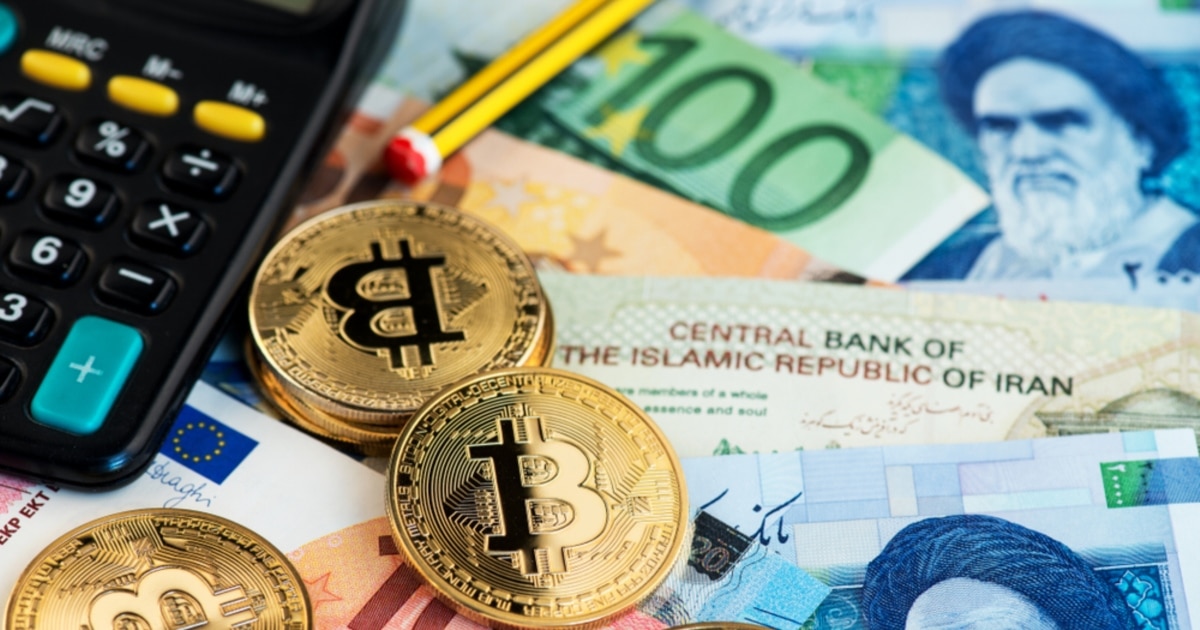
US sanctions on Iran’s largest cryptocurrency platform are aimed at intensifying the economic squeeze on Tehran but could also hurt ordinary Iranians and businesses, experts say.
Iran has been largely cut off from the global financial system for years due to US sanctions, leading Iranian state institutions and citizens to turn to cryptocurrency to transact with the world.
The US Treasury on June 2 imposed sanctions on Nobitex, saying the platform was being used by Iran’s central bank and the Islamic Revolutionary Guards Corps (IRGC), a US-designated terrorist organization, to evade sanctions.
But the move is also a blow to ordinary Iranians, who have been grappling with a deepening economic crisis exacerbated by the United States and Israel’s three-month-long war against the Islamic republic, experts say.
Masoumeh Taherkhani, an economic analyst based in London, said US sanctions against the cryptocurrency platform pose two major problems for Iranians.
“The first is psychological. Even if wallets inside Iran are not directly affected, sanctions create anxiety and uncertainty, and people may decide to withdraw their money simply because they no longer feel secure,” she told RFE/RL’s Radio Farda.
“The second problem arises if customers try to move their assets abroad,” Taherkhani added.
“Funds originating from sanctioned — effectively tainted — platforms are likely to face compliance obstacles when transferred to international companies.”
Cryptocurrency usage in Iran has expanded in recent years amid persistent inflation and restricted access to global finance.
Taherkhani said many Iranians have turned to digital assets to preserve the value of their savings as the country’s national currency, the rial, plunges to new record lows.

During the current conflict, the United States has intensified economic pressure on Iran.
Economic Pressure
In announcing the new sanctions on June 2, the US Treasury said “Nobitex has provided significant support to the regime, processing more than 50 percent of all Iranian digital asset inflows in 2025.”
The US Treasury added that the platform has been “facilitating payments tied to Iran’s terrorist activities, sanctions evasion efforts, and Islamic Revolutionary Guard Corps (IRGC)-linked transactions.”
The Treasury also issued sanctions against three other Iranian digital asset platforms, Wallex Bitpin, and Ramzinex. Nobitex’s three co-founders and current CEO were also sanctioned.
The measures freeze any assets the companies hold under US jurisdiction, bar US persons from dealing with them, and warn that foreign institutions conducting transactions with the designated entities could face secondary sanctions, the Treasury said.
The sanctions do not automatically block the exchanges’ operations inside Iran. But analysts say they are expected to significantly limit the companies’ ability to interact with the global financial and cryptocurrency ecosystem, as banks, payment providers, and international platforms seek to avoid sanctions exposure.
Nobitex has previously denied having direct ties to the Iranian government and said that any illicit transactions that may have passed through its platform did so without the knowledge or approval of management.
Economic Fury
Secretary of the Treasury Scott Bessent said the measures were part of Operation Economic Fury, which aims to cripple Iran’s already battered economy and force Tehran to a peace deal with Washington.
US officials have called the effort the “financial equivalent” of the US military campaign against Tehran.
During the current conflict, the United States has intensified economic pressure on Iran. US and Israeli air strikes destroyed or damaged the country’s key energy and transport infrastructure, including bridges, roads, and oil and gas depots.
Key industries, including manufacturing, were also targeted, disrupting domestic production and hiking prices for basic food items.
On April 13, the United States imposed a naval blockade on Iranian ports and vessels, disrupting Iran’s oil exports, the lifeline of its economy.
The US embargo came in response to Iran seizing control of the Strait of Hormuz, a key artery for global oil and gas supplies, at the start of the war.
By threatening and attacking international shipping, Iran brought maritime traffic to a virtual standstill, rattling international energy markets and upending the global economy.