Experts are warning the general population in Spain that pollen levels are expected to be much higher this year after abundant rainfall these past few months. Here’s everything you need to know about hay fever in Spain.
Seed or pollen season is definitely upon us, and in many cities across Spain you can already see spores flying through the air on a breezy day.
More than a third of the population in Spain has some allergy (alergia) to pollen (polen) and health issues caused by these outdoor allergens are only set to increase in the coming years.
Allergies affect eight million people in Spain, according to the Spanish Society of Allergology and Clinical Immunology (Seaic) and people are mainly affected during the spring and summer seasons.
High temperatures caused by climate change are increasing the amount of pollen in the air, which in turn is causing the number of pollen-related allergies such as hay fever to rise too.
According to Dr. Ángel Moral, president of the Seaic Aerobiology Committee, more than a third of the population in Spain has some pollen allergy problem, which could be in the form of an itchy nose, watery eyes, sneezing or even breathing difficulties, which makes it one of the most frequent illnesses in the country.
Why do allergies increase in spring and summer and where in Spain are they the worst?
Allergenic pollens vary according to the time of year and the type of vegetation. In general, tree pollen dominates during the winter and early spring, while grasses produce higher levels during spring and summer, according to the University Clinic of Navarra.
Each species has a different pollination period, which can also vary depending on the region. The level of grass pollen, for example, lasts until August in the north of the peninsula. On the other hand, on the Mediterranean coast, it lasts until the end of October.
Olive pollen, the other main species in May, is almost non-existent in the northern provinces, but high in the south and the Mediterranean.
According to the experts, the regions most badly affected by pollen in Spain are Andalusia, Castilla La-Mancha, Catalonia, Extremadura, Madrid and Murcia.
Currently over the next few days, there are yellow warnings for pollen across much of Andalusia, Madrid, Extremadura, Castilla y León and Asturias. Unusually high or red levels are being seen in Lleida in Catalonia and Navarra. If you want a live update of pollen levels in your part of Spain, click here.
Advertisement
What types of plants and pollen are people allergic to in Spain?
The two most important pollens these days are olive and grass, according to Dr. Moral. “There are more people allergic to grasses in Spain than in practically the whole world,” he explained.
Of the eight million people with allergies in Spain, seven million are allergic to grasses, olive trees, cypress trees, salsola and pellitory of the wall or lichwort.
Many people are also allergic to the seeds from plane trees, which can often cause sneezing and coughing fits. Experts suggest that plane trees, along with other species of trees, are one of the main sources of volatile compounds.
Barcelona Zoo states that plane trees are the most commonly planted tree in the cities and gardens throughout the Spanish Mediterranean region. They are typically planted in cities because of their ability to trap pollution particles on their leaves and bark, but the downside is that they also cause a lot of allergies.
Advertisement
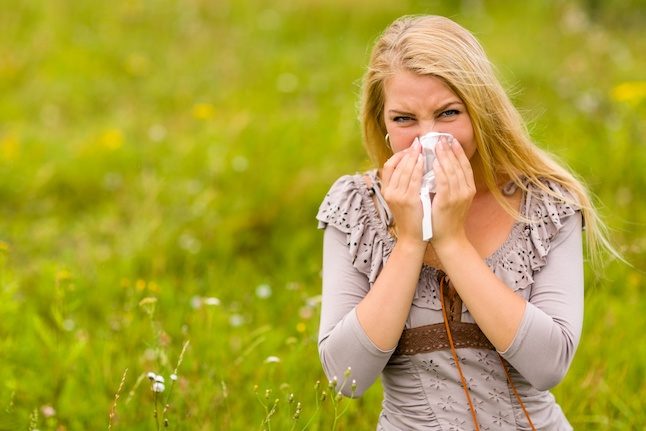
Avoid spending a lot of time outside on days when the pollen count is particularly high in your area of Spain. Photo: Public Domain Photos.net/Pixabay
Pollen season is set to get longer and the number of people suffering from allergies to increase
Research suggests that the pollen season is getting longer and longer each year due to climate change.
The increase in carbon dioxide is also fuelling photosynthesis, so plants may grow larger and produce even more pollen. Extensive research over the past decade has shown that airborne pollen has increased not just in Spain, but all over the world.
Seaic believes that because of this, the number of hay fever sufferers is set to increase too.
For example, in Madrid, the level of pollen in the air has doubled in the last 25 years. In 1995, an average of 25,000 grains per cubic metre was collected while the average for the year 2020 was more than 60,000, according to data collected by the Palinocam Network.
Advertisement
What to do in Spain if you suffer from hay fever?
According to the Department of Allergology of the University Clinic of Navarra symptoms can be treated with oral or topical antihistamines. They are effective in reducing itching, sneezing and runny nose. Nasal decongestants are also effective and often serve to prevent the onset of symptoms.
However, they also suggest limiting your exposure to pollen, which can prove difficult. Suggestions from health clinics on limiting exposure include:
- Avoiding spending a lot of time outside on days when the pollen count is particularly high.
- Avoiding the times between 5am and 10am and 7pm to 10pm when pollen levels are at their highest.
- Keeping your windows closed when driving.
- Not drying your clothes outside when the pollen counts are high as grains can stick your clothing.
- Showering when coming in from outside.
If you want to see a allergist (alergólogo/a in Spanish), this map by the Spanish Society of Allergology should direct you to your closest specialist.