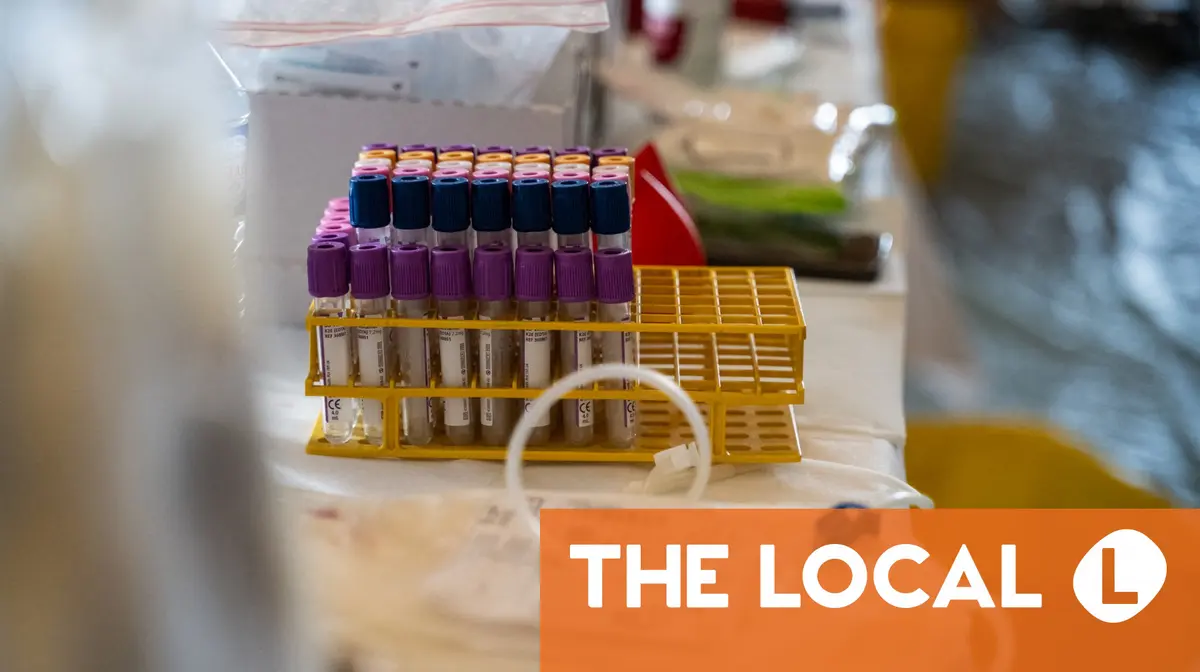

If you’re interacting with the French health system you may come across the ‘blood group card’ – here’s a look at what it is, who needs one and how to get it.
The carte de groupe sanguin is pretty much what it sounds like – a card showing your blood type (groupe sanguin), allowing doctors to give you a blood transfusion if necessary.
But not everyone in France will have one.
When registering in the French medical system you will (eventually) receive the carte vitale – this is the all-important green card that shows that you are entitled to have some or all of your medical expenses reimbursed by the French state. When accessing healthcare, you normally pay up front and then the medical professional swipes the carte vitale and the French government reimburses the money directly into your bank account.
However, you will not be automatically issued with a carte de groupe sanguin when registering.
There are four groups of people who will routinely be issued with them;
- People with pre-planned major surgery
- Pregnant women
- Sufferers of severe anaemia requiring a possible blood transfusion
- People with other medical conditions that require regular blood transfusions
In all cases the purpose is the same – to save time in cross-matching blood if you need a blood transfusion.
Part of the preparations for planned surgery involves blood tests, while pregnant women also get regular blood tests – these are done at medical laboratories and in most cases they will issue you with the card.
What about everyone else?
For the rest of the population, they are not routinely issued, but you can acquire one – you will need to book two blood typing tests (groupage sanguin) at a medical laboratory to test your blood type, and then request the card.
Make sure you have a form of ID with you (passport, carte de séjour, etc) so that the laboratory can verify your ID to make sure that the correct blood type is linked to the correct person.
The above groups have the cost of the test reimbursed, as does anyone else who has a doctor’s prescription for the test.
Without a prescription, it is still possible to get the test, but the cost will not be reimbursed by the French state health system – the cost is generally around €25.
People who regularly donate blood in France will be given a donor card which includes their blood type – the card is available as either a physical or digital version. Please note that anyone who lived in the UK between 1980 and 1996 cannot donate blood in France.
READ ALSO: How to donate blood in France
What do you do with the card?
Once you have the card, keep it in your wallet/purse so that first responders are likely to find it in the event of an accident.
Or take it into hospital when you go to give birth or to have your operation/blood transfusion.
Card changes
The format of the blood test cards changed in 2018, but the old style cards can still be used.
Since 2023, many laboratories have stopped issuing laminated cards, and instead issue standard lab test results on paper – or available online – listing the blood type. You can also update your digital health record (Mon Espace Santé) to include your blood type.
Can I get a transfusion if I don’t have the card?
Fear not, medics will not simply stand around watching if you need a blood transfusion, but you don’t have the card.
Medics always carry out a blood typing test before giving a transfusion – even for people who know their blood group – to be sure that they are giving the right type.
Having the card may save some time in an emergency, but not having one is no barrier to receiving a transfusion in the – hopefully unlikely – event that you need it.