

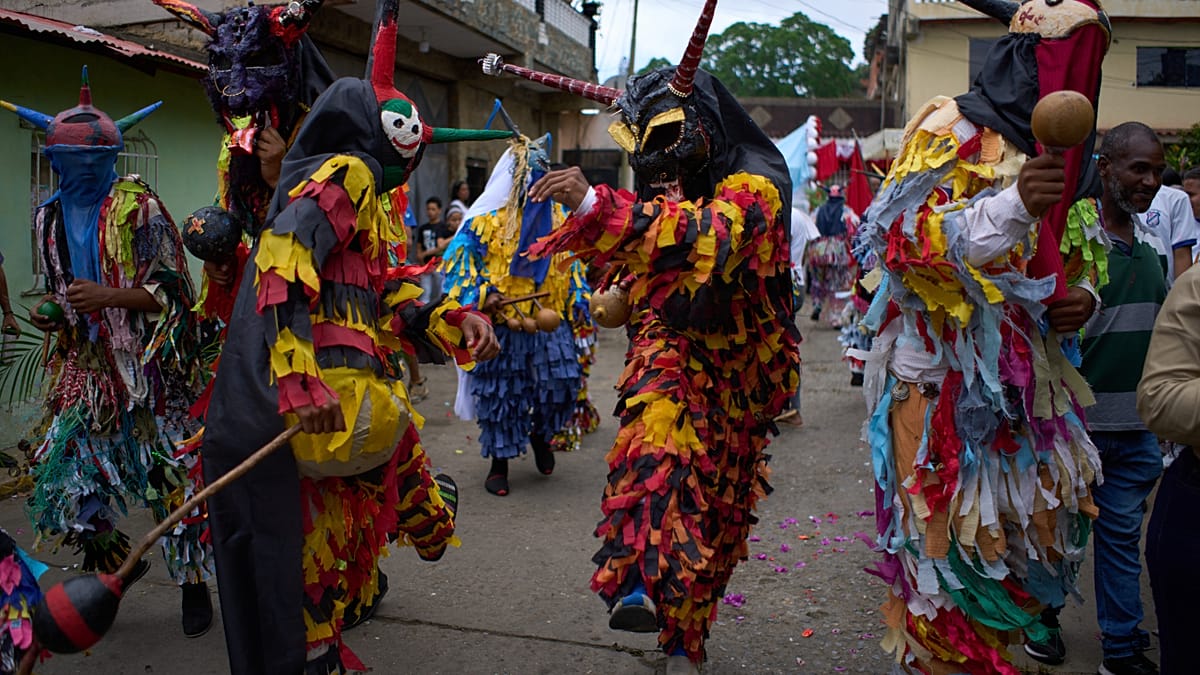
Dressed in colourful costumes and handmade masks, parishioners danced through the streets as children received their First Communion after a year of religious preparation. The event combines Catholic devotion with local customs and forms part of a ritual in which masked devils ultimately submit to the Blessed Sacrament, symbolising the victory of good over evil. The tradition was recognised by UNESCO as Intangible Cultural Heritage in 2012.

ADVERTISEMENT
ADVERTISEMENT
The celebration in Tarmas is distinguished by its small masks made from dried gourds and a rhythmic dance that traces the sign of the cross on the ground. Participants said that while costumes and rituals vary between communities, the central purpose remains the same: honouring the Eucharist.
The practice dates back to the arrival of Franciscan missionaries in the late eighteenth century and reflects a blend of Catholic, Indigenous and African influences. Today, it remains one of Venezuela’s most distinctive religious and cultural events, bringing together families, worshippers and local brotherhoods each year.
