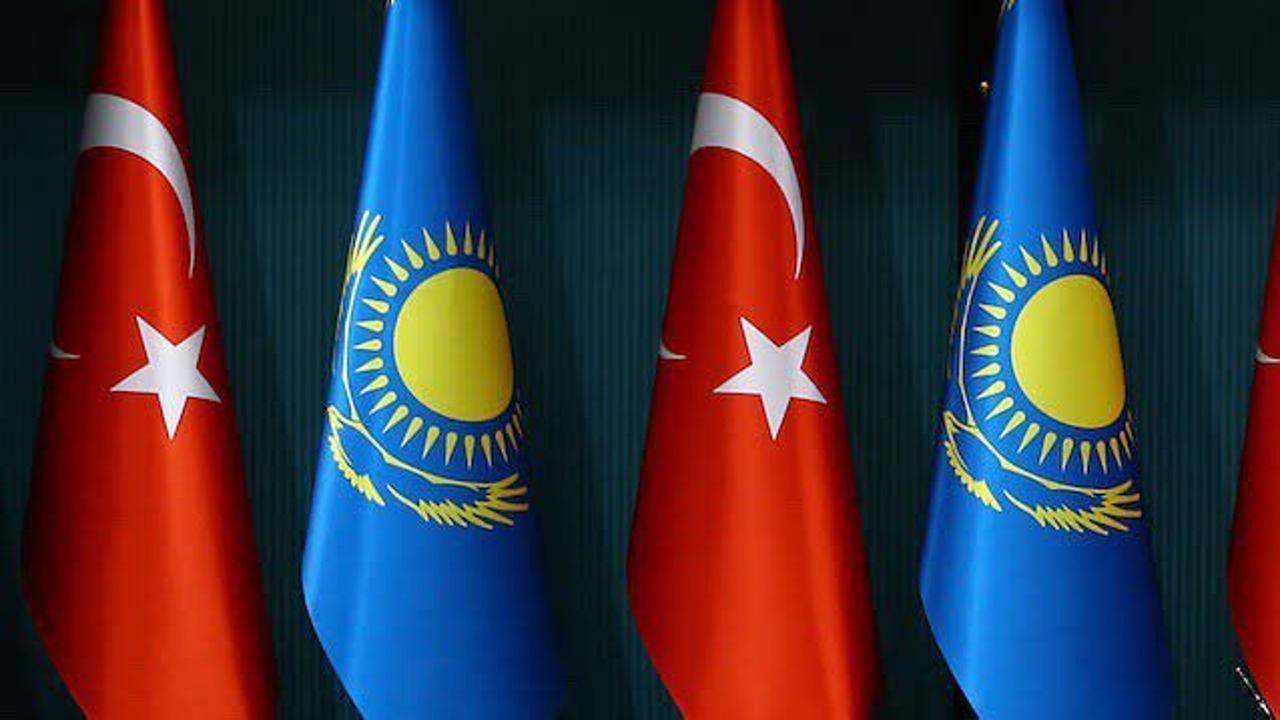
BAKU, Azerbaijan, May 13. The state visit of
President Recep Tayyip Erdogan to Kazakhstan, scheduled for May
13-14, will occur against the backdrop of deepening economic and
political cooperation between Kazakhstan and Türkiye. The two
countries are expanding collaboration across multiple sectors,
including logistics, energy, technology, and agriculture. This
process is further reinforced by the development of Turkic
integration and the increasing significance of the Middle Corridor
in regional trade.
President Erdogan’s visit follows closely on the heels of the
meeting of the intergovernmental commission on trade and economic
cooperation, held in Astana with the participation of Turkish Vice
President Cevdet Yilmaz. During that meeting, both parties
reaffirmed their plans to expand investment cooperation and to
further develop the Middle Corridor, which connects China and
Europe via Central Asia, the Caspian Sea, the South Caucasus, and
Türkiye. Over the past seven years, freight traffic along the
corridor has increased fivefold, while delivery times have been
reduced to 13 days.
Transport remains a central component of the bilateral agenda.
Rail freight between Kazakhstan and Türkiye grew by 35% in 2025,
reaching 6.4 million tons, while freight volumes along the
Trans-Caspian International Transport Route exceeded 4 million
tons.
The increasing significance of these transport routes reflects
broader changes in Eurasian logistics chains and the efforts of
regional countries to reduce dependence on traditional transit
corridors. Kazakhstan and Türkiye view the Middle Corridor as a
long-term infrastructure project and are working on railway
modernization, expansion of port capacities, and tariff policy
coordination.
According to the Kazakh government, Türkiye ranks among
Kazakhstan’s five largest trading partners. In 2025, bilateral
trade turnover increased by 9%, while exports of Kazakh products
grew by 17.7%, reaching $3.9 billion. Concurrently, Astana seeks to
shift cooperation toward higher value-added sectors, including
metallurgy, pharmaceuticals, agro-processing, and machinery. In the
previous year, Turkish investments in Kazakhstan’s economy amounted
to approximately $390 million, bringing the total inflow over the
past two decades to more than $6 billion.
Energy continues to represent a promising area of cooperation.
Kazakhstan maintains the use of the Baku–Tbilisi–Ceyhan pipeline
for oil exports through Turkish territory. According to Sanzhar
Zharkeshov, Deputy Minister of Energy of the Republic of
Kazakhstan, a key focus of bilateral collaboration includes
electricity projects. Notably, the “Kyzylorda” combined cycle power
plant, with a capacity of 240 MW, is being implemented in the
Kyzylorda region with the participation of a Turkish company.
Additional electricity sector projects are currently under detailed
review.
The development of the petrochemical industry constitutes
another significant area of cooperation. Kazakhstan plans to
implement petrochemical projects valued at $15 billion and has
invited Turkish companies to participate in these initiatives.
At the same time, the parties are expanding cooperation in the
technology sector. In May, in Almaty, Turkish holding ARDVENTURE
YATIRIM HOLDİNG A.Ş. and Astana Hub signed a memorandum of
partnership in venture investments and startup support. The
agreement provides for the launch of joint acceleration programs,
exchange of expertise, and promotion of technological projects in
Central Asia and the MENA region.
Agricultural trade between Kazakhstan and Türkiye increased by
more than 25% in 2025, reaching approximately $360 million. In
recent years, Kazakhstan and Türkiye have implemented around 10
projects worth approximately $400 million, covering agricultural
production and processing, as well as confectionery
manufacturing.
The Deputy Minister of Agriculture of Kazakhstan, Yermek
Kenzhekhanuly, stated that the parties continue to discuss new
initiatives. In particular, negotiations are underway on the
construction of a sugar plant with the participation of a Turkish
company.
It is expected that several bilateral agreements will be signed
following the Erdogan visit. After the talks in Astana, the Turkish
leader will take part in the informal summit of the Organization of
Turkic States in Turkestan on May 15, dedicated to the theme
“Artificial Intelligence and Digital Development.”
Notably, Erdogan is visiting Kazakhstan less than a year after
the official visit of President Kassym-Jomart Tokayev to Türkiye in
July 2025, following which the parties signed 18 agreements in
logistics, energy, digitalization, and industrial cooperation.
Since then, Astana and Ankara have been consistently expanding
cooperation, shifting the focus from political declarations to the
practical implementation of infrastructure and investment
projects.
Overall, the visit of the President of Türkiye to Kazakhstan
reflects not only a high level of bilateral relations but also a
broader process of strengthening Turkic integration across Eurasia.
Astana and Ankara are shifting cooperation from the political
sphere to a practical one – through the development of transport
routes, energy projects, industrial cooperation, and technological
initiatives. It is expected that the outcomes of the visit will
provide an additional impetus to joint projects and further deepen
the strategic partnership between the two countries.