

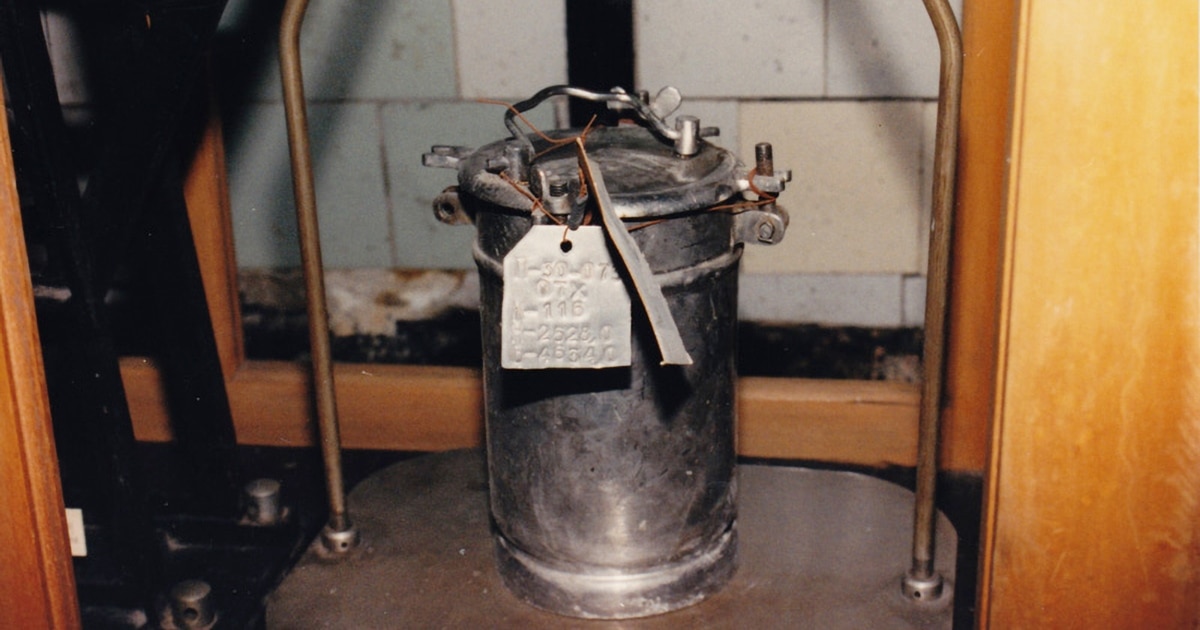
A container filled with highly enriched uranium in a factory in Kazakhstan in 1994.
Photo: www.nsarchive.org/Andy Weber (Courtesy Image)
Kazakhstan has offered to host Iran’s enriched uranium in order to streamline a potential peace deal between Tehran and Washington. The offer comes more than 30 years after a massive haul of weapons-grade uranium was taken out of the Central Asian country and flown to the US.
If Tehran accepts Kazakhstan’s recent offer to store Iran’s uranium stockpile, at the Ulba Metallurgical Plant, as part of a peace deal with the United States, it would not be the first time the Soviet-era facility has handled a high-stakes transfer of nuclear material.
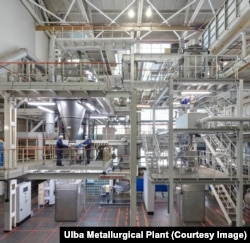
A section of the Ulba Mettalurgical Plant in northeast Kazakhstan as it looks today
In 1993, Andy Weber, a young American diplomat beginning a posting in newly independent Kazakhstan, was approached by Vitaly Mette, the director of the metallurgical plant in the northeastern city of Ust-Kamenogorsk, known today as Oskemen.
Mette offered to sell what he claimed was 600 kilograms of highly enriched uranium — enough for dozens of nuclear warheads.
The uranium, the industrialist said, had been gathering dust in his factory since a Soviet nuclear submarine project was ended in 1981. Moscow had apparently forgotten about the uranium — made to fuel the attack submarines — and the Kremlin no longer had jurisdiction over the plant.
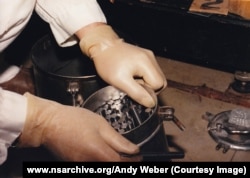
A container filled with rods of highly enriched uranium inside the Ulba Metallurgical Plant
With Iranian agents “all over Central Asia” at the time searching for Soviet-made nuclear material, Weber swiftly reported Mette’s pitch to Washington.
When White House officials raised the issue of the purported uranium to Kazakh President Nursultan Nazarbaev, he offered no objections to the US potentially removing material that had poisoned swathes of his country during Soviet weapons testing.
Weber and a nuclear expert dispatched from the US travelled to Ust-Kamenogorsk and were taken into a building in the Ulba Metallurgical Plant secured with an antique-looking padlock, where containers filled with metal rods were stored.
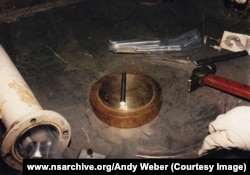
A rod of highly enriched uranium seen in the Ulba Metallurgical Plant in 1994
Weber later described a factory worker scraping a metal file down one rod that sparkled like a firework. “My eyes are lighting up, because I’ve got this chunk of metal in my hand,” Weber later recalled, “I know it’s bomb material.” Highly enriched uranium looks similar to steel but is extremely heavy. A chunk of the nuclear material the size of a bar of soap would weigh around 3 kilograms.
After tests confirmed the material was 90 percent uranium-235, the news hit Washington “like a ton of bricks.”
In early October 1994, a team of 31 American technicians and experts landed in Ust-Kamenogorsk for a covert operation to pack and remove the uranium. Project Sapphire was under way.
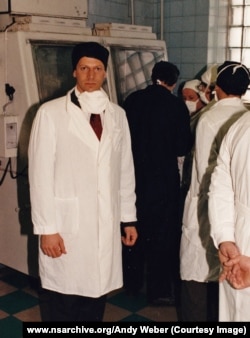
Andy Weber photographed in Ust-Kamenogorsk in 1994
For nearly a month, as the weather grew increasingly bitter, the team worked under strict secrecy to pack the 581 kilograms of uranium into 448 foam-filled metal barrels in preparation for flying it out of Kazakhstan.
Fears that Iran could have acquired the uranium were borne out by the discovery of shipping crates of beryllium in the Kazakh factory that had been addressed to Tehran but not sent. The metal can be used as a component of nuclear warheads.
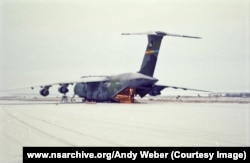
An American transport plane in Kazakhstan during Project Sapphire
By November 18, the removal was complete and three American transport jets lifted off with their cargo of nuclear material and the team that had packed it.
A classified report noted that Project Sapphire went relatively smoothly, barring some incidents that left a sour taste on both sides. One factory worker was described as being “particularly antagonistic” to the Americans. One member of the US team with existing health issues drank so much alcohol he fouled his room with “vomiting, urinating, and defecating.” The man left the mess “for the maids to clean up.”
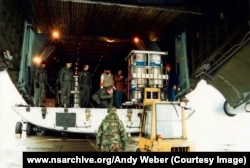
Metal barrels containing uranium being loaded aboard an American transporter aircraft during Project Sapphire
After its arrival in the US, the material was moved to a facility in Tennessee for “storage and disposition.” It is believed tens of millions of dollars were paid to Kazakhstan for the uranium, but the exact amount has never been confirmed.
Mette, the factory chief who had initiated the sale, was named deputy prime minister of Kazakhstan in October 1994.
