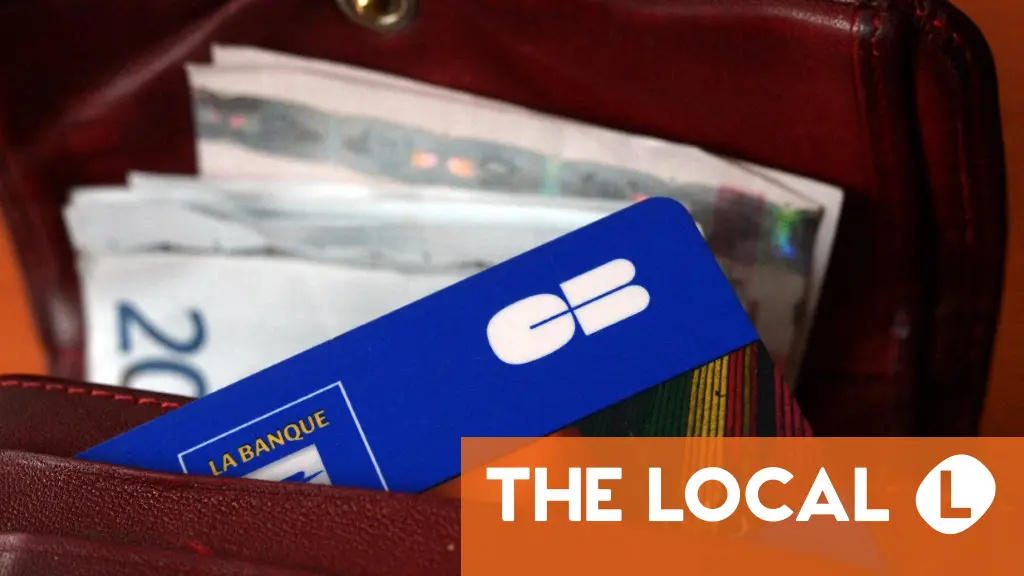
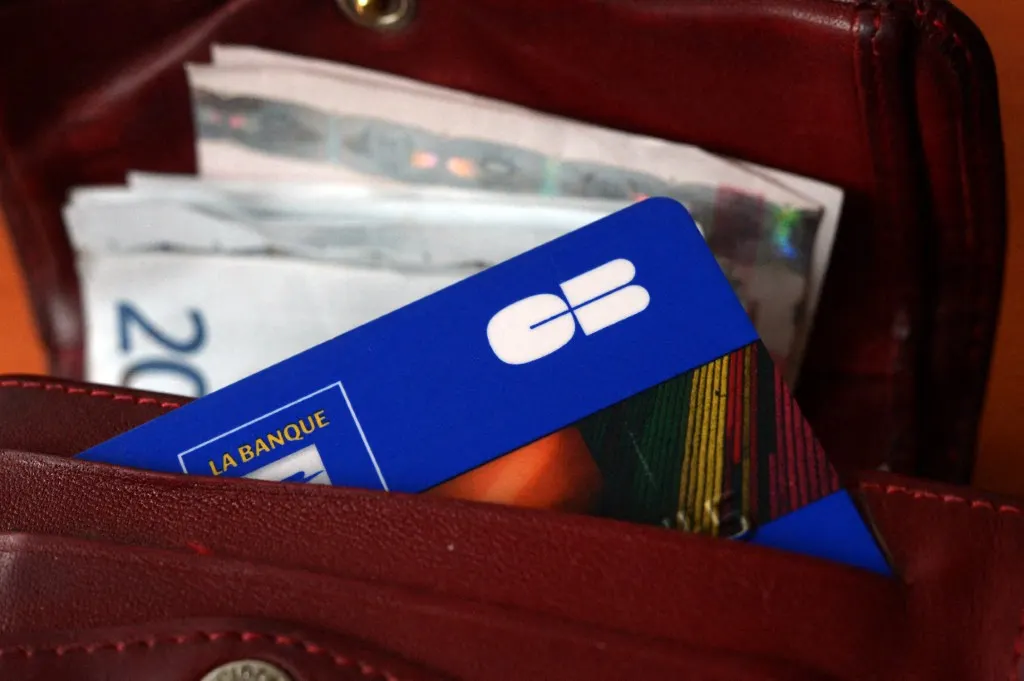
It brands itself as ‘Le made in France’ and uses the slogan ‘c’est mieux si on paye en France’ (it’s better if you pay in France) – so what is CB and is it really an alternative to American payment systems?
The advertising campaign for CB (Carte Bancaire), rolled out in recent months across France, has raised a few questions.
First, because many consumers don’t realise they actually have a choice when paying by card. Second, because the slogan implies that this choice could be a way of expressing economic patriotism.
So what is it?
Of the roughly 110 million bank cards in circulation in France, 77 million carry the CB logo. Most French bank cards are “co-badged,” meaning they carry both the CB logo and an international network such as Visa or Mastercard. This allows users to pay domestically via CB, and abroad via global networks.
When making an online payment, we do not always notice the CB logo, even though it is frequently present. Since Visa or Mastercard logos are more familiar to us, we generally tend to click on them. Yet it is possible to choose the national network whenever you have a “co-badged” card.
For a purchase in a shop, you simply need to select CB.
Carte bancaire
Carte Bancaire (CB) is France’s national card payment network, created in 1984 by the country’s major banks with support from public authorities. It operates as an interbank system that processes debit and credit card transactions across the country.
The CB scheme is administered and developed by the Groupement des Cartes Bancaires (GIE CB). It is a non-profit organisation that brings together France’s major banks: Groupe BPCE (Banque Populaire – Caisse d’Épargne), BNP Paribas, Société Générale, Crédit Agricole, Crédit Mutuel CIC, Banque Postale, HSBC France, and more.
Its goal is to ensure the proper functioning and security of the card payment system.
Today, CB is the dominant payment method in France. It accounts for roughly 65 percent of everyday transactions, with tens of millions of cards in circulation and billions of payments processed each year.
What advantages are there to using CB?
For merchants, it offers a strong guarantee of security. CB has the lowest fraud rate on the market.
“Out of €10,000 in payments, less than €3 is lost to fraud with CB, compared to an average of €5 on other networks,” explained Jean-Paul Mazoyer, CB’s president. It is also, from the merchant’s perspective, the most cost-effective payment network.
Mazoyer states that CB directly impacts the French economy as well as the purchasing power.
And most importantly, it offers security: “CB is the only 100 percent French payment solution that guarantees the sovereignty of our data, since all of it is processed, protected and secured in France”.
Calls to move away from Visa and Mastercard
As well as the practical advantages, CB also represents a way to move away from American tech – something that has become an increasing conversation in France in recent months, and which CB leans into with its ‘Made in Frace’ adverts.
President Emmanuel Macron said in March that payment methods represent “an essential part of our sovereignty,” in a video broadcast during the summit of the CB.
READ ALSO: 15 French replacements for American tech✎
Even though CB is overwhelmingly dominant in France, it has been losing ground in recent years to the American giants Visa and Mastercard, as well as to the surge in mobile phone payments.
Macron called on all national and European financial players to “make use” of the “co-badging” model that allows collaboration with others. The CB Economic Interest Group has asked its members to abandon their exclusive partnerships with the American giants Visa and Mastercard.
As well as simple patriotism, French organisations are becoming more aware of the security risks of depending too heavily on American platforms.
Nicolas Guillou, a judge at the International Criminal Court, was sanctioned by US President Donald Trump’s administration and consequently found himself unable to use American payment systems.
“In Europe, all payment methods are American. It’s crazy to think that France, the world’s seventh-largest economy and a permanent member of the Security Council, is not capable of having an autonomous payment method.
“The US executive can, without any oversight, disconnect anyone from the global payment system,” Guillou told French media Ouest-France in an interview.
Another European alternative
Another alternative to move away from American tech is to use the payment app Wero, short for ‘Oui Euro’ (yes to Euro). It is a free instant payment system launched in 2024 that allows users to send and receive money directly between individuals without going through traditional bank card networks.
It is not always necessary to know the recipient’s bank details (RIB or IBAN) – just a phone number is enough to make the transfer, provided the recipient also has the app. Wero currently operates in France, Belgium, and Germany, and is gradually expanding to other European countries.
SIDA to IRM to RIB: Everyday French initials and acronyms to know
However, it is not yet possible to pay for all everyday purchases with Wero. It will take some time before the service becomes widely available in stores.