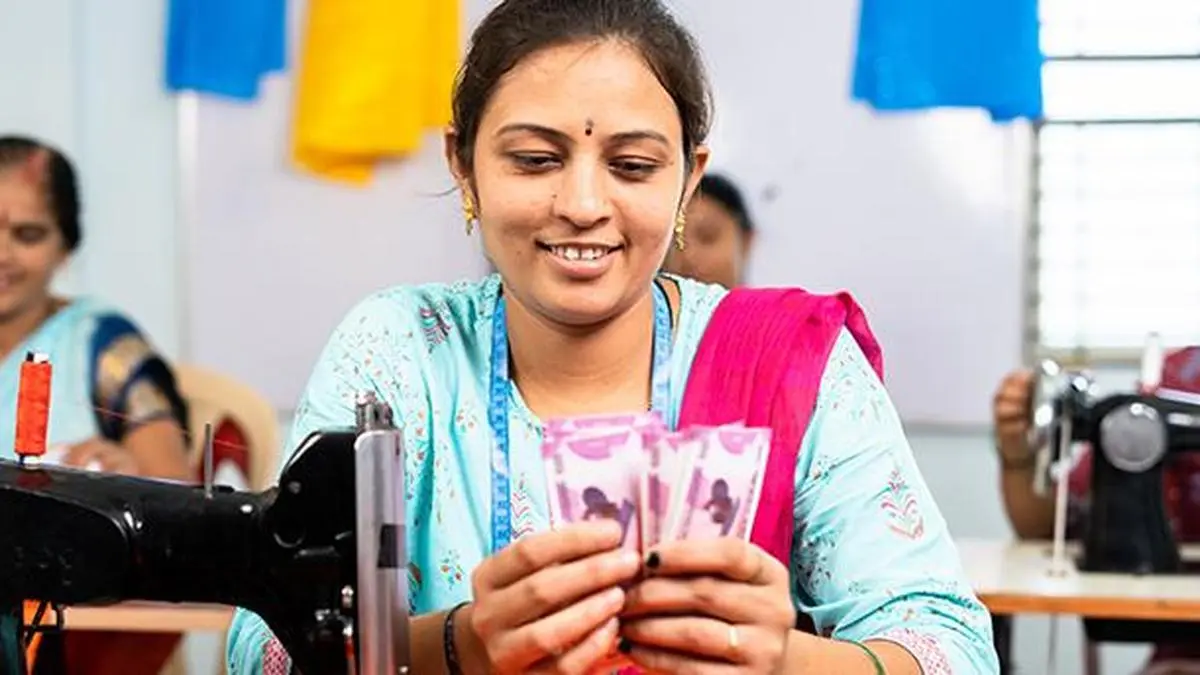
More women and freshers among the country’s blue- and grey-collar workforce are moving beyond their hometowns for better jobs and higher pay, driving a 31.4 per cent year-on-year rise in job-related migration during January-April 2026, according to a report.
A report by blue and grey-collar recruitment platform WorkIndia points to a defining moment in India’s labour story, more women, more freshers, and more workers from across the country’s blue and grey-collar workforce are looking beyond their home cities for better jobs, better wages, and better futures.
The data shows 8.6 million job applications for cities other than applicants’ own between January and April 2026, up from 6.5 million in the same period a year ago – a 31.4 per cent year-on-year increase.
This far outpaces the 20.2 per cent growth in same-city applications, meaning the cross-city worker pool is now expanding more than 1.5 times faster than the local one, the report revealed.
As a result, nearly 1 in 4 workers on the platform (24.1 per cent) is now actively pursuing opportunities outside their home city, compared to 22.5 per cent a year ago, it added.
The WorkIndia report is based on over 35 million job applications between January and April 2026 on the company’s platform.
The report found that, for a sector long defined by male-dominated migration, the data point to a meaningful shift, with women in blue- and grey-collar roles increasingly willing to leave their home cities for better opportunities, narrowing a gender gap in workforce mobility that has persisted for decades.
Freshers’ or first-time job seekers’ cross-city application rate climbed 11 per cent compared to a far softer 5 per cent increase among experienced workers.
Across blue- and grey-collar segments, roles such as labour, office work, sales, and healthcare saw more workers willing to move to other cities this year, reflecting a workforce that no longer treats migration as a last resort but as a deliberate path to better wages and working conditions.
High-volume mobility segments such as manufacturing, delivery and driver, automobile, and domestic work continue to contribute the bulk of cross-city application volume, even as their migration shares stabilise after years of rapid growth, it stated.
With the overall candidate pool itself expanding 22.7 per cent year-on-year, the absolute number of blue-collar workers crossing city lines has grown substantially in every one of these categories, even where the relative share has held steady.
Meanwhile, the report said geographically, opportunity continued to spread beyond the traditional metros.
Tier II hubs are absorbing rising volumes of incoming applications as employers in cities like Ahmedabad, Jaipur, Coimbatore, Indore, and Lucknow scale up hiring, and as workers respond to wage gaps, housing costs, and quality-of-life considerations that are reshaping the country’s economic geography.
“The Indian blue and grey-collar workforce is rewriting the rules of mobility. A woman in Patna applying for a healthcare role in Pune, a fresher in Bhopal applying for an office job in Bengaluru, a salesperson in Surat looking at openings in Hyderabad, this is the new normal.
“Migration has stopped being a male, metro-bound, last-resort decision. It is now a deliberate career choice being made by millions of Indians, including a fast-growing share of women and first-time job seekers,” WorkIndia co-founder and CEO Nilesh Dungarwal added.
Published on May 17, 2026