India’s factory output growth, measured by the Index of Industrial Production (IIP), slowed to 4.1% in March 2026 from 5.2% in February, according to the Ministry of Statistics and Programme Implementation.
Growth in factory output, as measured by the Index of Industrial Production (IIP), slowed to 4.1 per cent in March from 5.1 per cent in February, the Ministry of Statistics and Programme Implementation (MoSPI) reported on Tuesday.
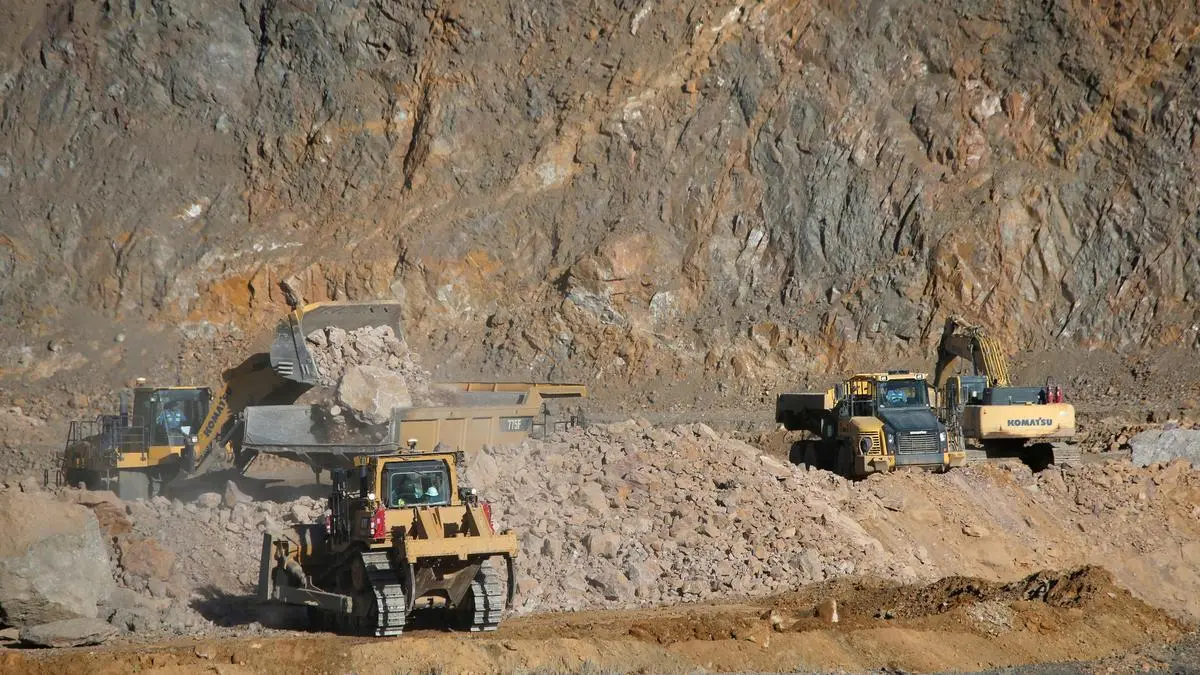
According to data by the National Statistics Office (NSO), the manufacturing sector’s output growth remained subdued at 4.3 per cent in March 2026 compared to 4 per cent in the year-ago month. Mining production growth improved to 5.5 per cent from a meagre growth of 1.2 per cent recorded a year ago. Power generation grew marginally by 0.8 per cent in March against 7.5 per cent expansion in the year-ago period.
According to Aastha Gudwani, India Chief Economist at Barclays, slower growth in manufacturing sector shaved off 120bp from headline. Similarly, slower electricity growth shaved off another 12 bp. This more than offset the higher growth seen in the mining sector. Within manufacturing, 14 out of 23 sectors saw positive growth rates (same as in February).
“We awaited March IP data to assess any immediate impact on industrial growth amid energy shortage in general and gas rationing in particular. To that extent, only chemical and chemical products saw slower year-on-year (y-o-y) and month-on-month (m-o-m) growth rates in March. Apart from that, we do not see any early signs of sharply lower output growth in impacted sectors,” she said.
Vikrant Chaturvedi, Associate Director at Brickwork Ratings, sees a dip in overall industrial growth signals as a moderation in industrial momentum as the economy transitions into FY27. “The strength in capital goods (14.6 per cent) and infrastructure goods (6.7 per cent) underscores that investment-led demand remains intact, even as consumer non-durables posted a muted 1.1 per cent rise,” he said.
Cautious approach
However, he cautioned against significant external headwinds due to escalating conflict in West Asia . The conflict has tightened global energy markets, raised input cost volatility, and could weigh on India’s industrial competitiveness if supply disruptions persist into FY27. Looking ahead, sustaining industrial growth will require broadening demand beyond investment-heavy segments to consumer-facing industries.
“The near-term outlook remains constructive, supported by government spending and easing supply chains. Still, the pace of recovery in electricity and consumer goods will be critical to achieving a balanced industrial expansion in FY27, even as we navigate the current geopolitical uncertainty,” he said.
Megha Arora, Director at India Ratings & Research (Ind-Ra), expects IIP growth in April 2026 will improve to around 5 per cent as base effect will help in maintaining the growth momentum (growth in April 2025 was 2.6 per cent) “Government’s continued capex is likely to keep capital goods (FY26: 8.2 per cent) and infrastructure/construction goods (FY26: 9.8 per cent) growth momentum in FY27 as well,” she said.
Published on April 28, 2026