If you have been living in Spain since before January 1st and don’t have legal residency, you might be able to apply for papers under the government’s mass migrant amnesty. Find out if you meet the requirements and how to apply.
On Tuesday, April 14th the Spanish government finally approved the controversial mass regularisation of undocumented migrants in Spain.
The measure will see between 500,000 and 800,000 undocumented migrants in Spain given residency and employment rights via an initial one year residency permit.
Spanish media reports suggest that scammers and criminal gangs are exploiting desperate migrants by block booking in cita previa appointments and charging for them.
Spain’s Immigration Ministry seems to be aware of this, and on its website notes: “IMPORTANT: Face-to-face appointments are FREE; no one is allowed to charge you for booking or attending a face-to-face appointment.”
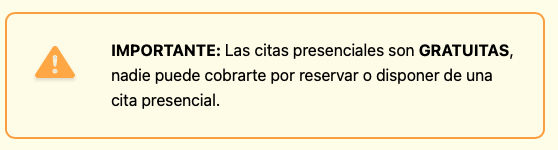
Source: Spanish government.
The measure has also proven controversial and caused confusion about who will benefit and what they’re entitled to. For a full breakdown of the reality about Spain’s migrant amnesty, read our myth buster here.
For those applying, here’s what you need to know about the deadlines, documents, requirements, and how and where to apply.
READ ALSO: Spain to start mass regularisation of undocumented migrants
When is the application window?
This migration amnesty is available for a short-time only. The application window begins online from Thursday, 16th April, and next Monday 20th April, in person.
The online service will be available 24 hours per day, but in-person applicants must book an appointment via the Ministry website. In-person appointments will begin from Monday 20th April.
Is there a deadline?
Yes. Anyone interested in taking part in migration amnesty must apply before 30th June.
What are the requirements?
- You must have been living in Spain without legal residency before 1st January 2026 and be able to prove it.
- You must have resided continuously in Spain for at least five months prior to the date of application.
- You need to have a clear criminal record and have a certificate from your home country (or from any country where you’ve lived for during the last five years) to prove it.
READ ALSO: Can unregistered Brits in Spain get residency under new regularisation?
Advertisement
Where do I apply?
As mentioned, you can apply either online and in person, for for both you will need to visit this special website set up by the government.
To be able to apply online, however, you will need a digital certificate.
To be seen in person, you will need to book an appointment on the same website, using the Cl@ve system, via a web form, or by calling 060, with support available in Spanish from Monday to Friday, 09.30am–2pm and 4.30–17:30pm.
You can also visit immigration offices in certain provinces (Madrid, Alicante, Valencia, Almería and Murcia), social security offices or the Social Security treasury offices.
If you’re not in any of the above cities, you can also apply at Correos post office branches in provincial capitals and towns with more than 50,000 inhabitants.
Which documents do I need to take with me?
Primarily you will need to download Form EX-32 from the same website and complete it.
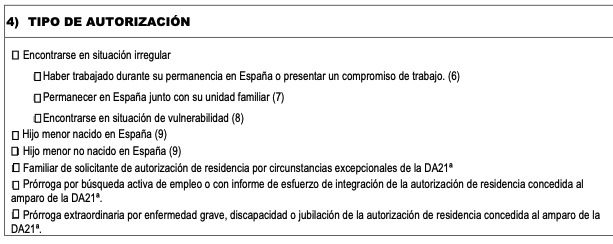
For migrants in an irregular situation who have not applied for international protection, EX-32 is the form that most undocumented migrants will need.
In section 4 applicants must specify their reason for regularising their legal status, including “have worked during their stay in Spain or provide proof of a job offer” alongside options for sickness, vulnerability and family ties.
Advertisement
Form EX-31
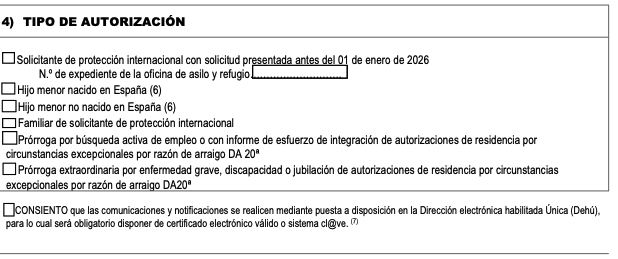
If you need special international protection, you can use EX-31 instead.
The form asks for basic personal information, and in section 4 you’ll be asked to specify which type of residency authorisation applies to your case.
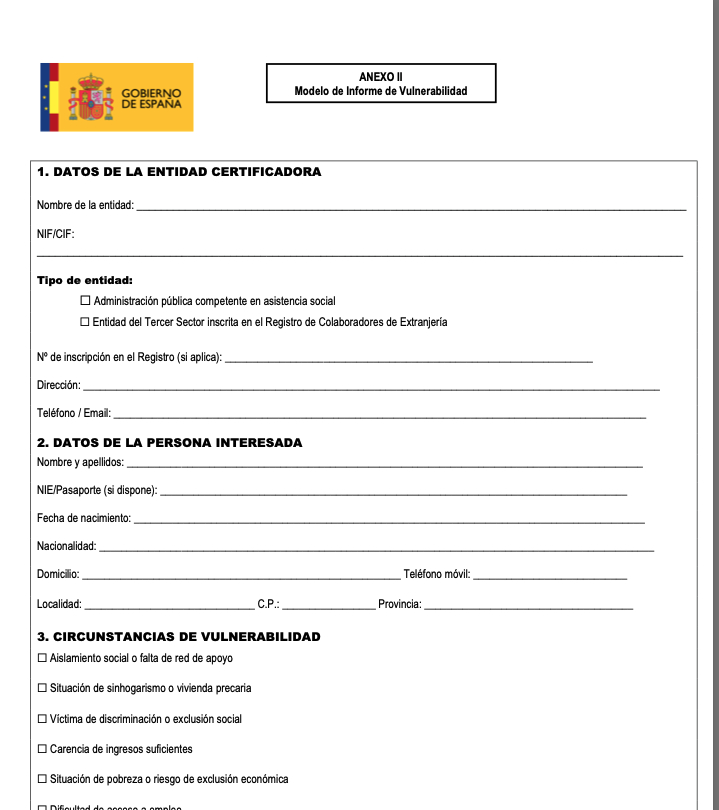
Informe de vulnerabilidad
For those in a vulnerable situation you can also complete the informe de vulnerabilidad, but this is not necessary if you have already completed EX-31 for international protection. This is a document issued by social organisations or public authorities certifying social situations such as poverty, social exclusion, lack of income, homelessness or risk of abuse.
This report allows for official proof that the foreign national is in circumstances that seriously affect their access to basic rights.
In addition to one of the above applications you will need:
- A criminal record certificate
- A complete copy of your passport (expired passports are acceptable)
- Registration card or travel document recognised as valid in Spain
- Documents proving you were in Spain before 1st January 2026.
Examples of documents that prove prior residence in Spain include an entry stamp in a passport, named airline tickets, proof of bank transactions carried out at branches within Spain, rental agreements or transport tickets for journeys within the country.
Advertisement
How long is the residency valid for?
The permit will be valid for an initial period of one year.
Once that’s elapsed, applicants must transition to standard residency permits set out in Spain’s immigration legislation.
The regularisation process provides special protection for minors, however, granting them an initial residence permit for five years.