
His video address set the tone for the 13th session of the World Urban Forum (WUF13), which comes at a critical moment as cities grapple with deepening inequalities, rapid urbanisation and a growing climate crisis.
Organised by UN‑Habitat in partnership with the Government of Azerbaijan, the forum, which has drawin a record number of participants, officially opened today following Sunday’s ceremonial events, which included the first-ever World Leaders Summit in the history of the gathering.
Housing rises up the global agenda
UN‑Habitat officials describe the summit as a major step in elevating housing and urbanisation to the highest political level.
Mr. Guterres stressed that housing directly affects people’s health, education and future opportunities.
“As Secretary-General, I am proud that the Pact for the Future and the Doha Political Declaration recognize housing as a priority,” he added, referring respectively to a landmark 2024 UN agreement aimed at strengthening global cooperation and safeguarding the needs of future generations, and the declaration adopted at last year’s World Social Summit, focused on advancing inclusive development.
“Housing is a human right, and fundamental for human dignity,” Mr. Guterres emphasized, calling on participants to make affordable housing a “shared reality.”
The Secretary‑General also warned that the crisis is no longer confined to low‑income countries. “No society is immune, from fast‑growing cities in the developing world, to advanced economies with high rents and rising homelessness,” he said.
No simple fixes for a global crisis
President of the UN General Assembly Annalena Baerbock said in a separate video message that there are no straightforward solutions.
“Building more houses is necessary, but it will not be enough on its own,” she stressed.
She called for a more comprehensive approach – one that links housing with infrastructure, climate resilience, financing and urban planning – and underlined that sustainable urban development is impossible without the participation of local communities, civil society and residents themselves.
Cities under pressure
According to UN estimates, around 1.5 million people move into cities every week. By 2050, more than two‑thirds of the world’s population will be living in urban areas, with nearly 90 per cent of that growth concentrated in Africa and Asia.
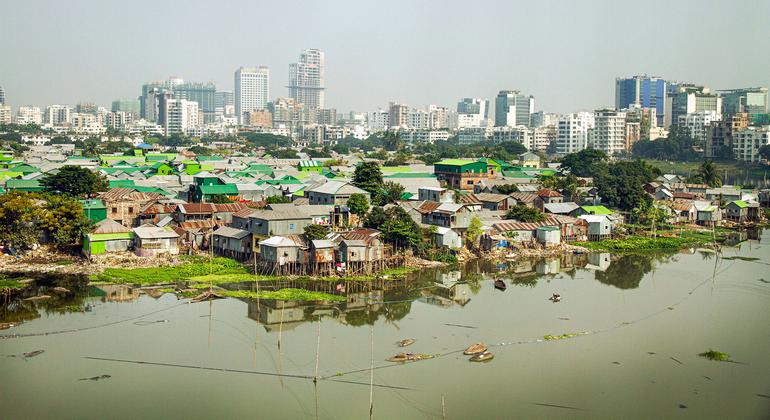
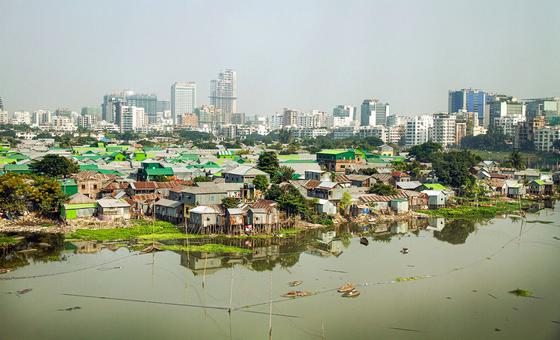
At the same time, informal settlements are continuing to expand: in developing countries, more than 30 per cent of urban residents live in slums and neighbourhoods lacking adequate infrastructure.
Participants have gathered at the forum to explore solutions to these and related challenges, including access to basic services, climate resilience and more effective urban governance.
Azerbaijan and Somalia currently serve as co‑chairs of the UN‑Habitat Intergovernmental Working Group on the resolution ‘Adequate Housing for All’ for the 2025–2026 term, coordinating UN Member States’ efforts and developing global recommendations on safe, sustainable and affordable housing.
Welcoming participants, President Ilham Aliyev of Azerbaijan described his country as “the place where East meets West”, noting that this interplay of “old and new” is reflected in Azerbaijani architecture. “Today, organizing this global gathering, we [have again] demonstrated our strong commitment to urban planning and our agenda to make life of the people better”, he added.
Record turnout amid extreme weather
Executive Director of UN‑Habitat Anacláudia Rossbach described the level of interest in the forum as unprecedented.
“Never before has a forum of this nature brought together such a vast and diverse global audience,” she said. “Despite the intense rainfall and thunderstorms that have affected parts of Azerbaijan in recent days, we have come together here in Baku with resilience, determination and a shared sense of purpose,” Rossbach added.
On 17 May, Baku and the Absheron Peninsula recorded a historic 103 millimetres of rainfall – equivalent to 523 per cent of the average monthly total for May – with heavy rain continuing uninterrupted for nine hours.
As a result of the severe weather, the World Leaders Summit and several other events had to be moved from the Olympic Stadium to the Baku Congress Center. The opening of the largest Urban Expo in WUF history was also delayed.
Spanning 3.5 hectares, the exhibition brings together more than 217 organisations from 66 countries. Governments, universities, international organisations, private companies and startups are presenting projects focused on affordable housing, digital technologies, climate resilience and inclusive urban development.
Why so many spirals?
At the centre of the Expo stands the UN‑Habitat pavilion, dedicated to the WUF13 theme: Housing the World. Its concept is built around the image of a spiral – a symbol of the interconnectedness of people, nature and cities.
Speaking to UN News, UN‑Habitat Chief of Communications Katerina Bezgachina explained that the idea emerged from reflections on what “home” means to people.
“We started thinking about what home means for a human being. And we realized that home is also our planet and our universe,” she said.
The spiral appears throughout nature – from galaxies to the shell of a snail, which “always carries its home with it”.
Visitors move through a series of interconnected “spirals”, each devoted to a different theme. One explores the global housing crisis, while showcasing solutions from around the world.
“We did not want to show only problems. We wanted to show that there are many solutions – people just do not always know about them,” the UN‑Habitat communications chief explained.
Another section traces the path from the 1948 Universal Declaration of Human Rights to the first Habitat conference, held in Vancouver in 1976, after which UN‑Habitat was established.
The pavilion’s design also echoes the modern skyline of Baku and its iconic landmarks – the Heydar Aliyev Center and the Flame Towers, the latter featured on the official WUF13 logo. Inside, a dedicated UN‑Habitat Arena will host 17 thematic sessions from 19 to 22 May.
UN News is in Baku covering the Summit throughout the week. Follow along here.