


As April arrives, Carol and her husband dream of a subtropical success…
I delivered my latest novel several weeks ago, leaving me this glorious month of April without work commitments. I can relax and relish the everyday pastimes of Olive Farm living.
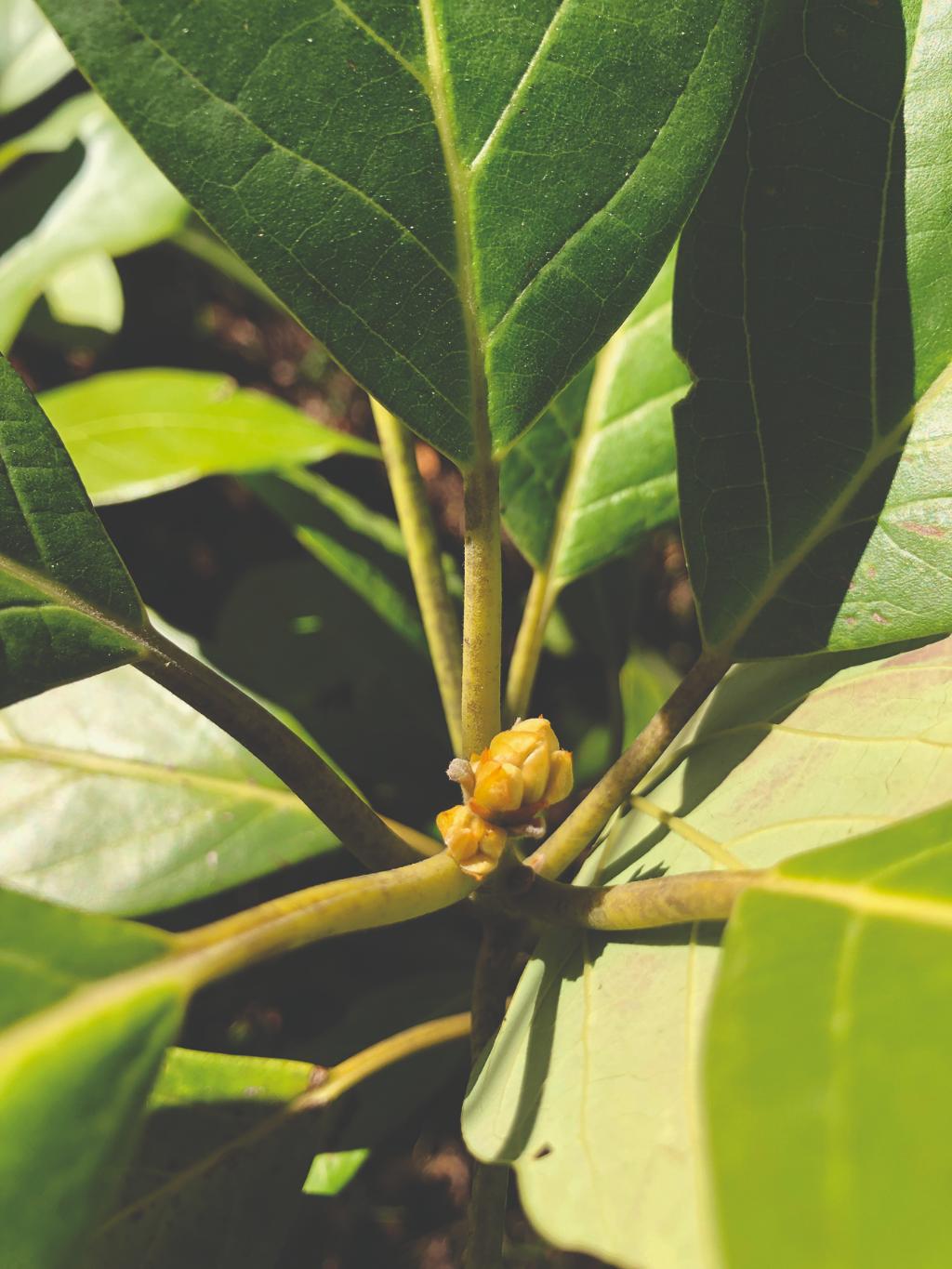
The spring weather has been exceptional. This has meant endless carefree hours outside studying and photographing the various pollinators who are tirelessly collecting from the blossoms. Their work prepares the fruit of upcoming months, which will include, I hope, avocados from our one and only avocado tree. I grew this rather imposing specimen from a stone, kept it in the greenhouse for almost five years and then we planted it on the land where, to my elation and amazement, it has grown taller than a two-storey building and flourishes. In October, it delivers us deliciously creamy avocados.
As I write, the tree is bursting with blossoms and colonies of noisy insects. These include, but not exclusively, several varieties of bees. Before I grew ‘my’ tree, I had never seen one in delicate flower.
I’d come across the trees in tropical climates such as South Africa where they reach monster heights, bearing so many fruits that many are left to fall and rot. I didn’t expect ours to survive, let alone bear fruit..
LESSONS IN CULTIVATION
When I was a girl, my mother showed me how to put an avocado stone into a glass with water and wait for it to sprout roots. It was an excellent lesson to show that food does not come from shops. However, I never succeeded in producing even a shoot from those stones let alone a tree.
Last year, we had a young South African who came to help on the land. His father owns a massive avocado plantation outside Limpopo. He was surprised to see our tree and he taught me a great deal about the cultivation of the fruits. He mentioned to my husband that his family also farm macadamias. Michel, who is nut crazy – we have crates of home-produced, harvested almonds, walnuts and hazelnuts – rushed to our local nursery to order six macadamia saplings. They are in our greenhouse waiting to be planted. I have no idea whether we will succeed with them. It seems a far stretch. Their habitat is subtropical rainforest. If we do, we will be the only olive farm growing these white-blossomed exotics on the French Riviera!
Macadamias are native to Australia, which today is a massive producer of our speciality: olives and olive oil.
Here along our French Mediterranean coast, the mimosa, which also hails from Australia, was introduced to the south of France by the British in the late 19th century. They erroneously believed the plant would ward off mosquitoes and so planted the sublime yellow-flowering trees all around the vicinity of Cannes. The mimosas spread. Forests grew. For many years they were considered an invasive nuisance; now they are a splendid tourist attraction.
LIKE SITTING ON THE SUN
In February, when the mimosa is in blossom, the hillsides are transformed into egg-yolk yellow forests. Climb up to the village of Tanneron and enjoy a mimosa cocktail while lingering over stunning views down to the sea. It is like sitting on the sun.
Now in April, on our terrace, we sip our apéritifs, watching the sun set on the blossoms of nectarines, oranges, peaches, plums. Michel, at my side, is cracking open the furry green skins of last year’s almonds. Next year, he muses, it’ll be Olive Farm macadamias. “Cheers,” I say. “We can dream.”
Carol Drinkwater is an award-winning actress and author. Her latest novel is One Summer in Provence.
From France Today Magazine
Your email address will not be published. Required fields are marked *
