

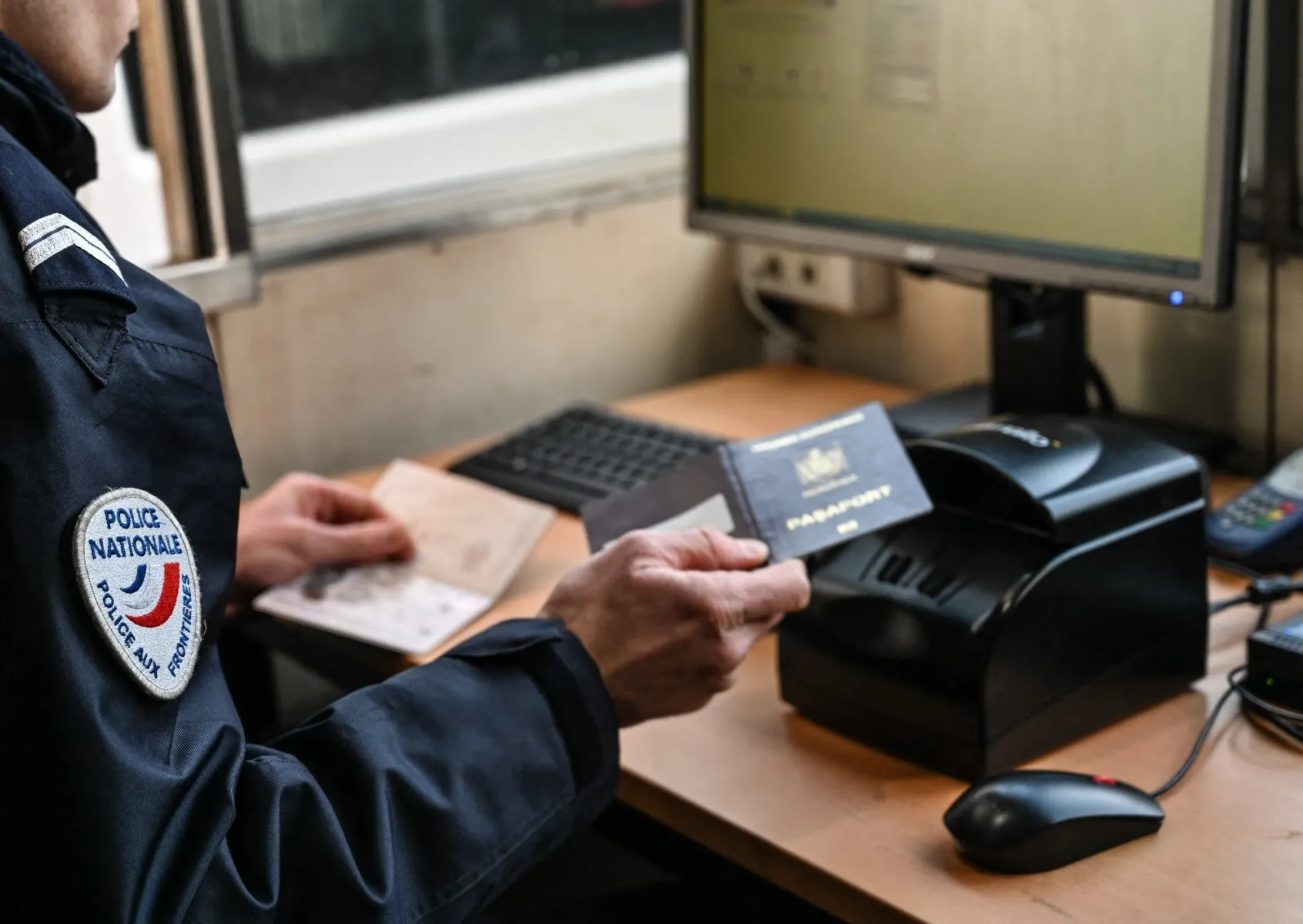
France refused entry to 200 British citizens in 2025, latest EU data shows, with most refused because they either did not have the correct paperwork or had previously over-stayed the 90-day limit.
Last year France was the EU country that refused entry to the highest number of Brits, with 200 UK citizens turned back at the border, according to the latest Eurostat figures.
The EU data shows an increase in the number of non-EU citizens being barred entry to EU countries, likely linked to the start of the EES biometric passport checks.
In 2025, 132,600 non-EU citizens were refused entry at the EU external borders, 7 percent more than in 2024, the EU statistical office Eurostat has reported.
The largest groups by nationality who were denied entry were Ukrainians (27,000), Albanians, Moldovans, Colombians, Turkish and Serbians – most of whom were attempting to cross a land border into the EU.
But among the numbers, Brits make up a small but significant minority – in total, in 2025, 1,240 UK nationals were barred from entering the EU, along with 965 US citizens.
France barred the highest number of UK entries – 200 – followed by the Netherlands (125), Italy and Poland (80 each). UK nationals made up the largest group denied entry to Malta.
The main reason for refusing access to the EU was that the “purpose and conditions of stay” was “not justified”.
The second most common reason was for having already stayed 3 months within a 6-month period, as set out under the Schengen 90-day rules.
READ ALSO: How does the 90-day rule work in France?
Other less common reasons for being refused entry included people having “no valid visa or residence permit”, a police alert having been issued against individuals and those who simply had no valid travel document.
The data does not break down the most common reasons for refusal of entry to Brits into France, but the 90-day rule was likely the major factor.
Brits benefit from the ‘Schengen rule’, which allows visa-free entry into France and stays of up to 90 days every 180 days. Brits are therefore unlikely to be barred from entry for not having a visa, but people who have overstayed their 90-day allowance can be barred from re-entry.
READ ALSO: EES and ETIAS: The big changes for travel to and from France in 2026
France had previously earned itself a reputation for being one of the more relaxed countries when it came to 90-day rule enforcement, but since Brexit, the rules have been tightened up and Brits who are second-home owners or regular visitors need to keep a careful track of their days.
READ ALSO: CALCULATOR: How to work out your 90-day allowance in France
An overstay of the 90-day allowance is most commonly detected when people leave the country, and penalties include a fine and a ban on re-entry for a period of between 90 days or, in cases of serious breaches, up to five years.
The introduction of the EES biometric passport checks – although it has not been fully introduced in France yet – means that overstaying will become much easier to detect.
Brits will also be affected by the introduction of the ETIAS visa waiver, which means that people who don’t have a residency permit or visa will have to complete the online visa waiver known as ETIAS in advance of travel. It is currently scheduled to be introduced in the second half of 2026, although the exact start date is still to be confirmed.
With reporting from Europe Street‘s Claudia Delpero
