

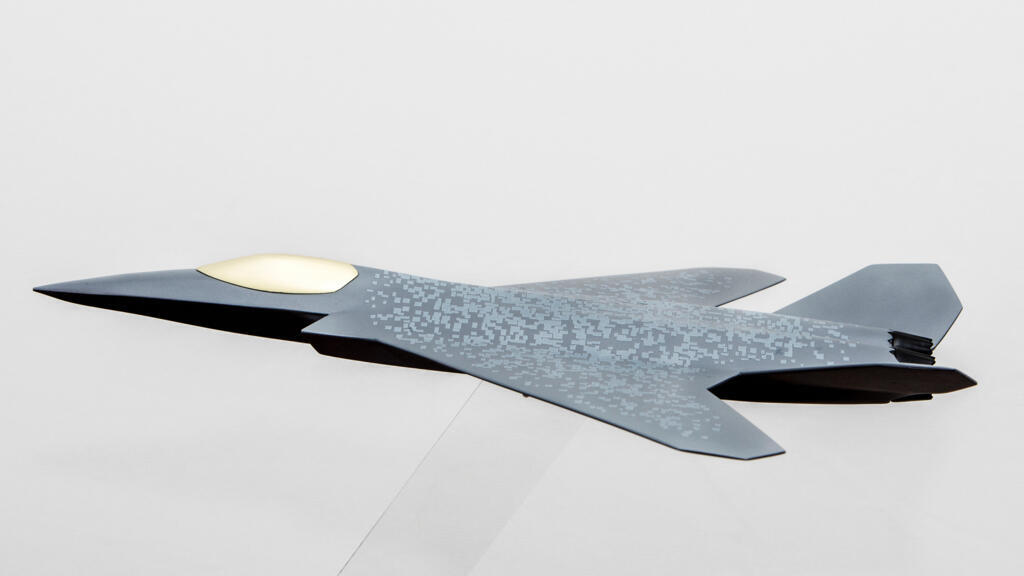
Germany and France have indicated different timelines for the future of their joint next-generation fighter jet programme, casting fresh doubt over Europe’s largest defence initiative.
Issued on:
1 min Reading time
The disagreement centres on the FCAS (Future Combat Air System), a €100 billion programme developed with Spain to build a next-generation fighter aircraft, drones, and a shared digital combat network.
The project was already under strain due to disputes between France’s Dassault Aviation and the Franco-German aerospace partnership involving Airbus SE, which represents both Germany and Spain in the programme.
German Defence Minister Boris Pistorius said he expects leaders to make a decision “this week,” stressing that the final call rests with heads of state, including Germany’s Chancellor Friedrich Merz and France’s President Emmanuel Macron, who are attending the EU Council summit in Cyprus on 23-24 April.
However, French defence minister Catherine Vautrin indicated that there would be a delay, saying mediators had requested more time beyond an earlier deadline of 18 April, extending discussions by around 10 more days.
German newspaper Handelsblatt reported that Germany and France had tasked the former head of tank manufacturer KMW (now KNDS,) Frank Haun, and Laurent Collet-Billon, former head of France’s defence procurement agency DGA at the end of March to find ways of salvaging the project.
As Europe pours money into defence, reliance on US remains a sticking point
Their talks with the industrial players are focused on three axes: intellectual property, work share, and export rights.
But according to Handelsblatt, the two negotiators could not reach an agreement and even produced two different reports. Investment advisors Delfineo added that the CEOs of Airbus Defence & Space and Dassault Aviation “haven’t spoken to each other for months”.
While the programme officially aims to develop a fully integrated air combat system, insiders suggest a possible compromise could see cooperation continue on drones and digital systems, while the core fighter jet component may be scaled back or restructured.
That potential shift would be politically sensitive for Paris, where the project is seen as a flagship of European defence integration.
The wider industrial ecosystem also includes key players such as Safran SA and US-based RTX Corporation, which are linked to various technology components in the broader aerospace sector.
(With newswires)
