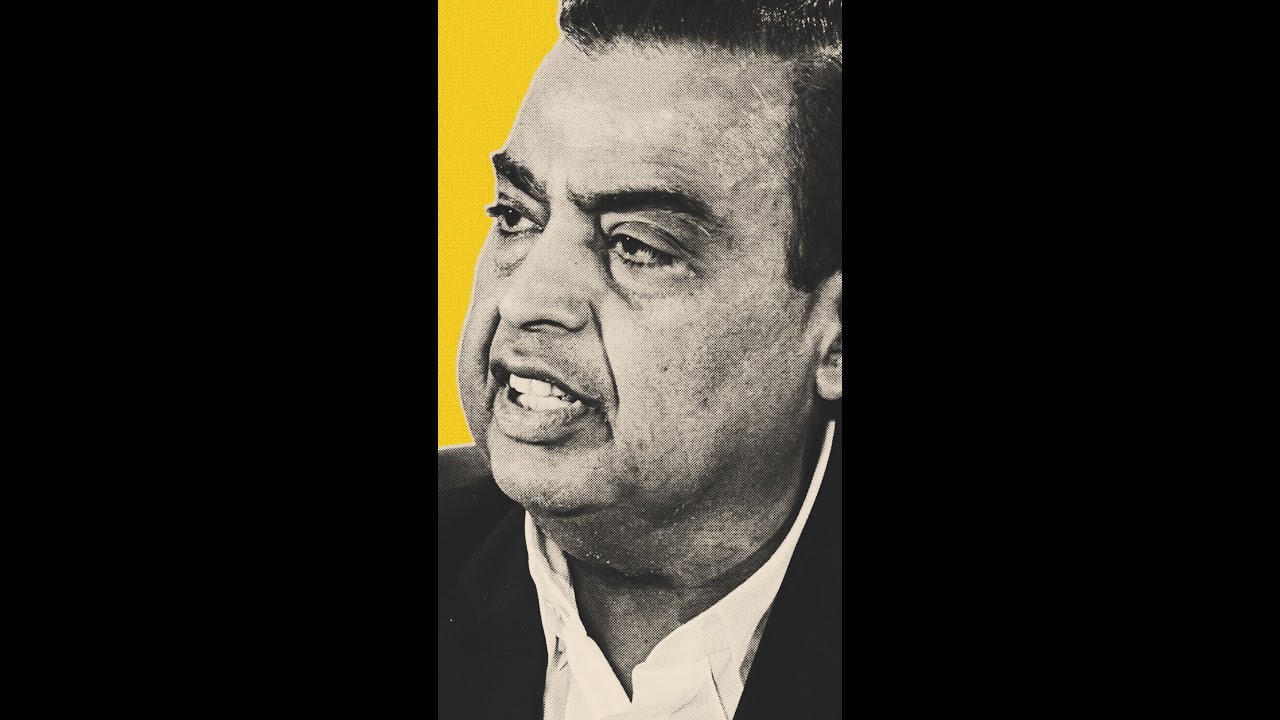
This interview provides an in-depth look at Meridiam’s strategy, operational practices, and commitment to sustainability. Fadi Selwan, Deputy CEO, outlines the core pillars of his role, which range from asset management to overseeing ESG and human resources teams. He discusses the firm’s focus on long-term value creation, stakeholder engagement, and strict adherence to environmental and social standards. Through concrete examples, he illustrates how Meridiam balances financial performance with a positive, lasting impact on local communities and the climate.
How would you describe your role as Deputy CEO at Meridiam?
My role at Meridiam rests upon three pillars. The first concerns the management and coordination of our assets. Today, our portfolio comprises approximately 130 assets, primarily distributed across three major regions.
The second focus consists of supervising the ESG and Hub teams. The ESG team measures the impact of our projects, an approach deeply rooted in Meridiam’s DNA. We ensure that our actions have a real, local impact on populations and the planet. This is key, and without this, projects would not be taken forward. The Hub, meanwhile, centralizes the reports and analyses that we transmit quarterly reports to our investors. These two teams work in close relation.
Finally, the third focus centers on human resources. The objective is to support the upskilling of our teams and our managers in order to reinforce their autonomy and expertise.
In parallel, I participate in investment committees, both for new projects and the existing portfolio. This transversality enables me to guarantee the monitoring of our strategy and provide a global vision, whilst supporting our teams in their development.
What sets Meridiam apart from other players in the infrastructure and energy transition sector?
What distinguishes Meridiam is our vision as a very long-term investor. Rather than reasoning on a 5 or 10-year scale, we project ourselves over several decades. We support our assets from their inception until the end of the concession contract. This long term immersion enables us to guarantee efficient management and a positive, sustainable impact for the regions.
Right from the outset, we integrate Meridiam’s core mission to ensure that each asset meets our ESG and environmental requirements, whilst guaranteeing financial viability. We conceive and manage our projects with this global approach in mind.
This long-term commitment precludes any rush. We apply strict criteria regarding corporate social responsibility (CSR), the climate, and relations with all stakeholders. This is the essential condition for building sound, profitable relationships with everyone, from local populations to public decision-makers.
What are the main strategic orientations that guide Meridiam today—geographical zones, sectors, types of projects—and how do these translate concretely into your achievements?
Our activities are distributed across three major geographical zones: the Americas, notably North America and some projects in Latin America such as in Chile; Europe, including the Middle East and neighbouring countries; and Africa. To guarantee local management, we have local teams and offices in these various regions. This prevents us from piloting projects from Paris and allows us to better understand the reality on the ground and the expectations of the local populations.
Our preferred sectors are mobility, including rail, road and port infrastructures, public services, and low-carbon solutions.
Our approach requires that each project meets the real needs of communities. If a project is isolated from its environment, it would not meet our DNA and thus would not be implemented. We seek to create a positive, sustainable impact.
As an example, during the 2023 earthquake on the Turkish-Syrian border, our hospitals built to resist this type of catastrophe, such as those in Gaziantep and Adana in Turkey, remained operational. They allowed us to provide direct support to the affected populations, notably by distributing tents and food produced by our canteens.
Our commitment to sustainable and local development is demonstrated through major projects such as in Gabon and French Guiana, where we fully integrate the needs of the populations and environmental requirements. In Gabon, the Kinguélé Aval hydroelectric dam project is a striking example of our desire to diversify and secure access to electricity whilst boosting the local economy. This infrastructure is set to provide thirteen per cent of Libreville’s electricity. However, beyond the beneficial effects for the inhabitants of the capital, we ensure that the populations directly affected by the dam understand the positive impact of the project. Thus, we have accompanied the people who were impacted, we have built infrastructure such as schools, gave them access to electricity, and we managed to recruit and train unemployed individuals during construction and operation. All of this contributes to high acceptance of the project by the local populations.
In French Guiana, another example illustrates our approach with a non-polluting electricity production and hydrogen storage project, situated in a relatively unspoilt area near a village. Here again, we held extensive discussions to present the project and ensure that the living conditions of the populations were not negatively impacted. The ESG component of all our projects is a cardinal axis. Without the acceptance of the populations, we do not commit.
How do you manage the strategic and operational coordination of portfolio assets on a daily basis to ensure long-term performance, social impact, and sustainability?
To ensure our assets maintain their long-term performance, we run continuous and rigorous monitoring on the ground. Through our Hub and our dedicated Meridiam project leaders, we collect and analyze financial, operational, and ESG data on a quarterly basis. This enables us to detect any discrepancies early and support local management in reaching our objectives.
Our on-site teams act as true partners, collaborating closely with public stakeholders and local communities to ensure the infrastructure continues to serve its purpose effectively. By aligning our operational priorities with our core sustainability and ESG targets, we guarantee that the social and environmental commitments made at the outset remain the driving force throughout the life of the asset.
What are the main challenges you face in integrating ESG criteria into the operational management of projects, and how does your team address them?
Beyond the elements already mentioned, I would like to highlight that when we work on a new project, we list precisely all the environmental impacts that will be generated. We never select a project that does not meet all of our ESG criteria. Once a project is selected, alongside the ESG teams, we ensure we have addressed all points before finalizing our offer. The project leaders are in continuous contact with the ESG teams and regularly upgrade our offer towards the most advantageous.
Meridiam was developed around the idea that fully integrating CSR elements is not an extra cost, but constitutes a genuine opportunity. Anticipating every detail allows us to make long-term savings and benefits both the populations and the environment.
Are current geopolitical events having an impact on Meridiam’s activities? Will defence-related operations become part of Meridiam’s scope of business?
The geopolitical impacts exist, particularly through the fluctuation of energy prices such as fuel. However, our projects are long-term, which allows us to weather temporary crises. To date, we have not suffered any major shock to our assets, apart from a slight increase in the cost of materials. Our contracts and financing structures offer us good protection against inflation, and all our assets continue to progress as planned.
Even during geopolitical tensions, our projects remain essential for the countries concerned. For example, the war in Iran has not fundamentally affected our assets in Jordan. We have certainly noted a temporary drop in passenger traffic at the airport, but this remains occasional, similar to the COVID crisis and led to a 40% drop before the situation recovered. For the moment, the impact remains limited as our infrastructure meets vital needs.
Regarding the defense sector, we have strict limits: we do not invest in weaponry. On the other hand, real estate or operational infrastructure, such as the construction of barracks or ministerial buildings, falls within our scope of action. We support the public sector via private financing for the creation of useful infrastructure for people, with no connection to offensive military activities.
What will the infrastructure sector look like in 20 years, in your opinion?
In my opinion, projects that overlook climate impact will no longer see the light of day. Project commissioners and investors are increasingly aware that the impact must be positive for both populations and the climate. New infrastructures must be transparent on this matter, especially as banks and investors no longer support projects that lack economic or climatic sense.
This philosophy is intrinsic to the creation of Meridiam, and our CSR monitoring is conducted with particular regard to temperature impact. At COP21, it was agreed that we must follow a trajectory aimed at limiting warming to below 2 degrees Celsius.
All of our funds are analyzed on a quarterly basis, and we are committed to ensuring that all our investments respect a global trajectory of less than 2 degrees. To achieve this, we adopt a balancing approach: if an essential infrastructure project, such as an airport or a road, has a higher carbon footprint, we balance it within the same fund by investing in much greener projects, such as green hydrogen or solar energy, while focusing on reducing the CO2 emissions on all our assets based on a continuous monitoring and action plan implementation.
This method allows us to meet countries’ essential transport needs while maintaining our overall temperature reduction target and limiting the use of fossil fuels.