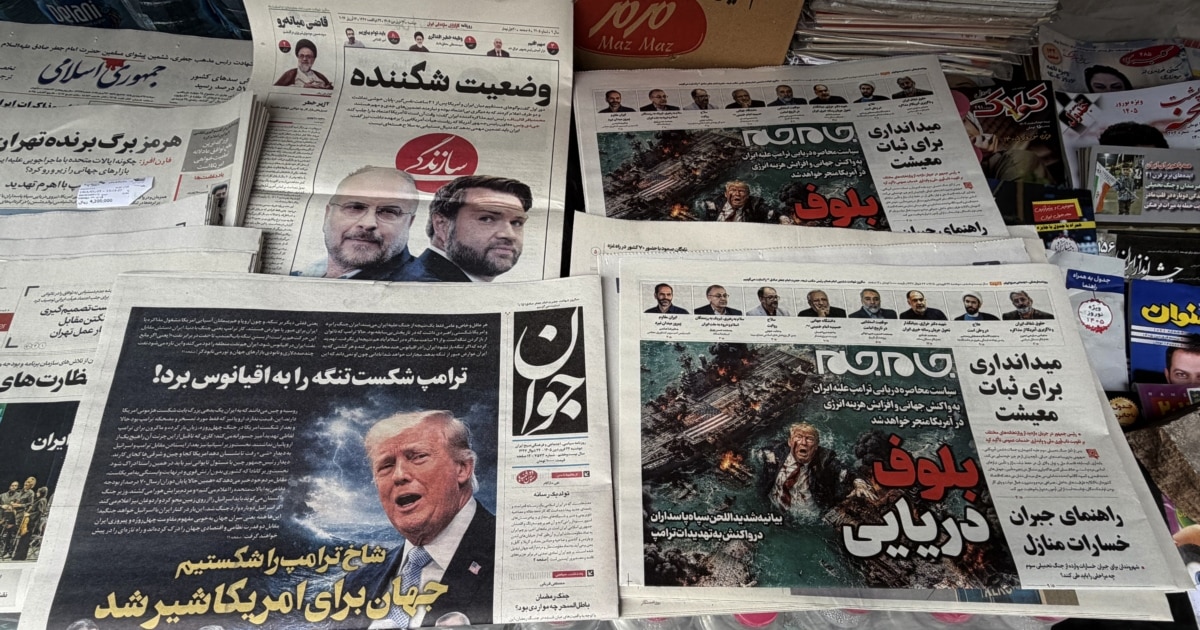
WASHINGTON — A series of conflicting signals from Tehran and Washington has highlighted the fluid status of ongoing US-Iran negotiations. Following a weekend of heightened speculation, the prospects for a diplomatic framework remain under close scrutiny by global markets and regional allies.
To break down the strategic calculations, political pressures, and maritime realities on the ground, RFE/RL spoke with former US Ambassador Christopher Henzel. A seasoned diplomat with decades of Middle East policy experience, Henzel previously served at the State Department’s Iran desk, as director of the Office of Israel and Palestinian Affairs, and led US missions as chief of mission to Yemen and in Saudi Arabia during the first Trump administration.
RFE/RL: Let’s dive straight into the diplomacy. Ambassador, you’ve spent years analyzing the inner workings of Iranian diplomacy, both at the State Department’s Iran desk and on the ground in the region. We are hearing conflicting reports. To clear the air from your perspective: Do we actually have a deal on the table right now, or are we looking at a tentative, fragile framework that could fall apart tomorrow?
Christopher Henzel: It’s clear that there is not a finished, fully agreed agreement. In fact, both parties have said that, and we should keep in mind that over the last several months, we’ve had several points where it’s been claimed that an agreement was close only for the negotiations to take a couple of steps backward again. It seems like over the weekend there was a lot of optimism about an agreement — I think that was driven by one of President [Donald] Trump’s social media posts — but that’s been walked back by both parties since then.
I think the latest out of both sides is Secretary [of State Marco] Rubio saying that there was still some language to be worked out. The Iranian side made a statement earlier today saying that there is no agreement yet, confirming that — so there’s more to be done. It’s hard for us on the outside to know exactly what’s going on inside, but we can make some educated guesses about it.
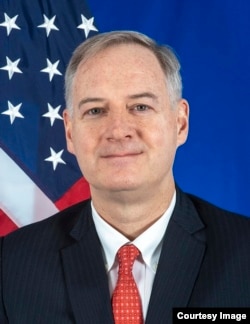
Christopher Henzel
RFE/RL: Every diplomatic breakthrough requires a trade-off. What exactly are both sides giving up in exchange for this peace framework and, realistically, what do they get in return?
Henzel: The way to think of it is there’s been deadlock in the negotiations for months now, yet at this point there seems to be a bit more optimism, and so one has to ask: What has changed in the situation, or in the calculations of the two sides?
The way I think of it is each side has its priorities, so they both have long lists of demands, but I think the priority for the Trump administration now is getting the Strait of Hormuz open again, because I think the Trump administration is feeling some pressure from the current situation. Gasoline prices are going up in the US; it’s something that’s politically sensitive, and there is increasing anti-war sentiment among a part of President Trump’s own base.
There’s really a split in the base now between supporting the war and those opposed to it. So that’s having both political and economic pressure on President Trump. We even saw some talk about a War Powers Resolution in the US Congress that was delayed by the Republican leadership, but that might come back, and that would be another pressure on the administration.
On the Iranian side, they are also feeling some pressure, although it’s again harder as outsiders to understand what pressures the Iranians face. I’m sure a very important one is the US blockade of Iranian ports, making it impossible for much of Iran’s oil exports to get to market, so they must be feeling the loss of that revenue that’s compounding a deep economic crisis that was under way in Iran even before this conflict started. What other pressures the Iranian leadership might be facing, I don’t know, and it’s hard to tell which side feels more pressure.
But I think [for] both sides, the issue they want to deal with first is oil, and if they can each get the oil flowing, then I think they’ll feel like they have some time to work more slowly on some of the other issues now. Also, another point of pressure on President Trump: There’s a hawkish element in the Republican Party that does not want to see an agreement, you know, anything short of almost complete surrender on the Iranian side, so he’s got to deal with that faction as well.
Red Flags In Washington
RFE/RL: Some of President Trump’s most prominent allies — including Senators [Lindsey] Graham and [Ted] Cruz — are waving red flags. They warn that this deal risks leaving Iran flush with cash and holding permanent leverage over Hormuz. Are they misreading the room, or is that a valid national-security blind spot? And if they continue to push back, does Congress realistically have the legislative teeth to block or completely dismantle this agreement?
Henzel: Well, yeah, I think the senators you mentioned, and others like them, they are spokesmen for and reflective of the strong supporters of Israel inside the US and the US political system, because I think Israel has similar reservations about the sort of peace deal that was rumored to be taking shape this weekend. Again, none of us on the outside know for sure what it is, but when you see the leaks from both sides, you can get an idea roughly of what they’re working on.
I think Israel and its supporters in the US, at least when this conflict started, imagined they could bring about regime change. I think the clerical regime in Tehran has shown that that’s not such a simple enterprise. I think they want to see Iran give up not only control of the strait, but also, you know, its nuclear reproductive processing capabilities right up front before anything else is given to them, and they don’t want to see the Iranians get any of their frozen assets back. This is really a recipe, in my view, that can only come about with the resumption of all-out war again, which I think is becoming increasingly unpopular in the United States.
Something we should keep in mind is that this is not just a negotiation between the United States and Iran; Israel is going to be looking over the president’s shoulder, and will probably have a say, and certainly wants to have a say in a lot of this. Whether he would split with them over this would be a very important political decision.
RFE/RL: That brings us to the core issue of trust. Given your deep history tracking Iranian commitments, can a regime that has historically advanced its nuclear ambitions under the radar truly be trusted to comply with this new arrangement?
Henzel: Well, I think that’s not as dangerous a problem as it was before this conflict. You know, personally, I think this conflict was largely a mistake, the way it was started, but in any case, it’s happened, but it has shown that the United States and Israel do have the capacity to destroy all known Iranian nuclear facilities — they claim to have done that, or at least to obstruct them.
So with these facilities under constant observation from overhead from satellites and by other means, it seems to me that if the Iranians broke an agreement and started reprocessing, there would always be the option for the US and Israel to repeat what they did over the last couple of months. So, of course, there’s always the danger of some highly clandestine nuclear program, but I think Iran’s whatever progress it had toward a military nuclear program has been knocked back significantly now.
And then remember, while the old nuclear agreement, the JCPOA (Joint Comprehensive Plan of Action), was in place, there were international organizations observing all of Iran’s known nuclear facilities and nuclear processes, so that was an aspect of the agreement that could be relied on.
Risk Of Legitimizing The Regime
RFE/RL: Going back to how this plays out inside Iran: Does an agreement like this ultimately weaken the hard-liners by forcing them to compromise, or does the injection of sanctions relief politically supercharge and legitimize the regime?
Henzel: I think any deal that is satisfactory to the leadership on both sides can be sold to the populations back home as a success. Both sides would likely come away from an agreement claiming they have succeeded, and each will point to the aspects of the agreement that benefit that side as a great victory, and ignore the aspects that are concessions to the other side. President Trump is certainly very good at doing that.
I think if the straits were opened and gas prices eventually went down, and there were no more military activity, I think the American public would probably be happy with that. You know, Trump’s critics would complain about any sanctions relief or return of frozen assets, but I don’t think the average American is going to care much about that.
Similarly, on the Iranian side, the regime will be able to claim this was an attempt to overthrow the regime, and the regime resisted, therefore we are victorious, and we’ve obtained whatever sanctions relief. They’ll point to all that as a victory. So, I think selling an agreement to the broader populace is something that both sides can do. It’s rather on both sides you have elite elements that are seeking a more hard-line deal. Those are going to be the real challenges to overcome.
RFE/RL: What impact does the latest US attack on Iran have on things?
Henzel: It will reinforce the Trump administration’s bargaining position, showing the US is ready to enforce its blockade with limited force.