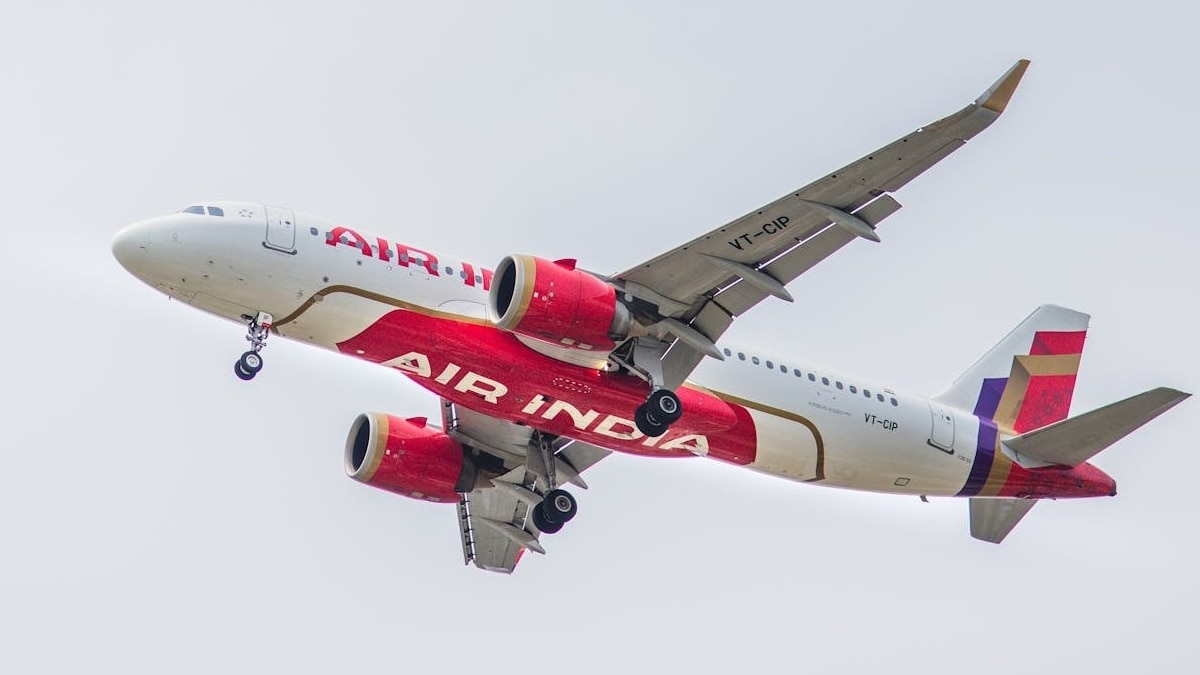
The death of two commercial pilots recently due to cardiac arrest has brought to the fore the fatigue rules for Indian pilots and the delayed implementation of the Flight Duty Time Limitation (FDTL), a major passenger safety concern.
Capt. Tarundeep Singh, 40, of Air India, was found dead in a hotel room in Bali on April 29, 2026, during his scheduled crew rest after the Delhi–Denpasar flight. The very next day, Capt. Arjun Naidu, 44, of Akasa Air, died during a training session in Bengaluru. There have been similar incidents in the past, raising concerns around stress and health parameters of pilots.
The All India Pilot Association (ALPA) has written to the Directorate General of Civil Aviation (DGCA), flagging fatigue as a critical safety concern. It questioned the continued delay in implementing the revised Flight Duty Time Limitations (FDTL) framework that regulates pilot working hours and rest.
What does the pilot fatigue report say?
The 2025 fatigue-report data filed by each airline operator shows that the country’s two largest airlines have the worst records.
Air India received 1,578 fatigue reports from its pilots in 2025 and rejected 860 of them — a 54.5% rejection rate. IndiGo received 8,721 reports and rejected 8,449 — a 96.9% rejection rate, as per data from the Safety Matters Foundation.
Air India Express — the short-haul subsidiary of the same Tata-owned parent — accepted every single one of the 278 fatigue reports its pilots filed in 2025.
Air India and its low-cost arm, Air India Express, have 6,350 and 1,592 pilots, respectively. IndiGo has 5,058 pilots. The number of pilots at Akasa is 466 and at SpiceJet, it is 385, according to government data collated till December 2025.
“The same Indian pilot training pipeline. The same Class 1 medical standards. The same DGCA. The acceptance rate ranges from 0% rejection to 96.9% rejection depending on which operator the pilot happens to fly for. The data are more consistent with operator-level screening, rejection, or under-reporting effects than with a true absence of fatigue,” says Amit Singh, a commercial pilot and founder, Safety Matters Foundation.
MUST READ: Summer travel boost: How are IndiGo, AI Express ramping up international operations?
What is the pilot fatigue policy?
In Air India’s case, the policy has a defined mechanism. Since September 2024, a pilot’s fatigue report is initially marked as sick leave on the crew portal. If the Fatigue Committee subsequently rejects the report, the entry remains classified as sick leave.
“An Air India narrow-body pilot has six sick days a year. Two or three rejected fatigue reports exhaust the entire annual entitlement. Pilots learn the policy. They file fewer reports. The non-punitive principle that the DGCA’s own Civil Aviation Requirement enshrines is, under this mechanism, materially difficult to defend,” explains Singh.
The IndiGo column header, reproduced verbatim from the operator’s own statutory submission, classifies the rejected reports as “Fatigue Reports Rejected (Perceived).” The operator’s framing, in a regulatory filing, is that pilot fatigue is imagined ninety-seven per cent of the time, he added.
What does global policy say?
The DGCA Civil Aviation Requirement (CAR) permits a pilot to be rostered for up to 60 hours of duty in any 7 consecutive days.
The World Health Organization and the International Labour Organization, in their May 2021 joint estimate of the work-related burden of disease, found that working 55 or more hours per week is associated with a 35% higher risk of stroke and a 17% higher risk of dying from ischemic heart disease.
ICAO Annex 6, Part 1, Standard 4.10.6 requires that prescriptive duty-time limits be based on scientific principles and knowledge. The international scientific consensus on the maximum Flight Duty Period for night-encroaching duty — established by the 2008 EASA-commissioned Moebus Report, confirmed by EASA’s 2018 effectiveness review, and reinforced by the NASA Ames Fatigue Countermeasures Group — is 10 hours.