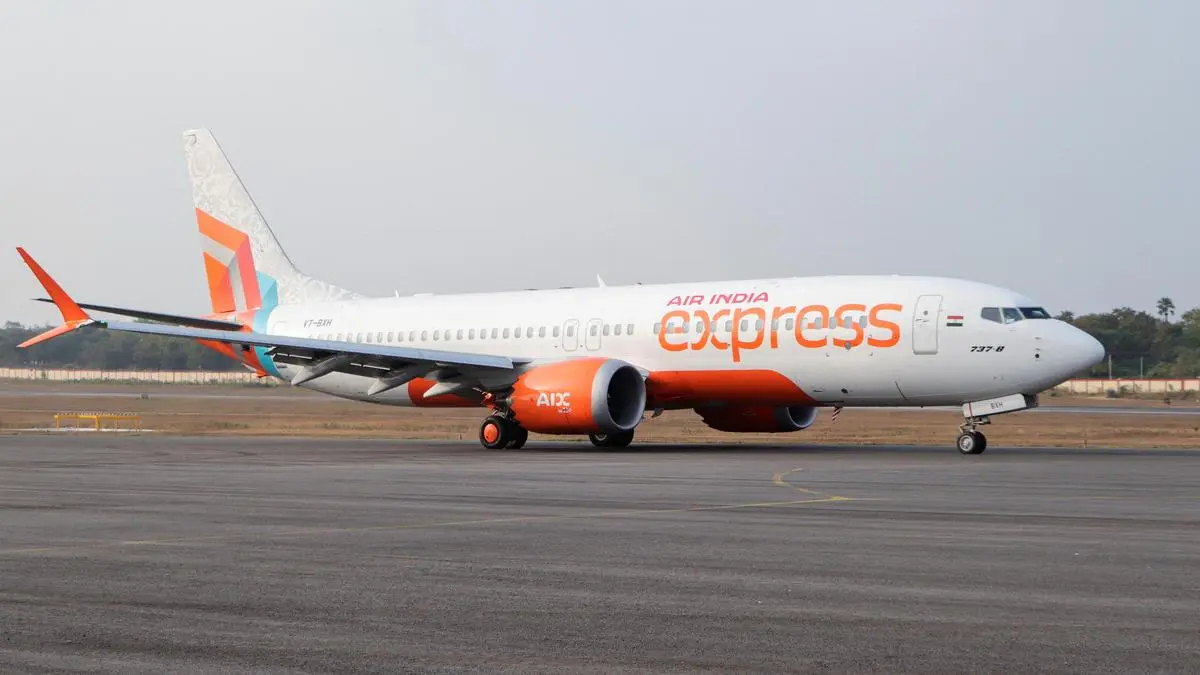
After the review, these numbers will be presented to the Air India Board on May 7.
| Photo Credit:
STRINGER
Tata Group-owned low-cost carrier Air India Express is expected to report a loss of around Rs 3,500 crore for FY26, industry insiders familiar with the matter told businessline.
However, when approached for comment, Air India Express did not respond.
According to sources, the Board of Air India Express is expected to review the financial performance and broader business strategy during its scheduled meeting on April 30.
After the review, these numbers will be presented to the Air India Board on May 7.
Notably, the airline had reported an estimated loss of around ₹5,000 crore in FY25.
Speaking to businessline, sources indicated that losses are estimated to have declined by nearly 35 per cent year-on-year, driven by stronger revenue growth and tighter cost management measures.
The reported loss represents a reduction of at least ₹2,000 crore in annual losses.
Nonetheless, elevated aviation turbine fuel prices, rupee depreciation, and increased operating expenditure across multiple segments continued to weigh on margins.
Geopolitical instability
Meanwhile, continued geopolitical instability in West Asia during the second half of the fiscal disrupted operations and increased costs linked to route diversions and longer flying durations.
The airline’s Middle East operations were especially hit. The airline is India’s largest operator of flights to the region.
Revenue is understood to have risen by nearly 18 per cent during the fiscal, driven by sustained passenger demand, network expansion, and improved utilisation across domestic and international operations.
Industry observers said operational adjustments and selective deployment of capacity have helped the airline manage margins more effectively despite a challenging environment.
The airline remains in an expansion phase, with sources pointing to the ongoing induction of aircraft, recruitment of pilots and cabin crew, and investment in supporting infrastructure.
These initiatives have added to expenditure but are seen as critical to strengthening long-term growth and market presence.
Other industry executives noted that the carrier has continued restructuring its network through route optimisation and targeted capacity deployment across key markets.
The airline has also been aligning commercial and operational functions with parent company Air India to improve coordination across scheduling, fleet planning, and revenue management.
Sources said the Board of Air India Express is expected to review the financial performance and broader business strategy during its scheduled meeting on April 30.
While near-term profitability remains under pressure, industry observers expect performance to improve over the medium term as regional geopolitical conditions stabilise and demand for West Asian routes strengthens.
The airline’s long-term strategy remains focused on strengthening its position in the value-carrier segment while improving unit economics through disciplined expenditure control and better aircraft utilisation.
Earlier this year, the airline stated that it expects to achieve operating profitability in the second half of FY27 through stronger operational performance and tighter cost management.
Additionally, the carrier is phasing out older leased aircraft and increasing the induction of fuel-efficient Boeing 737 MAX aircraft to improve operating efficiency and support future network growth.
Published on April 29, 2026