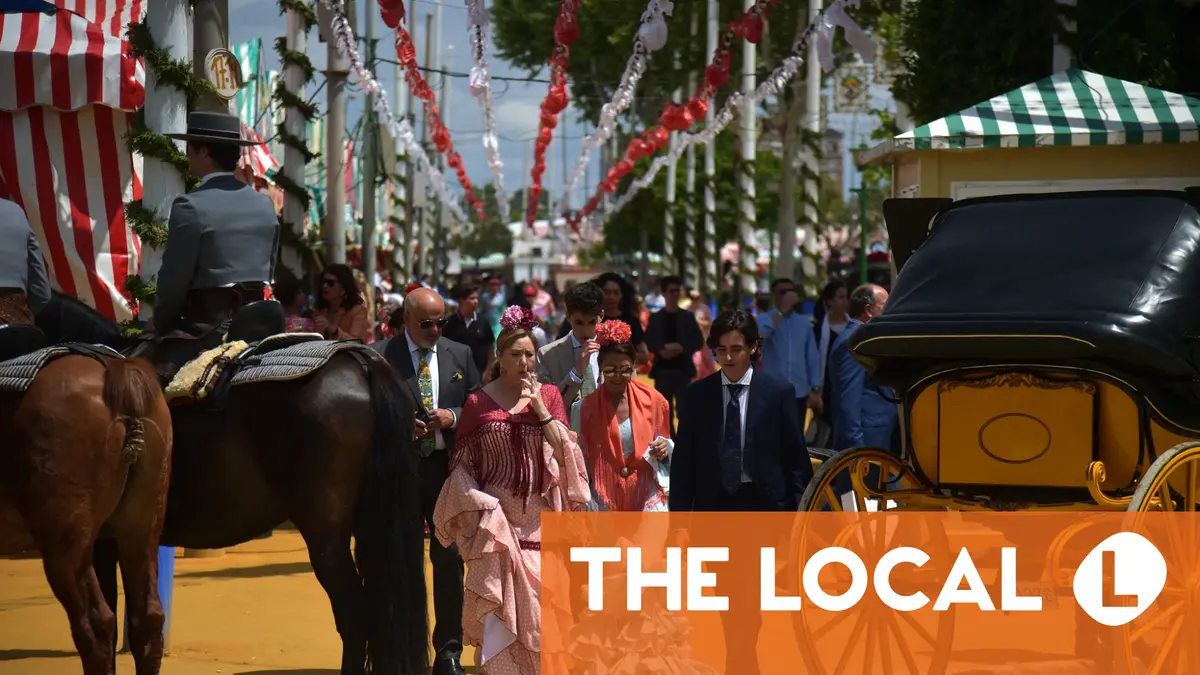
As Seville prepares to celebrate its famed April Fair, here’s everything you need to know about one of the Andalusian capital’s most important festivals.
If there’s a festival that encapsulates Andalusian flamboyance, that’s Seville’s Feria de Abril, with its bunting, horses, marquees and of course traditional flamenco trajes (dresses).
Feria, as you might have guessed, means fair in English and is a week-long event celebrated at a different time of year for each city and town, primarily in Andalusia.
Advertisement
Most of these fairs are typically celebrated during the spring or autumn, but there are some in the summer. If you’re familiar with the American or British concept of a fair: junk food, roller-coasters, games and booze, you’ll find the Spanish version not much different.
Like all festivals in Spain though, they are steeped in tradition. And Seville’s April Fair is considered the classiest of all.
So whether you’re planning to attend or have accidentally stumbled upon Seville’s feria, here’s a quick guide for 2026.
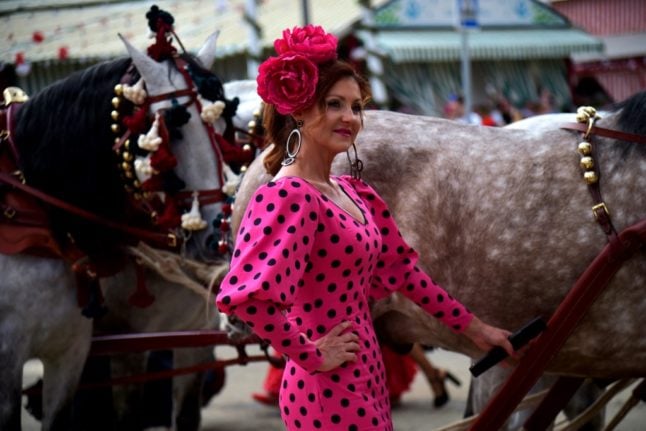 A woman in typical Sevillian attire poses next to horses during the ‘Feria de Abril’ in Seville. Photo: CRISTINA QUICLER / AFP
Seville’s 2026 April Fair
This year’s celebration will run from Monday April 20th to Sunday April 26th and will house over 1,000 casetas or marquees.
Held in Seville neighbourhood of Los Remedios, it will encompass several different, all named after famous bullfighters. It’s best to either take a taxi or public transport as parking in the area is challenging.
Spain’s State Meteorological Agency AEMET has predicted stable and dry weather for most of the week with no rainfall. The temperature could reach between 31 and 34C at the start of the week, which considerably high for April. Thankfully, it will cool to around 27-28C for the rest of the week.
The casetas contain bars where food and drinks are served, a dance floor and tables. There are no entrance restrictions or fees, anyone can enter the fairgrounds, but not everyone can enter each caseta. That’s because most casetas at the Seville Feria are privately owned, as in purchased by families, social groups and businesses who have restricted their casetas to respective members.
For this reason, most Andalusians will tell you that “Feria de Sevilla es para los Sevillanos“, (the Seville fair is for locals).
However, there are numerous public casetas that anyone can go to an enjoy and foreigners are welcome.
In 2026, the public casetas at the Seville Fair are Turismo de Sevilla (C/ Pascual Márquez, 225-229), Distrito Nervión – San Pablo – Santa Justa (C/ Costillares, 22-26), Distrito Casco Antiguo (C/ Antonio Bienvenida, 97-101), Distrito Triana – Los Remedios (C/ Pascual Márquez, 153-157: Distrito Triana – Los Remedios), Distrito Este – Cerro – Amate (C/ Pascual Márquez, 215-219), Distrito Macarena – Macarena Norte (C/ Costillares, 13), Distrito Sur – Bellavista – La Palmera (C/ Ignacio Sánchez Mejías, 61-65), PP de Sevilla (C/ Pascual Márquez, 66), La Pecera (C/ Pascual Márquez, 9), CC.OO. Sevilla (C/ Pascual Márquez, 75), UGT (C/ Antonio Bienvenida, 13), USO (C/ Curro Romero, 25), Hermandad de la Estrella (C/ Juan Belmonte, 166) and El Garbanzo Negro (C/ Manolo Vázquez, 39).
To help you get your bearings, the following map can also help:
The Feria de Abril is a spectacle to see regardless of whether you enter a caseta or not, but it’s more fun if you do. Remember again that most cities and large towns in Andalusia celebrate feria, and very few have private casetas, so you have many other options to experience feria if you’re not “well connected” in Seville.
Dress
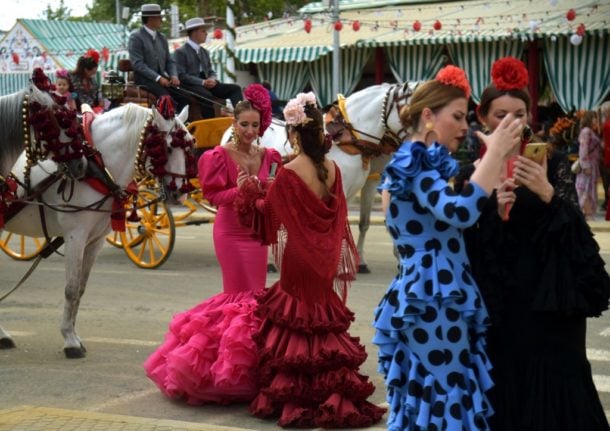 People in typical Sevillian costumes during the ‘Feria de Abril’ festival in Seville. Photo: CRISTINA QUICLER / AFP
So you’ve seen the gorgeous women in the gorgeous dresses and are either thinking (depending on what kind of girl you are) do I have to do all that? Or how do I do that? No, you don’t have to break the bank and buy a €200-€500 traje de flamenco to attend, but the traje is a significant part of the experience.
Yes, the dresses are expensive, but most sevillanas have at least two or three (that they’ve accumulated over the years) and rotate them throughout the week. If you’re a non-native, you might be lucky enough to have friends around your size who will loan you their dresses to wear. You can also hit up Humana (the Goodwill or Salvation Army of Spain) during feria season and you’re bound to find something south of €100.
Advertisement
And don’t forget your complementos. The typical flowers, earrings and bracelets are a must if you’re wearing a traje, but these can be found at any of the bazaars. In many cities, women don’t begin to wear their trajes until after the second or third day of feria.
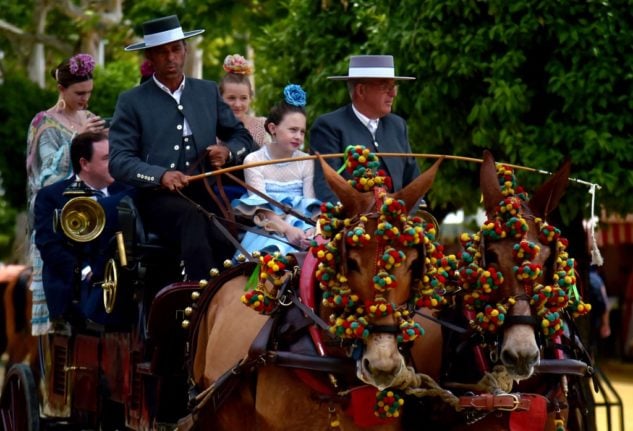 Horses are big protagonists during Seville’s Feria de Abril. Photo: CRISTINA QUICLER / AFP
If you were one of the women who said, “do I have to do all that?” there’s good news: dressy casual attire is also completely appropriate and you’ll blend right in, as half of the women will be wearing the same. In some towns you’ll see the style of dress leaning more towards casual for those who opt not to wear a traje, but dressy casual is a safer option if you’re unsure.
Since much of the walking pathway is dirt, wear heels at your own risk, low wedges or flats are a safer choice since you’ll also be spending many hours on your feet. Last but not least, if you’re a guiri (foreigner) and dress in a traje be ready for plenty of attention, Spaniards love to see foreigners in the traje de flamenco.
As usual, the men have it much easier, the traditional traje de corto is only worn by horse riders and carriage drivers. Therefore your average guy just wears button-down shirts and slacks or jeans.
Advertisement
Food and drink
Pescaíto frito or fried fish is the most typical food at feria; menus also contain all of the other typical Spanish foods, jamón (ham), montaditos (small sandwiches) etc. and you’ll find the food prices to be slightly higher than usual, as you’d probably expect.
Amongst the casetas you’ll see algodón de azúcar (cotton candy or candyfloss), churros, buñuelos (like fritters or doughnuts), and hamburger stands if you’re just looking for a quick snack or sweets. Just make sure you’re not looking for high-quality Spanish cuisine, no one goes to feria to eat. It’s a fast-food atmosphere, so the food isn’t, generally speaking, of the highest quality.
Rebujito is the typical alcoholic beverage of feria, it is a dry white sherry called manzanilla that is mixed with sparkling lemonade. Rebujito is consumed in tiny almost shot-sized glasses that make it seem like it’s a lot stronger than it is, but underestimate it and you’re sure to wake up with a hangover you’ll never forget. Beer, as always, is commonplace as well, and if you didn’t already know, CruzCampo is the beer of the south.
Music
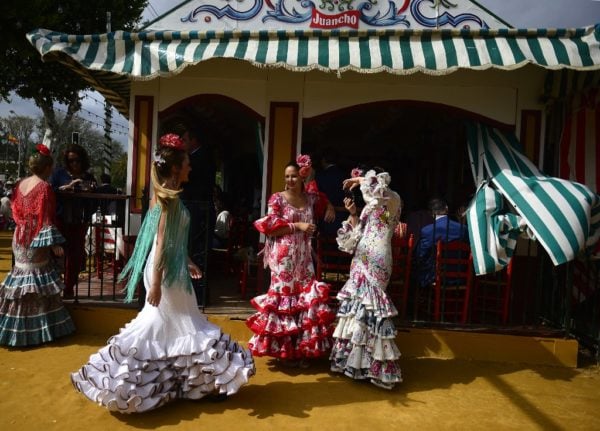 Expect plenty of flamenco music and sevillanas dancing at the Feria de Abril. Photo: CRISTINA QUICLER / AFP
One of the best parts of feria is the Sevillanas dance. It’s the traditional dance that women and men do together, that’s sweet and relatively simple. Most girls begin to learn Sevillanas from the time they’re seven or so, and surprisingly enough, it’s a dance that at least half of the male Sevillanos polled know as well, which is pretty impressive.
Advertisement
Once you’ve heard a Sevillanas song, you’ll never forget it because they all sound very similar. You can always find casetas with contemporary pop music too. There are usually a few and after a certain hour and are the equivalent of a club. If you’ve got the initiative though, there are Sevillanas classes in most cities.
This article was partly written by Ayan Ajanaku, a former Seville resident. It originally appeared on Las Morenas de España, an online community for black people in Spain that no longer exists. It was updated in April 2026 by The Local journalists.