
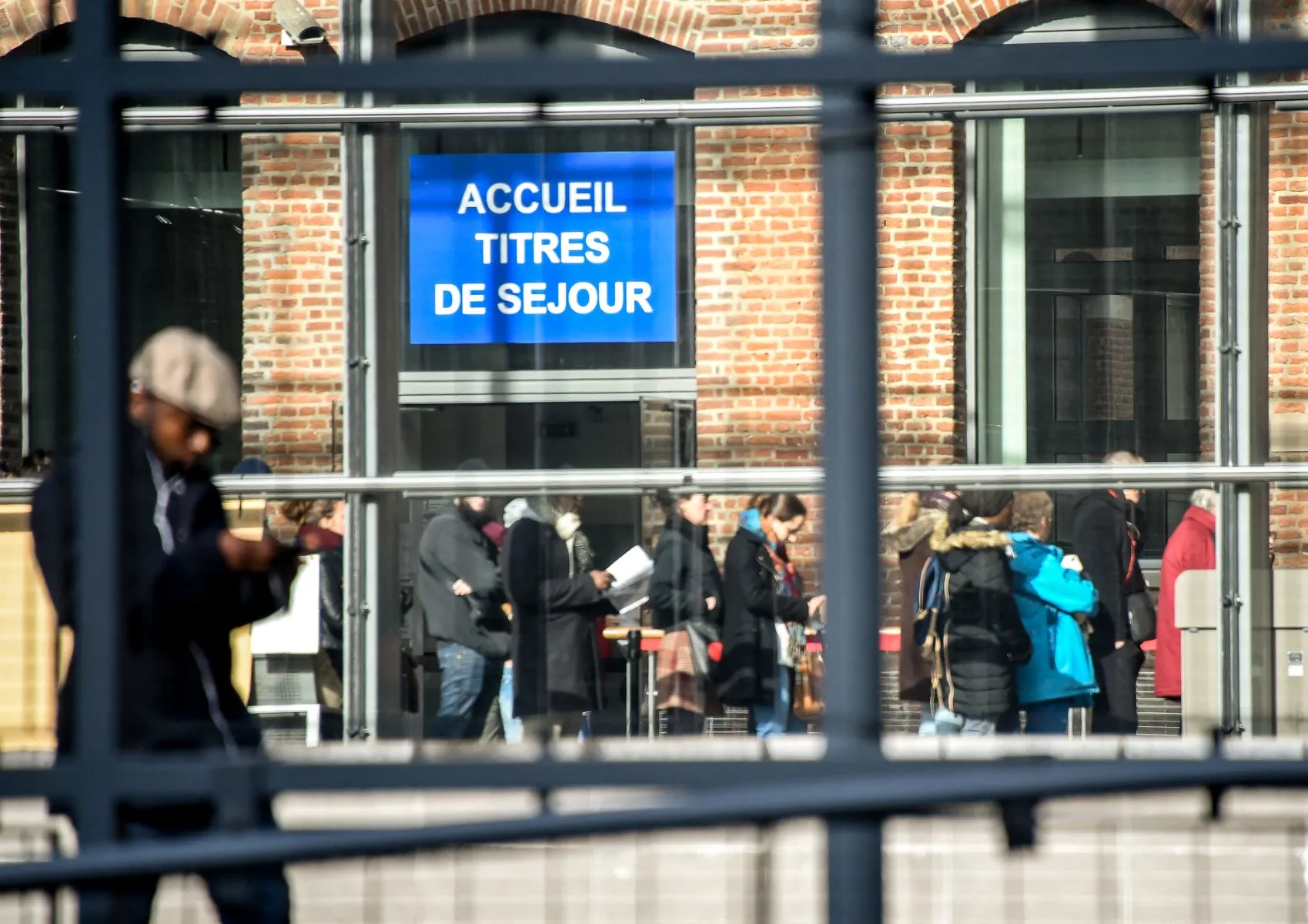
France’s Interior Minister has unveiled the details of his plan to cut waiting times for carte de séjour renewals – from fingerprints to address changes and reduced document checks, here’s what it means for those going through the renewal process.
France’s Interior Minister Laurent Nunez last week admitted that waiting times to renew a carte de séjour residency permit have become “unacceptable” and announced a plan to halve waiting times.
Latest figures show that 930,000 applications are currently awaiting approval.
Some parts of his plan – such as a €2 million initiative to recruit 500 extra staff – will take some time, but the minister has now sent a circulaire (memo) to préfectures instructing them on the measures that they can take immediately to speed up applications.
READ ALSO: LATEST: How long does it take to renew a carte de séjour in France?✎
The memo is entitled réduction des délais de traitement des demandes de titre de séjour et lutte contre la rupture des droits (reduction in waiting times and combating the loss of rights) – referring to the people who end up losing their right to live or work in France due to long delays in processing their card requests or renewals.
Nunez told préfectures that he wants to see “immediate changes with results visible within the next few months”.
Here’s what it says and how it will affect card renewals;
Prioritise ‘labour migration’ – priority should be given to renewals of cards for those working in France, “in order to safeguard the economy”. The memo singles out two types of card specifically; the salarié (given to salaried employees) and the talent (the card for holders of the Talent Passport for high-earners or highly skilled workers).
Automated certificates – people applying via the ANEF website will automatically be given an attestation de prolongation d’instruction, valid for 12 months.
This document is a type of récépissé, which certifies that the holder has applied for their renewal and is waiting on the préfecture – it is a legal document that proves that the holder remains legally resident in France. At present, some préfectures automatically give out récépissés while in other areas they are issued on request. The validity periods vary, but six months is common.
The idea is that no one should accidentally become undocumented while awaiting the renewal of their card.
The ANEF website at present can only be used for certain types of card renewal, but the renewal process is gradually shifting towards the online portal.
Biometric data – fingerprints will only have to be given every 10 years, as opposed to every five years currently, to reduce the workload of préfecture staff.
Change of address – people on the carte de résident (the long-term residency permit valid for 10 years) will no longer have to register a change of address if they move.
Holders of all other card types will still have to register their change of address, and request a new card with their new address, when they move.
READ ALSO: How to change the address on your carte de séjour if you move house✎
Multi-year cards – the normal pattern for arrivals in France is to spend several years on short-term cards (usually renewed each year) and then, after four or five years of residency, move onto a multi-year card (pluriannuelle) and then the long-term carte de résident (valid for 10 years). Some exceptions to this pattern exist, including holders of the ‘talent passport’ or Brits covered by the Brexit Withdrawal Agreement, who move straight onto multi-year cards.
The present system requires people to apply for a multi-year card after a certain period of residency – Nunez instructs préfectures to grant these requests unless there is a compelling reason why not, and also to move people onto multi-year cards after the required residency period even if they don’t make the request.
At present some préfectures already do this, but others don’t.
Extra documents – Nunez instructs préfectures to ensure that the ‘list of required documents’ for each card type is clear and up to date, and then tells préfectures that they should not request any documents other than those that are on the list adding: “I ask you to ensure that this instruction is followed”. [side note – Nunez began his career working in préfectures, he clearly understands how the systems work].
That might sound obvious, but many foreigners in France have a horror story of turning up at the préfecture with all the documents requested, only to be asked for something else that was not on the list.
A change in culture?
The memo has a section called Droit à l’erreur et bienveillance (room for error and compassion).
Préfectures are told: “The focus is on providing personalised support for vulnerable groups” and instructed to “Limit in-depth checks for low-risk categories (e.g. Talent Passport) to free up time for complex cases.”
This could mean a reduction in the number of extra checks and extra document requests for people renewing certain card types, especially the salarié and talent cards.
They would move to a system more like the one that has been deployed to renew the five-year ‘Brexit’ cards – Article 50 TUE – which Brits living in France in 2020 were given.
The renewal process for these cards is a streamlined one, compared to other card types, and requires the provision of only minimal documents, such as proof of continued residence in France. Préfecture staff have also been instructed to approve the renewal, unless there is a compelling reason why not.
As previously reported in The Local, long waiting times for the simple renewal process of a carte de séjour have resulted in lives being put on hold for months or even years while people wait for their new card.
READ ALSO: ‘Lives and livelihoods are on the line’ – readers speak out on carte de séjour delays in France✎
The national average waiting time is 117 days, which Nunez wants to cut to 55 days, but this hides wide regional variations with one third of préfectures exceeding 120 days.