
Keystone-SDA
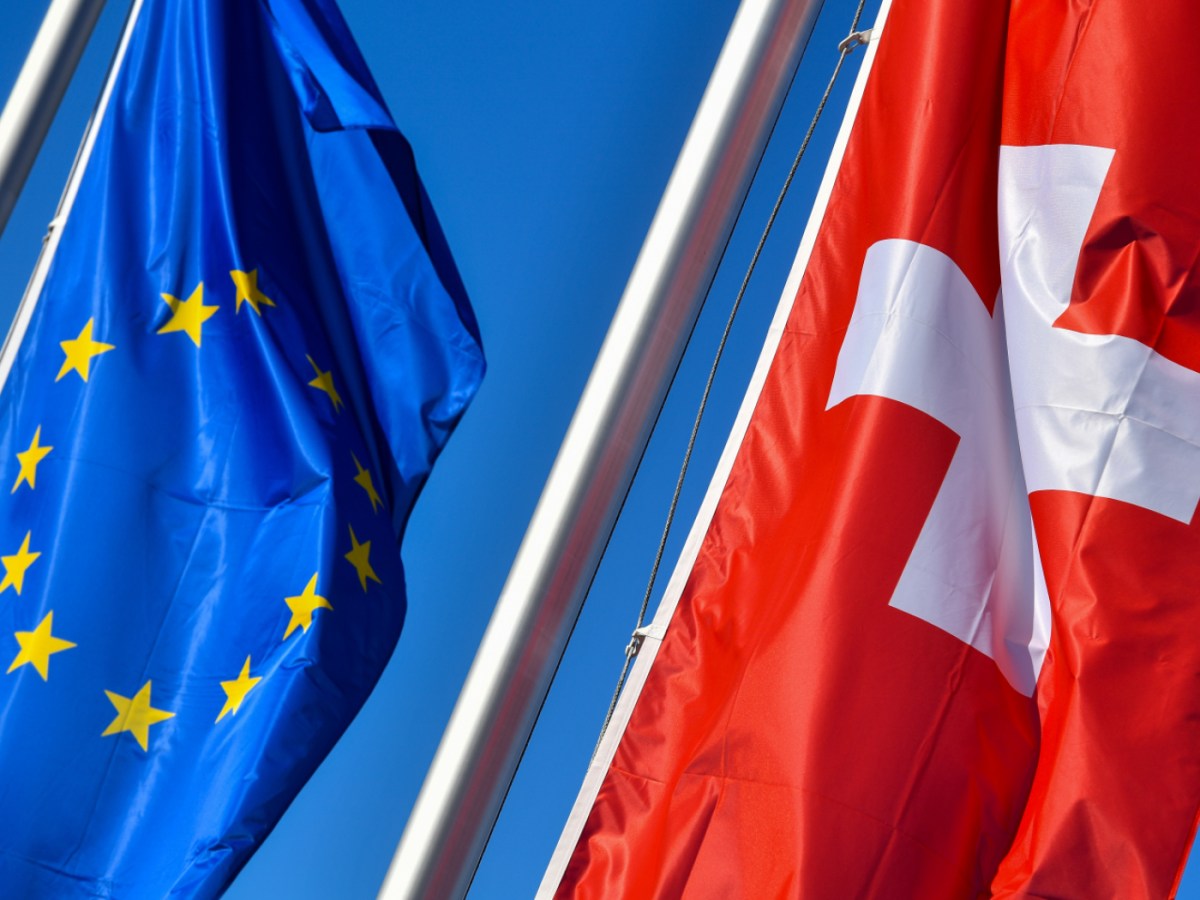
The steel duties recently approved by Brussels do not violate the joint declaration on the “stabilisation and development of Swiss-EU relations” package, the European Commission argued on Monday, rejecting criticism voiced by Swiss Economics Minister Guy Parmelin.
+Get the most important news from Switzerland in your inbox
Two days ago, on Swiss public radio SRF, Parmelin called the planned stricter EU rules on steel imports “unacceptable”. He had also said he was “surprised” by the timing, as it came just as the Swiss parliament was examining the recently signed package of agreements.
+ Swiss president labels EU steel tariffs as counterproductive
Parmelin, who also holds the rotating Swiss presidency this year, also referred to the joint declaration between Bern and Brussels to avoid tensions or obstacles during the Swiss parliament’s consideration of the dossier. The aim is not to jeopardise the ratification process of the agreements.
+ Switzerland, EU sign package of agreements to strengthen ties
But for the European Commission, the joint declaration only applies to the areas covered by the new package of Swiss-EU agreements. “The declaration cannot prevent the EU from taking autonomous decisions in other areas,” the European Commission said. Steel trade is governed by the 1972 bilateral free trade agreement and is not part of the current package.
The EU’s planned measures on steel imports include a sharp reduction in imports and the doubling of customs duties for excess quotas. The new rules are expected to enter into force on July 1. The only exception concerns the countries of the European Economic Area (Norway, Iceland and Liechtenstein), while Switzerland has not been granted any exemptions. The Swiss government and the European Commission would have to negotiate new quotas within the World Trade Organization.
Adapted from Italian by AI/ts
We select the most relevant news for an international audience and use automatic translation tools to translate them into English. A journalist then reviews the translation for clarity and accuracy before publication.
Providing you with automatically translated news gives us the time to write more in-depth articles. The news stories we select have been written and carefully fact-checked by an external editorial team from news agencies such as Bloomberg or Keystone.
If you have any questions about how we work, write to us at english@swissinfo.ch