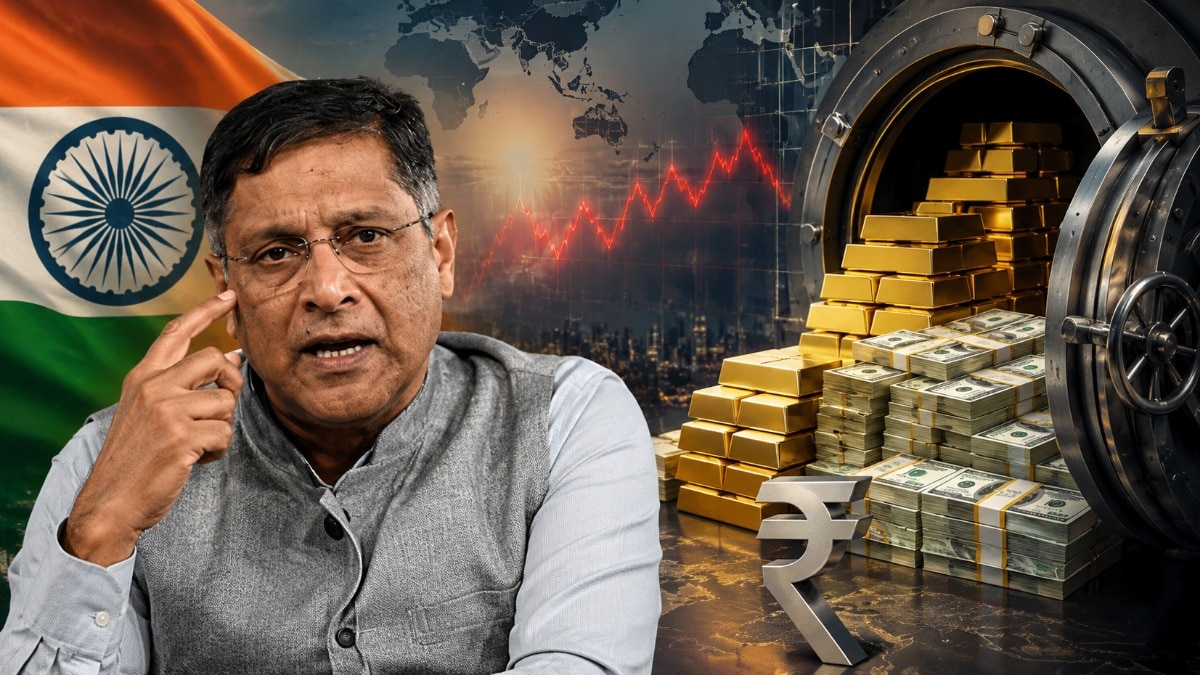
Former Chief Economic Adviser Arvind Subramanian has warned that India’s economic challenge is not a foreign exchange crisis but an “affordability and livelihoods crisis” that could worsen if the Iran war drags on.
The economist said the current energy shock was already squeezing households and livelihoods due to rising fuel prices globally. “This is not a foreign exchange crisis because we have $700 billion worth of reserves,” he said in an exclusive conversation with India Today. “It’s not that we can’t buy stuff. It is an affordability and a livelihood crisis because prices have to go up, and livelihoods are going to be affected.”
The former CEA said the duration of the crisis would depend heavily on how long the war continued and whether the Strait of Hormuz remained disrupted. “Even if it reopens quickly, it will be longer than people think because supply cannot come onto the market very easily,” he said.
Don’t Miss: ‘Don’t single out gold’: Arvind Panagariya on what India should really do now
‘Not yet a crisis’
Subramanian said policymakers should focus less on attracting foreign capital and more on how the burden of rising energy prices is shared across society. “The challenge is how the burden of this crisis is shared fairly and equitably across sections of society. That’s the policy and governance challenge. Not how should we bring back money from abroad or raise interest rates to attract capital.”
India has faced rising pressure on the rupee, foreign portfolio outflows, and higher import bills as crude prices surged following the West Asia conflict.
But the economist said the current situation also exposed weaknesses in India’s growth model. “There is also a medium-term challenge that’s reflected in what’s going on with the basic Indian development and growth model,” he said. “Is it delivering jobs? Is it delivering growth? Is it sustainable?”
On PM Modi government’s austerity push
The former CEA backed the government’s initial appeals for voluntary austerity, including calls to reduce unnecessary travel and consumption. “In the short term, exhortation to private austerity is a good starting point,” he said, but added that it’s not a substitute for the real burden sharing that has to happen.
He said the excessive focus and false prestige associated with the rupee have distracted the government from what needs to be done. “Some prices have to go up. The burden has to be limited on the poorer sections of society, and to some extent, the exchange rate has to go down, prices have to go up because that’s part of the adjustment,” he added.
The economist backed the prime minister’s call to reduce foreign travel. “If the exchange rate goes down, foreign travel is going to become more expensive. It is going to be more expensive for the middle class to send their kids abroad for education. That is necessary and desirable.”
At the same time, he warned that rising prices of fuel, gas, and fertilisers would hurt poorer households and farmers unless the government cushioned the impact. “What is problematic is, of course, the prices of energy which are used by poor people and farmers – fertilizers, petroleum, gas, and there we need to find a way if we cannot avoid price increases.”
‘Why is private investment still weak?’
Subramanian also questioned why private investment and foreign capital inflows remained weak despite India’s high headline growth projections.
“The rupee declined a lot and amongst the most in the year preceding the war,” he said. “If we were such a great place to invest in and supposedly growing at 7.5-8%, why are people not investing?”
The economist described it as “bizarre” that India projected strong growth while foreign direct investment and private investment remained subdued. He called for a “mission mode focus” on reviving private investment and improving export competitiveness.
When asked how he would revive private investment, the former CEA said it has a lot to do with what not to do. “You mustn’t weaponise the state apparatus to go after various people, including investors. You mustn’t favor only some groups over others more broadly; you must be able to take everyone along in decision making.”
“There’s a lot of don’t do as much as the dos that you need to attract private investment. We should take a leaf out of those states that have managed to attract private investment. The southern states have attracted a lot of investment from China. Let’s see what they are doing right.”
Asked whether it will get much worse before it gets better, Subramanian said the government has to at least prepare for things getting much worse before they get better, partly because of the war itself, but also because one is anxious about agriculture as well.
“Temperatures are very high. The El Niño might have an effect at least for the winter season. So, certainly we should be prepared for things getting worse before they get better.”