
If you’re driving on French motorways you will be expected to pay a toll charge – unless you’re in Brittany. Here’s why:
France has an impressive network of autoroutes (highways or motorways), which are run by private companies.
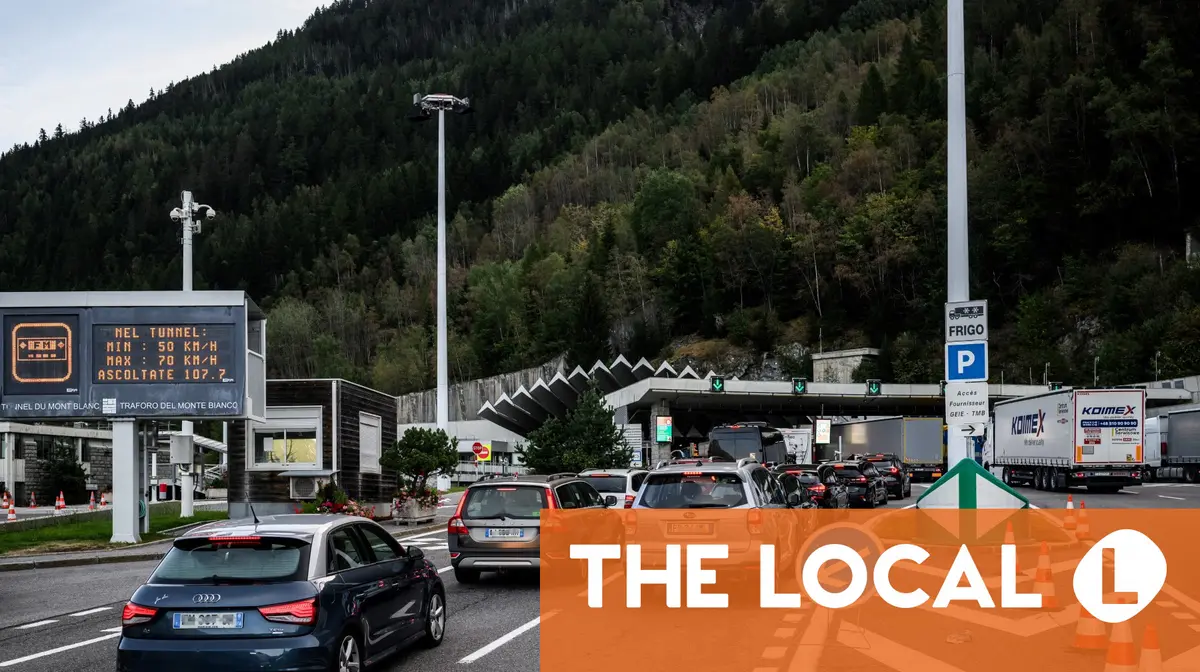
Drivers are expected to pay a fee to use them, collected at the péage (tollbooth) points which pop up regularly on long journeys.
Because there are different operating companies, the exact fee structure varies from region but if you’re taking a long trip, tolls can easily add up to €50 or more.
The exception to this, however, is Brittany. So why?
There’s a popular local myth that says this exemption dates back to Anne de Bretagne, the duchess who became Queen of France in the late 15th century.
She is said to have negotiated with Charles VIII to exempt Breton roads from all tolls. It’s a good story, but sadly it has no historical basis.
The key reason goes back to the 1960s regional development policy under president Charles de Gaulle.
At the time, Brittany was considered economically underdeveloped and geographically isolated compared to the rest of France.
To boost its economy and improve accessibility, the French government made the choice to fully fund new major highways in Brittany as free expressways (voies express).
These are different to autoroutes (motorways) which are typically part funded through private companies, who also operate them, and impose tolls in order to cover their running costs. For drivers, however, the experience is pretty much the same – the voies express have three or four lanes with a speed limit of 130km/h (or 110km/h in bad weather) just like the autoroutes.
With the exception of the highway A84 between Rennes and Caen, Brittany has no autoroutes.
So why if the A84 is an autoroute, why are there no tolls on it?
In France, to implement a toll, a free alternative must exist – without an alternative route, the law prohibits the installation of a toll.
Since there is no alternative route to the A84, it is not allowed to have tolls.
In truth, in most of the rest of the country these alternatives are somewhat theoretical – yes, it’s possible to avoid the autoroutes and travel only on the free N-roads, but doing so will usually add several hours to your journey (as you will discover if you accidentally set your sat-nav to ‘no tolls’).
Don’t make the mistake of thinking that Brittany doesn’t have proper roads, however – the region has a highly connected road network with 1,009 km of national roads – with just 50 km of autoroute – and a road density of 2.69 km per square kilometre, the second highest after the greater Paris region of Île-de-France.
It’s easy to travel from one city to another, even without a traditional highway. Rennes, Quimper, Brest, Vannes, and Saint-Brieuc are very well connected, which makes the region open for tourism as well as daily life.
The Bonnets Rouges movement
And if the government is ever tempted to roll back Brittany’s special status, there’s always the Bonnets rouges.
 Protesters, part of the “bonnets rouges” movement, wave flags of Brittany and hold a banner reading “Live, decide, work in Brittany” as they gather on a highway near Brech, western France, to protest a controversial tax on heavy vehicles, on February 15, 2014. (Photo by GAEL CLOAREC / AFP)
The original movement dates back to 1675, when people rebelled against new taxes imposed under King Louis XIV, particularly on everyday goods like stamped paper and tobacco. Protesters wore red caps (bonnets rouges) as a symbol of revolt.
This historical movement was revived in 2013, when a modern Bonnets Rouges movement emerged in Brittany against the French government’s proposed ecotax on heavy goods vehicles.
