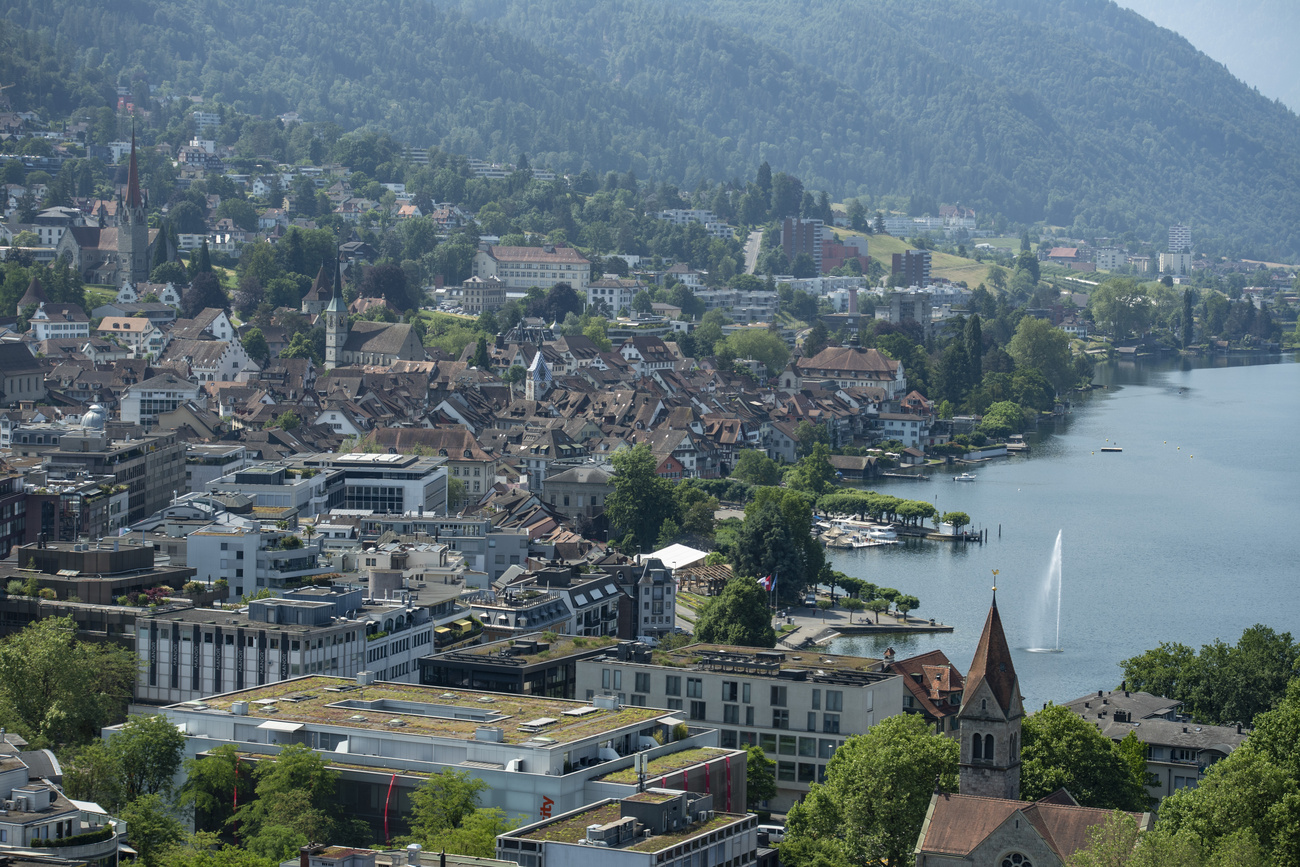
This small canton, with a population of around 135,000, is best known as a hub for commodities trading and the cryptocurrency industry.
Keystone / Urs Flueeler
In search of a haven from conflict in the Gulf, Dubai’s expatriates are homing in on Zug – a picturesque Swiss canton of just 135,000 people better known for commodity traders and cryptocurrency firms.
The influx includes wealthy individuals, family offices and companies, according to Heinz Tännler, Zug’s finance director, who said interest had picked up following the outbreak of the Israel-US war against Iran. “We are seeing increased inquiries,” he said. “Of course, we regret the circumstances – but the reality is Zug is benefiting.”
Wealth managers and bankers say clients based in Dubai, many of them working in commodities and finance, are looking for a stable European base.
External Content

“Everyone knows Zug, even if they haven’t been there,” said Pierre Gabris, the founder and chief executive of Swiss wealth manager Alpen Partners, which has helped a number of clients relocate from the Middle East. “The first request from clients is almost always Zug.”
For many traders and entrepreneurs in particular, who are familiar with Switzerland’s role in global commodities markets, the canton’s reputation precedes it, said Gabris, adding that Alpen is looking at opening an office in Zug given the growth in the market.
One Swiss-based private banker whose bank has a Zug office said the number of CVs from relationship managers at US banks landing on his desk had “quadrupled” since the war began. Another described attending an open house for a two-bedroom rental apartment in Zug last weekend: “The queue was around the block – the person behind me had flown in from Dubai that morning.”
More

More
Swiss banks prepare for Gulf clients
For many would-be arrivals, however, Switzerland’s appeal comes with practical constraints. While EU citizens can move relatively freely under bilateral agreements, securing accommodation – particularly in Zug, which is just south of Zurich – has become the main bottleneck. Rental supply is extremely limited, with properties often snapped up within days and competition intense.
Non-EU nationals face a higher bar. Residency is typically tied to employment, company formation or, for the very wealthy, negotiated lump-sum taxation agreements with cantonal authorities. These arrangements, available in several cantons, allow individuals to pay a flat annual tax based on living expenses rather than global income – but they require advance approval and do not guarantee access to the most in-demand locations.
“You can’t just simply show up, even if you have a European passport. It takes time and you need a work contract or to establish a company,” said Anja Beck, managing partner at an Engel & Völkers real estate office in Zug.
More

More
Swiss entrepreneurs are staying put in Dubai
With availability tightening, other cantons with flexible tax arrangements are beginning to benefit. Lugano, in southern Switzerland’s Italian-speaking Ticino region, is seeing a rise in enquiries from Dubai-based expatriates, according to local agents.
“Since the war started, we’ve noticed demand from foreigners living in Dubai – Italians, French, Swiss, British,” said Simon Incir of Engel & Völkers. “Now they are considering moving away [from Dubai].”
Unlike Zug, Lugano still has capacity. “We have much more availability – around 300 properties on the market,” Incir said, adding that foreign residents can negotiate lump-sum tax deals and obtain residency permits relatively quickly.
“This is just the starting phase. People are asking, scheduling viewings – we expect more.”
Copyright The Financial Times Limited 2026