Porepunkah has been in the spotlight since Dezi Freeman shot dead two police officers last year.
Read More
Blog
-
Shock, sadness and relief in town at centre of Australia's seven-month manhunt for Dezi Freeman
-
NTPC Green Energy’s arm signs green ammonia supply pact
NTPC Renewable Energy, a wholly owned subsidiary of NTPC Green Energy, has signed a green ammonia purchase agreement with Solar Energy Corporation of India, marking a key step in advancing India’s clean energy ambitions.
The agreement, executed under the SIGHT Scheme of the National Green Hydrogen Mission, involves the supply of 70,000 metric tonnes per annum of green ammonia.
The output will be supplied to Krishna Phoschem, which operates a facility in Meghnagar, Madhya Pradesh, with SECI acting as the intermediary procurer.
The development represents a major milestone in NTPC Green Energy’s expanding green hydrogen and ammonia portfolio. Green ammonia, produced using renewable energy, is increasingly seen as a critical component in decarbonising hard-to-abate sectors such as fertilisers, shipping, and heavy industry.
On Monday, NTPC Green Energy shares closed at 92.32 on the NSE, down 2.88 per cent. The market is closed today for a local holiday.
Published on March 31, 2026
-
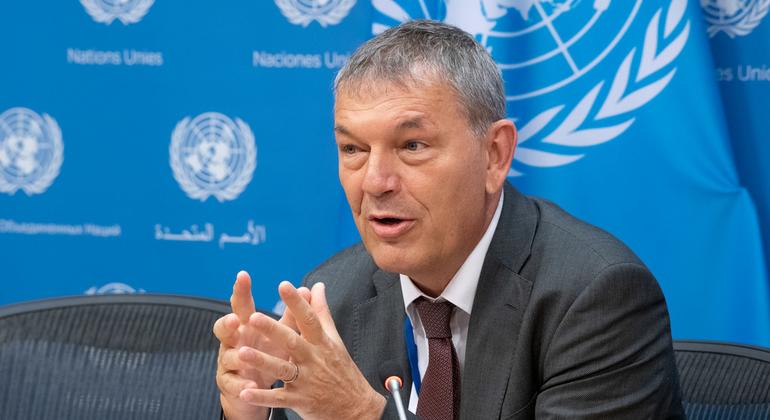
The image from Gaza that still haunts me: Palestine relief agency chief
“No doubt that I have mixed feelings today,” he says. “Bitterness, because I have been at the forefront over the last two years of extraordinary breaches of international law, witnessing atrocities, attacks against the United Nations; sadness, because many of our colleagues have been killed – nearly 400 in two years – that’s never been seen in the entire United Nations history.
“But, also some pride, because over the last two years, I have seen how our staff…have been extraordinarily committed to try to alleviate the suffering of a number of their own communities”.
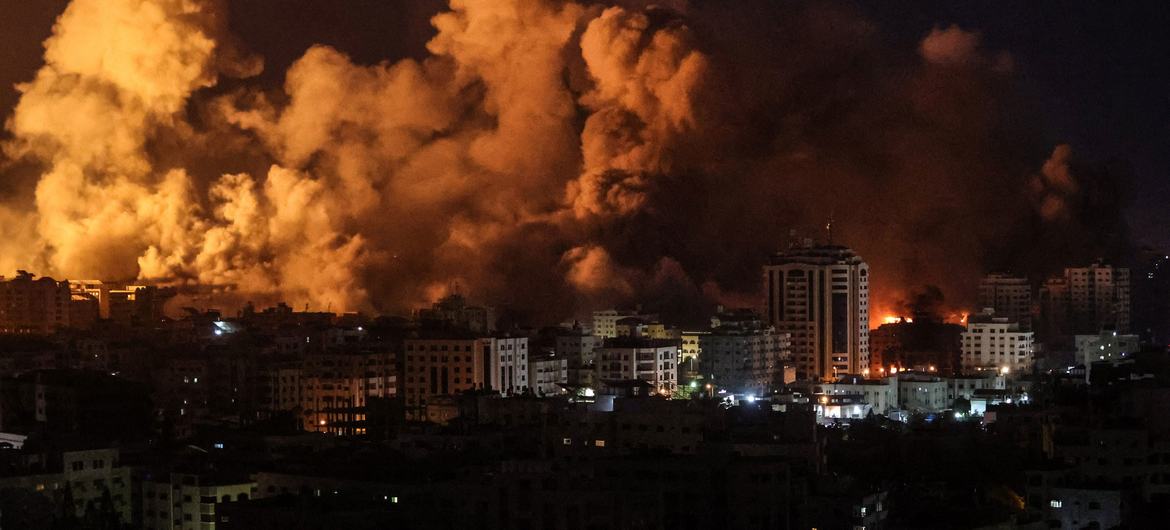
Air strikes on Gaza continue. (file)
Aftermath of 7 October
In addition to being the face of an organization constantly berated and accused online of collaborating with Hamas fighters in Gaza, the 62-year-old Swiss national has watched the disastrous impact of the Israeli war on the enclave’s people and his agency, sparked by Hamas-led terror attacks in Israel, in October 2023.
A high-level UN investigation into the accusations against UNRWA found that of 19 staff members accused of involvement in the terror attacks, one case was found to lack any supporting evidence and nine others lacked sufficient evidence to indicate involvement.
In the remaining nine cases, evidence indicated that the UNRWA staff may have been involved in the 7 October attacks, at which point the agency announced they would be sacked.
Today, the misery and death across the Gaza Strip continues, with one Gazan encounter from early in the conflict particularly hard to forget, despite Mr. Lazzarini’s many years working in conflict settings around the world, from Angola to Iraq and Somalia to South Sudan.
Haunted by hunger with human eyes
“It was a young girl I met in Rafah four weeks into the war and already I saw her with empty eyes begging in fact for a sip of water, a loaf of bread, in the school where she used to be a student. So, the school [that] should be a place of joy and education became a place of misery and shelter for these young girls. And I have to say, I have been haunted by this.”
And although there is a ceasefire in Gaza between Hamas fighters and Israel today, it is “in name only”, he insists, with people still being killed because they do not know where the shifting border is between them and the Israeli military.
“It’s nothing else than just misery,” he continues. “We might have reversed the tide of deepening hunger in Gaza but nothing else. People are still living in the rubble, are still waiting for hours to get some clean water. They are fighting and struggling against disease.”
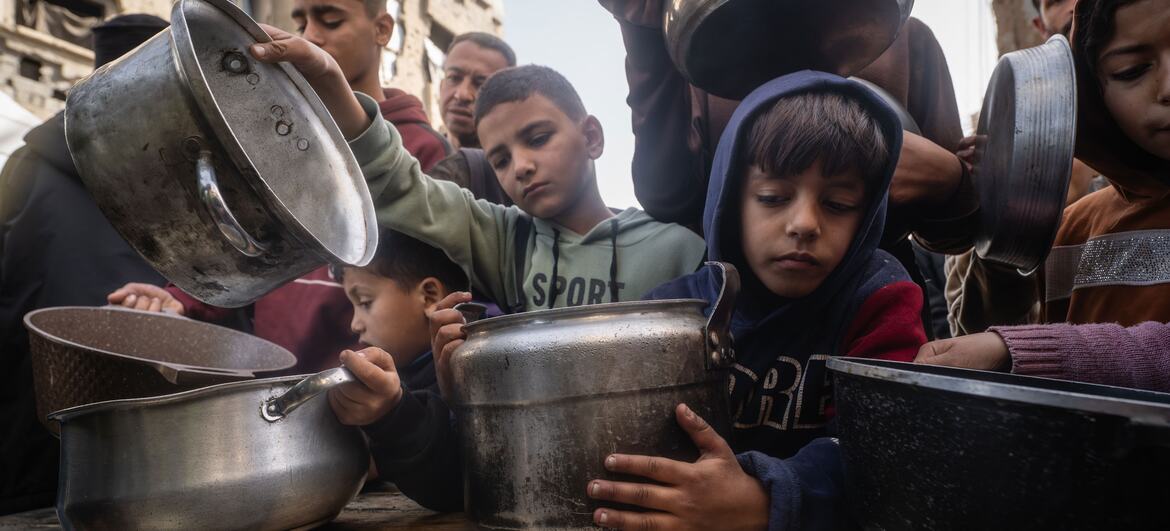
Children wait to be served a hot meal at a communal kitchen in Gaza.
No real alternative
Amid such suffering, Mr. Lazzarini dismisses suggestions that another body could take UNRWA’s place. “You do not have an existing alternative in Gaza,” he insists. “UNRWA is the only organization which has the manpower, the expertise, the community trust when it comes to public health, education services. There are no other NGOs or UN organizations. But we also know that the Palestinian Authority is not ready to take over these services.”
Beyond the attacks on UNRWA staff and on hundreds of the agency’s buildings in Gaza, its ability to provide key services in Gaza and beyond has been severely limited by a lack of financial support from the international community to match the three-year extension of its mandate passed by the UN General Assembly last December.
Running on empty
Despite austerity measures – including reduced services and a 20 per cent salary cut for most local staff – Mr. Lazzarini’s warning to the General Assembly President that UNRWA “may soon no longer be viable” without hard cash still stands. But political support is invaluable, too, and not just for his agency’s survival, he explains.
“The attacks on UNRWA are not an exception, cannot be dealt (with) in isolation. If we tolerate it for an agency like ours, others will follow. And that’s exactly what happened in Gaza: the UN agencies have been finger-pointed at being infiltrated by Hamas to justify action against them…And now we hear exactly the same narrative, we see the same pattern being implemented in Lebanon.”
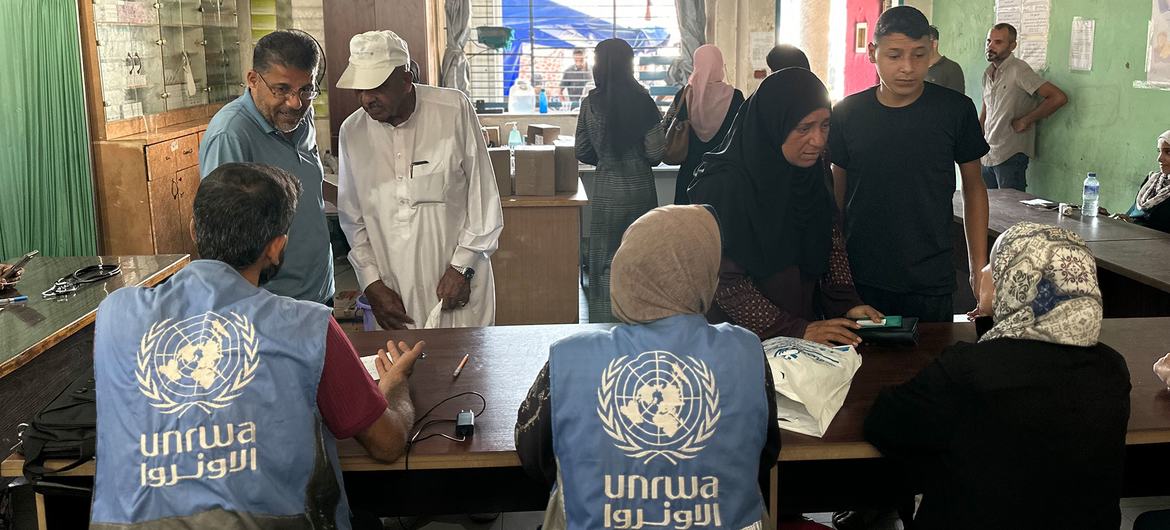
UNRWA teams in Gaza City continue to provide medical services.
Israel’s ‘silent war’ on the West Bank
Away from Gaza, the dire situation for Palestinians in the occupied West Bank facing increasing attacks by Israeli settlers has also highlighted the “silent war” taking place there “in total impunity”, Mr. Lazzarini continues.
In January, Israeli bulldozers moved into UNRWA headquarters in East Jerusalem and proceeded to demolish buildings there, as an Israeli flag was hoisted atop the UN complex – a move strongly condemned as a violation of international law by the global organization.
“When we talk about, you know, the respect of international law, we have seen that this blatant disdain and disregard – the fact that everything has been conducted without any respect of the rule of war – has also allowed now the spread of a conflict into Iran with no justification to initiate such a large-scale war impacting the entire region,” the UNRWA chief maintains.
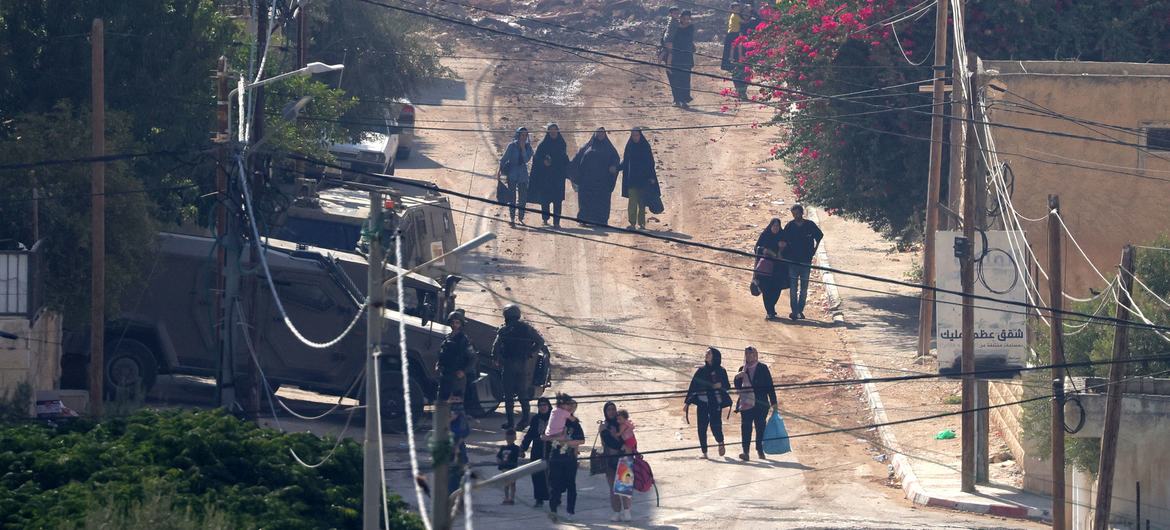
Families flee their homes in the West Bank, due to the ongoing escalation of violence. (file)
‘Extreme pressure’
Despite the global turmoil raging around the world, back in Geneva, Mr. Lazzarini appears relaxed. He could easily be mistaken for a visitor in his wax coat, suede shoes, jacket and tie, but clothes are perhaps the last thing on his mind.
Readily conceding that he has faced “extreme pressure” from attacks against himself and UNRWA in the past two years, the top UN diplomat cites his family’s support as one of the principal reasons why he has been able to continue working.
“I haven’t been present over the last two years,” he says, adding determinedly that once he leaves UNRWA, his plans include playing catch-up “to retrieve” his wife and children, as well as writing about his experiences at the helm of a UN agency whose future remains at the mercy of geopolitics.
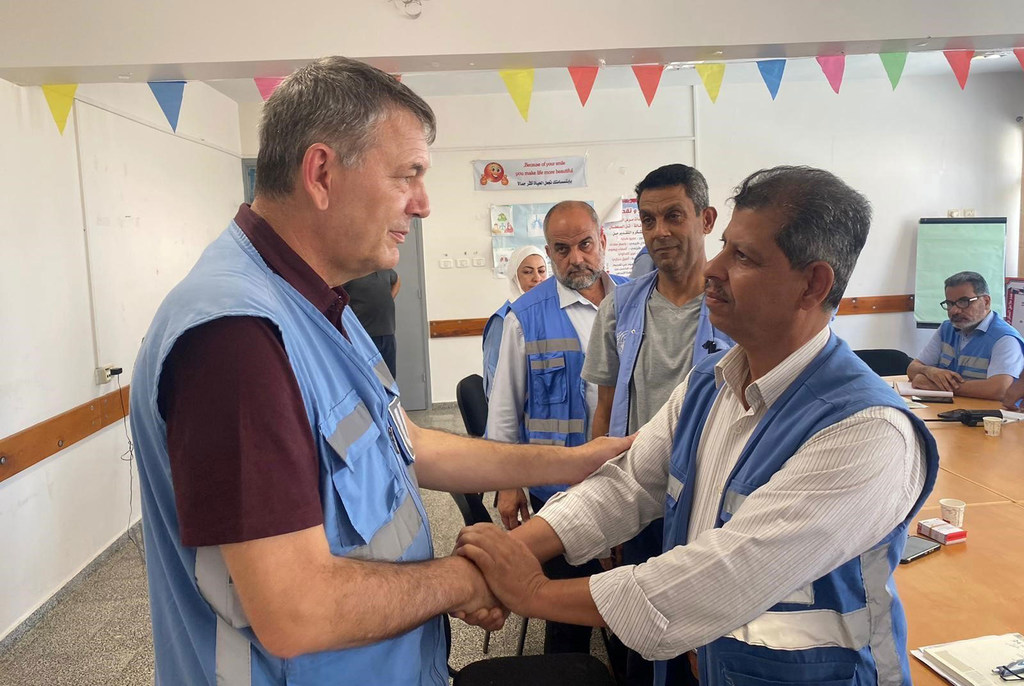 UNRWA Commissioner General Philippe Lazzarini visits colleagues in Gaza. (file)
 -
Japan’s election win is a warning for Europe’s comfort zone
Prime Minister Sanae Takaichi’s mandate shows Tokyo is betting on economic security, defence “normalisation” and alliance diversification. Europe should draw the lesson: strategic autonomy is less about distancing ourselves from allies than about building options, and the EU–Japan toolbox is one of the few places where those options already exist, writes Thierry Bechet.
Takaichi’s victory signals political consolidation in Japan around a harder‑edged foreign‑policy calculus: stop waiting for stability and plan for uncertainty. Europe should read it carefully, that low‑trust world is already the reality.
Europeans have spent years debating “strategic autonomy.” We have argued about defence spending, industrial policy, and how far Europe should distance itself from – or remain anchored to – the United States. Yet recent events suggest that the real question is less philosophical and more practical: how does Europe retain room for manoeuvre in a world that is becoming more transactional and less predictable? Autonomy is ultimately judged in crises: whether Europe can absorb pressure without scrambling.
In 2025, the European Union and the United States concluded a framework agreement on trade that some in Europe regarded as structurally unbalanced, including 15% US tariffs on most EU exports alongside zero EU tariffs on most US industrial goods. Whatever one’s view of the deal, it served as a reminder that even between close allies, economic relations can become explicitly transactional. Leverage is used more readily. Trust, once assumed, must now be managed.
None of this calls the transatlantic alliance into question. But it does confirm what many in Europe have been slow to accept: that geopolitics now colours every significant decision on trade, technology, and security. Strategic autonomy, in that light, is not a slogan for self-sufficiency. It is shorthand for having enough weight of your own, and enough reliable partners, to avoid being cornered.
Japan stands out as one of Europe’s most structurally aligned, yet still under‑operationalised, partners in that effort. Europe’s own Indo-Pacific strategy acknowledges the region’s centrality to trade, technology, and security. The Indo-Pacificis are also where the rules that underpin global stability are increasingly tested.
Japan and the EU share a foundational interest: both are open societies that built their postwar prosperity on a rules-based international order. But Japan has been forced to adapt earlier and more visibly to the pressures of multipolarity: caught between US-China rivalry, a rearming neighbourhood, and the constant background noise of economic coercion. Tokyo’s answer has quietly combined trade diplomacy, multilateral coalition-building, and a more capable defence posture into something that might be called principled pragmatism.
Europe should recognise that Japan has already confronted dilemmas we are only now fully acknowledging: how to stay open without becoming exposed; and how to deepen security ties without trading away a rules-based identity.
What makes this different from most strategic partnerships is that the groundwork is already laid. The EPA has been in force since 2019. The Digital Partnership was launched in 2022. The Security and Defence Partnership followed in 2024. And the Strategic Partnership Agreement entered into force in 2025.
This “policy stack” is rare. It means Europe does not need to invent a new strategic framework. The deficit is not frameworks – it is the will to use them.
Consider economic security. Europe is right to invest in resilience. But regulation written in Brussels does not, by itself, reduce a chokepoint in East Asia. That requires partners with the industrial weight and the shared interest to make resilience a collective project rather than a competitive one.
Technology has become the sharpest edge of this debate. Semiconductors, AI standards, and data flows are, beyond commercial questions, instruments of strategic leverage. The EU–Japan Digital Partnership is one of the few existing channels through which Europe and a like-minded partner can work toward common standards before others set them.
Japan anchors some of Asia’s most significant trade architecture, covering close to a third of global GDP. That integration is advancing regardless of whether Europe chooses to engage with it seriously. The EPA is a potential platform for coordinating supply-chain resilience and shaping the standards that will govern trade in critical technologies. The July 2025 summit signalled political appetite on both sides to move in that direction. The question is whether it translates into practice.
If Europe wants to reduce vulnerability to chokepoints, it should move from declarations to working arrangements; starting with structured supply-chain mapping alongside coordinated export control approaches and ensuring that resilience efforts reinforce – rather than fragment – open markets among trusted partners.
The same logic applies in the security domain. Japan is expanding its capabilities, deepening partnerships beyond the United States, and increasing defence spending under Prime Minister Takaichi. Tokyo has concluded reciprocal access agreements with the United Kingdom and the Philippines and has embedded itself in a web of multilateral arrangements that reflect a more assertive regional posture.
Europe has no business aspiring to be a Pacific military power, nor should it. The more important recognition is that European security and Indo-Pacific stability are increasingly interconnected. The EU–Japan Security and Defence Partnership offers a structured way to cooperate in precisely these areas.
Strategic autonomy is not achieved by pulling away from partners, and it is not conjured by political speeches about sovereignty. It is earned, quietly, by accumulating choices so that no single actor can dictate terms.
Japan can serve as a practical Indo-Pacific anchor; economically weighty, technologically capable, and increasingly explicit about navigating multipolar pressures without abandoning rules. Treating that partnership as peripheral would be a mistake.
Europe does not need a dramatic pivot. It needs steady, operational habits of cooperation that turn alignment into leverage. In a world where trust is lower and power more openly transactional, that is what strategic maturity looks like.
-

Which Swiss cantons have the most public holidays over Easter?

Good Friday and Easter Monday are two holidays that are celebrated in some Swiss cantons over the Easter weekend, but not in others. And one canton has no public holidays at all.
-
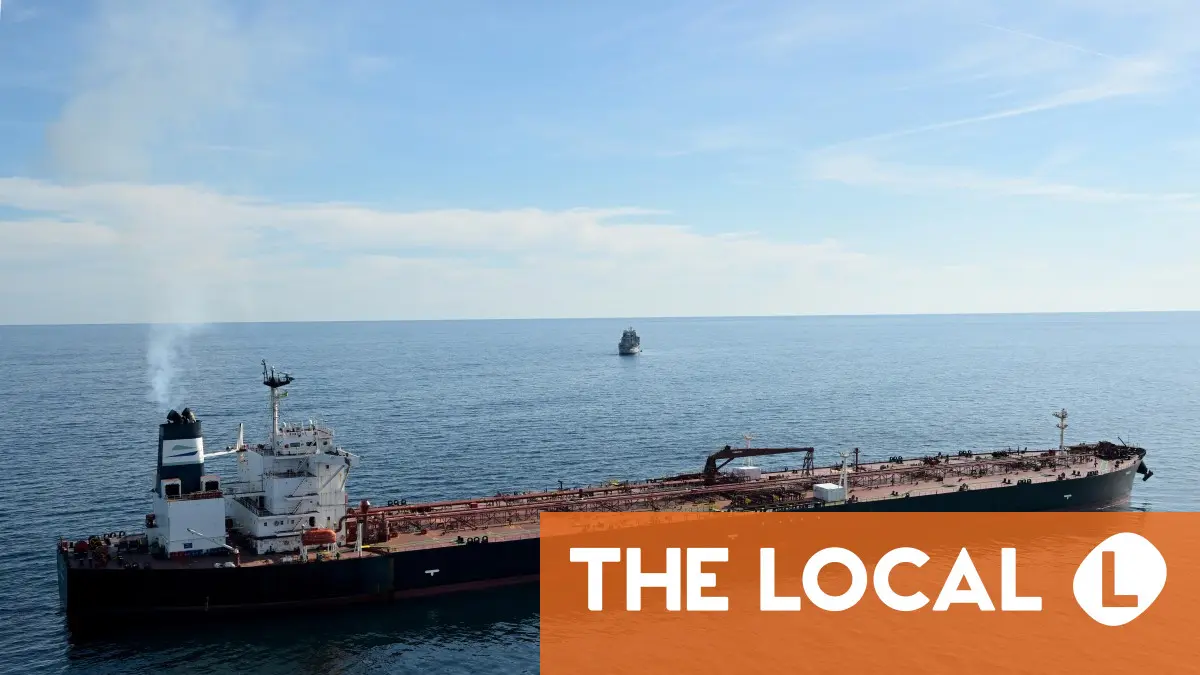
France court sentences Russia-linked tanker captain to one year in jail

A French court on Monday issued an arrest warrant and a one-year jail sentence against the Chinese captain of a suspected Russian “shadow fleet” tanker over failing to comply with orders to stop his ship.
Chen Zhangjie, 39, was sentenced in absentia after the French navy boarded the Boracay tanker in September before releasing the vessel and its crew days later, in what Russian President Vladimir Putin condemned as “piracy”.
The court in the western city of Brest also ordered Zhangjie to pay a €150,000 fine.
The vessel, claiming to be flagged in Benin, was thought to be part of a fleet transporting Russian oil in violation of Western sanctions imposed over Moscow’s invasion of Ukraine.
Two employees of a Russian private security company were on board the Boracay when the French navy stopped it, an informed French source and the captain’s lawyer have told AFP.
They were in charge of representing Russian interests and gathering intelligence, they said.
The Boracay has been linked to mysterious drone flights over Denmark last year, part of a spate of drone sightings and airspace violations in European countries blamed on Russia.
No formal link has however been established and Moscow denies responsibility.
The European Union lists 598 vessels, suspected of being part of the “shadow fleet”, as banned from European ports and maritime services.
-

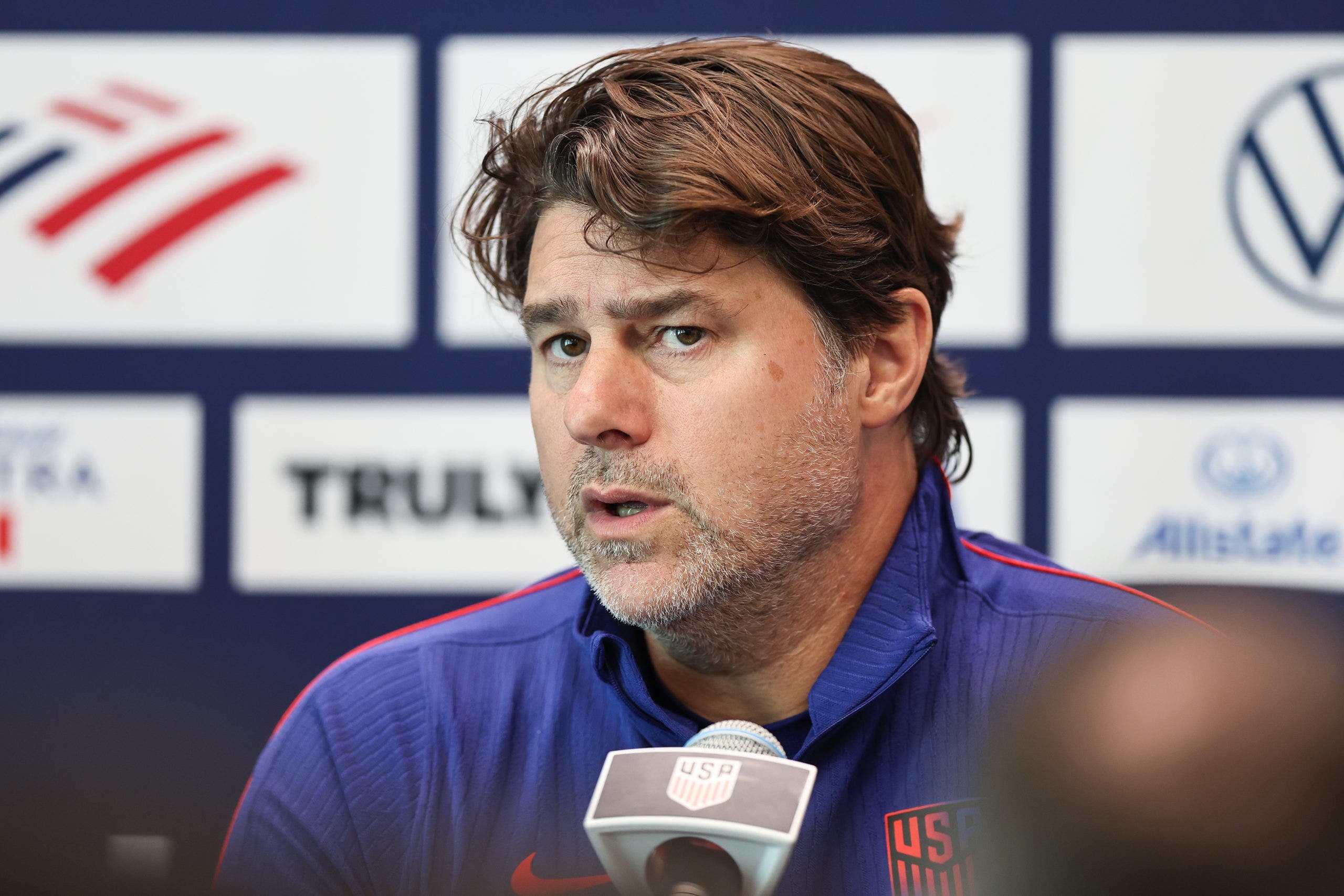
USA Must Rediscover Intensity In Tuneup v. Portugal: ‘It’s Nonnegotiable’
MARIETTA, Ga. — As he settled into his podium seat for Monday’s packed pre-match press conference inside Atlanta United’s sprawling and pristine training facility, U.S. men’s national team coach Mauricio Pochettino cut a businesslike figure.
(Photo by Omar Vega/Getty Images)
The Argentine answered the first dozen or so questions matter-of-factly, displaying little sign of the charm that endeared him to fans of clubs across Europe — including the all-world likes of Chelsea and Paris Saint-Germain — during the 15 years he spent managing on the continent.
Exactly 24 minutes into the back-and-forth with reporters, Pochettino’s demeanor changed. Asked how the American squad can keep its intensity high for all 90 minutes, something it failed to do in Saturday’s 5-2 capitulation against Belgium, in tomorrow’s World Cup preparation match versus No. 6-ranked Portugal, the 54-year-old instantly became animated. He gesticulated as he spoke. That trademark charisma was suddenly on full display.
“If you watched the game [between] France and Colombia, that is intensity,” said Pochettino, referring to Sunday’s exhibition between the 2018 World Cup champions (and 2022 runners-up) and Los Cafeteros in Landover, Maryland. Les Bleus won 3-1. Yet the victory was anything but comfortable.
“You can win or you can lose,” Pochettino said. “But do you think the coach of Colombia, [despite] losing the game, is going to complain about [the effort of] some players? They played like this was the final of the World Cup. And France, when they saw the intensity and the aggression of Colombia, said, ‘If we aren’t as intense, they’ll kill us.’ That is intensity.”
(Photo by Johnnie Izquierdo/USSF/Getty Images)
In stark contrast, the U.S. all but folded up shop when a Belgian penalty put the home side down two goals on Saturday with more than 30 minutes of the contest still left to play. The response, goalkeeper Matt Turner and others said afterward, should’ve been the opposite. As the saying goes: If you can’t beat them, beat them up.
Pochettino didn’t go that far, of course. Yet although English is his third language after his native Spanish and the French he learned playing as a central defender for Ligue 1 sides PSG and Bordeaux in the early 2000s, he couldn’t have expressed himself more clearly.
This isn’t the first time intensity has been a problem for the Americans since Pochettino arrived on these shores 18 months ago.
Exactly this time last year, a flat and toothless USA dropped home games to regional foes Panama and Canada in the Concacaf Nations League finals.
Poch was so upset that he and his staff “destroy[ed] what we needed to destroy” and began to rebuild the team in his own image by bringing in a gaggle of newcomers who have since become mainstays. By the end of last year, lack of fight was no longer an issue: The U.S. literally brawled toward the end of a win over Paraguay before beating the brakes off two-time World Cup champ Uruguay — arguably the hardest team, pound for pound, on planet futbol.
It’s something Poch’s lot must rediscover between this month’ two games.
“It’s a conscious decision. It’s just an overall effort,” captain Tim Ream said when asked why the U.S. faded so badly against Belgium. “It’s not that guys don’t want to do it. I think sometimes it’s like ,’I’ve just made an effort,’ and now it’s about making the second, the third, the fourth. And sometimes, that doesn’t happen.
“That’s something that’s a nonnegotiable, really,” Ream continued. “It’s something that we were doing really well in the fall last year. And it’s something we have to get back to.”
Pochettino noted on Monday that unlike last autumn, his players have been inundated with pre-World Cup media responsibilities this week. That wasn’t the case in November or in the two international windows that preceded it. Yet he also pointed out that it’s not a switch that can simply be turned on when the World Cup kicks off in June. That’s the big lesson from Saturday. It’s the mandate for Tuesday.
(Photo by Andrew J. Clark/ISI Photos/USSF/Getty Images)
The 2026 World Cup co-hosts still might not win the match. Portugal has a legitimate chance of hoisting the most coveted trophy in sports next July 19. Even at home, the U.S. would require a miracle even to reach the final four. Failure to rediscover their pugilistic spirit could end in catastrophe. As Pochettino asked rhetorically of whoever his team comes up against next summer: “Do you think that they are not going to fight?”
“There’s still time to realize that we need to compete,” he reiterated on Monday. “The players need to believe in that.”
We’ll find out on Tuesday how much.
-
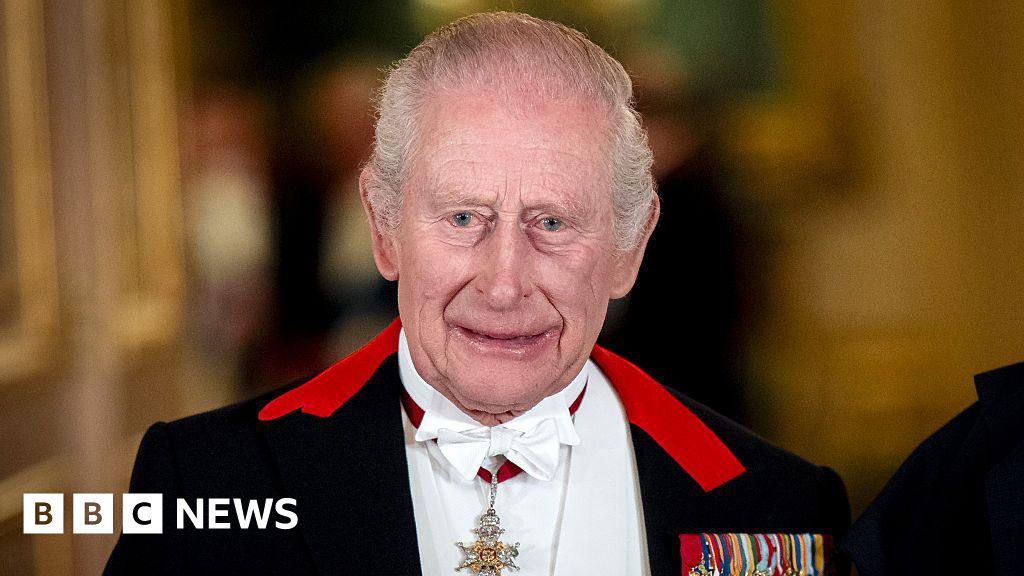
King Charles should meet Epstein victims, US lawmaker says
While the trip is not officially confirmed, the King and Queen Camilla are reportedly planning to visit the US at the end of April.
Read More -
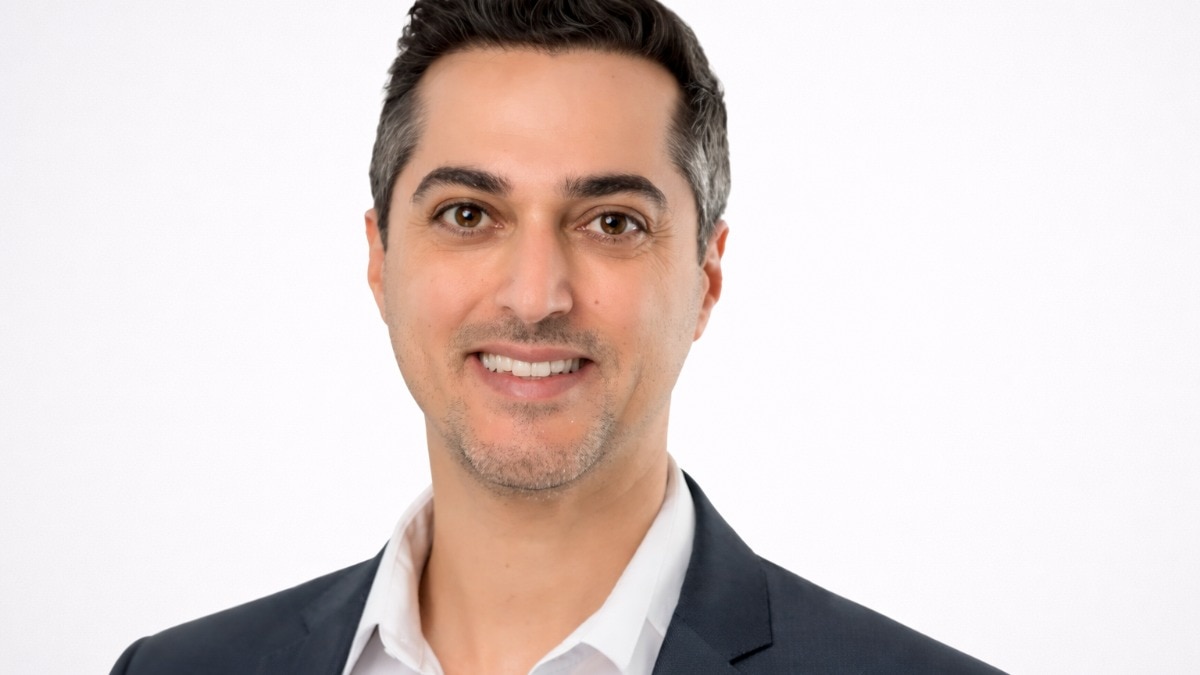
‘Disregard the status quo’: Ex Google executive reveals how he climbed the ranks quickly
A former executive at Google says his rapid rise inside the tech giant did not come from following the usual corporate playbook — it came from breaking it.
Alon Chen joined Google in 2006 at the age of 23 with no formal marketing background and no industry connections. Within five years, he had become a Chief Marketing Officer responsible for markets including Israel and Greece, helping build a $2-billion product line across more than 30 countries while earning a high six-figure salary and a seven-figure equity package.
Looking back, Chen says the climb felt straightforward once he stopped treating company rules as fixed barriers.
In an interview with Fortune, Chen said the key was questioning the status quo and acting on what he believed was the right course of action.
“Climbing up was fairly natural and easy, simply because I just disregarded all the status quo and the rules and realized what’s the right thing to do, and went all the way with it,” he said.
Asked for a promotion before the rules allowed it
At Google, employees are typically expected to wait at least two years before seeking a promotion. Chen chose not to follow that timeline.
Less than a year into his role, he approached his manager directly and made his case.
“I just told my manager, listen, I know this is a year thing. Look what I’ve been able to achieve. It’s way more than anyone else. We’re going to put me up for promotion now,” he said.
Chen believes many employees limit their growth by accepting company systems without questioning them.
“We have all these rules, we have all these benchmarks, we have all these processes,” he said. “That’s what’s going to happen for most of you.”
Launched a project even without approval
Chen also recalled a moment when he moved ahead with a major initiative despite not receiving approval from senior leadership.
While working on expanding the Google Partners programme internationally, his proposal was initially rejected by internal teams. Instead of shelving the idea, he decided to launch it in other markets anyway.
The gamble worked.
After the initiative proved successful internationally, senior teams approached him with a new request: expand the programme into North America as well.
Chen says corporate environments can sometimes discourage initiative.
“Corporate America can put you in these frames that discourage you,” he said, adding that the most successful people are often those willing to take calculated risks inside organisations.
Entrepreneurship started in his teenage years
Chen’s unconventional approach began long before his time at Google.
Growing up near Tel Aviv, his family faced financial difficulties after his father was injured in a motorbike accident. That experience pushed him to start working early.
At the age of 12, he began coding, although upgrading his computer became difficult because his family could not afford new hardware.
By 15, he started negotiating with importers for computer parts and assembling machines himself. Soon he began selling computers to small businesses while still in high school.
“It was my first entrepreneurial adventure,” he said, adding that the venture eventually grew into a sizable business serving thousands of small and medium-sized businesses.
Leaving Google for his own startup
Despite holding a senior role and earning a lucrative compensation package, Chen eventually decided to leave Google to build his own company.
He went on to found Tastewise, an artificial intelligence platform that helps food companies analyse consumer trends and develop new products.
The platform is now used by major food companies including PepsiCo, Nestlé, Mars, Incorporated, Kraft Heinz, Campbell Soup Company and Givaudan. The company has raised more than $71 million in funding.
The idea for the business came from a surprisingly simple source — a family WhatsApp group where Chen’s mother would ask everyone what they wanted to eat before cooking.
Although he says he now earns less as a startup founder compared to his corporate salary, Chen says he has no regrets about leaving.
For him, the decision was about building something of his own rather than following a traditional career path.
-
Uzbekistan reports more than 20-fold increase in trade with Portugal
Economy
Materials
31 March 2026 07:22 (UTC +04:00)
Uzbekistan’s trade with Portugal has surged sharply, reflecting a rapid expansion in bilateral economic ties and shifting trade dynamics.Access to paid information is limited
If You already have an account, please log in
Subscription to paid content
Gain access to all that Trend has to offer, as well as to premium, licensed content via subscription or direct purchase through a credit card.