Blog

  • Are fuel cuts back on the table? – POLITICO

    Are fuel cuts back on the table? – POLITICO


    Europe is facing another potential energy shock — and this time, Brussels is starting to float something politically tricky: using less fuel.

    Host Zoya Sheftalovich is joined by POLITICO’s senior EU politics editor Ian Wishart to break down a warning from Brussels that points to a possible need to cut fuel use, as fears grow of a prolonged disruption linked to the war in Iran.

    They also zoom in on Kyiv, where EU foreign ministers are marking the anniversary of the Bucha massacre of March 2022 while pushing forward plans for a special tribunal to prosecute Russia’s war of aggression.

    And back in Brussels, a €3.6 million plan from the Committee of the Regions is raising eyebrows — and prompting questions about priorities.

    If you have questions or comments, you can reach us on our WhatsApp at +32 491 05 06 29.


    Read More

  • Switzerland’s first Alpine solar plant exceeds power expectations

    Switzerland’s first Alpine solar plant exceeds power expectations


    First Alpine solar power plant produces more electricity than expected

    First Alpine solar power plant produces more electricity than expected


    Keystone-SDA

    The Madrisa Solar photovoltaic system produced more electricity than forecast in its first winter. According to the energy company Repower, the Graubünden plant is the first Alpine solar power plant in Switzerland.

    +Get the most important news from Switzerland in your inbox

    The plant generated around 1.5 gigawatt hours of electricity in the winter period from October to March, the energy company Repower announced on Tuesday. Around 3,600 solar modules were in operation during this period, which corresponds to around 20% of the planned total plant.

    The aim is to connect around 70% of the plant to the grid by November. The largest construction phase of the project will begin at the start of May with full commissioning expected by the end of 2027.

    Plant designed for winter electricity

    The plant is located at around 2,000 metres above sea level and is designed for high winter power generation. After the first snowfall, the output increased by around 15% thanks to the reflected light. This was made possible by so-called bifacial solar modules, which produce electricity on both sides.

    More

    The electricity produced is used by Elektrizitätswerke des Kantons Zürich (EKZ) and Bergbahnen Klosters-Madrisa. Together with their own systems, the mountain railways have generated more energy than they need to operate during the winter season, Repower added.

    The plant was built by Madrisa Solar AG. Repower, EKZ and the municipality of Klosters each hold a one-third stake in the company. The total investment amounts to CHF70 million ($87 million).

    Two other large Alpine solar plants are currently being built in Graubünden as part of the federal government’s Solar Express programme: NalpSolar by Axpo and SedrunSolar by Energia Alpina. Both are located in the municipality of Tujetsch in the Surselva region. Madrisa Solar was the first of these plants to be connected to the grid last September as part of the Solarexpress programme.

    Translated from German by AI/jdp

    We select the most relevant news for an international audience and use automatic translation tools to translate them into English. A journalist then reviews the translation for clarity and accuracy before publication.  

    Providing you with automatically translated news gives us the time to write more in-depth articles. The news stories we select have been written and carefully fact-checked by an external editorial team from news agencies such as Bloomberg or Keystone.

    If you have any questions about how we work, write to us at english@swissinfo.ch

    Read More

  • Le Parlement israélien instaure «un régime de peine capitale raciste»

    Le Parlement israélien instaure «un régime de peine capitale raciste»


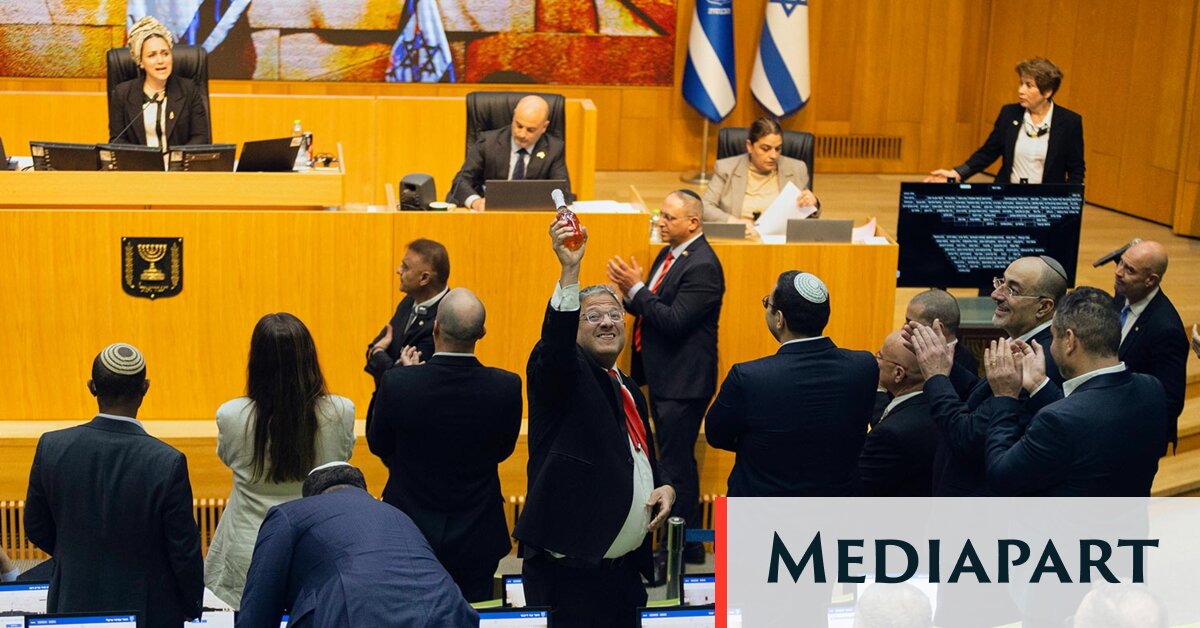
    Par 62 députés contre 48 et malgré les vives indignations que suscite le texte, la Knesset a voté lundi 30 mars une loi qui instaure la peine de mort pour les coupables – uniquement palestiniens – de meurtre «terroriste».

    Read More

  • USA Must Rediscover Intensity In Tuneup v. Portugal: ‘That’s Non-Negotiable’

    USA Must Rediscover Intensity In Tuneup v. Portugal: ‘That’s Non-Negotiable’


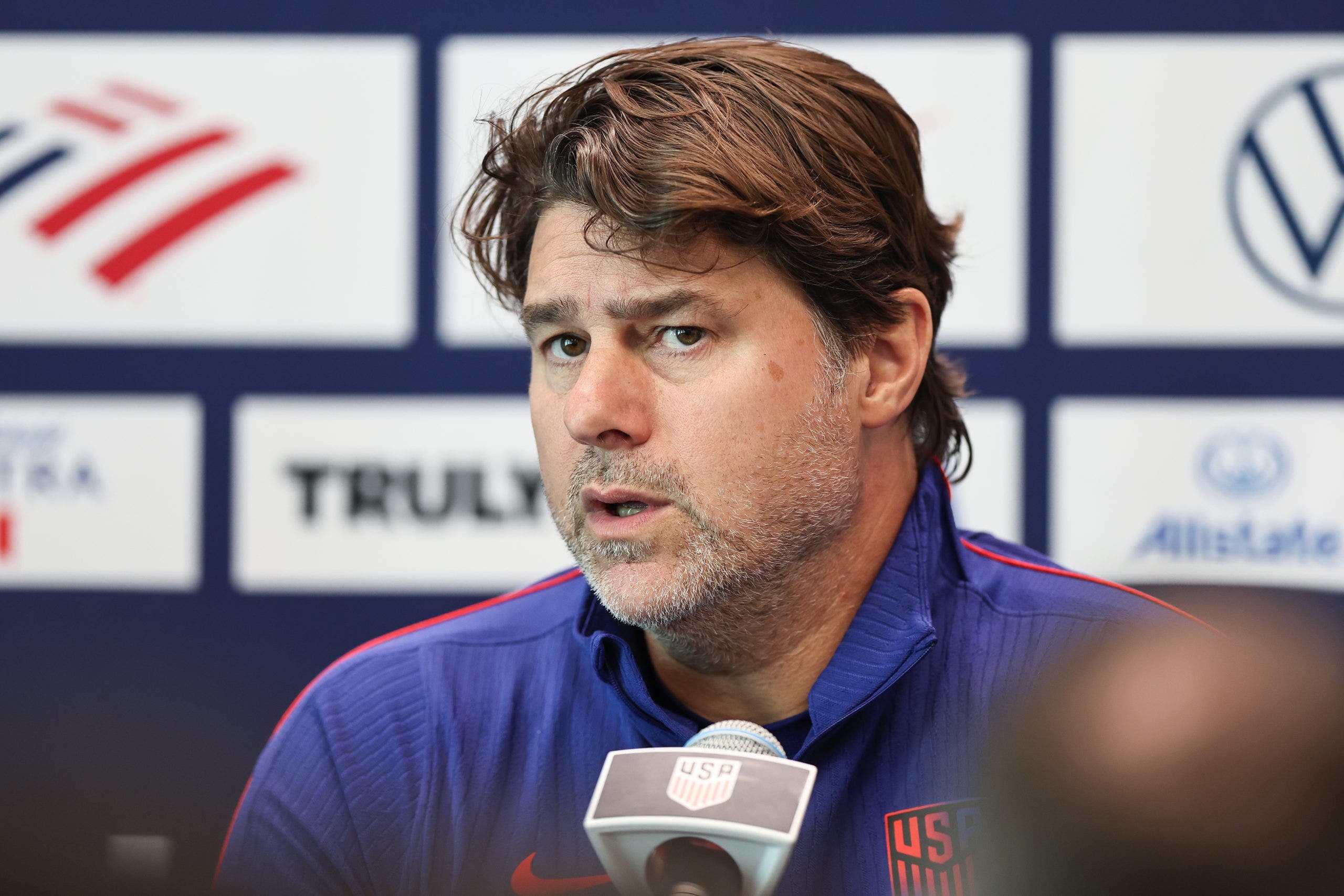
    MARIETTA, Ga. As he settled into his podium seat for Monday’s packed pre-match press conference inside the sprawling and pristine training facility of MLS side Atlanta United, U.S. men’s national team coach Mauricio Pochettino cut a businesslike figure.

    (Photo by Omar Vega/Getty Images)

    The Argentine answered the first dozen or so questions matter-of-factly, displaying little sign of the charm that endeared him to fans of clubs across Europe — including the all-world squads like Chelsea and Paris Saint-Germain — during the 15 years he spent managing on the continent.

    Will Defender Chris Richards Play vs. Portugal?
    World Cup Schedule, Matches

    Exactly 24 minutes into the back-and-forth with reporters, Pochettino’s demeanor changed. Asked how the American squad can keep its intensity high for all 90 minutes, something it failed to do in Saturday’s 5-2 capitulation against Belgium, in Tuesday’s World Cup preparation match versus No. 6-ranked Portugal, the 54-year-old instantly became animated. He gesticulated as he spoke. That trademark charisma was suddenly on full display.

    “If you watched the game [between] France and Colombia, that is intensity,” said Pochettino, referring to Sunday’s exhibition between the 2018 World Cup champions (and 2022 runners-up) and Los Cafeteros in Landover, Maryland. Les Bleus won 3-1, yet the victory was anything but comfortable. 

    “You can win, or you can lose,” Pochettino said. “But do you think the coach of Colombia, [despite] losing the game, is going to complain about [the effort of] some players? They played like this was the final of the World Cup. And France, when they saw the intensity and the aggression of Colombia, said, ‘If we aren’t as intense, they’ll kill us.’ That is intensity.”

    (Photo by Johnnie Izquierdo/USSF/Getty Images)

    In stark contrast, the U.S. all but folded up shop when a Belgian penalty put the home side down two goals on Saturday with more than 30 minutes of the contest still left to play. The response, goalkeeper Matt Turner and others said afterward, should’ve been the opposite. As the saying goes: If you can’t beat them, beat them up.

    Pochettino didn’t go that far, of course. And although English is his third language after his native Spanish and the French he learned playing as a central defender for Ligue 1 sides PSG and Bordeaux in the early 2000s, he couldn’t have expressed himself more clearly.

    This isn’t the first time intensity has been a problem for the Americans since Pochettino arrived on these shores 18 months ago.

    Exactly this time last year, a flat and toothless USA dropped home games to regional foes Panama and Canada in the Concacaf Nations League finals.

    Pochettino was so upset that he and his staff “destroy[ed] what we needed to destroy” and began to rebuild the team in his own image by bringing in a gaggle of newcomers who have since become mainstays. By the end of last year, the lack of fight was no longer an issue: The U.S. literally brawled toward the end of a November win over Paraguay before beating the brakes off two-time World Cup champ Uruguay — arguably the hardest team, pound for pound, on planet fútbol.

    It’s something Poch’s lot must rediscover between this month’s two games.

    “It’s a conscious decision. It’s just an overall effort,” captain Tim Ream said when asked why the U.S. faded so badly against Belgium at Mercedes-Benz Stadium. “It’s not that guys don’t want to do it. I think sometimes it’s like ’I’ve just made an effort,’ and now it’s about making the second, the third, the fourth. And sometimes, that doesn’t happen.

    “That’s something that’s non-negotiable, really,” Ream continued. “It’s something that we were doing really well in the fall last year. And it’s something we have to get back to.”

    Pochettino noted on Monday that unlike last autumn, his players have been inundated with pre-World Cup media responsibilities this week. That wasn’t the case in November or in the two international windows that preceded it. Yet he also pointed out that it’s not a switch that can simply be turned on when the World Cup kicks off in June. That’s the big lesson from Saturday. It’s the mandate for Tuesday. 

    (Photo by Andrew J. Clark/ISI Photos/USSF/Getty Images)

    The 2026 World Cup co-hosts still might not win the match. Portugal has a legitimate chance of hoisting the most coveted trophy in sports next July 19. Even at home, the U.S. would require a miracle even to reach the final four. Failure to rediscover their pugilistic spirit could end in catastrophe. As Pochettino asked rhetorically of whoever his team comes up against next summer: “Do you think that they are not going to fight?” 

    “There’s still time to realize that we need to compete,” he reiterated on Monday. “The players need to believe in that.”

    We’ll find out on Tuesday how much. 

    2026 FIFA World Cup: How To Watch

    The World Cup will run from June 11–July 19, 2026. Spread across three countries, the tournament will culminate with the final on July 19 at New York New Jersey Stadium in East Rutherford, New Jersey. All 104 tournament matches will air live across FOX (70) and FS1 (34) with every match streaming live and on-demand within both the FOX One and the FOX Sports apps. 

    Read More

  • Who are the Artemis II astronauts heading to the Moon?

    Who are the Artemis II astronauts heading to the Moon?


    The crew, who are accomplished pilots, engineers and scientists, reveal their hopes, fears and family sacrifices.

    Read More

  • Infosys Took 18,000 Freshers So Far In FY26, CFO Says Amid Attrition Dip


    The total employee count rose by 5,043 sequentially to 3,37,034 in the December quarter.

    Read More

  • UN condemns killing of two more peacekeepers in Lebanon

    UN condemns killing of two more peacekeepers in Lebanon


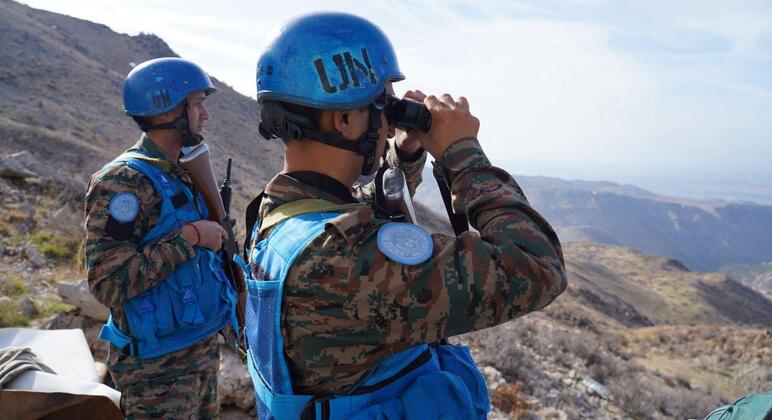
    Two Indonesian peacekeepers were killed on Monday, and two more were injured, in an explosion that hit a UNIFIL logistics convoy, destroying their vehicle.

    The incident took place near Bani Hayyan in southern Lebanon a day after another Indonesian blue helmet was killed when a projectile hit the mission’s base in Ett Taibe and exploded.  

    A colleague – who was critically injured and evacuated to the capital, Beirut –remains in hospital. 

    Never a target 

    UNIFIL is conducting investigations “to determine the circumstances of these tragic developments,” the head of UN Peace Operations, Jean-Pierre Lacroix, said in New York. 

    We strongly condemn these unacceptable incidents. Peacekeepers must never be a target,” he told journalists at a press briefing at UN Headquarters. 

    “We also remain seriously concerned about several aggressive behaviour incidents against UNIFIL peacekeepers in the past couple of days,” he added. 

    Widening regional risks 

    Mr. Lacroix affirmed that UN peacekeepers “remain on the ground, carrying out Security Council-mandated tasks, in these extremely dangerous conditions.”  

    Tensions continue to rise in the Middle East more than a month after the United States and Israel bombed Iran, prompting Iran to carry out retaliatory strikes on several countries in the region. 

    At the outset, UN Secretary-General António Guterres warned that the crisis risked “igniting a chain of events that no one can control in the most volatile region of the world.” 

    Since 2 March, more than 1,200 people in Lebanon have been killed in the escalation in hostilities between Hezbollah and Israel, said UN Special Coordinator for the country Jeanine Hennis-Plasschaert.

    Determining the circumstances 

    Following the deadly shelling incident on Sunday, UNIFIL Spokesperson Kandice Ardiel told UN News that a probe was underway but will take time. 

    “For the moment, we don’t have a clear idea of exactly what happened, but that’s what the investigation will find out,” she said. 

    “Once we have that investigation concluded, per usual practice we’ll share that with the parties. And depending on the result, if we find a party responsible, we will let them know and we will formally protest that to them.” 

    Service and sacrifice 

    More than 8,000 peacekeepers from nearly 50 countries serve with UNIFIL.  These men and women “demonstrate utmost courage and commitment to advancing international peace and security far away from home,” said Mr. Lacroix. 

    The mission was established in 1978 by the UN Security Council to confirm the withdrawal of Israeli forces from southern Lebanon, restore international peace and security, and assist the Lebanese Government in ensuring the return of its effective authority in the area. 

    It has played an important role in advancing peace and security, including by patrolling the Blue Line of separation between the two countries. 

    ‘A very dangerous and volatile situation’ 

    Peacekeepers also assist in implementing the Security Council resolution that brought an end to more than 30 days of hostilities between Israeli forces and Hezbollah in 2006. 

    The current clashes have led to “a multiplicity of violations” of resolution 1701 (2006), Mr. Lacroix said, citing strikes in both directions across the Blue Line as well as the presence of Israeli forces in Lebanon. 

    We’ve seen a great deal of Israeli incursions into South Lebanon in different areas, including near our headquarters in Naqoura, where about a week or so ago, in past days, we had some very violent battles that we could hear taking place,” said Ms. Ardiel. 

    “Our headquarters here was impacted by bullets, by shrapnel. Rockets even impacted in our headquarters, so it was a very dangerous and volatile situation.” 

    No military solution 

    Mr. Lacroix was adamant that hostilities can only be resolved through diplomatic means. 

    There cannot be a military solution. There has to be a political solution,” he said. 

    “The framework is there for a political solution – resolution 1701 – to which all the parties are still committed, to the best of what we hear from them.” 

    Read More

  • UK to hike price of Electronic Travel Authorisation for foreign travellers

    UK to hike price of Electronic Travel Authorisation for foreign travellers


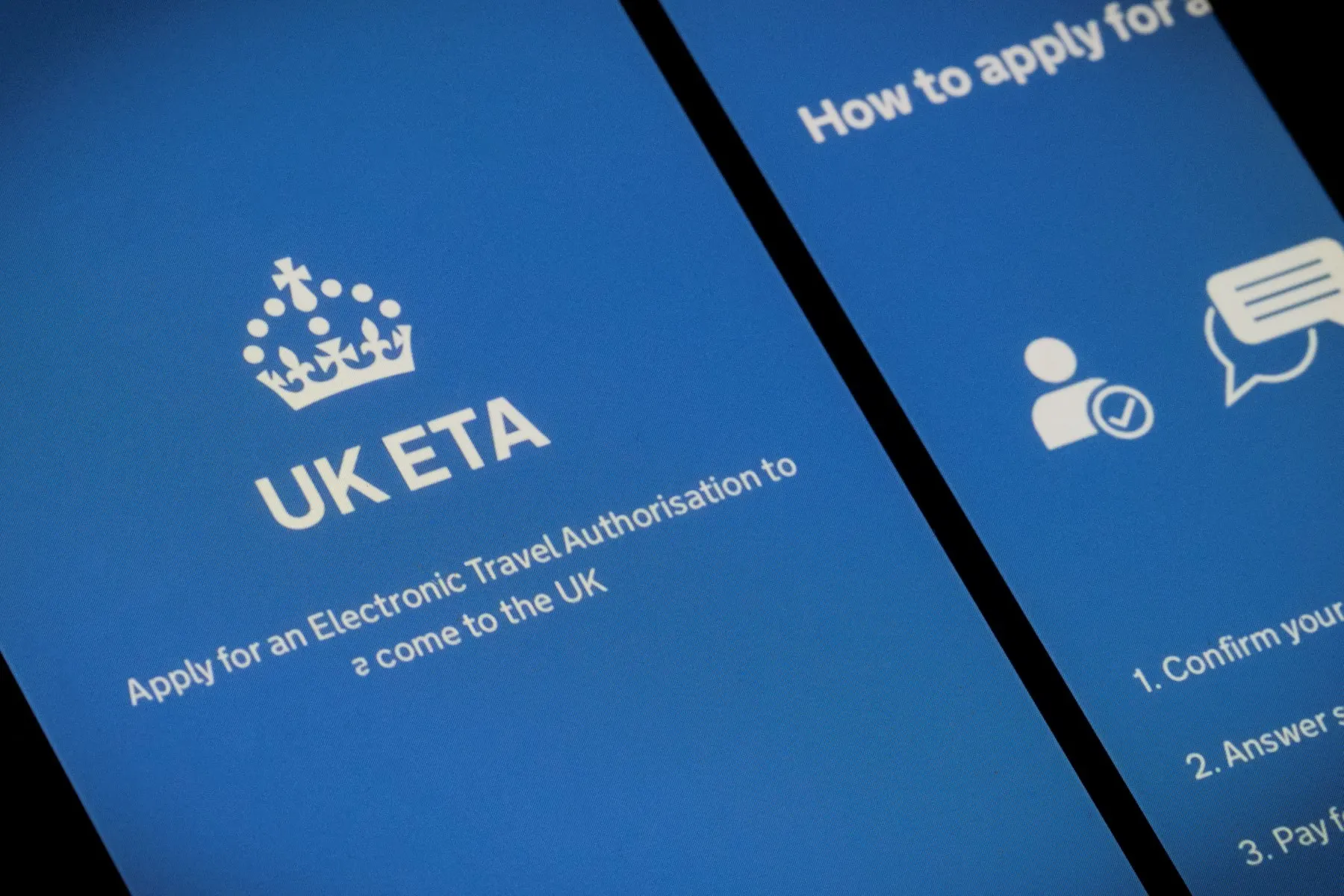
    The UK government is set to further increase the cost of the Electronic Travel Authorisation (ETA) for travellers from Europe, coinciding with the implementation of tougher entry rules.

    The UK government is set to hike the cost of its new Electronic Travel Authorisation (ETA) by a further 25 percent.

    From April 8th the fee will rise from £16 to £20 (€18 to €23), a 25 percent increase. This follows a previous increase from £10 to £16 that was implemented in 2025. 

    “As with all our fees, the cost of an ETA is kept under review, and we intend to increase the cost of an ETA to £20 in the future. We will provide more information in due course,” a previous statement from the Home Office said.

    The rise would roughly bring the ETA price in line with the EU’s ETIAS travel authorisation coming in at end of 2026, which will be €20.

    READ ALSO: When will Europe roll out its ETIAS visa waiver for non-EU travellers?

    The UK first introduced its Electronic Travel Authorisation (ETA) in 2023, gradually rolling it out so that by April 2025 it was compulsory for anyone entering the UK – with the exception of those travelling on a UK or Irish passport.

    This implementation phase ended in February 2026, with the UK now imposing the rules more strictly.

    The UK government has said foreign travellers who don’t have the ETA will be denied entry, or denied boarding if travelling by plane.

    The Local has reported how the rules have led to young dual national Britons being stranded abroad because the Home Office now insists they need a valid British passport to enter the UK.

    READ ALSO: Young British dual nationals barred from flights home over new passport rules

    Advertisement

    What is ETA?

    The Electronic Travel Authorisation is essentially a visa waiver.

    Its introduction ends paperwork-free travel to the UK for people from countries where a visa is not required for a short stay – including Americans, Canadian, Australians and citizens of all EU/EEA countries.

    Only people who are travelling on a valid UK or Irish passport are exempt from the new requirement. People who have a British long-stay visa or residency status should show that at the border instead.

    There is no exemption for EU nationals who are married to a British citizen.

    Travellers must apply for the ETA in advance of travel, and it can only be obtained online – find full instructions on how to get one HERE.

    Advertisement

    An ETA must be obtained for each traveller, including children.

    It is advised to apply for it at least three days in advance of travel, although the UK government says that “most applications are processed in minutes”. Once obtained, it is valid for two years – unless you get a new passport during that period.

    Be careful that you are on the correct Gov.uk website or app, there are a lot of scam websites, as well as companies that will charge you far in excess of the official fee to get the ETA for you. 

    Read More

  • Intrum: Inkassofirma treibt Geld für falsche Forderungen ein

    Intrum: Inkassofirma treibt Geld für falsche Forderungen ein


    Intrum: Inkassofirma treibt Geld für falsche Forderungen ein

    Die Einschätzung fusst auf einem Ärgernis, das Reutler, die eigentlich anders heisst, schon fast vergessen hatte. 2015 forderte das Inkassounternehmen Intrum von ihr Fr. 52.65 für angebliche Roamingkosten beim Handyanbieter Tele 4U, einem Tochterunternehmen von Sunrise.

    Read More

  • France rolls out targeted fuel aid as truckers stage Paris protest

    France rolls out targeted fuel aid as truckers stage Paris protest


    The French government has pledged targeted support for industries hit by surging fuel prices linked to tensions in the Middle East, while warning that broad, across-the-board financial relief is no longer sustainable. This comes as truck and bus drivers drivers staged a “go slow” protest in Paris.

    Issued on:


    2 min Reading time

    Speaking on Monday, Transport Minister Philippe Tabarot stressed that while the French state would “do everything” to support struggling sectors, public finances limit how far it can go. “The cheque book can no longer be used for all our fellow citizens,” he said, adding that aid must now be carefully directed.

    The remarks come as road hauliers ramp up pressure on the government, staging a so-called “snail operation” protest in Paris.

    Police said between 150 and 200 coaches and lorries were expected to crawl along the capital’s ring road between 10:00am and 12:00pm, causing significant disruption but remaining under police supervision.

    France launches nationwide petrol station inspections as fuel prices jump

    Targeted support under scrutiny

    The government last week unveiled a €70 million support package for April aimed at cushioning the blow from rising fuel costs. Of this, €50 million is earmarked for the road transport sector, equating to a subsidy of 20 cents per litre.

    Tabarot defended the measures, underlining the strategic importance of transport to the French economy. “We need them,” he said, noting that the movement of goods and passengers accounts for 90 percent of transport activity in the country.

    However, many in the sector argue the aid falls short of what is needed to offset rapidly rising costs. Hauliers have been particularly vocal, warning that smaller operators risk going under if prices remain elevated.

    The minister also pointed to shared responsibility across the supply chain, suggesting that clients and upstream shippers should contribute more to easing the pressure.

    G7 ministers urge end to attacks against civilians in Mideast war

    No price cap – but flexibility promised

    Meanwhile, France’s Finance Minister Roland Lescure signalled that while direct price controls are off the table, other interventions remain possible. In an interview with  La Tribune Dimanche newswpaper, he described the €70 million package as significant, but ruled out introducing a cap on fuel prices.

    Instead, he indicated that regulating profit margins could still be considered if necessary.

    A broader international response is also under discussion. The minister is set to chair a videoconference on Monday with counterparts from the G7, alongside energy ministers and central bankers, reflecting growing concern among major economies over the impact of the crisis.

    French officials have repeatedly emphasised the uncertainty surrounding the situation. “We have no clear timeline for this crisis,” Tabarot said, adding that support measures would be adjusted depending on how events in the Middle East unfold.

    For now, the government is walking a careful line – offering targeted relief while urging restraint, even as pressure mounts from sectors feeling the immediate strain of rising fuel costs.

    (with newswires)

    Read More