Blog

  • Pourquoi les partis de centre gauche en Europe enchaînent les revers électoraux

    Pourquoi les partis de centre gauche en Europe enchaînent les revers électoraux


    Les partis sociaux-démocrates européens s’effondrent et leurs dirigeants ne semblent pas savoir comment inverser la tendance.

    Pendant la majeure partie du XXe siècle, les partis de centre gauche, ancrés dans les syndicats et le monde ouvrier, ont été parmi les forces politiques dominantes en Europe.

    Mais aujourd’hui, nombre d’entre eux sont politiquement méconnaissables, ou en grande difficulté.

    Le dernier exemple en date est celui des sociaux-démocrates de la Première ministre danoise, Mette Frederiksen, qui ont réalisé la semaine dernière une chute spectaculaire lors des élections législatives. Bien que le parti ait obtenu le plus grand nombre de voix, ses résultats sont les pires depuis 1903.

    L’électorat ouvrier, mécontent de l’inaction du parti sur les questions liées au coût de la vie, s’est tourné vers le Parti populaire danois, une formation d’extrême droite, tandis que les électeurs de gauche, désapprouvant la volonté de Mette Frederiksen de s’allier avec le centre droit et d’adopter une ligne dure sur l’immigration, ont fait défection au profit du Parti populaire socialiste.

    Giacomo Filibeck, secrétaire général du Parti socialiste européen — l’entité paneuropéenne qui comprend tous les partis sociaux-démocrates nationaux du Vieux Continent — a estimé auprès de POLITICO que les mauvais résultats étaient attribuables à la “colère” suscitée par la gestion de la crise du coût de la vie par le parti de centre gauche au pouvoir. La question est devenue plus pressante “en raison de la guerre en Iran, qui a augmenté les prix de l’énergie et plus encore”, a-t-il complété.

    Vagn Juhl-Larsen, président local du parti social-démocrate au Danemark, a été plus direct. “Les électeurs n’ont aucun respect pour un parti qui ne poursuit pas sa propre politique”, a-t-il taclé, reprochant aux dirigeants de la Social-démocratie d’avoir renoncé aux valeurs politiques “rouges”.

    Le cas danois n’est pas unique.

    Après trente-cinq ans de règne ininterrompu, le Parti social-démocrate d’Allemagne (SPD) a perdu son emprise sur l’Etat industriel de Rhénanie-Palatinat lors des élections régionales de la semaine dernière, où le débat sur la stagnation de l’économie a dominé la campagne. Cette défaite fait suite à celle du 8 mars dans le Bade-Wurtemberg, où le SPD n’a obtenu que 5,5% des suffrages.

    En France, pendant ce temps, le centre gauche a conservé des villes clés, telles que Paris et Marseille lors des élections municipales de ce mois-ci, mais brille par son absence au niveau national. Au cours de la dernière décennie, le Parti socialiste, autrefois dominant, a connu un tel déclin qu’il a été contraint de vendre son siège historique pour rembourser ses dettes. Aujourd’hui, il ne détient plus que 65 des 577 sièges de l’Assemblée nationale.

    “Le centre gauche ne semble pas savoir quelle est sa place en Europe à l’heure actuelle”, a observé l’analyste politique Rodrigo Vaz, ancien attaché adjoint à la représentation permanente du Portugal auprès de l’UE. “Cette crise d’identité l’a conduit à défendre des programmes politiques qui ne se distinguent pas de ceux du centre droit — une stratégie qui n’est ni claire ni attrayante pour les électeurs.”

    Le dilemme du centriste

    Le centre gauche en Europe s’est construit en s’appuyant sur les travailleurs dans l’industrie, les syndicalistes et les communautés ouvrières — une base qui a autrefois porté au pouvoir des dirigeants comme Willy Brandt et François Mitterrand.

    Mais ce monde n’existe plus. Depuis le milieu des années 1980, la désindustrialisation a réduit la main-d’œuvre ouvrière traditionnelle, tandis que le nombre de syndiqués a diminué sur tout le continent. Les partis sociaux-démocrates européens n’ont pas encore trouvé de réponse cohérente aux changements survenus dans leur bloc électoral traditionnel.

    “Le centre gauche doit encore proposer un nouveau contrat social qui réponde aux préoccupations de la société moderne”, est convaincu Rodrigo Vaz. “Il n’y a pas de discours clair sur la position des sociaux-démocrates concernant l’automatisation, l’intelligence artificielle ou l’avenir du travail.”

    Au fur et à mesure que leur électorat se rétrécit, de nombreux partis de centre gauche se sont rapprochés du centre “dans une tentative malavisée, et finalement vouée à l’échec, de plaire à tout le monde”, a poursuivi Rodrigo Vaz.

    Pour cet analyste politique, l’ancien chancelier allemand et leader du SPD, Olaf Scholz, est “tombé dans le piège centriste”, alors qu’il gouvernait en coalition avec les Verts et le Parti libéral-démocrate de 2021 à 2025, ne parvenant pas à atteindre des compromis sur des questions majeures, telles que la crise climatique ou la compétitivité de l’industrie allemande.

    Selon Rodrigo Vaz, le Premier ministre britannique Keir Starmer commet une erreur similaire en adoptant un “centrisme inefficace” qui alimente le mécontentement des électeurs confrontés à la crise du coût de la vie et à l’érosion de l’Etat-providence.

    “Les électeurs veulent une réponse claire à des problèmes concrets, tels que le coût du logement”, a-t-il ajouté, soulignant le déclin du Parti socialiste au Portugal, qui est passé du contrôle de la majorité absolue du Parlement en 2024 à son remplacement par le groupe d’extrême droite Chega en tant que principal parti d’opposition du pays l’année dernière.

    Rodrigo Vaz a affirmé que l’actuel président du Conseil européen, António Costa, qui a été Premier ministre du Portugal pendant huit ans, avait laissé passer l’occasion d’entreprendre des réformes structurelles et de s’attaquer à la flambée des prix de l’immobilier. “Les électeurs historiques du parti — la classe ouvrière — n’ont pas disparu, ils ont simplement cessé de les soutenir et, dans certains cas, sont passés à l’extrême droite qui s’est emparée de la colère générée par la crise du coût de la vie”, a-t-il argumenté.

    Les partis sociaux-démocrates semblent commencer à écouter les électeurs.

    En Allemagne, le vice-chancelier et codirigeant du SPD, Lars Klingbeil, a prononcé mercredi dernier un discours sur les réformes dans lequel il a annoncé des baisses d’impôts pour 95% des contribuables allemands et des hausses pour les riches.

    Tobias Cremer, eurodéputé social-démocrate allemand, a expliqué l’annonce avait été motivée par les mauvais résultats obtenus lors des élections régionales et qu’elle montrait que le parti était sérieux dans sa volonté d’agir “sur les questions du quotidien”.

    “Il s’agit de croissance économique, de justice sociale, mais aussi de réformer notre économie de manière à ce que ce soit à nous de déterminer comment nous travaillons, et non à la Maison-Blanche, au Kremlin ou à la Chine”, a-t-il ajouté.

    Le choc Trump

    Le président américain Donald Trump, dont les provocations ont contribué à mobiliser certains électeurs, a donné un coup de pouce improbable au centre gauche en Europe.

    Le président américain Donald Trump a donné un coup de pouce improbable au centre gauche en Europe. | Alex Wong/Getty Images

    Le député européen Tobias Cremer en est persuadé : les sociaux-démocrates danois, qui sont au pouvoir depuis 2019, auraient probablement subi une défaite encore plus grave lors de l’élection sans le refus de Mette Frederiksen de céder aux menaces de Trump d’annexer le Groenland ; une attitude qui lui a fait gagner la sympathie des électeurs.

    “Nos camarades au Danemark ont fait un travail remarquable, ils ont en fait progressé dans de nombreux sondages, alors qu’ils partaient d’une position beaucoup plus difficile”, a-t-il souligné. “Si vous êtes au gouvernement […] depuis des années, il est très fréquent que vous soyez dans une situation difficile, et ils ont déjà montré qu’en tenant tête à Trump, mais aussi dans le domaine de la politique intérieure, ils parviennent à rattraper une bonne partie de leur retard.”

    Mais le centre gauche européen sait qu’il ne peut pas baser l’ensemble de son programme sur des messages anti-MAGA (Make American Great Again, le slogan de Donald Trump). La voie à suivre, selon certains, est l’exemple du Premier ministre espagnol Pedro Sánchez. Il est le chef d’un des seuls partis sociaux-démocrates qui reste populaire auprès des électeurs, en partie parce qu’il a adopté une position ferme sur les questions progressistes et sur le fait de gouverner avec des partenaires situés à l’extrême gauche de l’échiquier politique.

    Un haut responsable du gouvernement espagnol, à qui l’on a accordé l’anonymat pour qu’il puisse s’exprimer librement, a expliqué qu’alors que la plupart des gouvernements européens de centre gauche se sont “transformés en machines axées sur la gestion de l’urgence du moment” dans une ère de crise constante, les gouvernements de Pedro Sánchez ont profité des défis, comme la pandémie de Covid et l’invasion de l’Ukraine par la Russie, pour mettre en place des programmes progressistes, à l’image du revenu minimum de base et de l’augmentation des investissements dans les énergies renouvelables.

    “Presque tout le monde s’est concentré sur le rétablissement du statu quo”, a pointé le haut responsable. “Nous nous sommes attachés à le transformer.”

    Pour Pablo Simón, politiste à l’université Carlos III de Madrid, Pedro Sánchez a réussi à séduire les électeurs progressistes en “s’appropriant des thèmes défendus par ses rivaux politiques situés à gauche de son Parti socialiste : de l’énergie verte au féminisme, des politiques d’immigration libérales à la défense du statut d’Etat palestinien”.

    En embrassant “des valeurs sociales ouvertes et des mesures économiques quelque peu progressistes”, a retracé Pablo Simón, les socialistes espagnols sont devenus l’un des rares partis sociaux-démocrates à avoir réussi à conserver le soutien de ses électeurs au cours de la dernière décennie. Paradoxalement, cette stratégie compromet la capacité de Pedro Sánchez à rester au pouvoir à long terme.

    “Les partis situés à sa gauche sont en train de devenir superflus”, a observé Pablo Simón. “Cela peut lui coûter cher lors des prochaines élections, car sans eux, il aura du mal à obtenir une majorité pour gouverner.”

    Rasmus Buchsteiner et James Angelos ont contribué à cet article depuis Berlin.

    Cet article a d’abord été publié par POLITICO en anglais, puis a été édité en français par Jean-Christophe Catalon.
    Read More

  • European airports record longer waits at borders as EES deadline looms

    European airports record longer waits at borders as EES deadline looms


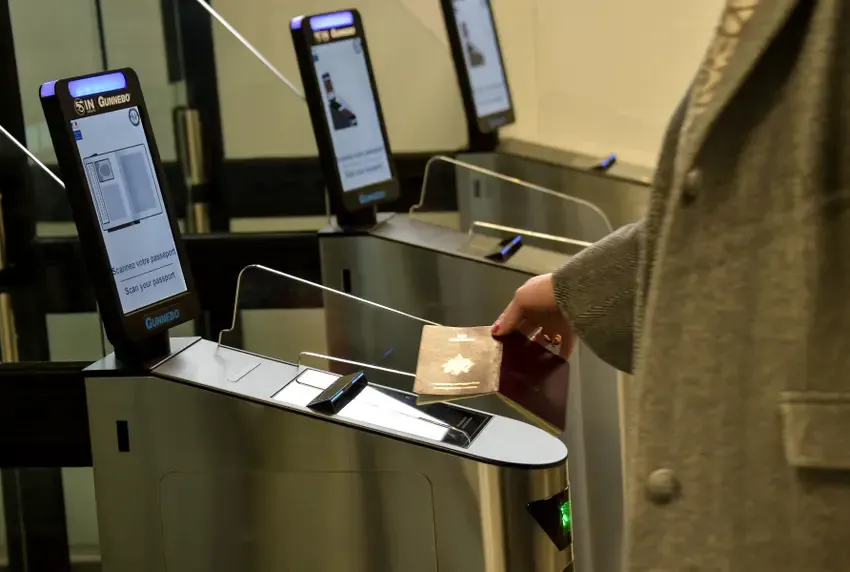
    European airports and airlines organisations issued on Monday the latest warning about the next implementation phase of the EU’s new biometric border system, “as the transition phase comes to an end right in the travel peak of the Easter holidays.”

    The Airports Council International (ACI Europe) and Airlines for Europe (A4E) have reported that the continued roll out of the EU’s Entry/Exit System (EES), in which passengers give finger prints and facial scans, is causing more and more delays around Europe. 

    The two organisation said in a joint statement on Monday that since March 10th, when the registration of 50 per cent of third country nationals travelling to the Schengen area became mandatory, there has been “a continued deterioration in waiting times at border crossing points”.

    READ MORE about EES passport checks

    “Waiting times are now regularly reaching up to two hours at peak traffic times, with some airports reporting even longer queues,” the groups added.

    This happens “despite the continued use by border control authorities of both the partial and full suspension of EES processes … during travel peaks,” the statement read.

    A spokesperson for ACI Europe said that, based on a survey conducted by the group, “several airports across Europe have had to partially or fully suspend the EES, including those in France, Italy, Spain, Portugal, Greece, Switzerland, Belgium and Germany”.

    READ MORE: EES border checks catch 4,000 over-stayers

    “Of those, Belgium, Greece, Portugal and Italy have seen some of the longest waiting times”, with airports of all sizes affected, including Brussels International in Belgium, Torino and Milan Malpensa in Italy, and Frankfurt Airport in Germany, “to name just a few.”

    She added that the list was “not exhaustive”.

    “It is clear that the issue is affecting a wide range of airports across Europe and has even led to passengers missing flights,” she said.

    The EES has being introduced gradually since October 12th 2025 across the 29 countries of the Schengen area (25 EU member states plus Iceland, Norway, Switzerland, and Liechtenstein) with the deadline for full implementation April 9th 2026.

    Advertisement

    “With the next critical milestones approaching – namely the requirement to register 100 per cent of third country nationals as of March 31st, followed by the end of the transition period on April 9th – airports and airlines warn that the situation risks deteriorating further,” the groups said in a statement.

    “From that point onwards, Member States will no longer be able to fully suspend the system in response to operational pressures, removing a key safeguard currently used to manage peak demand,” the statement said.

    The two organisations point at persisting problems regarding border control staff shortages, technical and maintenance issues with self-service kiosks, limited use of automated border control gates, reliability of the central IT system, and lack of availability of the EES preregistration app, currently deployed only in Sweden and Portugal.

    EES flexibility

    The two organisations called on the European Commission and EU Member States to “extend the possibility to fully or partially suspend… during the entirety of the 2026 summer season” and, if necessary, during winter too.

    A European Commission spokesperson said in January that member States will be able to partially suspend the EES over the summer. “After the completion of the roll-out, Member States will still be able to partially suspend EES operations where necessary during a period of an additional 90 days with a possible 60-day extension to cover the summer peak,” Markus Lammert said.

    “This will give Member States the necessary tools to manage potential extended queues,” he added

    Advertisement

    Biometric registration

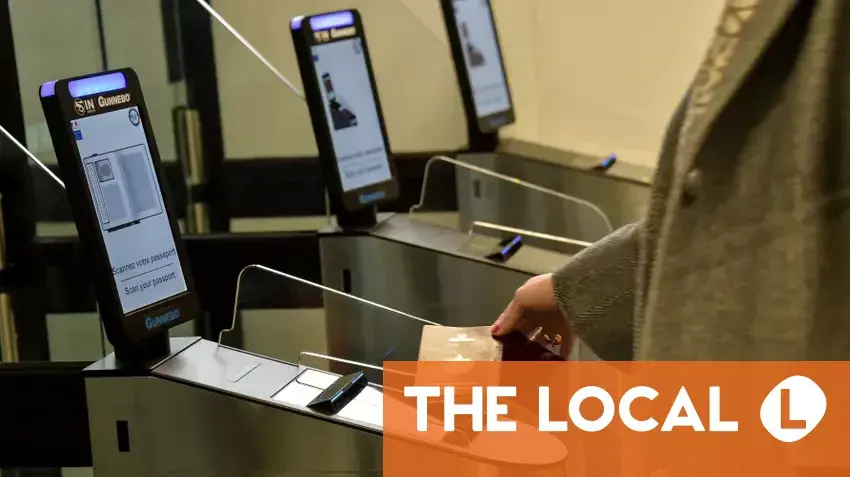
    The EES, which collects digital personal records of visitors from third countries and replaces the manual stamping of passports, requires passengers to register fingerprints and facial images the first time they cross an external Schengen border. The data is recorded in a Europe-wide database tracking each time travellers enter and exit the Schengen area, to avoid people staying beyond the limits of the 90/180 day rule.

    Last week the British government urged UK tourists travelling to the Schengen area around Easter to allow additional time and follow travel operators’ guidance. “As with all journeys, travellers should follow their travel operator’s guidance and allow time to complete these checks, particularly if they have connections or onward transport booked,” the government note said.

    Read More

  • Grâce à CNews, le racisme a encore de beaux jours devant lui

    Grâce à CNews, le racisme a encore de beaux jours devant lui


    Sur la chaîne de Vincent Bolloré, le maire de Saint-Denis Bally Bagayoko a été assimilé en deux jours, d’abord à un «singe», puis à un «mâle dominant», chef «d’une tribu primitive». Des propos ouvertement racistes qui démontrent la prégnance de l’assignation raciale en France.

    Read More

  • Rams HC Sean McVay Backs Puka Nacua; Mentions Kirk Cousins as Potential Backup QB

    Rams HC Sean McVay Backs Puka Nacua; Mentions Kirk Cousins as Potential Backup QB


    PHOENIX – Los Angeles Rams head coach Sean McVay isn’t ready to give up on talented wide receiver Puka Nacua

    McVay said the team was already aware of the latest off-field incident with Nacua that occurred on New Year’s Eve before a TMZ report made waves last week, and the Rams are continuing to gather information on that incident. 

    “I trust his heart,” McVay told reporters here at the NFL owners meeting on Monday. “I trust the human being. And I want to be able to put my arm around him. One of the most important things you can do as a coach is help guys grow. You don’t ever really say there’s one size that fits all. But what I’ve really leaned into the last couple years is let’s build and develop relationships, let guys continue to grow and give them grace in the middle of that journey.

    “But also, let’s have an understanding of what the expectations are and who you want to become.”

    Nacua faces a civil lawsuit for an alleged assault and battery by a woman who claims he made an antisemitic statement and bit her on the shoulder on New Year’s Eve. Nacua’s attorney, Levi McCathern, has already strongly denied that his client made any antisemitic statements. He described the bites as “horseplay.”

    Nacua had previously issued an apology last December after performing a gesture that plays upon antisemitic tropes while appearing on an internet live stream.

    McVay says Nacua’s off-the-field issues have not risen to the level that the Rams do not want him to be part of the team’s long-term plans. McVay doesn’t believe that Nacua’s behavior hasn’t reached the point of being a distraction to the team, either. 

    “He and I have a close relationship,” McVay said. “We communicate clear, open and honest. The play on the field is amazing. And with what the play has dictated and determined, there’s a responsibility in terms of representing all things, not exclusive to just that. 

    “He knows that. Those are the expectations, and we’re hopeful that this will be an opportunity for him to learn and grow. And we are real hopeful that he’s going to be a Ram for a really long time. But he understands what the responsibility is, not exclusive to the production on the field.” 

    The Seattle Seahawks recently made Jaxon Smith-Njigba the highest-paid receiver in the league, inking him to a four-year, $168.6 million contract. Nacua, 24, would seem to be the next receiver in line to receive a life-changing new deal as he enters the final year of his rookie contract. However, sources I spoke with around the league said Nacua might have to wait to get paid, pointing to how the Rams traditionally handle contract extensions, along with his issues away from the field. 

    “Good players get paid,” an NFL personnel executive recently told me. “[Smith-Njigba’s] numbers will look remarkably low in two years. Puka is a tough one, because his injuries, style of play and hiccups off the field have to be considered.”

    A fifth-round selection by the Rams in the 2023 draft, Nacua is entering the final year of his rookie deal and is set to make $5.77 million in 2026. Over the last three seasons, Nacua is second in receiving yards (4,191) and fourth in receptions (313). Last year, Nacua led the NFL with 129 receptions, with 1,715 receiving yards and 10 receiving touchdowns. 

    In other roster news for the Rams, McVay shared the team is still exploring the possibility of who will backup 38-year-old quarterback Matthew Stafford. Last year’s backup, Jimmy Garoppolo, remains unsigned, and third-string quarterback Stetson Bennett is the only quarterback other than Stafford currently on the roster.

    McVay threw another name into the ring on Monday. 

    “I would love to have Jimmy Garoppolo back with us,” McVay said. “That’s a big deal for us. He’s earned the right to be able to take his time and do whatever he wants. Is there an opportunity to explore if it’s not Jimmy, maybe it’s Kirk Cousins? Of course, I’d love to be able to see what that looks like.”

    Cousins, 37, is still a free agent after getting released by the Atlanta Falcons earlier in March. McVay has worked with Cousins in the past, serving as the quarterback’s offensive coordinator for three seasons when they were in Washington. 

    Read More

  • Palestinians convicted of deadly attacks face death penalty under new Israeli law

    Palestinians convicted of deadly attacks face death penalty under new Israeli law


    A member of Ben-Gvir’s party, Limor Son-Har-Melech, who survived an attack by Palestinian gunmen in which her husband was killed, argued that the law was necessary, citing the example of how one of her husband’s killers was later released and went on to take part in the 7 October 2023 attacks on Israel.

    Read More

  • Access Error


    The page you are trying to access is unavailable because we detected potential misuse. Please wait a moment and try again.

    For help please visit help.ft.com. We
    apologise for any inconvenience.

    The following information can help our support team to resolve this issue.

    Reason
    Access Blocked
    Request ID
    9e4a1908382fff63
    Status Code
    403

    Read More

  • European airports record longer waits at borders as EES deadline looms

    European airports record longer waits at borders as EES deadline looms


    European airports and airlines organisations issued on Monday the latest warning about the next implementation phase of the EU’s new biometric border system, “as the transition phase comes to an end right in the travel peak of the Easter holidays.”

    The Airports Council International (ACI Europe) and Airlines for Europe (A4E) have reported that the continued roll out of the EU’s Entry/Exit System (EES), in which passengers give finger prints and facial scans, is causing more and more delays around Europe. 

    The two organisation said in a joint statement on Monday that since March 10th, when the registration of 50 per cent of third country nationals travelling to the Schengen area became mandatory, there has been “a continued deterioration in waiting times at border crossing points”.

    READ MORE about EES passport checks

    “Waiting times are now regularly reaching up to two hours at peak traffic times, with some airports reporting even longer queues,” the groups added.

    This happens “despite the continued use by border control authorities of both the partial and full suspension of EES processes … during travel peaks,” the statement read.

    A spokesperson for ACI Europe said that, based on a survey conducted by the group, “several airports across Europe have had to partially or fully suspend the EES, including those in France, Italy, Spain, Portugal, Greece, Switzerland, Belgium and Germany”.

    READ MORE: EES border checks catch 4,000 over-stayers

    “Of those, Belgium, Greece, Portugal and Italy have seen some of the longest waiting times”, with airports of all sizes affected, including Brussels International in Belgium, Torino and Milan Malpensa in Italy, and Frankfurt Airport in Germany, “to name just a few.”

    She added that the list was “not exhaustive”.

    “It is clear that the issue is affecting a wide range of airports across Europe and has even led to passengers missing flights,” she said.

    The EES has being introduced gradually since October 12th 2025 across the 29 countries of the Schengen area (25 EU member states plus Iceland, Norway, Switzerland, and Liechtenstein) with the deadline for full implementation April 9th 2026.

    Advertisement

    “With the next critical milestones approaching – namely the requirement to register 100 per cent of third country nationals as of March 31st, followed by the end of the transition period on April 9th – airports and airlines warn that the situation risks deteriorating further,” the groups said in a statement.

    “From that point onwards, Member States will no longer be able to fully suspend the system in response to operational pressures, removing a key safeguard currently used to manage peak demand,” the statement said.

    The two organisations point at persisting problems regarding border control staff shortages, technical and maintenance issues with self-service kiosks, limited use of automated border control gates, reliability of the central IT system, and lack of availability of the EES preregistration app, currently deployed only in Sweden and Portugal.

    EES flexibility

    The two organisations called on the European Commission and EU Member States to “extend the possibility to fully or partially suspend… during the entirety of the 2026 summer season” and, if necessary, during winter too.

    A European Commission spokesperson said in January that member States will be able to partially suspend the EES over the summer. “After the completion of the roll-out, Member States will still be able to partially suspend EES operations where necessary during a period of an additional 90 days with a possible 60-day extension to cover the summer peak,” Markus Lammert said.

    “This will give Member States the necessary tools to manage potential extended queues,” he added

    Advertisement

    Biometric registration

    The EES, which collects digital personal records of visitors from third countries and replaces the manual stamping of passports, requires passengers to register fingerprints and facial images the first time they cross an external Schengen border. The data is recorded in a Europe-wide database tracking each time travellers enter and exit the Schengen area, to avoid people staying beyond the limits of the 90/180 day rule.

    Last week the British government urged UK tourists travelling to the Schengen area around Easter to allow additional time and follow travel operators’ guidance. “As with all journeys, travellers should follow their travel operator’s guidance and allow time to complete these checks, particularly if they have connections or onward transport booked,” the government note said.

    Read More

  • Rare young dinosaur skull discovered by Swiss team

    Rare young dinosaur skull discovered by Swiss team


    Dinosaur skull

    The animal was between eight and ten years old at the time of its death, according to initial analyses.


    Keystone-SDA

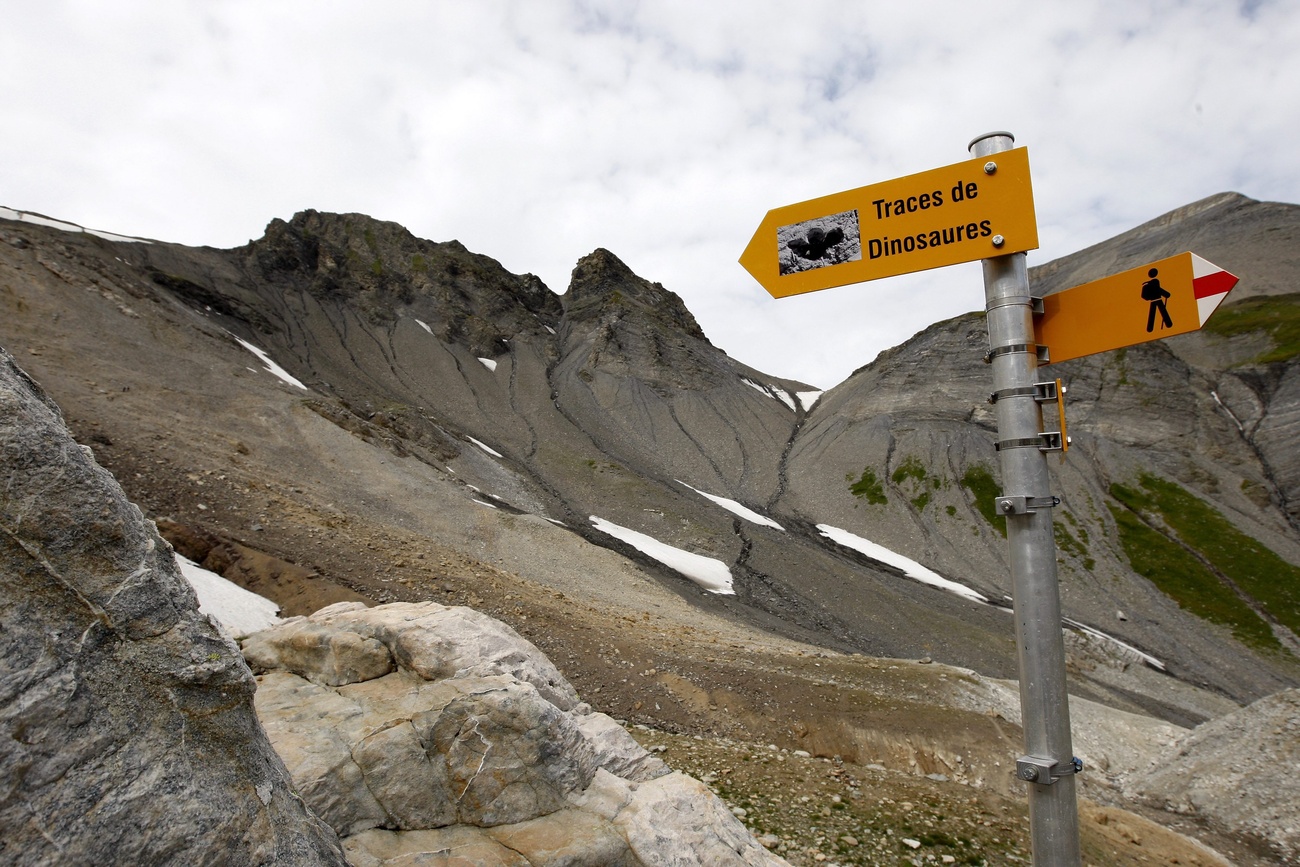
    An excavation team at the Dinosaur Museum in Aathal, canton Zurich, has uncovered an exceptionally well-preserved juvenile dinosaur skull in a boulder brought back from the US. Nicknamed Lucy, this fossil is one of the most complete in the world for this species.

    +Get the most important news from Switzerland in your inbox

    The fossil comes from Wyoming, where the Zurich museum operates an excavation site in a quarry, it explained in a press release on Monday. The remains, which are around 150 million years old, were extracted from Jurassic rock layers in a geological formation known as the Morrison Formation.

    The precious fossil will go on public display for the first time at the Aathal museum on Friday. The boulder containing what appeared to be skull fragments arrived in Switzerland two years ago, but its contents were only revealed at the beginning of this year.

    More

    Long-necked herbivore

    Alongside the fragments, the characteristic flash of shovel-shaped teeth identified the species Camarasaurus, a long-necked herbivorous dinosaur. During the subsequent preparation work, the researchers noted just how well preserved the skull was.

    The extreme fragility of sauropod skulls, whose bones are very thin to lighten the weight borne by their long necks, makes their complete conservation exceptional, the museum points out. Quoted in the press release, Emanuel Tschopp, an expert from the Free University of Berlin, describes the discovery as extremely rare: according to him, only one skull of this size has ever been found in the United States.

    The animal preserved at Aathal was between eight and ten years old at the time of its death, according to initial analyses by the excavation team. The teeth are particularly interesting for research: they could provide clues about the diet of young sauropods, their migratory movements and even their body temperature.

    The specimen was given the nickname Lucy in reference to the daughter of the director of the Zurich museum, who was responsible for the excavations. These individual names, which have nothing to do with scientific nomenclature, are common in palaeontology to distinguish discoveries.

    More

    Adapted from French by AI/ts

    We select the most relevant news for an international audience and use automatic translation tools to translate them into English. A journalist then reviews the translation for clarity and accuracy before publication.  

    Providing you with automatically translated news gives us the time to write more in-depth articles. The news stories we select have been written and carefully fact-checked by an external editorial team from news agencies such as Bloomberg or Keystone.

    If you have any questions about how we work, write to us at english@swissinfo.ch

    Read More

  • Captain of Russian ‘shadow tanker’ sentenced to one year in French prison

    Captain of Russian ‘shadow tanker’ sentenced to one year in French prison


    A French court has handed down a one-year prison sentence and issued an arrest warrant for the Chinese captain of a tanker suspected of being part of Russia’s so-called ‘shadow fleet’, in a case that highlights Europe’s growing efforts to enforce sanctions at sea.

    Issued on:


    2 min Reading time

    Chen Zhangjie, 39, was sentenced in absentia on Monday after failing to comply with French naval orders to stop his vessel, the Boracay, during an incident in September.

    The court in the western city of Brest also imposed a fine of €150,000, underlining the seriousness with which authorities are treating alleged sanctions evasion.

    The Boracay was intercepted by the French navy before being boarded and inspected. It was later released along with its crew, prompting a sharp reaction from Russian President Vladimir Putin, who described the operation as “piracy”.

    Despite the diplomatic tension, the ruling signals a firm stance from French authorities as scrutiny intensifies around maritime activities linked to Moscow.

    Russian ‘shadow fleet’ ship detained by French navy resumes voyage

    Shadow fleet under scrutiny

    The tanker had claimed to be sailing under a Benin flag and is believed to be part of a network of vessels used to transport Russian oil in ways that may circumvent Western sanctions imposed following the invasion of Ukraine.

    These so-called shadow fleets have become an increasing focus for European governments, who are keen to close loopholes in enforcement.

    According to an informed French source and the captain’s lawyer, two employees of a Russian private security company were also on board at the time of the interception. Their reported role was to represent Russian interests and gather intelligence, adding another layer of intrigue to the case.

    The European Union has already blacklisted 598 vessels suspected of participating in such operations, banning them from European ports and maritime services.

    The Brest court’s decision is therefore part of a broader effort to ensure that these measures carry real consequences.

    French prosecutor seeks penalty for captain in Russian shadow fleet test case

    Wider security concerns

    Beyond sanctions enforcement, the Boracay has also drawn attention for its alleged links to a series of unexplained drone flights over Denmark last year. These incidents formed part of a wider pattern of drone sightings and airspace violations across Europe that have often been attributed to Russian activity.

    No formal connection has been established between the tanker and the drone activity, and Moscow has consistently denied any involvement. Still, the overlap of maritime and aerial security concerns has heightened unease among European officials.

    While the case against Chen Zhangjie centres on non-compliance with naval orders, it reflects a much larger geopolitical picture – one in which maritime routes, energy supplies and security risks are increasingly intertwined

    (with newswires)

    Read More

  • Packers HC Matt LaFleur Responds to His NFLPA Grade: ‘You Can’t Please Everybody’

    Packers HC Matt LaFleur Responds to His NFLPA Grade: ‘You Can’t Please Everybody’


    PHOENIX — In late January, Matt LaFleur received a major nod of approval from the Green Bay Packers in the form of a contract extension. That solidified his position in the organization, likely for years to come. 

    But then came the annual NFLPA player survey, which complicated the picture slightly. The report, which was not supposed to be public this year but leaked through multiple media outlets, revealed that players gave him a B- grade, tied for third-worst in the NFL. That’s after LaFleur received an A- grade after the 2024 season. This year, it came down to “respect for players,” per the report.

    At the NFL owners meetings in Phoenix on Monday, LaFleur, who’s entering his eighth season with Green Bay, discussed how he’s handling the assessment of his coaching.

    “I try to take that with a grain of salt, but you don’t want to just dismiss that stuff. You got to look into it,” he told reporters. “I feel pretty confident with my conversations with the majority of our players, but certainly some guys felt a certain type of way. And the one thing I’ve learned in this business is: You can’t please everybody. You can’t be all things to all people. And ultimately, you got to make decisions that you feel are in the best interest of your football team.

    “Great leaders are great listeners, but that doesn’t mean we’re always going to do what that person suggests. It’s impossible.”

    Packers QB Jordan Love shares a moment with head coach Matt LaFleur prior to facing the Philadelphia Eagles at Lambeau Field last November. (Photo by Michael Owens/Getty Images)

    The Packers traded for All-Pro edge Micah Parsons at the beginning of the season in a blockbuster deal with Dallas that made them look like a Super Bowl front-runner. But Parsons suffered a knee injury in December and the Packers’ defense looked thin without him. It didn’t help that the offensive line suffered injuries and underperformed. And Green Bay lost its final five games of the season, including its wild-card matchup against the rival Chicago Bears.

    “If I’m being honest about it, I think there were some guys that were upset about roles last year, and I think that took a toll on our football team,” LaFleur said.

    Micah Parsons suffered a season-ending ACL tear in his left knee in Week 15. (Photo by Christian Petersen/Getty Images)

    The late-season issues increased speculation that, perhaps, LaFleur might not receive an extension. And the losing streak probably didn’t help with morale in the locker room. 

    He was asked, specifically, about comments in the survey regarding his “respect for players.”

    “I don’t feel that way, but unfortunately, some guys did,” LaFleur said. “And so that tells me I got to do a better job of communicating. And it goes back to the relationship piece. I think it’s so critical. We always talk about, ‘Connected teams are powerful teams.’ And we’ve got to grow that connection. 

    “So certainly, that’s been a topic of conversation within our building. How do we get these guys a little closer? The more they know each other, the more they’re going to battle for one another. Although they may be competing within a certain position, they’re going to help each other grow and ultimately be better individual players, which should help our collective football team.”

    LaFleur and the Packers didn’t have any blockbuster acquisitions over the offseason, instead bringing in a group of role players — and trading veteran edge Rashan Gary to Dallas for a 2027 fourth-round pick. Green Bay largely stuck with last season’s core. As a result, the Packers must feel optimistic they can recreate the way they started their 2025 season, going 9-3-1 in their first 12 games.

    In a way, that’s yet another nod of confidence in LaFleur to generate better results with the same ingredients.

    Read More