Blog

  • Robert Mueller, former FBI director who led Trump investigation, dies at 81

    Robert Mueller, former FBI director who led Trump investigation, dies at 81


    Robert Mueller, the special counsel whose investigation of President Donald Trump kept America transfixed for two years, has died, according to a family statement provided to the Associated Press. He was 81.

    In August 2025, his family disclosed to the New York Times that Mueller had been “diagnosed with Parkinson’s disease in the summer of 2021,” and that he retired both from teaching and his law practice because of his escalating health issues.

    During Trump’s first term, the nation waited on Mueller and watched, eager to see whether its president or his campaign staff would be found to have conspired with a foreign power to get himself elected. Ultimately, Mueller offered a detailed report that accused Trump of misbehavior and possibly of obstructing justice, but which never came out and said the president had broken the law.

    “Russia’s actions were a threat to America’s democracy. It was critical that they be investigated and understood,” he wrote in 2020 in defense of his investigation.

    Mueller had a long record of public service before becoming a special counsel for the Department of Justice in 2017, including four years in the Marines during the Vietnam War and 12 years as director of the FBI.

    “Agents of the Bureau prize three virtues above all: fidelity, bravery and integrity. This new Director is a man who exemplifies them all,” President George W. Bush said in nominating him to lead the FBI in 2001. When appointing him in 2011 to two more years leading the FBI, President Barack Obama said Mueller had “set the gold standard for leading the bureau.”

    It was his reputation for rectitude and tenacity that colored much of the response to his appointment to examine Trump’s 2016 presidential campaign and whatever connections it might have had to Vladimir Putin’s Russian government.

    The special counsel’s final report, called the Mueller Report, summarized the lengthy investigation in a way that left many things open to interpretation. Trump claimed full vindication; tweeting at one point, “Mueller should have never been appointed, although he did prove that I must be the most honest man in America!” Others saw it as an investigation hamstrung by its own precise interpretation of the law, putting forth a case for Trump as someone who might well have broken the law but who couldn’t be charged because he was the president.

    The publication of a much-redacted report didn’t add any great clarity.

    “If we had confidence after a thorough investigation of the facts that the President clearly did not commit obstruction of justice, we would so state,” Mueller stated in his report. “Based on the facts and the applicable legal standards, we are unable to reach that judgment. Accordingly, while this report does not conclude that the President committed a crime, it also does not exonerate him.”

    Mueller had rarely sought the spotlight during his career and that was true even as the nation was watching intently for leaks and hints about where the investigation was heading — or expecting him to make a big show out of the whole Washington political circus that surrounded the investigation.

    Biographer Garrett Graff wrote in 2017 that Mueller “might just be America’s straightest arrow,” neither the first nor the last person to describe him that way. Graff quoted a former Mueller aide at the FBI as saying: “The things that most of us would struggle with the most come relatively easy to him because his moral compass is so straight.”

    Robert Mueller, former FBI director who led Trump investigation, dies at 81
    Assistant Attorney General Robert Mueller points on Nov. 14, 1991, to a photo of the reconstructed wreckage of Pan Am Flight 103, which exploded over Scotland in 1988, killing 270 people. | Barry Thumma/AP

    Robert Swan Mueller III was born in New York City on Aug. 7, 1944. He spent part of his youth in Princeton, New Jersey, and went on to attend Princeton University, where, like his father, he played lacrosse.

    He got a master’s at New York University and would later attend law school at the University of Virginia. He also married Ann Cabell Standish, whom he had met at a high school party.

    Between NYU and law school, he served in the military. In a 2017 profile, Josh Meyer wrote: “He enlisted in the Marine Corps in 1968, led a rifle platoon in Vietnam and earned a Bronze Star, a Purple Heart and other medals for valor.” Mueller would later say that he was driven to public service because he felt “exceptionally lucky” to have survived his tours of duty there.

    Over the next three decades, Mueller practiced law, sometimes in private practice but more often as a government attorney.

    In the early 1990s, he used testimony from an infamous mob underboss to successfully prosecute New York mob boss John Gotti, who had been called the “Teflon Don” because of his success in avoiding criminal convictions.

    He also investigated the scandal-plagued Bank of Credit and Commerce International; prosecuted Manuel Noriega on drug trafficking charges after the U.S. invaded Panama and toppled his dictatorship; and led American efforts to get justice in the bombing of Pan Am Flight 103, which exploded over the Scottish village of Lockerbie in December 1988, killing 270 people, most of them Americans. Those Lockerbie efforts would continue well into the next decade.

    FBI Director Robert Mueller  speaks at FBI headquarters about the 9/11 attacks on Sept. 27, 2001,  as Attorney General John Ashcroft  looks on.
    FBI Director Robert Mueller speaks at FBI headquarters about the 9/11 attacks on Sept. 27, 2001, as Attorney General John Ashcroft looks on. | Joyce Naltchayan/AFP via Getty Images

    In 2001, Mueller was nominated by Bush to be the sixth director of the FBI.

    “Our next FBI Director has given nearly all his career to public service, going back to his days in the Marine Corps. He served with distinction and was decorated during the Vietnam War. As a lawyer, prosecutor, and government official, he has shown high ideals, a clear sense of purpose and a tested devotion to his country,” Bush said.

    The Washington Post profiled him at the time: “He laughs at jokes but rarely tells them. Friends say he’s punctual even about his own parties, signaling their end by flicking the lights. His edges are hard when he wants something done, harder when it isn’t done the way he wants but smooth when someone is suffering. He believes bragging is taboo.”

    He was confirmed by a 98-0 vote and assumed the position one week before the 9/11 terrorist attacks, an event that would raise the stakes for law enforcement in America.

    “Since September 11,” Richard A. Clarke wrote in “Against All Enemies: Inside America’s War on Terror,” “Mueller has tried to reorient the organization from post-crime investigation to prevention, from drugs and bank robbery to terrorism.”

    Mueller later told Graff, his biographer, that he liked leading the FBI because it was perceived as being above partisanship. “You’re free to do what you think is right,” Graff quoted him as saying.

    By the time, he left the FBI in September 2013, Mueller had led the agency longer than anyone except J. Edgar Hoover. “It is a family and it is a well-respected family,” Mueller said in a statement at the time.

    After leaving the FBI, Mueller was hired by the NFL to investigate whether the league had mishandled its response to a case in which Ray Rice, a star running back for the Baltimore Ravens, had knocked his fiancée unconscious. He was also appointed to oversee the settlement of U.S. consumer claims against Volkswagen.

    Robert Mueller testifies before a House Judiciary Committee hearing about his report on Russian interference in the 2016 presidential election July 24, 2019.
    Robert Mueller testifies before a House Judiciary Committee hearing about his report on Russian interference in the 2016 presidential election July 24, 2019. | Jonathan Ernst/Getty Images

    He was called back into public service months into the Trump presidency, one week after Trump had rattled Washington by firing FBI Director James Comey.

    On May 17, 2017, Deputy Attorney General Rod Rosenstein announced that he appointed Mueller “to serve as special counsel to oversee the previously-confirmed FBI investigation of Russian government efforts to influence the 2016 presidential election and related matters.”

    Inside and outside of Washington, Mueller’s appointment as special counsel was praised. Mueller’s history of getting along with both Republican and Democratic presidents worked in his favor. “With his intellect, integrity, and insight, he is right out of central casting on how a prosecutor and investigator should conduct themselves,” said Michael Leiter, who had led the National Counterterrorism Center.

    In a statement, Trump said he welcomed the investigation: “As I have stated many times, a thorough investigation will confirm what we already know — there was no collusion between my campaign and any foreign entity.” But it was later reported that he told Attorney General Jeff Sessions that Mueller’s appointment meant “the end of my presidency.”

    Within a day, Trump was publicly casting doubts about the investigation: “It shows we’re a divided, mixed-up, not-unified country.” Those would not be his last criticisms, nor his most vitriolic, and it wasn’t long before the leading topic in Washington was whether Trump would fire Mueller, as he had done with Comey.

    Mueller was nothing if not thorough, building a substantial team of investigators and then seemingly pursuing every angle as far as those angles could be pursued. The investigation plodded along, something that irked both those who hoped to see Trump vindicated and those who hoped to see Trump disgraced.

    Seasons came and went, elections came and went, and yet the investigation continued. Various Trump campaign officials faced charges, including Paul Manafort, Rick Gates, Roger Stone and Michael Flynn, though many of the cases seemed to be of a technical nature, as opposed to things that would implicate the Trump campaign, such as direct collaboration with Russian agents.

    Thirteen Russians were indicted for election interference, but none of them have faced trial in the United States.

    The word “Mueller” increasingly appeared in Trump’s Twitter feed. “Why does the Mueller team have 13 hardened Democrats,” he tweeted in March 2018, “some big Crooked Hillary supporters, and Zero Republicans? Another Dem recently added … does anyone think this is fair? And yet, there is NO COLLUSION!”

    The attacks came and went without a response from Mueller, who was rarely seen in public. In his book “Fear,” Bob Woodward dubbed him “a master of silence.”

    On March 22, 2019, Mueller wrapped up his investigation and sent his findings to Attorney General William Barr, whom he had worked under decades earlier at the Justice Department. Two days later, Barr, who had raised constitutional issues about Mueller’s investigation when he was still a private citizen, sent a summary of Mueller’s findings to Congress.

    The big takeaways, according to Barr’s summary, seemed to be that there was no evidence Trump had colluded with Russians, and that the president was not being accused of obstruction of justice. Trump was quite happy: “Bob Mueller was a great HERO to the Radical Left Democrats. Now that the Mueller Report is finished, with a finding of NO COLLUSION & NO OBSTRUCTION (based on a review of Report by our highly respected A.G.), the Dems are going around saying, ‘Bob who, sorry, don’t know the man.’”

    But when the full report was published, it soon became evident that Mueller’s findings were of a more complicated nature than Barr and Trump had suggested.

    “Far from the ‘complete and total exoneration’ the president has declared in recent weeks, the report depicts a president who made repeated moves to thwart the investigation into his campaign and presidency, possibly because Trump was trying to hide other, potentially criminal behavior — although Mueller found no evidence of a criminal conspiracy to help Russia influence the 2016 election,” Josh Gerstein and Darren Samuelsohn wrote in April 2019.

    Attorney General William Barr looks over the letter he received from Robert Mueller while he answers questions from Sen. Richard Blumenthal during a Senate Judiciary Committee hearing  May 1, 2019.
    Attorney General William Barr looks over the letter he received from Robert Mueller while he answers questions from Sen. Richard Blumenthal during a Senate Judiciary Committee hearing May 1, 2019. | Susan Walsh/AP

    Mueller complained to Barr about his summary report.

    “The summary letter the Department sent to Congress and released to the public late in the afternoon of March 24 did not fully capture the context, nature, and substance of this office’s work and conclusions,” he wrote in a letter to Barr.

    Mueller made it clear that he was guided from the get-go by a belief in the Department of Justice that a sitting president could not be charged with a crime. “Under long-standing department policy, a president cannot be charged with a federal crime while he is in office. That is unconstitutional,” Mueller said.

    Mueller also indicated that he believed Russia had indeed interfered in the 2016 election, and that the nation needed to do something about it. “Russian intelligence officers who are part of the Russian military launched a concerted attack on our political system,” he said.

    Barr testified about the report before the Senate Judiciary Committee on May 1, 2019, and complained about the way his old friend had handled the whole situation. Two months later, Mueller appeared before the House Judiciary Committee. Members of the panel hoped to draw out of him some of what his team had found but didn’t put in the report, but Mueller didn’t take the bait.

    Laurence Tribe, a Harvard law professor, tweeted: “Far from breathing life into his damning report, the tired Robert Mueller sucked the life out of it.” Though Trump would continue to be the subject of investigations through the very end of his presidency and beyond, Mueller no longer figured prominently in them.

    Mueller, however, would remain associated with Trump’s presidency. By the time Trump was banned from Twitter in January 2021, Mueller’s name had appeared in 298 Trump tweets or re-tweets.

    “Good, I’m glad he’s dead,” the president wrote on Truth Social upon learning of Mueller’s death on Saturday. “He can no longer hurt innocent people!”

    In July 2020, Mueller defended the outcome of his investigation in a Washington Post op-ed. “The work of the special counsel’s office — its reports, indictments, guilty pleas and convictions — should speak for itself,” Mueller said before tallying up the record of the investigation.

    “Uncovering and tracing Russian outreach and interference activities was a complex task,” he wrote.

    “The investigation to understand these activities took two years and substantial effort. Based on our work, eight individuals pleaded guilty or were convicted at trial, and more than two dozen Russian individuals and entities, including senior Russian intelligence officers, were charged with federal crimes.”


    Read More

  • Hotel Management School Lausanne offers new catering training

    Hotel Management School Lausanne offers new catering training


    Hotel Management School Lausanne, new training in the catering branch

    Hotel Management School Lausanne, new training in the catering branch


    Keystone-SDA

    The Hotel School of Lausanne (EHL) is launching a new programme: an Associate Degree – a two-year university degree – in culinary arts and restaurant management.

    +Get the most important news from Switzerland in your inbox

    The aim is to respond to the shortage of personnel in the sector and to offer young people a comprehensive training that goes beyond the technical in the kitchen.

    The programme also aims to attract young people to the branch’s professions and “make their eyes sparkle,” Patrick Ogheard, EHL manager, explained to RTS radio. It is to provide “the tools to be a chef de cuisine, maître d’hôtel or to create one’s own business”. It will teach ‘all facets of the profession, as well as finance, marketing, communication, human resources management and customer management’.

    The course, aimed at young people with a high school or bachelor’s degree, costs CHF 69,000 for two years. The first edition will take 20 students, and will then move on to two annual promotions of up to 40 students each.

    Adapted from Italian with AI/ds

    We select the most relevant news for an international audience and use automatic translation tools to translate them into English. A journalist then reviews the translation for clarity and accuracy before publication.  

    Providing you with automatically translated news gives us the time to write more in-depth articles. The news stories we select have been written and carefully fact-checked by an external editorial team from news agencies such as Bloomberg or Keystone.

    If you have any questions about how we work, write to us at english@swissinfo.ch

    Read More

  • French prosecutors suspect Musk encouraged deepfakes row to inflate X value

    French prosecutors suspect Musk encouraged deepfakes row to inflate X value


    French prosecutors said Saturday they had alerted US authorities to a suspicion that tech tycoon Elon Musk had encouraged the controversy over sexualised deepfakes on X to “artificially” increase the value of his company.

    The social media network’s Grok AI chatbot stirred outrage earlier this year over it generating images of women and girls in minimal attire without their consent.

    “The controversy sparked by sexually explicit deepfakes generated by Grok (X’s AI) may have been deliberately generated in order to artificially boost the value of companies X and X AI,” the Paris prosecutor’s office said, confirming a report in Le Monde newspaper on Friday.

    This could have been done towards “the planned June 2026 stock market listing of the new entity created by the merger” between Space X and X AI, it added.

    The prosecutor’s office said it had on Tuesday reached out to the US Department of Justice, as well as French lawyers at the US Securities and Exchange Commission (SEC), a financial market regulation body, to share its concerns.

    X’s lawyer in France was not immediately available for comment.

    French authorities are investigating X over allegations that its algorithm was used to interfere in French politics, as well as Grok’s dissemination of Holocaust denials and the sexualised deepfakes.

    AI chat bot Grok has its own account on the X social network allowing users to interact with it.

    For a period, users could tag the bot in posts to request image generation and editing, receiving the image in a reply from Grok. Many sent Grok photos of women or tagged the bot in replies to women’s photo posts, giving it prompts such as “put her in a bikini” or “remove her clothes”.

    ‘Incitements’

    It generated an estimated three million sexualised images — mostly of women, though also 23,000 that appeared to depict children — in 11 days, the Center for Countering Digital Hate (CCDH), a nonprofit watchdog, said in late January.

    Le Monde pointed to “several posts by Musk, published at the height of the controversy, which prosecutors interpret as incitements to generate non-consensual images”.

    “The billionaire posted several messages in which he expressed delight, using numerous emojis, about his AI engine’s “undressing” capabilities, even sharing an image of himself in which his chatbot depicted him wearing a bikini,” Le Monde reported.

    Daily average app downloads for Grok worldwide soared by 72 percent from January 1 to January 19 compared to the same period in December, the Washington Post has cited market intelligence firm Sensor Tower as saying.

    French authorities last month summoned Musk to a “voluntary interview” and searched the local offices of his social media network, in what Musk called a “political attack”.

    Both Britain and the European Union have also opened investigations into the creation of the sexualised deepfakes.

    Read More

  • Midwest Region’s Top-Seeded Michigan Rolls to 95-72 Win Over Saint Louis

    Midwest Region’s Top-Seeded Michigan Rolls to 95-72 Win Over Saint Louis


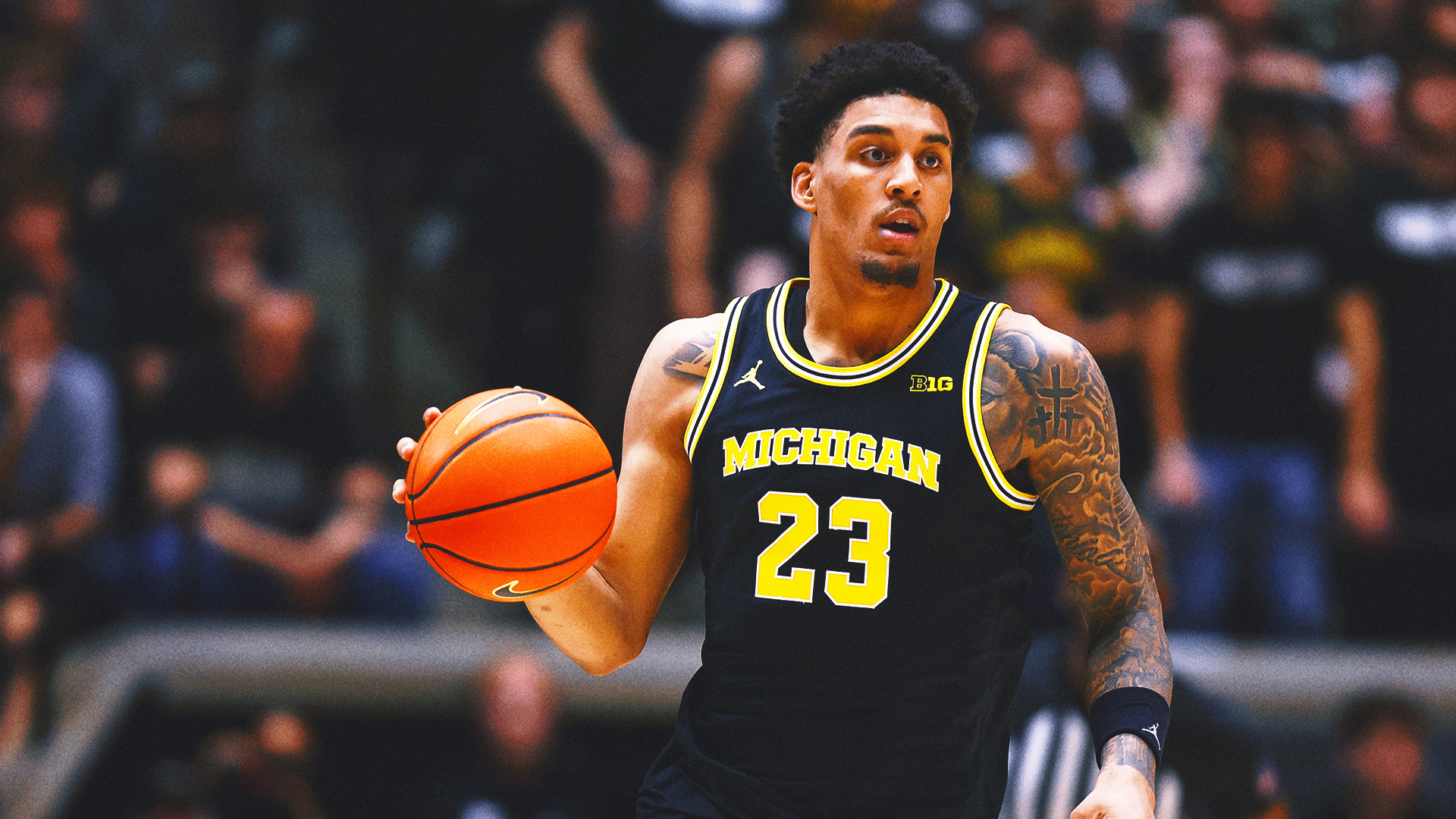
    Yaxel Lendeborg punctuated his 25-point outing with a massive dunk in transition, and the Midwest Region’s top-seeded Michigan advanced to the Sweet 16 with a 95-72 victory over Saint Louis in the second round of the NCAA Tournament on Saturday.

    Morez Johnson Jr. had 15 and eight rebounds for Michigan (33-3), which matched a program record for victories set during its seventh and most recent Final Four appearance in 2018.

    The Wolverines’ 7-foot-3 center Aday Mara had 16 points, five rebounds and four blocks to increase his season blocks total to 96, one short of matching Michigan’s single-season record set by Roy Tarpley in 1985-86.

    The Wolverines advanced to the round of 16 for the second consecutive year and seventh time since 2017. They’ll play the winner of Texas Tech-Alabama at Chicago on Friday.

    Amari McCottry had 14 points and five rebounds for Saint Louis (29-6), which saw its season end after setting a single-season record for wins with its 102-77 first-round victory over Georgia.

    The Wolverines’ size and depth proved too much for the ninth-seeded Billikens, who dropped to 0-6 in second-round games.

    Michigan particularly took away the Billikens’ primary strength, their outside shooting game, limiting Saint Louis to 5 of 17 3-point attempts through the first half, and 10 of 32 overall.

    Billikens senior Robbie Avila, who entered ranking third among NCAA centers with 211 career 3-point baskets, struggled to find his range, finishing 3 of 13 — including 3 of 10 3-pointers.

    After trading leads six times through the first 10 minutes, Michigan went ahead for good on Trey McKenney’s 3-pointer with 9:37 left in the first half. The basket sparked a 9-0 run. And the Wolverines put the game away midway through the second half with their transition game and pressure defense.

    Lendeborg saw Michigan show signs of overcoming its issues of slow second-half starts — something that cost the Wolverines the Big Ten Tournament title in an 80-72 loss to Purdue last weekend.

    “We’re just learning from our mistakes against Purdue. We let them step away,” Lendeborg said. “We’re going to start coming out more aggressively in the second half from now on. When they started going on their run, it went back to leaning on each other and playing poised and believing we can compete with anybody.”

    Lendeborg had a highlight-reel dunk by bullying his way through two defenders and finishing his transition drive with a dunk to put Michigan up 66-57. A little over a minute later, Michigan’s press cashed in, with Nimari Burnett intercepting Brady Dunlap’s pass and taking it the other way for a layup to make it 73-58.

    “Dominican LeBron,” Burnett said, referring to Lendeborg’s nickname when asked about the dunk. “At that point in the game, we were up 10 or so, but it gave us another boost to extend the lead.”

    Lendeborg, who signed with Michigan after spending the previous two seasons at UAB, was born in Puerto Rico, but his parents are from the Dominican Republic.

    Billikens coach Josh Schertz was wowed by the Wolverines.

    “They’re so gifted,” he said. “They’ll be a tough out, not just for Saint Louis, but for anybody. You’ve got to make them play bad, and we weren’t able to make them play bad enough.”

    Reporting by The Associated Press.

    Read More

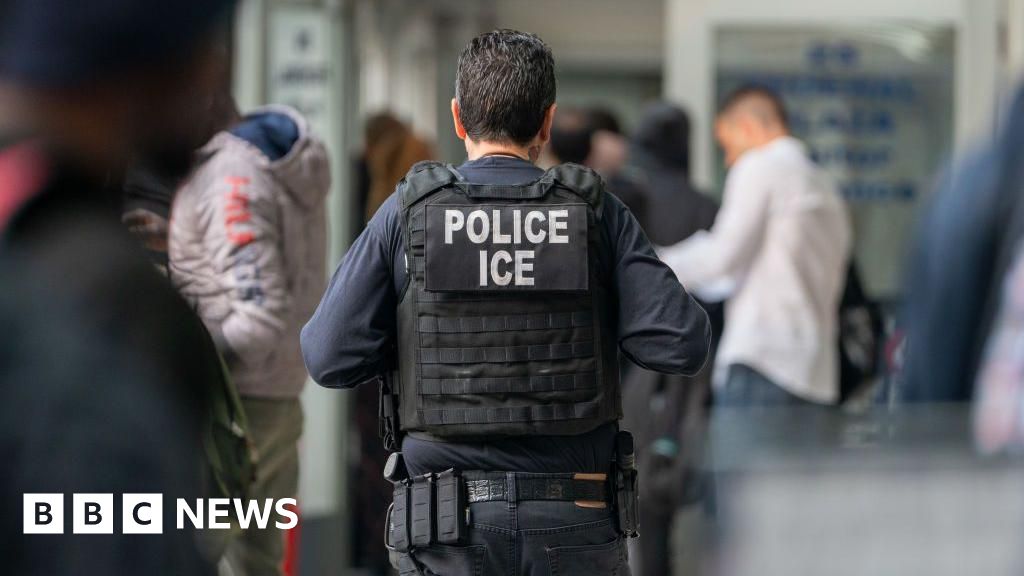
  • Trump threatens to send ICE into airports unless funding deal reached

    Trump threatens to send ICE into airports unless funding deal reached


    The president said ICE would “do security” as airport security staff have gone without pay for weeks due to a partial government shutdown.

    Read More

  • Trump says he will order ICE to airports for security and vows to arrest ‘all illegal immigrants’

    Trump says he will order ICE to airports for security and vows to arrest ‘all illegal immigrants’


    In a pair of social media posts, Trump first threatened and then said he had made plans to put officers from U.S. Immigration and Customs Enforcement in airports if the congressional standoff continues. He made the announcement as a partial shutdown contributes to long linesto pass through screening at some of the nation’s largest airports.

    The Republican president suggested ICE agents would bring the administration’s immigration crackdown into the nation’s airports, promising to arrest “all Illegal Immigrants.”

    “I look forward to moving ICE in on Monday, and have already told them to, “GET READY.” NO MORE WAITING, NO MORE GAMES!” Trump wrote while spending the weekend in Florida.

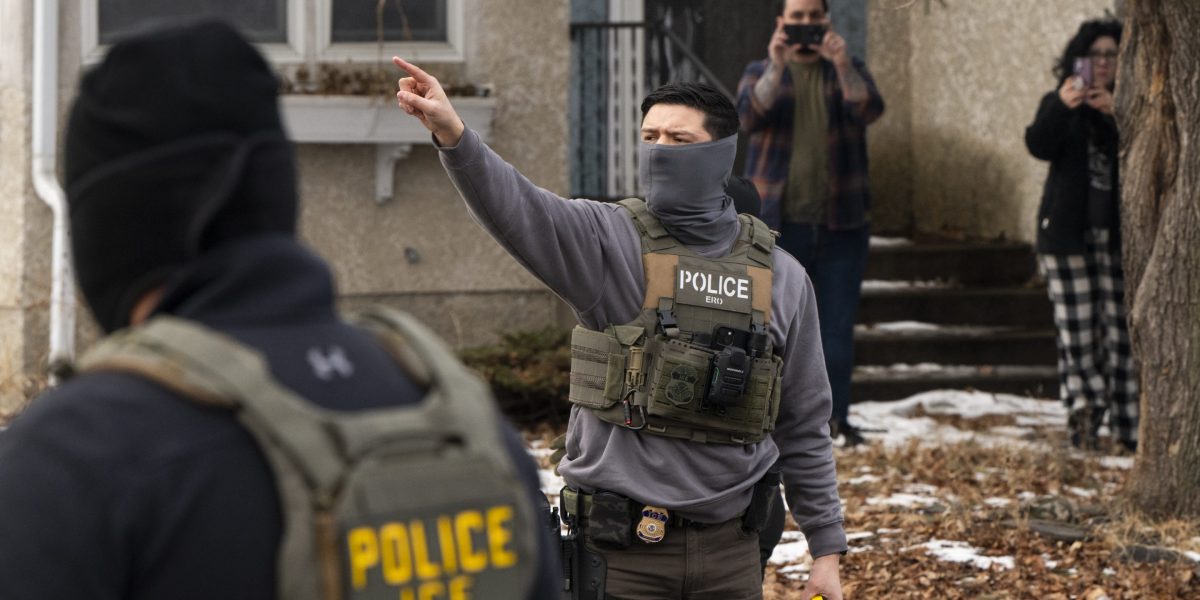
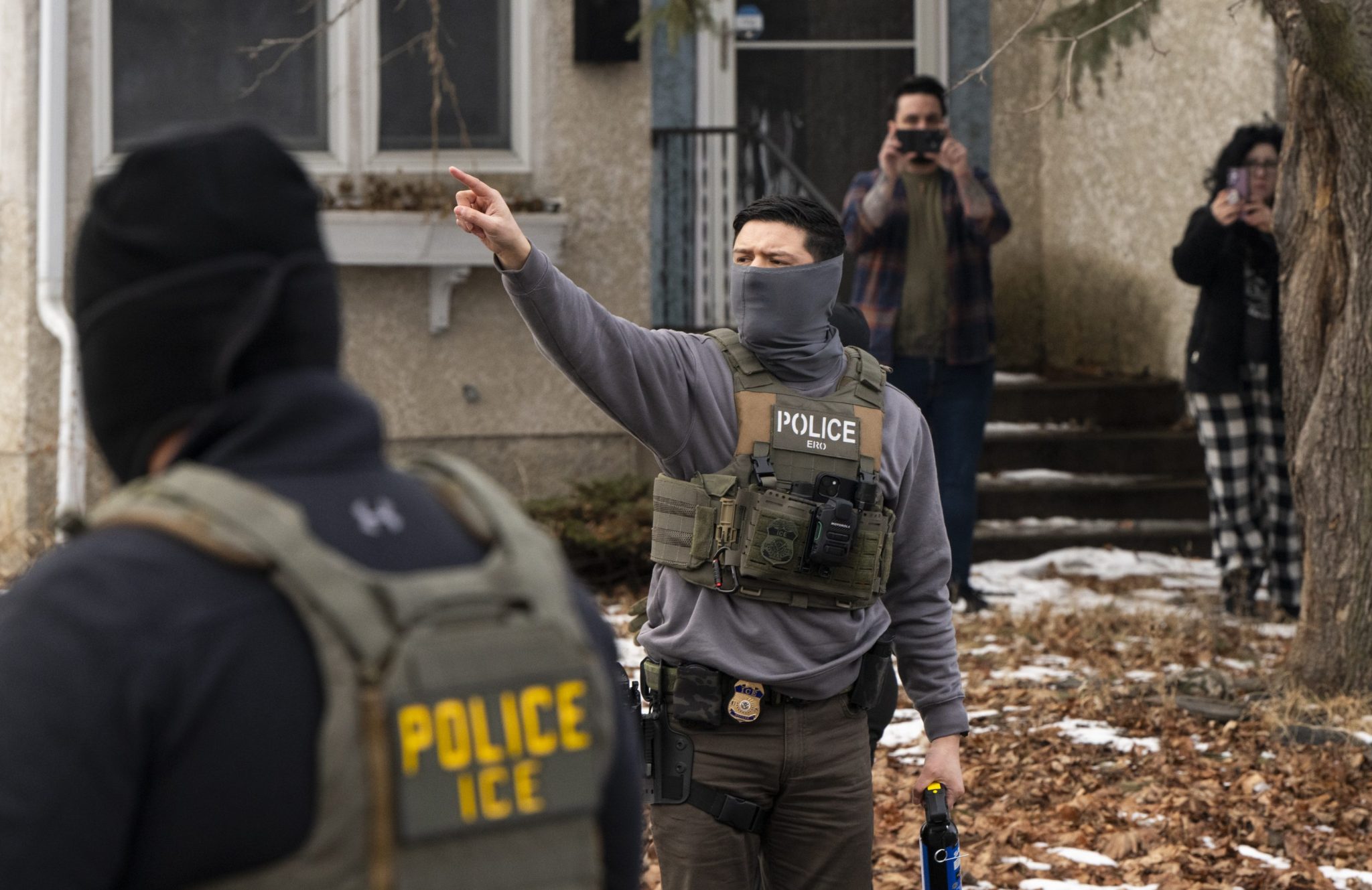
    The move appears to be a pointed effort to expand the type of immigration enforcement that has become a sticking point in Congress. Democrats pledged to oppose funding for DHS unless changes were made in the wake of a crackdown in Minnesota that led to the fatal shootings of two protesters. Democrats are asking for better identification for federal law enforcement officers, a new code of conduct for those agencies and more use of judicial warrants, among other measures.

    The Minnesota operation was tied in part to allegations of fraud involving Somali residents. On Saturday, Trump said ICE officers sent to airports would focus on arresting immigrants from Somalia who are in the United States illegally. Repeating his criticism on Somalis, he said they “totally destroyed” Minnesota.

    “If the Democrats do not allow for Just and Proper Security at our Airports, and elsewhere throughout our Country, ICE will do the job far better than ever done before,” Trump said.

    Trump’s posts did not offer additional detail on how ICE would take a role in airport security and what it meant for the Transportation Security Administration, which screens passengers and luggage for hazardous items.

    The vast majority of TSA employees are considered essential and continue to work during the funding lapse, but they are doing so without pay. Call-out rates have started to increase at some airports, and DHS said at least 376 have quit since the partial shutdown began Feb. 14.

    On Saturday, in a rare weekend session, the Senate rejected a motion by Democrats to take up legislation to reopen TSA and pay workers who are now going without paychecks. Republicans argue that they need to fund all parts of the DHS, not just certain ones. A bill to fund the Cabinet department failed to advance in the Senate on Friday.

    There were signs of progress, though, with the restarting in recent days of stalled talks between Democrats and the White House. On Saturday, Republican and Democratic senators were set to meet for a third consecutive day with White House officials behind closed doors as Senate Democratic leader Chuck Schumer of New York spoke of “productive conversations.”

    Senate Majority Leader John Thune, R-S.D., urged the bipartisan group to act quickly. He has said repeatedly that Democrats and the White House need to find compromise as lines at airports have grown.

    “If that group that’s meeting can’t come up with a solution really quickly, things are going to get worse and worse,” Thune said Saturday.

    Read More

  • When justice fails: Why women can’t get protection from AI deepfake abuse

    When justice fails: Why women can’t get protection from AI deepfake abuse


    Whispers followed her offline. Online, the abuse imploded, unchecked: comments, ridicule, shares, screenshots. She had never consented to any of it. That hadn’t stopped anyone.

    Within minutes, thousands had seen the content. Within hours, millions.

    The nightmare had only begun.

    Days passed before platforms responded. By then, the images had been seen, save, and replicated. She was left asking: Who do I report this to? Will anyone believe me? Will the people who did this ever face consequences? Or will the blame land on me?

    This is the reality for thousands of women and girls every single day. AI deepfakes are destroying real lives and justice remains out of reach for most survivors.

    Her story could be yours.

    Deepfake abuse is the sharp edge of a much broader pattern of digital violence targeting women and girls. It’s gendered and it’s escalating. Right now, the systems designed to protect people are failing, while the tools to cause harm become cheaper, faster and easier to use every day.

    Here’s what you need to know:

    What is deepfake abuse and how common is it?

    Deepfakes are images, audio or videos manipulated by artificial intelligence (AI) that make it appear someone said or did something they never did.

    The technology itself isn’t new, but its weaponisation against women and girls is a newer phenomenon, and it’s accelerating fast.

    • deepfake pornography made up 98 per cent of all deepfake videos online, and 99 per cent depicted women, according to a 2023 report.
    • deepfake videos were an estimated 550 per cent more prevalent in 2023 than in 2019
    • the tools to create them are widely available, usually free, and require very little technical expertise
    • once posted, AI-generated content can be replicated endlessly, saved to private devices, and shared across platforms, making it nearly impossible to fully remove

    Why survivors don’t report and what happens when they do

    Underreporting is one of the biggest barriers to accountability. For survivors who do come forward, the justice system often becomes another source of trauma.

    • Survivors are asked repeatedly to view and describe abusive content with police, lawyers and platform moderators while often facing questions like, “are you sure it’s not real?” or “did you share intimate images before?”
    • If a case reaches court, their clothing, relationships and past behaviour go under the microscope, not the perpetrator’s
    • Harm doesn’t stay online, according to a UN Women survey, which found 41 per cent of  women in public life who experienced digital violence also reported facing offline attacks or harassment linked to it

    Why deepfake creators rarely face justice

    Despite the scale of harm, prosecutions are rare, platforms routinely fail to act and survivors are often re-traumatised when they try to seek help. Here’s why:

    The law hasn’t caught up as less than half of countries have laws that address online abuse and even fewer have legislation that specifically covers AI-generated deepfake content

    • most “revenge porn” or image-based abuse laws were written before deepfakes existed, leaving gaping loopholes
    • in many countries, deepfake porn or AI-generated nude images fall into legal grey areas
    • survivors are unsure whether the abuse is even illegal and whether perpetrators can be prosecuted

    Enforcement is lagging because even when laws exist, investigators need digital forensics expertise, cross-border coordination and platform cooperation to build a case while most justice systems don’t have adequate resources for any of these

    • evidence disappears fast as content spreads and copies multiply while perpetrators hide behind anonymity or operate across jurisdictions
    • platforms are slow or unwilling to share data with law enforcement, especially in cross-border cases
    • digital forensics backlogs mean cases stall before they even get started

    Tech platforms are failing survivors as they have long hidden behind “intermediary” status to avoid responsibility for user-generated content.

    What must happen now

    While there are a number of nations and regions taking action (see text box below), stopping deepfake abuse requires urgent, coordinated action from governments, institutions and tech platforms.

    Here are five things that need to happen:

    1. Laws that actually cover deepfake abuse

    Governments must pass legislation with clear definitions of AI-generated abuse and focusing on consent, strict liability for perpetrators, fast-track removal obligations for platforms and cross-border enforcement protocols.

    2. Justice systems that can investigate and prosecute

    Law enforcement needs training, resources and dedicated capacity to collect and preserve digital evidence while digital forensics backlogs are addressed, with international cooperation frameworks becoming fast, functional and fit for purpose.

    3. Platforms held accountable

    Tech companies must be legally required to proactively monitor for and remove abusive content within mandatory timelines, cooperate with law enforcement and face real financial consequences when they fail to act.

    4. Real support for survivors

    Trained, trauma-informed law enforcement and legal professionals and free legal aid should be available.

    5. Education that prevents abuse

    Digital literacy, including consent education, online safety, and what to do when experiencing abuse, needs to start young and reach everyone as prevention is as important as prosecution.

    UN Women warns this is not a niche internet problem: “It is a global crisis.”

    • in a recent high-profile case, UK journalist Daisy Dixon discovered AI-generated, sexualised images of herself on X in December 2025, created using the platform’s own Grok AI tool; it took days for the platform to geoblock the function, while the abuse kept spreading
    • deepfake abuse can serve as online catalyst for so-called “honour-based crimes” in certain cultural contexts, where perceived breach of honour norms on digital platforms can result in extreme physical violence against women, or even death
    • more than half of deepfake victims in the United States of America contemplated suicide, according to recent research

    Meanwhile, a handful of jurisdictions are starting to act:

    • Brazil amended its criminal code in 2025, increasing penalty for causing psychological violence against women using AI or other technology to alter their image or voice
    • the European Union artificial intelligence (AI) act imposes transparency obligations around deepfakes
    • The United Kingdom’s Online Safety Act prohibits sharing digitally manipulated explicit images, but does not address the creation of deepfakes and may not apply where intent to cause distress cannot be proven
    • the United States Take It Down Act explicitly covers AI-generated intimate imagery and requires platform removal within 48 hours

    Read More

  • What’s it like being an American in Spain right now?

    What’s it like being an American in Spain right now?


    In this month’s Americans in Spain newsletter Barcelona-based journalist Jennifer Lutz speaks to US nationals who’ve made the move to ‘España’ about what other Americans should expect if they relocate here, from advice, preconceptions and experiences.

    Read More

  • Naima review – triumphant note of hope fuels engrossing insight into the immigrant experience | Film

    Naima review – triumphant note of hope fuels engrossing insight into the immigrant experience | Film


    Naima, the charismatic subject of Anna Thommen’s engrossing documentary, and is always on the move. The film opens with her taking a deep plunge into a bright blue swimming pool, an image that embodies her struggles as a Venezuelan migrant in Switzerland. Naima dives deep into life goals with a fierce passion, yet she often finds herself buffeted by currents.

    Sixteen years ago, she had moved to the country for love, only to be mistreated by her Swiss husband. Since her diploma was not recognised in Switzerland, she went from managing a team of 48 to being wholly dependent on her partner. Then, left in a financially precarious position after her divorce, she subsequently lost custody of her two children.

    Now enrolled in a nursing course, Naima throws herself into her internship at a rehab centre, embracing not only the medical side of things, but also showing heartfelt empathy towards the patients. More than just clinical, their interactions have the warmth of conversations between friends. Their backgrounds might differ, yet Naima too has suffered social marginalisation, just like those under her care. Considering this, it’s all the more shocking when Naima’s supervisors fail her in her final evaluation – though appreciated by her patients, her friendliness is deemed unprofessional. This is yet another instance where Naima is discriminated against because of her accent and her skin colour.

    That she is able to win an academic appeal is an inspiring moment, even if her story echoes the plight of other immigrants who are unable to maximise their full potential. The touching moment when her children attend her graduation ceremony feels like a passing of the torch; Naima’s fight will perhaps bring about a brighter future for the next generation.

    Naima is on True Story from 20 March.

    Read More

  • Middle East war live: Iranian missile hit town housing nuclear facility, Israeli army says

    Middle East war live: Iranian missile hit town housing nuclear facility, Israeli army says


    At least 47 taken to hospital following Iranian missile strike in Dimona, Israeli media reports

    Following an Iranian ballistic missile strike in the southern city of Dimona, 47 people were taken to Soroka Hospital in Beersheba, The Times of Israel’s correspondent Emanuel Fabian said on social media, citing Israeli medics.

    The wounded included a young boy in serious condition from shrapnel and a woman in her 30s moderately injured by glass shards, while 31 others sustained minor injuries from shrapnel or falls, and an additional 14 were treated for acute anxiety, he said.

    Israel medics say injured toll from strike on nuclear town rises to 39

    Israel army says Iranian missile struck town housing nuclear facility

    Israel’s military said an Iranian missile on Saturday struck the southern town of Dimona, home to a nuclear facility, after medics reported some 20 people injured by shrapnel. 

    The army told AFP there was a “direct missile hit on a building” in the town in the Negev desert.

    Shrapnel wounds 20 after Iran missile warning in Israel nuclear town

    Israeli medics said shrapnel wounded 20 people in the town of Dimona, home to a nuclear facility, after warnings of incoming missile fire from Iran. 

    Magen David Adom first responders said their teams were treating approximately 20 victims at a number of impact sites, including a 10-year-old boy and a 40-year-old woman in moderate condition. 

    Israeli police released pictures of officers in a building with a large hole blown in the wall. 

    Dimona in southern Israel hosts a facility widely believed to possess the Middle East’s sole, if undeclared, nuclear arsenal.

    At least 1,024 killed in Israeli strikes in Lebanon, authorities say

    Around 1,024 people have been killed in Israeli strikes since March 2, according to ​Lebanese authorities.

    The World Health Organization and Lebanese health authorities said more than 100 of those killed were ‌children.

    UK says its bases on Cyprus will not be used in offensive operations, Cypriot spokesperson says

    Britain ⁠will not ​be using its bases in Cyprus for ​any offensive action in the Iran crisis, the Cypriot government spokesperson said on Saturday, ​citing ‌a phone call between British ⁠Prime Minister Keir Starmer and Cypriot President Nikos ‌Christodoulides.

    “The British Prime Minister reiterated … that the ⁠security of the Republic of Cyprus is fundamental to the United ​Kingdom and, to that end, a ‌decision has been taken to enhance the means contributing to the preventive measures ‌already in place,” the spokesperson said in a written ​statement.

    “Finally, the Prime Minister reiterated that the British Bases in Cyprus will not be ​used for any offensive military operations.”

    An Iranian-type ​Shahed drone caused slight ​damage when it hit facilities at Britain’s Akrotiri airbase ​in southern Cyprus on March 2, with two others later intercepted. There have been no further known security incidents.

    Britain retained ⁠sovereignty over two bases on the island when it ⁠granted ​its colony independence in 1960.

    From Gaza to Lebanon, doctor races against time to treat war-wounded children

    For nearly three weeks of ongoing conflict in Lebanon, Dr. Ghassan Abu-Sittah, a British-Palestinian pediatric surgeon, has been working tirelessly to treat children severely injured in Israeli airstrikes.

    At Beirut’s American University Medical Center, his unit has received critical cases from across the country, including children with shrapnel wounds, partial amputations, and brain injuries. Abu-Sittah described the scale of the injuries as overwhelming, requiring multiple surgeries and long-term reconstructive care, while lamenting that “a child should never become faceless, they never become numbers”.

    The conflict has forced several hospitals to evacuate amid relentless bombardment, complicating the transfer of critically wounded children from less-equipped regions like Nabatiyeh and the Bekaa Valley. Health workers have been directly targeted, with 40 killed and 119 wounded, further straining Lebanon’s medical system.

    Abu-Sittah, who founded the Ghassan Abu-Sittah Children’s Fund in 2024, highlighted the long-term challenges for surviving children, particularly those from poor families who have lost relatives, emphasizing that the war destroys not only bodies but entire family units.

    EU urges reduced gas-storage target as Mideast war crimps supply

    The European Commission on Saturday urged EU member countries to lower their target for filling natural gas storage in the coming months, to alleviate price pressures caused by the war in the Middle East.

    EU energy commissioner Dan Jorgensen sent a letter asking to “consider reducing your filling target to 80 percent as early as possible in the filling season to provide certainty and reassurance to market participants”, down from the usual 90 percent goal.

    ‘Anxiety and fear’: Israeli strikes intensify in Beirut

    Israel launched a new wave of strikes on Beirut targeting Hezbollah, prompting evacuations and adding to growing civilian distress.

    “The sounds of strikes and thunder … were impossible to differentiate, creating so much anxiety and fear amongst the population,” said Renée Davis, FRANCE 24’s correspondent in Beirut.

    Iran sends ‘strong message’ with strike attempts on US-UK air base

    As the Iran conflict enters its fourth week, attempted strikes on the distant Diego Garcia base highlight Tehran’s military reach.

    “What happened with Garcia was a show of that,” said Hoda Abdel Hamid, FRANCE 24 correspondent in Doha, noting Iran’s long-range missile capabilities. Meanwhile, the UN calls for restraint, and the US temporarily waives sanctions on Iranian oil to ease global market pressures.

    ‘Nothing but impunity afforded to Israel’: Lebanese front overlooked as strikes intensify

    Lebanon is the second front of the war in the Middle East. While there has been excellent reporting by domestic and foreign press, FRANCE 24’s media show Scoop asks why there hasn’t been more international coverage.

    There has been “nothing but impunity afforded to Israel” since the Gaza war, said Rania Khalek, a Lebanese-American journalist with BreakThrough News, adding that she feels terrorized as Israel continues to strike Lebanon.

    Iran conflict escalates as strikes signal wider regional risks

    As the Iran conflict enters its fourth week, strikes on nuclear sites and a reported attack on a US-UK base signal further escalation. With no clear exit in sight, fears are mounting of wider instability and humanitarian fallout.

    “The attack on Diego Garcia is an escalation… it’s a joint US-UK base, not just US territory – that in and of itself is definitely an escalation,” said Ali Vaez, director of the Iran Project and senior adviser at the International Crisis Group.

    Israel says it has struck Iranian IRGC ballistic missile facility in Tehran

    The Israeli military on Saturday said its forces struck ballistic missile production facilities belonging to Iran’s Revolutionary Guards in overnight attacks on Tehran.

    “Facilities utilised for the production of critical components for the development of ballistic missiles belonging to the Iranian regime’s security apparatus were targeted,” the military said.

    The strikes hit a central Guards’ compound, a missile components production facility, and a separate compound belonging to Iran’s defence ministry, it said. 

    “The strikes significantly degrade the Iranian terror regime’s capabilities to continue producing critical components for ballistic missiles at these sites,” the military said.

    The US and Israel launched their joint campaign against Iran on February 28, saying they seek to dismantle the country’s ballistic missile capabilities, alongside its nuclear facilities.

    US military says Iran threat to Hormuz ‘degraded’

    The head of US Central Command says in his latest video update on the war that US forces “remain on plan to eliminate Iran’s ability to project meaningful power outside its borders.”

    Adm. Brad Cooper also detailed steps taken to undermine Iran’s control of the Strait of Hormuz, the waterway vital to international commerce such as oil shipments.

    He says in a post on X that earlier in the week, multiple 5,000-pound bombs were dropped on an underground facility along Iran’s coastline that was used to store anti-ship cruise missiles, mobile missile launchers and other equipment “that presented a dangerous risk to international shipping.”

    Cooper says intelligence support sites and missile radar relays used to monitor ship movements were destroyed.

    “Iran’s ability to threaten freedom of navigation in and around the Strait of Hormuz is degraded as a result and we will not stop pursuing these targets,” he says in the video.

    Cooper also said that “we have built the most extensive air defense umbrella in the world over the Middle East right now.”

    Explosions heard in Bahrain capital, AFP journalist reports

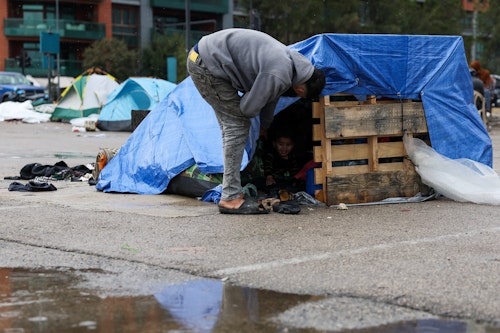
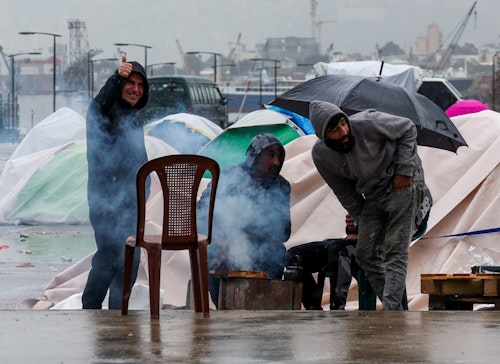
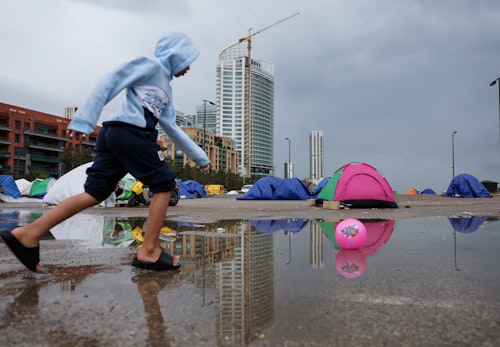
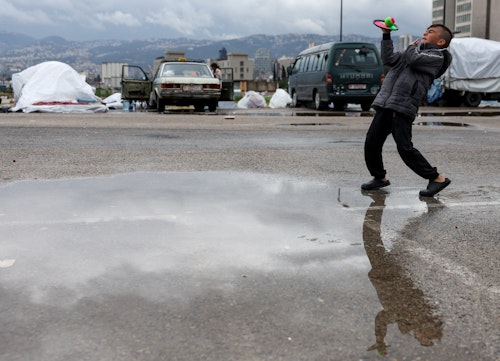
    In pictures: Families displaced by Israel’s bombardment of southern Beirut seek shelter in the capital

    Displaced families from Beirut’s southern suburbs stand by makeshift shelters after being driven from their homes by the latest escalation between Hezbollah and Israel, in Beirut, Lebanon, March 21, 2026. Photo: Amr Abdallah Dalsh, Reuters

    Iranian gas to Iraq resumes after South Pars attack, Iraqi state news agency says

    ⁠Iranian ⁠gas ​supplies ​to Iraq have resumed at a ​rate ‌of ⁠five ‌million cubic metres per ⁠day, the Iraqi electricity ministry ​said, according to ‌the state news ​agency.

    Flows had been halted after ​Israel attacked ​Iran’s ​main gas field, South ​Pars, on Wednesday.

    Iran ‘unsuccessfully’ targeted Diego Garcia base, UK official source confirms to AFP

    Iran was “unsuccessful” in targeting the joint UK-US Indian Ocean military base at Diego Garcia, a UK official source confirmed to AFP, after the Wall Street Journal reported Tehran fired two ballistic missiles at it.

    The source said the “unsuccessful targeting of Diego Garcia” took place before the UK government announced Friday that it would allow the United States to use some of its bases to target Iranian sites being used to attack ships in the Strait of Hormuz.

    Bahrain says Patriot missile system involved in March 9 blast over residential area that injured civilians

    A Patriot air defence ​system ‌was involved ⁠in the interception ‌of an Iranian drone over ⁠a residential area of Bahrain on ​March 9, ‌Bahrain’s government told Reuters on Saturday, describing ‌an incident that led to ​civilian injuries.

    The interception prevented a drone strike and ​saved lives, the ​spokesperson said. ​The US military had ​previously said an Iranian drone had struck a residential neighbourhood ⁠on March 9, injuring civilians.

    India’s Modi speaks to Iranian President Pezeshkian

    ⁠India’s ⁠Prime ​Minister Narendra Modi ​said in a post on X ​on ‌Saturday ⁠that he had ‌spoken with Iran’s President Masoud ⁠Pezeshkian.

    Modi condemned attacks on critical ​infrastructure in ‌the Middle East region, while also ‌reiterating the importance ​of ensuring that shipping lanes remain open ​and secure.

    “Appreciated ​Iran’s continued ​support for the safety ​and security of Indian nationals in Iran,” Modi ⁠added.

    Read More