Blog

  • Long queues in Myanmar as Iran war fuel crisis deepens

    Long queues in Myanmar as Iran war fuel crisis deepens


    The closure of the Strait of Hormuz after the US and Israel struck Iran in late February has sent shockwaves across the globe, with oil prices soaring and shipping disrupted.

    Nearly 90% of the oil and gas that passes through the strait is bound for Asian countries – but that has all but stopped since the start of the war.

    The BBC’s South East Asia Correspondent Jonathan Head reports from Myanmar, where drivers have been facing long queues outside petrol stations to fill up their vehicles.

    Military-backed authorities in the country, which has been engulfed by civil war since May 2021, have also brought in an alternate day policy for private vehicles and limited fuel consumption to only 35 litres a week.

    Read More

  • Access Error


    The page you are trying to access is unavailable because we detected potential misuse. Please wait a moment and try again.

    For help please visit help.ft.com. We
    apologise for any inconvenience.

    The following information can help our support team to resolve this issue.

    Reason
    Access Blocked
    Request ID
    9e4ae45ccb6a47da
    Status Code
    403

    Read More

  • World News in Brief: Ukraine drone attacks, Afghan rights, Zero-Waste Day

    World News in Brief: Ukraine drone attacks, Afghan rights, Zero-Waste Day


    In a night of further terror for civilians, on 28 March, a drone strike hit the Odesa Maternity Hospital No.5 with dozens of pregnant women and newborns inside.

    The patients were safe due to the underground shelter, and no one was hurt in the strike, according to the UN World Health Organisation (WHO).

    32 new mothers and 22 newborns were evacuated to other facilities as the hospital was badly damaged. Attacks on hospitals violate international humanitarian law. It is the fifth UN supported maternity hospital to be hit in Ukraine this year alone.

    Attacks in other regions

    Elsewhere in Ukraine, the Mykolaiv region also came under attack, resulting in the death of a child and injuries to several other residents, including children. 

    A school and other infrastructure were also damaged. The UN aid coordination office, OCHA, said humanitarians have provided emergency support to those in need.

    In the latest round of drone attacks by Russia, a 13-year-old boy was killed in Kramatorsk while a 13-year-old girl was killed in Voskresenske, according to reports from UN Children’s Fund, UNICEF, who called for an “end attacks and the senseless devastation of young lives”.

    Afghanistan’s human rights crisis continues

    Women and girls continue to be erased from public life through Taliban decree, according to a new report by UN human rights office.

    In the period between August 2025 and January this year, the report found that girls continue to be barred from education above sixth grade, medical graduation examinations were held without women for the second year running in November.

    Women not complying with the chador requirement were removed from public transport and denied access to public markets and services.

    Elsewhere, Taliban security forces continue to prevent Afghan women, including UN staff, contractors, and visitors, from entering UN premises nationwide.

    A child is treated at a health centre in Herat, Afghanistan.

    A child is treated at a health centre in Herat, Afghanistan.

    Women and girls criminalised

    Books authored by women were removed from the shelves of bookstores and libraries, including university libraries in some provinces, regardless of subject matter, content, or the author’s nationality. 

     “The de facto authorities have, in effect, criminalised the presence of women and girls in public life,” said UN Human Rights chief, Volker Türk, while presenting the report: “Women and girls are the present and the future, and the country cannot thrive without them.”

    Since 2021, the de facto authorities carried out 12 public executions, two of which occurred during the reporting period, in sports stadiums, in violation of the right to life. Corporal punishment is implemented in public on a weekly basis.

    Meanwhile journalists and media workers continue to face arbitrary arrests and detention because of “disproportionate restrictions on the content they produce”.

    UN urges action to transform inefficient food systems

    Every year, the world throws away roughly a billion tonnes of food that is absolutely safe to eat. Around 60 per cent of food waste happens at the household level while the rest comes mostly from food service and retail.

    The issue was in the spotlight on Monday, the International Day of Zero Waste.

    The staggering amount of edible food we toss out is the result of inefficient food systems – from production to distribution to consumption. 

    With the year’s “Zero Waste Starts on Your Plate” focus, the UN is calling for transforming food systems to be more efficient, resilient and sustainability.

    Methods of transformation

    For example, governments can advance climate and biodiversity plans along with national policies that support these objectives.

    Businesses can set measurable food waste reduction targets and integrate them into existing sustainability commitments.

    Meanwhile, consumers can improve how they buy, store and prepare food to both cut waste and save resources.

    Read More

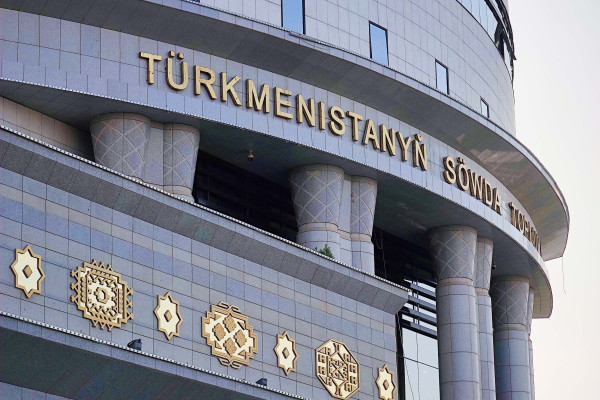
  • Petrochemicals drive down external quotations value in Turkmen exchange

    Petrochemicals drive down external quotations value in Turkmen exchange


    Economy
    Materials
    31 March 2026 03:07 (UTC +04:00)

    Petrochemicals drive down external quotations value in Turkmen exchange

    Photo: State commodity and raw materials exchange of Turkmenistan (SCRMET)


    The total value of external quotations in the March 27 trading session on the State Commodity and Raw Materials Exchange of Turkmenistan decreased compared to the previous session, driven mainly by lower indicators in petrochemicals and light industry, while agriculture showed a sharp increase.


    Subscription to paid content

    Gain access to all that Trend has to offer, as well as to premium, licensed content via subscription or direct purchase through a credit card.


    Read More

  • Schweizer IV-Rente light: Mehr Eingliederung, aber weniger Geld

    Schweizer IV-Rente light: Mehr Eingliederung, aber weniger Geld


    Schweizer IV-Rente light: Mehr Eingliederung, aber weniger Geld

    Dazu kommt: Längerfristig wird mit dieser Neuerung nur die IV finanziell entlastet. Denn der Lebensunterhalt von jungen Erwachsenen kostet nicht weniger, nur weil die IV weniger zahlt. Letztlich führt die Reform dazu, dass die Eltern, die Ergänzungsleistungen oder die Sozialhilfe das finanzieren, was die IV mit einer «Rente light» einspart.

    Read More

  • Trump threatens to destroy Iran’s Kharg Island oil hub if no deal reached

    Trump threatens to destroy Iran’s Kharg Island oil hub if no deal reached


    US President Donald Trump threatened Monday to destroy Iran‘s Kharg Island, a crude oil export hub, along with oil wells and power plants unless Tehran quickly accepted a deal to end the US-Israeli war. 

    The risk of further escalation, including a potential US ground operation to seize Kharg Island, is sending tremors through financial and energy markets, as well as neighbouring Gulf countries.

    In a post on his Truth Social network, Trump voiced hope about US talks with a “more reasonable regime” in Tehran, an apparent reference to new leadership despite the failure of the month-long war to dislodge the Islamic republic.

    But Trump warned that if a deal were not struck — including to reopen the vital Strait of Hormuz shipping lane — US forces would destroy “all of their Electric Generating Plants, Oil Wells and Kharg Island (and possibly all desalinization plants!).”

    Destroying civilian infrastructure such as power and water facilities would be illegal under international humanitarian law and could constitute a war crime, experts say.

    Iran has previously threatened to retaliate by targeting energy infrastructure and desalination plants in its Arab neighbours in the Gulf that host the US military, such as the United Arab Emirates, Oman, Qatar and Saudi Arabia

    Showing it will not back down, an Iranian parliamentary committee voted to impose tolls on vessels through the Strait of Hormuz, the passageway through which one-fifth of global oil passes.

    State television said Iran would forbid the United States and Israel from passing through.

    The tolling plan for the strait has outraged the United States, which has spoken of creating a “coalition” to oppose it.

    “No one in the world can accept it,” Secretary of State Marco Rubio told Al-Jazeera.

    “It sets an incredible precedent. So this means that nations can now take over international waterways and claim them as their own,” Rubio said of the waterway the US president recently called the “Strait of Trump.”

    Oil price causes havoc 

    Economy ministers and central bankers from the G7 club of rich countries met in Paris to discuss the war’s effects, with many countries introducing energy-saving measures or cutting fuel taxes to help consumers.

    Market experts warned that any US ground operation or wider Iranian retaliation could send oil prices to levels not seen since the July 2008 commodity boom, when the cost of Brent crude, the international benchmark, hit close to $150 a barrel.

    Brent has already risen nearly 60 percent this month, and the US benchmark WTI by more than half.

    The spectre of a widening conflict grew over the weekend when Iran-backed Houthi rebels in Yemen fired missiles and drones at Israel.

    The Houthis have previously threatened shipping through the Red Sea and the Suez canal, which requires vessels to travel through a narrow strait off Yemen‘s coast.

    “The Houthi’s ability to disrupt shipping through the Bab al-Mandeb strait, which accounts for roughly 12 percent of global trade, is the new key risk,” said analyst Chris Weston at the Australian financial services firm Pepperstone. 

    Read more‘The Houthis hold serious cards’ expert says, amid threats to choke off Red Sea passage

    In Lebanon, Israel continued to bombard Beirut’s southern suburbs and the country’s south, where an airstrike targeted an army checkpoint and killed a soldier.

    The United Nations peacekeeping force in south Lebanon, where Israeli and Hezbollah forces are clashing, reported that two of its personnel were killed Monday in “an explosion of unknown origin.” 

    Another peacekeeper was killed on Sunday, with Indonesia confirming one of its soldiers had died.

    New strikes 

    Around the Middle East on Monday, there was no let-up in hostilities.

    Israel said its air defence batteries responded to missiles launched from Iran, after earlier announcing it was striking military infrastructure across Tehran.

    Israel also confirmed it had hit the Imam Hossein University in the capital, which it said was used by Iran’s Islamic Revolutionary Guards Corps for advanced weapons research. 

    In Israel, emergency services reported a fire at an oil refinery in the northern port city of Haifa, which also suffered a blaze on March 19.

    Kuwait condemned strikes on a power station and a desalination plant, which killed an Indian worker.

    Egypt pleads for end 

    On the diplomatic front, Egyptian President Abdel Fattah al-Sisi, whose country is playing a role in mediating indirect talks between the US and Iran, appealed directly to Trump on Monday to find an offramp.

    “Please, help us to stop the war, you are capable of it,” Sisi told a press conference with Cypriot President Nikos Christodoulides in Cairo. 

    Egypt’s foreign minister joined counterparts from Saudi Arabia, Turkey and Egypt in the Pakistani capital Islamabad on Sunday for talks on the crisis.

    Trump has claimed to be in direct contact with senior Iranian figures who have not been identified publicly. 

    Rubio said there were “fractures” within the Islamic republic and voiced hope that the Iranian officials allegedly in contact with Washington had the “power to deliver.”

    But Iranian foreign ministry spokesman Esmaeil Baqaei again denied any negotiations, saying that the United States had sent only a request to talk via intermediaries including Pakistan.

    Iranian leaders insist Trump’s offer of talks is a smokescreen as he moves thousands of marines and paratroopers to the region for a possible ground invasion.

    Read moreUS mulls over ground offensive in Iran despite claims of talks

    After weeks of strikes, residents of Tehran painted a picture of a city that is still clinging to some routine, with cafes and restaurants open and no shortages reported in supermarkets or petrol stations.

    Security remains tight, with checkpoints erected on streets around the capital.

    “When I make it to a cafe table, even for a few minutes, I can almost believe the world hasn’t ended,” said Fatemeh, 27, a dental assistant.

    “And then I go back home, back to the reality of living through war, with all its darkness and weight.”

    (FRANCE 24 with AFP)

    Read More

  • Big Bets Report: Bettor Loses Chance at 0k After Shocking Duke Loss

    Big Bets Report: Bettor Loses Chance at $500k After Shocking Duke Loss


    As UConn and Duke took the floor Sunday in the East Region final, the Huskies were in the range of +180 moneyline underdogs on the March Madness oddsboard.

    Late in the first half, down 19 points, UConn was 10 times that — a +1800 underdog to pull the outright upset. 

    In other words, it was quite unlikely.

    But if you had a hundred bucks burning a hole in your pocket, well, maybe take a shot. That was apparently the mindset of one Fanatics Sportsbook customer.

    More on that shocking winner, a couple of corresponding, heartbreaking Duke losing bets, along with other notable parlays and major wagers, as we recap the weekend that was in NCAA Tournament betting.

    This page may contain affiliate links to legal sports betting partners. If you sign up or place a wager, FOX Sports may be compensated. Read more about Sports Betting on FOX Sports.

    Big Dogs

    Sure, big bets and big payouts get the most attention. There’s something about living vicariously through wagers most of us could never dare to make.

    But relatable bets are underrated, especially when they win. Like the $120 the Fanatics bettor wagered on UConn +1800 in-game moneyline, while getting smoked by Duke in the first half.

    It took the entire second half for the Huskies to dig out of that once 19-point hole, literally up until the final second. But they did so.

    Trailing 72-70 as the final seconds ticked away, UConn forced a turnover near mid-court. Then Braylon Mullins knocked down a long 3-pointer with 0.4 seconds left, giving the Huskies a 73-72 victory to cap an unbelievable comeback.

    The bettor got an hour or so of absolute theater and an exhilarating finish, while turning that $120 into $2,280. 

    That’s entertainment.

    Parlay Pity

    Nearly a year ago, ahead of the 2025 Masters, a FanDuel Sportsbook customer put $50 on a three-leg futures parlay. The bettor tied the prestigious golf tournament to the World Series and March Madness.

    Add up those odds, and you’ve got a healthy +26080, or just shy of 261/1.

    Rory McIlroy got the first leg through, winning a riveting Masters in a playoff against Justin Rose. Equally riveting, the Dodgers won a dramatic Game 7 over the Blue Jays, 5-4 in 11 innings, to claim the World Series.

    It’s been hurry-up-and-wait ever since Nov. 1.

    Duke got the overall No. 1 seed in the NCAA Tournament and survived a huge first-round scare vs. No. 16 seed Siena. By the time the Elite Eight arrived, the Blue Devils were on a 14-game win streak.

    And as noted above, they led UConn 44-25 late in the first half. The Final Four seemed assured, and that parlay looked to still be in great shape.

    Until it wasn’t. So no $13,000 payday there.

    At Fanatics, a potentially much more massive payday went by the boards, though it needed more than Duke. 

    Months ago, a customer put just $10 on a seven-leg parlay, combining a couple of Premier League soccer matches with the College Football Playoff, the NFL playoffs, March Madness and the NBA Finals.

    Odds were a humongous +5354900, or in slightly easier-to-digest terms, nearly 54000/1.

    Once the Patriots and Seahawks won the AFC and NFC titles, respectively, the first five legs were in. Duke was certainly well-positioned, at the very least.

    The Spurs winning the NBA title? Well, that might’ve been a stretch, but not out of the question.

    Hopefully it was just fun to dream about turning $10 into more than half-a-million.

    Parlay Partay

    Parlays are a bookmaker’s best friend. It’s a sports betting mantra that can’t be repeated often enough.

    Keep that phrase in mind, anytime you feel compelled to add more legs to your bet. Be reasonable.

    If you’re going to line up 13 outcomes, then bet a responsible amount on all those outcomes occurring. Like, say, $8.31.

    A Fanatics customer did just that on Friday, combining MLB, NBA and March Madness odds on this ticket:

    The final three legs: Michigan and Duke as solid moneyline favorites in the Sweet 16, along with moneyline underdog Tennessee.

    Michigan beat Alabama 90-77, Duke held off St. John’s 80-75 and Tennessee rolled over Iowa State 76-62.

    At odds of +181630 — or just beyond 1816/1 — that eight bucks and change turned into a stout $15,093.45.

    I Like Big Bets and I Cannot Lie

    There was no shortage of high-roller plays over the second weekend of March Madness odds. A few of the more notable bets:

    • $100,000 Illinois moneyline -340 vs. Iowa (DraftKings). The Fighting Illini just had to win, regardless of margin, and did so 71-59. The bettor profited $29,411.76 (total payout $129,411.76).
    • $45,000 Purdue +5.5 vs. Arizona (DraftKings). The Boilermakers couldn’t hold up in the second half, losing 79-64. That’s a five-figure donation to the house.
    • 35,000 UConn +5.5 (-115) vs. Duke (DraftKings). It didn’t look good in the first half, but it’s all about how it ends. The Huskies won outright as 5.5-point ‘dogs, and the bettor won $30,434.78 (total payout $65,434.78).
    • $32,000 Arizona moneyline -270 vs. Purdue. The Wildcats roll 79-64, and the bettor banks $11,851.85 profit (total payout $43,851.85).

    And let’s wrap it up with a relatively modest three-figure wager, on the golf course, rather than on the basketball court.

    Over the weekend, Gary Woodland completed a remarkable 2.5-year comeback from brain surgery and PTSD to win the PGA Tour’s Houston Open. Woodland posted a 21-under 259 total, five strokes clear of second-place Nicolai Hojgaard.

    Woodland was a +9600 long shot (96/1) to win the tournament. A DraftKings customer put $800 on Woodland and bagged $76,800 in profit. That’s a pretty good weekend.

    As for those bigger wagers, keep in mind that high-rollers have the bankroll to make such bets — and potentially absorb huge losses. Keep your wagers and expectations reasonable. Don’t bet more than you can afford to lose.

    Read More

  • Social media firms must better enforce Australia under-16 ban, watchdog says

    Social media firms must better enforce Australia under-16 ban, watchdog says


    Regulator eSafety says it has concerns about how Facebook, Instagram, Snapchat, TikTok and YouTube are complying with the ban.

    Read More

  • Jerome Powell to Gen Z: don’t fear AI — master it

    Jerome Powell to Gen Z: don’t fear AI — master it


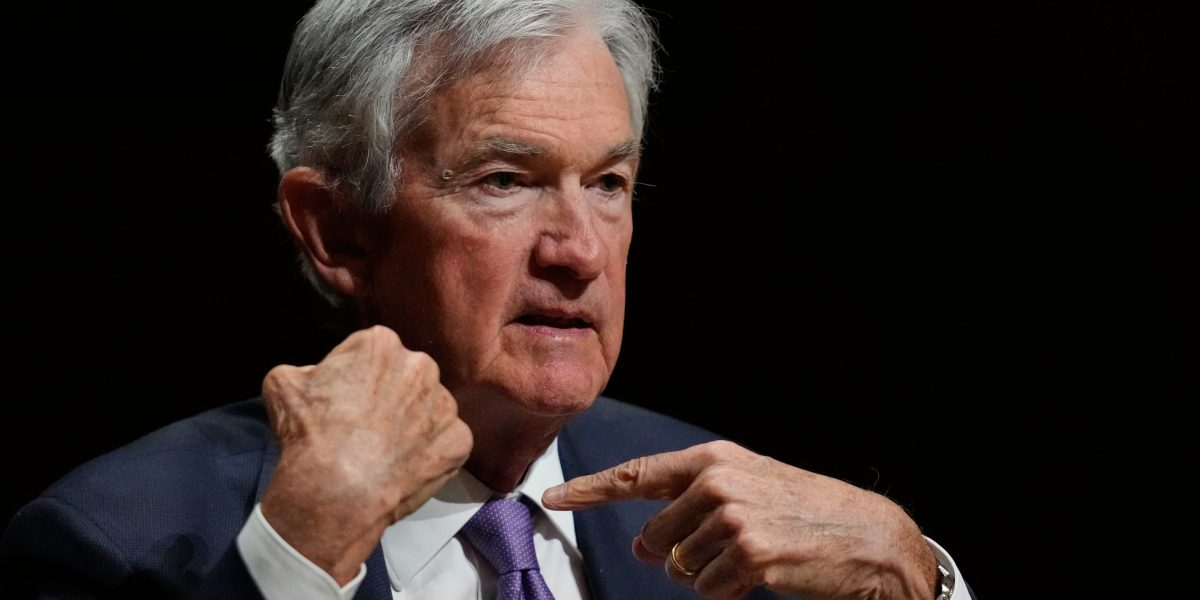
    Federal Reserve Chair Jerome Powell delivered a pointed message to the next generation of workers last week: Stop worrying about artificial intelligence and start learning how to use it.

    Speaking before nearly 400 students at a Harvard economics class in a wide-ranging conversation moderated by Professor David Moss, Powell acknowledged that Gen Z is entering one of the more challenging job markets in recent memory—and said AI is both part of the problem and the solution.

    Moss put Powell on the spot immediately, asking on behalf of the students in the room: “They’re entering into an uncertain time—an economy where new job formation is lower for many reasons. In particular, jobs that were plentiful a couple of years ago for students coming out of college are no longer so. And AI sits as this remarkable technological transformation that is both promising and existentially threatening.”

    Powell said he and his colleagues at the central bank were “well aware of the current situation for students coming out. It’s a time of very low job creation. And also you have AI going on.” Allowing that something “more longer-term, more secular” is probably happening around technology and AI, he was direct: “there’s no denying it’s a challenging time to enter the labor market.”

    Powell also cited low job creation, shifts in immigration policy, along with the disruptive force of new technology. But rather than counsel caution, he pointed students toward the tools disrupting their future careers. “I think you’re in a situation where you need to invest the time to really master the use of these new technologies, and that should stand you in good stead.”

    Powell spoke from personal experience. “My observation is that these large language models make people much more productive,” he said. “I feel like it’s making me more productive, because I can learn things really quickly.” He added that conversations with his son and others in the workforce had reinforced that view: for those who learn to use AI well, it is an amplifier, not a threat.

    The AI washing wave is already here

    The remarks come at a delicate moment. The U.S. unemployment rate remains low, but Powell was candid that the headline figure offers little comfort to recent graduates struggling to land their first jobs. New college hires that were plentiful just a few years ago have grown scarce, he noted, as companies assess what work can be automated.

    Powell all but confirmed that many large companies are eager to follow Block CEO Jack Dorsey’s lead and lay off thousands of workers, a practice that some, including OpenAI CEO Sam Altman, call “AI washing.” He said that “major U.S. companies—and we talked to a lot of those people who run those companies—they’re all looking at what they can do” in terms of staff reductions. “The truth is, they can take out a lot of jobs that can be automated by a very smart large language model. They just can, and they will, because their competitors are doing it and they can’t afford to have higher costs than their competitors.”

    Still, Powell pushed back against fatalism. He cited the historical pattern of technological disruption—stretching back to the invention of the loom—as evidence that new tools, however threatening in the short term, ultimately raise productivity and living standards.

    Jerome Powell on the Luddite era

    Powell put on his econ nerd hat for a second, citing all the similar technological advances throughout the history of modern capitalism. “If you look back through history—to generalize, this has been going on for a couple hundred years, since the loom was invented, right, to put all the people who were doing weaving out of business. But in all cases, it has wound up raising productivity and raising living standards—as long as the society keeps producing people who have the skills and aptitudes to benefit from that technology.”

    Powell predicted “that will be the case here,” when it comes to AI—just a new version of the loom. “It may take some patience and all that,” he said, “but in the longer term, this economy is going to give you great opportunities. And just be a little optimistic about that.”

    The crucial question, though, is just how much longer that longer term ends up being. When mechanical weaving displaced textile workers in 19th-century England, after all, the transition was brutal, sparking the Luddite movement of displaced workers destroying the machines that had taken their jobs and giving economic historians. What if the “long term” is the whole lifespan of the Gen Z generation?

    That was exactly Moss’ follow-up question: does longer term mean 10, 20, or even 40 years? “You know,” Powell responded, “it’s so hard to say.” All the AI adoption that he sees happening in the 2020s is focusing on existing middle management, back-office jobs, and Powell speculated that fluent AI users should be unaffected by this, while admitting that he didn’t know the answer. “There can be a period during which it’s challenging,” he acknowledged to the professor, “and this may be one of those. But nonetheless, I would just say it’s out there and it’s out there to be done. And I would be, medium and longer term, very optimistic about this economy compared to any other economy.”

    Read More

  • Developing countries are being priced out, in struggle for affordable finance

    Developing countries are being priced out, in struggle for affordable finance


    A credit rating is an assessment of how likely a borrower, such as a government, is to repay its debt on time and in full. For sovereign states, ratings influence how much countries pay to borrow in international markets: the lower the rating, the higher the perceived risk and usually the higher the interest costs.

    The current system too often relies on “outdated and incomplete information”, leaving countries unfairly penalised in global capital markets, the deputy UN chief Amina Mohammed told the opening of the UN’s Economic and Social Council, ECOSOC, Special Meeting on Credit Ratings, delivering remarks on behalf of Secretary-General António Guterres.  

    Adequate and timely finance is the fuel that drives sustainable development,” the Deputy Secretary-General said, warning that “today that fuel is running perilously low, and it’s getting more costly.”

    She pointed to nearly $1.4 trillion in annual debt servicing costs across developing countries, while more than 3.4 billion people live in countries that spend more on debt interest payments than on health or education.

    Global instability

    Ms. Mohammed added that global instability is deepening the crisis. Rising fuel and raw material costs linked to conflict and economic volatility are intensifying fiscal pressures and slowing growth, while climate-vulnerable countries continue to face disaster losses without access to affordable recovery financing.

    “This is a matter of profound importance,” Ms. Mohammed said.

    Debt reform efforts broaden

    Ms. Mohammed also linked the credit ratings debate to wider efforts to reform the global debt architecture and pointed to new steps aimed at giving developing countries a stronger voice in debt discussions.

    These include a borrowers’ platform, work on principles for responsible sovereign borrowing and lending, and a UN-led process bringing together debtor and creditor countries, private creditors, international financial institutions, academics and civil society.

    She also cited the planned African Credit Rating Agency as an example of efforts to improve data, transparency and risk assessment.

    Call to reimagine ratings

    Ms. Mohammed urged a major shift in how sovereign ratings are designed, arguing that assessments should capture not only vulnerability, but also opportunity.

    “We must transform the mindsets from long-term speculation to long-term investment,” she said, calling for broader, more transparent and forward-looking methodologies that better reflect countries’ real prospects.

    Ms. Mohammed stressed that affordable borrowing for development can strengthen a country’s future solvency. 

    Investment in health, education, infrastructure, climate resilience and renewable energy, she said, can generate prosperity, reduce risk and improve economic stability over time.

    She also criticised narrow measures of progress, insisting that “GDP tells us the cost of everything and the value of very little.”

    Ms. Mohammed called for greater accountability from governments, investors and ratings providers alike, alongside stronger data and fairer methodologies.

    It’s time to turn credit ratings from barriers into contributors to long-term finance and sustainable development,” Ms. Mohammed said, urging a new approach that helps developing countries secure the financing they need.

    Read More