Blog

  • Abrupt ICI closure signals waning urgency in gov’t’s anti-graft drive

    Abrupt ICI closure signals waning urgency in gov’t’s anti-graft drive


    Abrupt ICI closure signals waning urgency in gov’t’s anti-graft drive

    By Chloe Mari A. Hufana, Reporter and Kaela Patricia B. Gabriel

    THE administration may be losing urgency in its anti-graft drive, analysts said, as the independent body tasked to probe anomalies in flood control infrastructure projects concludes its investigation on March 31.

    The “abrupt closure” of the Independent Commission for Infrastructure (ICI) may be perceived as “unfinished business,” Gary G. Ador Dionisio, dean of the De La Salle-College of St. Benilde’s School of Diplomacy and Governance, said in a Messenger chat, as no sitting lawmakers and top Public Works officials mentioned during hearings were sent behind bars.

    The ICI was created through Executive Order No. 94 in September 2025, as a response to allegations of a multibillion-peso public works scandal involving flood mitigation projects.

    Originally comprising Chairman Andres B. Reyes, Jr., and members Rogelio B. Singson and Rossana A. Fajardo, the body was reduced to Mr. Reyes by the end of 2025, raising questions about its lifespan.

    In February, the ICI submitted an accomplishment report to Malacañang, which later served as basis for President Ferdinand R. Marcos, Jr.’s decision to close it on March 31.

    While the seizure of assets, freezing of bank accounts, and jailing of some personalities could mean the investigative phase is largely completed, Mr. Ador Dionisio flagged a “significant governance risk” in closing the ICI before its expected results are fully delivered.

    “The closure of a high-profile investigative body may create the perception that the effort is losing urgency.”

    The lack of “substantive achievement” ahead of its shutdown would also suggest that the ICI’s corruption crackdown is “performative,” Joy G. Aceron, convenor-director of transparency group Government Watch, said.

    “If they are not continued, they’ll come down as mere performative. Their purpose was only to manage the anger of the people. It did not mean to address corruption,” she said in a Facebook Messenger chat.

    University of Santo Tomas Political Science Professor Eric Daniel C. de Torres added the flood mess just leaves Filipinos questioning whether the commission’s work was meant to pursue accountability or just to appease the public.

    Hansley A. Juliano, who teaches political science at the Ateneo de Manila University, said the credibility of the anti-graft push will hinge less on individual officials’ reputations and more on whether the administration pursues accountability in a visibly fair and policy-driven manner.

    “The Ombudsman’s pursuit of persons of interest and the recovery of relevant assets would be key to the achievement of justice, albeit there would be a clear need to demonstrate cross-party accountability across the accused,” he said via Facebook Messenger.

    For Mr. Ador Dionisio, the next phase of the ICI must promote reforms on infrastructure protocols, processes and procurement, and jail time for individuals linked to alleged corruption cases from 2016 to the present.

    “If the findings of the commission are systematically integrated into prosecutorial processes, legislative reforms, and long-term oversight mechanisms, the closure may represent the completion of a phase rather than the end of accountability,” he said.

    “If not, it risks signaling a premature conclusion to anti-corruption efforts, potentially undermining broader governance reforms,” he added.

    Despite its looming shutdown, Mr. Marcos ordered both chambers of Congress to fast-track a measure that would institutionalize and strengthen the body through the creation of the Independent People’s Commission (IPC).

    Ms. Aceron said the ICI’s closure paved the way for this measure but noted the IPC will only be sustainable with people’s participation.

    Mr. de Torres, however, questioned the need for an IPC, noting existing laws that already established mechanisms for accountability through the Ombudsman and Citizen’s Charter. He also flagged what seems to be a lack of interest to certify the bills granting the commission more teeth as urgent.

    Senate Bill No. 1512, filed by Senate President Vicente C. Sotto III last year, proposed an independent body to probe corruption and irregularities in government public works projects. The IPC will hold the power to subpoena, freeze assets and blacklist contractors to boost transparency and accountability in public spending. A similar proposal was filed in the House of Representatives.

    “I think that it will not push through; to pass it is a political decision. With the way the early stage of investigation had gone through, it is expected that the individuals, offices, and systems in place is a web-like relationship that is very deep,” Mr. de Torres said in anticipation of possible conflicts of interest in the composition of an IPC.

    The Philippines, a climate-vulnerable nation hit by an average of 20 typhoons annually, has consistently dedicated billions of pesos in its annual budgets to flood control projects to shield communities and protect local economies.

    However, a series of storms mid-last year further exposed the gaps in the outdated flood control systems of the nation.
    Read More

  • MIDDLE EAST LIVE 17 March: Crisis impact ripples across region

    MIDDLE EAST LIVE 17 March: Crisis impact ripples across region


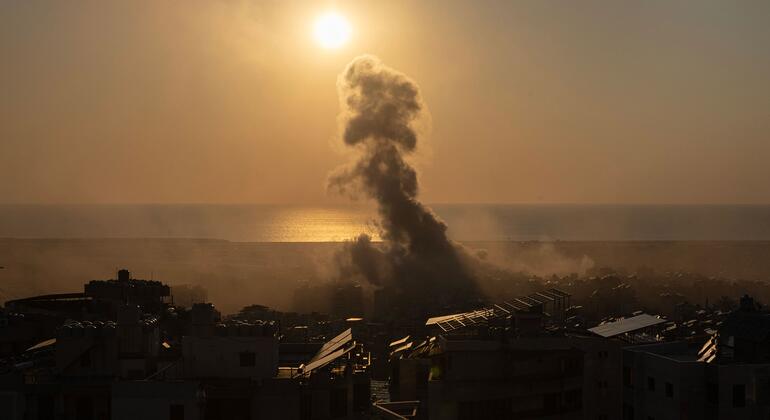
    The crisis in the Middle East has entered its third week, with fighting continuing across the region and humanitarian needs rising. Oil prices continue to hover above $100 a barrel, while shipping disruptions and temporary flight suspensions are affecting travel and supply chains. Despite mounting challenges, UN agencies are scaling up emergency aid, warning that displacement, food insecurity and pressure on health systems are growing as the war’s impact spreads. Stay with us for live updates from across the UN system. App users can follow coverage here.

    Read More

  • Tehran strikes near Israeli nuclear center as Trump threatens attacks on Iranian power plants – POLITICO

    Tehran strikes near Israeli nuclear center as Trump threatens attacks on Iranian power plants – POLITICO


    Iranian state TV said Saturday’s strikes by Tehran were a response to an attack on Iran’s Natanz nuclear facility earlier in the day, according to the BBC.

    Mohammad Bagher Ghalibaf, speaker of Iran’s parliament, said the fact that ballistic missiles evaded Israeli defenses and struck near the nuclear research site appears to signal “a new phase” in the war.

    “If Israel is unable to intercept missiles in the heavily protected Dimona area, it is, operationally, a sign of entering a new phase of the conflict,” he posted on social media network X. “Israel’s skies are defenseless.”

    He added that the “time has come to implement the next pre-planned schemes,” without providing further details.

    Israeli military spokesman Effie Defrin said the strikes did not represent a new threat. “The air defense systems operated but did not intercept the missile. We will investigate the incident and learn from it,” he wrote on X.

    Israeli Prime Minister Benjamin Netanyahu said it had been a “very difficult evening,” and vowed to “continue to strike our enemies on all fronts.”

    The International Atomic Energy Agency said it was aware of the strikes near the nuclear research center and has not received any indication of damage to the facility, nor any information from regional states indicating that abnormal radiation levels have been detected.


    Read More

  • Why did a Swiss gondola fall from its cable?

    Why did a Swiss gondola fall from its cable?


    On March 18th 2026 a gondola detached from a ski lift at the Engelberg resort in Switzerland and fell to the ground. A 61-year-old woman, the sole occupant of the gondola, was killed.

    Source: X

    Initial investigations indicate that the system was in sound technical condition. The Swiss Transportation Safety Investigation Board (STSB) has stated that there is no evidence of a systematic fault with a specific type of clamp.

    Investigators still believe there may have been a impact between the clamp attaching the cabin to the cable and a roller assembly on a support tower.

    High winds
    The crash occurred during a period of strong winds, raising questions about how such conditions are monitored and managed.

    Arno Inauen, chief executive of Garaventa, told various media that conditions at the time were marked by strong, gusting winds. According to preliminary findings, an unusually powerful gust forced the cabin violently off course, causing it to strike a support tower before being torn from the cable.

    Cable cars are equipped with wind speed devices—typically two or three—mounted on towers where wind exposure is greatest. These devices transmit real-time wind-speed data to the drive station. Such monitoring is mandatory, and modern systems also record the data, allowing operators to track trends.

    Operators work within defined thresholds. At around 40km/h a wind warning is issued, signalling the need for caution. At this stage, operators may stop admitting new passengers, as clearing the line takes time. At roughly 60km/h an alarm is triggered; by then, operators are expected to reduce speed or suspend operations altogether.

    Responsibility rests with on-site staff. Supervisors have the authority to halt operations at any moment, though decisions after an initial warning depend on circumstances. In practice, individuals must weigh safety against the pressure to keep services running.

    Fatal accidents rare
    Fatal cableway accidents are rare. Between 2015 and 2020 no fatal accidents occurred in France, Germany, Austria or Switzerland. In 2021 and 2022 one fatal accident was recorded each year.

    However, serious incidents have occurred elsewhere in Europe. In 2021 two accidents in Italy, including the Stresa–Monte Mottarone disaster, killed 14 people; another fatality occurred in the Czech Republic at Ještěd. On April 17th 2025 four people died in an accident near Naples. In each of these cases the haul rope failed and the track-rope brake did not function as intended. Investigation reports point to gaps in operator expertise and shortcomings in oversight and inspection.

    Comparatively safe
    Compared with other modes of transport, cableways remain exceptionally safe. Buses and trams record around 7.49 injuries and 0.18 deaths per 100m passengers—significantly more than either trains or cable cars—largely because they operate in mixed road traffic. Trains perform better, with about 0.93 injuries and 0.09 deaths per 100m passengers—see study here.

    For more stories like this on Switzerland follow us on Facebook and Twitter.


    Read More

  • Paris and Marseille in focus as French go to the polls in local election runoffs

    Paris and Marseille in focus as French go to the polls in local election runoffs


    French voters go to the polls on Sunday to elect mayors in Paris, ​Marseille and more than 1,500 other constituencies, in a test of the far right’s strength and the resilience of mainstream parties ahead of next year’s presidential election.

    Issued on:


    3 min Reading time

    Heading nearly 35,000 municipalities – from major cities to villages with only a few dozen residents – mayors are France’s most trusted elected officials.

    Most mayors were elected outright in the first round on 15 March, having won more than 50 percent of the vote.

    But there are runoffs on Sunday in around 1,590 constituences, including France‘s biggest cities.

    Some 17 million people are eligible to vote.

    Key battle grounds include Paris, Marseille, Lyon, Bordeaux and Toulouse.

    The local ballots are being closely watched to gauge the mood on the ground and potential party alliances before the election of a successor to centrist President Emmanuel Macron next year. 

    Voting started at 8 a.m. and ends between 6 p.m. and 8 p.m. Results will trickle in ⁠through the evening.

    Voter turnout stood at 20.33 percent at midday in mainland France, according to the Ministry of the Interior.

    Polling has already closed in the French overseas territory of New Caledonia. Data provided by the communes so far put turnout at around 72 percent, compared to 56 percent in first round. 

    Rachida Dati, Paris mayoral candidate supported by Les Republicains (LR) and the MoDem parties, votes in the second round of the French mayoral election at a polling station in Paris, France, March 22, 2026.
    Rachida Dati, Paris mayoral candidate supported by Les Republicains (LR) and the MoDem parties, votes in the second round of the French mayoral election at a polling station in Paris, France, March 22, 2026. REUTERS – Benoit Tessier

    What to watch in the deciding round of France’s local elections

    Key ballots

    A close race is likely in Paris, where conservative former justice and culture minister Rachida Dati seeks to take control of the capital, which has been run by the left since 2001.

    Her main rival is Emmanuel Gregoire – a former deputy of outgoing Socialist mayor Anne Hidalgo

    Emmanuel Gregoire, Paris mayoral candidate for the Socialist Party and head of the "left-wing coalition" list (La Gauche unie), arrives at a polling station to vote in the second round of the French mayoral election in Paris, France, March 22, 2026.
    Emmanuel Gregoire, Paris mayoral candidate for the Socialist Party and head of the “left-wing coalition” list (La Gauche unie), arrives at a polling station to vote in the second round of the French mayoral election in Paris, France, March 22, 2026. REUTERS – Sarah Meyssonnier

    Another key ballot is in Marseille, ⁠the country’s second-biggest city, where the second round pits the far-right National Rally (RN) against the incumbent Socialist mayor.

    The RN’s chances of winning Marseille took a hit when hard-left candidate Sebastien Delogu of France Unbowed (LFI) withdrew from the second round out of concern that splitting the left’s vote could help the RN.

    The first round brought mixed results for the party, which got re-elected in several cities but failed to make major wins beyond its southern and northern bastions.

    In the French Riviera ‌city of Nice, RN ally Eric Ciotti is facing off against incumbent mayor Christian Estrosi – a conservative  backed by the centre.

    Local elections ‘less vulnerable’ to disinformation, despite targeted campaigns

    Shifting alliances

    The thousands of separate municipal ballots are often focused on ​very local issues and their outcome does not forecast who will win in the April 2027 presidential election.

    But they show trends, in popularity and in the type of alliances that can be struck in an increasingly fragmented landscape.

    A key question is what impact the alliances – or lack of alliances – struck between the two rounds will have.

    Local party negotiations since Sunday’s first round have highlighted divisions on the left, with the Socialists striking deals with their hard-left arch-rivals from LFI in some ⁠cities, such as Lyon and Toulouse, but not in others such as Marseille or Lille.

    France’s parity law boosts female candidates, but most mayors are still men

    Overall turnout for the first round stood at 57 percent – the country’s lowest in local polls bar the last edition in 2020 which was impacted by the Covid pandemic.

    (with newswires)

    Read More

  • Hot Start Continues for Michael Jordan’s NASCAR Team as Tyler Reddick Takes Darlington Pole

    Hot Start Continues for Michael Jordan’s NASCAR Team as Tyler Reddick Takes Darlington Pole


    The NASCAR team co-owned by NBA legend Michael Jordan continued its strong 2026 start in the Cup Series, locking up the top two starting spots Saturday at Darlington Raceway.

    Daytona 500 winner Tyler Reddick, the first driver in NASCAR history to win the season’s first three races, qualified first for Sunday’s 400-mile race with a 169.152 mph lap on the 1.366-mile oval.

    The 23XI Racing driver captured his 13th pole position despite smacking the wall with his No. 45 Toyota as he struggled with a new package that makes driving harder with higher horsepower and lower downforce.

    “I tried to take it easy and just overdid the throttle,” Reddick said. “I kind of knew I was in trouble about a third of the way through, so I just had to hit the wall at that point.

    “Just really proud of everyone at 23XI. It was a huge focal point with the adjustments to the engine and downforce to stay as strong as we have been the last couple of years. I knew it would be a huge challenge in qualifying today, and it was. I damn near wrecked.”

    Teammate Bubba Wallace qualified second at 168.434 mph in his No. 23 Toyota for 23XI, marking the second front row sweep for the team founded by Jordan and NASCAR star Denny Hamlin. Reddick and Wallace are also ranked 1-2 in the points standings through five races.

    “That’s Reddick for you,” Wallace said. “He pushes it to the limit. That was a hell of a lap. Just proud of the efforts of the team. Continue to ride the momentum from Race 1 to now and Darlington’s super tough. This package is a handful.”

    Wallace dedicated the lap to his newborn daughter, who was born Thursday.

    Chase Elliott qualified third after his No. 9 Chevrolet failed inspection twice before the session, resulting in the loss of pit selection and the ejection of car chief Matt Barndt.

    Kyle Larson and Brad Keselowski rounded out the top five in qualifying.

    Chris Buescher qualified sixth, but his No. 17 Ford also failed inspection twice. The team lost its pit selection and car chief Josh Sisco for the race.

    Reporting by The Associated Press.

    Read More

  • A secularism law some women say makes them feel like 'outsiders' heads to Canada's top court

    A secularism law some women say makes them feel like 'outsiders' heads to Canada's top court


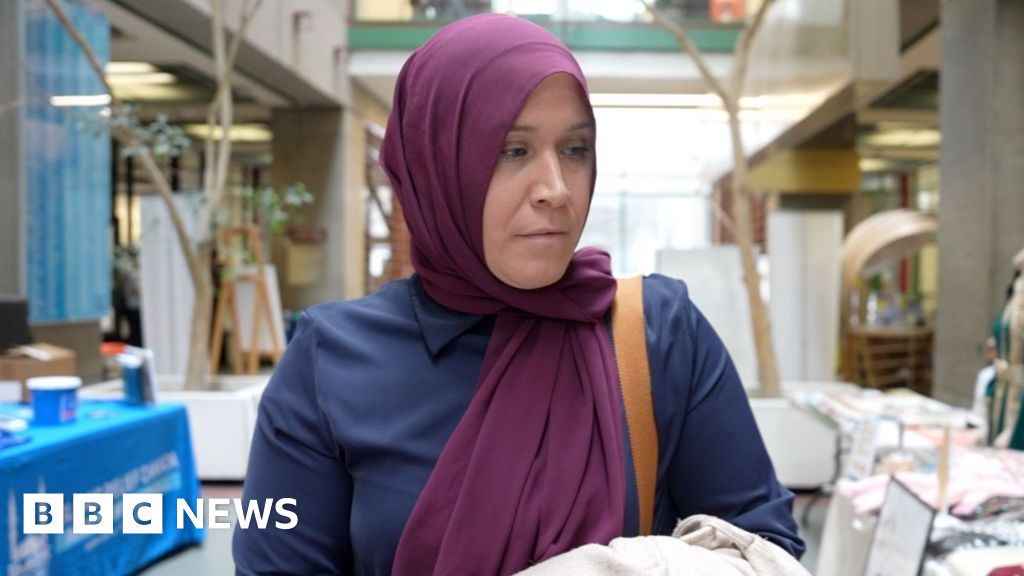
    Canada’s Supreme Court will hear a challenge to Quebec’s Bill 21, which bars some public sector workers, including teachers, from wearing religious symbols.

    Read More

  • Korea Names BIS Veteran, Financial Stability Expert as BOK Head


    (Bloomberg) — South Korea nominated Shin Hyun Song as the nation’s next central bank governor, charging the senior Bank for International Settlements official with steering monetary policy at a time of growing uncertainty due to the conflict in Iran.  Read More

    Read More

  • World News in Brief: West Bank displacement, Cuba fuel crisis, sexual abuse safeguards, new ‘humancentric’ AI advocate

    World News in Brief: West Bank displacement, Cuba fuel crisis, sexual abuse safeguards, new ‘humancentric’ AI advocate


    According to the UN human rights office, UNHCR, more than 36,000 Palestinians were displaced in the year to October 2025 amid intensifying settlement activity and settler violence.

    The report highlights a sharp rise in attacks by settlers, alongside demolitions, land seizures and severe restrictions on access to services, creating what it describes as a “coercive environment” forcing people from their homes. 

    Fait accompli

    UN rights chief Volker Türk warned that the trend risks further entrenching displacement and undermining prospects for a viable Palestinian state.

    Israeli authorities have rejected similar findings, maintaining that settlement activity is lawful and linked to security needs. 

    The OHCHR report reiterates that settlements in occupied territory are illegal under international law, as affirmed by UN Security Council Resolution 2334, and calls for an immediate halt to expansion and related practices.

    The report documents “increasing incidents of settler violence resulting in killings, injuries and property damage, as well as relentless harassment, intimidation, and destruction of Palestinian homes and farmland,” UN Deputy Spokesperson Farhan Haq told reporters in New York.

    Cuba blackout exposes deepening fuel crisis

    Fuel shortages in Cuba are severely restricting access to basic services, the UN said on Tuesday, as a nationwide power outage underscored the scale of the crisis.

    The disruption followed a malfunction at a major power station, with electricity only “gradually” returning, according to the UN aid coordination office, OCHA.

    Humanitarians warned that the energy crunch is affecting daily life across the country. In Havana, uncollected rubbish is piling up and air quality has worsened as residents burn waste and wood for cooking.

    Thousands of surgeries postponed

    Authorities say more than 50,000 surgeries were postponed in February alone due to energy shortages.

    Aid deliveries are also being hit. Dozens of containers remain at Havana’s port in the capital, while fuel scarcity is “slowing down and driving up the cost” of getting assistance to those in need. 

    The Pan American Health Organization – affiliated with the UN health agency WHO – continues supplying medical items, but operations are constrained.

    The crisis comes amid tightening US restrictions on fuel shipments to the island, which UN officials have warned are exacerbating existing humanitarian pressures.

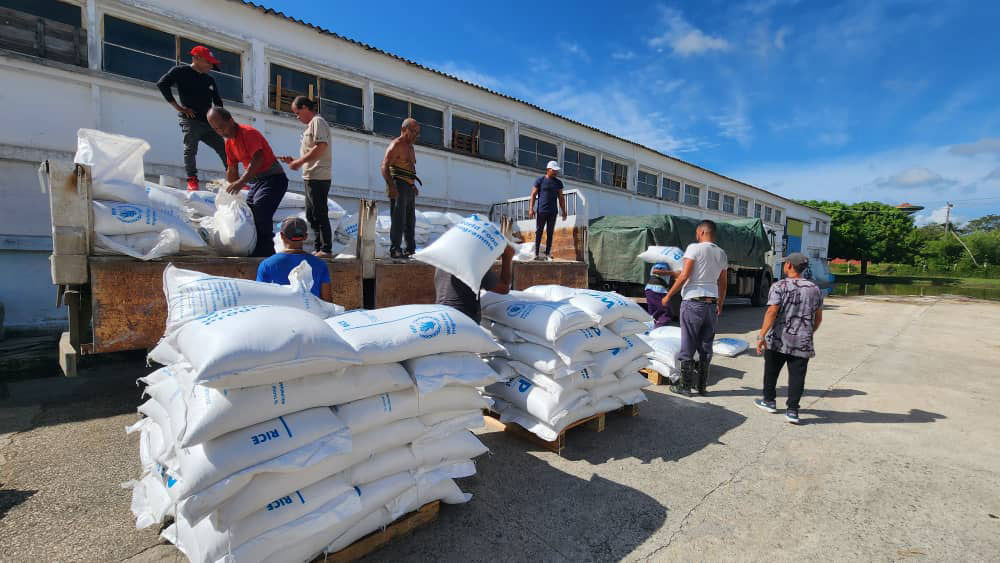
    Food aid is prepared for delivery by the World Food Programe to communities in Cuba affected by Hurricane Melissa.

    Food aid is prepared for delivery by the World Food Programe to communities in Cuba affected by Hurricane Melissa.

    Funding cuts threaten progress on UN abuse safeguards

    A sustained global effort is needed to tackle the root causes of sexual exploitation and abuse, the United Nations said on Tuesday, warning that funding cuts risk undermining hard-won progress.

    A new report by the Secretary-General António Guterres highlights system-wide measures to prevent and respond to abuse by UN personnel and partners.

    It stresses that addressing the issue requires confronting “inequality and power imbalances”, noting that women and girls accounted for 85 per cent of victims between 2017 and 2025.

    Safeguards strengthened

    Since 2017, the UN has strengthened safeguards through improved policies, coordination and public reporting, all based on a victim-centred approach. But challenges remain, the report finds.

    Recent cuts to peacekeeping, humanitarian and development budgets are of particular concern, as they “risk undermining decades of progress” and weakening support systems for victims.

    UN officials emphasised that predictable funding is essential to maintain protections and ensure accountability across operations worldwide.

    The full report is available online here.  

    UN taps Joseph Gordon-Levitt to champion human-first approach to AI

    From Hollywood to global policy debates, Joseph Gordon-Levitt is taking on a new UN role – helping ensure that the rapidly evolving world of artificial intelligence and digital technology remains grounded in human rights, inclusion and everyday experience.

    The UN announced on Tuesday that the actor, filmmaker and creative entrepreneur has been appointed its first Global Advocate for Human-centric Digital Governance, a newly created role aimed at making complex digital policy discussions more accessible and relevant to people worldwide.

    ‘Human-centric incentives’

    “Digital technologies are transforming how societies function, how economies develop and how people engage with one another, often faster than our collective ability to respond,” Li Junhua, head of the UN Department of Economic and Social Affairs (DESA) said.

    The new role, he added, will help connect global policy discussions “with everyday experience” while emphasizing accountability and inclusion.

    In his new capacity, Mr. Gordon-Levitt will work with DESA and the Internet Governance Forum (IGF) – the UN’s global platform for digital public policy dialogue – to translate technical debates into accessible narratives and amplify diverse perspectives, particularly from communities often underrepresented in global policymaking.

    Read More

  • Young British dual nationals barred from flights home over new passport rules

    Young British dual nationals barred from flights home over new passport rules


    More British dual nationals have been stranded abroad after being refused entry on return flights under new UK border rules.

    Two more British teenagers have been stranded abroad after being denied boarding on return flights because of new UK border rules imposed on dual nationals.

    This comes after a British schoolgirl was left in Denmark because she was not allowed to board her Norwegian Air flight back to the UK on March 8th following a weekend visiting her father, a British academic working at a university in Copenhagen. 

    The Guardian reports that British schoolgirl had travelled with her Norwegian mother and did not have a valid British passport with her, but was in the process of applying for one. The article does not state which other passport the girl was travelling on, but given the nationality of the mother we can presume it was likely a Norwegian one.

    Now the British newspaper reports that two further British teenagers have fallen foul of the rule change: a 19-year-old stuck in Madrid on a university trip, and a 18-year-old British-Danish national stranded in Mumbai.

    READ ALSO: Can dual national Brits travel to UK without valid British passport after all?

    This is despite the 19-year-old in Madrid having various forms of identity with her, reports suggest.

    “She has her British birth certificate with her and photos of both her parents’ British passports and proof of residence in the UK. We are extremely concerned, as you can imagine,” the girl’s grandmother told The Guardian.

    The 18-year-old British-Danish national was left in Mumbai after Air India did not allow her to board without a British passport.

    “She couldn’t leave the airport as she had no visa to find accommodation. She was very, very scared,” the girl’s mother told The Guardian.

    She reportedly left the country before the rule change came into force on February 25th and did not know that dual nationals must now carry their British passport with them.

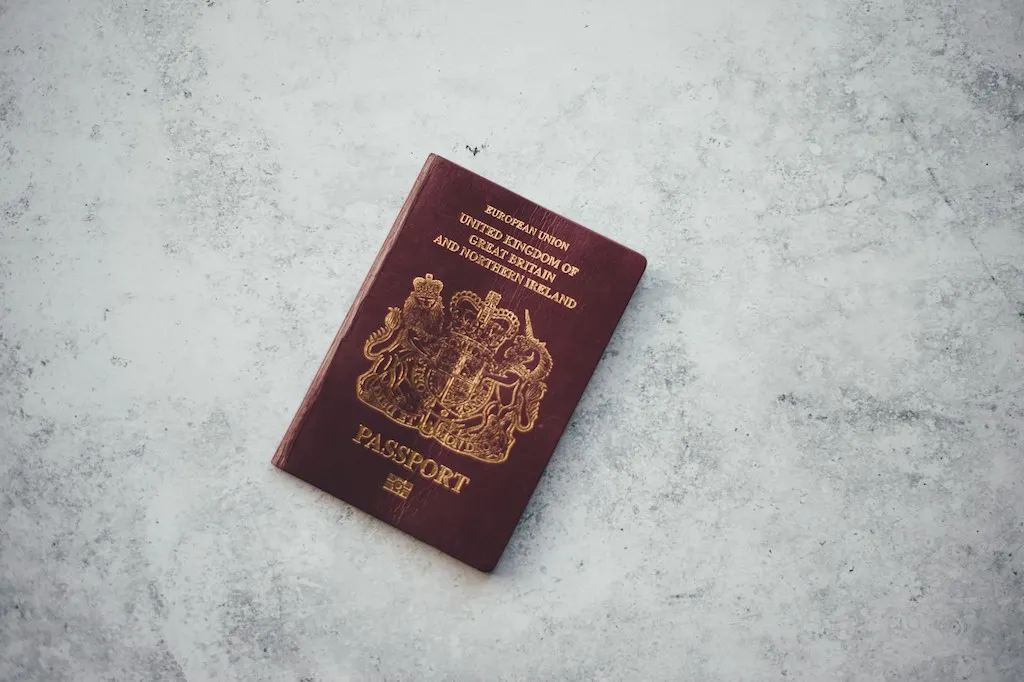
    Under new border rules for the Electronic Travel Authorisation (ETA) system in place from 25th February, British dual nationals can only enter the UK if they have a valid British passport or alternatively a Certificate of Entitlement, which costs £589.

    Advertisement

    Under pressure the UK’s Home Office has softened the rules slightly saying Brits can prove the UK nationality using an out of date passport if they don’t have a current one. However there was no solution offered for those who have never had a British passport such as children born abroad to British parents, or dual nationals born in the UK like the schoolgirl stranded in Copenhagen.

    The girl’s parents were not aware of the rule change and she was not allowed to board her return flight, meaning the student has been stranded in Denmark as her GCSE exams approach.

    “We tried to check in on the app and it allowed me to check in but not Hanne,” her mother told The Guardian.

    “When we got to the airport… they wouldn’t let her check in either.”

    Advertisement

    The report does not specify why she was denied boarding or if she had applied for an ETA, the UK’s new Electronic Travel Authorisation for for foreign arrivals.

    The Local has contacted Norwegian for clarification on the case but has not yet received a response.

    The family’s local MP, James MacCleary, has spoken publicly and blamed mixed messages from the government: “The government’s hopeless planning and communication of its changes to entry requirements for dual nationals has caused an untold amount of chaos and stress. 

    “Too many dual nationals have found themselves stranded abroad in heartbreaking situations, missing funerals, weddings, or in the case of my constituent, an absolutely crucial time in education.

    “The home secretary needs to pull her finger out and urgently provide a low-cost and quick alternative for dual nationals stuck abroad. If she fails to act, the prime minister must step in to bring an end to the chaos, otherwise more children and families will pay the price.”

    In a statement, the Home Office said: “Public information advising dual nationals to travel with a valid UK passport or certificate of entitlement has been available since October 2024, including official guidance on gov.uk”.

    Advertisement

    What are the rules?

    Dual-nationals abroad have expressed anger at the change, telling The Local they felt they were being ‘punished for having dual citizenship’ and describing the ETA system as a  “money making racket”.

    Ever since the launch of ETA, there has been confusion when it comes to British dual nationals. The Home Office had done little to allay these fears, but for a full breakdown of the rules, or what is understood of them so far, at least, read The Local’s explainer here.

    In short: British or Irish nationals travelling on their UK or Irish passport do not require the electronic travel authorisation known as the ETA.

    Many British dual nationals, however, might not have a British passport anymore. These people have always previously had the option of simply using their other passport to enter the UK but the rule change makes this more difficult, if not impossible.

    This is because the website and app used to apply for the ETA demands that people list any other nationalities they possess – but does not allow applicants to select ‘British’ as another nationality – meaning that dual nationals cannot truthfully complete the ETA application and travel on their other passport. Basically British dual nationals have been told they cannot get an ETA.

    They would therefore be at risk of being accused of making a false declaration if they hadn’t applied for and paid for a new passport (for £108) or a Certificate of Entitlement, which costs £589.

    READ ALSO: Explained: The UK’s £16 ETA travel permit

    Read More