Bureaucratic backlogs and rule changes on residency rights are having an increasing impact on the lives of foreigners living around Europe. Many say they have been left in legal limbo with their lives effectively on hold.
Any foreigner living abroad knows that navigating bureaucracy in another country and language can be a challenge.
Sorting out a residency permit is one of the first and most important tasks to undertake upon arrival, and renewing it annually or five or ten years later can be critical to long-term plans. But these plans are often hit by long delays in the renewal of permits, which can often leave foreigners effectively “undocumented” or unable to travel abroad.
On top of the common issues, in recent years an anti-immigrant drift in European politics has meant that many governments are now cracking down on residency and citizenship rights, causing further delays and leaving many in legal limbo.
What’s often missed in this, however, is the human angle and how uncertainty around residency permits can affect lives and life plans.
Here’s a look across Europe at how residency card delays is putting lives of foreigners across Europe on hold.
France
“I hope the new interest from the Minister actually results in changes to the process. People’s lives and livelihoods are on the line.”
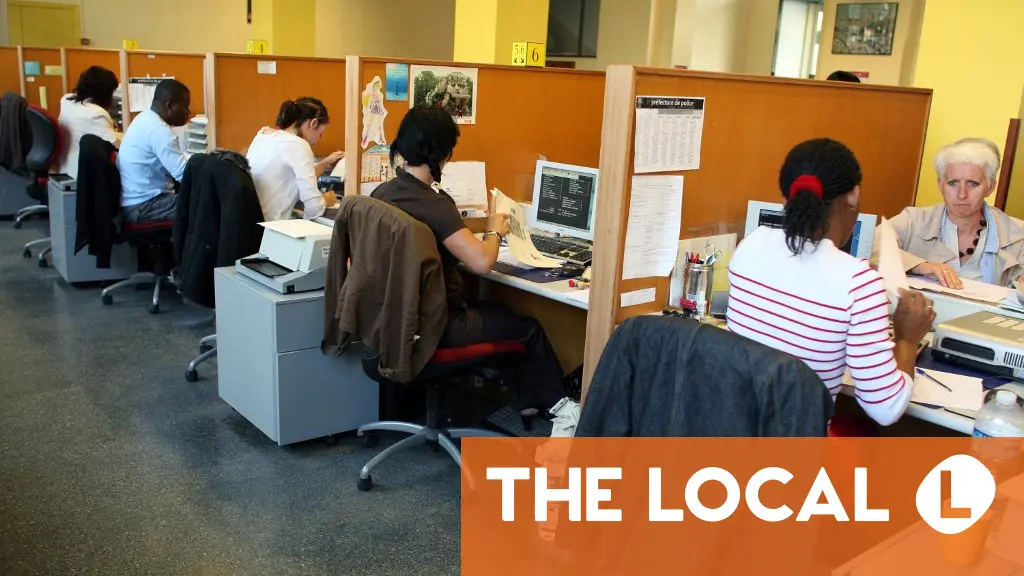
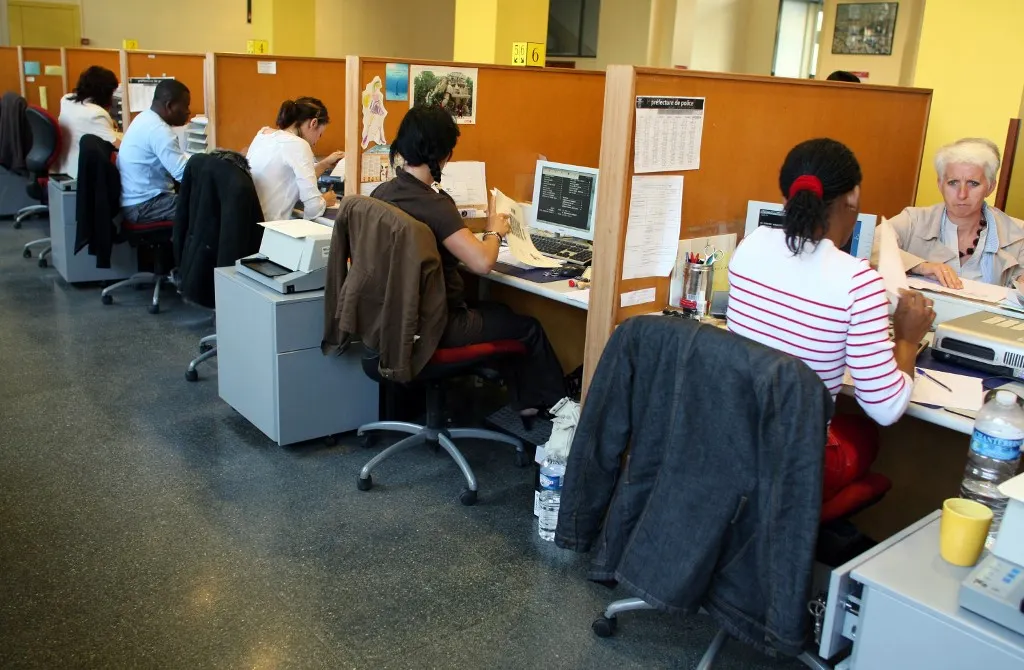
That comment, from Local reader Conrad Tobin, sums up the situation in France. Non-EU nationals resident in the country will be familiar with the long delays in processing requests to obtain or renew a carte de séjour, the document which proves legal residency. It’s common to wait more than six months for a card, and also for the old card to expire while the applicant is waiting.
In terms of average wait times, it’s tough to get figures because it’s organised on a local level and waiting times really vary between prefectures. Some numbers from a couple of years ago, however, show huge regional variations with some areas having delays of almost 300 days.
A recent report by the rights organisation Défenseur des Droits highlighted growing problems for foreigners in France in dealing with administration and difficulties renewing a carte de séjour was cited as the number one issue. Last year, 50,000 foreigners contacted the rights organisation for help with issues around immigration admin, up from just 6,000 in 2019.
In fact, 77 percent of all calls from foreigners relate to problems in renewing their card. Excessive delays in processing a request, malfunctions in the online residency card platform ANEF and overwhelmed préfecture services were the main problems cited.
However, promising to “boost staffing levels in the préfectures’ residence departments”, Interior Minister Laurent Nunez has announced a “massive plan” to tackle delays in response.
READ ALSO: ‘Lives and livelihoods are on the line’ – readers speak out on carte de séjour delays in France
Advertisement
Germany
Readers of The Local Germany have told our team that getting a residence permit takes a long time.
Nancy Landrum, an American who lives in Leipzig, had almost a yearlong wait and noted that getting a good caseworker might help: “The waiting time of nine months was excessive; I do not have a helpful case worker.”
Incredibly, one reader, an Egyptian living in Hamburg, reported being stuck on a student visa for 12 years, citing “patience, patience, patience”.
“I struggled for many years trying to switch from student residence to a different one which allows me to work,” he said.
For a roundup of reader responses on what it’s like to get a residency permit in Germany, you can read more here.
In Germany there’s also the issue of travelling when your residency application (or renewal) is underway. In many cases, people’s residency permits expire whilst they are still waiting for their application to be processed, which can make international travel unpredictable.
In this case, you can usually get a temporary leave permit from your immigration office on request.
READ ALSO: Q&A: What are your rights while waiting for a German residence permit?
Advertisement
Spain
Spain’s residency system has in recent years been plagued by criminal gangs, computer hackers and a surge of applications that police unions warn could “collapse” the system.
Current wait times for residency processes vary between 3 and 9 months, according to immigration lawyers Cohen and Aguirre. Note that there can be differences depending on where in the country you are and whether you’re renewing or applying for the first time.
Spain has struggled for years to stop criminal gangs charging foreigners tens or hundreds of euros to get residency appointments which ought to be free but are all booked up by bots.
The Local Spain’s own Esme Fox has described the trials and tribulations of renewing her TIE residency card and a reader based in Jávea told The Local last year: “I have phoned in once a day, sometimes twice or three times for over four weeks now, and still no appointment. This is to change my Green Residence Certificate to a TIE card. Yet I hear some people have no trouble, using a middleman, but hear they have paid up to €100. Feeling unhappy and very frustrated”.
If anything, the situation has worsened since then as the Spanish system is under further strain following the government’s proposed regularisation of over up to 800,000 undocumented migrants, something police unions warned could “collapse” immigration offices and make processing times far longer throughout 2026.
On top of that, tens of thousands of applications for Spanish residency and work permits have been put on hold due to a failure in the computer system used to check whether the applicant has a criminal record or not.
Experts estimate that approximately 150,000 applications are paralysed due to the inability to process requests for police records.
READ ALSO: Why Spanish residency processing times could be even longer in 2026
Advertisement
Sweden
The plight of foreign nationals living in Sweden has been well-covered by our colleagues at The Local Sweden.
Whether for residency or citizenship rights, the Swedish government has tightened rules in recent years. This has caused uncertainty and delays for foreigners, with many worrying if they’ll even be able to stay in the country long-term.
Figures from Sweden’s Immigration Ministry show that applications for long-term residency currently take around 8 months on average, while residency permit extensions look to be quicker, resolved within 3 or 6 months.
Long delays are nothing new, however. As The Local previously reported, in 2024 two researchers were denied long-term residency status and argued they were unjustly punished for the Migration Agency’s history of long processing times.
“We wanted to contribute to this society, that’s why we’ve been living here continuously. But Sweden is not giving back,” Berrak Pinar Uluer Yilmaz told The Local.
Recent proposals from the government, however, could further delay processing times moving forward.
The government is pushing ahead with its controversial plan to abolish permanent residency for many future applicants, including those on the basis of Long Term Residence (LTR).
The draft law does not revoke the permanent residency of people who have already received it, it just phases out permanent residency for some future applicants.
A separate proposal, which would go a step further and revoke permanent residencies for certain categories (such as refugees and holders of long-term resident status, but not work migrants), was last month officially put on hold after it received scathing criticism.
Advertisement
Austria
Austria’s residency system hasn’t struggled with delays as much as other European countries but rather the bureaucracy and inconsistency of it all.
In 2024, a total of 65,668 first residence permits were issued to non-EU citizens in Austria, according to EU figures.
The Local Austria’s recent reporting shows some immigrants describing a geographical imbalance across the country. In particular, Wien’s municipal department MA 35, which handles applications in the capital, is known for its complex and troubled system, attracting thousands of complaints each year.
READ ALSO: Vienna’s immigration office sees new wave of complaints despite reform
Advertisement
Italy
Foreign residents in Italy describe waiting years to receive their ‘permesso di soggiorno’ residency permits as the country’s administrative backlog worsens.
Gail, a retired teacher from the US living in Gabiano, Piedmont, described her and her husband’s experience to The Local as “horrific”.
Italy’s permesso di soggiorno, or residency permit, is a frequent source of complaint as residents report long delays and problems with their applications.
Wait times for the permit have soared in recent years, leading to petitions and protests from foreigners who struggle to access essential services and travel abroad.
Dozens of readers have contacted The Local to vent frustrations about the process, from the difficulty of getting an appointment with the questure (police headquarters) where the permits are issued to being sent expired documents.
Read the full breakdown below, with some readers reporting delays of 18 months or more.
READ ALSO: ‘Horrific’ – What it’s like applying for Italy’s residency permit
Advertisement
Norway
Both non-EEA and EEA nationals must deal with the Norwegian Directorate of Immigration (UDI) and/or the police to hand in the documentation required to legally live, work, and build a life in Norway.
UDI provides an estimated waiting time for each application (also posted on their website), ranging from a few months to a year and a half, or even two years.
The current website shows a timeframe of up to 25 months for some permanent residency applicants. Among established residents who have completed the process, the majority reported that their evaluation took longer than 18 months.
This pattern continues for current applicants, with two-thirds of pending permanent residency cases already past their estimated deadline.
A 33-year-old British citizen in Oslo told The Local he was informed by the police to expect a wait of 12 to 16 weeks for permanent residency.
“Now I will wait over two years,” he said. “UDI and the police are actively lying to residents… It’s honestly a nightmare.”
READ ALSO: ‘It’s a joke’ – Foreigners in Norway warn against trusting UDI wait times