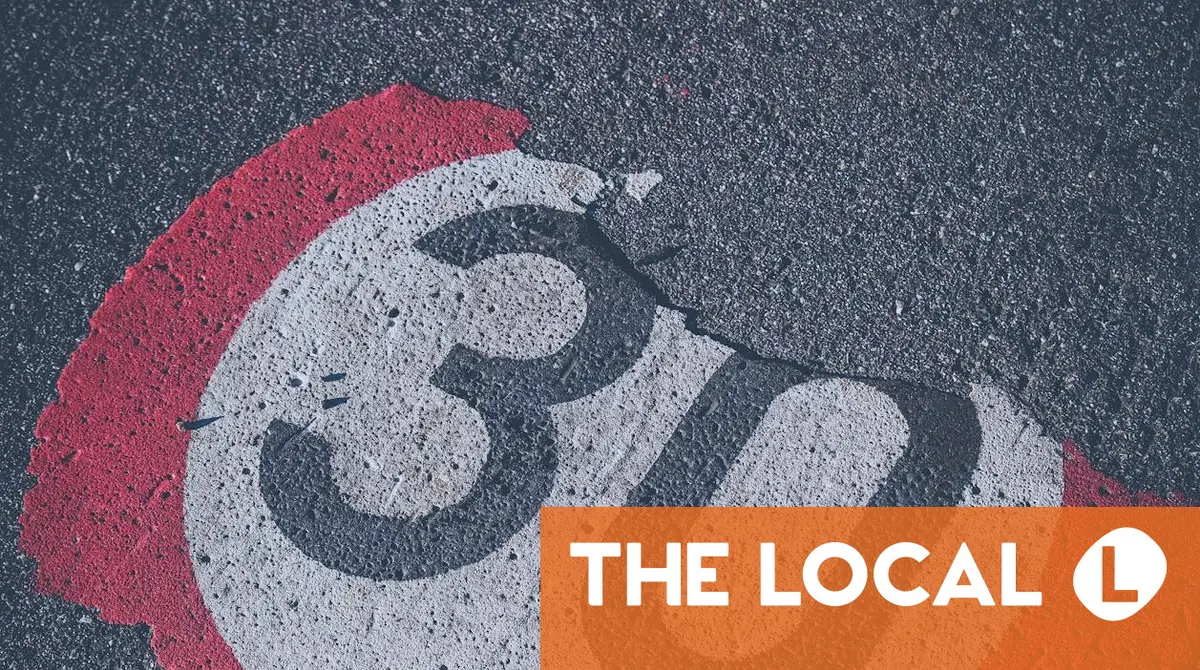

Geneva voters will have to decide on a law that would ban any speed limit below 50 km/h on major roads of the Swiss canton.
The law to impose a minimum speed of 50 km/h on major roads was approved by the cantonal parliament in February.
Its goal is to prevent the generalisation of 30 km/h zones common in other Swiss cities, so that the flow of traffic in Geneva can be improved
However, opponents of the measure – a coalition of mobility and environmental groups as well as left-wing parties – have submitted a petition this week, carrying 5,456 signatures (1,184 more than required) to block this move.
They argue that not being able to reduce the speed to 30 km/h in residential areas – as many other cities had done – disregards the safety and health concerns of local residents, as well as their quality of life.
The date for the referendum has not yet been set.
Geneva’s traffic woes
Switzerland’s second-largest city is famous (or ‘infamous’ may be a better word) for continually congested roads and traffic moving at a snail’s pace.
Even in the best of times, bottlenecks are a frequent occurrence in Geneva, with motorists spending, on average, 141 hours sitting in traffic during peak hours — according to the 2025 Traffic Index ranking by the GPS navigation company, TomTom.
READ MORE: Why has traffic in Geneva become a nightmare for residents?
It is precisely for this reason that Geneva’s MPs voted to ban 30 km/zones on the canton’s territory.
Advertisement
What does the speed have to do with traffic jams?
It depends on who you ask.
According to the Federal Office for the Environment (BAFU), which is in favour of reducing speeds in cities from the current 50 to 30 km/hour, this is a positive move.
“At 30km/h, traffic is free-flowing, as less braking and accelerating is required,” it said.
However, opponents , like those in Geneva, claim that lower speed not only does not improve traffic but actually creates the very thing they attempt to prevent – road congestion.
Advertisement
In fact, Geneva is not be the only canton trying to block 30 km/hour zones.
Residents of other Swiss cities and cantons feel the same way – at least according to a survey carried out by the TCS motoring organisation in September 2025.
It found that over 60 percent of respondents opposed generalised 30-km zones in cities, preferring them to be used sparingly and selectively.
Among the reasons mentioned was that this measure would slow down public transport, and would also prevent emergency services like police and ambulances to get to heir destination quickly.