

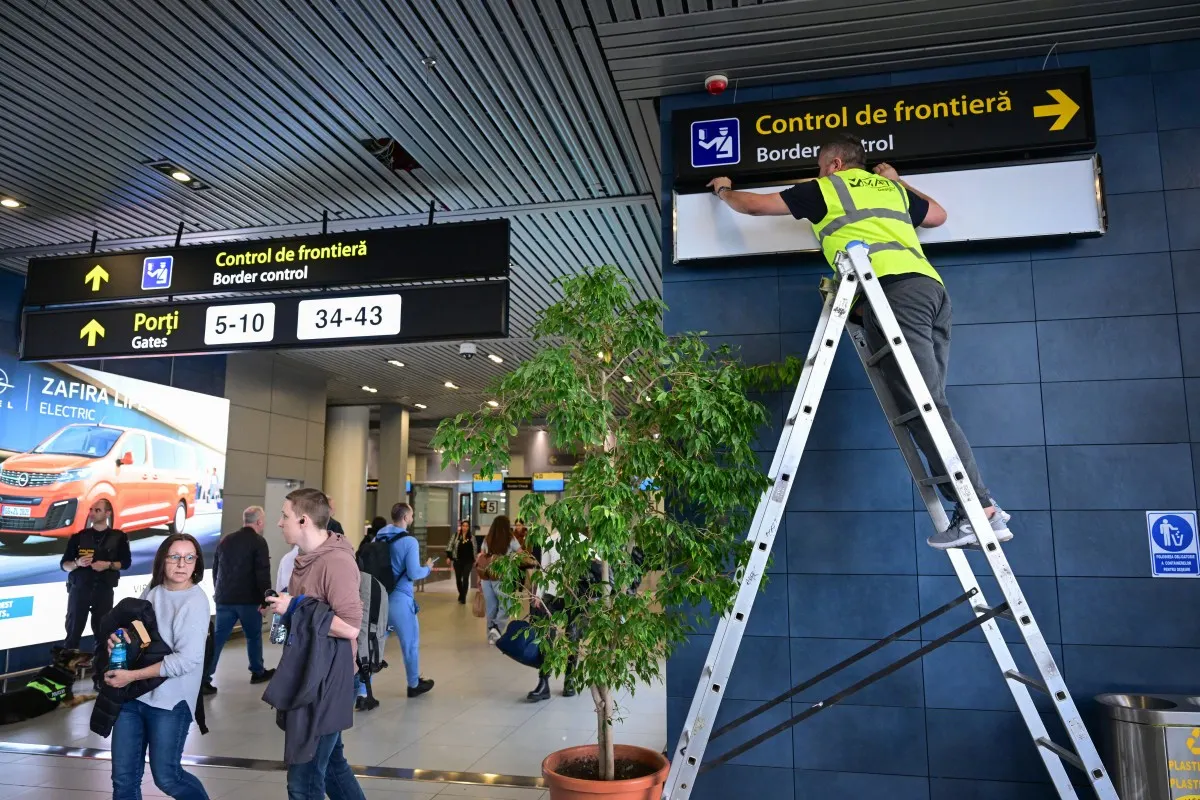
Despite claims that the EU’s new Entry/Exit System (EES) border checks would be “fully operational” by April 10th, many airports have reported disruption and some Channel ports don’t even have the technology for full rollout yet.
The rollout of new Schengen area border rules has been hit by delays and disruptions, despite claims from the European Commission that it would be “fully operational” by Friday April 10th.
Friday April 10th marked what the EU described as a “significant milestone”, in other words the day the system “becomes fully operational” at all external borders of Schengen nations. However in reality the EES, which sees non-EU/Schengen nationals having to give facial scans and finger prints when they enter the bloc, is far from being 100 percent implemented.
Since it began to be operational in October last year the European Commission says 27,000 travellers have been denied entry and 700 identified as “a security threat” since the EU’s full rollout of the long-awaited Entry/Exit System (EES). In all some 52 million entries and exits have been recorded.
READ ALSO: What will new EES border checks mean for non-EU residents in Europe?
But airlines and airports have frequently raised the alarm about delays at borders and did so again on Friday.
A statement from the Airports Council International (ACI) to coincide with the April 10th deadline, noted that “initial reports from a number of airports and airlines across the Schengen area confirm that the mandatory registration of all third-country nationals” has caused “passenger waiting times of 2 to 3 hours at airport border control during peak travel periods. These delays are occurring despite border authorities making extensive use of partial suspension measures, which allow biometrics data not to be captured.”
The ACI also noted “significant disruption to flight operations, with passengers missing flights and delays due to prolonged border processing times.”
“For instance, a flight to the UK today was missing 51 passengers at departure. Another flight had zero passengers on board at gate closing time, and 90 minutes later, 12 passengers were yet to reach the gate,” it added.
Another key issue with the roll out of EES is at the key cross-Channel UK ports in Dover, Folkestone and St Pancras International station, where there are juxtaposed border posts.
Here EES has only been imposed on a small percentage of passengers and port authorities and travel companies are still waiting for the French government to give the green light to fully roll out the new checks.
As The Local previously reported, EES has been delayed for passengers arriving in France by Eurostar, Eurotunnel and ferry due to a technology issue.
The Guardian reported that Eurostar, Eurotunnel’s Le Shuttle service and cross-channel ferries will not implement the rules from April 10th owing “to delays in France’s developing the technology needed to collate and process the biometric information.”
Sources also told The Guardian that the French authorities have not yet supplied the necessary equipment at the Port of Dover and Eurotunnel.
The UK-France border has long been a concern and some departure points, especially the Port of Dover, have seen long delays ever since Brexit due to increased paperwork requirements.
A European Commission spokesperson on Friday told The Local that rather than being “fully operational” by April 10th, Friday marked “the start of the full roll out”.
“We are aware that implementation can vary from Member State to Member State,” a Commission spokesperson said.
“While the Commission will continue providing the necessary support, it is up to Member States’ to ensure the proper implementation of the EES on the ground.”
“Border fluidity should also be ensured by the Member States by providing enough resources and personnel at heavy-traffic border crossing points.”
The new EES checks collect digital personal records of third country nationals travelling to the Schengen area and replace the manual stamping of passports.
Travellers from non-EU countries, including the UK, have to register fingerprints and facial images the first time they cross an external Schengen border to enter any of the 29 Schengen countries (25 EU member states plus Iceland, Norway, Switzerland, and Liechtenstein).
It was first launched on October 12th 2025 and the system has been introduced gradually, but technological issues have hindered implementation, however.
READ ALSO: Eurotunnel and Eurostar still not ready for EES rollout despite deadline
