
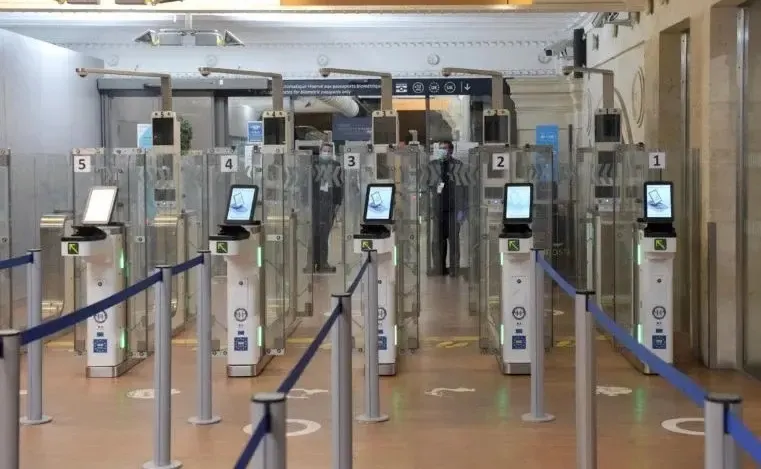
With the deadline for the EU’s new Entry/Exit System fast approaching, biometric border rules for travellers arriving in France via Eurotunnel and Eurostar have been delayed.
New biometric border rules have been delayed for passengers arriving in France by Eurostar or Eurotunnel due to a technology issue in the country.
The new checks, part of the EU’s new Entry/Exit System (EES), collect digital personal records of third country nationals travelling to the Schengen area and replace the manual stamping of passports.
Under the EES, travellers from non-EU countries, including the UK, have to register fingerprints and facial images the first time they cross an external Schengen border to enter any of the 29 Schengen countries (25 EU member states plus Iceland, Norway, Switzerland, and Liechtenstein).
It was first launched on October 12th 2025 and the system is being introduced gradually with final roll-out scheduled for April 10th when it is meant to be fully operational.
READ ALSO: UK warns of Easter travel delays due to new EU border checks
However, The Guardian reports that Eurostar, Eurotunnel’s Le Shuttle service and cross-channel ferries will not implement the rules from April 10th owing “to delays in France’s developing the technology needed to collate and process the biometric information.”
Sources told The Guardian that the French authorities have not yet supplied the necessary equipment at the Port of Dover and Eurotunnel.
Passports will continue to be stamped at the French border, which is in England for Le Shuttle and ferry passengers.
Coach passengers, lorry drivers and ferry foot passengers, whom French border officials have already been processing since November, will need to follow the EES rules.
The transition period has been beset by problems and delayed, with airports already recording longer waits at borders and airlines warning of summer travel chaos.
EU communications and websites suggest that the original deadline will go ahead, and that after 10th April passengers arriving in the Schengen travel area must give their biometric data.
The UK Home Office recently advised British travellers to allow more time for checks.
A Port of Dover spokesperson told The Guardian that it has made significant layout alterations in preparation for EES, adding that the port is “working closely with our French border agency partners to ensure a smooth introduction of EES for tourist passengers, which includes waiting until current issues with the French technology are resolved and thorough testing at Dover has been conducted”.
Eurotunnel said EES would “take a further operational step on 10 April with the Police aux Frontières beginning the creation of EES files” but “this stage will not involve biometric data collection.”
LeShuttle passengers will see no change on April 10th either, a spokesperson said.
Eurostar said it was “working closely with the French and EU authorities as they continue to introduce the next stages of the system”.
EES biometric registration
The EES, which collects digital personal records of visitors from third countries and replaces the manual stamping of passports, requires passengers to register fingerprints and facial images the first time they cross an external Schengen border.
The data is recorded in a Europe-wide database tracking each time travellers enter and exit the Schengen area, to avoid people staying beyond the limits of the 90/180 day rule.
READ MORE: EES border checks catch 4,000 over-stayers
