Category: UN

  • MIDDLE EAST LIVE 30 March: UN peacekeeper killed amid Israel-Hezbollah clashes

    MIDDLE EAST LIVE 30 March: UN peacekeeper killed amid Israel-Hezbollah clashes


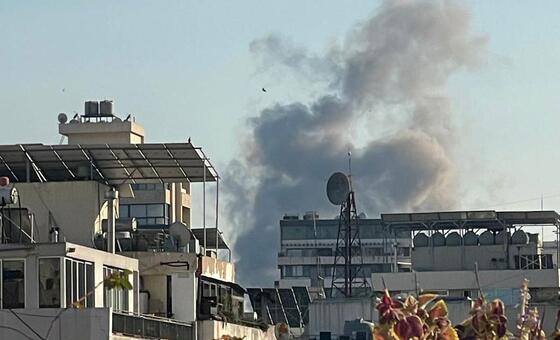
    Further attacks have been reported across the Middle East as the war enters a second month, with one UN peacekeeper killed in Lebanon on Sunday and another seriously injured. On the diplomatic front, the UN has announced a taskforce to restore the flow of fertilizer and aid through the Strait of Hormuz, while the UN’s atomic watchdog confirms an attack on a heavy water facility at Khondab in Iran. Stay with us for live updates on this and UN agencies. App users can follow coverage here.

    Read More

  • UN peacekeeper killed, another seriously injured, in southern Lebanon

    UN peacekeeper killed, another seriously injured, in southern Lebanon


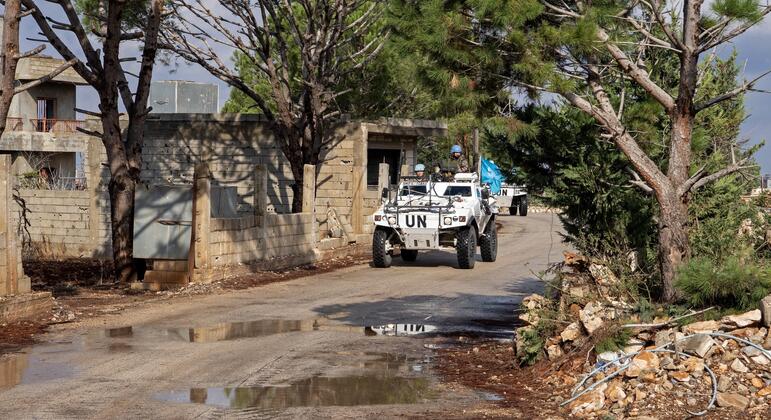
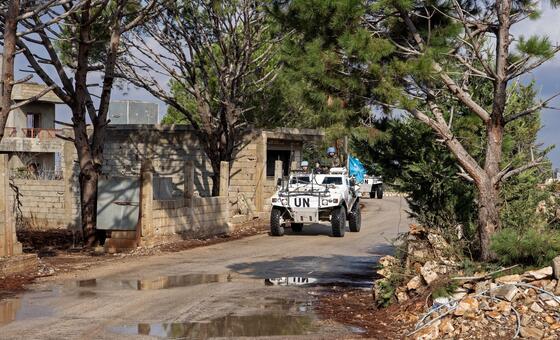
    The blue helmet from Indonesia was deployed with the UN Interim Force in Lebanon (UNIFIL), which reported that a projectile exploded at its position near Adchit Al Qusayr, located in the south of the country.

    Another peacekeeper was seriously injured in the blast and remains in hospital.

    UNIFIL did not know the origin of the projectile and has launched an investigation to determine the circumstances.

    No one should ever lose their life serving the cause of peace,” the mission said.

    Ensure safety of UN personnel

    The Secretary-General strongly condemned the incident, which occurred within the context of the escalating conflict in the Middle East.

    “This is one of a number of incidents that have jeopardized the safety and security of peacekeepers, including over the past 48 hours,” UN Spokesperson Stéphane Dujarric said in a statement.

    “Once again, the Secretary-General calls on all actors to uphold their obligations under international law and to ensure the safety and security of UN personnel and property at all times.”

    Possible war crimes

    The UN chief recalled that attacks on peacekeepers are grave violations of international humanitarian law and of UN Security Council Resolution 1701 (2006) and may amount to war crimes

    UNIFIL supports implementation of the resolution, which brought an end to hostilities between Israeli forces and Hezbollah that erupted nearly two decades ago. Read more in our explainer.

    There will need to be accountability,” the statement said.

    Appeal for de-escalation

    The Secretary-General expressed his deepest condolences to the family, friends, and colleagues of the deceased peacekeeper, and to the country of Indonesia.  He wished a full and fast recovery to the injured officer.

    Mr. Guterres also extended his deepest appreciation to the men and women serving with UNIFIL, underscoring the importance of their safety, security and freedom of movement.

    The UN urged the parties to de-escalate immediately and fully adhere to their obligations under the Security Council resolution.

    More than 50 health workers killed this month

    Meanwhile, the World Health Organization (WHO) reported the loss of another medical professional amid the escalation.

    “Israel’s expanding military operations in southern Lebanon have resulted in the death of yet another health worker today,” WHO chief Tedros Adhanom Ghebreyesus said on Sunday in a statement posted on X.

    The paramedic was killed in a strike on an ambulance in the town of Bint Jbeil, while a medical warehouse there was destroyed in an attack.

    “Prior to today’s strikes, WHO has verified that 51 Lebanese health workers have been killed since 2 March, including nine paramedics just yesterday,” Tedros said.

    “Attacks on health facilities must cease immediately. This cannot become the norm.” 

    Read More

  • Middle East war: UN initiatives support mediation efforts, ‘lifesaving’ fertiliser shipments

    Middle East war: UN initiatives support mediation efforts, ‘lifesaving’ fertiliser shipments


    The humanitarian fallout continues to deepen and is exacerbated by the number of deaths, injuries and damage to civilian infrastructure, and the severe impacts on the global economy are increasing.

    While UN efforts to support affected civilians and de-escalate the conflict are ongoing, the Secretary-General has stressed the need to take immediate action to mitigate the consequences. 

    Wide-ranging impacts

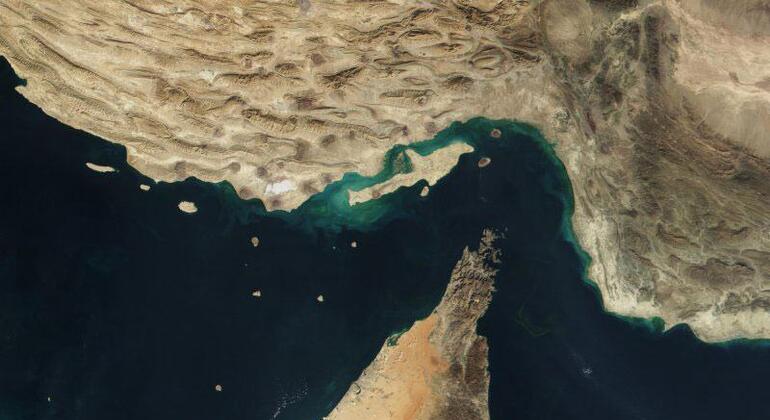
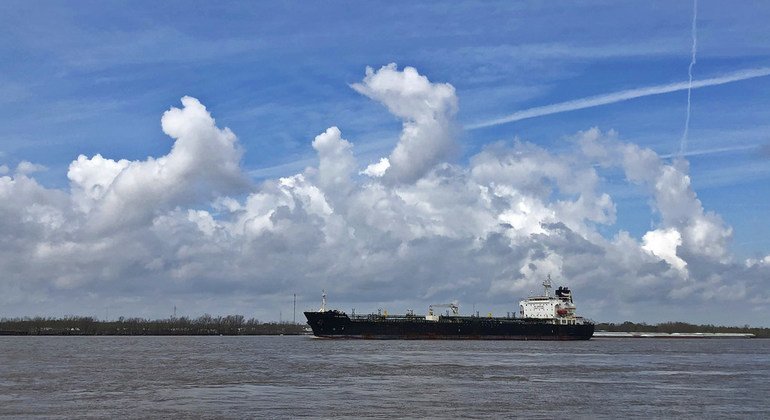
    The prolonged closure of the Strait of Hormuz to maritime trade “is choking the movement of oil, gas, and fertiliser at a critical moment in the global planting season,” he said.

    Tanker traffic has dropped by more than 90 per cent, according to the UN Food and Agriculture Organization (FAO), which is threatening agricultural production and global food security.

    “The crisis is causing the most significant global humanitarian supply chain disruptions since COVID-19 and the onset of the war in Ukraine,” the UN aid coordination office OCHA added.

    “Humanitarian supply lines across the Middle East are being severely disrupted, threatening the timely delivery of lifesaving food, medical items and emergency relief to millions.”

    With the conflict showing no signs of stopping, the Secretary-General this week announced two important initiatives: the appointment of an envoy to spearhead UN peace efforts and the establishment of a dedicated Task Force on the Strait of Hormuz.

    Facilitating transit, averting crisis

    The Task Force will work to ensure safe, orderly and reliable transit for humanitarian purposes through the critical maritime corridor.

    It will be headed by Jorge Moreira da Silva, Executive Director of the United Nations Office for Project Services (UNOPS), which provides infrastructure, procurement and project management services around the world. 

    Representatives from UN trade body UNCTAD, the International Maritime Organization (IMO), and the International Chamber of Commerce will also be on board.

    “Our focus is to facilitate the trade of commercial fertilisers and the movement of related raw materials. We are standing by to support this lifesaving operation,” Mr. Moreira da Silva said in a statement posted on X.

    “It is urgent to prevent a massive humanitarian crisis in the Middle East and beyond including in Africa and Asia import-dependent on fertilizers.”

    Inspired by previous initiatives

    The Task Force draws inspiration from other UN initiatives, including the Verification and Inspection Mechanism in Yemen, the former Black Sea Grain Initiative on exports from Ukraine, and the UN Special Mechanism for Gaza aid delivery outlined in Security Council resolution 2720 (2023). 

    “The mechanism’s operationalization will be done in close consultation with relevant Member States with full respect for national sovereignty and established international legal frameworks,” said UN Spokesperson Stéphane Dujarric

    “If successful, it would also create confidence among Member States on the diplomatic approach to the conflict and constitute a valuable step towards a wider political settlement,” he added.

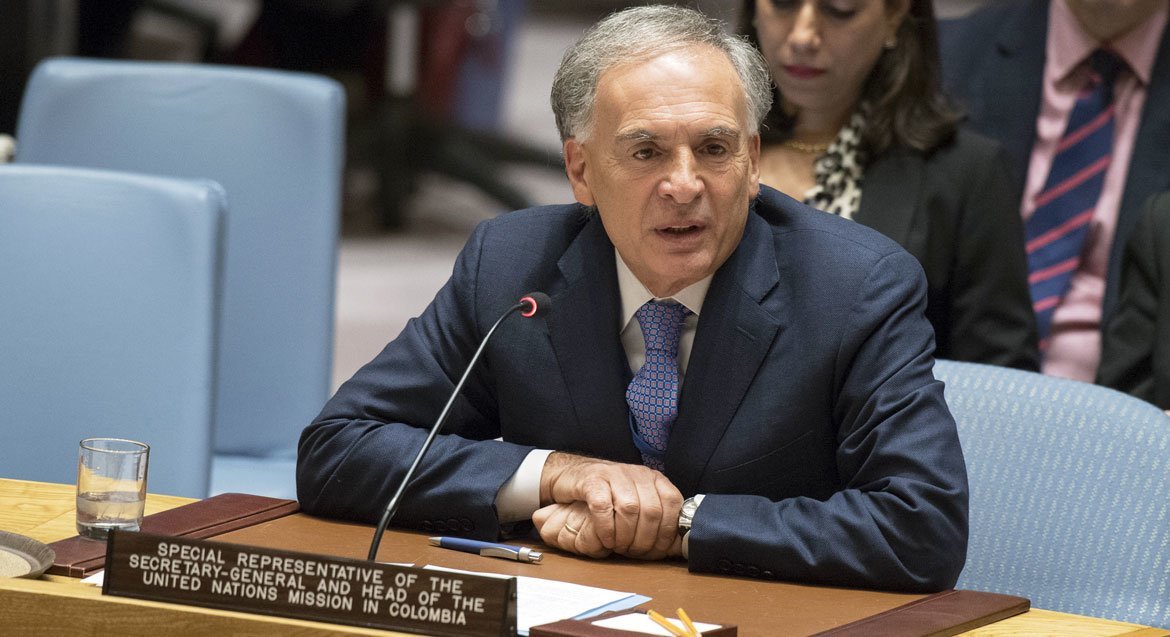
    Jean Arnault, Special Representative of the Secretary-General and Head of the UN Verification Mission in Colombia, addresses the Security Council.

    File photo of Jean Arnault, a former Special Representative of the Secretary-General and Head of the UN Verification Mission in Colombia.

    UN envoy appointed

    The Secretary-General named veteran French diplomat Jean Arnault as his Personal Envoy to lead UN efforts on the Middle East conflict and its consequences.

    He warned that the conflict was “out of control”, reiterating his call on the United States and Israel to stop the war, and for Iran to stop attacking its neighbours.

    “It is time to stop climbing the escalation ladder – and start climbing the diplomatic ladder, and return to full respect of international law,” he said.

    Mr. Arnault “will be doing everything possible” to support all efforts for mediation and peace, and will be in contact with all parties.  He will examine how the conflict is impacting the region and civilians, both there and around the world, as well as consequences for the global economy.

    The envoy has nearly 40 years of experience in international diplomacy, especially in the field of peaceful settlements and mediation, and has led UN missions in Africa, Asia, Europe and Latin America. Most recently he served as the Secretary-General’s Personal Envoy on Afghanistan and Regional Issues.

    Read More

  • Kidnapped and tortured on an infamous migration route to Saudi Arabia

    Kidnapped and tortured on an infamous migration route to Saudi Arabia


    When Jamal, an Ethiopian man in his early thirties, set out along what has become known as the eastern route, he was not chasing work, wealth, or status.

    He was looking for his sixteen-year-old nephew, who had vanished while attempting to reach Saudi Arabia through one of the world’s most dangerous migration corridors.

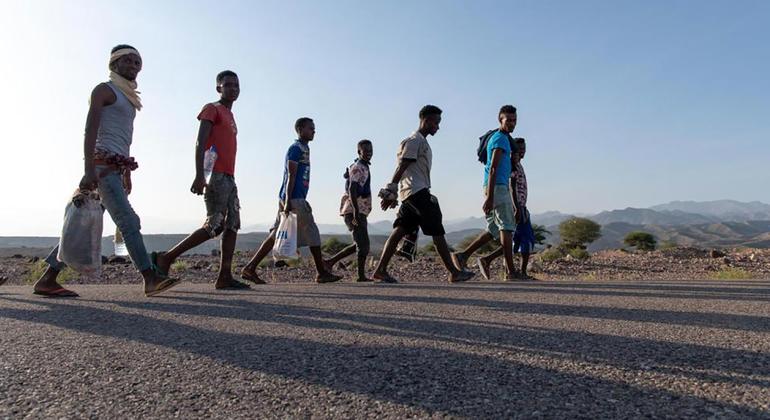
    Each year, tens of thousands of Ethiopians travel this route, crossing arid stretches of Ethiopia and Djibouti, the Gulf of Aden, and war-torn Yemen.

    Many flee conflict, displacement, poverty, or climate shocks.

    Others are pulled by false promises spread by traffickers who profit from desperation. According to the International Organization for Migration (IOM), the eastern route has become increasingly violent, marked by kidnappings, extortion, and systematic abuse.

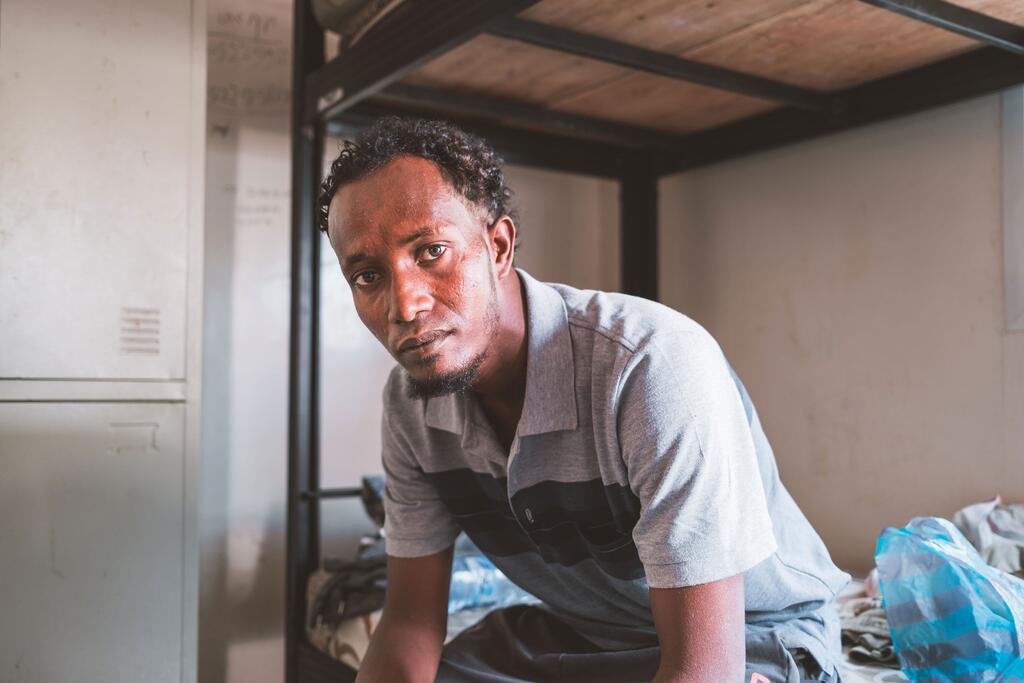
    Portrait of Jamal, an Ethiopian migrant in his early thirties, sitting on a bunk bed inside a shelter in Djibouti. He is looking directly at the camera with a serious expression, wearing a gray and black striped polo shirt.

    Jamal rests in a shelter for migrants in Djibouti.

    Jamal’s nephew was one of those taken. Kidnapped in Yemen, the boy’s captors demanded a ransom. The family paid, but the boy was never released.

    So Jamal followed went looking for him.

    “I had no choice,” he says. “My brother had no other children. I had to go after him.”

    In search of the traffickers

    In Yemen, Jamal deliberately placed himself in the path of traffickers, hoping they would take him to the same location where his nephew was being held.

    The plan worked. He was reunited with the boy, though he pretended not to recognize him to avoid suspicion. As Jamal began planning their escape, he helped other captives flee. Before he could secure his own escape, he was caught.

    The punishment was immediate and brutal.

    Jamal was forced to watch as other captives were beaten, mutilated, and burned.

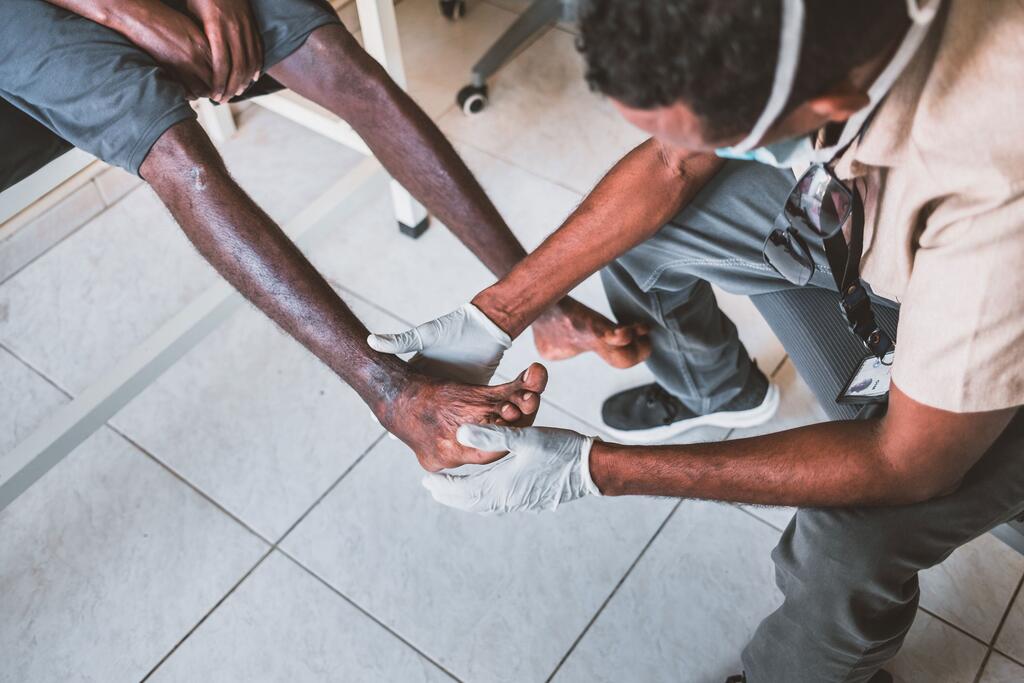
    A medical worker wearing gloves examines the injured foot of a seated African migrant in a clinic setting.

    Jamal is treated for his injuries at a shelter for migrants in Djibouti.

    Then it was his turn. His captors wrapped his feet in plastic and set them alight, again and again. The burns left permanent damage, affecting how he walks, how he sleeps, and how he lives with the memory of that night.

    Their escape came only because fighting broke out between rival trafficking groups. Amid the chaos, Jamal and his nephew ran.

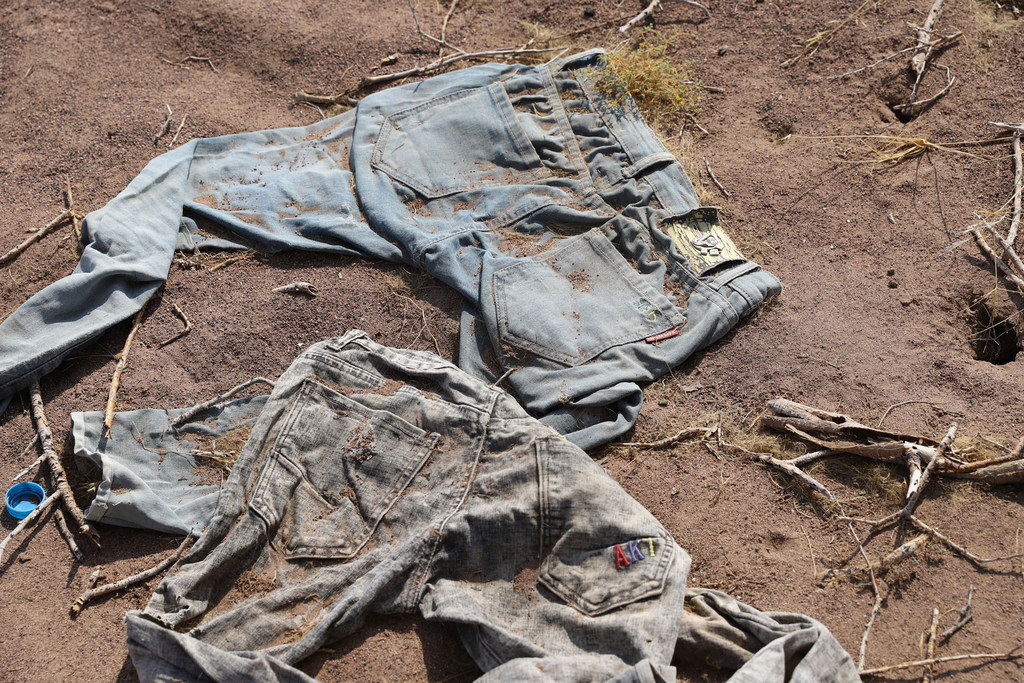
    Clothes thought to be discarded by migrants lie in the Djibouti desert.

    Clothes thought to be discarded by migrants lie in the Djibouti desert.

    After months in Yemen, surviving by washing cars to earn enough money to leave, Jamal eventually reached Djibouti. There, he was referred to an IOM Migrant Response Centre in Obock, where he received medical care for his injuries and psychosocial support to begin processing what he had endured.

    For the first time since his ordeal, he says, someone asked not only where he came from, but how he was coping.

    Today, Jamal is preparing to return to Ethiopia.

    He has not yet told his mother what happened. Even now, his concern is for her, not himself.

    “She saw me leave in good health,” he says. “I am worried about her seeing me like this. I will have to explain it to her gently.”

    Read More

  • Syria: UN Commission documents grave violations in July 2025 escalation in Sweida

    Syria: UN Commission documents grave violations in July 2025 escalation in Sweida


    The UN Commission of Inquiry on Syria documented widespread violations mainly against the Druze and Bedouin communities, including executions, torture, gender-based violence and the burning of homes. 

    These incidents, carried out by multiple actors, including Syrian government forces and Druze armed groups, may amount to war crimes or even crimes against humanity, pending further investigation, the Commission said. 

    Widespread devastation 

    The escalation in the southern governorate, also spelled Suwayda, occurred in the wake of the fall of the Assad regime in December 2024.  

    “The scale and brutality of the violence and violations documented in Suwayda is deeply distressing,” said Commission Chair Paulo Sérgio Pinheiro.  

    “Expanded efforts to pursue accountability for all perpetrators, regardless of affiliation or rank, are urgently needed to rebuild trust among the victim communities, alongside genuine dialogue to resolve root causes.” 

    Overlapping waves of hostilities 

    The report draws on more than 400 firsthand accounts from survivors and witnesses.  

    The investigators were granted access by the Syrian authorities and conducted extensive field visits to the hardest-hit areas.  They found widespread devastation—particularly in Druze villages, where tens of thousands of homes, businesses, and places of worship were burned. 

    The violence was initially triggered by inter-community tensions and unfolded in three waves—two targeting Druze civilians and the other Bedouins. 

    “The entire period was also marked by elevated levels of hate speech and disinformation, which was disseminated largely through social media,” the report said. 

    The first major wave of violence was the deadliest, with Government forces accompanied by tribal fighters committing widespread violations – including murder, torture, arbitrary detention and pillage – against Druze civilians in western Sweida and Sweida city between 14–16 July. 

    “Men identified as Druze were separated from women and children and executed. Others were shot in the streets or killed in their homes alongside family members,” the Commission said. 

    The second wave began on 17 July after Government forces withdrew in the wake of Israeli airstrikes on Sweida and Syria’s capital Damascus.  Druze armed groups then attacked Bedouin civilians, engaging in murder, torture, arbitrary detention, forced displacement and pillage.  

    “Such attacks forced tens of thousands of Bedouins to leave the Druze-held areas of the governorate,” the report said, ultimately driving almost the entire Bedouin community from areas under armed group control. 

    Retaliatory attacks 

    The third and most destructive wave was carried out by tribal fighters from across Syria who mobilized in the aftermath, from 17-19 July, and targeted Druze civilians in retaliation.  

    “There was widespread looting and systematic burning of nearly every home in 35 mixed or predominantly Druze villages by tribal fighters, along with killings and abductions of civilians who had not fled from the earlier government advance or who had returned to their villages on 17 July,” the report said. 

    Businesses and religious sites were also burned and looted, while some Government force members “shed their uniforms” and joined the attacks. 

    The Commission noted that “Israel’s military intervention, and earlier efforts to counter government functioning, centralization and sow division,” not only caused death and injury “but also contributed to instability, fueling accusations of treason against Druze community leaders, and prompting further online incitement to hatred and retaliatory attacks against the entire community, and dividing it.” 

    Call for accountability 

    In response to the violence, the Syrian authorities pledged accountability and launched a national inquiry.  Recently, 23 security and army personnel were reportedly detained.  Information regarding investigations into command responsibility has been limited. 

    “Serious violations carried out by government forces and Druze armed groups may amount to war crimes and require expanded prompt, effective and impartial investigations to provide justice and guarantees of nonrecurrence,” said Commissioner Fionnuala Ní Aoláin.  

    The report calls for expanded efforts to ensure accountability, action to prevent recurrence, and strengthened confidence building and reconciliation efforts, among other measures.  

    It urges the international community to support the Syrian authorities in implementing these recommendations, and for external actors, including Israel, to halt actions that risk further destabilization and civilian harm. 

    About the Commission 

    The Independent International Commission of Inquiry on the Syrian Arab Republic was established by the UN Human Rights Council to investigate all alleged violations of international human rights law in the country since March 2011. 

    The panel consists of three members who are not UN staff and do not receive any payment for their work. 

    Read More

  • Middle East war: Attacks on vital healthcare, evacuation strike fears

    Middle East war: Attacks on vital healthcare, evacuation strike fears


    In a rare piece of good news, though, the UN World Health Organization (WHO) said that aid shipments are getting “back on track” from Dubai, one of its key relief hubs, after major disruption to flights and other shipments caused by Iranian attacks throughout the Gulf.

    “I would say the first two weeks of the crisis really set us back. But we’re now receiving bookings for commercially scheduled cargo, and we’re able to begin moving supplies out as we were in the past,” said Robert Blanchard, WHO Emergency Operations Team Lead at the Dubai Logistics Hub.

    After a “significant reduction” in air freight across the region after war erupted on 28 February, most airlines in the Gulf “are now back to around 50 or 60 per cent of their capacity”, he explained, noting that more charter flights will accelerate the delivery of supplies, in addition to an Egypt-bound convoy carrying lifesaving medicines for Gaza.

    Buried under rubble in Iran

    From Iran, meanwhile, UN partner the International Federation of Red Cross and Red Crescent Societies highlighted the “rapidly deteriorating” impact of strikes in the capital, Tehran, “a city of roughly nine million people [that] feels completely empty”. 

    “While Tehran still maintains some basic services, some cities in the south are facing water and electricity cuts. Not to mention the fact that we have a nationwide internet blackout since 28 February,” said Maria Martinez, IFRC Head of Delegation in Iran.

    The humanitarian official described how one IFRC search and rescue responder “discovered the bodies of his own family beneath the rubble”.

    Moreover, “In Qom, another first responder recovered his aunt and her husband alongside a young child. This is the reality humanitarian workers are facing saving lives while carrying unimaginable personal loss.”

    According to WHO’s healthcare attacks monitor, there have been 21 attacks on health workers and facilities in Iran since the war began. Ms. Martinez noted that 17 Red Crescent centres have been struck and nearly 100 ambulances damaged or destroyed. “These are not just vehicles. They are often the only hope people have when the bombs fall.”

    Lebanon evacuation terror

    From Lebanon, UN teams highlighted how civilians endure “intensified Israeli strikes” on targets linked to Hezbollah militants, who have continued to fire rockets at Israel since the war began.

    Frequently, there is little warning about impending attacks.

    “The attack in Bashura in central Beirut last week, there was a warning issued, but maybe less than an hour before the strike hit and it was very early in the morning,” said Karolina Lindholm Billing, UNHCR Representative in Lebanon.

    She added that a second strike “close to several collective shelters hosting displaced (people), gave “no warning, it was a direct target…as far as I’m aware, there have been no sites designated as safe where civilians have been advised to go to.”

    Echoing those concerns, the UN Children’s Fund (UNICEF)’s Marcoluigi Corsi, Country Representative in Lebanon insisted that “there is no safe space” for people to go – including the capital, Beirut. “Although the evaluation order has been issued for the southern part of Beirut…the strikes actually happen also in other parts of Beirut” too, he said.

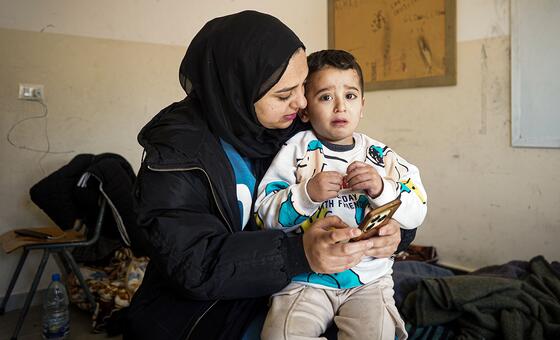
    More than one million people have now fled their homes in Lebanon in just a few weeks, UN aid teams say, highlighting the trauma of the upheaval.

    “I have met women and girls forced to make devastating choices, fleeing their homes at night without clear destination, losing their families’ entire livelihoods and leaving behind their sense of safety and everything that is familiar,” said Gielan El Messiri, UN Women Representative in Lebanon.

    Bridges blown

    The destruction of bridges in southern Lebanon by the Israeli military has created serious safety and humanitarian concerns.

    “Access…is also becoming increasingly difficult because the destruction of key bridges in the south has cut off entire districts and isolating over 150,000 people and severely limiting humanitarian access with essential items to reach them,” UNHCR’s Ms. Billing added.

    She said that from 2-23 March, well over 15 humanitarian operations have brought essential relief items to people still in the south. “But there have also been some of these convoys where the notification was not approved. So, we were not able then to proceed with it because of the security risks. One, for example, last week was not approved and then it could proceed a couple of days later.”

    Read More

  • Myanmar: WFP reports fragile recovery one year after deadly earthquake

    Myanmar: WFP reports fragile recovery one year after deadly earthquake


    The World Food Programme’s (WFP) latest monitoring shows a fragile recovery from the disaster.  

    In the affected regions of Sagaing and Mandalay, one in six households continue to face moderate to severe food insecurity, whilst half of all families remain only marginally food secure, making them exceptionally vulnerable to even the smallest shock. 

    “People who survived the earthquake have barely begun to stand again, and now another blow is knocking them back down,” said WFP Country Director Michael Dunford.

    Middle East conflict increasing prices 

    The conflict in the Middle East is disrupting transportation and driving fuel shortages across Myanmar.

    Rising fuel prices are pushing up the cost of moving food and agricultural goods, placing additional strain on households already struggling to afford essentials.

    The crisis is also striking Myanmar’s farmers as they prepare for monsoon crops. With fertilizer demand expected to rise over the next three months, fuel shortages and rising input costs are threatening to push production expenses to double last year’s levels.  

    Earthquake and conflict areas hardest hit 

    These compounding shocks are expected to hit hardest in conflict and earthquake affected areas, such as Chin, Kachin, Kayah, Rakhine, Sagaing and Shan, worsening the food insecurity in a country where 12.4 million people – nearly one quarter of the population – are already facing acute hunger. 

    Over the past year, WFP reached half a million earthquake survivors with relief and recovery support. However, the organisation has now transitioned from emergency relief to restoring community infrastructure that provides long-term stability. 

    Funding needs  

    WFP needs $150 million to assist 1.5 million people across the country this year with life-saving assistance and resilience support.  

    Without sufficient funding, the agency will be forced to prioritize the most urgent life-saving needs, potentially scaling back recovery efforts that help earthquake survivors rebuild livelihoods and reduce long-term dependence on aid.

    “The people of Myanmar have endured shock after shock – conflict, climate disasters, the devastating earthquake, and now a global fuel crisis,” Mr. Dunford said. 

    “We must stand with them now. One year after the earthquake, they cannot afford another fall.” 

    Read More

  • MIDDLE EAST LIVE 27 March: rights council meets, aid agencies update

    MIDDLE EAST LIVE 27 March: rights council meets, aid agencies update


    The war in the Middle East continues, with attacks causing further terror and suffering, deepening the humanitarian crisis across the region. In Geneva, diplomats at the Human Rights Council have been discussing the school strike in Iran’s Minab that killed more than 100 children. Stay with us for live updates on this and from UN agencies providing relief. App users can follow coverage here.

    Read More

  • Persian Gulf crisis impacting food security, FAO warns

    Persian Gulf crisis impacting food security, FAO warns


    The crisis is affecting agricultural production and food security worldwide, with impacts on farmers but also migrant workers, Máximo Torero told journalists at UN Headquarters in New York. 

    “Temporality matters a lot right now and the clock is ticking very hard, and I think we need to find a solution as soon as possible,” he said via videoconference from Rome. 

    ‘Double shock’ for farmers 

    Since the war erupted, tanker traffic in the Strait of Hormuz has declined by more than 90 per cent.  

    Normally, 35 per cent of global crude oil flows – 20 million barrels – along with 30 per cent of fertilizer trade, and a fifth of liquefied natural gas passes through the critical maritime corridor each day. 

    As a result, farmers are facing “a double shock” brought on by rising prices for fertilizer and fuel, both key for agricultural production.   

    Concern for consumers 

    If a solution is found soon, markets could stabilise within roughly three months, but the picture changes if disruptions continue. 

    “The medium-term scenario of a three-month blockade will affect all farmers globally, and then we will have different elements that could impact mostly in the next season,” he said, pointing to reduced crop yields and substitutions. 

    The situation could also spark competition from the biofuel sector, particularly if oil prices rise above $100 a barrel. Although farmers would benefit, “it will be bad for consumers because prices will increase.” 

    Vulnerable nations 

    In the short term, priority must be on countries such as Sri Lanka and Bangladesh, where rice harvests are happening now.  

    African nations that depend on fertilizer imports are also vulnerable, he said, although “big exporters” like Argentina, Brazil and the United States will also be affected. 

    Regarding the Gulf, Mr. Torero noted that food prices are already “skyrocketing” in Iran.  Although the country produces roughly 70 per cent of its own supply, the rest is imported.  

    Meanwhile, “huge importers of food” such as Qatar and the United Arab Emirates will face challenges because no vessels are going to the region.   

    Gulf countries also host millions of migrant workers from South Asia and East Africa. Remittances sent to their homelands could decline if the conflict continues.   

    Solutions needed now 

    To mitigate the crisis, Mr. Torero stressed the need to find alternative maritime routes in the short term. 

    “We need to provide emergency balance of payment support to import-dependent nations before planting windows,” he added.  

    In the medium term, countries must diversify fertilizer import sources, strengthen regional reserve sharing and avoid export restrictions, while increasing resilience will be critical in the long term. 

    “We need to treat food systems with the same strategic importance as energy and transport sectors, investing accordingly to minimize those shocks,” he concluded. 

    Read More

  • DR Congo: violence intensifies as UN mission pledges continued support

    DR Congo: violence intensifies as UN mission pledges continued support


    Despite the volatility, the UN peacekeeping mission, MONUSCO, remains committed to delivering on its mandate, as regional efforts to restore peace continue.

    Vivian van de Perre, Deputy Special Representative for Protection and Operations with the mission, said that ‘blue helmets’ would continue the full spectrum of their activities in Ituri, supporting the ceasefire as well as offering protection to civilians in North Kivu – while focusing exclusively on ceasefire-related functions in South Kivu. 

    MONUSCO has been in the DRC since July 2010, taking over from an earlier UN peacekeeping operation in a conflict stemming from the 1994 genocide against the Tutsi in neighbouring Rwanda. MONUSCO’s mandate includes protecting civilians and helping the DRC to stabilise and consolidate peace.

    ‘Alarming’ situation as conflict continues

    The deputy chief’s briefing came as clashes between rebel militia groups, AFC and M23, and forces supporting the Government in Kinshasa intensify in the Kivus, despite the M23 militia’s withdrawal from Uvira in January. 

    The violence is also spreading toward Burundi’s border, raising fears of a broader regional conflict. 

    In Ituri province, “the situation remains alarming” with rebel attacks causing casualties, displacement, and damage to infrastructure, the UN official said.

    “Recent hostilities between the government and AFC/M23 have also been marked by the growing use of offensive drones, as well as by continued jamming and spoofing of GPS signals,” Ms. van de Perre said.

    Attacks from another rebel group, the ADF, have also resumed in the Mambasa territory, far from their traditional areas of operations. 

    Diplomatic push for peace

     “Despite these challenges, diplomatic efforts to support the implementation of ongoing peace processes are ongoing,” Ms. van de Perre said. 

    She welcomed the renewed commitment by the DRC and Rwanda to move forward with the Washington Accords following their 17–18 March meeting in the US capital, where both sides agreed on concrete steps to implement the peace agreement and reduce tensions.

    She also noted progress through the Doha process and African Union-led initiatives, which have helped build a ceasefire framework.

    Ms. van de Perre added that a recent “joint exploratory mission” to Uvira found that that security guarantees and freedom of movement are essential before deployment can proceed. 

    She urged the Council to exercise its influence to translate this progress into the rapid reopening of Goma and Kavumu airports and the resumption of flights

    “I encourage all political and civil society actors to find common ground on the scope, objectives, and modalities of the national dialogue,” she said.

    Supporting civilians 

    Vivian van de Perre said MONUSCO continues to provide protection where it has sheltered nearly 3,000 civilians who fled violence from rebel militia in Djaiba village and sought refuge in the UN’s Fataki base.

    She noted that the Missions support, including conducting 204 patrols, enabled 18,000 farmers to harvest and transport their crops

    However, she stressed that stronger governance and security sector reform are essential if the State is to meet its primary responsibility to protect civilians, while disarmament and repatriation efforts must advance in parallel to reduce tensions. 

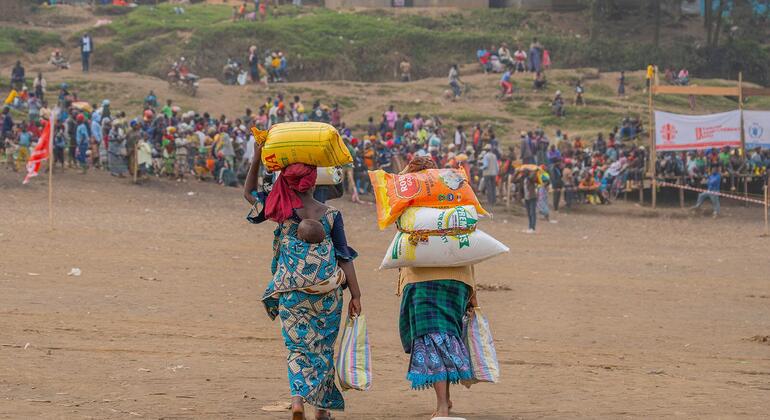
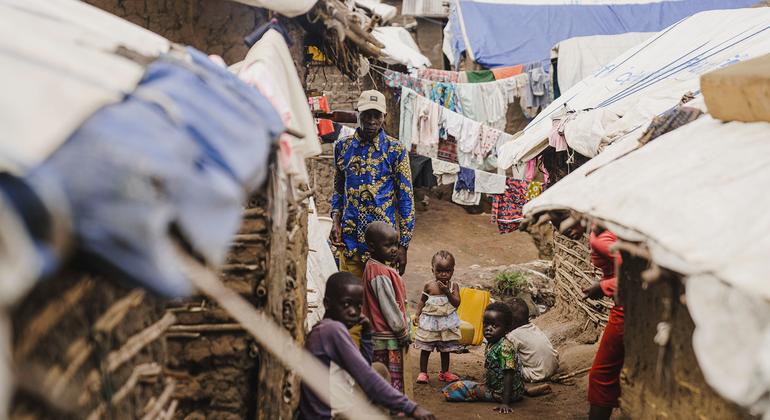
    Eastern DR Congo has seen repeated waves of violence and displacement. Pictured here, families sheltering at an IDP camp in Ituri province in September 2025.

    © UNICEF/Jospin Benekire

    Against this backdrop, “the humanitarian landscape has shifted dramatically”, the UN official said, adding that 6.4 million people are currently internally displaced across the country. 

    “While current humanitarian efforts remain essential, they are insufficient and compounded by significant funding challenges,” she added that 26.6 million people, a quarter of the population, are expected to face food insecurity in the DRC this year. 

    “Humanitarian action alone cannot carry the burden of peace, particularly in a context where humanitarian actors continue to be targeted, with ten incidents reported since December 2025,” Ms. van de Perre said. 

    Human rights abuses 

    The UN Joint Human Rights Office in DRC has continued to document grave human rights violations by both armed groups and state actors since the Security Council was last briefed in December 2025. 

    “Since December 2025, 173 cases of conflict-related sexual violence were confirmed, affecting 111 victims, mostly women and girls, which is, as we know, only the tip of the iceberg.” 

    Ms. van de Perre also warned that restrictions on MONUSCO’s access are hampering its ability to monitor, investigate, and report on abuses, while human rights defenders, journalists, and civil society actors in rebel-controlled areas continue to face intimidation and arbitrary detention. 

    She further underscored that child forced labour remains a serious concern at artisanal mining sites, where exploitation helps fuel the conflict. 
    Read More