Category: UN

  • Syria: Hundreds of thousands flee Lebanon, vital food aid blocked

    Syria: Hundreds of thousands flee Lebanon, vital food aid blocked


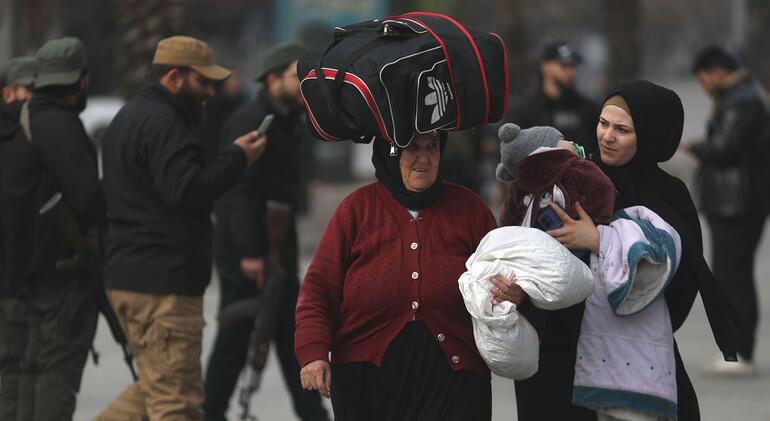
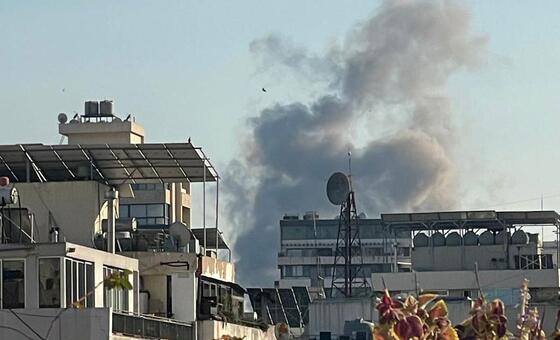
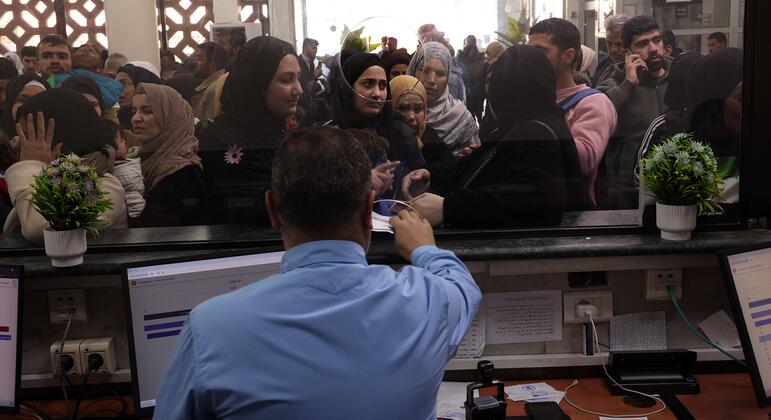
    Speaking from Damascus, the UN Refugee Agency (UNHCR)’s representative in Syria, Asseer Al-Madaien, said that the country has seen a “sharp rise” in people crossing the border from Lebanon – more than 200,000 between 2 and 27 March. 

    “The vast majority, nearly 180,000, are Syrians, including Syrian refugees who had fled Syria seeking safety in the past in Lebanon and now forced to flee again,” she said.

     More than 28,000 Lebanese also have crossed into Syria. 

    Fleeing with nothing

    “Most are people fleeing the intense Israeli bombardments,” Ms. Al-Madaien told reporters in Geneva. “They arrive exhausted, traumatized and with very, very few belongings.”

    The UNHCR representative said that the agency is preparing for as many as 350,000 to cross into Syria, depending on the course of the conflict.

    As the humanitarian fallout continues to deepen over a month since Israeli and US airstrikes on Iran began, sparking a wider regional war, supply lines across the Middle East are already severely disrupted. 

    The UN World Food Programme (WFP)’s Director of Supply, Chain Corinne Fleischer, said that the agency is concerned about “all [its] big operations”.

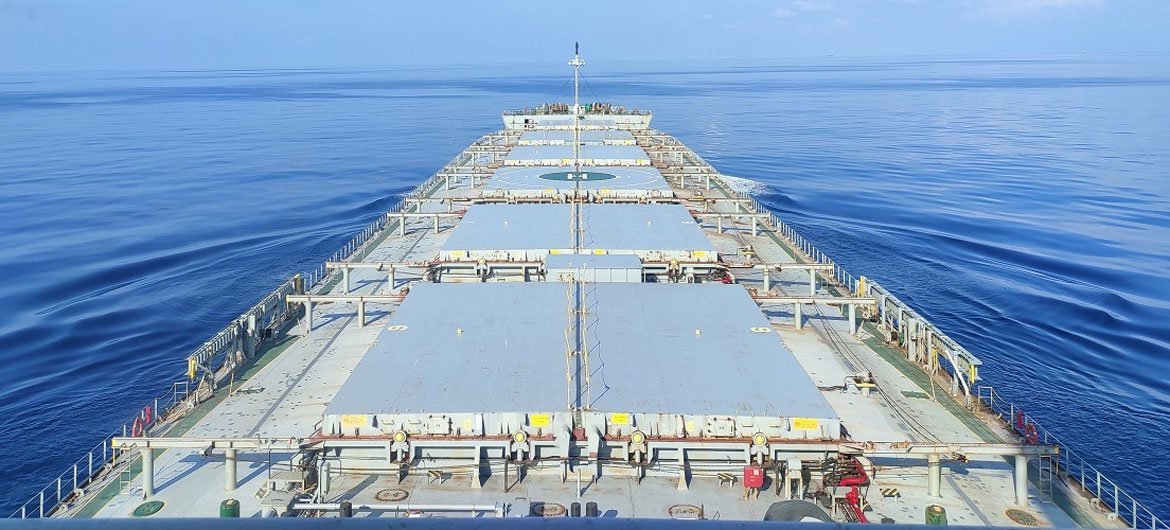
    WFP currently has “70,000 metric tonnes of food that is impacted by the war…About half of them are on chartered bulk vessels and the other half are on in containers which are either on route or stuck in a port and don’t move,” she said.

    Speaking from Rome, Ms. Fleischer clarified that WFP has no vessels in the Strait of Hormuz but is impacted “by the ripple effect of what’s happening there… vessels being stuck in ports, not berthing to ports, not leaving ports, containers not being offloaded”. 

    COVID precedent

    The WFP official warned that similar global supply chain disruptions seen during COVID took “four to five months to get back into place once the situation’s stabilized”. 

    Shipping costs have surged as carriers avoid the Suez Canal linked to the Middle East war and have to re-route around the Cape of Good Hope. This adds up to 30 days to the journey and has driven rates up 15 to 25 per cent, with fuel price hikes also hitting firms’ bottom lines.

    Speaking about mitigating measures, Ms. Fleischer explained that WFP has been “asking for priority cargo for humanitarian operations” as it is the only UN organization with its own shipping department directly engaging with shipping lines and vessel owners. 

    She said that the agency has successfully negotiated a waiver for the surcharges that are being put in place by shipping lines and certain ports at risk in the Middle East, which represent between $2,000 to $4,000 per container – a saving of about $1.5 million so far. 

    Afghanistan aid delays

    WFP is also rerouting cargo, for instance to Afghanistan, where 17 million people are food insecure. 

    Earlier this year, food aid sourced in Pakistan was impacted by the Pakistan-Afghanistan war and initially re-routed through Iran, Ms. Fleischer said. 

    “While we were [rerouting] to get into Bandar Abbas port of Iran, the war broke out” she explained. “We had to put it in Jebel Ali [port] in Dubai and now we will truck it from Dubai through Saudi Arabia…That adds about 1,000 euros per tonne and of course another three weeks.”

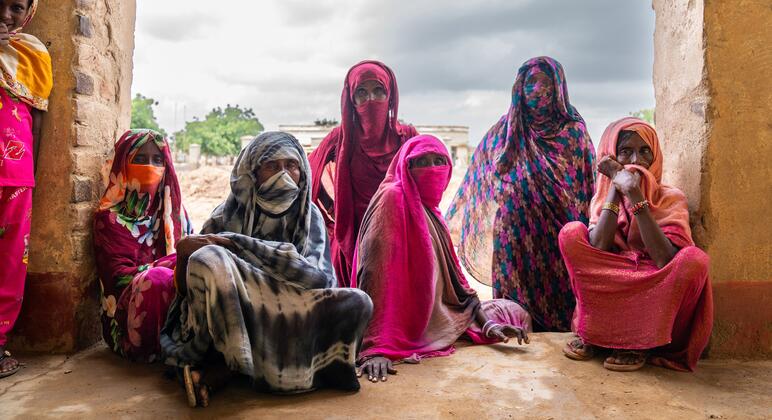
    The WFP official expressed further concern about Sudan, with 19 million people “acutely hungry”, as well as Somalia and South Sudan, where operations are buckling under longer lead times and higher costs.

    “The financing of humanitarian operations has, since several years, not being where it should be,” she said. “We have eroded any buffer stocks. We’re living from hand-to-mouth in these operations.”

    With famine in areas of Sudan “there is no time”, she insisted. “Our operations and pipelines don’t allow for a three-weeks-longer rerouting through the Horn of Africa.”
    Read More

  • ‘No precedent’ for seafarers caught in war zone in post-WW2 era

    ‘No precedent’ for seafarers caught in war zone in post-WW2 era


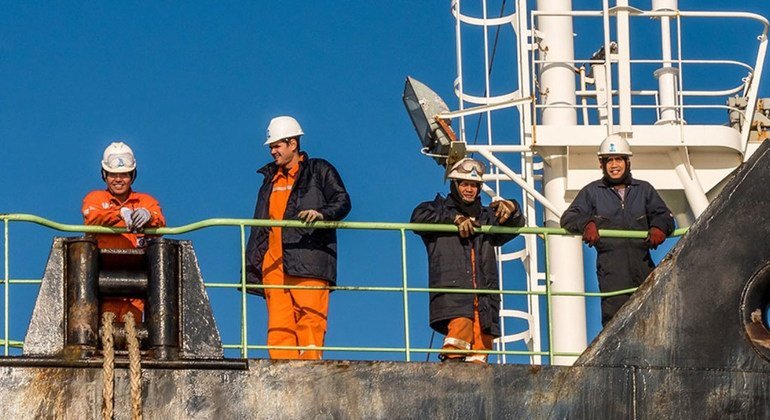
    The seafarers are working on some 2,000 ships including oil and gas tankers, bulk carriers, cargo ships as well as six tourist cruise liners.

    The ships are trapped in the Persian Gulf and are unable to pass through the narrow strait owing to the ongoing war in the Middle East.

    Iran borders the strait on its northern side and has said it will only allow passage to “non-hostile” ships. 

    Prior to the conflict, around 150 vessels passed through the waterway every day, but now only four or five do so. 

    On Monday, two Chinese-flagged cargo ships had reportedly embarked on the four-to-six-hour journey through the strait and into the Gulf of Oman and safer waters outside the war zone.

    Attacks on ships

    Since the beginning of the conflict a month ago, there have been 18 attacks on vessels in the strait, according to the UN’s International Maritime Organization (IMO) in London.

    Seven seafarers have been killed, eight injured and five have been reported as missing since the Israeli-US bombing of Iran began, sparking Iranian strikes across the Gulf.  

    On Tuesday, a fully loaded oil tanker was struck off the coast of Dubai, probably by an armed drone.

    400,000 seafarers are still at sea even though their contracts have ended.

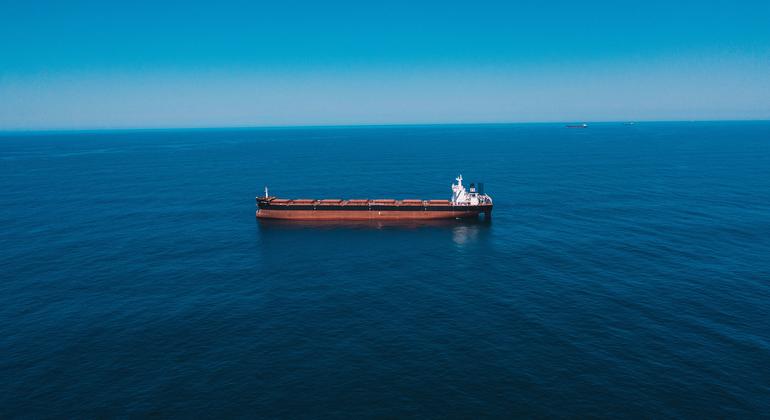
    A cargo vessel sails in the open seas. (file)

    It remains unclear why those 19 ships were specifically targeted. 

    There appear to have been fewer attacks in the past week, amid increased diplomatic moves to resolve the crisis.

    Seafarer safety

    The IMO, which is a specialized agency of the United Nations responsible for measures to improve the safety and security of international shipping, is focused on ensuring the evacuation and safety of the 20,000 seafarers.

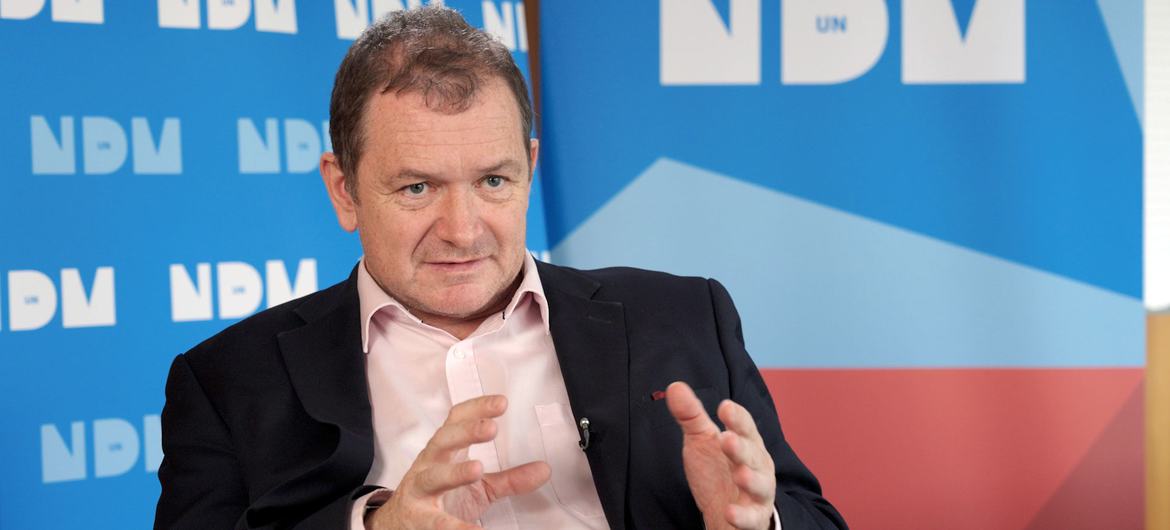
    “There is no precedent for the stranding of so many seafarers in the modern age,” said Damien Chevallier, Director of the organization’s Maritime Safety Division.

    “IMO has called on all parties to the conflict to deescalate the attacks so that the seafarers can be evacuated to safety.” 

    “They have been working in an active war zone for a month,” said Mr. Chevallier. “It is a very scary situation and one can only imagine the psychological stress they are under.”

    The International Transport Workers’ Federation, an IMO partner which represents seafarers, said it had received more than 1,000 emails from crew stranded on ships voicing concern about on-board conditions and asking for repatriation to their home countries.

    “It might be possible to relieve those seafarers by replacing them with others as a ship obviously needs to a crew to carry on operating, but the companies running those vessels would need to find volunteers,” said Mr. Chevallier. 

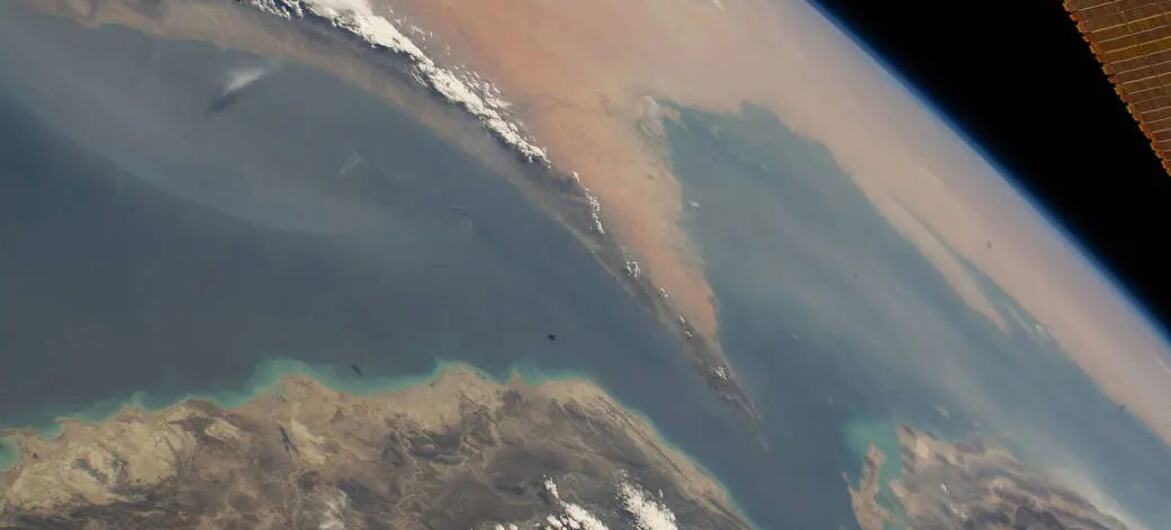
    Satellite view of the Strait of Hormuz, connecting the Gulf of Oman to the Persian Gulf, separating Iran from Oman, UAE, and Qatar.

    A satellite photo shows the strategically important shipping route of the Strait of Hormuz.

    “The best solution is for those vessels to be able to pass to safety through the Strait of Hormuz, but that would require a cessation of hostilities,” he added.

    Negotiating safe passage

    The 2,000 vessels in the Persian Gulf are being resupplied with food, water and fuel by companies operating out of Saudi Arabia and Oman. The Saudi authorities have worked with IMO to provide information to the industry about how to contact those resupply companies. 

    It is not necessarily safer for those ships to remain in port, so the vessels are moving around the Gulf in search of secure locations where they can wait out the conflict, following the protocols of the shipping companies that own them.

    As the IMO continues to engage with a range of interlocutors towards the evacuation of seafarers, the IMO’s Damien Chevallier said that the organization has asked Iran “for clarification of what constitutes a ‘hostile’ ship and one which could thus be under the threat of attack,” if it passed through the Strait of Hormuz.

    Internationally agreed route

    The strait is vitally important to the global economy. An estimated 20 per cent of the world’s oil and gas supplies pass through it.

    An internationally agreed ship routing system, a two-way ship traffic separation scheme, was adopted by IMO in 1968 with agreement of countries in the region. This maps out the safest route through the narrow maritime corridor passing close to Oman in the south. 

    However, the few vessels that have transited have taken a northern route close to Iran, reportedly so the authorities there can monitor their movements more closely.

    What next for seafarers?

    IMO’s short-term aim is to secure the safety of all the crew currently stuck in the Persian Gulf, but there are longer-term concerns about the future of seafaring. 

    “If seafarers do not feel safe due to conflicts like the one which is taking place now, then it will be difficult to attract the next generation to meet what are expanding needs,” Mr. Chevallier explained.

    “Without seafarers there can be no global trade which the world’s economies depend on.”

    Read More

  • MIDDLE EAST LIVE: Vital food aid blocked, aid agencies warn over Sudan fallout

    MIDDLE EAST LIVE: Vital food aid blocked, aid agencies warn over Sudan fallout


    More than a month since war erupted in the Middle East, UN agencies confirmed on Tuesday that huge numbers of people have returned to Syria from Lebanon “exhausted, traumatized and with very, very few belongings”. Meanwhile, the UN International Maritime Organization said that another vessel has been attacked in the Strait of Hormuz, increasing concerns of further delays in getting lifesaving aid to desperately vulnerable people in conflict settings including Sudan. Stay with us for live updates on this and UN agencies. App users can follow coverage here

    Read More

  • Airstrike on funeral underscores rising civilian toll in Sudan

    Airstrike on funeral underscores rising civilian toll in Sudan


    Seven people were killed and dozens injured when an airstrike hit a funeral gathering in the Nuba Mountains in West Kordofan last Friday, according to local sources, said UN aid coordination office, OCHA.

    The war, which began in April 2023 between the Rapid Support Forces (RSF) militia and the Sudanese Armed Forces, continues to have alarming consequence for civilians. 

    The funeral strike follows a drone attack on the Teaching Hospital in East Darfur’s capital, Al Deain, that killed 70 on 20 March. 

    The heightened insecurity continues to displace families in West Kordofan, according to the International Organization for Migration (IOM). 

    In neighbouring South Kordofan, drone strikes and attacks in the town of Dilling reportedly caused three deaths on Saturday, with reports from local NGOs that the humanitarian situation is rapidly deteriorating

    Humanitarian access sputters

    The continued fighting and repeated drone strikes are also disrupting critical supply routes across the Kordofan region.

    Key roads linking the city of El Obeid in North Kordofan to the towns of Dilling and Kadugli in South Kordofan are increasingly unsafe, which has the direct impact of hampering the movement of humanitarian supplies and commercial supplies

    Red tape is further compounding these challenges”, the Spokesperson for the Secretary-General, Stéphane Dujarric said, “with essential medical activities in El Obeid suspended for nearly one month now.”

    Meanwhile in Darfur, increasing insecurity and restriction on humanitarian movements are choking humanitarian access. 

    Aid workers face armed robberies and attacks along key routes, while some organizations have been forced to suspend operations altogether, leaving vulnerable populations with even fewer services.

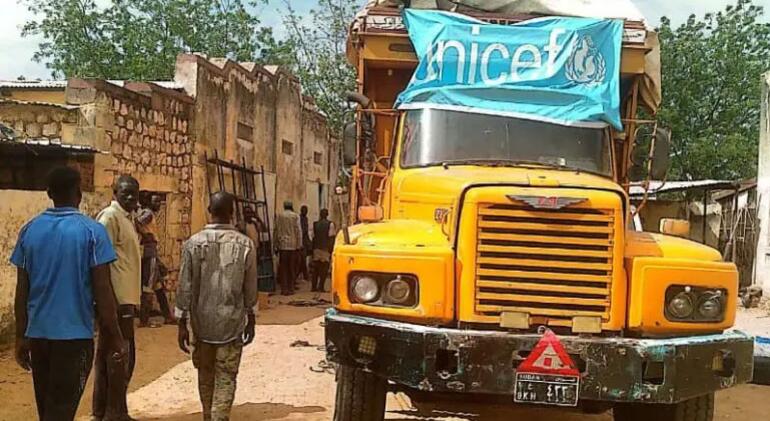
    A UNICEF aid convoy reaches Dilling and Kadugli in South Kordofan, Sudan, delivering lifesaving supplies to over 130,000 people affected by conflict.

    Skirmishes near Ethiopian border

    Similarly, escalating hostilities near the border with Ethiopia in Blue Nile State have severely constrained humanitarian operations. Movement beyond the state capital of Ed Damazine is largely suspended, cutting off access to reach people in need.

    Because of growing insecurity, in recent days more than 1,600 people have been displaced in the Blue Nile State locality of Geisan, the migration agency reports. 

    Despite these challenges, the UN and its partners continue to respond to needs across Sudan. The UN’s humanitarian relief coordinator, OCHA reiterates that civilians must be protected at all times, as required by international humanitarian law.

    “Attacks on civilians and essential infrastructure must stop,” Mr. Dujarric told journalists at the noon briefing on Monday. 

    “We reiterate that all parties must ensure rapid, safe, unhindered and unimpeded humanitarian access, including all key routes and anywhere aid is needed.”

    Read More

  • UN condemns killing of two more peacekeepers in Lebanon

    UN condemns killing of two more peacekeepers in Lebanon


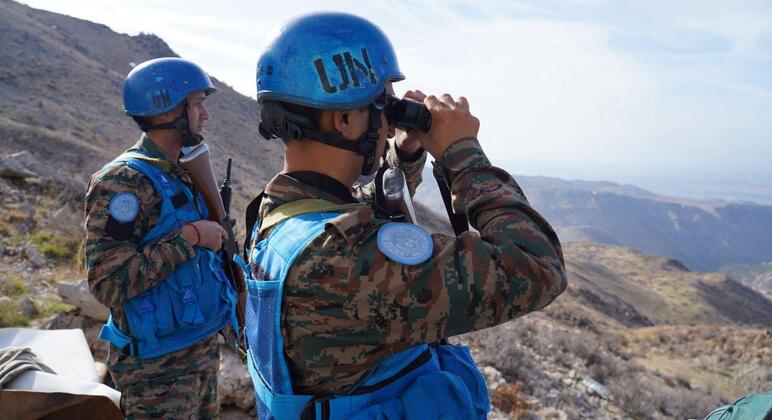
    Two Indonesian peacekeepers were killed on Monday, and two more were injured, in an explosion that hit a UNIFIL logistics convoy, destroying their vehicle.

    The incident took place near Bani Hayyan in southern Lebanon a day after another Indonesian blue helmet was killed when a projectile hit the mission’s base in Ett Taibe and exploded.  

    A colleague – who was critically injured and evacuated to the capital, Beirut –remains in hospital. 

    Never a target 

    UNIFIL is conducting investigations “to determine the circumstances of these tragic developments,” the head of UN Peace Operations, Jean-Pierre Lacroix, said in New York. 

    We strongly condemn these unacceptable incidents. Peacekeepers must never be a target,” he told journalists at a press briefing at UN Headquarters. 

    “We also remain seriously concerned about several aggressive behaviour incidents against UNIFIL peacekeepers in the past couple of days,” he added. 

    Widening regional risks 

    Mr. Lacroix affirmed that UN peacekeepers “remain on the ground, carrying out Security Council-mandated tasks, in these extremely dangerous conditions.”  

    Tensions continue to rise in the Middle East more than a month after the United States and Israel bombed Iran, prompting Iran to carry out retaliatory strikes on several countries in the region. 

    At the outset, UN Secretary-General António Guterres warned that the crisis risked “igniting a chain of events that no one can control in the most volatile region of the world.” 

    Since 2 March, more than 1,200 people in Lebanon have been killed in the escalation in hostilities between Hezbollah and Israel, said UN Special Coordinator for the country Jeanine Hennis-Plasschaert.

    Determining the circumstances 

    Following the deadly shelling incident on Sunday, UNIFIL Spokesperson Kandice Ardiel told UN News that a probe was underway but will take time. 

    “For the moment, we don’t have a clear idea of exactly what happened, but that’s what the investigation will find out,” she said. 

    “Once we have that investigation concluded, per usual practice we’ll share that with the parties. And depending on the result, if we find a party responsible, we will let them know and we will formally protest that to them.” 

    Service and sacrifice 

    More than 8,000 peacekeepers from nearly 50 countries serve with UNIFIL.  These men and women “demonstrate utmost courage and commitment to advancing international peace and security far away from home,” said Mr. Lacroix. 

    The mission was established in 1978 by the UN Security Council to confirm the withdrawal of Israeli forces from southern Lebanon, restore international peace and security, and assist the Lebanese Government in ensuring the return of its effective authority in the area. 

    It has played an important role in advancing peace and security, including by patrolling the Blue Line of separation between the two countries. 

    ‘A very dangerous and volatile situation’ 

    Peacekeepers also assist in implementing the Security Council resolution that brought an end to more than 30 days of hostilities between Israeli forces and Hezbollah in 2006. 

    The current clashes have led to “a multiplicity of violations” of resolution 1701 (2006), Mr. Lacroix said, citing strikes in both directions across the Blue Line as well as the presence of Israeli forces in Lebanon. 

    We’ve seen a great deal of Israeli incursions into South Lebanon in different areas, including near our headquarters in Naqoura, where about a week or so ago, in past days, we had some very violent battles that we could hear taking place,” said Ms. Ardiel. 

    “Our headquarters here was impacted by bullets, by shrapnel. Rockets even impacted in our headquarters, so it was a very dangerous and volatile situation.” 

    No military solution 

    Mr. Lacroix was adamant that hostilities can only be resolved through diplomatic means. 

    There cannot be a military solution. There has to be a political solution,” he said. 

    “The framework is there for a political solution – resolution 1701 – to which all the parties are still committed, to the best of what we hear from them.” 

    Read More

  • The image from Gaza that still haunts me: Palestine relief agency chief

    The image from Gaza that still haunts me: Palestine relief agency chief


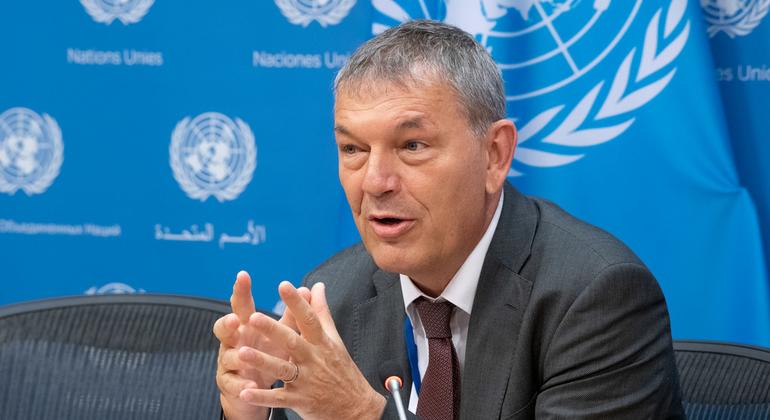
    “No doubt that I have mixed feelings today,” he says. “Bitterness, because I have been at the forefront over the last two years of extraordinary breaches of international law, witnessing atrocities, attacks against the United Nations; sadness, because many of our colleagues have been killed – nearly 400 in two years – that’s never been seen in the entire United Nations history.

    “But, also some pride, because over the last two years, I have seen how our staff…have been extraordinarily committed to try to alleviate the suffering of a number of their own communities”.

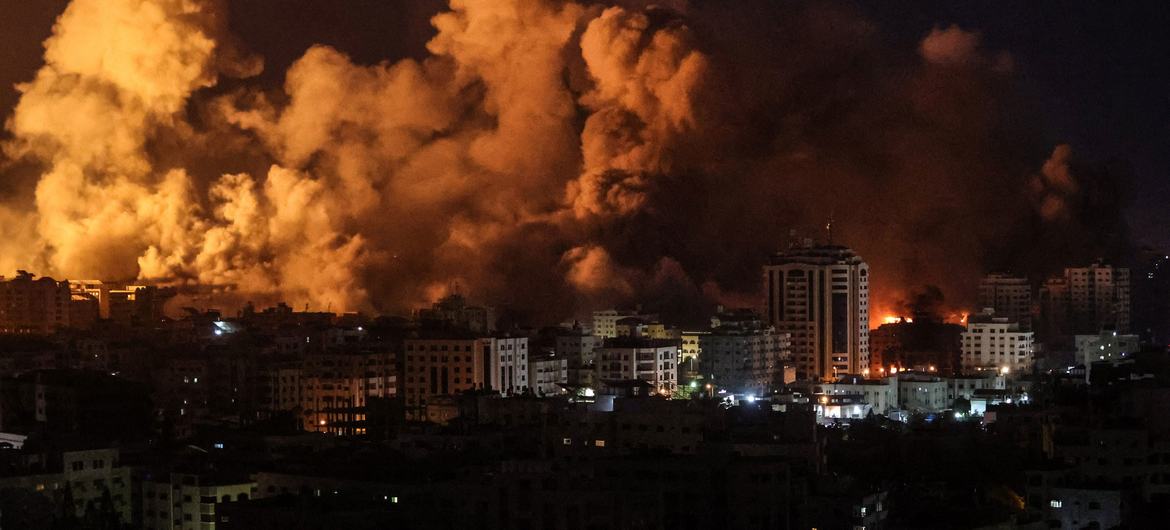
    Air strikes on Gaza are continuing. (file)

    Air strikes on Gaza continue. (file)

    Aftermath of 7 October

    In addition to being the face of an organization constantly berated and accused online of collaborating with Hamas fighters in Gaza, the 62-year-old Swiss national has watched the disastrous impact of the Israeli war on the enclave’s people and his agency, sparked by Hamas-led terror attacks in Israel, in October 2023.

    A high-level UN investigation into the accusations against UNRWA found that of 19 staff members accused of involvement in the terror attacks, one case was found to lack any supporting evidence and nine others lacked sufficient evidence to indicate involvement.

    In the remaining nine cases, evidence indicated that the UNRWA staff may have been involved in the 7 October attacks, at which point the agency announced they would be sacked.

    Today, the misery and death across the Gaza Strip continues, with one Gazan encounter from early in the conflict particularly hard to forget, despite Mr. Lazzarini’s many years working in conflict settings around the world, from Angola to Iraq and Somalia to South Sudan.

    Haunted by hunger with human eyes

    “It was a young girl I met in Rafah four weeks into the war and already I saw her with empty eyes begging in fact for a sip of water, a loaf of bread, in the school where she used to be a student. So, the school [that] should be a place of joy and education became a place of misery and shelter for these young girls. And I have to say, I have been haunted by this.”

    And although there is a ceasefire in Gaza between Hamas fighters and Israel today, it is “in name only”, he insists, with people still being killed because they do not know where the shifting border is between them and the Israeli military.

    “It’s nothing else than just misery,” he continues. “We might have reversed the tide of deepening hunger in Gaza but nothing else. People are still living in the rubble, are still waiting for hours to get some clean water. They are fighting and struggling against disease.”

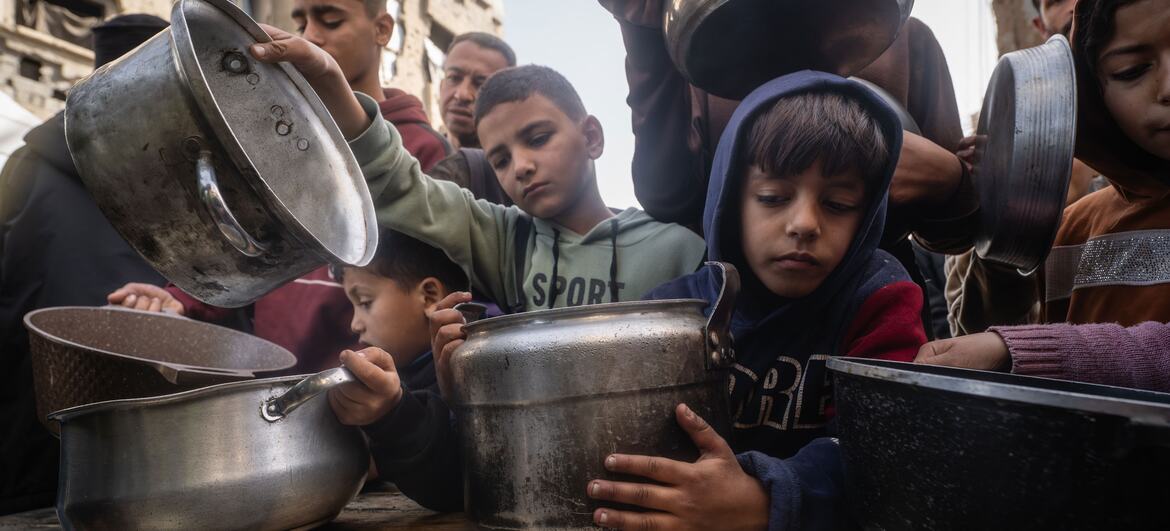
    Children in Gaza receive hot meals during Ramadan from a community kitchen, highlighting the impact of displacement and humanitarian aid.

    Children wait to be served a hot meal at a communal kitchen in Gaza.

    No real alternative

    Amid such suffering, Mr. Lazzarini dismisses suggestions that another body could take UNRWA’s place. “You do not have an existing alternative in Gaza,” he insists. “UNRWA is the only organization which has the manpower, the expertise, the community trust when it comes to public health, education services. There are no other NGOs or UN organizations. But we also know that the Palestinian Authority is not ready to take over these services.”

    Beyond the attacks on UNRWA staff and on hundreds of the agency’s buildings in Gaza, its ability to provide key services in Gaza and beyond has been severely limited by a lack of financial support from the international community to match the three-year extension of its mandate passed by the UN General Assembly last December.

    Running on empty

    Despite austerity measures – including reduced services and a 20 per cent salary cut for most local staff – Mr. Lazzarini’s warning to the General Assembly President that UNRWA “may soon no longer be viable” without hard cash still stands. But political support is invaluable, too, and not just for his agency’s survival, he explains.

    “The attacks on UNRWA are not an exception, cannot be dealt (with) in isolation. If we tolerate it for an agency like ours, others will follow. And that’s exactly what happened in Gaza: the UN agencies have been finger-pointed at being infiltrated by Hamas to justify action against them…And now we hear exactly the same narrative, we see the same pattern being implemented in Lebanon.”

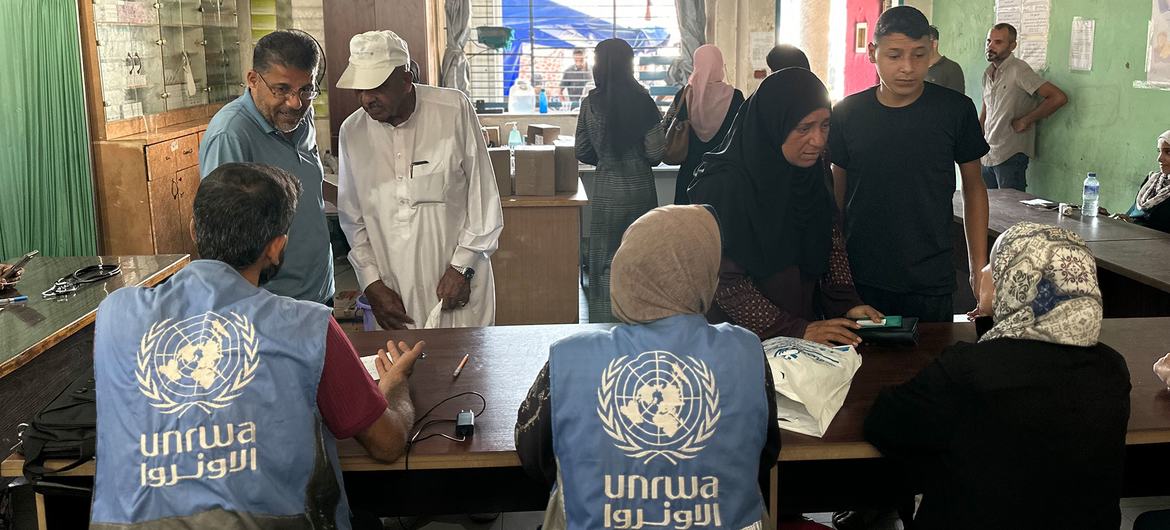
    UNRWA teams in Gaza City continue to provide medical services.

    UNRWA teams in Gaza City continue to provide medical services.

    Israel’s ‘silent war’ on the West Bank

    Away from Gaza, the dire situation for Palestinians in the occupied West Bank facing increasing attacks by Israeli settlers has also highlighted the “silent war” taking place there “in total impunity”, Mr. Lazzarini continues.

    In January, Israeli bulldozers moved into UNRWA headquarters in East Jerusalem and proceeded to demolish buildings there, as an Israeli flag was hoisted atop the UN complex – a move strongly condemned as a violation of international law by the global organization.

    “When we talk about, you know, the respect of international law, we have seen that this blatant disdain and disregard – the fact that everything has been conducted without any respect of the rule of war – has also allowed now the spread of a conflict into Iran with no justification to initiate such a large-scale war impacting the entire region,” the UNRWA chief maintains.

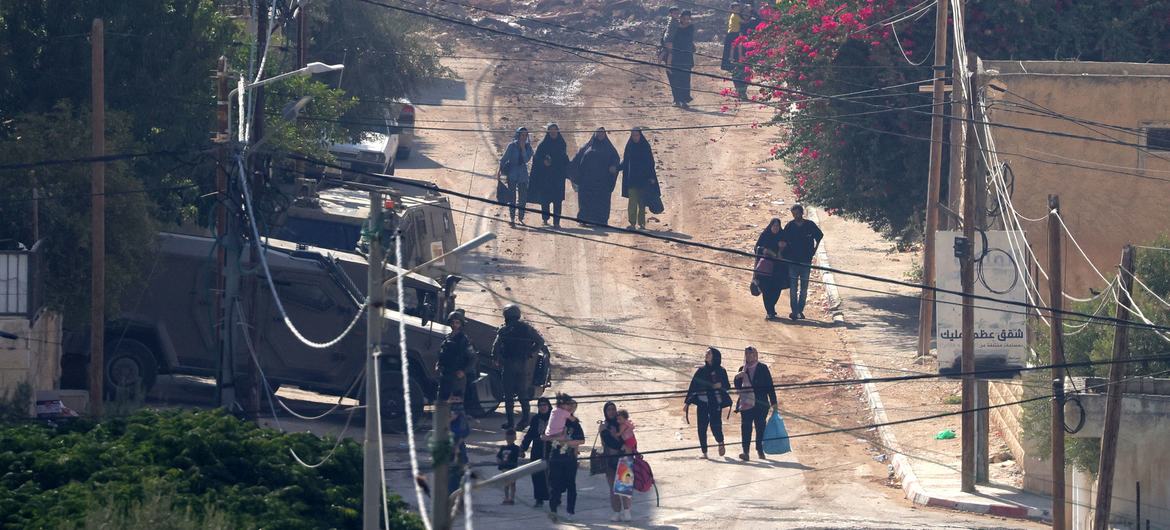
    Families flee their homes in the West Bank, due to the ongoing escalation of violence. (file)

    Families flee their homes in the West Bank, due to the ongoing escalation of violence. (file)

    ‘Extreme pressure’

    Despite the global turmoil raging around the world, back in Geneva, Mr. Lazzarini appears relaxed. He could easily be mistaken for a visitor in his wax coat, suede shoes, jacket and tie, but clothes are perhaps the last thing on his mind.

    Readily conceding that he has faced “extreme pressure” from attacks against himself and UNRWA in the past two years, the top UN diplomat cites his family’s support as one of the principal reasons why he has been able to continue working.

    “I haven’t been present over the last two years,” he says, adding determinedly that once he leaves UNRWA, his plans include playing catch-up “to retrieve” his wife and children, as well as writing about his experiences at the helm of a UN agency whose future remains at the mercy of geopolitics.

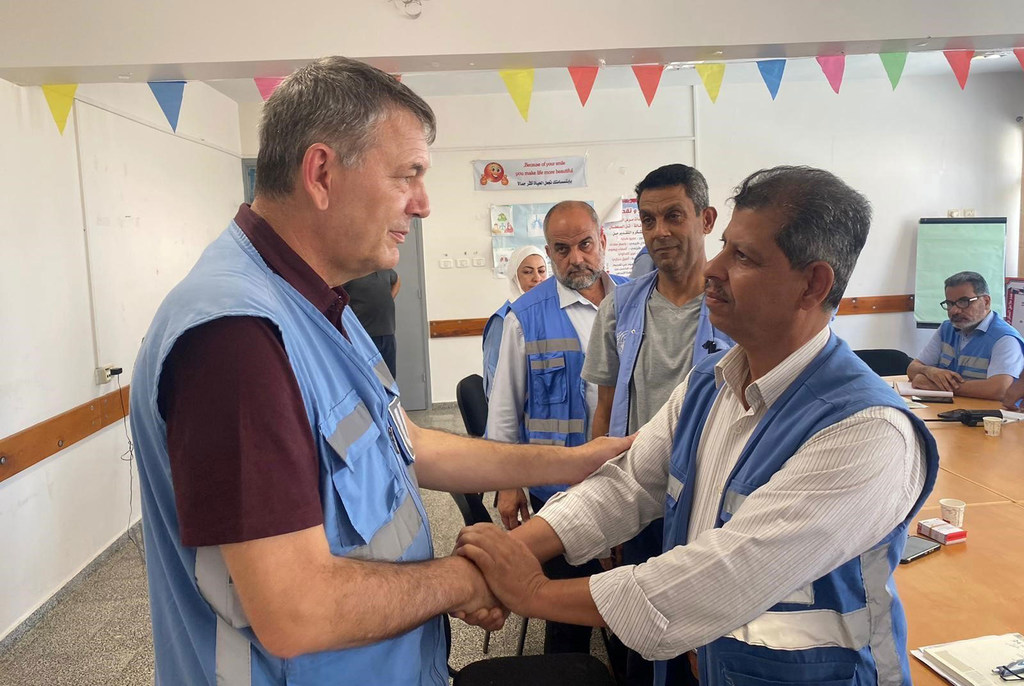
    UNRWA Commissioner General Philippe Lazzarini visits colleagues in Gaza.
    UNRWA Commissioner General Philippe Lazzarini visits colleagues in Gaza. (file)

    Read More

  • World News in Brief: Ukraine drone attacks, Afghan rights, Zero-Waste Day

    World News in Brief: Ukraine drone attacks, Afghan rights, Zero-Waste Day


    In a night of further terror for civilians, on 28 March, a drone strike hit the Odesa Maternity Hospital No.5 with dozens of pregnant women and newborns inside.

    The patients were safe due to the underground shelter, and no one was hurt in the strike, according to the UN World Health Organisation (WHO).

    32 new mothers and 22 newborns were evacuated to other facilities as the hospital was badly damaged. Attacks on hospitals violate international humanitarian law. It is the fifth UN supported maternity hospital to be hit in Ukraine this year alone.

    Attacks in other regions

    Elsewhere in Ukraine, the Mykolaiv region also came under attack, resulting in the death of a child and injuries to several other residents, including children. 

    A school and other infrastructure were also damaged. The UN aid coordination office, OCHA, said humanitarians have provided emergency support to those in need.

    In the latest round of drone attacks by Russia, a 13-year-old boy was killed in Kramatorsk while a 13-year-old girl was killed in Voskresenske, according to reports from UN Children’s Fund, UNICEF, who called for an “end attacks and the senseless devastation of young lives”.

    Afghanistan’s human rights crisis continues

    Women and girls continue to be erased from public life through Taliban decree, according to a new report by UN human rights office.

    In the period between August 2025 and January this year, the report found that girls continue to be barred from education above sixth grade, medical graduation examinations were held without women for the second year running in November.

    Women not complying with the chador requirement were removed from public transport and denied access to public markets and services.

    Elsewhere, Taliban security forces continue to prevent Afghan women, including UN staff, contractors, and visitors, from entering UN premises nationwide.

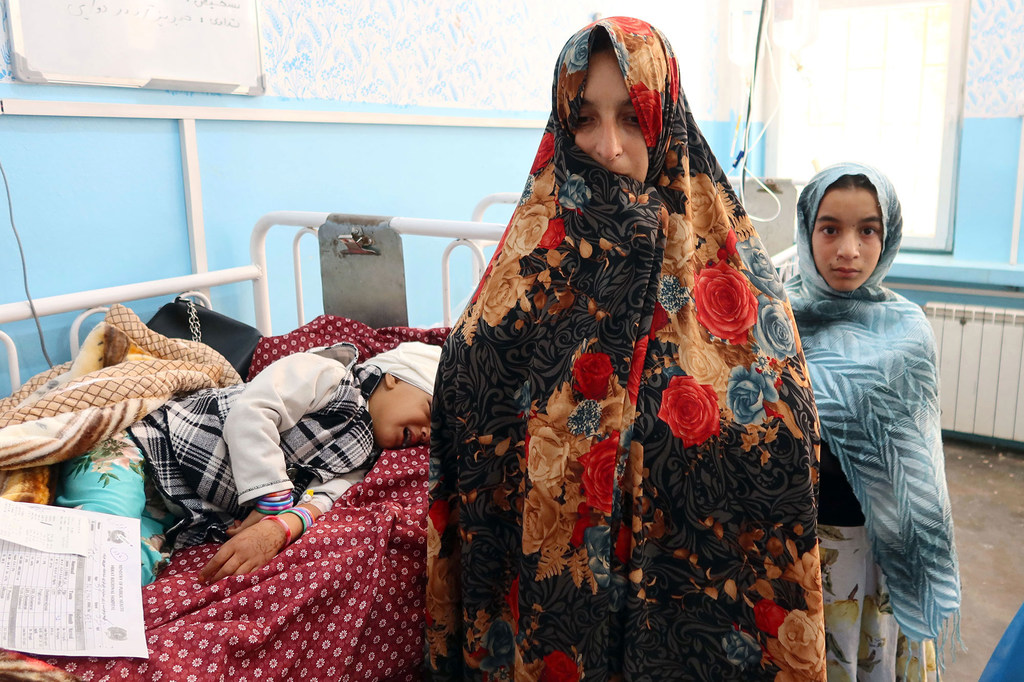
    A child is treated at a health centre in Herat, Afghanistan.

    A child is treated at a health centre in Herat, Afghanistan.

    Women and girls criminalised

    Books authored by women were removed from the shelves of bookstores and libraries, including university libraries in some provinces, regardless of subject matter, content, or the author’s nationality. 

     “The de facto authorities have, in effect, criminalised the presence of women and girls in public life,” said UN Human Rights chief, Volker Türk, while presenting the report: “Women and girls are the present and the future, and the country cannot thrive without them.”

    Since 2021, the de facto authorities carried out 12 public executions, two of which occurred during the reporting period, in sports stadiums, in violation of the right to life. Corporal punishment is implemented in public on a weekly basis.

    Meanwhile journalists and media workers continue to face arbitrary arrests and detention because of “disproportionate restrictions on the content they produce”.

    UN urges action to transform inefficient food systems

    Every year, the world throws away roughly a billion tonnes of food that is absolutely safe to eat. Around 60 per cent of food waste happens at the household level while the rest comes mostly from food service and retail.

    The issue was in the spotlight on Monday, the International Day of Zero Waste.

    The staggering amount of edible food we toss out is the result of inefficient food systems – from production to distribution to consumption. 

    With the year’s “Zero Waste Starts on Your Plate” focus, the UN is calling for transforming food systems to be more efficient, resilient and sustainability.

    Methods of transformation

    For example, governments can advance climate and biodiversity plans along with national policies that support these objectives.

    Businesses can set measurable food waste reduction targets and integrate them into existing sustainability commitments.

    Meanwhile, consumers can improve how they buy, store and prepare food to both cut waste and save resources.

    Read More

  • Developing countries are being priced out, in struggle for affordable finance

    Developing countries are being priced out, in struggle for affordable finance


    A credit rating is an assessment of how likely a borrower, such as a government, is to repay its debt on time and in full. For sovereign states, ratings influence how much countries pay to borrow in international markets: the lower the rating, the higher the perceived risk and usually the higher the interest costs.

    The current system too often relies on “outdated and incomplete information”, leaving countries unfairly penalised in global capital markets, the deputy UN chief Amina Mohammed told the opening of the UN’s Economic and Social Council, ECOSOC, Special Meeting on Credit Ratings, delivering remarks on behalf of Secretary-General António Guterres.  

    Adequate and timely finance is the fuel that drives sustainable development,” the Deputy Secretary-General said, warning that “today that fuel is running perilously low, and it’s getting more costly.”

    She pointed to nearly $1.4 trillion in annual debt servicing costs across developing countries, while more than 3.4 billion people live in countries that spend more on debt interest payments than on health or education.

    Global instability

    Ms. Mohammed added that global instability is deepening the crisis. Rising fuel and raw material costs linked to conflict and economic volatility are intensifying fiscal pressures and slowing growth, while climate-vulnerable countries continue to face disaster losses without access to affordable recovery financing.

    “This is a matter of profound importance,” Ms. Mohammed said.

    Debt reform efforts broaden

    Ms. Mohammed also linked the credit ratings debate to wider efforts to reform the global debt architecture and pointed to new steps aimed at giving developing countries a stronger voice in debt discussions.

    These include a borrowers’ platform, work on principles for responsible sovereign borrowing and lending, and a UN-led process bringing together debtor and creditor countries, private creditors, international financial institutions, academics and civil society.

    She also cited the planned African Credit Rating Agency as an example of efforts to improve data, transparency and risk assessment.

    Call to reimagine ratings

    Ms. Mohammed urged a major shift in how sovereign ratings are designed, arguing that assessments should capture not only vulnerability, but also opportunity.

    “We must transform the mindsets from long-term speculation to long-term investment,” she said, calling for broader, more transparent and forward-looking methodologies that better reflect countries’ real prospects.

    Ms. Mohammed stressed that affordable borrowing for development can strengthen a country’s future solvency. 

    Investment in health, education, infrastructure, climate resilience and renewable energy, she said, can generate prosperity, reduce risk and improve economic stability over time.

    She also criticised narrow measures of progress, insisting that “GDP tells us the cost of everything and the value of very little.”

    Ms. Mohammed called for greater accountability from governments, investors and ratings providers alike, alongside stronger data and fairer methodologies.

    It’s time to turn credit ratings from barriers into contributors to long-term finance and sustainable development,” Ms. Mohammed said, urging a new approach that helps developing countries secure the financing they need.

    Read More

  • Sea mines clearance: A new dimension of difficulty

    Sea mines clearance: A new dimension of difficulty


    It is still not clear whether mines, which can sink vessels of all types if activated, have been deployed in the Strait of Hormuz, as part of the ongoing conflict in the Middle East.

    Most shipping has not been able to pass through the strategically important strait as Iran continues its war with the United States, Israel and other countries in the region, amid ongoing bombing of Iranian targets.

    It remains a key objective of the global community to reopen the strait to facilitate the flow of oil and fertilizer.

    Paul Heslop is an expert with the UN Mine Action Service (UNMAS) which focuses on clearing land-based mines.

    He spoke to UN News’s Nathalie Minard ahead of the International Day for Mine Awareness and Assistance marked annually on 4 April.

    UN NEWS: Do you have any information about naval mines being deployed in the Strait of Hormuz?

    Paul Heslop: We do know that the Iranian navy had a massive stockpile of sea mines prior to the conflict. 

    Paul Heslop, Head of UNDP Mine Action Programme in Ukraine, sits down for an interview with UN News.

    Paul Heslop, UNMAS

    We have no confirmed reports stating exactly the number or types that have been used, but sea mines are relatively easy to deploy. 

    You can take them out in a fairly small boat, a fishing boat, a dhow, or a dedicated minelayer. 

    UN NEWS: What types of sea mines could be deployed?

    Paul Heslop: If you consider a landmine, it is normally either laid on or below the surface. And once it is laid, it stays in place, unless there is an earthquake, landslide, or a large volume of water that moves it. 

    The challenge with sea mines is that they can be laid in three layers: floating on the surface, floating inside the water or deployed to the bottom of the seabed.

    Obviously, if they’re floating, they are vulnerable to tidal currents and can move location. They can also be tethered and secured in one location.

    Satellite view of the Strait of Hormuz, connecting the Gulf of Oman to the Persian Gulf, separating Iran from Oman, UAE, and Qatar.

    A satellite photo shows the strategically important shipping route of the Strait of Hormuz.

    They can be made from plastic or metal. Their activation mechanisms include contact with a hull, magnetic influence, or they can be remotely detonated, or timed to detonate.

    UN NEWS: Why are sea mines more challenging to clear?

    Paul Heslop: Clearing landmines is difficult, but clearing sea mines is even harder. 

    You’re not only working in three different depths, so three dimensions, but also a fourth dimension, which is time.

    Over time, the mines may move. If an area is cleared, and there is a tidal surge or other current then that same area may be contaminated again. 

    Moreover, some mines move through the water, driven by a propellant mechanism so deminers are working in a dynamic and changing environment. 

    UN NEWS: How can they be detected?

    Paul Heslop: If they are metal, a magnetometer (which measures changes in magnetic fields) would find them. There are also a range of sophisticated sonar (sound wave) and radar (radio wave) detection tools for locating underwater devices.

    Another challenging factor in water are temperature layers which can act as a reflector and make detection more difficult. 

    So, if the mine is at a depth where there is a different temperature layer above it, and a sonar has been deployed, the sonar may be degraded or deflected because of those temperature layers. 

    This is why finding and clearing sea mines is extremely challenging and very dangerous for the ships that are doing it. 

    UN NEWS: Which countries have minesweeping ships and the capacity to technically intervene in that specific area of naval mines?

    Paul Heslop: Most navies will have some capability to deal with mines. 

    This conflict is happening at a time of transition from the old-fashioned minesweeper boats with crew, to new technologies that use drones or underwater robotics to locate mines.

    UN NEWS: If sea mines were a proven threat to shipping, what would be the solution to allow traffic to resume once peace is restored? 

    It’s a bit like in a peacekeeping mission: you may have an insurgent group that, at night, goes and puts a mine on the road to target a convoy. 

    So, each morning, you do a patrol with a mine-protected vehicle to check that there’s been no mines laid the night before.

    If there is a peace deal or an agreement in the Strait of Hormuz and mines have been deployed, then for the foreseeable future, there will probably be a requirement, because of the dynamic nature of sea mines, to form a convoy and sweep for mines in front of that convoy.

    A convoy would probably operate in a channel a couple of kilometres wide which has been cleared of mines. It would not be the case that every square metre of the Strait of Hormuz would be cleared every day.

    And obviously, depending on currents, tidal shifts, some areas are more likely to become re-contaminated than others.

    Read More

  • MIDDLE EAST LIVE 30 March: UN peacekeeper killed amid Israel-Hezbollah clashes

    MIDDLE EAST LIVE 30 March: UN peacekeeper killed amid Israel-Hezbollah clashes


    Further attacks have been reported across the Middle East as the war enters a second month, with one UN peacekeeper killed in Lebanon on Sunday and another seriously injured. On the diplomatic front, the UN has announced a taskforce to restore the flow of fertilizer and aid through the Strait of Hormuz, while the UN’s atomic watchdog confirms an attack on a heavy water facility at Khondab in Iran. Stay with us for live updates on this and UN agencies. App users can follow coverage here.

    Read More