Category: Switzerland

  • British schoolgirl barred from flying home over UK dual national rules

    British schoolgirl barred from flying home over UK dual national rules


    A dual-national British schoolgirl has been left stranded on mainland Europe after she was refused entry on a return flight under new UK border rules.

    A British schoolgirl has been left in Denmark after being denied boarding on her return flight to London because of new UK border rules imposed on dual nationals.

    The girl planned to catch a Norwegian Air flight back to the UK on March 8th after a weekend visiting her father, a British academic working at a university in Copenhagen, but was unable to board both online and in person at the airport.

    The Guardian reports that she had travelled with her Norwegian mother and did not have a valid British passport with her, but was in the process of applying for one. The article does not state which other passport the girl was travelling on, but given the nationality of the mother we can presume it was likely a Norwegian one.

    READ ALSO: Can dual national Brits travel to UK without valid British passport after all?

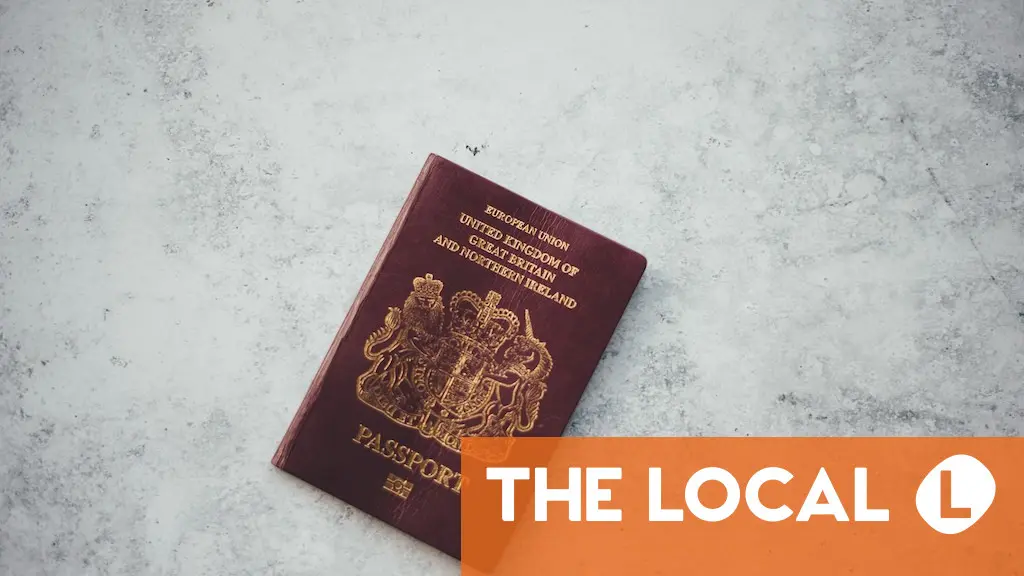
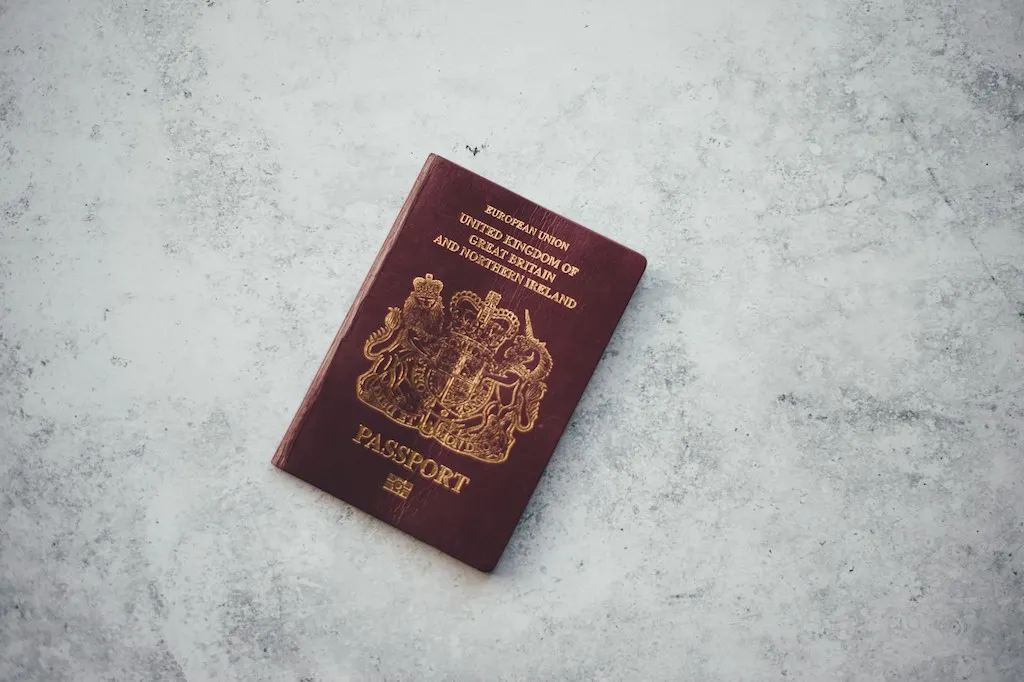
    Under new border rules for the Electronic Travel Authorisation (ETA) system in place from 25th February, British dual nationals can only enter the UK if they have a valid British passport or alternatively a Certificate of Entitlement, which costs £589.

    Under pressure the UK’s Home Office has softened the rules slightly saying Brits can prove the UK nationality using an out of date passport if they don’t have a current one. However there was no solution offered for those who have never had a British passport such as children born abroad to British parents, or dual nationals born in the UK like this girl.

    The schoolgirl’s parents were not aware of the rule change and she was not allowed to board her return flight, meaning the student has been stranded in Denmark as her GCSE exams approach.

    “We tried to check in on the app and it allowed me to check in but not Hanne,” her mother told The Guardian.

    “When we got to the airport… they wouldn’t let her check in either.”

    This is reportedly the third child the British publication knows of who has been refused entry on a return flight to the UK under the new dual citizen rules.

    Advertisement

    The report does not specify why she was denied boarding or if she had applied for an ETA, the UK’s new Electronic Travel Authorisation for for foreign arrivals.

    The Local has contacted Norwegian for clarification on the case but has not yet received a response.

    The family’s local MP, James MacCleary, has spoken publicly and blamed mixed messages from the government: “The government’s hopeless planning and communication of its changes to entry requirements for dual nationals has caused an untold amount of chaos and stress. 

    “Too many dual nationals have found themselves stranded abroad in heartbreaking situations, missing funerals, weddings, or in the case of my constituent, an absolutely crucial time in education.

    “The home secretary needs to pull her finger out and urgently provide a low-cost and quick alternative for dual nationals stuck abroad. If she fails to act, the prime minister must step in to bring an end to the chaos, otherwise more children and families will pay the price.”

    In a statement, the Home Office said: “Public information advising dual nationals to travel with a valid UK passport or certificate of entitlement has been available since October 2024, including official guidance on gov.uk”.

    Advertisement

    What are the rules?

    Dual-nationals abroad have expressed anger at the change, telling The Local they felt they were being ‘punished for having dual citizenship’ and describing the ETA system as a  “money making racket”.

    Ever since the launch of ETA, there has been confusion when it comes to British dual nationals. The Home Office had done little to allay these fears, but for a full breakdown of the rules, or what is understood of them so far, at least, read The Local’s explainer here.

    In short: British or Irish nationals travelling on their UK or Irish passport do not require the electronic travel authorisation known as the ETA.

    Many British dual nationals, however, might not have a British passport anymore. These people have always previously had the option of simply using their other passport to enter the UK but the rule change makes this more difficult, if not impossible.

    This is because the website and app used to apply for the ETA demands that people list any other nationalities they possess – but does not allow applicants to select ‘British’ as another nationality – meaning that dual nationals cannot truthfully complete the ETA application and travel on their other passport. Basically British dual nationals have been told they cannot get an ETA.

    They would therefore be at risk of being accused of making a false declaration if they hadn’t applied for and paid for a new passport (for £108) or a Certificate of Entitlement, which costs £589.

    READ ALSO: Explained: The UK’s £16 ETA travel permit

    Read More

  • Swiss government suspends arms exports to US

    Swiss government suspends arms exports to US


    Federal Council restricts arms exports to the USA due to Iran war

    Economics Minister Guy Parmelin.


    Keystone-SDA

    Due to the war in Iran, the Swiss government is no longer authorising any new arms exports to the United States. Existing licences and exports of other goods will be regularly reviewed by a group of experts.

    +Get the most important news from Switzerland in your inbox

    The government made its decision at its meeting on Friday. It based its decision on Switzerland’s neutrality and the provisions of the War Materiel Act.

    “The export of war materiel to countries involved in the international armed conflict with Iran cannot be authorised for the duration of the conflict,” the government wrote in a statementExternal link.

    Defence Minister Martin Pfister said the Swiss government did not fear a backlash from US President Donald Trump. The government’s application of the law of neutrality comes as no surprise to foreign countries, Pfister said at a press conference on the 2026 Armed Forces Dispatch in Bern in response to questions from journalists. “The US knows the maxims of Swiss foreign policy.”

    In initial reactions to the government’s decision, the industry association Swissmem spoke of a “premature statement of neutrality”. For the left-wing Social Democratic Party the decision did not go far enough, while the right-wing Swiss People’s Party reckons the government had no other choice.

    + Switzerland refuses two US requests for flyovers linked to Iran war

    Regular reviews

    In practice, the decision concerns the US. “No definitive licences for the export of war materiel to Israel have been granted for a number of years,” the government said. The same applies to Iran. According to the statement, no new licences have been issued for exports of war materiel to the US since the US and Israeli airstrikes on Iran began on February 28.

    According to the statement, the existing licences can continue to be used. According to the government, it has come to the conclusion that they have no relevance to the war against Iran. However, a group of experts with representatives from the economics ministry, the foreign ministry and the defence ministry “will regularly review developments in exports of the goods in question to the US and assess whether any action is required under neutrality law”.

    + As Middle East conflict rages, Swiss tradition of uniting adversaries is changing

    The group of experts will also examine exports of goods that can be used for both civilian and military purposes, as well as specific military goods such as training aircraft or military simulators. There are also plans to review exports of goods that do not fall into this category but are affected by sanctions against Iran. “A restrictive approach is already in place with regard to Israel,” the government said.

    According to international law expert Evelyne Schmid from the University of Lausanne, it would be legally possible to stop transactions that are already underway. “The legal basis for precisely such cases stipulates that the authorities can also revert to authorisations that have already been granted. It can suspend them, it can even revoke them,” Schmid told Swiss public television SRF on Thursday.

    Adapted from German by AI/ts

    We select the most relevant news for an international audience and use automatic translation tools to translate them into English. A journalist then reviews the translation for clarity and accuracy before publication.  

    Providing you with automatically translated news gives us the time to write more in-depth articles. The news stories we select have been written and carefully fact-checked by an external editorial team from news agencies such as Bloomberg or Keystone.

    If you have any questions about how we work, write to us at english@swissinfo.ch

    Read More

  • Swiss cable car slammed into pylon before falling

    Swiss cable car slammed into pylon before falling


    Engelberg cable car slams into a pylon before falling

    Engelberg cable car slams into a pylon before falling


    Keystone-SDA

    The fatal fall of a cable car gondola on Wednesday in central Switzerland was due to “an unexpectedly strong gust of wind”, according to its manufacturer. The gust blew the cabin against a pylon. The impact unhooked it from the support cable.

    +Get the most important news from Switzerland in your inbox

    At the time of the accident, the wind was strong and blustery,” Arno Inauer, managing director of the Zug company Garaventa, which built the Titlis Xpress eight-seater gondolas, wrote to the media on Friday. The checks carried out since Wednesday show that the installation in question was in perfect technical condition,” he said.

    The gondola fell on a snow-covered slope after the intermediate station of Trübsee (1,800m), on its way up to the upper station of Stan (2,430m). It rolled several times after the fall. Its sole occupant, a 61-year-old woman from the region, did not survive.

    + One dead after gondola cabin plunges in Swiss resort of Engelberg

    The upper section of the Titlis Xpress has been closed since the accident until further notice. The parallel cable car linking Trübsee to Stand will ensure transport on this route.

    On Thursday parliamentarian Hans Wicki, chairman of the board of directors of the Engelberg mountain railways, told the Tages-Anzeiger newspaper that just before the accident, employees working on the Titlis Xpress had begun to suspend operations because of the wind. They were putting the gondolas in a storage area when one of the gondolas still in service fell.

    Adapted from French by AI/ts

    We select the most relevant news for an international audience and use automatic translation tools to translate them into English. A journalist then reviews the translation for clarity and accuracy before publication.  

    Providing you with automatically translated news gives us the time to write more in-depth articles. The news stories we select have been written and carefully fact-checked by an external editorial team from news agencies such as Bloomberg or Keystone.

    If you have any questions about how we work, write to us at english@swissinfo.ch

    Read More

  • Arztgeheimnis Schweiz: Soll der Arbeitgeber mehr erfahren dürfen?

    Arztgeheimnis Schweiz: Soll der Arbeitgeber mehr erfahren dürfen?


    Arztgeheimnis Schweiz: Soll der Arbeitgeber mehr erfahren dürfen?

    Mehr Kontrolle oder zu viel Einblick?

    Der Bundesrat lehnt eine Lockerung jedoch ab. Er verweist darauf, dass Arbeitgeber beispielsweise eine vertrauensärztliche Untersuchung verlangen oder ein Arztzeugnis bereits ab dem ersten Krankheitstag einfordern können. Auch die Ärzteorganisation FMH stellt sich gegen die Forderungen. FMH-Präsidentin Yvonne Gilli betont, dass falsch ausgestellte Arztzeugnisse strafbar sind und entsprechend geahndet werden können.

    Read More

  • A Swiss Survivor on What It’s Like to Be Caught in an Avalanche


    Heinz Mueller was buried under 30 feet of snow in the Swiss Alps in 1993 but made it out alive. “It’s panic,” he says.

    Read More

  • The key decisions Swiss MPs made during parliament’s spring session

    The key decisions Swiss MPs made during parliament’s spring session


    The first session of the parliament in 2026, from March 2nd to March 20th, yielded some decisions that are bound to impact the lives of Switzerland’s population, including foreign residents.

    Read More

  • Switzerland to bolster defences against drones and cyber attacks

    Switzerland to bolster defences against drones and cyber attacks


    Switzerland’s Federal Council plans to invest about CHF 3.4bn to strengthen the army, with a focus on long-range threats and cyberwarfare. On Friday it presented its latest army plan to parliament, which includes additional borrowing of roughly CHF 500m. A further CHF 562m is earmarked for modernising military infrastructure and improving noise protection.

    Presented by the defence minister, Martin Pfister, the plan prioritises ground-based air defence, protection against drones and expanded capabilities in cyberspace. The government has reprioritised, Mr Pfister said, to address the most likely threats: long-range attacks and hybrid conflict.

    Russia’s war in Ukraine, the government argues, marks a turning-point in European security and underscores the need to refocus on territorial defence and the protection of critical infrastructure. The conflict involving Iran, Mr Pfister added, also has implications for Europe.

    He said sustained investment was essential. Ensuring Switzerland’s security over the next decade will require around CHF 31bn, partly financed by a temporary increase in value-added tax. Switzerland is currently not adequately protected against the most likely forms of threat, he said, adding that neutrality demands stronger defensive capabilities.

    Air defence takes priority
    Most of the funding will go to air defence. The government plans to spend CHF 1bn on additional IRIS-T SLM systems to extend defence coverage and better protect critical infrastructure. A further CHF 800m will replace ageing short-range air-defence systems. To improve surveillance, the existing tactical radar will be replaced by a semi-mobile medium-range system, at a cost of CHF 150m.

    The Federal Council also intends to spend CHF 70m on new systems to counter small drones, which are increasingly seen as a threat to both military units and civilian infrastructure.

    Expanding cyber and space capabilities
    Two further programmes aim to improve resilience. Around CHF 30m will be invested in space-based capabilities to enhance situational awareness. Another CHF 100m will go towards expanding access to civilian data networks, helping to maintain command-and-control functions in a crisis. In addition, CHF 240m is allocated to strengthen electronic-warfare capabilities in cyberspace and the electromagnetic domain.

    Equipment and fighter jets
    Across the armed forces, new personal weapons will be procured at a cost of CHF 50m. The government is also seeking an additional CHF 394m for the purchase of F-35A fighter jets, citing higher costs due to inflation but insisting the programme remains within the financial limits approved by voters. Switzerland is now expected to acquire only 30 aircraft.

    More on this:
    Government press release (in French) – Take a 5 minute French test now

    For more stories like this on Switzerland follow us on Facebook and Twitter.


    Read More

  • Swiss cuts summer flights amid pilot shortage

    Swiss cuts summer flights amid pilot shortage


    Swiss International Air Lines will cancel several hundred flights from its summer schedule, citing a shortage of pilots among other constraints.

    red and white airplane on airport
    Photo by Quentin Krattiger on Pexels.com

    The airline said that due to operational constraints, including limited availability of cockpit crew, the airline has reduced its 2026 summer schedule. In total, 326 flights—less than 0.5% of the overall programme—will be cancelled. Affected passengers will be contacted and offered alternative travel arrangements.

    The reductions will fall mainly on long-haul routes, which require larger crews. Frequencies to destinations such as Chicago and Shanghai will be trimmed.

    Staffing imbalances
    A shortage of pilots reflects training demands for new Airbus A350 aircraft, which are tying up crew who might otherwise operate the rest of the fleet. In addition, 11 aircraft are currently grounded owing to engine problems.

    The situation is reversed in the cabin. At times Swiss has had a surplus of up to 300 cabin crew. The airline is offering payments of up to CHF 15,000 to staff willing to give up full-time positions.

    For more stories like this on Switzerland follow us on Facebook and Twitter.


    Read More

  • Scientists discover heavier version of proton with upgraded detector | Particle physics

    Scientists discover heavier version of proton with upgraded detector | Particle physics


    Scientists at the Cern nuclear physics laboratory near Geneva have discovered a heavier version of the proton, the subatomic particle that sits at the heart of every known atom in the universe.

    They spotted the particle in a shower of debris that lit up a detector at the Large Hadron Collider (LHC), located deep beneath the ground at Cern, which smashes protons together at close to the speed of light. The collisions recreate in microcosm conditions that prevailed just after the big bang, with the energy converting to particles that spray in all directions.

    The newfound particle, which is four times heavier than the regular proton, should help physicists refine their understanding of the strong nuclear force that glues together the innards of all atomic nuclei. The force is unusual because it behaves like a rubber band, getting stronger as the distance between subatomic particles increases.

    Physicists working on the LHCb experiment found the heavy proton after the detector was upgraded to make it more powerful.

    “This is just the first of many expected insights that can be gained with the new LHCb detector,” said Prof Tim Gershon at the University of Warwick, who takes over as the LHCb international lead in July. “The improved detection capability allowed us to find the particle after only one year, while we could not see it in a decade of data collected with the original LHCb.”

    Atoms of hydrogen, the simplest and most abundant element in the observable universe, contain only a proton and an electron. Protons, along with neutrons in heavier atoms, consist of elementary subatomic particles called quarks. A proton contains two up quarks and one down quark, but there are heavier, unstable versions of quarks known as charm, strange, top and bottom.

    In the heavy proton detected at Cern, both up quarks are replaced with charm quarks. The particle, snappily named Xi-cc-plus, was revealed by its signature decay into other particles. After popping into existence, it does not hang around: scientists suspect it survives for less than a millionth of a millionth of a second before breaking down.

    “The more we learn about these particles, the more we can learn about the strong force, and that is the same strong force that binds our protons and neutrons together,” said Prof Chris Parkes, a physicist at the University of Manchester.

    The discovery comes as UK Research and Innovation(UKRI), the nation’s science funder, faces fierce criticism for its plans to pull £50m funding for the LHCb’s final upgrade in the 2030s. The revamp would ensure the detector made the most of a major transformation to the LHC that could substantially improve its discovery potential.

    UK scientists working in particle physics, astronomy and nuclear physics have been told their grants will be slashed following cost overruns at major science facilities. Projects have also been hit, including the next LHCb upgrade and an electron-ion collider under development with researchers in the US.

    Last week, Chi Onwurah, chair of the Commons science committee, sent a scathing letter to Prof Ian Chapman, chief executive of the UKRI, and Patrick Vallance, the science minister, calling the cuts “wholly unacceptable” and “a failure” by UKRI, the Science and Technology Facilities Council and the Department for Science, Innovation and Technology.

    The letter demands “swift and decisive action” and asks whether the decision on the LHCb upgrade is final.

    “It is so important that we can overcome the problems caused by the UKRI decision to deprioritise the funding for this project,” Gershon said. “No other experiment either running or planned will be able to do this physics.”

    Read More

  • «Mein Lohn steigt automatisch, je länger ich im Beruf arbeite»

    «Mein Lohn steigt automatisch, je länger ich im Beruf arbeite»


    «Mein Lohn steigt automatisch, je länger ich im Beruf arbeite»
    Céline Sutter bezeichnet sich als Supersparerin und investiert jeden Monat über 3000 Franken. Für die Beobachter-Serie legt sie ihr Budget offen.

    Read More