Category: Switzerland

  • Switzerland, a paradise for dinosaur hunters. Or is it?

    Switzerland, a paradise for dinosaur hunters. Or is it?


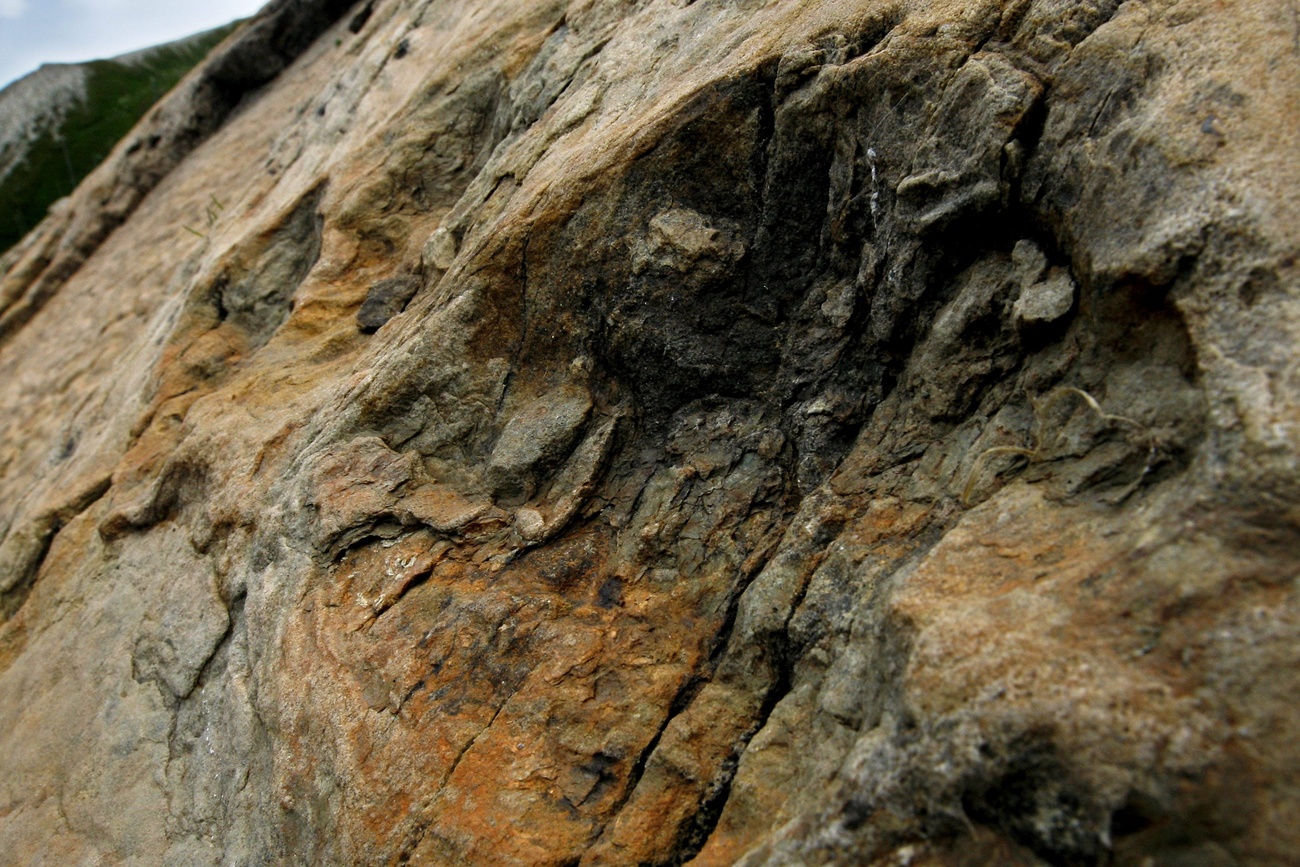
    Fossilised tracks on a sandstone slab

    The tracks now visible on the sandstone slab at Vieux-Emosson were left by animals passing through the area 230 million years ago.


    Keystone

    Switzerland occupies a special place in the world of ichnology, the science that studies the fossilised remains of animals that have been extinct for millions of years. A book takes stock of the situation on the 50th anniversary of a major discovery in the Valais Alps.

    In 1976, French geologist Georges Bronner discovered fossilised traces on a rock face in the Vieux-Emosson area of the Valais Alps, near the border with France. The fact that this discovery took place that year was no coincidence. Bronner was involved in organising an exhibition on the region’s geology as part of the construction of the Emosson Dam, which was due to be inaugurated on October 1, 1976.

    In addition, 1976 was marked by an unprecedented drought. In the mountains, this “drought of the century” caused the snow cover to recede more sharply than usual, making it possible to see rocks that were usually covered in snow.

    In his book Un dinosaure dans la montagne External link(A dinosaur in the mountain), Pierre-Yves Frei tells the story of this discovery. A member of the Geneva Natural History Museum, journalist, author and science populariser, he uses a method already tried and tested in previous works, such as Du pâté d’éléphant chez Calvin (Elephant pâté at Calvin’s): starting with a specific fact to provide a comprehensive, multidisciplinary overview of a subject.

    In this case, the 1976 discovery provides an opportunity to discuss the history of palaeontology, plate tectonics and the classification of species.

    Dinosaurs that aren’t dinosaurs

    The discovery made by chance during a hike was exceptional. It is a 350m2 slab of sandstone with more than 800 fossil remains dating from the Triassic period. “Overnight, Emosson became a beacon of ichnology perched at an altitude of 2,400 metres,” notes Pierre-Yves Frei.

    Research carried out at the time revealed images of animals – mostly dinosaurs – moving along a strip of sand by the sea. And dinosaurs are still the stuff of dreams. “200 million years ago, dinosaurs were grazing at Vieux-Emosson”, wrote the Valais daily Le Nouvelliste in 1979.

    Very quickly, dinosaurs were even used to promote tourism in the region. “Beach, mountains, dinosaurs – the perfect recipe for a story that was bound to be a big hit,” says Pierre-Yves Frei.

    A replica dinosaur with Mont Blanc in the background.

    The view of the Mont Blanc massif is already a great draw for tourists. But if there’s a dinosaur to boot, that’s even better. In Finhaut, in the Trient Valley, the tourism board has clearly got the message.


    Keystone / Jean-Christophe Bott

    But not everyone is convinced by this wonderful story. For example, the absence of shellfish or microalgae fossils in an area that is supposed to have once been by the sea is fuelling doubts. And this time it’s not a comet from outer space, but scientific research that is extinguishing the Valais dinosaurs.

    In 2002, palaeontologists came to the conclusion that the traces found on the site were not those of dinosaurs, but of archosaurs, reptiles from the Triassic period that were the ancestors of crocodiles and dinosaurs. As for the beach by the sea, it is transformed into the shore of a river of Pangaea, the single continent that still existed at the beginning of the Triassic period.

    Cover of the book "A Dinosaur in the Mountains".

    “The title of this book is a bit clickbaity,” admits the author, Pierre-Yves Frei. “It promises a dinosaur in the mountains and then spends the whole book trying to prove there isn’t one.”


    epflpress

    Jurassic Parc is in… Jura

    Switzerland has other Triassic sites. Ticino is even home to one of the world’s largest deposits of Middle Triassic fossils at the Monte San GiorgioExternal link site, which is a UNESCO World Heritage Site. This site even has its local star, the Ticinosuchus, a carnivorous archosaur close to the ancestors of crocodiles. But there are no traces of dinosaurs here either.

    There are, however, traces of dinosaurs dating from the Triassic period in Switzerland. There are 200 of them in the Swiss National ParkExternal link, south of Graubünden. But here too there is a slight disappointment: the dinosaurs in the National Park were much smaller than those in Jurassic Park. Discovered in 1961, these traces have been dated to around 220 million years ago, which corresponds to a period when dinosaurs were still relatively modest and not very diverse. They are attributed to primitive herbivorous dinosaurs measuring between five and eight metres in length.

    More
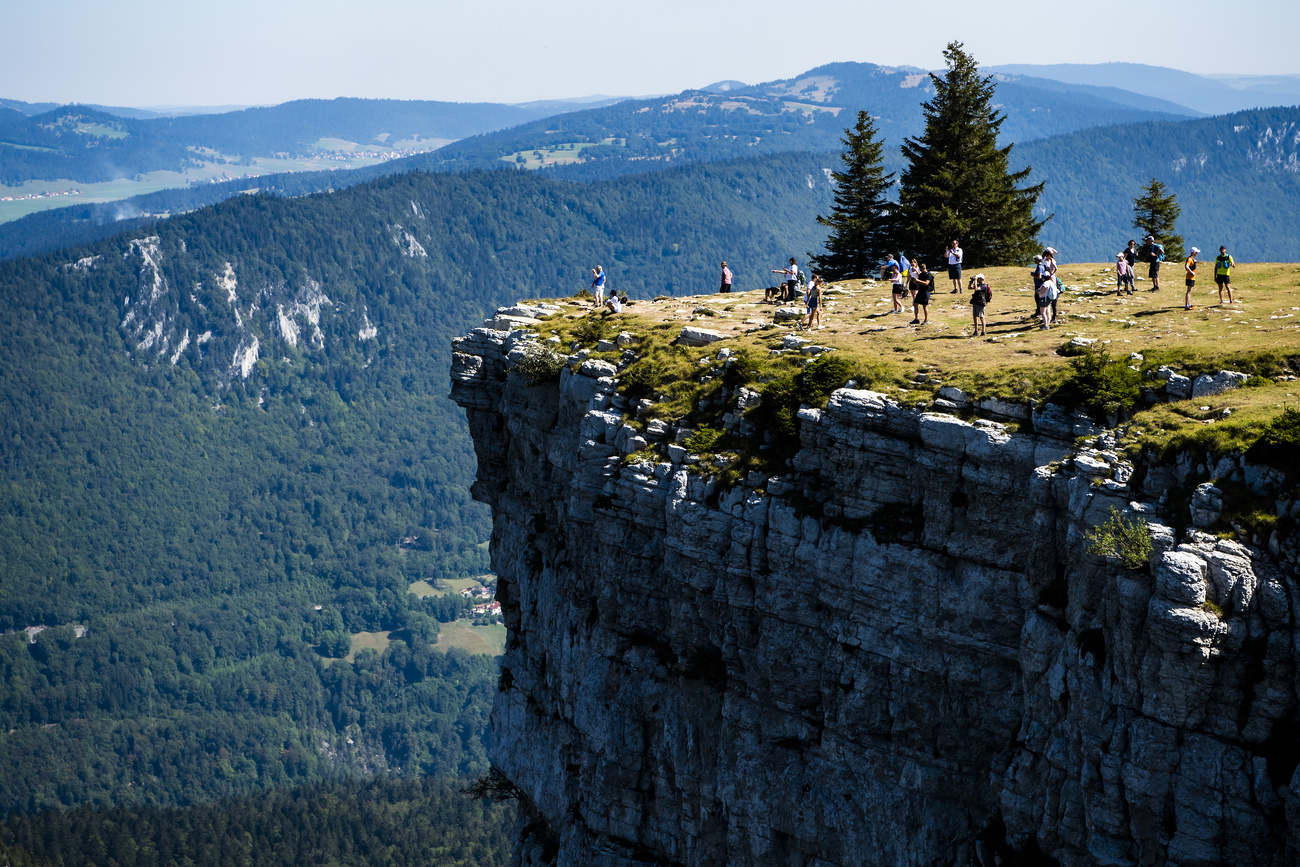
    So there are no traces in Switzerland of the enormous dinosaurs that make children – and adults – dream? Yes, in the Jura, in the heart of the mountain range that gave its name to the Jurassic period, the golden age of dinosaurs. As at Vieux-Emosson, the remains of these dinosaurs have been brought to light thanks to excavation work.

    In the early 2000s, the construction of a motorway led to the discovery of dinosaur footprints that had been preserved since the Upper Jurassic period. At the time, the future Jura looked a bit like the Bahamas, with small islands and large sandbanks. Palaeontologists found some 14,000 footprints in a total of 637 tracks, an unusual density on a European scale. The discovery of this veritable “dinosaur highwayExternal link” was immediately hailed as exceptional in terms of its sheer size and the legibility of the tracks.

    And this time, we’re talking about “real” dinosaurs. The surfaces uncovered during the motorway work show the footprints of sauropods – very large four-legged herbivores – and carnivorous theropods. Some of the footprints show animals up to 30m long, making them the largest dinosaurs recorded in Switzerland.

    More than just tracks

    Swiss soil has not yielded any large fossils of the kind found in abundance in the United States, Argentina or China. For the moment, the largest bone fossil is a plateosaurus measuring around eight metres found in Frick, canton Aargau, in northern Switzerland. It is therefore much smaller than the giants that left their mark in the Jura.

    + T. rex skeleton goes for CHF4.8 million at Zurich auction

    Although it has few fossils, Switzerland occupies a special place in world of ichnology. Switzerland has an exceptional density of sites in a relatively small area. What’s more, the Swiss deposits contain some of the best-preserved fossil footprints in Europe, covering key geological periods for understanding the evolution of vertebrates: the Lower Triassic (first archosaurs), the Upper Triassic (diversification of primitive dinosaurs) and the Upper Jurassic (peak of the great dinosaurs).

    Obviously, footprints are less impressive than the great fossils that are the pride of museums. But for those who know how to observe them, they are much more than just traces in the ground. Ichnology shows how extinct animals really lived: their tracks reveal their gait, their speed, their size, and sometimes their interactions. Footprints capture a moment in life – an animal walking, speeding up, gliding or following a group.

    “Palaeo-ichnology opens up special windows onto the past, onto the behaviour of animals that have been dead for millions of years, whereas the analysis of fossil skeletons generally only provides anatomical information about an organism,” emphasises Pierre-Yves Frei.

    Edited by Samuel Jaberg. Translated from French by AI/ts

    More

    Have you ever heard anything peculiar about Switzerland that you found interesting?


    Is there anything peculiar related to Switzerland that has caught your interest? Share it with us, and we might feature it in an article!


    View the discussion


    How we translate with AI

    We use automatic translation tools, such as DeepL and Google Translate, for some content.  

    Each translated article is carefully reviewed by a journalist for accuracy. Using translation tools gives us the time for more in-depth articles. 

    Learn more here about how we work with AI. 
    Read More

  • Swiss bus fire that killed six caused by ‘disturbed’ man setting himself alight, prosecutor says | Switzerland

    Swiss bus fire that killed six caused by ‘disturbed’ man setting himself alight, prosecutor says | Switzerland


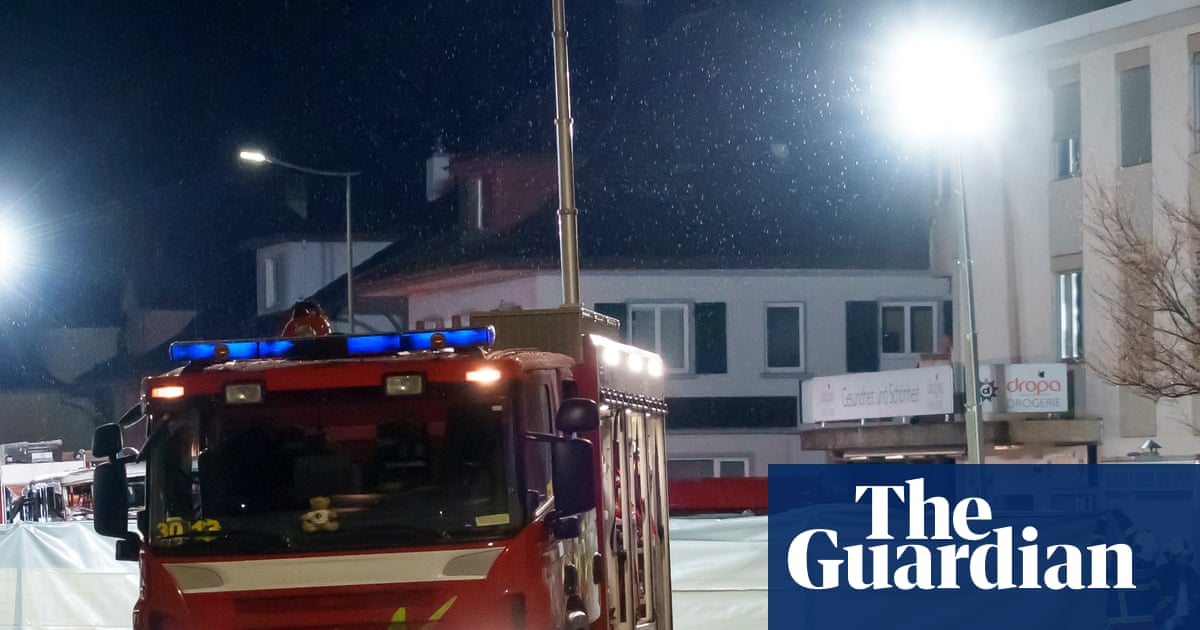
    Police investigating a bus fire that killed at least six people in western Switzerland have said they believe it was started by a “marginalised and disturbed” Swiss man onboard who set himself ablaze.

    The vehicle, operated by a service that transports passengers and mail, went up in flames on Tuesday evening in Kerzers, a town of about 5,000 people about 12 miles (20km) west of Berne in the canton of Fribourg.

    “A witness statement indicated that a man … of Swiss origin boarded the bus carrying bags. At some point, he doused himself with a flammable substance and set himself alight,” Fribourg canton’s public prosecutor Raphael Bourquin told a news conference on Wednesday.

    He said the family of the man, who was from Berne canton and in his 60s, had recently reported his disappearance, and “current evidence describes him as a marginalised and disturbed individual”.

    “There is absolutely no evidence to suggest that this could be a terrorist act,” said Bourquin, adding that “it appears that this person is among the deceased”.

    Public prosecutors have opened a criminal investigation.

    As well as the six deaths, five people were injured in the blaze. Police were unable to say how many passengers were on the bus at the time.

    Fribourg police’s communications chief, Martial Pugin, said two of the victims were in a serious condition while a third was able to return home overnight. The victims were aged between 17 and 65, the authorities said, without giving details on nationalities.

    The bus went up in flames on Tuesday evening in the town of Kerzers, in the west of the country. Photograph: Kantonspolizei Freiburg /EPA

    The Swiss president, Guy Parmelin, whose country was struck by a devastating fire on New Year’s Eve in the ski resort of Crans-Montana, expressed his condolences to the victims’ families. “I am shocked and saddened that people in Switzerland have once again lost their lives in a serious fire,” he said.

    In the early hours of 1 January, a basement bar in Crans-Montana was engulfed in flames as people celebrated the new year. Forty-one people died, with another 115 injured.

    Images from Kerzers posted on social media showed tall flames shooting from the windows of the bus and a plume of black smoke rising into the sky. Emergency services staff worked late into the night at the scene.

    Video after the fire was extinguished showed the charred remains of the yellow vehicle. It was removed from the road during the night.

    People lay flowers at the site of the fire. Witnesses said the fire spread quickly and caused the tyres on the bus to explode. Photograph: Romina Amato/Reuters

    “Everything happened so quickly – and then within moments everything was in flames,” a witness told media outlet Blick. “The heat even caused the tyres to explode and fly up to 200 metres away.”

    Others told the Tages-Anzeiger newspaper they saw injured people screaming and writhing in pain on the street. “It was awful,” said Hans-Jürg Stocker, who lives near the scene.

    Two women who work in a building close to the site of the fire reported hearing a loud bang and people throwing objects at the bus. “Apparently they wanted to break open the windows to free people,” one of the women told the Tages-Anzeiger.

    Nirosan Vickneswaran, 37, was waiting anxiously for news of his cousin, who was on the bus when it went up in flames. “We don’t know if he’s injured or worse,” he told Reuters. Police had taken DNA samples from the family and indicated it could take up to 48 hours to find out, he said.

    Switzerland bus fire that killed at least six could have been ‘a deliberate act’ – video

    Mina Gendre was about to close up the shop where she works when she saw the bus, which had stopped unexpectedly across the road, had a small fire inside. She said that within half a minute or so, it had burst into flames.

    “It was so shocking. I saw someone come running out of the bus on fire,” she said. With smoke billowing out of the bus, Gendre shut the door of the shop to protect it as bystanders helped put out the fire on a person with a jacket.

    Romain Collaud, a member of the Fribourg state council, said the bus involved was not an electric vehicle. Although the cause of the blaze has yet to be determined, the theory that an electric motor caught fire can be ruled out. “It was a bus with a combustion engine,” he told broadcaster RTS.

    The vehicle involved was a PostBus, a fixture of rural life in the Alpine country. The distinctive yellow buses serve people in more remote areas, connecting them with towns and carrying letters and parcels. They are used by about half a million people every day, including schoolchildren.

    Stefan Regli, the chief executive of PostBus, said in a statement: “It is a terrible tragedy that occurred yesterday. Like me, all the employees of PostBus and Swiss Post are shocked.”

    Agence France-Presse and Reuters contributed to this report

    Read More

  • Iran Holds Exercises in Strait of Hormuz After Trump Threatens Military Action


    The day before nuclear talks were set to resume, Iran conducted live drills in the Strait of Hormuz, a strategic waterway for oil and gas shipments.

    Read More

  • … wie lebt es sich ohne Smartphone?

    … wie lebt es sich ohne Smartphone?


    … wie lebt es sich ohne Smartphone?
    Ein Alltag ohne ständiges Scrollen: Rachele De Caro hat ­das Smartphone vor drei Jahren aufgegeben. Es braucht etwas mehr Planung, sagt sie. Aber sie erlebt neue Freiheiten.

    Read More

  • Switzerland targeted in two American trade probes

    Switzerland targeted in two American trade probes


    Switzerland is among several economies under investigation by the United States for alleged unfair trade practices, reported RTS. The Federal Council discussed the matter on Friday, reviewing possible next steps but taking no decision. Its deliberations were based on an initial analysis by the State Secretariat for Economic Affairs (SECO), according to Nicole Lamon, a government spokeswoman.

    low angle photo of concrete buildings
    Photo by Louis on Pexels.com

    The inquiries have been launched under Section 301 of the Trade Act of 1974. Swiss authorities were formally notified in writing by Jamieson Greer, the United States trade representative.

    One investigation concerns structural overcapacity. Announced on March 11th, it will examine whether such practices are inappropriate or discriminatory, and whether they harm American trade. Fifteen countries, including China, Norway, India, South Korea and Japan, as well as the European Union, are affected.

    The second inquiry focuses on forced labour. American officials argue that governments are failing to prevent goods produced under such conditions from entering their markets. Some 60 economies fall within the scope of the investigation.

    A long-running tariff dispute
    Bern and Washington are also negotiating a legally binding trade agreement aimed at capping American tariffs at 15%. Its broad outlines were set out in a joint declaration adopted in November.

    Meanwhile, America’s Supreme Court struck down much of the tariff regime introduced by Donald Trump on February 20th. The court ruled that the 1977 law he relied on did not grant the president authority to impose such surcharges, a power reserved for Congress.

    Mr Trump subsequently announced new tariffs of 10% to replace those that were annulled. These measures are limited to 150 days, with any extension requiring congressional approval.

    How this tangle of competing measures and negotiations will be resolved remains unclear.

    More on this:
    RTS article (in French) – Take a 5 minute French test now

    For more stories like this on Switzerland follow us on Facebook and Twitter.


    Read More

  • Swiss bank UBS gets US boost with national banking licence

    Swiss bank UBS gets US boost with national banking licence


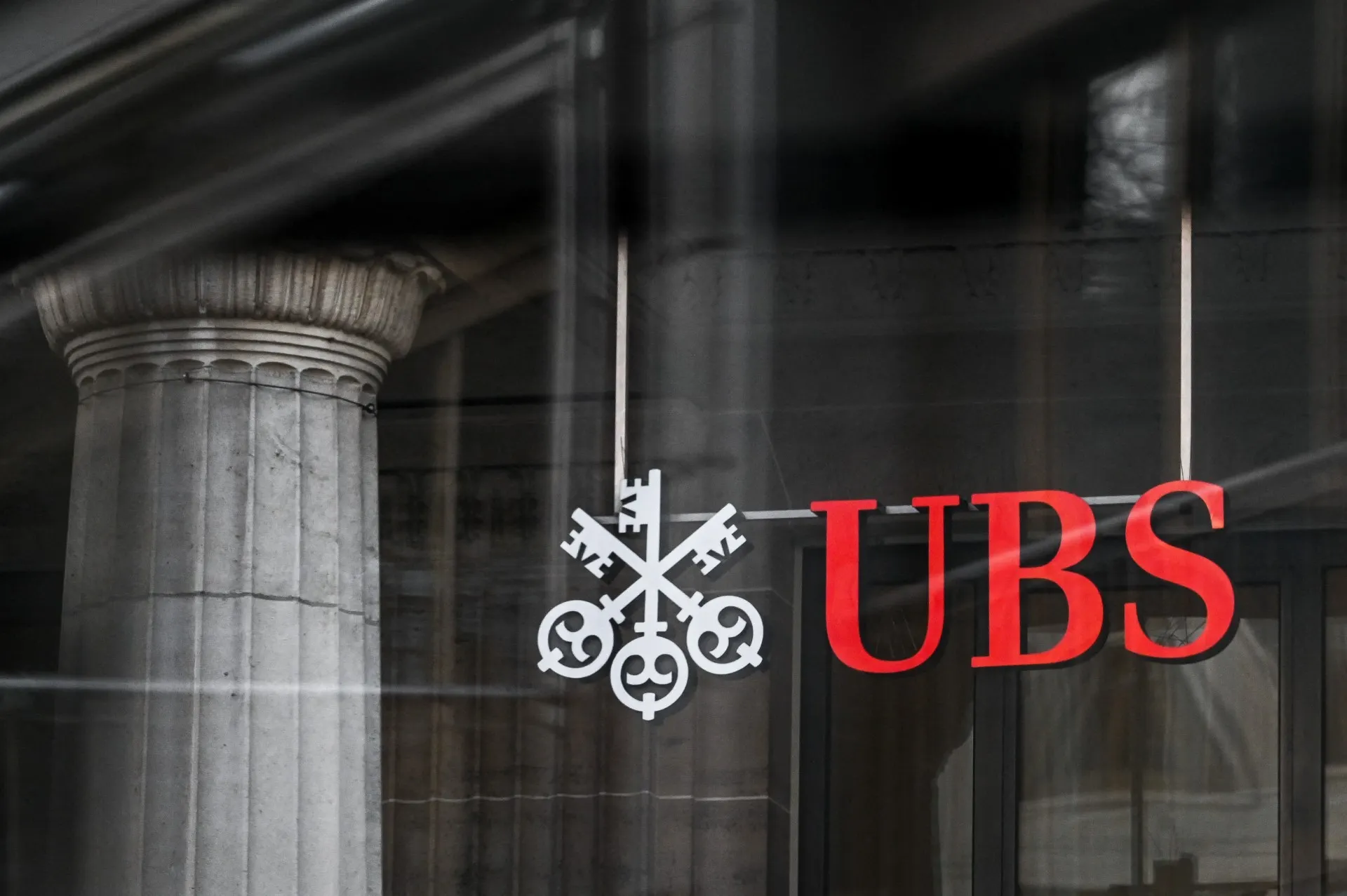
    UBS said Friday it had secured a national banking licence in the United States, which should enable the Swiss banking giant to strengthen its position in the US market.

    The bank already has a presence in the United States, notably with a branch called UBS Bank USA registered in Utah.

    In October, it submitted an application for a national licence to the Office of the Comptroller of the Currency (OCC), an independent office within the Treasury Department responsible for supervising banks.

    “We’ve received final approval from the OCC for a national bank charter application,” said Robert Karofsky, the UBS Americas president and a member of the UBS executive board.

    “This milestone really positions well for the next phase of growth,” he said in a video posted on LinkedIn.

    While the licence will not change anything for current UBS clients in the United States, it should allow the world’s largest wealth management bank to expand its range of services, particularly for simple checking and savings accounts.

    “The national bank charter, approved by US regulators Friday, should help the Swiss bank expand beyond its traditional clientele of the super-rich into a pool of affluent and not-quite-ultrawealthy clients,” The Wall Street Journal newspaper said.

    Advertisement

    The United States is a key market for UBS, which underlined in its annual report that of global personal financial wealth, North America remains the largest pool at 42 percent, ahead of the Asia-Pacific region (35 percent), and the Europe, Middle East, and Africa region (21 percent), according to its estimates.

    In its wealth management division alone, UBS’s invested assets totalled $4.753 trillion in 2025.

    “We are among the market leaders in the Americas… around half of the invested assets our wealth management clients entrusted us with are booked in that region,” the bank said in its annual report.

    Read More

  • Hotel Management School Lausanne offers new catering training

    Hotel Management School Lausanne offers new catering training


    Hotel Management School Lausanne, new training in the catering branch

    Hotel Management School Lausanne, new training in the catering branch


    Keystone-SDA

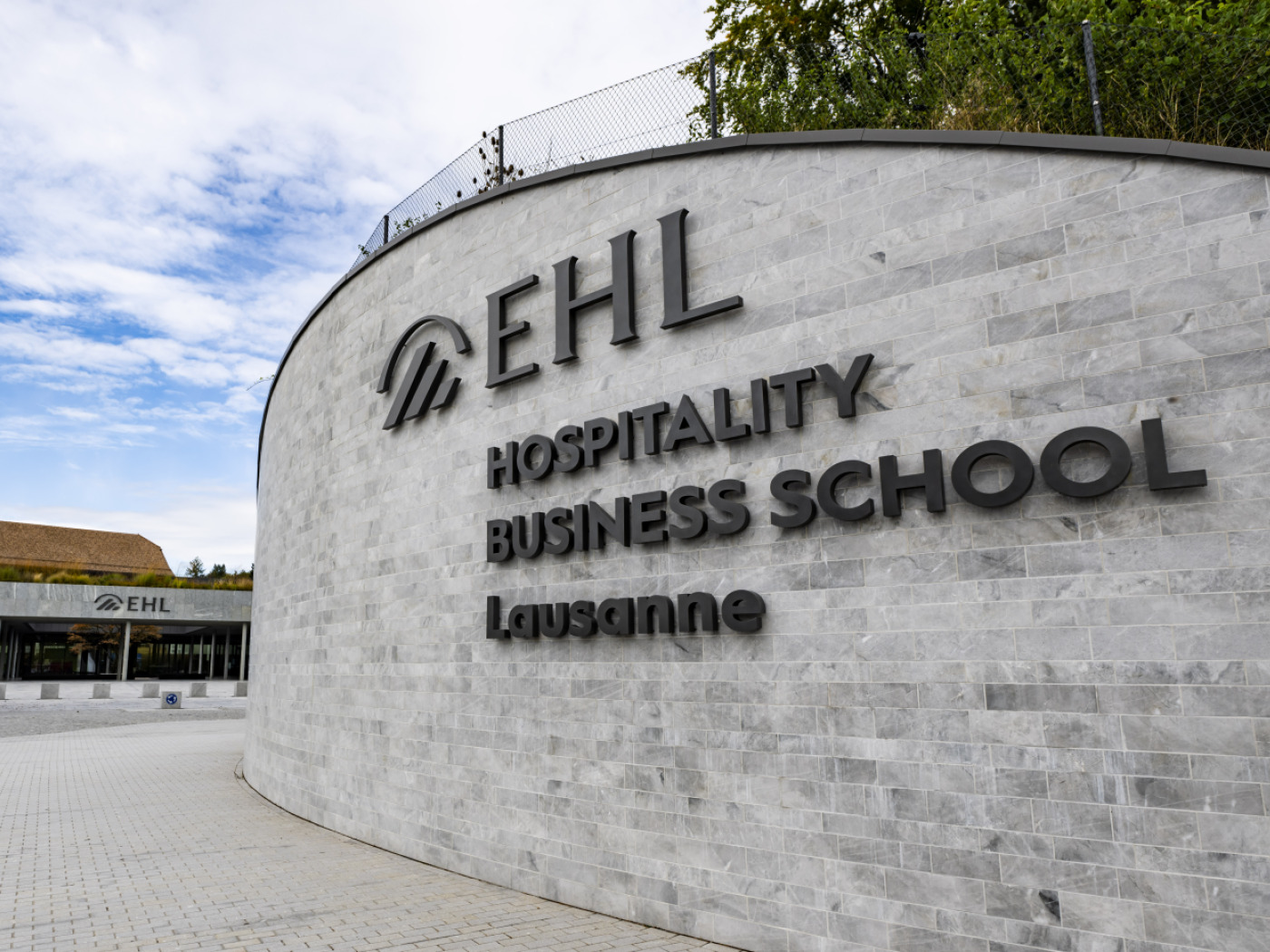
    The Hotel School of Lausanne (EHL) is launching a new programme: an Associate Degree – a two-year university degree – in culinary arts and restaurant management.

    +Get the most important news from Switzerland in your inbox

    The aim is to respond to the shortage of personnel in the sector and to offer young people a comprehensive training that goes beyond the technical in the kitchen.

    The programme also aims to attract young people to the branch’s professions and “make their eyes sparkle,” Patrick Ogheard, EHL manager, explained to RTS radio. It is to provide “the tools to be a chef de cuisine, maître d’hôtel or to create one’s own business”. It will teach ‘all facets of the profession, as well as finance, marketing, communication, human resources management and customer management’.

    The course, aimed at young people with a high school or bachelor’s degree, costs CHF 69,000 for two years. The first edition will take 20 students, and will then move on to two annual promotions of up to 40 students each.

    Adapted from Italian with AI/ds

    We select the most relevant news for an international audience and use automatic translation tools to translate them into English. A journalist then reviews the translation for clarity and accuracy before publication.  

    Providing you with automatically translated news gives us the time to write more in-depth articles. The news stories we select have been written and carefully fact-checked by an external editorial team from news agencies such as Bloomberg or Keystone.

    If you have any questions about how we work, write to us at english@swissinfo.ch

    Read More

  • Naima review – triumphant note of hope fuels engrossing insight into the immigrant experience | Film

    Naima review – triumphant note of hope fuels engrossing insight into the immigrant experience | Film


    Naima, the charismatic subject of Anna Thommen’s engrossing documentary, and is always on the move. The film opens with her taking a deep plunge into a bright blue swimming pool, an image that embodies her struggles as a Venezuelan migrant in Switzerland. Naima dives deep into life goals with a fierce passion, yet she often finds herself buffeted by currents.

    Sixteen years ago, she had moved to the country for love, only to be mistreated by her Swiss husband. Since her diploma was not recognised in Switzerland, she went from managing a team of 48 to being wholly dependent on her partner. Then, left in a financially precarious position after her divorce, she subsequently lost custody of her two children.

    Now enrolled in a nursing course, Naima throws herself into her internship at a rehab centre, embracing not only the medical side of things, but also showing heartfelt empathy towards the patients. More than just clinical, their interactions have the warmth of conversations between friends. Their backgrounds might differ, yet Naima too has suffered social marginalisation, just like those under her care. Considering this, it’s all the more shocking when Naima’s supervisors fail her in her final evaluation – though appreciated by her patients, her friendliness is deemed unprofessional. This is yet another instance where Naima is discriminated against because of her accent and her skin colour.

    That she is able to win an academic appeal is an inspiring moment, even if her story echoes the plight of other immigrants who are unable to maximise their full potential. The touching moment when her children attend her graduation ceremony feels like a passing of the torch; Naima’s fight will perhaps bring about a brighter future for the next generation.

    Naima is on True Story from 20 March.

    Read More

  • High-Stakes Nuclear Talks Between U.S. and Iran Set to Kick Off

    High-Stakes Nuclear Talks Between U.S. and Iran Set to Kick Off


    new video loaded: High-Stakes Nuclear Talks Between U.S. and Iran Set to Kick Off

    transcript

    transcript

    High-Stakes Nuclear Talks Between U.S. and Iran Set to Kick Off

    The United States and Iran have been flexing their military might as their negotiators resume nuclear talks in Switzerland.

    I’ll be involved in those talks indirectly, and they’ll be very important. We’ll see what can happen. Typically, Iran’s a very tough negotiator. I don’t think they want the consequences of not making a deal. They want to make a deal.

    The United States and Iran have been flexing their military might as their negotiators resume nuclear talks in Switzerland.

    By Shawn Paik

    February 17, 2026

    Read More

  • «Während meiner Lehre konnte ich 8000 Franken ansparen»

    «Während meiner Lehre konnte ich 8000 Franken ansparen»


    «Während meiner Lehre konnte ich 8000 Franken ansparen»
    Manon Erb absolviert derzeit die Berufsmatura. Es ist finanziell eng bei ihr, auch weil ihre Familiengeschichte nicht einfach ist. Für die Beobachter-Serie legt sie ihr Budget offen.

    Read More