Mathilde Gremaud edges out Eileen Gu to win slopestyle gold.
Read More
Category: Switzerland
-
How Mathilde Gremaud Edged Out Eileen Gu in Slopestyle, Again
-

Stiftung zahlt Tierheim für die Hamster
Burkhard, der eigentlich anders heisst, leidet an Schizophrenie und wird durch die Sozialhilfe unterstützt. Im vergangenen Sommer erlitt er eine Psychose und musste sich während eineinhalb Monaten in einer Klinik behandeln lassen. In dieser Zeit waren seine Hamster vorübergehend in einem Tierheim untergebracht.
-

LES RAYONS ET LES OMBRES ***1/2 – a study of French collaboration
20 March 2026
LES RAYONS ET LES OMBRES ***1/2 (vo French and German)
Here is a thorough study of the eternal question of what it is to be a collaborator. In this true story of journalist Jean Luchaire and his actress daughter Corinne, who were known as notorious French collaborators with the Nazis during WWII, director Xavier Giannoli (of the sublime “Illusions Perdues” and “Marguerite”) lays bare the earnest beginnings of a peace movement between German and French intellectuals Otto Abetz and Luchaire in the 1930s that evolves into a corrosive partnership as the ongoing war corrupts all their principles and ideals.
Jean Dujardin plays the journalist Luchaire as a fervent French believer in his youthful peace movement, while the outstanding German actor August Diehl (who has portrayed such key characters as Marx, Mengele and a Gestapo major in Tarantino’s “Inglorious Basterds”) plays his idealistic Teutonic counterpart who ends up as the German Ambassador in Paris during the Nazi occupation of the capital. They had remained friends from their young years before the war, and continued to help and support each other during the war.
But as life has it, power, prestige and possessions prove too intoxicating for both of them, changing their integrity into blind beliefs in both the controlled media of the times and their personal advancement. Despite the many favors the Ambassador does for his old journalist friend, the waters become muddied, dark and corrupt between them in an almost uncontrolled, hypnotic trance. Director Giannoli portrays their fall from grace with great pathos and conviction in the style of a Greek tragedy. It takes the 3h15m length of the film to fully convey the three characters’ fatal trajectory.
PROJECT HAIL MARY (Projet dernière chance) ***
We haven’t seen such a warm-hearted relationship between a human and an alien since E.T.! For me that is the kernel of the story. But this science fiction tale based on the 2021 best seller by Andy Weir is also an adventurous tale, with a great deal of technical jargon. Ryan Gosling plays a science teacher who wakes up in a spaceship with no recollection of how or why he got there. It takes him a while before he can begin to get his act together.
In the meantime he encounters a sort of a huge ship in the vast universe in which he is traveling, and therefore comes upon a strange creature that seems to be a living, stone-like thing that moves like a stiff crab. He then begins to remember how he was recruited by an insistent mission leader (the talented German actress, Sandra Hüller, from “Anatomy of a Fall”) to save the world from a shrinking sun. It’s a last ditch effort that’s called a ‘Hail Mary’ – a hopeless, desperate one….
This stoney crab named Rocky ends up being a very smart and helpful friend, who slowly learns to speak the scientist’s language. And this is when the fun and warmth begins, the two of them trying to defy the ‘Hail Mary’ syndrome. Directors Phil Lord and Chris Miller have created a sweet tale of cooperation and camaraderie within an intricate scientific story of survival, both of the individual and of the world. Intriguing.
PALESTINE 36 **1/2 (Arabic and English)
This is another necessary eye-opener on the tragic destiny of the Palestinian people. From Annemarie Jacir, the Christian Palestinian director of such fine films as “When I Saw You” and “Wajib”, it recounts the beginnings of the 1936 Palestinian uprising against the cruel and arbitrary partition of their country by the British.
In her 2017 “Wajib”, director Jacir created a beautifully intimate story between a father and a son with opposing ideals. In this film, which has expanded to tell of the vast history of injustice and its many characters, she somehow loses perspective and strength of vision. It’s a pity, for it is not as moving or as powerful in its message as were similar recent Palestinian films such as “All that’s Left of You” or “The Voice of Hind Rajab”.
It is an earnest work, nevertheless.POLICE FLASH 80 * (vo French)
This tiresome and vulgar French movie is a police story set in the 1980s about an incompetent, corrupt cop trying to hunt down his partner’s killers. There are drug dealers and all sorts of crooked setups that he is trying to avoid, as a new, honest assistant has come to help with the investigation. Making a supposed comedy out of a corrupt fool feels like a mirror of our times today. Don’t waste your time or money.
Superb **** Very Good *** Good ** Mediocre * Miserable – no stars
By Neptune
Neptune Ravar Ingwersen reviews film extensively for publications in Switzerland. She views 4 to 8 films a week and her aim is to sort the wheat from the chaff for readers.

Neptune For more stories like this on Switzerland follow us on Facebook and Twitter.
Related posts
-

Swiss will not export war equipment to US during Mideast conflict
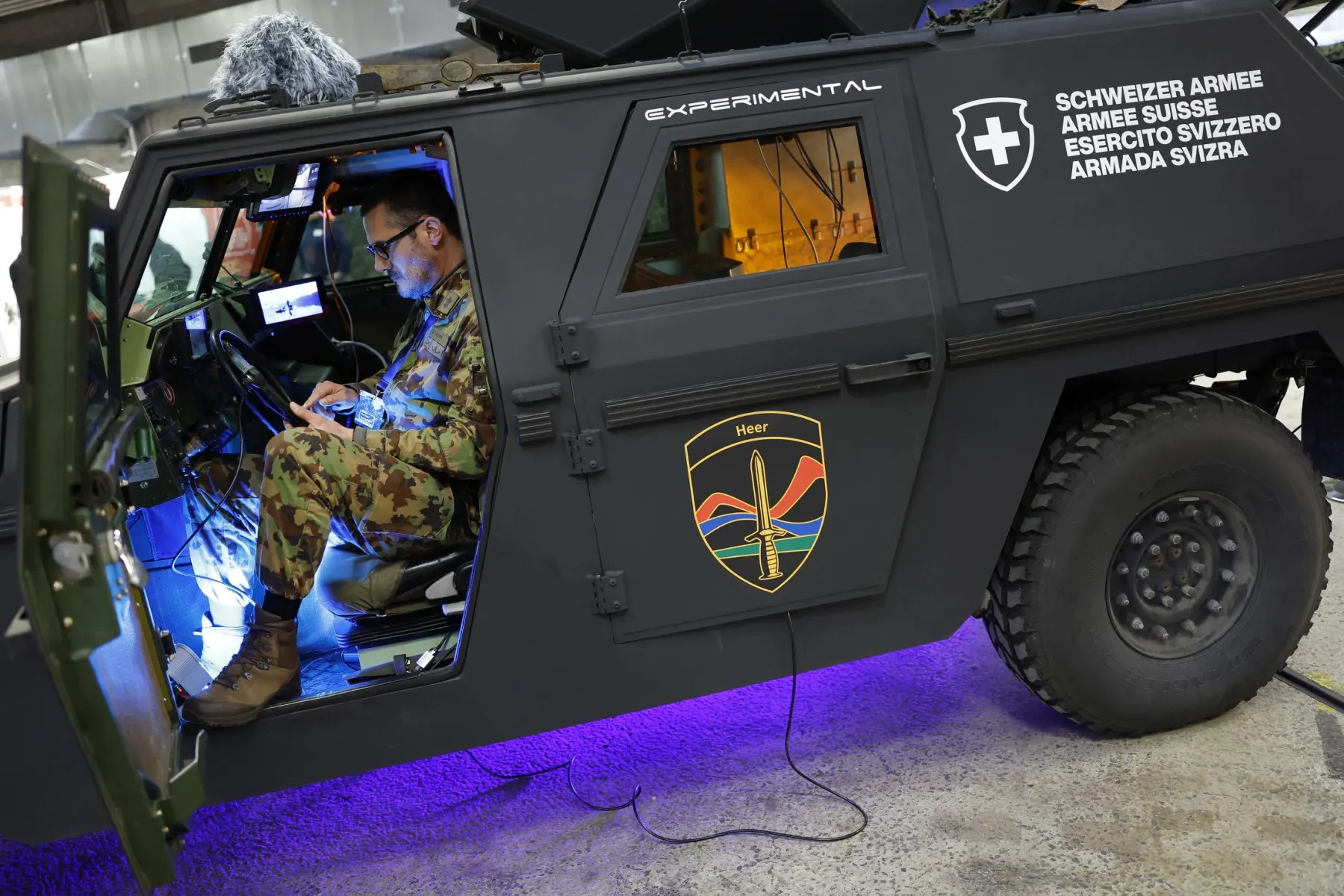
Switzerland decided on March 20th it will not authorise the export of war material to the United States during the Middle East conflict, in line with its long-standing principle of military neutrality.
Switzerland has already refused US requests for flights over its territory since the war erupted on February 28th, when the United States and Israel began attacks on Iran.
Following that decision, on Friday the Swiss government looked at applying neutrality to exports to states involved in the war.
“The export of war materiel to countries involved in the international armed conflict with Iran cannot be authorised for the duration of the conflict,” said a government statement.
“Existing licences and exports of other goods will now be regularly reviewed by an interdepartmental group of experts, particularly with regard to their compatibility with neutrality.
“Exports of war materiel to the USA cannot currently be authorised,” and existing US licences will now face regular review, it said, whilst adding that Switzerland has not issued war materiel export licences to Israel or Iran for years.
Advertisement
Since the conflict started, no new licences have been issued for exports of war goods to the United States, Bern said.
Existing US licences “have been determined to be of no relevance to the war at present and can therefore continue to be used”, the statement said.
Nevertheless, an expert group drawn from the foreign, defence and economy ministries will regularly review developments in exports of the goods in question to the United States, and assess whether any action is required.
Swiss neutrality traces its roots back to 1516 and has been internationally recognised since 1815.
-
An exhibition to turn borders into meeting places
An exhibition to turn borders into meeting places
Keystone-SDA
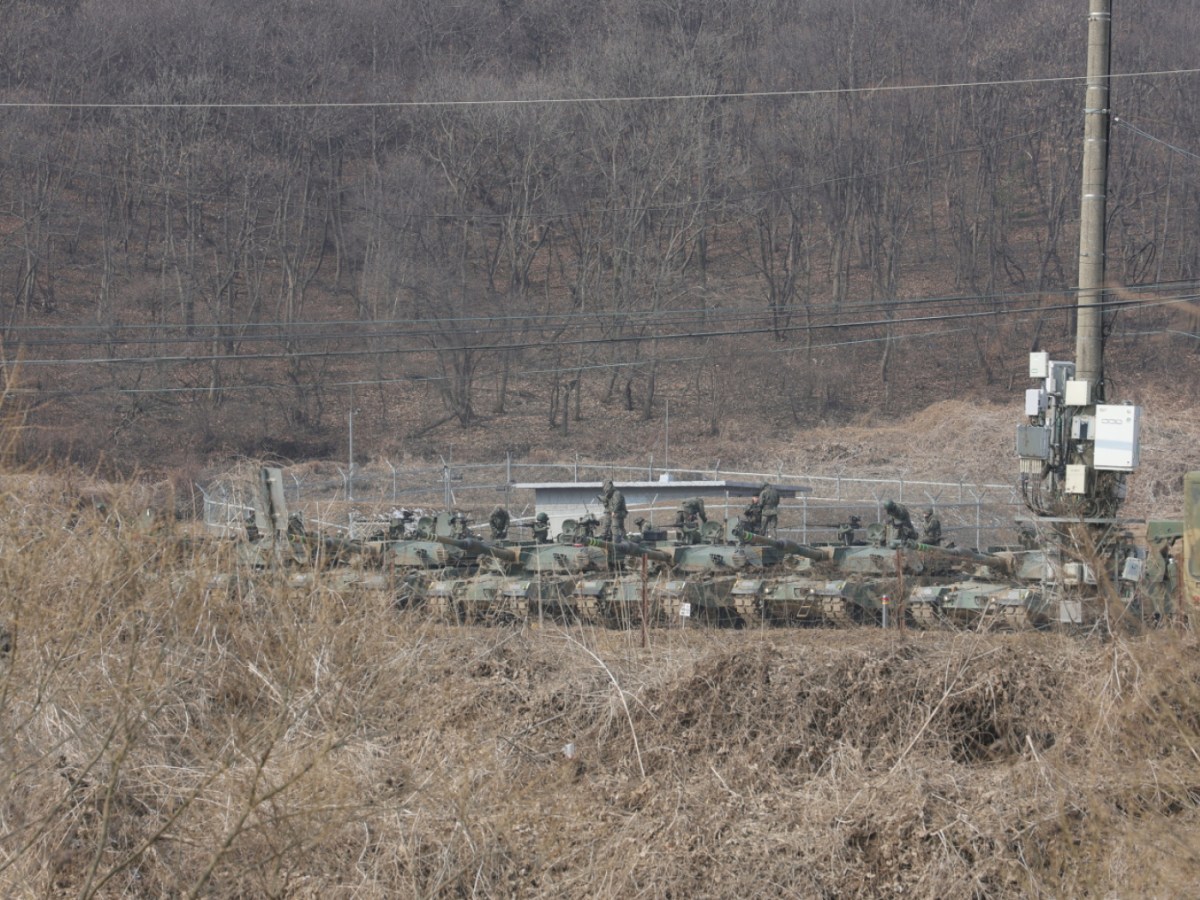
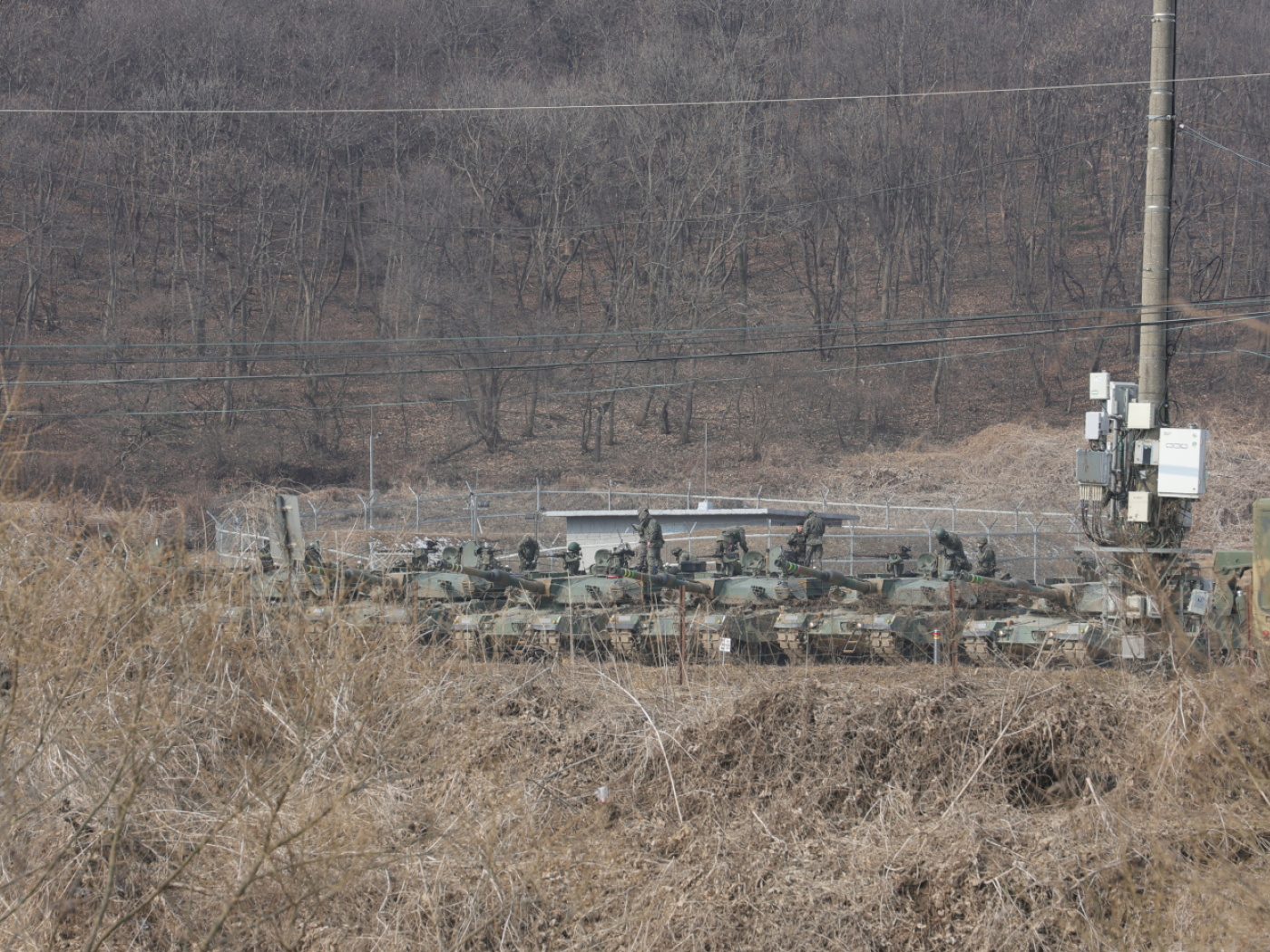
Borders are often seen as a divisive factor, but Geneva-based architect and artist Anna Grichting is working to turn them into an ecological zone where people can meet. An exhibition exploring this approach runs from 1 to 17 April at the WRP Foundation in Geneva.
The Geneva native has lived close to several borders, whether between Northern Ireland and Ireland or between neighbourhoods of different communities in the United States. In her research, she then worked on the possible changes to borders as ecological sites, whether on the wastelands of the Berlin Wall or in the divided city of Nicosia in Cyprus.
Human activity in these areas has often been replaced by military surveillance. “This situation also allows nature to regenerate in some of these areas,” points out the architect.
From Berlin to Northern Ireland, from Cyprus to the two Koreas, she is working on development plans for these sites and on participatory design with politicians, biologists, ecologists and artists.
Anna Grichting, herself a musician, also offers a musical approach with her “Border meetings” project. The exhibition brings these elements together, combining documents, models, videos, games and a “musical architecture” with 24 loudspeakers. There will also be a workshop for children and a conference with musical entertainment.
Translated from French by AI/ds
We select the most relevant news for an international audience and use automatic translation tools to translate them into English. A journalist then reviews the translation for clarity and accuracy before publication.
Providing you with automatically translated news gives us the time to write more in-depth articles. The news stories we select have been written and carefully fact-checked by an external editorial team from news agencies such as Bloomberg or Keystone.
If you have any questions about how we work, write to us at english@swissinfo.ch
-
Switzerland bus fire that killed at least six could have been ‘a deliberate act’ – video | Switzerland
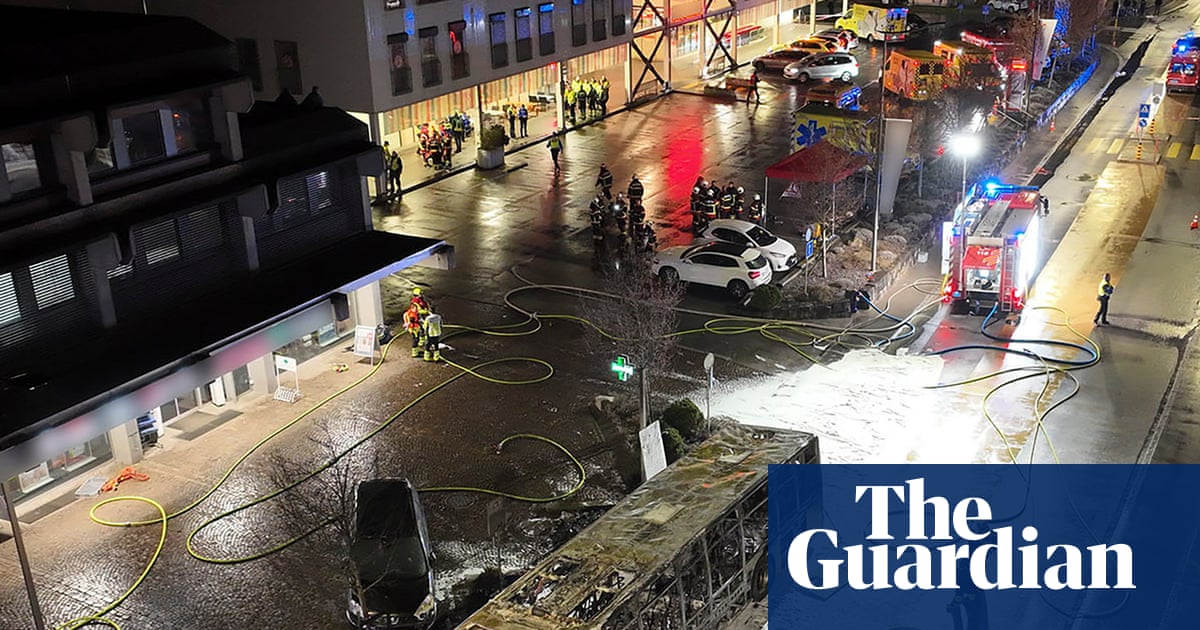
At least six people died in a coach fire on Tuesday in a small town in western Switzerland, prompting the police to launch a criminal investigation. ‘Well, at this point, a deliberate act could be the cause of this tragedy. We really want to know what happened,’ said the spokesperson for the Fribourg Canton Police, Frederic Papaux.
-
Could an Electronic Coach Help Ski Jumpers Leap Farther?
Future Olympic prospects are testing a device that can give them corrective advice in real time as they hurtle into the air.
Read More -
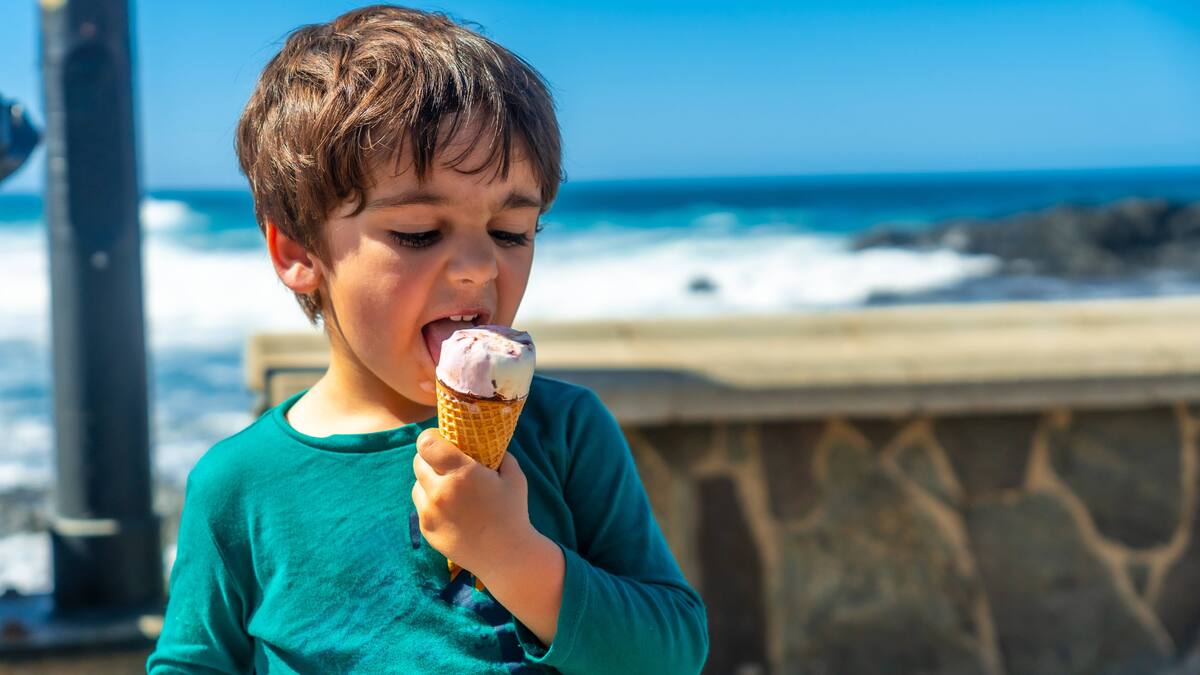
So reduzieren Sie den Zuckerkonsum von Kindern
Ein Glace hier, ein Schoggistängeli da – Kinder gewöhnen sich rasend schnell an Zucker. Der Weg zurück zum gesunden Mass gelingt auch ohne rigorose Verbote. Wir haben acht Tipps für Sie.
Read More -

Why did a Swiss gondola fall from its cable?
On March 18th 2026 a gondola detached from a ski lift at the Engelberg resort in Switzerland and fell to the ground. A 61-year-old woman, the sole occupant of the gondola, was killed.
Source: X Initial investigations indicate that the system was in sound technical condition. The Swiss Transportation Safety Investigation Board (STSB) has stated that there is no evidence of a systematic fault with a specific type of clamp.
Investigators still believe there may have been a impact between the clamp attaching the cabin to the cable and a roller assembly on a support tower.
High winds
The crash occurred during a period of strong winds, raising questions about how such conditions are monitored and managed.Arno Inauen, chief executive of Garaventa, told various media that conditions at the time were marked by strong, gusting winds. According to preliminary findings, an unusually powerful gust forced the cabin violently off course, causing it to strike a support tower before being torn from the cable.
Cable cars are equipped with wind speed devices—typically two or three—mounted on towers where wind exposure is greatest. These devices transmit real-time wind-speed data to the drive station. Such monitoring is mandatory, and modern systems also record the data, allowing operators to track trends.
Operators work within defined thresholds. At around 40km/h a wind warning is issued, signalling the need for caution. At this stage, operators may stop admitting new passengers, as clearing the line takes time. At roughly 60km/h an alarm is triggered; by then, operators are expected to reduce speed or suspend operations altogether.
Responsibility rests with on-site staff. Supervisors have the authority to halt operations at any moment, though decisions after an initial warning depend on circumstances. In practice, individuals must weigh safety against the pressure to keep services running.
Fatal accidents rare
Fatal cableway accidents are rare. Between 2015 and 2020 no fatal accidents occurred in France, Germany, Austria or Switzerland. In 2021 and 2022 one fatal accident was recorded each year.However, serious incidents have occurred elsewhere in Europe. In 2021 two accidents in Italy, including the Stresa–Monte Mottarone disaster, killed 14 people; another fatality occurred in the Czech Republic at Ještěd. On April 17th 2025 four people died in an accident near Naples. In each of these cases the haul rope failed and the track-rope brake did not function as intended. Investigation reports point to gaps in operator expertise and shortcomings in oversight and inspection.
Comparatively safe
Compared with other modes of transport, cableways remain exceptionally safe. Buses and trams record around 7.49 injuries and 0.18 deaths per 100m passengers—significantly more than either trains or cable cars—largely because they operate in mixed road traffic. Trains perform better, with about 0.93 injuries and 0.09 deaths per 100m passengers—see study here.For more stories like this on Switzerland follow us on Facebook and Twitter.
Related posts
-
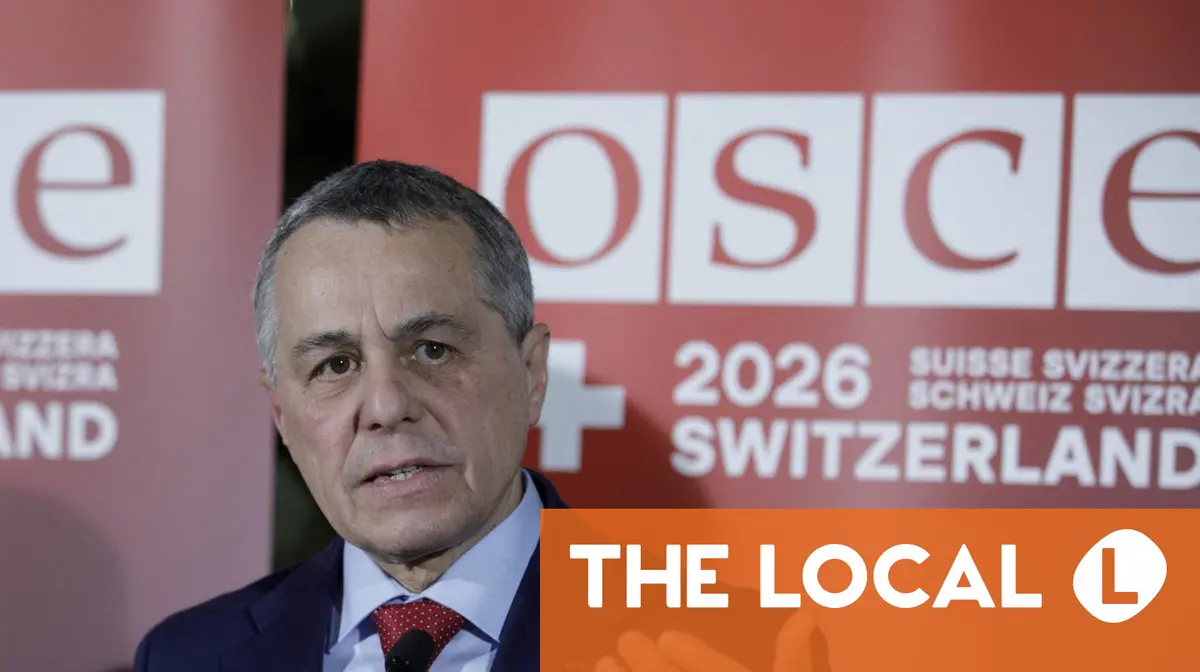
Middle East war risks becoming unpredictable, Switzerland warns
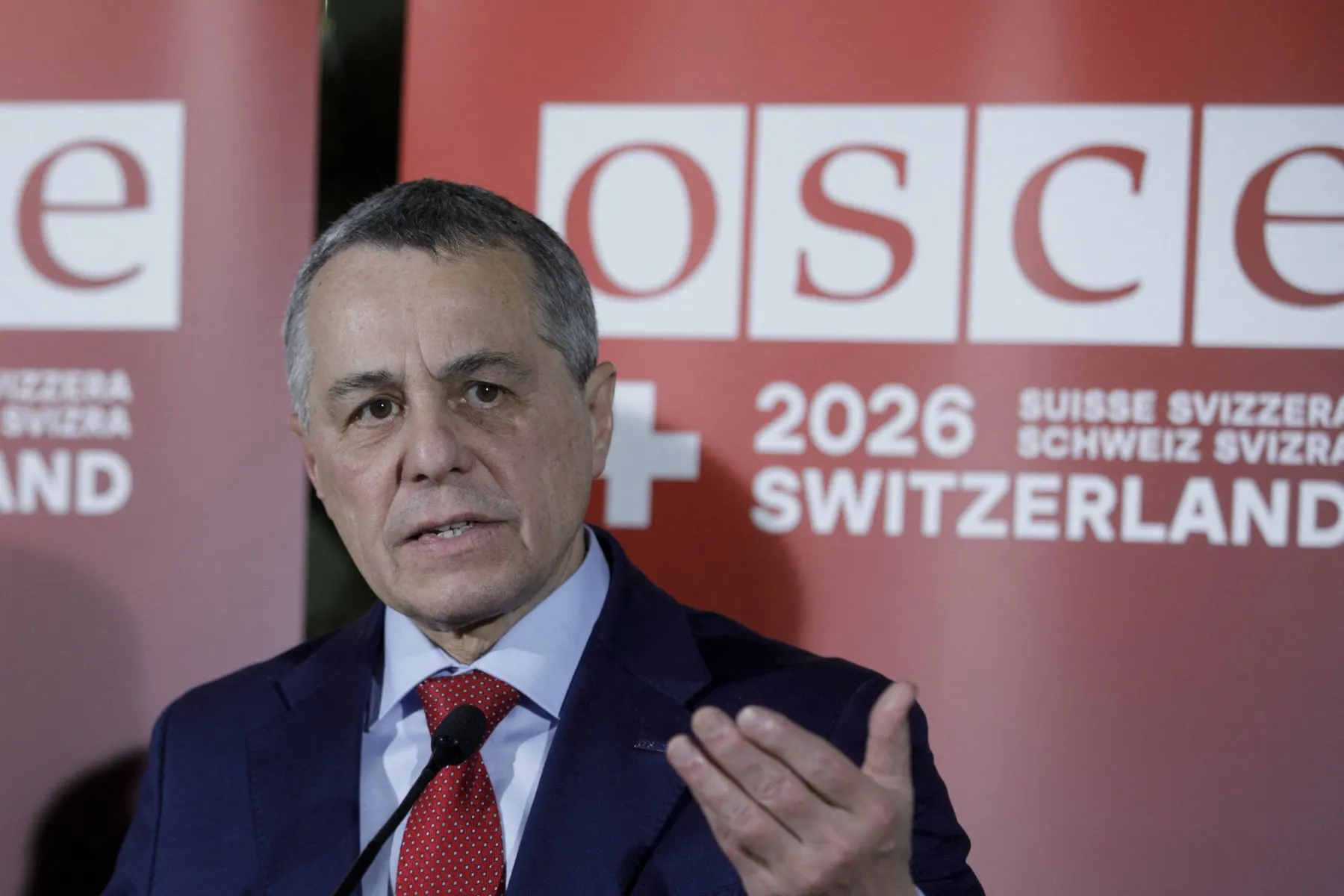
The Middle East war risks becoming unpredictable in terms of its duration and outcome, Switzerland’s foreign minister said in an interview published Saturday.
The conflict is further complicating the situation in the region, Ignazio Cassis told Le Temps newspaper.
“If the goal was to resolve everything with an operation like the one in Venezuela, that hasn’t been achieved,” he said.
“And we risk getting involved in a war whose duration, intensity, and outcome are difficult to predict. There’s also the escalation of the conflict across the entire region, the Middle East. This is precisely what Switzerland has always sought to avoid.”
For decades, militarily neutral Switzerland has played a key role in maintaining basic diplomatic contacts between Iran and the United States.
In its role as the so-called protecting power, Switzerland has been representing US interests in Iran since Washington broke off relations with Tehran after the 1980 hostage crisis, a year after the Iranian revolution.
“The role of communication channel continues; it has not been denounced by either side. But currently, it does not apply, since communication is, unfortunately, carried out by force of arms,” said Cassis.
US and Iranian negotiators held indirect talks on Tehran’s nuclear programme, through Omani mediators, in Switzerland on February 26.
Two days later, the United States and Israel began their attacks on Iran. Tehran has responded by striking targets across the Gulf region and beyond.
Cassis said he had spoken with the negotiating parties on February 26.
“They all seemed to think we still had some time to reach a solution,” he said.
Advertisement
“When progress is being made, you obviously can’t be happy when a war breaks out just as you’re making headway. History shows that most conflicts end up being resolved around a negotiating table.”
Switzerland decided Friday it will not authorise the export of war materiel to the United States during the Middle East conflict, in line with its long-standing principle of military neutrality.
Switzerland has already refused US requests for flights over its territory since the war erupted.
“Before this decision, we had obviously contacted them,” Cassis said.
“We explained that, given our neutrality, it wasn’t possible to allow their warplanes to fly over our territory. But since the flyover only lasts a few minutes, they can easily find alternatives. So we weren’t expecting a strong reaction.”
