Category: Switzerland

  • Switzerland to vote on far-right proposal to cap population at 10 million | Switzerland

    Switzerland to vote on far-right proposal to cap population at 10 million | Switzerland


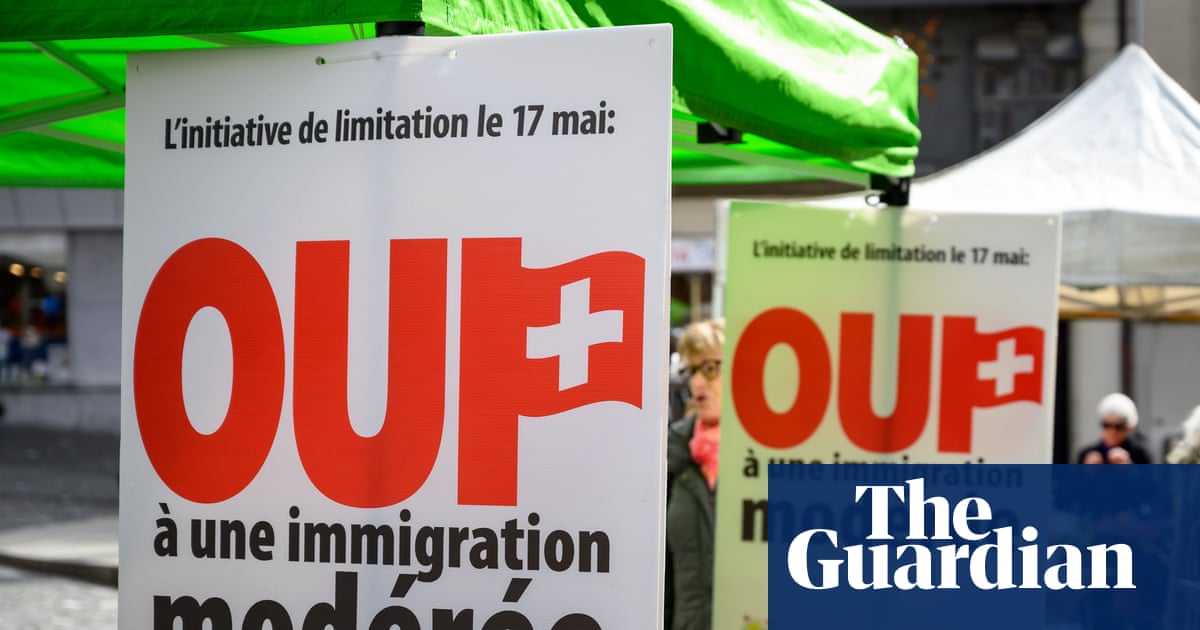
    Switzerland will vote this summer on a proposal from the far-right Swiss People’s party (SVP) to limit the country’s population to 10 million, a move that would threaten key agreements with the EU and, opponents say, cripple the economy.

    The government said on Wednesday the referendum on the SVP’s “No to a 10 million Switzerland” initiative, which is strongly opposed by both chambers of parliament and the business and financial services community, would be held on 10 June.

    The initiative would oblige the Swiss government and parliament to act if the country’s permanent population, currently 9.1 million, exceeds 9.5 million by denying entrance to newcomers, including asylum seekers and the families of foreign residents.

    If the population reaches 10 million, further restrictions would come into force, and if numbers do not start to fall the government would be required to pull out of the free-movement agreement it has with the EU, by far its biggest export market.

    Switzerland’s population has grown about five times faster than the average in surrounding EU member states over the past decade, as its economic success has attracted both low-skilled workers and highly paid corporate expats.

    About 27% of Swiss residents are not citizens, according to government figures. The SVP, the country’s largest political party, says the “population explosion” is inflating rents and straining public infrastructure and services to breaking point.

    The party, which has finished first in every election since 1999, has long campaigned against immigration, highlighting crimes committed by foreigners and posting images of bloody knives, hooded criminals, fists and frightened women.

    The radical nationalist changes it frequently proposes, such as a 2016 proposal to automatically deport immigrants found guilty of even minor offences, and a 2020 plan to end free movement with the EU, have not generally fared so well.

    Switzerland’s system of direct democracy allows citizens to propose so-called popular initiatives that are put to a plebiscite if they get 100,000 backers in 18 months. They are a long-favoured tool of the SVP, but only about 10% of popular initiatives pass.

    However, a poll in December revealed broad support from 48% of voters for the “No to a 10 million Switzerland” initiative, reflecting deeply divided sentiment about how open the country wants and needs to be in a fast-changing world.

    Opponents, including multinationals such as Roche, UBS and Nestlé, say the proposal would jeopardise the bilateral agreements with the EU, including a deal reached last year over single market access, on which much of Switzerland’s prosperity rests.

    Economiesuisse, a leading business lobby, has described it as the “chaos initiative” and warned that many Swiss companies rely on EU and other European workers, without whom they will have to relocate abroad, hitting tax revenue and services.

    Rival parties have said a close relationship with Europe is Switzerland’s only option: about half of all the country’s exports go to the EU. Employers’ associations have said the population will increase mainly through natural growth and longer life expectancy.
    Read More

  • Darf ich etwas «gratis zum Mitnehmen» hinstellen?

    Darf ich etwas «gratis zum Mitnehmen» hinstellen?


    Darf ich etwas «gratis zum Mitnehmen» hinstellen?
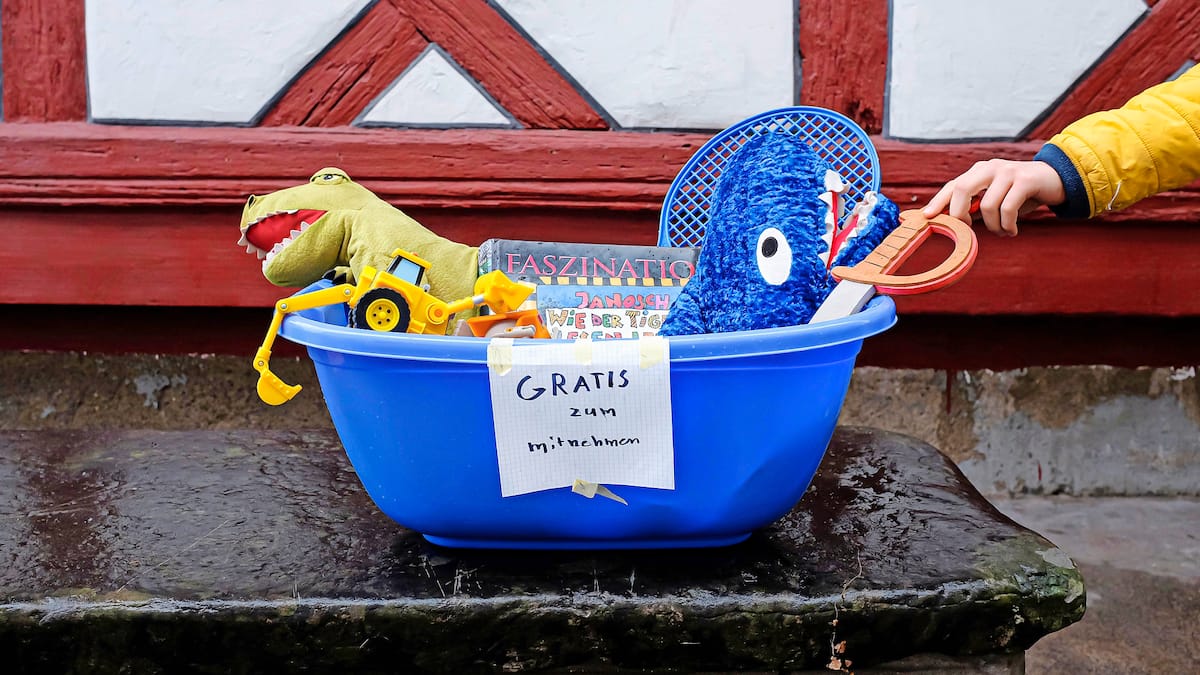
    Beim Entrümpeln haben wir ein paar Plüschtiere gefunden, die wir nicht mehr brauchen. Ist es legal, diese an die Strasse zu stellen, damit sich andere bedienen können?

    Read More

  • What Swiss political offices can naturalised foreign citizens run for?

    What Swiss political offices can naturalised foreign citizens run for?


    In certain countries – the United States immediately jumps to mind – foreign-born naturalised citizens are limited for how involved they can get in politics. What is the situation in Switzerland?

    Read More

  • Trainer maker On can use Swiss cross on sports shoes

    Trainer maker On can use Swiss cross on sports shoes


    white and yellow running shoes

    The shoe maker has confirmed that the Swiss cross will be allowed to feature on its training shoes.


    Keystone-SDA

    The shoe manufacturer On has been successful in its long-running battle with the Swiss authorities to use the Swiss cross on its running shoes.

    +Get the most important news from Switzerland in your inbox

    The company has confirmed earlier media reports that the Swiss cross will be allowed to feature on its sports shoes.

    The Neue Zürcher Zeitung (NZZ) explained on Monday that the Swiss Federal Institute of Intellectual Property (IPI) had relaxed its practices. Companies that develop in Switzerland but produce abroad can – under certain conditions – use the Swiss cross.

    More

    On welcomes this clarification, it told the Keystone-ATS news agency, saying it is appropriate for the times and takes reality into account. The strength of the Swiss economy lies not only in production, but also in innovation, research, development and design.

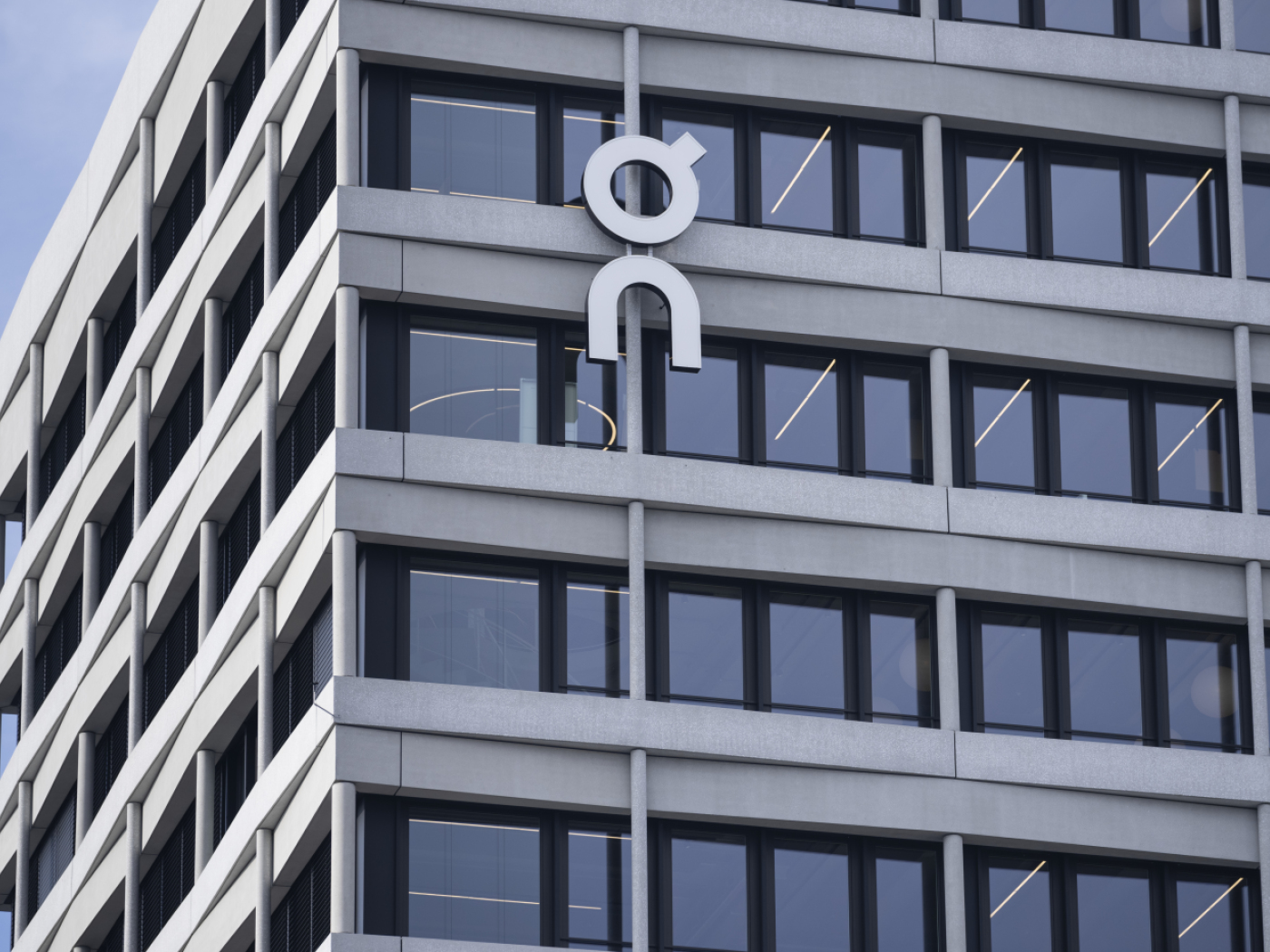
    Since On was created 16 years ago, all of these above-mentioned stages are carried out at its Zurich headquarters, where over 1,100 people work.

    More

    Adapted from Italian by AI/sb

    We select the most relevant news for an international audience and use automatic translation tools to translate them into English. A journalist then reviews the translation for clarity and accuracy before publication.  

    Providing you with automatically translated news gives us the time to write more in-depth articles. The news stories we select have been written and carefully fact-checked by an external editorial team from news agencies such as Bloomberg or Keystone.

    If you have any questions about how we work, write to us at english@swissinfo.ch

    Read More

  • Train derails in Switzerland amid fatal avalanches across the Alps | Avalanches

    Train derails in Switzerland amid fatal avalanches across the Alps | Avalanches


    Avalanches from heavy snowfall in the European Alps claimed more lives over the weekend, as a train was derailed by a snow slide in Switzerland on Monday and roads and villages around Mont Blanc were closed or placed under evacuation orders.

    As large areas of the western Alps remained under a high risk of avalanche – following a week in which alerts reached category 5, the highest level – Swiss police said a train derailment caused by an avalanche injured five people near the town of Goppenstein.

    The avalanche that killed two skiers in the Couloir Vesses, a popular off-piste route in Courmayeur, northern Italy. Photograph: Italian Alpine Rescua/AP

    The incident in Switzerland followed a series of deadly avalanches in the Alps in recent days involving skiers.

    On Friday, two Britons were among three skiers killed in an avalanche while being accompanied by an instructor in Val d’Isère, in south-east France.

    A French national, who was skiing alone, was also killed. The Albertville prosecutor, Benoît Bachelet, said the ski instructor, who avoided injury, tested negative after taking blood and drug tests. He added that another Briton had sustained minor injuries.

    In another incident on Sunday, an avalanche claimed the lives of two skiers on the Italian side of Mont Blanc.

    The incident occurred at about 11am in the Couloir Vesses, a popular off-piste route in Courmayeur, located in the upper Val Veny, near the border with France and Switzerland.

    The incidents come on top of the record 13 off-piste skiers, climbers and hikers who died in the Italian mountains during the week ending 8 February, Alpine Rescue said last Monday, including 10 in avalanches triggered by an exceptionally unstable snowpack.

    Fresh snowfall during recent storms and windswept snowcaps on weak internal layers have created especially risky conditions along the entire Alpine crescent bordering France, Switzerland and Austria, Alpine Rescue said.

    Italian Alpine rescuers at the scene of an avalanche on 5 February in South Tyrol, Italy, killing two members of a group of ski mountaineers. Photograph: AP

    “Under such conditions, the passage of a single skier, or natural overloading from the weight of snow, can be sufficient to trigger an avalanche,’’ said Federico Catania, a spokesperson for Italy’s Alpine Rescue Corps.

    Under the European avalanche warning system, grade 5 risk conditions are categorised as “extraordinary” and rare, being issued for conditions where the possibility of “numerous very large and extremely large natural avalanches (ie not victim triggered) can be expected” and posing danger to valley roads and settlements.

    In grade 5 conditions. skiers and mountaineers are cautioned to avoid all but open and unthreatened slopes.

    The currently very high risk levels in the mountains have been produced by a combination of factors including recent heavy falls of snow, combined with high winds that have deposited heavy and unconsolidated accumulations on an already unstable snowpack produced by lean snow conditions earlier in the season.

    A mountain rescue team prepares to board a helicopter after an avalanche emergency response rescue mission in an off-piste area of the Ecrins massif in the French Alps. Photograph: Jeff Pachoud/AFP/Getty Images

    “We have had some very complicated, very unstable snow since the beginning of the season,” Luc Nicolino, slopes manager at the resort of La Plagne, told Agence France-Presse last week. “It’s a kind of mille-feuille with many hidden, fragile layers.”

    Conditions were already dangerous in the wake of Storm Nils, which passed through the Alps last week depositing between 60cm and 100cm of snow with a further 40-50cm predicted in some areas of the Alps during Monday.

    Among those caught up in the avalanches in the French Alps on Friday was Daniel Matthews, whose profile describes him as an adventure skier, who was buried for eight minutes after a couloir he was skiing collapsed and buried him before being dug out by his companions.

    “I don’t really know what I’m doing here but I have been getting asked so many questions about the avalanche on Friday and to be honest I don’t know how to answer them and maybe could help people not to make the mistake I made,” Matthews wrote on Instagram.

    Mountain rescuers searching for people after an avalanche in the Austrian Alps in January. Photograph: Markus Schreiber/AP

    “I made a very bad decision and uneducated decision to ski Skimans [sic] Couloir just off the Palafour lift in Tignes. “I dropped in and did one turn the whole couloir collapsed underneath me and I immediately tried to pull my [avalanche] airbag but as I was fell I fell forward making it impossible to reach my toggle, I was then quickly thrown into what felt like a washing machine and I just remember falling for about 35 seconds (about 400m) and then coming to a very quick stop.

    “I hope I and other[s] may be able to learn some things. I didn’t follow the signs that day that were clearly there! and I paid for it. The only person to blame is myself,” he added.

    Read More

  • Emma hat mir Geld geschickt – dabei kenne ich die nicht

    Emma hat mir Geld geschickt – dabei kenne ich die nicht


    Emma hat mir Geld geschickt – dabei kenne ich die nicht
    Unsere Autorin hat plötzlich 33 Franken auf dem Konto und fragt sich: Will mich da jemand betrügen? Ein Selbstversuch: Wie man echte Irrtümer von Betrugsmaschen unterscheidet.

    Read More

  • A roundup of the latest news on Monday

    A roundup of the latest news on Monday


    The anti-immigration initiative would be ‘disastrous’ for Swiss universities; Zurich finds a way to relieve its housing shortage; and more news in our Monday roundup.

    Read More

  • Swiss tourist faces charges in Bali for allegedly insulting religious holiday

    Swiss tourist faces charges in Bali for allegedly insulting religious holiday


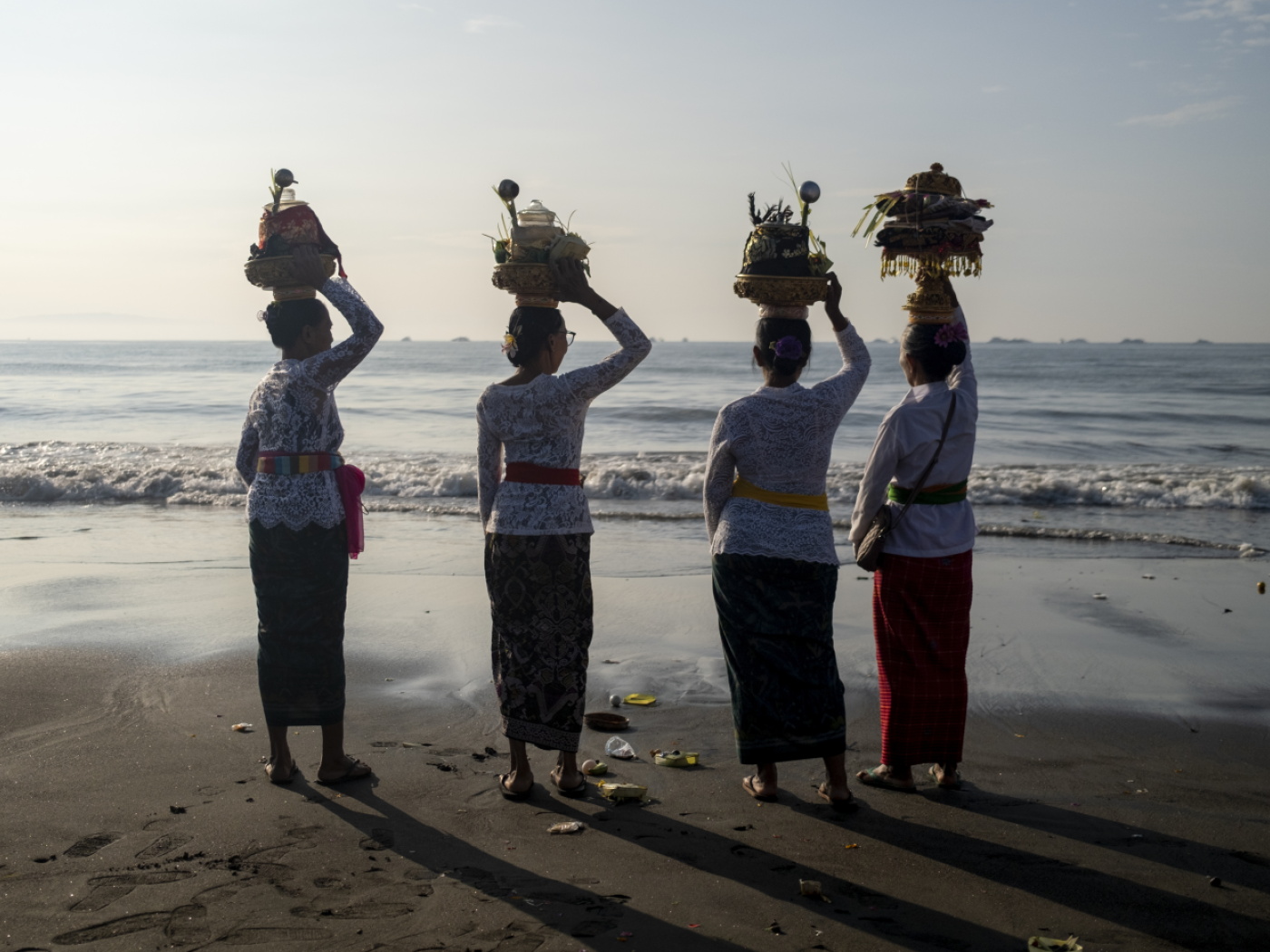
    Balinese women standing on a beach

    Bali attracts millions of foreign visitors each year.


    Keystone-SDA

    A Swiss tourist has been arrested by the Indonesian authorities in Bali accused of using expletives to denigrate a Hindu religious holiday observed on the tourist island.

    +Get the most important news from Switzerland in your inbox

    The Swiss man, whose age is unknown, faces up to five years in prison on hate speech charges, a spokesman for the Bali police said.

    Bali’s Day of Silence or “Nyepi,” was celebrated last Thursday and requires locals and tourists on the Hindu-majority island to stay at home for 24 hours for self-reflection. No work, travel, entertainment and even electricity use is discouraged.

    The Swiss national was arrested on Saturday after he was reported to police over an Instagram post in which he allegedly repeatedly swore when referring to the religious holiday.

    Bali attracts millions of foreign visitors each year.

    Adapted from Italian by AI/sb

    We select the most relevant news for an international audience and use automatic translation tools to translate them into English. A journalist then reviews the translation for clarity and accuracy before publication.  

    Providing you with automatically translated news gives us the time to write more in-depth articles. The news stories we select have been written and carefully fact-checked by an external editorial team from news agencies such as Bloomberg or Keystone.

    If you have any questions about how we work, write to us at english@swissinfo.ch

    Read More

  • Ukraine and Russia to meet for third round of talks as fourth anniversary of war looms | Ukraine

    Ukraine and Russia to meet for third round of talks as fourth anniversary of war looms | Ukraine


    Senior Ukrainian and Russian officials are to meet this week in Switzerland for a third round of talks brokered by the Trump administration, days before the fourth anniversary of Moscow’s full-scale invasion of Ukraine.

    The two-day meeting, kicking off on Tuesday, is expected to mirror negotiations held earlier this month in Abu Dhabi, with representatives from Washington, Kyiv and Moscow in attendance. Despite renewed US efforts to revive diplomacy, hopes for any sudden breakthrough remain low, with Russia continuing to press maximalist demands on Ukraine.

    While the Abu Dhabi discussions were largely focused on military ceasefire proposals, the Kremlin spokesperson, Dmitry Peskov, said on Monday the Geneva talks would address a “broader range of issues”, including territorial questions and other demands put forward by Moscow.

    Vladimir Medinsky, an arch-conservative Putin adviser who has previously questioned Ukrainian sovereignty, will head Russia’s negotiating team. He will be joined by Igor Kostyukov, the chief of Russian military intelligence, and the deputy foreign minister Mikhail Galuzin, among nearly two dozen officials, Moscow has said. Ukraine is expected to send the same delegation as in earlier rounds, to be led in Geneva by Rustem Umerov, secretary of Ukraine’s national security and defence council.

    The Ukrainian president, Volodymyr Zelenskyy, said diplomacy would be more effective with “justice and strength”.

    “Strength of pressure on the Russian Federation – sanctions pressure and steady, rapid support for the Ukrainian army and our air defence,” he wrote on social media.

    The choice of Switzerland marks the first time the talks will be held on European soil after earlier rounds in Abu Dhabi and Istanbul.

    The choice of Geneva appears to have been pushed by Washington. The Trump envoys Steve Witkoff and Jared Kushner, who are expected to lead US engagement with Russia and Ukraine, are scheduled to hold separate meetings with Iranian officials in the city later this week.

    Zelenskyy during a meeting with Steve Witkoff and Jared Kushner on the sidelines of the Munich Security Conference. Photograph: Ukrainian Presidential Press Service/AFP/Getty Images

    Trump, who throughout his second presidency has veered between criticising Moscow and Kyiv, reverted this weekend to placing blame on Zelenskyy, suggesting Ukraine was holding up efforts to end the war.

    “Zelenskyy needs to act. Russia wants to make a deal. He needs to act, otherwise he will miss a great opportunity,” he said in comments to reporters.

    But his secretary of state, Marco Rubio, speaking at the Munich Security Conference at the weekend, said Washington remained uncertain whether Russia was genuinely serious about ending the war in Ukraine.

    Ahead of the Geneva meeting, Zelenskyy made clear Ukraine was unwilling to give up territory in the Donbas – a key Kremlin demand. He cited previous Russian land grabs in Chechnya, Georgia and Crimea and said that “allowing the aggressor to take something is a big mistake”.

    “That is why now I do not want to be a president who will repeat the mistakes of his predecessors or other people … Because Putin cannot be stopped with kisses or flowers. I have never done this, and therefore I do not think that this is right. My advice to everyone: do not do this with Putin.”

    He said Russia was losing 30,000-35,000 people a month, with its attempt to seize more territory over four years of full-scale war staggeringly costly and mostly unsuccessful. “Can you imagine that in the 21st century? I’m not sure he [Putin] knows that,” Zelenskyy said.

    There were no expectations in Kyiv that the latest round of trilateral talks would led to a political breakthrough. Speaking in Munich on Saturday, Zelenskyy said his country would not give up the heavily defended north of Donetsk oblast, including the cities of Sloviansk and Kramatorsk, or abandon the 200,000 civilians who live there.

    He said Ukraine would play a “constructive” role in the trilateral talks but acknowledged there were differences with the US over security guarantees. The Trump administration is offering 15 years, with Ukraine wanting an American commitment lasting 30-50 years. Kyiv hopes the war will end this year, Zelenskyy has indicated.

    Kyrylo Budanov, the head of the presidential office, posted a photo of his departure by train for the talks with a Ukrainian delegation. He wrote: “On the way to Geneva. The next round of negotiations is ahead. Along the way, we will discuss the lessons of our history with our colleagues and seek the right conclusions. Ukraine’s interests must be protected.”

    The history reference appeared to be a jibe directed at Medinsky. The former culture minister is believed to have written the 2021 essay attributed to Putin, which argued that Ukraine and Russia were a single people and state, with a common origin in the ninth century. His presence is being interpreted by Kyiv as a sign the Kremlin is not taking the talks seriously.

    Olexiy Haran, a professor of comparative politics at the Kyiv-Mohyla academy, said Ukrainians were overwhelmingly opposed to growing US-Russian demands that Ukraine hold presidential elections. “The country is not ready for them because there are no security conditions. It would be crazy to conduct them under martial law,” he said.

    Haran recognised Trump and Putin were putting “huge pressure” on Zelenskyy to hold a poll over the next few months. He said the Kremlin was trying to “destabilise” the situation inside Ukraine and would not agree to a ceasefire. There were numerous legal and practical obstacles to holding a vote, he added, not least the question of how international observers could take part.

    He said: “Doubts of the government’s legitimacy is a trick of the Kremlin, echoed unfortunately by President Trump. Political renewal is needed, but elections can only take place once the war ends and security conditions allow.”

    This article was amended on 17 February 2026 because officials from Ukraine and Russia are set to meet in Geneva for a third round of talks, not second round as an earlier version said.

    Read More

  • Mit diesen Tipps schützen Sie sich vor Online-Betrügern

    Mit diesen Tipps schützen Sie sich vor Online-Betrügern


    Mit diesen Tipps schützen Sie sich vor Online-Betrügern
    Tagtäglich landen dubiose E-Mails in unserer Inbox. Was dahinter­steckt – und was Sie dagegen tun können.

    Read More