Category: Sports

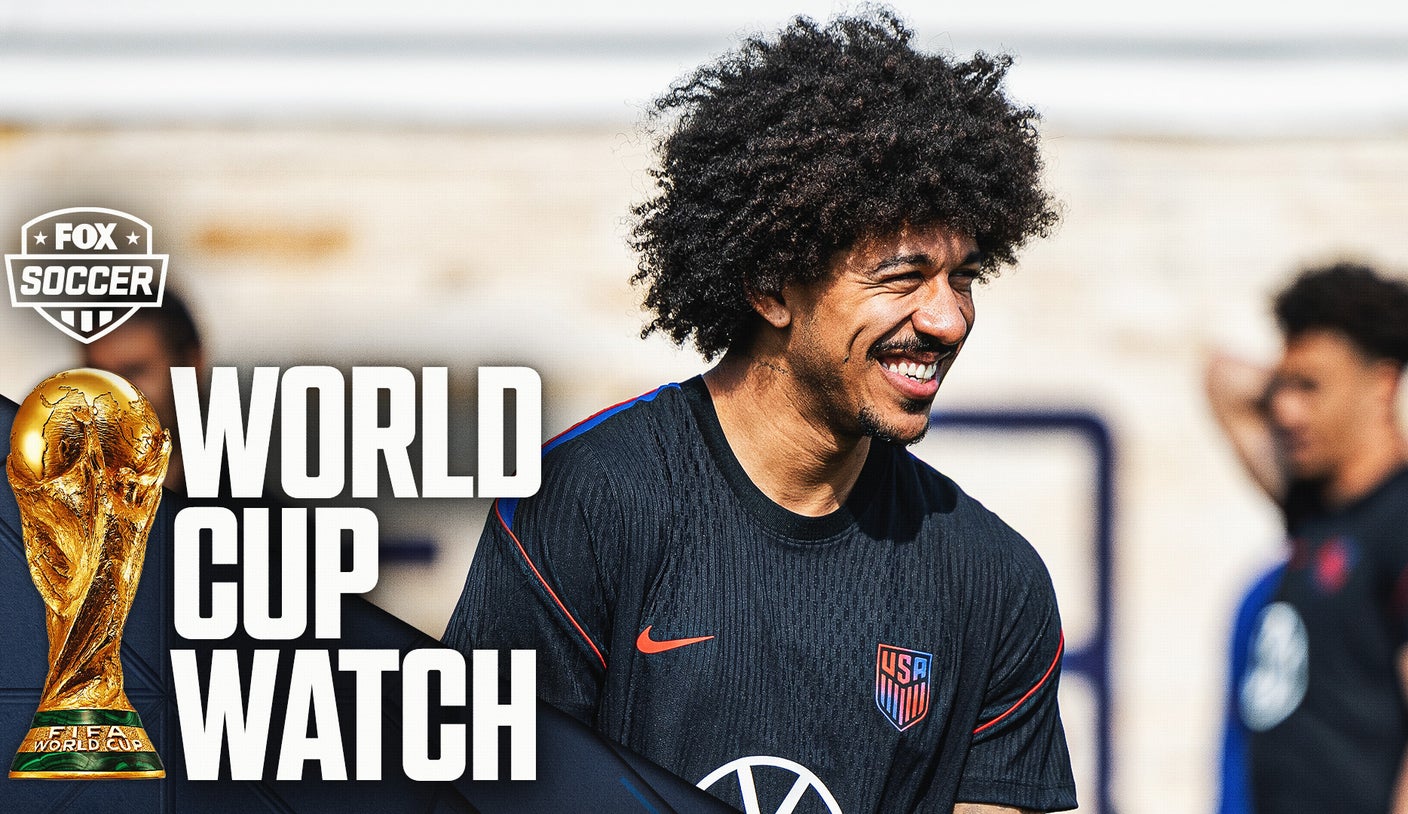
  • USA Must Rediscover Intensity In Tuneup v. Portugal: ‘It’s Nonnegotiable’

    USA Must Rediscover Intensity In Tuneup v. Portugal: ‘It’s Nonnegotiable’


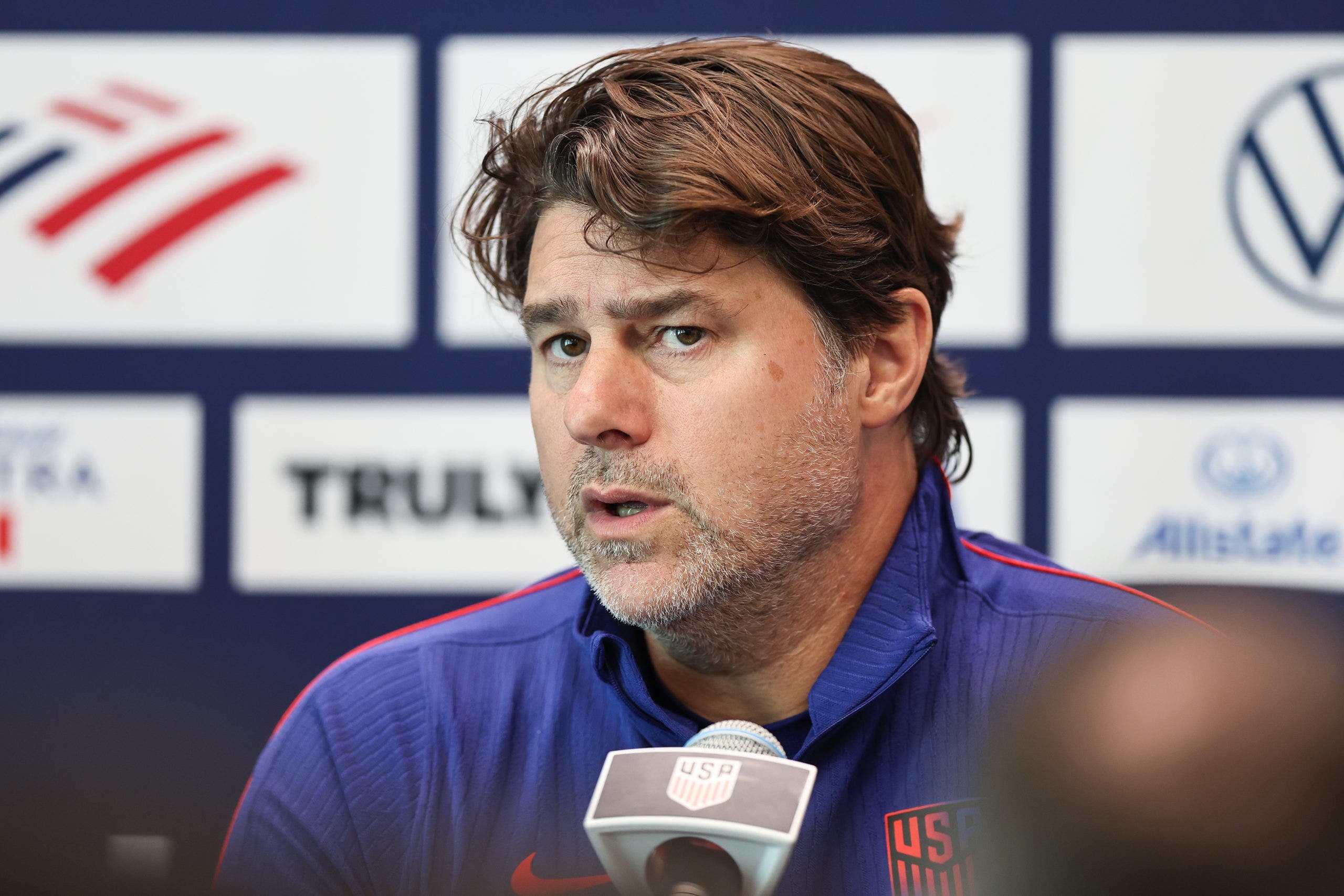
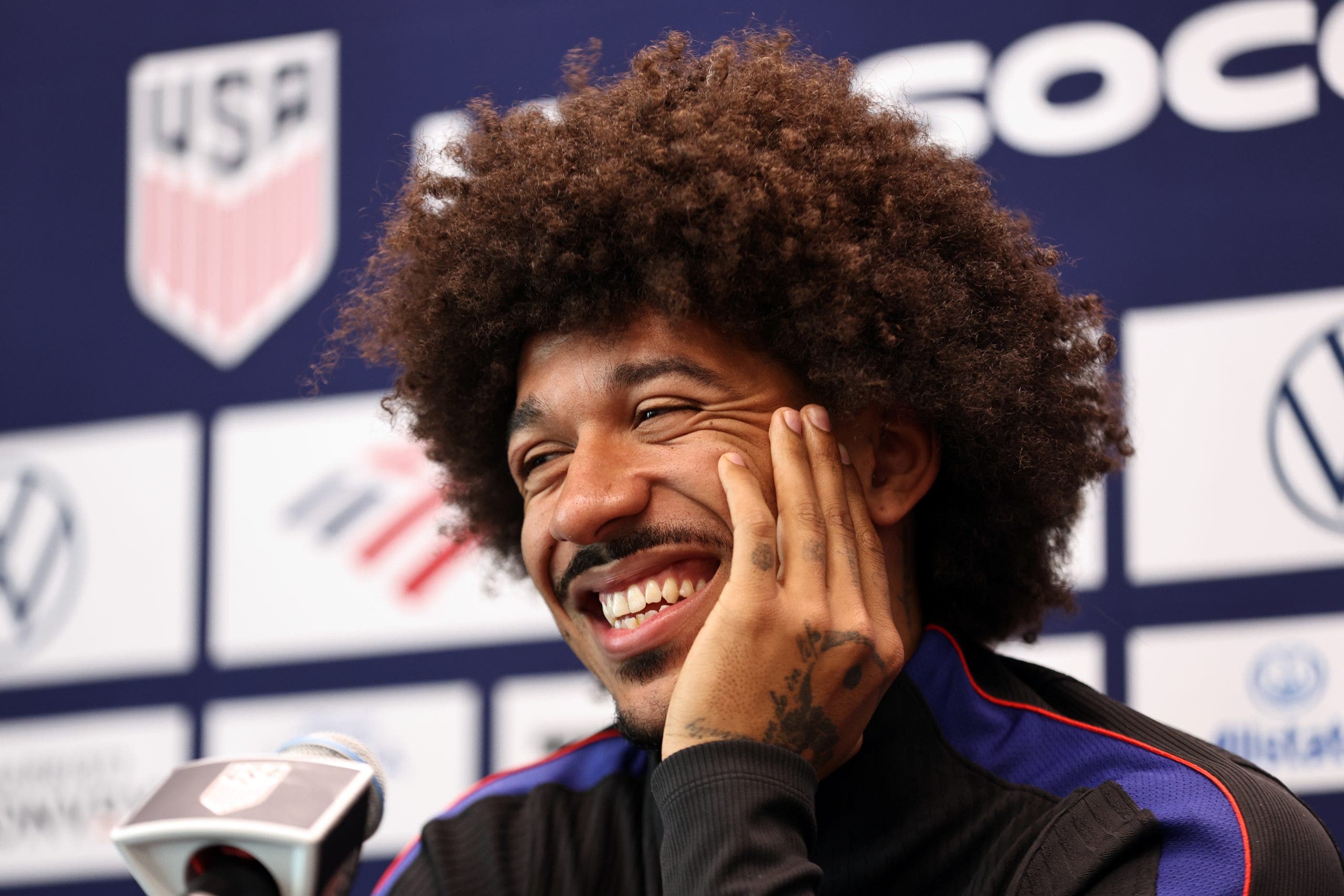
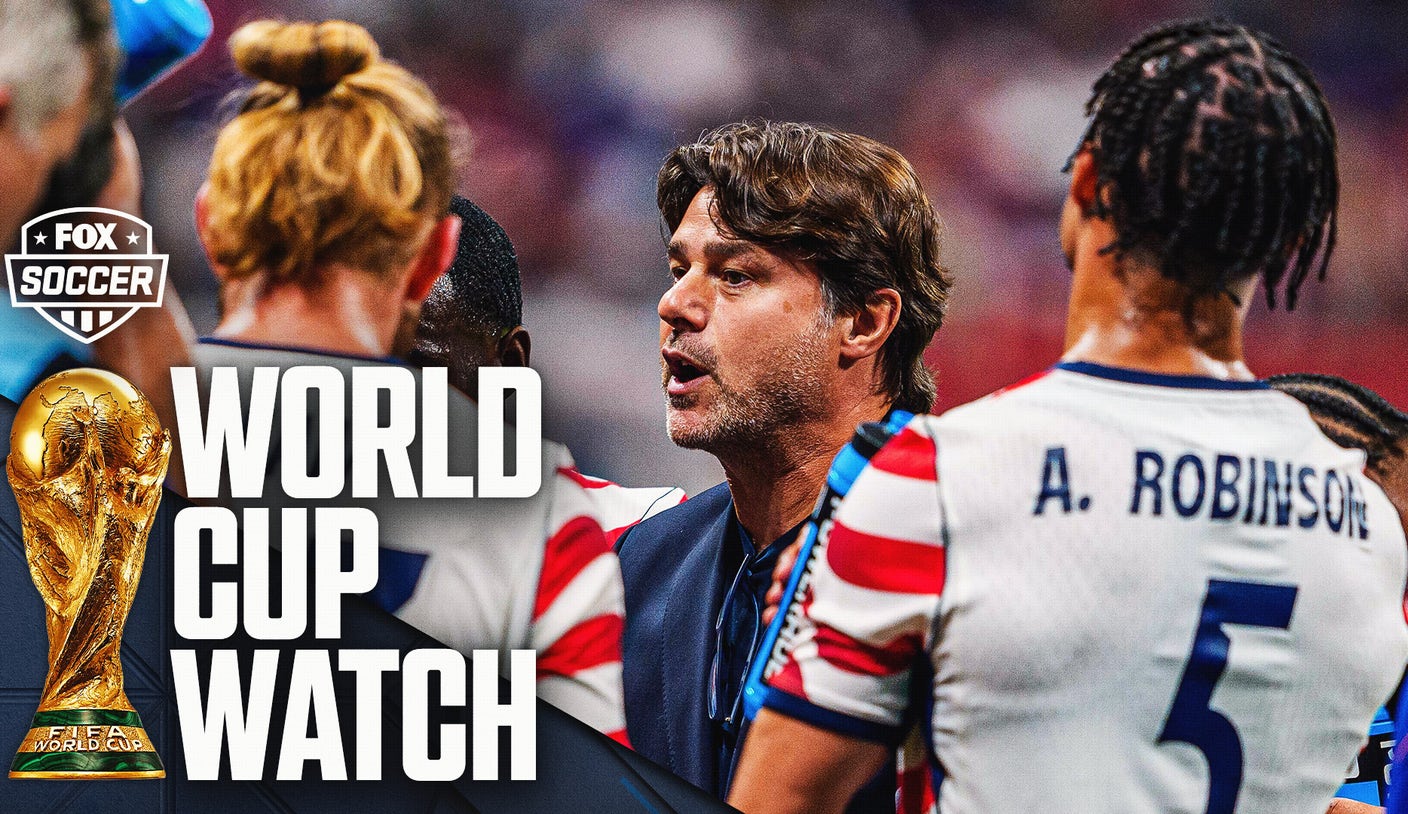
    MARIETTA, Ga. As he settled into his podium seat for Monday’s packed pre-match press conference inside Atlanta United’s sprawling and pristine training facility, U.S. men’s national team coach Mauricio Pochettino cut a businesslike figure.

    (Photo by Omar Vega/Getty Images)

    The Argentine answered the first dozen or so questions matter-of-factly, displaying little sign of the charm that endeared him to fans of clubs across Europe — including the all-world likes of Chelsea and Paris Saint-Germain — during the 15 years he spent managing on the continent.

    Exactly 24 minutes into the back-and-forth with reporters, Pochettino’s demeanor changed. Asked how the American squad can keep its intensity high for all 90 minutes, something it failed to do in Saturday’s 5-2 capitulation against Belgium, in tomorrow’s World Cup preparation match versus No. 6-ranked Portugal, the 54-year-old instantly became animated. He gesticulated as he spoke. That trademark charisma was suddenly on full display.

    “If you watched the game [between] France and Colombia, that is intensity,” said Pochettino, referring to Sunday’s exhibition between the 2018 World Cup champions (and 2022 runners-up) and Los Cafeteros in Landover, Maryland. Les Bleus won 3-1. Yet the victory was anything but comfortable. 

    “You can win or you can lose,” Pochettino said. “But do you think the coach of Colombia, [despite] losing the game, is going to complain about [the effort of] some players? They played like this was the final of the World Cup. And France, when they saw the intensity and the aggression of Colombia, said, ‘If we aren’t as intense, they’ll kill us.’ That is intensity.”

    (Photo by Johnnie Izquierdo/USSF/Getty Images)

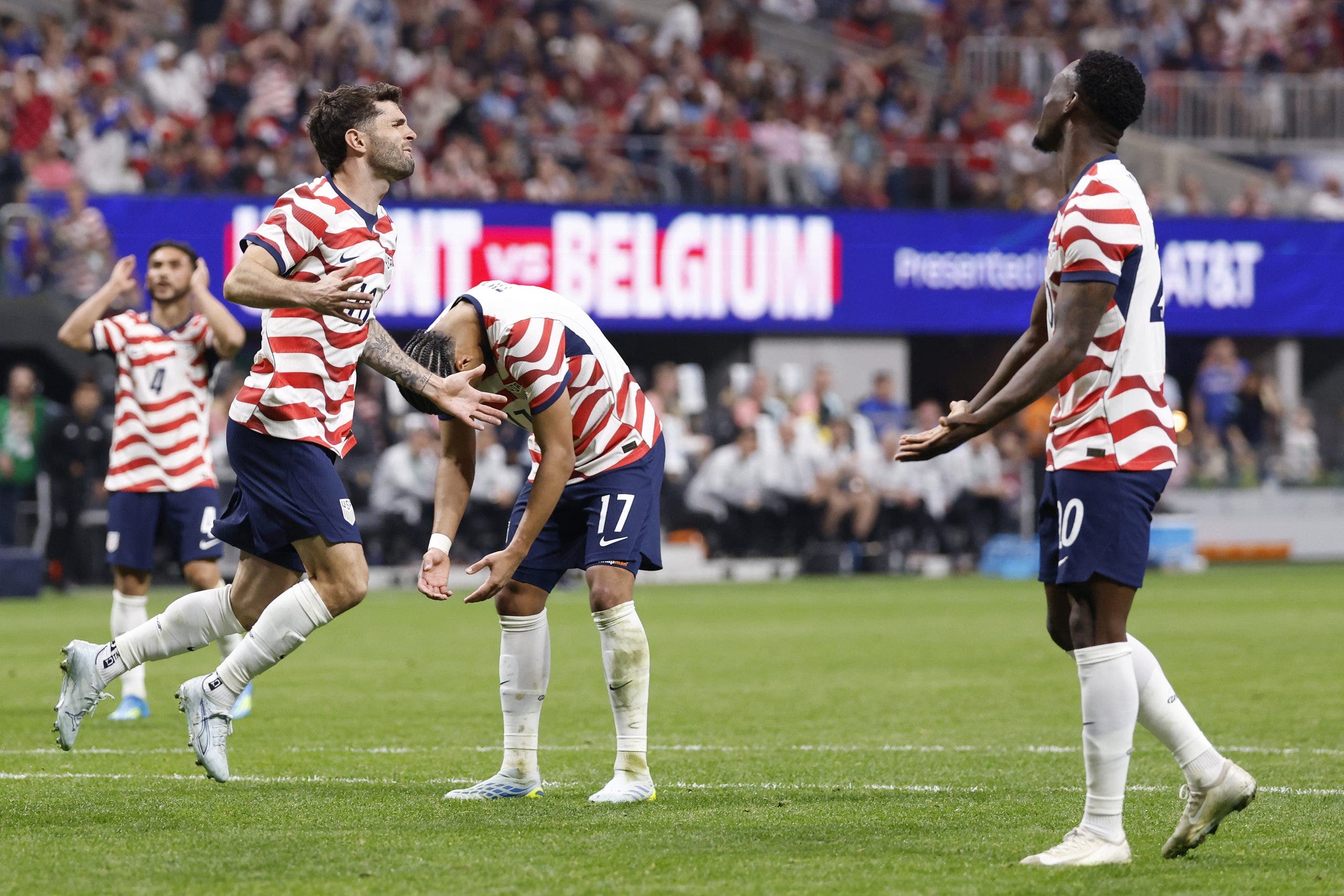
    In stark contrast, the U.S. all but folded up shop when a Belgian penalty put the home side down two goals on Saturday with more than 30 minutes of the contest still left to play. The response, goalkeeper Matt Turner and others said afterward, should’ve been the opposite. As the saying goes: If you can’t beat them, beat them up.

    Pochettino didn’t go that far, of course. Yet although English is his third language after his native Spanish and the French he learned playing as a central defender for Ligue 1 sides PSG and Bordeaux in the early 2000s, he couldn’t have expressed himself more clearly.

    This isn’t the first time intensity has been a problem for the Americans since Pochettino arrived on these shores 18 months ago.

    Exactly this time last year, a flat and toothless USA dropped home games to regional foes Panama and Canada in the Concacaf Nations League finals.

    Poch was so upset that he and his staff “destroy[ed] what we needed to destroy” and began to rebuild the team in his own image by bringing in a gaggle of newcomers who have since become mainstays. By the end of last year, lack of fight was no longer an issue: The U.S. literally brawled toward the end of a win over Paraguay before beating the brakes off two-time World Cup champ Uruguay — arguably the hardest team, pound for pound, on planet futbol.

    It’s something Poch’s lot must rediscover between this month’ two games.

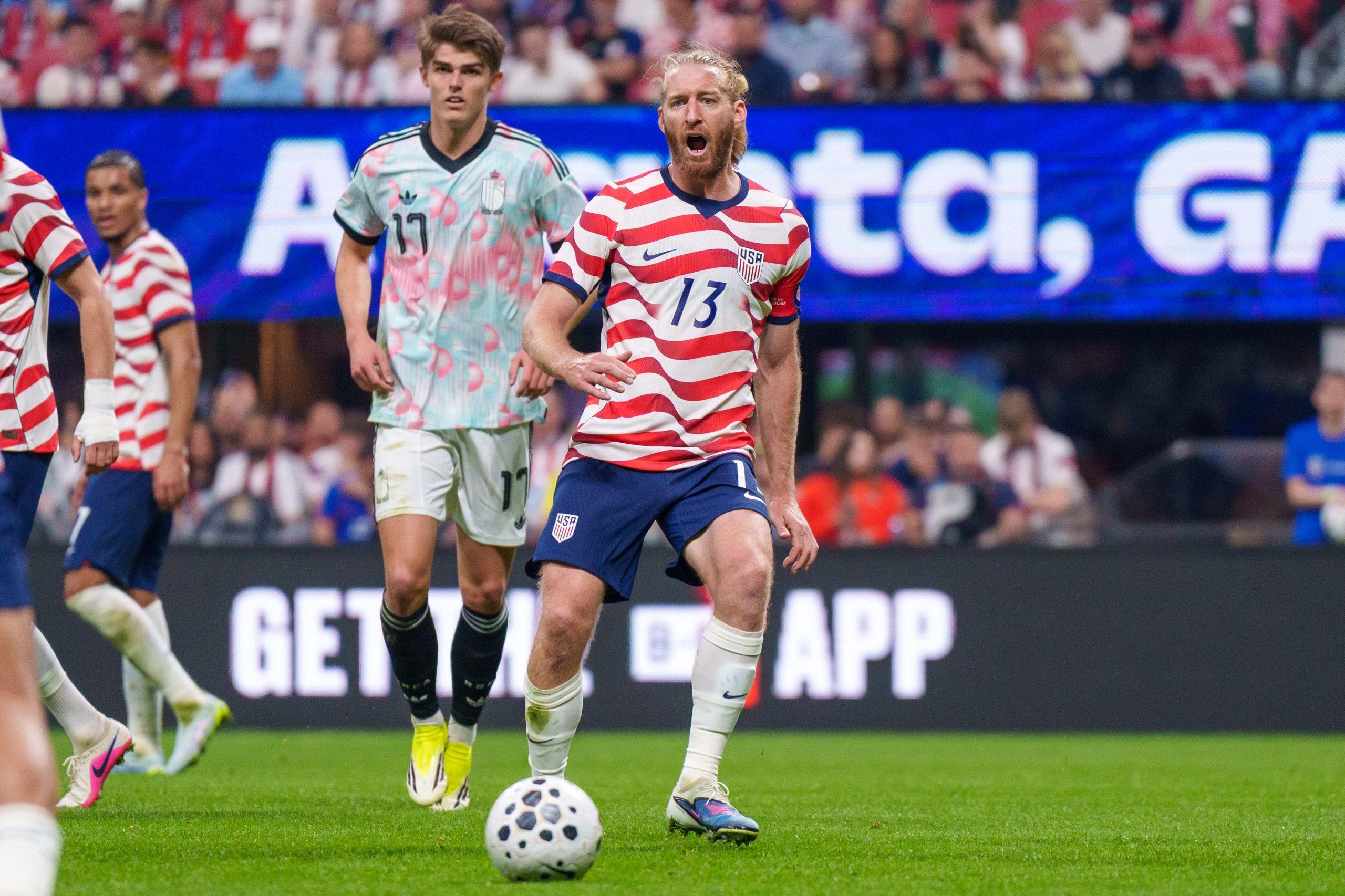
    “It’s a conscious decision. It’s just an overall effort,” captain Tim Ream said when asked why the U.S. faded so badly against Belgium. “It’s not that guys don’t want to do it. I think sometimes it’s like ,’I’ve just made an effort,’ and now it’s about making the second, the third, the fourth. And sometimes, that doesn’t happen.

    “That’s something that’s a nonnegotiable, really,” Ream continued. “It’s something that we were doing really well in the fall last year. And it’s something we have to get back to.”

    Pochettino noted on Monday that unlike last autumn, his players have been inundated with pre-World Cup media responsibilities this week. That wasn’t the case in November or in the two international windows that preceded it. Yet he also pointed out that it’s not a switch that can simply be turned on when the World Cup kicks off in June. That’s the big lesson from Saturday. It’s the mandate for Tuesday. 

    (Photo by Andrew J. Clark/ISI Photos/USSF/Getty Images)

    The 2026 World Cup co-hosts still might not win the match. Portugal has a legitimate chance of hoisting the most coveted trophy in sports next July 19. Even at home, the U.S. would require a miracle even to reach the final four. Failure to rediscover their pugilistic spirit could end in catastrophe. As Pochettino asked rhetorically of whoever his team comes up against next summer: “Do you think that they are not going to fight?” 

    “There’s still time to realize that we need to compete,” he reiterated on Monday. “The players need to believe in that.”

    We’ll find out on Tuesday how much. 

    Read More

  • Joey Wiemer, MLB’s Hottest Hitter, Has Come Out of Nowhere for the Nationals

    Joey Wiemer, MLB’s Hottest Hitter, Has Come Out of Nowhere for the Nationals


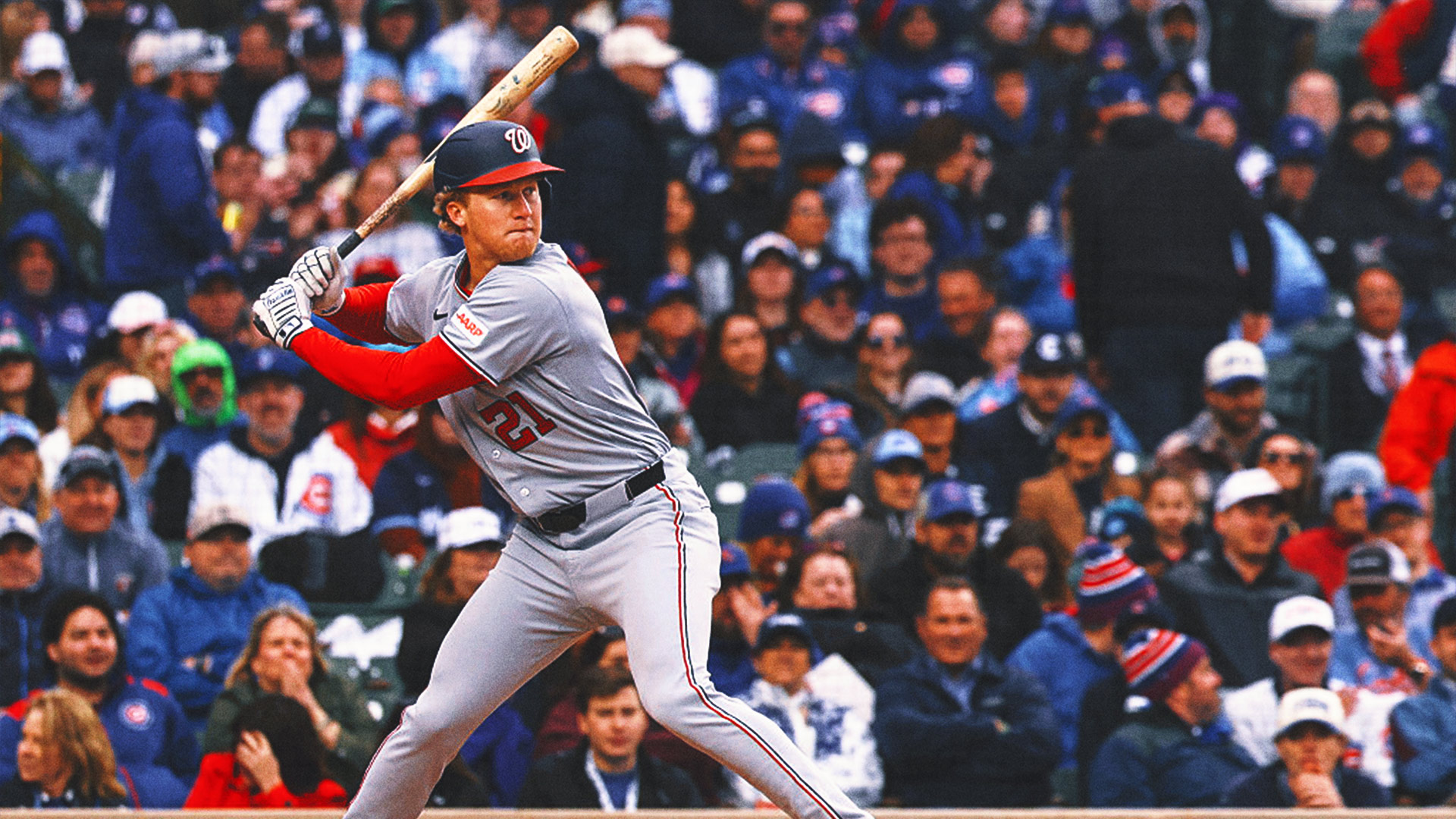
    The hottest hitter to start the 2026 MLB season has come out of nowhere. 

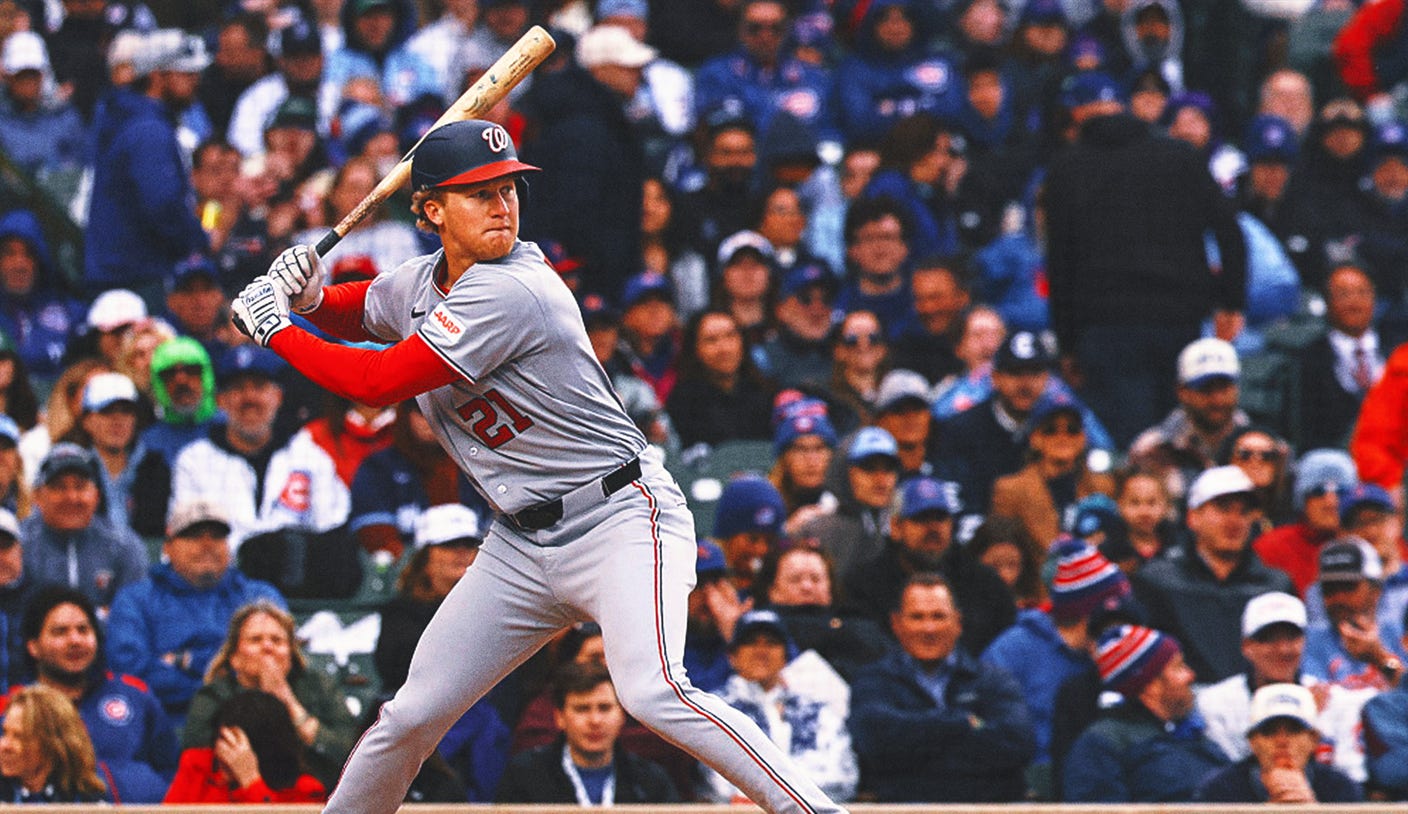
    Washington Nationals outfielder Joey Wiemer reached base on each of his first 12 plate appearances. He went 3-for-3 on Opening Day with a home run and a walk, and followed that up with the same statline on Sunday, helping the Nationals to two wins over the Chicago Cubs. He continued that hot start on Monday, when he went 2-for-4 with a run in Washington’s 13-2 win against the Philadelphia Phillies.  

    Wiemer has batted all around the lineup, hitting fifth on Opening Day and on Sunday, and batting ninth on Monday. He’s made the most of his opportunity as Wiemer wasn’t expected to be on Washington’s major league roster to start the season. 

    Wiemer tied a major-league record by reaching base in 10 straight at-bats to start the season. The previous player to do so was former first baseman Carlos Delgado, who did it in 2002.

    A former fourth-round pick by the Milwaukee Brewers in 2020, Wiemer struggled to start his career. During his rookie season in 2023, he slashed .204/.283/.362 for the Brewers with 13 home runs and 42 RBIs across 410 plate appearances. Then, during his second MLB season, Milwaukee optioned him back down to Triple-A before trading him to the Cincinnati Reds for starter Frankie Montas, who kept him in the minors after the move.

    Following the 2024 season, Wiemer was moved in another trade — to the Kansas City Royals, but he was waived and didn’t appear in a single game for the organization. The Miami Marlins picked up his contract, where he had a .236 batting average over 61 plate appearances. The same saga ensued — the Marlins moved on from Weimer, trading him to the San Francisco Giants for cash considerations, but he never appeared in a game. 

    So, he moved onto his sixth team in four seasons, as the Nationals picked up his contract before this season, and he found himself in a battle for an outfield spot with Washington’s top prospect, Dylan Crews. But Crews struggled in Spring Training, hitting .103 in 29 at-bats, and Weimer won the battle for an outfield position. 

    He’s since capitalized on that opportunity. 

    Read More

  • ‘If Chris Richards Is Available, It’s Good’: USA Set To Have Its Star Defender vs. Portugal

    ‘If Chris Richards Is Available, It’s Good’: USA Set To Have Its Star Defender vs. Portugal


    MARIETTA, Georgia Chris Richards knew the question was coming. And when he heard it, he smiled.

    “Tell us about your knee — what’s going on there?” a reporter asked Monday ahead of the U.S. men’s national team’s training session.

    The Crystal Palace center back missed Saturday’s 5-2 defeat to Belgium because of a knee issue. USA manager Mauricio Pochettino said in the days beforehand that Richards arrived at training camp early last week with some soreness and wouldn’t play. But his presence at a press conference was a good sign that he’d be good to go for Tuesday’s World Cup tune-up vs. Portugal.

    (Photo by Omar Vega/Getty Images)

    “I had a bad tackle in my last game with Palace,” Richards said, referring to his club’s 2-1 win over AEK Larnaca in a UEFA Conference League match. “So just a little bit of knee pain, knee soreness. But I’ve been training individually all week and I’m available.”

    That’s a relief for a thin back line, which has been dealing with various injuries on and off for a while. There was left back Antonee “Jedi” Robinson, who missed about a year-and-a-half’s worth of matches while recovering from a knee injury. He’s back with the national team now though, and had the assist on Weston McKennie’s goal in the first half Saturday. Right back Sergino Dest was not called up for this roster because of a hamstring injury, and center back Miles Robinson tweaked his groin during training in Atlanta last week and didn’t play against Belgium and won’t suit up against Portugal, either. 

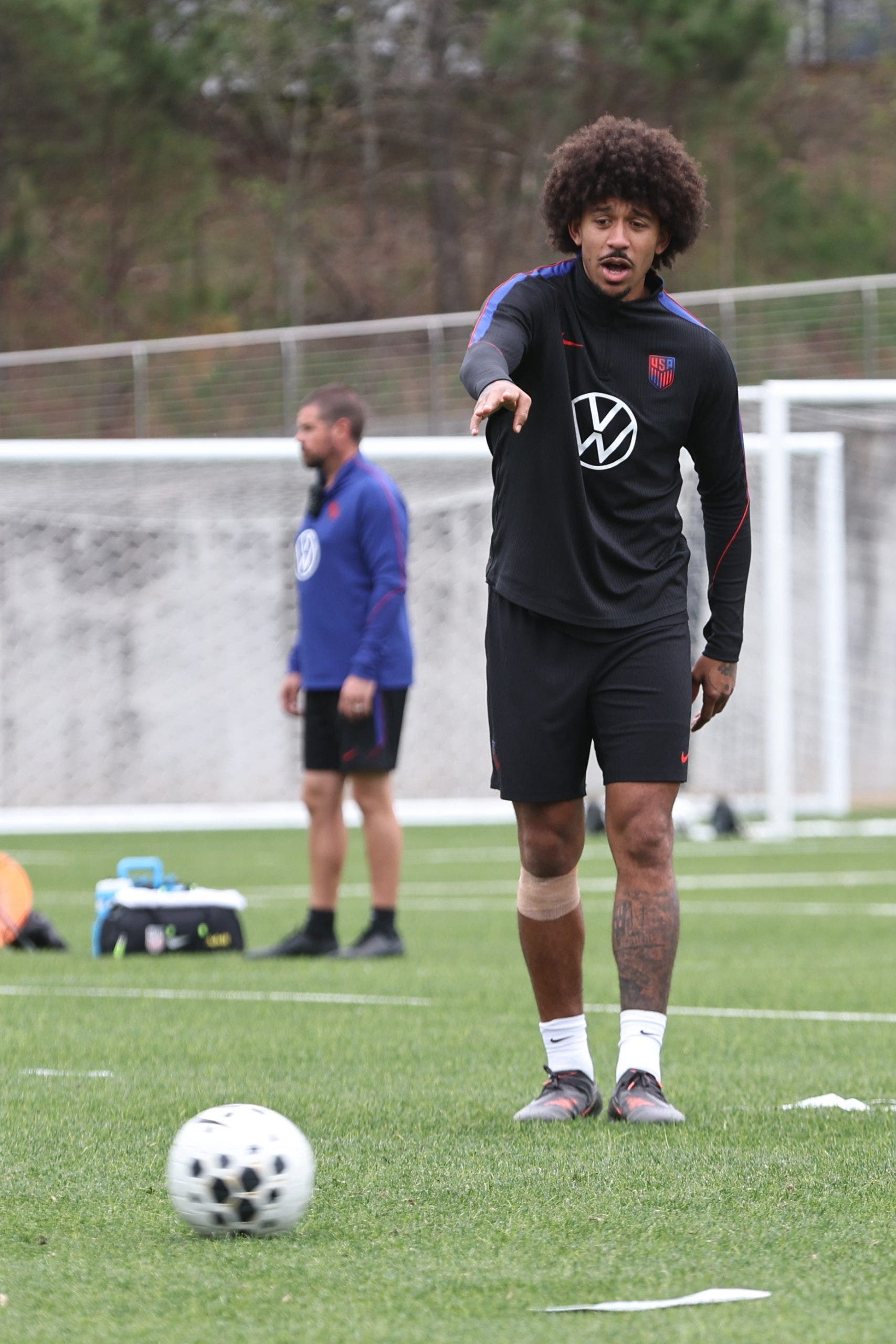
    Richards wore a wrap and bandage just below his right knee during Monday’s training session, but otherwise appeared loose and ready while warming up alongside Robinson and fellow center back Tim Ream.

    (Photo by Omar Vega/Getty Images)

    It’s no secret that the team needs Richards to be healthy. The 26-year-old, who was named U.S. Soccer’s Male Player of the Year in 2025, provides experience on the back line where he starts regularly in the Premier League and for the national team. He missed out on the 2022 World Cup because of a hamstring injury, but figures to play an important role for the team at this summer’s tournament on home soil.

    Pochettino said Monday that the squad needed to be better “in the defensive phase” against Belgium. In Richards’ absence, Pochettino went with a traditional 4-3-2-1 lineup with Robinson, Ream, Mark McKenzie and Tim Weah in the back. 

    “If Chris Richards is available, it’s good,” Pochettino said with a chuckle.

    The U.S. manager did relay some new injury news, however. Midfielder Johnny Cardoso, who started Saturday and played 45 minutes, is heading back to Atlético Madrid to rehab a minor injury.

    “He arrived from Madrid with small issues,” Pochettino said. “The plan was 45 minutes [vs. Belgium]. Afterwards, he [felt] again this type of uncomfortable things in his leg.”

    Tuesday’s match against Portugal is the last game the team will play before Pochettino names his 26-man World Cup roster in New York City on May 26.

    Read More

  • 4 Takeaways: UFL Week 1

    4 Takeaways: UFL Week 1


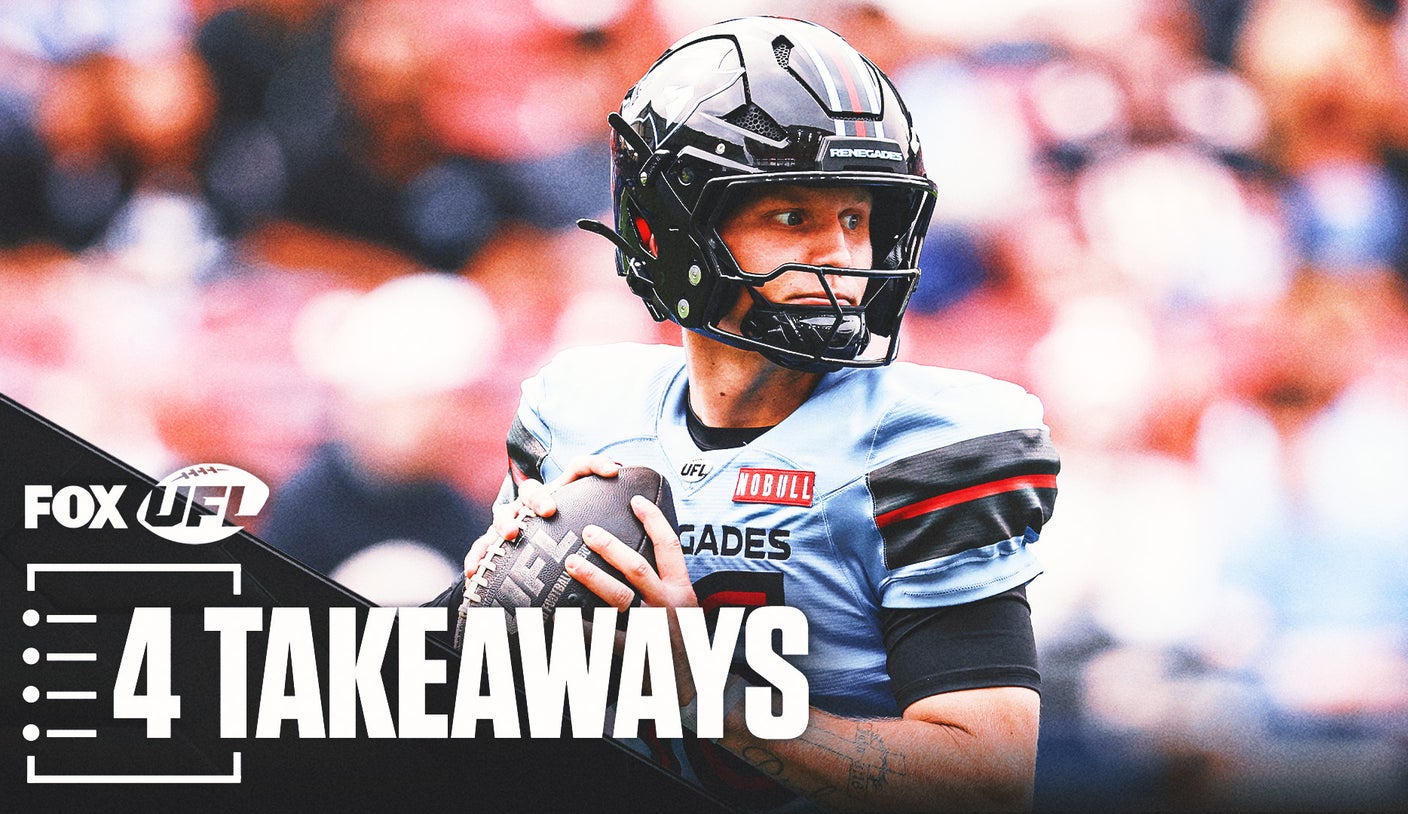
    Austin Reed’s first start at quarterback in the UFL was one to remember.

    The Western Kentucky product engineered a scintillating debut for the Dallas Renegades, completing 26 of 40 passes for 376 yards — the most in league history in a regular-season game — three touchdowns and no interceptions in his team’s 36-17 win over the Houston Gamblers in the season opener for both teams.

    Veteran UFL receiver Tyler Vaughns led Dallas (1-0) with seven receptions for 144 yards and a score, while fellow receiver Greg Ward added three catches for 93 yards and a touchdown in a runaway victory over Houston (0-1).

    “It was really a team effort more than anything,” Reed said. “[The] guys were playing well, and we had a really good game plan. We felt good about what we had going into this game, and what we were going to do. It just came down to whether we were going to execute or not.”

    Reed said despite how well the offense moved the ball, the Renegades can play even bigger, which makes for an interesting matchup next week against one of the best defenses in the league in the St. Louis Battlehawks (1-0).

    “I feel like we could have played even better, and that’s a great thing to see when your Week 1 output looks like this,” Reed added. “There’s so much more we can improve.”

    [UFL 2026: Everything To Know About the Upcoming Season]

    Speaking of St. Louis, former legendary NFL receiver Ricky Proehl earned his first victory as a head coach, leading his hometown Battlehawks to a 16-10 victory over the defending UFL champion DC Defenders (0-1) in front a league-high crowd of 31,191 at The Dome at America’s Center. 

    The Louisville Kings (0-1) couldn’t hold onto the lead late, falling to the Birmingham Stallions (1-0) by two, 15-13, in AJ McCarron’s first victory as head coach. The Kings played in front of 14,034 at Lynn Family Stadium in Kentucky. 

    Leading the Orlando Storm (1-0) for the first time, head coach Anthony Becht helped to engineer a 23-16 victory over the visiting Columbus Aviators (0-1). 

    Here are my takeaways from Week 1 of the UFL:

    1. Opportunistic defense leads Stallions to road win over Kings

    Birmingham forced 13 takeaways last season, and it continued its ball-hawking ways to start the 2026 season. 

    The Stallions thwarted an early promising drive for Louisville when Kings tight end Zach Davidson failed to corral a pass from his quarterback, Jason Bean, with Birmingham linebacker Dyontae Johnson winding up with the loose ball. The Stallions turned that into a 5-yard touchdown, courtesy of Snoop Conner, for an early lead. Later in the game, Birmingham safety Hudson Clark intercepted a Bean pass in the fourth quarter to help salt away a two-point victory — McCarron’s first as a head coach, as he replaced three-time spring football champion coach Skip Holtz this year. 

    Birmingham finished with three takeaways overall, the most for a defense in Week 1. 

    2. Matt McCrane drills first 60-yard, 4-point field goal

    It didn’t take long for a kicker to take advantage of one of the UFL’s newest rules implemented to generate more points. Defenders kicker McCrane booted a 60-yard field goal on his team’s opening drive on the road against St. Louis on Saturday, marking the first 4-point field goal in UFL history. However, McCrane did miss from 55 yards later.

    Elsewhere, Battlehawks kicker Tucker McCann made a 58-yarder in the opening quarter but missed from 45 yards. 

    “Matt was hitting the ball well on field goals and things like that,” Defenders head coach Shannon Harris said. “He had the long miss, but he’ll make that 10 out of 10 times. So, we’re going to always continue to put him in those situations because of the faith we have in him.”

    In Week 1, kickers went 15-for-20 on field goals, including four from beyond 50 yards, and 8-for-10 on extra points.

    3. Battlehawks’ defense looks legit after seven-sack performance

    Led by 2025 UFL Defensive Player of the Year Pita Taumoepenu, the Battlehawks sacked the Defenders seven times on their way to a tough win. Taumoepenu finished with 2.5 of those sacks, along with a combined six tackles in the win. St. Louis lost to DC at home in the playoffs last season, so the win was a little measure of revenge for St. Louis.

    “When one guy gets to the ball carrier, I want 11 guys getting to the football,” Proehl said. “They bought in, and they’ve done it in practice every day for the last two weeks. They showed up today. They wore them down. We were in better shape, in my opinion. We were in great shape, and we finished.”

    4. Jordan Ta’amu and DC’s offense show early struggles 

    Led by 2025 UFL Championship Game MVP Ta’amu, the Defenders struggled to move the ball on the road against the Battlehawks. One of the top offenses in 2025, DC mustered just 153 total yards offensively against St. Louis’ stingy defense. The Defenders averaged 22.4 points per game last season but were held to a league-low 10 points this week.

    Considered one of the most dynamic quarterbacks returning in the UFL this season, Ta’amu was sacked seven times and held to 123 passing yards. He also threw two interceptions. The only way is up for DC’s offense in Week 2.

    “We’ve got to clean things up,” Harris said. “We’ve got to understand that every game thus far is going to be everyone’s Super Bowl. We’ve got to understand that magnitude of it.”

    4 ½: What’s Next

    The Kings and the Battlehawks are on the road next week after hosting in Week 1, while the Renegades and the Storm have their second consecutive home matchup of the season. 

    One game will be played on Friday (Defenders at Aviators), one on Saturday (Kings at Storm), one on Sunday (Stallions at Gamblers) and the final game on Tuesday (Battlehawks at Renegades).

    Read More

  • Top-10 Players in the 2026 College Basketball Crown Tournament

    Top-10 Players in the 2026 College Basketball Crown Tournament


    An eight-team field. Loaded with talent. Half-a-million in NIL money on the line.

    The College Basketball Crown returns to Las Vegas this week with some must-see stars and matchups.

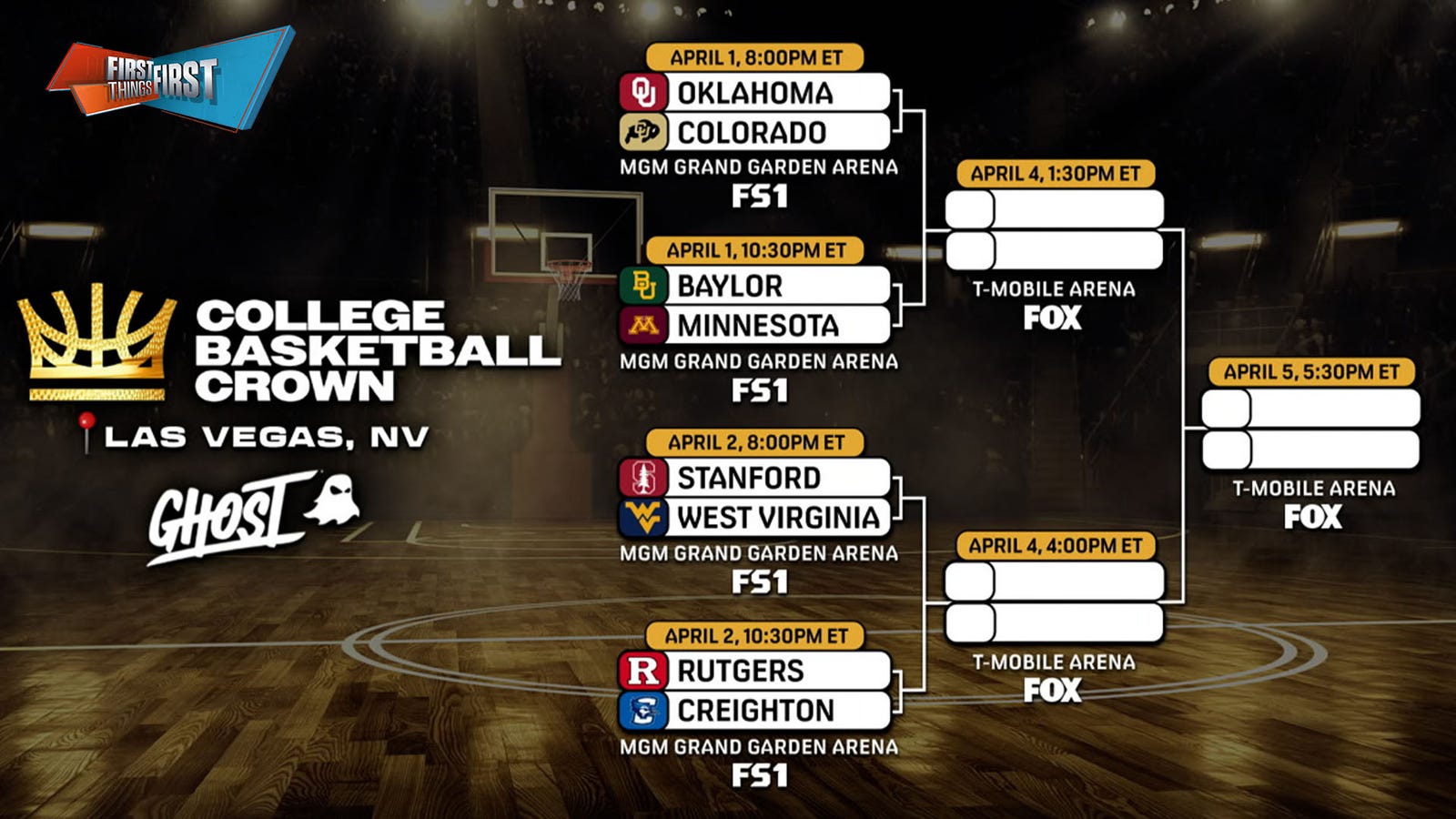
    Several all-conference performances will take the court this week in the single-elimination tournament, which tips off with first-round games scheduled for April 1-2, followed by the semifinals on April 4 and the championship game on April 5. The tournament will be played at MGM Grand Garden Arena and T-Mobile Arena with a $500,000 NIL prize pool.

    The complete bracket features Oklahoma, Colorado, Baylor, Minnesota, Stanford, West Virginia, Rutgers and Creighton.

    Baylor, Minnesota and Creighton highlight the 2026 College Basketball Crown Tournament Bracket

    Who are the top names in this year’s College Basketball Crown, and what should fans expect to see this weekend in the desert?

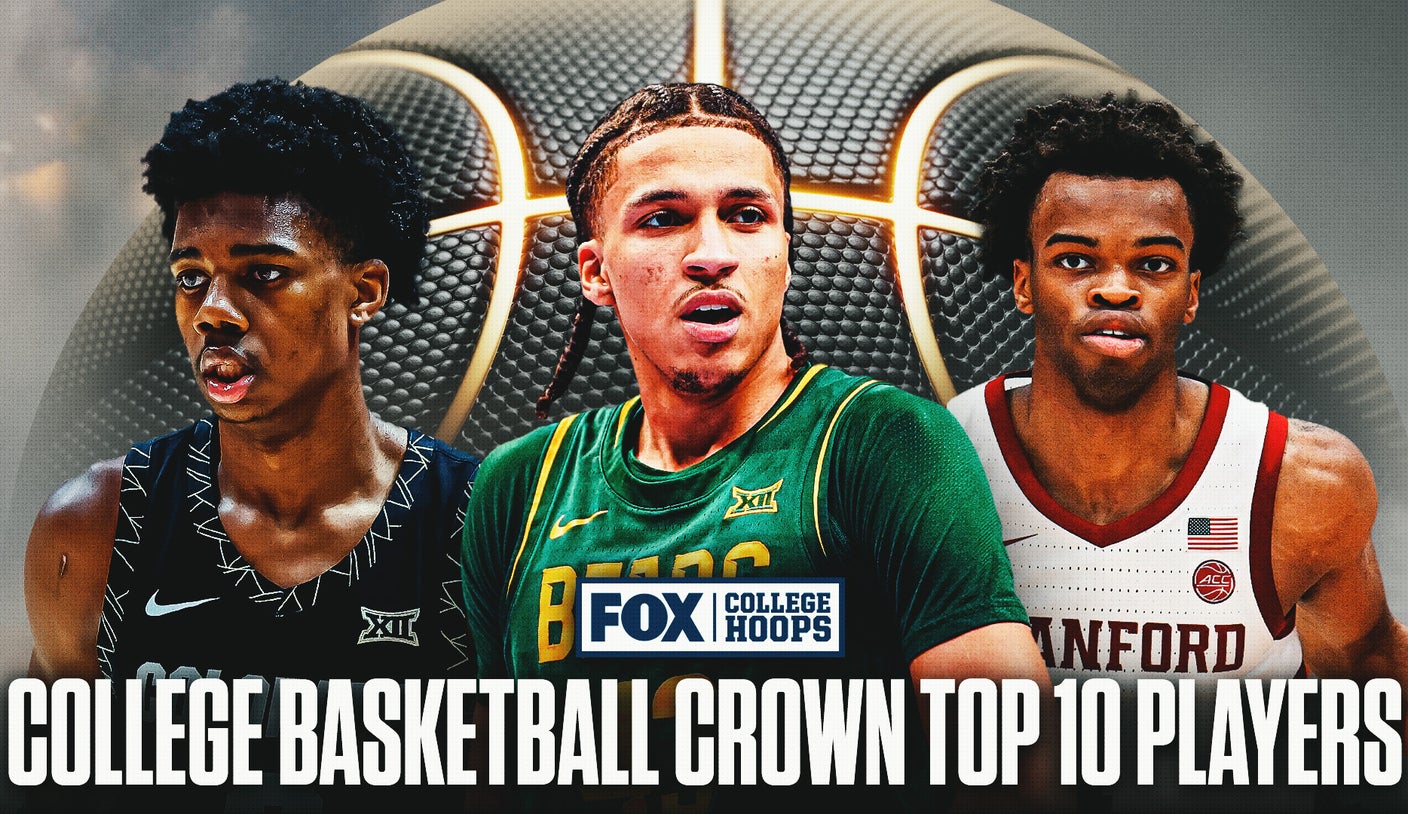
    Here is a breakdown of the top-10 players to watch in this year’s event.

    [COLLEGE BASKETBALL CROWN: Schedule, Bracket, Teams]

    This 6-foot-2, 182-pound guard from New Hampshire is an elite-level scorer with the potential to be the star of this tournament. He averaged 22.8 points per game, which ranked eighth among Division I players, joining BYU’s AJ Dybantsa, ArkansasDarius Acuff Jr. and Duke’s Cameron Boozer as the only first-year players to average more than 22 points per contest this season. Okorie scored at least 30 points on seven occasions this season, including a memorable 40-point outing in Stanford’s 95-72 win over ACC foe Georgia Tech back on Feb. 7. He is the best pure scorer in the field and has the ability to lead the Cardinal on a run to the College Basketball Crown title.

    (Photo by David Buono/Icon Sportswire via Getty Images)

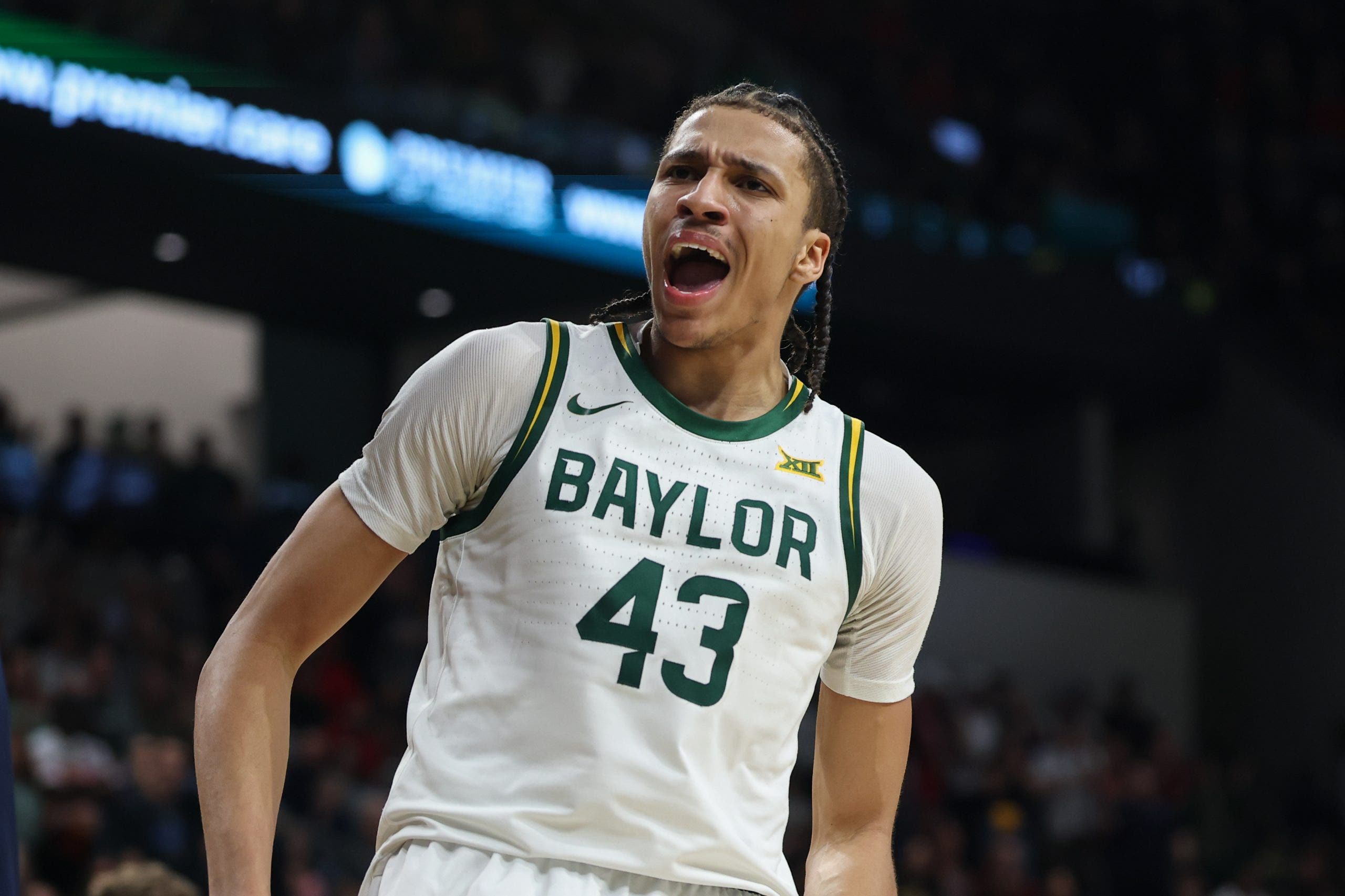
    After spending the past two seasons at Tennessee, Carr transferred to Baylor and made an immediate impact in Waco. The 6-foot-5 redshirt sophomore leads the Bears in scoring at 19.2 points per game while also contributing 5.5 rebounds, 2.7 assists and 1.3 blocks per contest. He shoots 51% from the field and sports a 39% clip from 3-point range. Carr has put up 21 or more points in four of Baylor’s last five games heading into the College Basketball Crown, including a 25-point outing against Arizona State in the opening round of the Big 12 Tournament.

    A five-star recruit out of Benin, Yessoufou has lived up to his billing during his first year on campus. The 6-foot-5 guard is averaging 17.8 points and 5.8 rebounds per game en route to being named All-Big 12 honorable mention this season. He has elite physical strength for a guard, but he has shown to be inconsistent at times on the defensive end of the court. His best game of the season came in a mid-February matchup against BYU when he put up 37 points and six rebounds on 12-of-19 shooting from the floor and 5-of-8 from 3-point range.

    [CBB CROWN: How to Bet the Crown’s First Round]

    Another standout freshman, Johnson has been the best player on a Colorado team that started the season with a 10-1 mark. A three-star recruit out of Los Angeles, Johnson exploded on the scene for the Buffaloes, averaging a team-high 16.9 points per game while shooting 48.6% from the field and 37.8% from downtown. He put up big numbers in big-time games, including a 27-point showing against AJ Dybantsa and BYU back on Feb. 14, and he had a 28-point outing in the Buffs’ regular-season finale against No. 2 Arizona.

    5. Josh Dix, G, Creighton

    (Photo by Joe Buglewicz/Getty Images)

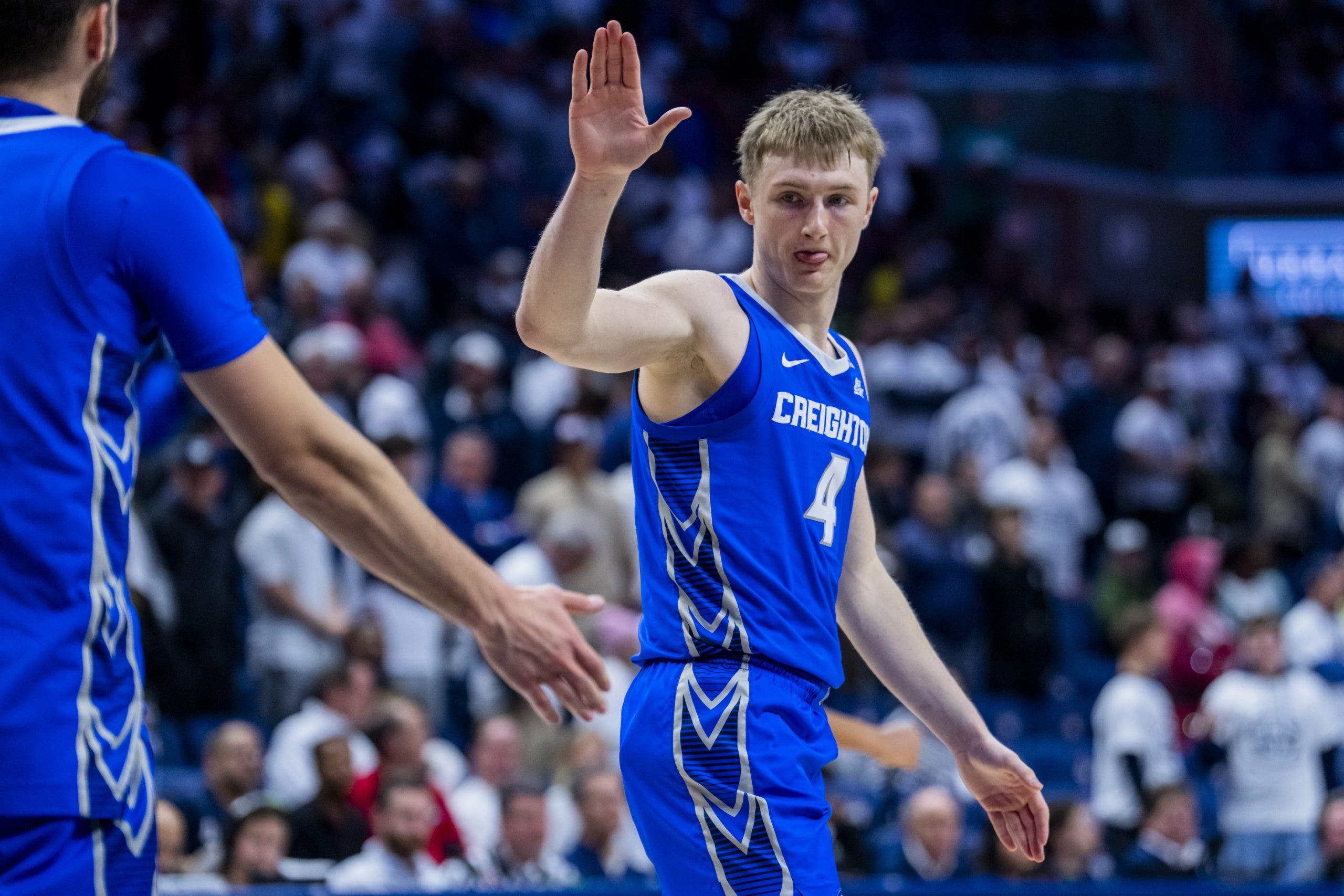
    Dix spent the first three seasons of his college career at Iowa and made the decision to transfer to Creighton last offseason. He has made an instant impact, averaging a team-high 13 points per game on the season. Dix has topped the 20-point mark in three of his last six games heading into the Crown, including a memorable 21-point, eight-rebound performance in Creighton’s 91-84 upset win over UConn back on Feb. 18. 

    Tyson is on his third stop in four years after spending the first two seasons of his collegiate career at Belmont with a year at North Carolina in between. He has developed as the Gophers’ most consistent offensive threat in his senior season, averaging a team-high 19.6 points per game, the sixth-highest average in the Big Ten. He is also an above-average 3-point shooter, hitting at a 42% clip from beyond the arc. 

    Francis, a junior guard out of Pittsburgh, is one of the top bucket-getters in this tournament. He is a crafty scorer who averaged 16.9 points per game this season, which led the Scarlet Knights. He had 30 or more points on three separate occasions this season, as well as a 29-point showing on 5-of-7 shooting from downtown in a Big Ten Tournament win over fellow Crown participant, Minnesota.

    8. Honor Huff, G, West Virginia

    (Photo by WJ/Icon Sportswire via Getty Images)

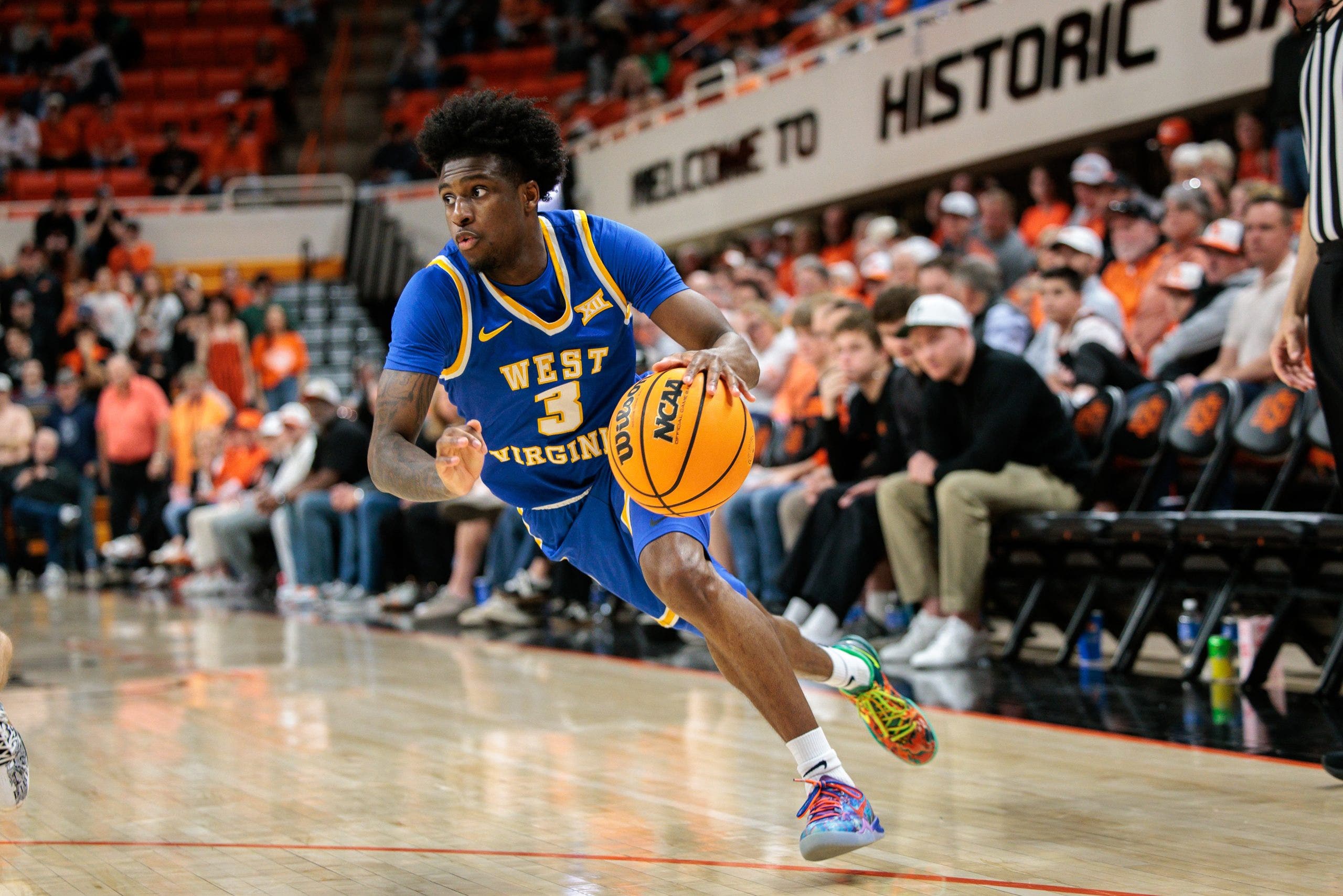
    Huff is not only one of the top 3-point shooters in this year’s College Basketball Crown, but the 5-foot-10 senior guard is also one of the most successful shooters from downtown in West Virginia program history. Huff knocked down 109 3s this season, which ranked third among Big 12 players this season. He led the Mountaineers in scoring at 15.8 points per game and has scored in double-figures in eight straight games.

    Pack is a sixth-year senior who began his career at Kansas State, where he played for two years before transferring to Miami. He spent three years at Miami and is now in his final year at Oklahoma. The 5-foot-10 senior guard has been a scoring threat throughout his collegiate career, totaling more than 2,300 points. He led the Sooners in scoring this season, averaging 16.5 points per game while shooting 47% from the field and 45% from 3-point range. 

    After playing his freshman and sophomore year at S. Joe’s, Brown transferred to Oklahoma this offseason and became a full-time starter in the Sooners’ backcourt, averaging 15.3 points per game, which ranked second on the team. He led the Sooners in both assists (3.2) and steals (1.3), while shooting 46% from the field. 

    Read More

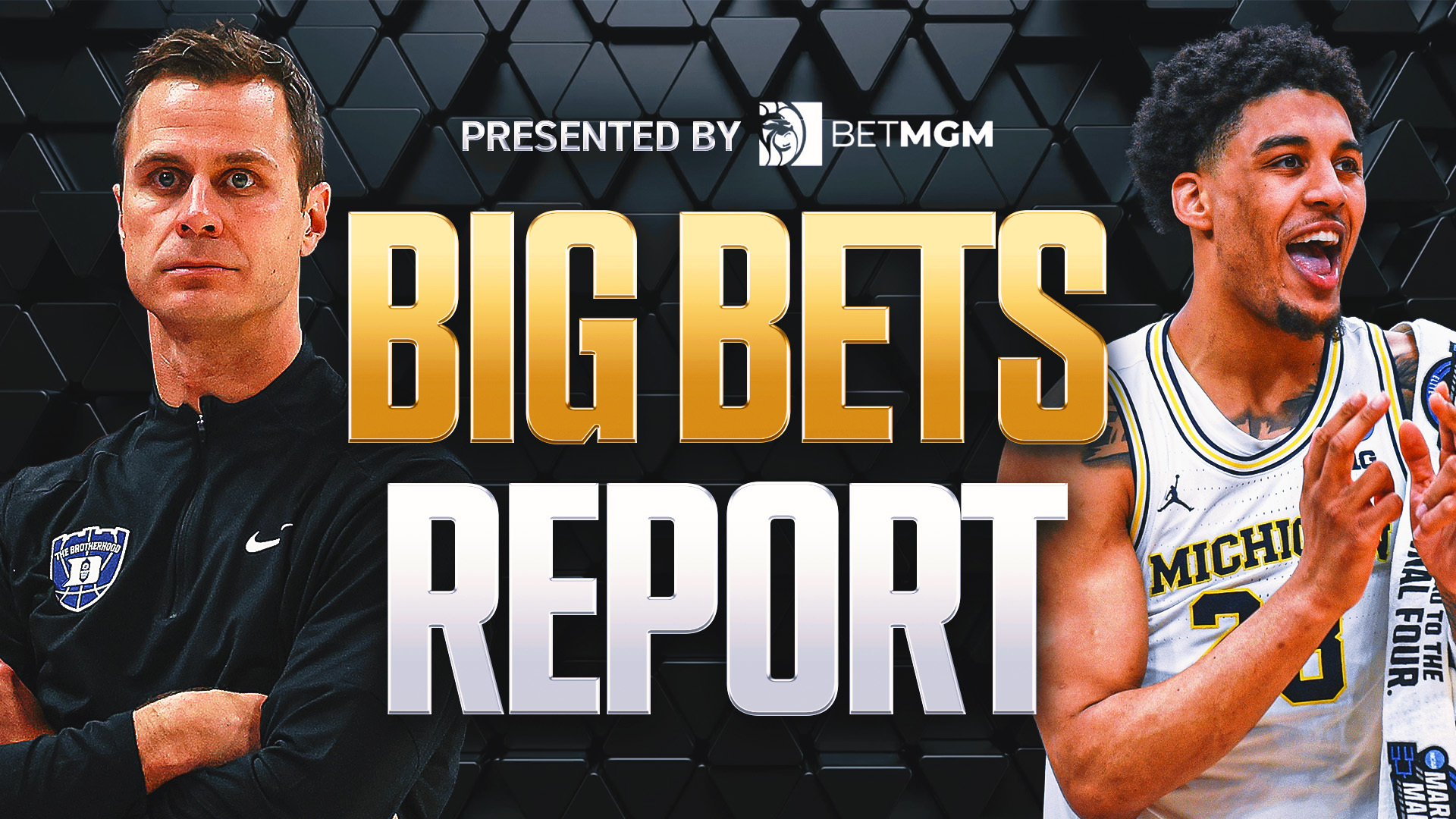
  • Big Bets Report: Bettor Loses Chance at 0k After Shocking Duke Loss

    Big Bets Report: Bettor Loses Chance at $500k After Shocking Duke Loss


    As UConn and Duke took the floor Sunday in the East Region final, the Huskies were in the range of +180 moneyline underdogs on the March Madness oddsboard.

    Late in the first half, down 19 points, UConn was 10 times that — a +1800 underdog to pull the outright upset. 

    In other words, it was quite unlikely.

    But if you had a hundred bucks burning a hole in your pocket, well, maybe take a shot. That was apparently the mindset of one Fanatics Sportsbook customer.

    More on that shocking winner, a couple of corresponding, heartbreaking Duke losing bets, along with other notable parlays and major wagers, as we recap the weekend that was in NCAA Tournament betting.

    This page may contain affiliate links to legal sports betting partners. If you sign up or place a wager, FOX Sports may be compensated. Read more about Sports Betting on FOX Sports.

    Big Dogs

    Sure, big bets and big payouts get the most attention. There’s something about living vicariously through wagers most of us could never dare to make.

    But relatable bets are underrated, especially when they win. Like the $120 the Fanatics bettor wagered on UConn +1800 in-game moneyline, while getting smoked by Duke in the first half.

    It took the entire second half for the Huskies to dig out of that once 19-point hole, literally up until the final second. But they did so.

    Trailing 72-70 as the final seconds ticked away, UConn forced a turnover near mid-court. Then Braylon Mullins knocked down a long 3-pointer with 0.4 seconds left, giving the Huskies a 73-72 victory to cap an unbelievable comeback.

    The bettor got an hour or so of absolute theater and an exhilarating finish, while turning that $120 into $2,280. 

    That’s entertainment.

    Parlay Pity

    Nearly a year ago, ahead of the 2025 Masters, a FanDuel Sportsbook customer put $50 on a three-leg futures parlay. The bettor tied the prestigious golf tournament to the World Series and March Madness.

    Add up those odds, and you’ve got a healthy +26080, or just shy of 261/1.

    Rory McIlroy got the first leg through, winning a riveting Masters in a playoff against Justin Rose. Equally riveting, the Dodgers won a dramatic Game 7 over the Blue Jays, 5-4 in 11 innings, to claim the World Series.

    It’s been hurry-up-and-wait ever since Nov. 1.

    Duke got the overall No. 1 seed in the NCAA Tournament and survived a huge first-round scare vs. No. 16 seed Siena. By the time the Elite Eight arrived, the Blue Devils were on a 14-game win streak.

    And as noted above, they led UConn 44-25 late in the first half. The Final Four seemed assured, and that parlay looked to still be in great shape.

    Until it wasn’t. So no $13,000 payday there.

    At Fanatics, a potentially much more massive payday went by the boards, though it needed more than Duke. 

    Months ago, a customer put just $10 on a seven-leg parlay, combining a couple of Premier League soccer matches with the College Football Playoff, the NFL playoffs, March Madness and the NBA Finals.

    Odds were a humongous +5354900, or in slightly easier-to-digest terms, nearly 54000/1.

    Once the Patriots and Seahawks won the AFC and NFC titles, respectively, the first five legs were in. Duke was certainly well-positioned, at the very least.

    The Spurs winning the NBA title? Well, that might’ve been a stretch, but not out of the question.

    Hopefully it was just fun to dream about turning $10 into more than half-a-million.

    Parlay Partay

    Parlays are a bookmaker’s best friend. It’s a sports betting mantra that can’t be repeated often enough.

    Keep that phrase in mind, anytime you feel compelled to add more legs to your bet. Be reasonable.

    If you’re going to line up 13 outcomes, then bet a responsible amount on all those outcomes occurring. Like, say, $8.31.

    A Fanatics customer did just that on Friday, combining MLB, NBA and March Madness odds on this ticket:

    The final three legs: Michigan and Duke as solid moneyline favorites in the Sweet 16, along with moneyline underdog Tennessee.

    Michigan beat Alabama 90-77, Duke held off St. John’s 80-75 and Tennessee rolled over Iowa State 76-62.

    At odds of +181630 — or just beyond 1816/1 — that eight bucks and change turned into a stout $15,093.45.

    I Like Big Bets and I Cannot Lie

    There was no shortage of high-roller plays over the second weekend of March Madness odds. A few of the more notable bets:

    • $100,000 Illinois moneyline -340 vs. Iowa (DraftKings). The Fighting Illini just had to win, regardless of margin, and did so 71-59. The bettor profited $29,411.76 (total payout $129,411.76).
    • $45,000 Purdue +5.5 vs. Arizona (DraftKings). The Boilermakers couldn’t hold up in the second half, losing 79-64. That’s a five-figure donation to the house.
    • 35,000 UConn +5.5 (-115) vs. Duke (DraftKings). It didn’t look good in the first half, but it’s all about how it ends. The Huskies won outright as 5.5-point ‘dogs, and the bettor won $30,434.78 (total payout $65,434.78).
    • $32,000 Arizona moneyline -270 vs. Purdue. The Wildcats roll 79-64, and the bettor banks $11,851.85 profit (total payout $43,851.85).

    And let’s wrap it up with a relatively modest three-figure wager, on the golf course, rather than on the basketball court.

    Over the weekend, Gary Woodland completed a remarkable 2.5-year comeback from brain surgery and PTSD to win the PGA Tour’s Houston Open. Woodland posted a 21-under 259 total, five strokes clear of second-place Nicolai Hojgaard.

    Woodland was a +9600 long shot (96/1) to win the tournament. A DraftKings customer put $800 on Woodland and bagged $76,800 in profit. That’s a pretty good weekend.

    As for those bigger wagers, keep in mind that high-rollers have the bankroll to make such bets — and potentially absorb huge losses. Keep your wagers and expectations reasonable. Don’t bet more than you can afford to lose.

    Read More

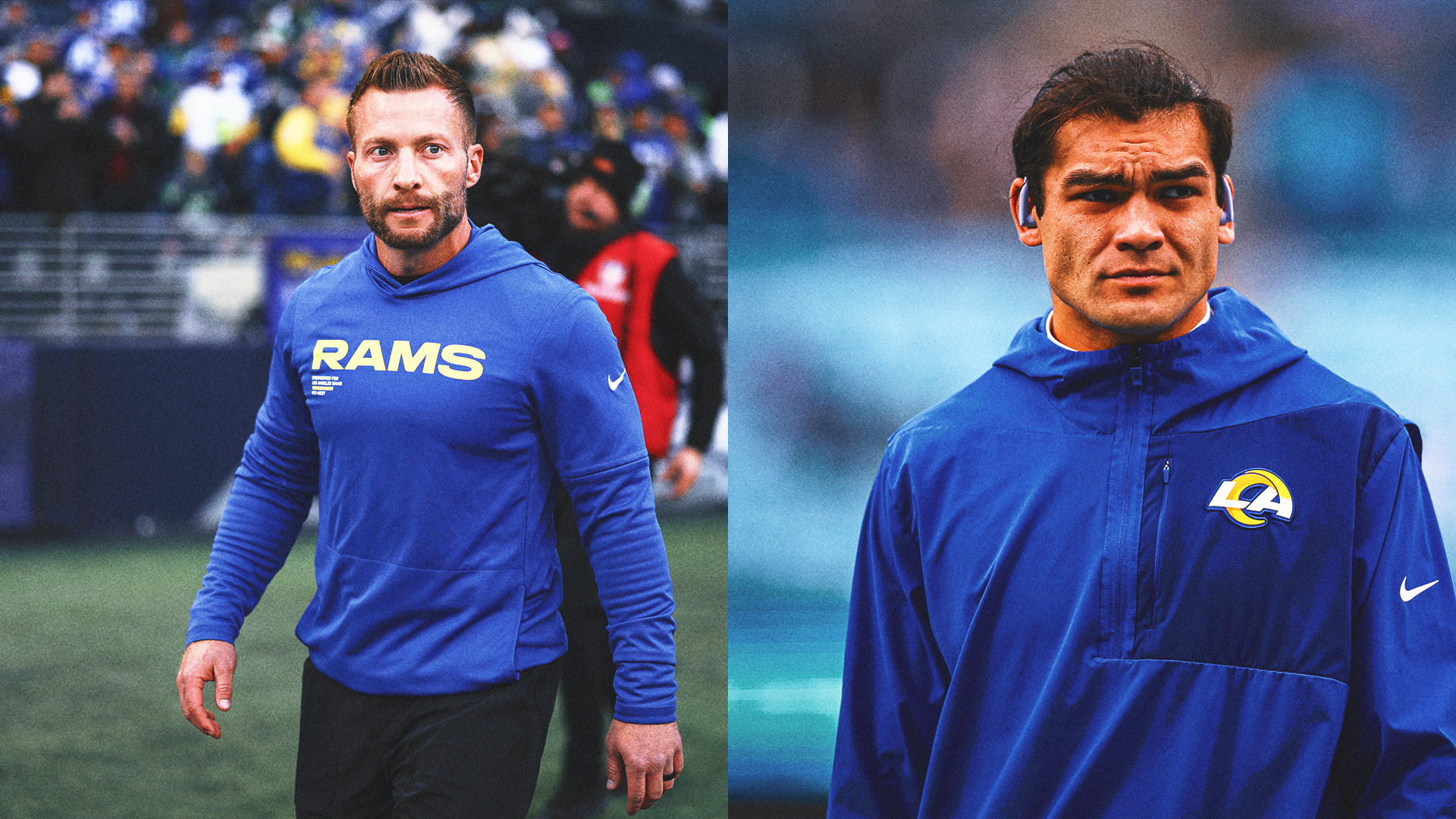
  • Rams HC Sean McVay Backs Puka Nacua; Mentions Kirk Cousins as Potential Backup QB

    Rams HC Sean McVay Backs Puka Nacua; Mentions Kirk Cousins as Potential Backup QB


    PHOENIX – Los Angeles Rams head coach Sean McVay isn’t ready to give up on talented wide receiver Puka Nacua

    McVay said the team was already aware of the latest off-field incident with Nacua that occurred on New Year’s Eve before a TMZ report made waves last week, and the Rams are continuing to gather information on that incident. 

    “I trust his heart,” McVay told reporters here at the NFL owners meeting on Monday. “I trust the human being. And I want to be able to put my arm around him. One of the most important things you can do as a coach is help guys grow. You don’t ever really say there’s one size that fits all. But what I’ve really leaned into the last couple years is let’s build and develop relationships, let guys continue to grow and give them grace in the middle of that journey.

    “But also, let’s have an understanding of what the expectations are and who you want to become.”

    Nacua faces a civil lawsuit for an alleged assault and battery by a woman who claims he made an antisemitic statement and bit her on the shoulder on New Year’s Eve. Nacua’s attorney, Levi McCathern, has already strongly denied that his client made any antisemitic statements. He described the bites as “horseplay.”

    Nacua had previously issued an apology last December after performing a gesture that plays upon antisemitic tropes while appearing on an internet live stream.

    McVay says Nacua’s off-the-field issues have not risen to the level that the Rams do not want him to be part of the team’s long-term plans. McVay doesn’t believe that Nacua’s behavior hasn’t reached the point of being a distraction to the team, either. 

    “He and I have a close relationship,” McVay said. “We communicate clear, open and honest. The play on the field is amazing. And with what the play has dictated and determined, there’s a responsibility in terms of representing all things, not exclusive to just that. 

    “He knows that. Those are the expectations, and we’re hopeful that this will be an opportunity for him to learn and grow. And we are real hopeful that he’s going to be a Ram for a really long time. But he understands what the responsibility is, not exclusive to the production on the field.” 

    The Seattle Seahawks recently made Jaxon Smith-Njigba the highest-paid receiver in the league, inking him to a four-year, $168.6 million contract. Nacua, 24, would seem to be the next receiver in line to receive a life-changing new deal as he enters the final year of his rookie contract. However, sources I spoke with around the league said Nacua might have to wait to get paid, pointing to how the Rams traditionally handle contract extensions, along with his issues away from the field. 

    “Good players get paid,” an NFL personnel executive recently told me. “[Smith-Njigba’s] numbers will look remarkably low in two years. Puka is a tough one, because his injuries, style of play and hiccups off the field have to be considered.”

    A fifth-round selection by the Rams in the 2023 draft, Nacua is entering the final year of his rookie deal and is set to make $5.77 million in 2026. Over the last three seasons, Nacua is second in receiving yards (4,191) and fourth in receptions (313). Last year, Nacua led the NFL with 129 receptions, with 1,715 receiving yards and 10 receiving touchdowns. 

    In other roster news for the Rams, McVay shared the team is still exploring the possibility of who will backup 38-year-old quarterback Matthew Stafford. Last year’s backup, Jimmy Garoppolo, remains unsigned, and third-string quarterback Stetson Bennett is the only quarterback other than Stafford currently on the roster.

    McVay threw another name into the ring on Monday. 

    “I would love to have Jimmy Garoppolo back with us,” McVay said. “That’s a big deal for us. He’s earned the right to be able to take his time and do whatever he wants. Is there an opportunity to explore if it’s not Jimmy, maybe it’s Kirk Cousins? Of course, I’d love to be able to see what that looks like.”

    Cousins, 37, is still a free agent after getting released by the Atlanta Falcons earlier in March. McVay has worked with Cousins in the past, serving as the quarterback’s offensive coordinator for three seasons when they were in Washington. 

    Read More

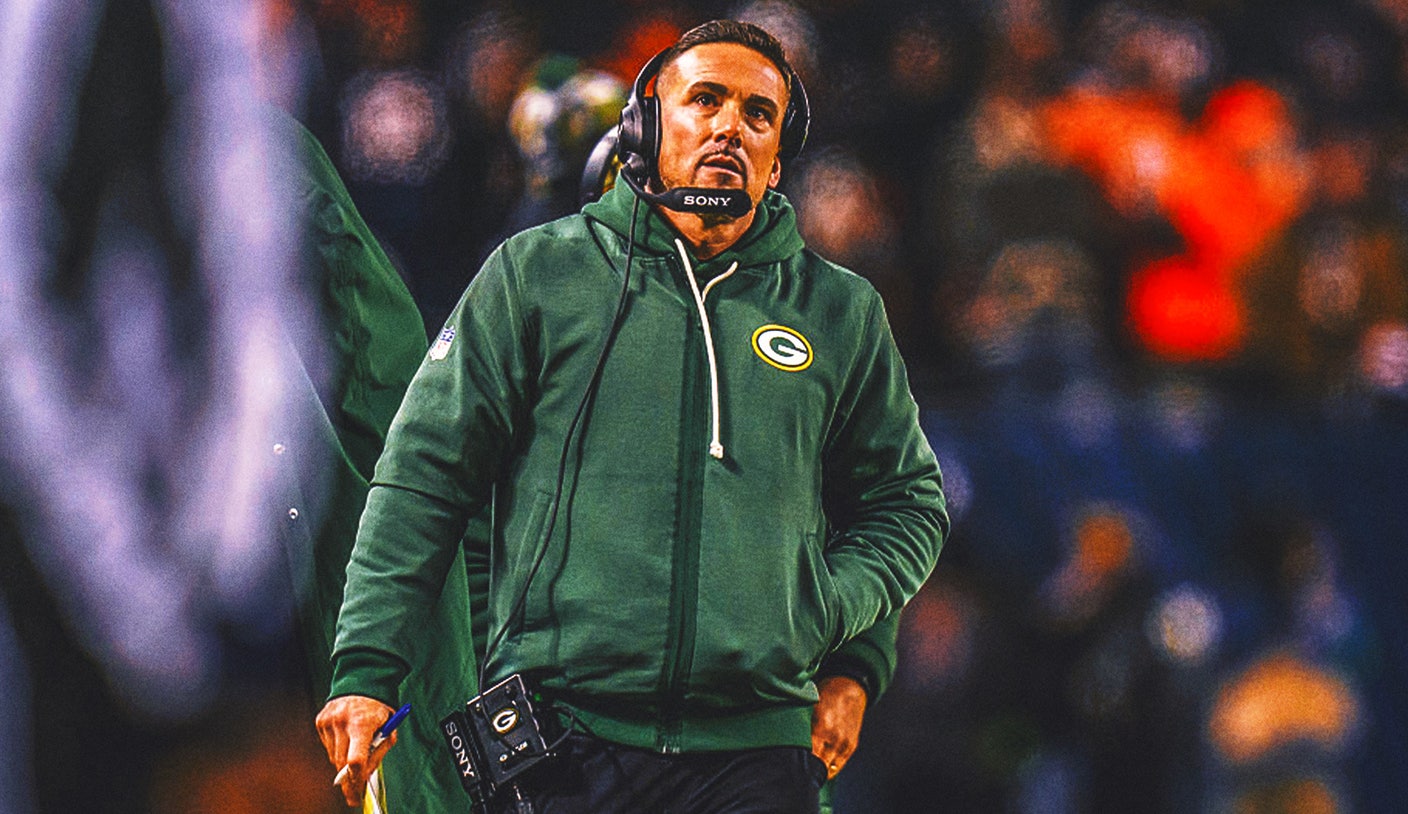
  • Packers HC Matt LaFleur Responds to His NFLPA Grade: ‘You Can’t Please Everybody’

    Packers HC Matt LaFleur Responds to His NFLPA Grade: ‘You Can’t Please Everybody’


    PHOENIX — In late January, Matt LaFleur received a major nod of approval from the Green Bay Packers in the form of a contract extension. That solidified his position in the organization, likely for years to come. 

    But then came the annual NFLPA player survey, which complicated the picture slightly. The report, which was not supposed to be public this year but leaked through multiple media outlets, revealed that players gave him a B- grade, tied for third-worst in the NFL. That’s after LaFleur received an A- grade after the 2024 season. This year, it came down to “respect for players,” per the report.

    At the NFL owners meetings in Phoenix on Monday, LaFleur, who’s entering his eighth season with Green Bay, discussed how he’s handling the assessment of his coaching.

    “I try to take that with a grain of salt, but you don’t want to just dismiss that stuff. You got to look into it,” he told reporters. “I feel pretty confident with my conversations with the majority of our players, but certainly some guys felt a certain type of way. And the one thing I’ve learned in this business is: You can’t please everybody. You can’t be all things to all people. And ultimately, you got to make decisions that you feel are in the best interest of your football team.

    “Great leaders are great listeners, but that doesn’t mean we’re always going to do what that person suggests. It’s impossible.”

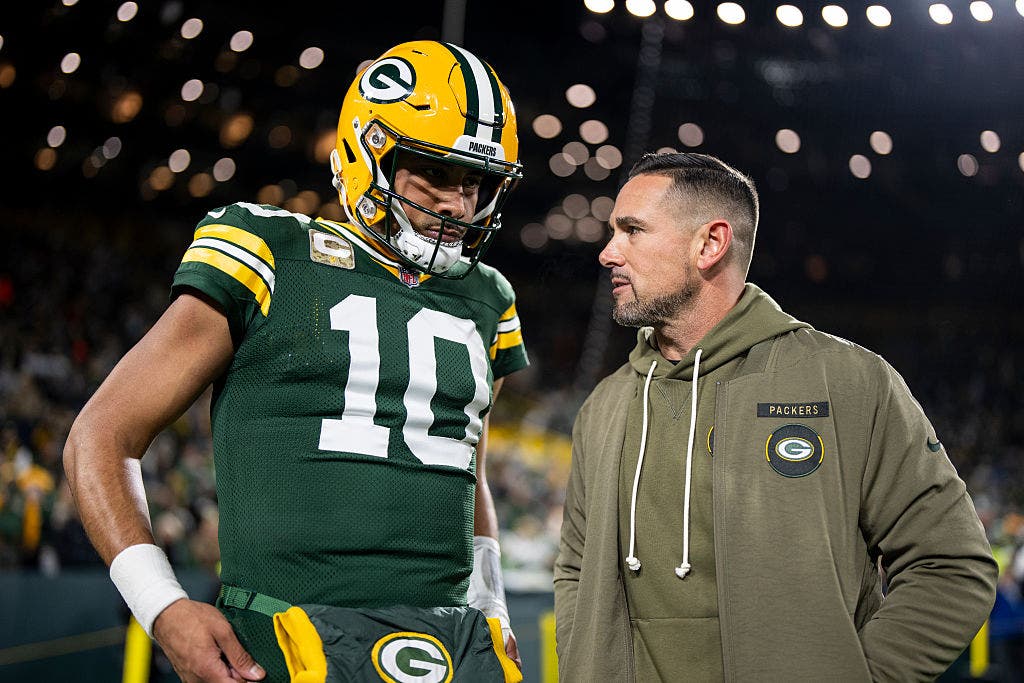
    Packers QB Jordan Love shares a moment with head coach Matt LaFleur prior to facing the Philadelphia Eagles at Lambeau Field last November. (Photo by Michael Owens/Getty Images)

    The Packers traded for All-Pro edge Micah Parsons at the beginning of the season in a blockbuster deal with Dallas that made them look like a Super Bowl front-runner. But Parsons suffered a knee injury in December and the Packers’ defense looked thin without him. It didn’t help that the offensive line suffered injuries and underperformed. And Green Bay lost its final five games of the season, including its wild-card matchup against the rival Chicago Bears.

    “If I’m being honest about it, I think there were some guys that were upset about roles last year, and I think that took a toll on our football team,” LaFleur said.

    Micah Parsons suffered a season-ending ACL tear in his left knee in Week 15. (Photo by Christian Petersen/Getty Images)

    The late-season issues increased speculation that, perhaps, LaFleur might not receive an extension. And the losing streak probably didn’t help with morale in the locker room. 

    He was asked, specifically, about comments in the survey regarding his “respect for players.”

    “I don’t feel that way, but unfortunately, some guys did,” LaFleur said. “And so that tells me I got to do a better job of communicating. And it goes back to the relationship piece. I think it’s so critical. We always talk about, ‘Connected teams are powerful teams.’ And we’ve got to grow that connection. 

    “So certainly, that’s been a topic of conversation within our building. How do we get these guys a little closer? The more they know each other, the more they’re going to battle for one another. Although they may be competing within a certain position, they’re going to help each other grow and ultimately be better individual players, which should help our collective football team.”

    LaFleur and the Packers didn’t have any blockbuster acquisitions over the offseason, instead bringing in a group of role players — and trading veteran edge Rashan Gary to Dallas for a 2027 fourth-round pick. Green Bay largely stuck with last season’s core. As a result, the Packers must feel optimistic they can recreate the way they started their 2025 season, going 9-3-1 in their first 12 games.

    In a way, that’s yet another nod of confidence in LaFleur to generate better results with the same ingredients.

    Read More

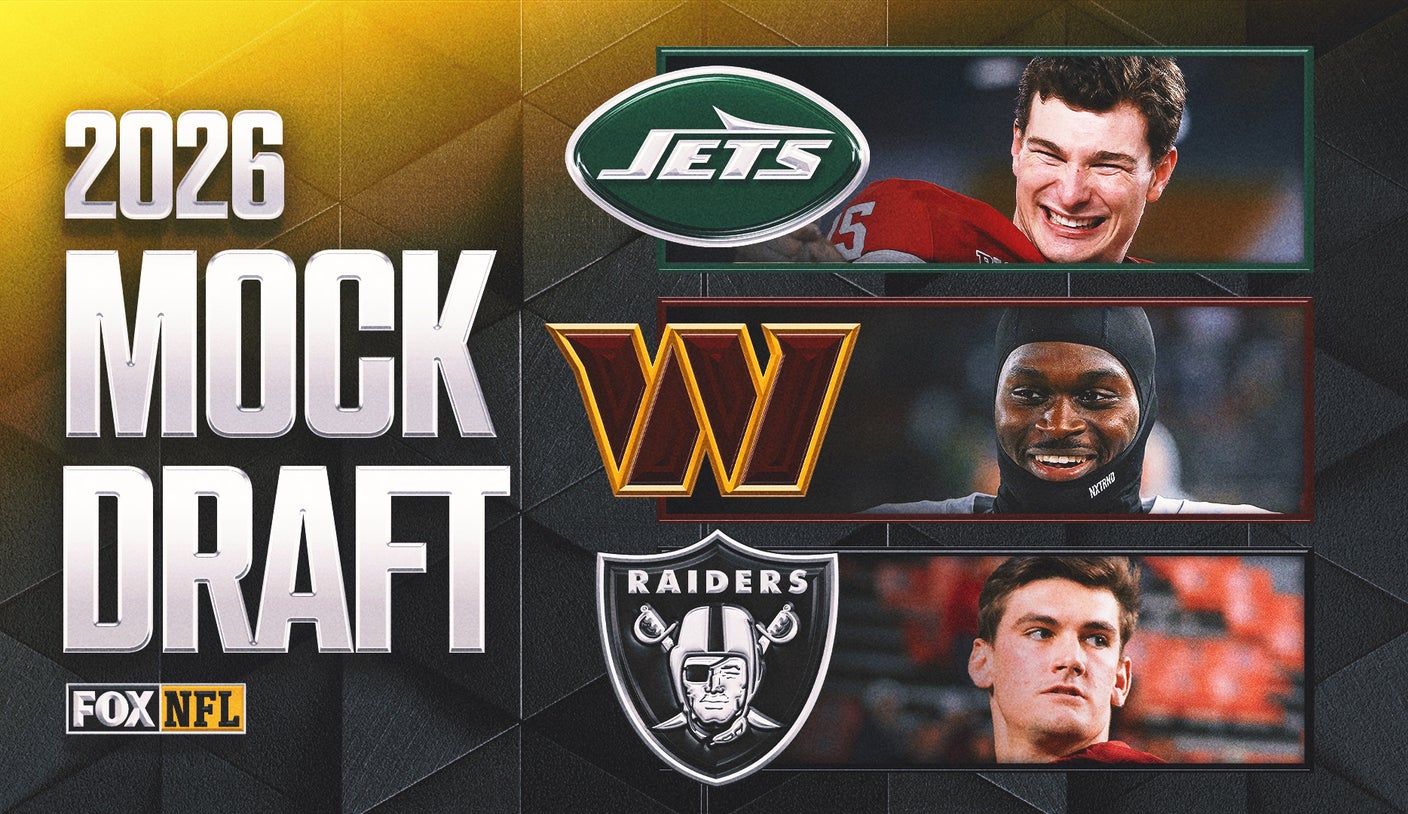
  • 2026 NFL Mock Draft: Every First-Round Pick Gets Traded!

    2026 NFL Mock Draft: Every First-Round Pick Gets Traded!


    In a public response to a recent proposal by the Cleveland Browns to allow NFL teams the ability to trade draft picks five years out, Los Angeles Rams president Kevin Demoff wrote on social media, “Nothing creates more interest in the NFL than trades… More picks to trade = more trades = more interest and team-building options.”

    We took those words to heart in this mock draft, projecting trades for every pick of the first round. Not all these trades will occur, obviously. But this exercise is intended to demonstrate which teams have the draft capital to be aggressive and which fan bases should be fully expecting their favorite clubs to trade down, rather than stick and pick. 

    FIRST ROUND

    1. New York Jets (from Raiders): Fernando Mendoza, QB, Indiana 

    To be clear, I don’t think there is any way the Raiders trade the No. 1 overall pick. They currently have just one QB on their roster (Aidan O’Connell) and a huge part of their recruitment of new head coach Klint Kubiak was surely the opportunity to select Mendoza, a terrific fit for his offense. However, the Jets have the assets necessary to tempt the Raiders and their actions this offseason — including the Nos. 2, 16 and 44 picks in this draft. Moreover, their decision to retain Breece Hall, sign veteran LB Demario Davis and trade for both Geno Smith and Minkah Fitzpatrick speak to the urgency GM Darren Mougey and head coach Aaron Glenn are operating with to save their jobs. Mendoza has the talent and intangibles to handle the unique pressure of playing in the country’s largest media market, and he wouldn’t be forced onto the field early with Smith already on the roster. 

    QB Fernando Mendoza #15 of the Indiana Hoosiers smiles on the podium following the Indiana Hoosiers versus the Miami Hurricanes College Football Playoff National Championship Game Presented by AT&T on January 19, 2026, at Hard Rock Stadium in Miami Gardens, FL. (Photo by Peter Joneleit/Icon Sportswire via Getty Images)

    2. Las Vegas Raiders (from Jets): Arvell Reese, LB, Ohio State

    The Jets would have to pay plenty to move up to the first pick for Mendoza. While I’m still not convinced the Raiders would do it, if they liked any other quarterbacks in this class, the possibility exists. Reese’s ability to play both off-ball linebacker and attack off the edge opposite Maxx Crosby is certainly intriguing, especially given his ability to spy the mobile quarterbacks of the AFC West. 

    3. Washington Commanders (from Cardinals): Jeremiyah Love, RB, Notre Dame

    If the Commanders are really serious about protecting Jayden Daniels, they’ll insulate him with a dynamic runner and won’t risk losing the opportunity to draft him by waiting until they are on the clock at No. 7 overall. With just six draft picks in 2026 (including no second-round selection), Washington would have to be bold, indeed, to make this move, likely having to trade not only this year’s first round pick but next year’s, as well.

    4. Kansas City Chiefs (from Titans): Sonny Styles, LB, Ohio State 

    Jumping from the No. 9 selection to No. 4 overall would likely cost the Chiefs at least their third- (No. 74) and fourth-round (No. 109) picks this year, but adding a difference-maker like Styles would be worth it. The Chiefs need to find a new star to build a reshuffled defense around, and with the dynamic dual-threat quarterbacks in the AFC West, the speedy Styles would be an excellent choice. 

    5. Miami Dolphins (from Giants): Carnell Tate, WR, Ohio State

    The Dolphins are looking for new playmakers after an offseason in which longtime stalwarts Tua Tagovailoa and Jaylen Waddle (and Tyreek Hill) have been cast aside. New QB1 Malik Willis has little chance at success if the Dolphins don’t give him some weapons. With an NFL-best seven picks among the top 94 — beginning with the No. 11 pick — and 11 overall, Miami has the draft capital needed to be aggressive. 

    Carnell Tate #17 of the Ohio State Buckeyes participates in drills during 2026 Ohio State Pro Day at Woody Hayes Athletic Center on March 25, 2026 in Columbus, Ohio.  (Photo by Jason Mowry/Getty Images)

    6. Dallas Cowboys (from Browns): David Bailey, Edge, Texas Tech 

    Jerry Jones is perennially in win-now mode, but with longtime NFC East rival Washington making the splashy trade up to secure star running back Jeremiyah Love a few picks earlier, the Cowboys may react even more aggressively. It might cost the Cowboys both of their first0round picks in the 2026 draft (Nos. 12 and No. 20) to secure the best pass-rusher in this class, but boosting a rush that finished last season tied for 28th in the NFL should be a top priority. 

    7. Arizona Cardinals (from Commanders): Francis Mauigoa, OT, Miami

    New head coach Mike LaFleur inherits a team that finished a distant fourth in the NFL’s top division a year ago. This will not be a one-year rebuild. Adding Washington’s first-round pick in a 2027 draft class that is widely expected to be loaded with QB talent gives LaFleur and general manager Monti Ossenfort plenty of flexibility. For now, adding a bully along the offensive line to help protect that future investment at quarterback makes the most sense. 

    8. Baltimore Ravens (from Saints): Mansoor Delane, CB, LSU

    Delane grew up in Silver Spring, Md., rooting for the Baltimore Ravens, and a bold move up by GM Eric DeCosta to make him the first defensive back drafted in 2026 would undoubtedly be a dream come true for the gifted cornerback. Boosting the secondary could go a long way toward resurrecting Baltimore’s Super Bowl aspirations, making it worth it — at least in my opinion — to consider offering the Saints a couple of middle-round picks (like No. 73 and 136, for example) to do it. 

    9. Tennessee Titans (from Chiefs): Rueben Bain Jr., Edge, Miami

    Pairing Bain — the most violent player in this class — with Jeffery Simmons would be just the sort of move that Robert Saleh would push for at No. 4 overall. The short arm concerns, however, could push him down the board and would certainly make the Titans an early “winner” if they were able to add him, as well as a couple of extra mid-round picks, by trading down. 

    10. Minnesota Vikings (from Bengals): Caleb Downs, S, Ohio State

    Some believe that safeties just aren’t valuable enough in today’s NFL to justify a top-10 selection, but I think Downs’ tape over the past three seasons proves that he is the best player in this draft class. If he slips far enough, some savvy team is going to look brilliant. Sign me up for Downs in Brian Flores’ defense. Minnesota might have to give up both of their third-round picks (Nos. 82 and 97) to pull off a trade into the top 10, but as the signing of Kyler Murray proves, the Vikings aren’t afraid of bold action. 

    Caleb Downs #2 of the Ohio State Buckeyes participates in drills during 2026 Ohio State Pro Day at Woody Hayes Athletic Center on March 25, 2026 in Columbus, Ohio.  (Photo by Jason Mowry/Getty Images)

    11. New York Giants (from Dolphins): Kadyn Proctor, OL, Alabama

    The Giants would be living up to their name with the addition of the 6-foot-7, 352-pound Proctor, who ranks among the most polarizing prospects in this class. John Harbaugh won with massive offensive lines in Baltimore, and I don’t expect his style to change now. Whether it be at tackle or guard, I believe Proctor projects as a decade-long NFL starter. The Dolphins have four picks in the third round this year. The Giants can net at least two of those to move out of the top 10. 

    12. Cleveland Browns (from Cowboys): Spencer Fano, OT, Utah

    The Browns have addressed their offensive line in free agency, but if arguably the most gifted blocker in this class is still on the board after a trade down, they shouldn’t hesitate to take him. With improved blocking and receiving (more on that later), Cleveland can accurately evaluate its young QBs and determine whether Shedeur Sanders or Dillon Gabriel is its long-term answer or if it will, again, be heavily scouting next year’s crop. 

    13. Pittsburgh Steelers (from Rams via Falcons): Vega Ioane, OG, Penn State

    Pittsburgh is hosting the draft this year, and with a league-high 12 draft picks at his disposal, GM Omar Kahn is well-positioned to make a splash for the home crowd. While a gamble on Alabama QB Ty Simpson would make some Steelers fans happy, an investment in the trenches would seemingly be more Pittsburgh’s style, especially if it was done to steal a local fan favorite from Baltimore, the hated divisional rival picking next (who is also thought to view Ioane highly). The rugged Ioane would be an upgrade over free-agent defection Isaac Seumalo and perhaps offer a comfy enough pocket for Aaron Rodgers to return. Trading away two of the five picks the Steelers currently have between Nos. 76 and 161 overall would probably be enough to convince the Rams it’s worth trading back. 

    14. New Orleans Saints (from Ravens): Kenyon Sadiq, TE, Oregon

    The Saints appear to be moving on from veteran Taysom Hill, and Kellen Moore knows as well as anyone that a playmaking tight end can be a huge help for a young quarterback. Sadiq is a remarkable talent just scratching the surface of his potential. To drop down this far, the Saints can expect at least two middle-round selections from Baltimore, as well as the swap of first-round picks. The extra picks could go a long way in resetting this roster to best fit Moore’s vision. 

    15. Philadelphia Eagles (from Buccaneers): Makai Lemon, WR, Southern Cal

    Howie Roseman has put together one of the NFL’s best rosters, making it unlikely that all nine of this year’s draft picks will make the team. Packaging some of those — or even adding next year’s projected third-round compensatory pick (for Jaelan Phillips) to add a skilled, versatile and hungry playmaker like Lemon would provide the club insurance if things get to a breaking point with A.J. Brown. Lemon is a pinball who could feast on the single coverage he would see should Brown remain flying for the Eagles this fall.

    16. Las Vegas Raiders (from Jets via Colts): Denzel Boston, WR, Washington

    One of the few (only?) reasons why the Raiders might consider trading Mendoza at No. 1 overall is the fact that the team currently lacks proven difference-makers at receiver. Boston has the frame and game to contribute immediately, especially given the one-on-one opportunities he’ll likely see with defenses focused on Vegas’ stellar tight ends Brock Bowers and Michael Mayer and promising running back Ashton Jeanty.  

    Denzel Boston #WO08 of Washington participates in a drill during the 2026 NFL Scouting Combine  at Lucas Oil Stadium on February 28, 2026 in Indianapolis, Indiana. (Photo by Cooper Neill/Getty Images)

    17. Carolina Panthers (from Lions): Dillon Thieneman, S, Oregon

    Carolina GM Dan Morgan made a career at middle linebacker anticipating where ballcarriers were headed, and with Thieneman seemingly a perfect fit for the Vikings picking at No. 18 overall (or the Bengals in this scenario), the Panthers might need to trade up to secure his services. The Lions have nine picks but only two of them in the top 117 selections. Carolina might offer their fourth-rounder (#119 overall) as fair compensation for Detroit to move down two spots. 

    18. Cincinnati Bengals (from Vikings): Colton Hood, CB, Tennessee

    In yet another example of a team receiving extra picks in a trade down and yet still filling a key need, the Bengals should be able to take advantage of this year’s quality cornerback depth while moving out of the top 10. Hood has the pure cover skills and untapped potential the Bengals have long prioritized under Duke Tobin. 

    19. Detroit Lions (from Panthers): Caleb Lomu, OT, Utah

    Like the Bengals a pick earlier, the Lions can add to their draft class — acquiring a 10th pick — and still nab a tackle they understandably could be targeting at No. 17 in Lomu. The precocious 6-foot-6, 313-pound redshirt sophomore might one day prove the best tackle of this class. 

    20. Jacksonville Jaguars (from Browns via Cowboys via Packers): Jordyn Tyson, WR, Arizona State 

    The Jaguars refuted offseason reports that 2024 first-round pick Brian Thomas Jr. was on the trade block. They can deal him here, however, and pounce on an opportunity to reset the position with arguably the most talented pass-catcher of this class. Jacksonville and Cleveland have recent trade history, of course, with the Jags boldly moving up in the 2025 draft to select Travis Hunter. This time, they add a dynamic playmaker to complement Hunter and ship another one who doesn’t appear to be in their long-term plans to a franchise desperate for talent at receiver. To complete this trade, Jacksonville would probably have to sweeten the deal with a couple of its 11 draft picks, including three selections in the third round. 

    21. Los Angeles Rams (from Steelers): Omar Cooper Jr., WR, Indiana

    Speaking of the offseason, the aggressive upgrades at cornerback make it clear that the Rams are all-in on another Super Bowl run, so a trade up might seem more likely than moving back. But with so much salary dedicated to some of their stars, GM Les Snead might be looking for young, cheap talent. While the Rams have seven picks to work with in this draft, four of them are between 207-252. Cooper could feast on the one-on-one matchups he’d see with the Rams and replace the jet-sweep possibilities they lost with Tutu Atwell leaving in free agency. 

    22. Miami Dolphins (from Chargers): Aveion Terrell, CB, Clemson 

    Changes on offense have dominated the Dolphins’ offseason, but there are plenty of concerns on defense, as well. Behind likely top-10 pick Mansoor Delane, Terrell — an NFL legacy — is viewed by some scouts as the safest cornerback of this class. The Dolphins have a league-high four picks in the third round to part with. 

    23. Tampa Bay Buccaneers (from Eagles): Keldric Faulk, DL, Auburn

    GM Jason Licht has some retooling to do with Mike Evans now playing for the 49ers and Lavonte David officially retiring this week. Faulk is a 21-year-old, 6-foot-6, 276-pound ball of clay whose best football is ahead of him and quite the consolation prize at this point in the draft following a trade down to add to their seven selections. 

    Keldric Faulk of the Auburn Tigers participates in a drill during the 2026 NFL Scouting Combine at Lucas Oil Stadium on February 26, 2026 in Indianapolis, Indiana. (Photo by Stacy Revere/Getty Images)

    24. Indianapolis Colts (from Browns via Jaguars): Monroe Freeling, OT, Georgia

    Colts GM Chris Ballard might have to trade back into the first round, after shipping his initial top pick a year ago to the Jets for cornerback Sauce Gardner. It would probably take Indy’s second-round pick this year (No. 47) and another Day 2 selection next year to move up this far, but the club would be wise to give young right tackle Jalen Travis quality competition to replace longtime standout Braden Smith

    25. New England Patriots (from Bears): Emmanuel McNeil-Warren, S, Toledo

    The Patriots got an up-close look at Seahawks rising star Nick Emmanwori in the Super Bowl. And given the talent the Pats already have at cornerback, one couldn’t blame general manager Eliot Wolf if he saw McNeil-Warren, who boasts comparable size and athleticism to Emmanwori, as capable of making a similar type of immediate impact on New England’s defense. The Pats have 11 draft picks in 2026, and they can be aggressive with them in hopes of returning to the Super Bowl. 

    26. Houston Texans (from Bills): Kayden McDonald, DT, Ohio State

    In a case of the rich getting richer, the Texans boost one of the league’s dominant defenses with this year’s top interior lineman. Houston might be able to get McDonald at No. 28 overall, but they shouldn’t balk at giving up a Day 3 pick if it means ensuring they land one of the few nose guards with legitimate pass rush ability. 

    27. Kansas City Chiefs (from 49ers): Chris Johnson, CB, San Diego State

    Packaging the No. 29 overall selection acquired in the deal with the Los Angeles Rams that sent cornerback Trent McDuffie to the NFC, the Chiefs boldly move up to land a similarly smooth cover-corner in Johnson, the reigning Mountain West Defensive Player of the Year.  

    28. Buffalo Bills (from Texans): Cashius Howell, Edge, Texas A&M

    The Bills must add pass-rushers, and Howell is among the elite QB hunters of this draft class. He lacks the frame some teams require at the position, but his burst and bend off the edge could make him a 10-plus sack artist in the NFL. In this scenario, the Bills likely could pry pick No. 141 — the first pick of the fifth round — from Houston to move down two spots. 

    Cashius Howell #DL41 of Texas A&M participates in a drill during the 2026 NFL Scouting Combine at Lucas Oil Stadium on February 26, 2026 in Indianapolis, Indiana. (Photo by Cooper Neill/Getty Images)

    29. San Francisco 49ers (from Chiefs via Rams): KC Concepcion, WR, Texas A&M

    Even after the signings of veterans Mike Evans and Christian Kirk, the 49ers have been kicking the tires on several wideouts expected to be drafted in the first round. San Francisco knows all too well the impact that Rashid Shaheed had for the Seahawks a year ago. Concepcion is a similar brand of playmaker in the receiving, running and return game. The 49ers should be able to get at least Kansas City’s fifth-round pick (#148) for this small move down, which would give San Francisco an enviable five picks in a 22-selection span early on Day 3. 

    30. Los Angeles Chargers (from Dolphins via Broncos): Emmanuel Pregnon, OG, Oregon

    The Chargers enter the draft with just five picks. They happily add one of the Eagles’ three Day 2 picks while still reinforcing the interior of their offensive line with the powerful and pro-ready Pregnon. 

    31. Chicago Bears (from Patriots): Malachi Lawrence, Edge, UCF

    The Bears enter the draft with seven selections, but that number is deceiving as they have a 110 pick gap on Day 3 between the fourth and seventh rounds. I expect Bears GM Ryan Poles will trade down at some point to bridge that gap. If he can do so early and still get a dynamic edge rusher (who, frankly, should be in consideration with their original pick at No. 25), Poles will be giving the Bears their best chance for the kind of draft class that can spring a Super Bowl run. 

    32. Las Vegas Raiders (from Seahawks): Ty Simpson, QB, Alabama

    I cannot see a way in which the Raiders end the first round of the 2026 NFL draft without adding another quarterback to the roster. Given the connections Kubiak has with Seattle, a trade with the defending Super Bowl champs might be his last, good opportunity to do so. Simpson possesses the IQ, accuracy and mobility to be successful in Kubiak’s scheme. He might very well be available at No. 36, but the fifth-year option on the rookie contract all first rounders receive makes it more responsible financially to draft quarterbacks in the first round. To pry this pick from the Seahawks, the Raiders give up No. 36 overall, as well as veteran defensive end Tyree Wilson

    SECOND ROUND (*teams without a first-round pick)

    36. Seattle Seahawks (from Raiders): Jadarian Price, RB, Notre Dame

    The Seahawks are Super Bowl champions, but with a league-low four draft picks, winning this year’s draft is going to be nearly impossible. Adding a back with a skill set well-suited to their wide zone running scheme would be a good start, however, especially if in doing so, Seattle also received veteran edge rusher Tyree Wilson. 

    Jadarian Price #RB15 of Notre Dame runs the 40-yard dash during the 2026 NFL Scouting Combine  at Lucas Oil Stadium on February 28, 2026 in Indianapolis, Indiana. (Photo by Cooper Neill/Getty Images)

    44. Green Bay Packers (from Falcons): Lee Hunter, DT, Texas Tech

    Even after trading away their top pick for Micah Parsons, the Packers still have seven selections in this draft. But five of those are on Day 3, giving GM Brian Gutekunst minimal flexibility to move up. Adding a true nose guard is critical to the run defense, however, and the Packers don’t want to risk losing on a talent like the block-eating Hunter, so offering the Falcons No. 52 overall, as well as this year’s fifth-round pick (No. 160) might do the trick.  

    52. Atlanta Falcons (from Titans via Chiefs): R Mason Thomas, Edge, Oklahoma

    Ian Cunningham wasn’t with the Falcons last year when the club traded up to select James Pearce Jr. With the star pass-rusher currently facing multiple felony charges, the new Falcons GM might have little choice but to seek a replacement. Thomas has the burst to wreak havoc off the edge, and a trade with Green Bay would net the Falcons at least one more selection. Atlanta has just five picks in 2026, with a league-low two of them among the top-100 selections. 

    54. Denver Broncos (from Buccaneers via Eagles): Eli Stowers, TE, Vanderbilt

    As it stands now, the Broncos’ first pick in the 2026 draft is No. 62 overall, significantly lower than any other NFL team. Of course, that is because Denver exchanged their top original first-round slot for speedy Dolphins wideout Jaylen Waddle. Doubling down on that decision with another aggressive trade for a playmaking pass-catcher like Stowers seems like a Sean Payton-type move, and this time it might only cost the Broncos’ the second of their two third-round picks (No. 111) this year. 
    Read More

  • Kalshi Promo Code FOXSPORTS: Get  Bonus After Your First  Trade

    Kalshi Promo Code FOXSPORTS: Get $10 Bonus After Your First $10 Trade


    This page may contain affiliate links to legal sports betting partners. If you sign up or place a wager, FOX Sports may be compensated. Read more about Sports Betting on FOX Sports.

    The Kalshi promo code FOXSPORTS gives new users a simple welcome offer: trade $10 in prediction markets and receive a $10 bonus.

    The chase for the Final Four continues for these women’s teams today with Michigan taking on Texas. South Carolina then faces TCU. The Pistons meet the Thunder in the NBA. MLB action continues, and the Islanders face the Penguins in a marquee NHL matchup.

    Unlike traditional sportsbooks, Kalshi operates as a federally regulated prediction market exchange where users trade contracts based on real-world outcomes. These markets cover a wide range of topics, including:

    • Sports games and championships
    • Elections and political outcomes
    • Economic indicators
    • Weather events
    • Pop culture predictions

    Unlike traditional sportsbooks, Kalshi allows users to buy and sell event contracts tied to probabilities, with prices ranging from $0 to $1 depending on how likely an outcome is to happen. When you sign up and use the Kalshi bonus code FOXSPORTS, you can start trading these markets and qualify for the new-user bonus after completing your first $10 in trades.

    Current Kalshi Promo Code FOXSPORTS Details: Get a $10 Bonus After Your First $10 Trade

    Enter the Kalshi promo code FOXSPORTS, trade $10 in prediction markets, and you’ll receive $10 in bonus trading credit.

    Welcome Offer Trade $10, Get $10
    Kalshi Promo Code FOXSPORTS
    Bonus Type Trade & Get
    Bonus Amount $10
    Minimum Deposit $10+
    Minimum Trade Requirement $10 in event contracts
    Deposit Methods Debit card, bank transfer, Apple Pay, wire transfer, USDC
    Platform Type Prediction market exchange
    Regulation Commodity Futures Trading Commission (CFTC)
    Eligible States 43 States (Not in AZ, IL, MD, MI, MT, NJ, and OH)

    Kalshi Promo Code FOXSPORTS Terms & Conditions

    • The Kalshi FOXSPORTS welcome bonus is only available to new accounts.
    • Users must trade at least $10 in event contracts to receive the $10 bonus.
    • The reward is issued as bonus trading credit, not withdrawable cash.
    • Users must be 18 years or older and located in an eligible U.S. jurisdiction.
    • The Kalshi platform is currently unavailable in Arizona, Illinois, Massachusetts, Maryland, Michigan, Montana, New Jersey, and Ohio.
    • Users must complete KYC verification before depositing or trading.
    • Kalshi operates under regulation from the Commodity Futures Trading Commission (CFTC).

    How to Claim the Kalshi Welcome Bonus

    1. Click one of the Claim Now buttons on this page (or click here) to visit Kalshi and start the signup process.
    2. Create a new Kalshi account using your email address and basic registration details.
    3. Enter Kalshi promo code FOXSPORTS during signup so the welcome offer is attached to your account.
    4. Complete identity verification, which Kalshi requires before users can deposit and trade.
    5. Deposit funds and trade at least $10 in event contracts to receive the $10 bonus trading credit.

    What Is Kalshi?

    Kalshi is a regulated prediction market platform where users trade contracts based on the outcomes of real-world events. Instead of placing traditional bets like you would at a sportsbook, Kalshi allows users to buy and sell “Yes” or “No” contracts tied to specific questions.

    These questions can cover a wide range of topics, including:

    • Sports games and championships
    • Elections and political outcomes
    • Economic data releases
    • Weather events
    • Entertainment and pop culture

    Each contract is priced between $0 and $1, which represents the market’s estimated probability of that event occurring.

    For example, if a contract is priced at $0.65, the market is implying a 65% chance that the event will happen. If the prediction is correct, the contract settles at $1. If the outcome is incorrect, it settles at $0.

    Unlike traditional sportsbooks, where bettors wager against the house, Kalshi functions more like a financial exchange where users trade against other participants in the market.

    The platform operates under oversight from the Commodity Futures Trading Commission (CFTC), making it one of the only federally regulated prediction markets available to U.S. users.

    What Can You Trade on Kalshi?

    Kalshi offers a wide range of prediction markets that allow users to trade contracts tied to real-world outcomes. These markets go far beyond sports and cover events across politics, economics, weather, and pop culture.

    Because Kalshi is structured as a prediction market exchange, users can also sell their contracts before an event is finalized if prices move in their favor. This allows traders to lock in profits or reduce losses based on changing market probabilities.

    Some of the most common types of markets available on Kalshi include:

    Sports markets

    Users can trade contracts on outcomes in leagues such as the NFL, NBA, MLB, NHL, and major college sports. A typical market might ask which team will win a game or championship.

    Political markets

    Kalshi became widely known for its election prediction markets. Users can trade contracts related to election outcomes, control of Congress, and other political developments.

    Economic markets

    Many traders use Kalshi to speculate on economic indicators such as inflation, unemployment reports, interest rate decisions, and other government data releases.

    Weather markets

    Kalshi also lists contracts based on measurable weather events, such as temperature levels, snowfall totals, and hurricane activity.

    Entertainment and pop culture markets

    The platform occasionally offers markets tied to major cultural events like award shows, movie releases, or trending news topics.

    How Kalshi Prediction Markets Work

    Kalshi markets are built around simple yes-or-no questions about real-world events. Each possible outcome is represented by a contract that traders can buy or sell.

    Contracts are priced between $0 and $1, which reflects the market’s estimated probability of the event occurring.

    For example:

    • If a contract trades at $0.70, the market believes there is a 70% chance the event will happen.
    • If the event occurs, the contract settles at $1.
    • If the event does not occur, the contract settles at $0.

    Your profit depends on the difference between the price you paid and the final $1 settlement value.

    For example, buying a contract at $0.60 would return $1 if correct, creating a profit of $0.40 per share.

    Another key difference from traditional sports betting is that contracts can be sold before the event finishes. If the probability of your prediction increases, you may be able to sell your contract early for a profit rather than waiting for final settlement.

    Because the market is driven by buyers and sellers, prices can move throughout the day as new information becomes available. This is why Kalshi markets often behave more like financial exchanges than sportsbooks.

    Where is Kalshi Legal in the United States

    Kalshi operates under federal oversight from the Commodity Futures Trading Commission (CFTC), which means the platform is available to users across most of the United States.

    Because Kalshi is classified as a prediction market exchange rather than a traditional sportsbook, it is not regulated under state gambling laws the same way sports betting apps are. This allows Kalshi to operate nationally in many jurisdictions where sports betting is still illegal.

    As of March 2026, Kalshi is available in most U.S. states, but the platform is currently restricted in several jurisdictions.

    States Where Kalshi Is Legal

    States Where Kalshi is Not Available

    Kalshi Fees and Payment Methods

    Before trading prediction markets on Kalshi, users need to fund their account. The platform supports several common banking options, including traditional bank transfers and crypto deposits.

    Kalshi’s fee structure is relatively simple compared to many betting or trading platforms. Most deposits are free, though some payment methods may include small processing fees.

    Kalshi Deposit and Withdrawal Methods

    Payment Method Deposits Withdrawals Fees Processing Time
    Debit Card Yes Yes ~2% processing fee Usually within 30 minutes
    Apple Pay Yes Yes ~2% processing fee Usually within 30 minutes
    Bank Transfer (ACH) Yes Yes No fee 2–4 business days
    Wire Transfer Yes Limited Bank fees may apply Same or next business day
    Crypto (USDC) Yes Yes Network fees vary Usually within 30 minutes

    Kalshi may also charge small trading fees on matched orders, which are calculated based on the price and size of the contracts being traded.

    Withdrawals may include a flat processing fee, depending on the method selected.

    Kalshi vs Traditional Sportsbooks

    Kalshi may feel similar to sports betting apps at first, but the platform actually operates very differently from traditional sportsbooks like DraftKings or FanDuel.

    Instead of betting against a sportsbook that sets the odds, Kalshi operates as a prediction market exchange where users trade contracts against other market participants. Prices move based on supply and demand, and contracts settle at $1 if the predicted outcome occurs.

    This structure makes Kalshi function more like a financial exchange than a traditional betting platform.

    Feature Kalshi Traditional Sportsbooks
    Platform Type Prediction market exchange Sports betting platform
    Who You Trade Against Other users The sportsbook
    Pricing Format Probability-based ($0–$1 contracts) American odds (-110, +200, etc.)
    House Edge Transparent trading fees Built-in sportsbook vig
    Early Exit Sell contracts anytime Cash-out option controlled by sportsbook
    Regulation Federal (CFTC) State gaming regulators
    Market Types Sports, politics, economics, weather, entertainment Primarily sports betting

    Kalshi Combos

    Kalshi also offers combos, which allow users to combine multiple event contracts into a single position. This works similarly to a parlay in traditional sports betting, where several predictions are linked together into one trade.

    When using combos on Kalshi, the probability of all outcomes occurring is combined into a single price. Because multiple events must be correct, the potential return is higher than trading a single contract.

    For example, a combo might include:

    • An NBA team to win a game
    • An NFL team to win a matchup
    • A college basketball team to advance in a tournament

    If all of the predictions in the combo are correct, the position settles at $1 per contract, just like any other Kalshi market.

    Combos are most commonly available for major professional sports leagues, including the NBA and NFL. They allow traders to build higher-risk, higher-reward positions using multiple events within the same trade.

    However, it’s important to remember that because several outcomes must be correct, combos also carry greater risk than single-event contracts.

    Kalshi Pros and Cons

    Like any trading platform, Kalshi has advantages and limitations. Understanding how the prediction market works can help users decide whether it fits their trading style.

    Pros

    • Available in most U.S. states: Because Kalshi is regulated at the federal level, it is accessible in many states where traditional sports betting apps are not available.
    • Unique prediction markets: Kalshi offers markets on sports, elections, economic data, weather, and pop culture events that you won’t find at traditional sportsbooks.
    • Transparent pricing model: Contracts are priced between $0 and $1, which directly reflects the market’s probability of an event occurring.
    • Ability to exit trades early: Users can sell contracts before the event settles, allowing them to lock in profits or cut losses as probabilities change.
    • Low trading costs: Kalshi uses small transaction fees rather than the built-in sportsbook vig typically found in betting odds.

    Cons

    • Smaller welcome bonus than sportsbooks: The typical Kalshi promotion is a Trade $10, Get $10 offer, which is smaller than many sportsbook sign-up bonuses.
    • Learning curve for new users: Prediction markets use probability pricing rather than traditional betting odds, which may take time for some users to understand.
    • Some markets have limited liquidity: Less popular markets may have wider spreads or fewer traders compared to high-volume sports events or economic markets.

    Kalshi Promo Code FAQ

    What is the current Kalshi promo code?

    The current Kalshi promo code is FOXSPORTS. New users who sign up with this code can receive a $10 bonus after completing $10 in trades on the platform.

    How do you get the Kalshi $10 bonus?

    To receive the Kalshi welcome bonus, create a new account using promo code FOXSPORTS, deposit funds, and complete at least $10 in event contract trades. Once the requirement is met, Kalshi will credit your account with the $10 bonus trading credit.

    Is Kalshi legal in the United States?

    Yes. Kalshi operates as a federally regulated prediction market exchange under oversight from the Commodity Futures Trading Commission (CFTC). The platform is available in most U.S. states, though it is currently restricted in Arizona, Illinois, Massachusetts, Maryland, Michigan, Montana, New Jersey, and Ohio.

    How do Kalshi contracts work?

    Kalshi contracts are priced between $0 and $1, which represents the market’s estimated probability of an event occurring. If the predicted outcome happens, the contract settles at $1. If it does not occur, the contract settles at $0.

    What payment methods does Kalshi accept?

    Kalshi supports several funding options, including debit cards, bank transfers (ACH), Apple Pay, wire transfers, and USDC crypto deposits.

    Read More