Category: France

  • PDHS Panthers go back-to-back in AABHN girls hockey

    PDHS Panthers go back-to-back in AABHN girls hockey


    Paris beats undefeated Assumption for title

    Article content

    The Paris District High School Panthers girls hockey team shut down any talk of being a one-player team on Wednesday.

    Advertisement 2

    Article content

    Facing undefeated Assumption College in the AABHN championship game at the Gretzky Centre, the Panthers prevailed 3-2 with an outstanding team effort.

    Article content

    Article content

    It was the second straight championship for Paris after it won the Athletic Association of Brant, Haldimand and Norfolk championship a year ago.

    That win last yera was powered by superstar Madison Burr, currently playing for NCAA University of Minnesota-Duluth, but the Panthers proved that there was more punch to their team than one player.

    “It feels really good,” said PDHS goaltender Kenzie Coates, who was outstanding in the final.

    “We wanted this really bad. The girls played really well. It was probably our best game of the season.”

    Paris coach Shane Seibert was extremely happy for his players. Despite the fact the Panthers had lost to Assumption twice in the regular season by scores of 4-1 and 1-0, the coach believed in his team.

    Advertisement 3

    Article content

    “It’s amazing,” he said when asked what it felt like to win.

    “I’ve been with this team several years now and these girls battled their (tails) off. They knew they could do it. They just had to believe in themselves. They came out and did that.”

    It wasn’t easy.

    Things went back-and-forth to start the game but at 8:35 Carling Ruddell got the Lions on the board. That lead didn’t last long though because exactly one minute later, Sydney Kipp scored a nasty goal when she went bar down while falling to beat ACS netminder Kayli Sault.

    That’s the way things stood until there was five minutes remaining in the second. Following a backhand goal by Reese Halliday, Rowan Worrall followed that up with a power-play marker with 3:30 to go until the third.

    Advertisement 4

    Article content

    Running out of time, the Lions pressed and they were rewarded on a power play when Ruddell got her second of the game.

    At that point, Coates knew she had to stand tall.

    “After the second goal went in, I knew I needed to keep the puck out,” she said. “I was nervous but trying to stay calm.”

    Assumption continued to push for the tying goal but in the end, the Lions ran out of time and the Panthers clinched their second straight title.

    Taylor Drinkle got two assists for PDHS with one apiece to Harley Shuart, Raegan Charter, Alyssa Oakes and Scout Hergott-Leader.

    Victoria Sharp got two assists for ACS.

    The Panthers were competing in a play-in game on Friday to advance to the Central Western Ontario Secondary Schools Association A/AA championship, which will be hosted by Simcoe’s Holy Trinity Catholic High School on March 4 and 5.

    Advertisement 5

    Article content

    In last year’s play-in game, Paris suffered a heartbreaking overtime loss.

    “We’re looking forward to it,” Coates said. “Hopefully we win because we didn’t get to go last year.”

    Seibert said now that the players have achieved one goal, it’s time to move on to the next.

    “It’s frustrating that we have to play it but we understand,” he said of the play-in game.

    “The team we’re going to be facing, I think it’s Hagersville, they’re a strong team as well. We have to play the exact same game we played today. We know we can do it.”

    The result of that game was not known at press time.

    ACS will play in the CWOSSA AAA championship on March 10 (in Waterloo) and 11 (Woolwich).

    Other members of Paris’ championship team not already mentioned include Faith Smith, Sav Brown, Lily Goodyear, Dani Seibert, Addison Langille, Hayley Jackson, Megahn Balog, Brooklyn Boer and coaches Paul Armstrong, Shannon Pearson, Patti Halliday and Wilma Nicholls.

    PDHS finishes the AABHN season with an 8-2 record. ACS was 9-1.

    Article content

    Read More

  • Pendant que la Russie façonne son offensive d’été, l’armée ukrainienne reprend du terrain

    Pendant que la Russie façonne son offensive d’été, l’armée ukrainienne reprend du terrain


    La guerre contre l’Iran a officiellement mis en pause les discussions pour une fin de conflit négociée entre l’Ukraine et la Russie. En un an, celles-ci n’avaient de toute façon abouti à aucun résultat concret, si ce n’est l’intensification des attaques russes contre les civil·es ukrainien·nes.

    Le Kremlin assume : il dit vouloir poursuivre sa guerre d’agression, car ses objectifs n’ont « pas été pleinement atteints ». L’avenir de l’Ukraine se joue donc, pour l’heure, sur le champ de bataille et dépendra de sa capacité à continuer de résister aux tentatives d’invasion russes.

    Si la situation reste très sombre pour les Ukrainien·nes, qui subissent depuis quatre ans une guerre qu’ils n’ont pas voulue, ces dernières semaines leur ont toutefois donné quelques nouvelles moins mauvaises que d’ordinaire. Les forces armées ukrainiennes ont regagné, selon Kyiv, environ 400 kilomètres carrés (km2) depuis début février grâce à une série de contre-attaques victorieuses sur certaines portions du front.

    Un soldat ukrainien lance un drone utilisé pour la reconnaissance et le guidage des tirs d’artillerie dans la direction de Zaporijjia, le 22 février 2026. © Photo Dmytro Smolienko / Ukrinform via ZUMA Press Wire / REA

    Ces victoires tactiques ont peu de chances de se transformer en percée, mais elles ont d’ores et déjà perturbé les préparatifs de l’offensive que prévoyait la Russie pour le printemps et l’été, assurent plusieurs analystes.

    Effet cumulatif

    Ces progressions ukrainiennes ont eu lieu au sud de la ville de Zaporijjia, autour des localités d’Orikhiv et de Houliaïpole. Cette dernière, ville de naissance du célèbre anarchiste ukrainien Nestor Makhno (1888-1934), qui s’est battu à la fois contre les tsaristes et l’Armée rouge, et dans laquelle Mediapart avait pu se rendre au printemps 2023, est désormais largement contrôlée par l’armée russe.

    Dans ce coin de campagne couvert de champs de blé, de seigle et de villages aujourd’hui quasiment rasés par les bombes russes, les forces de Kyiv ont donc repris en quelques semaines de larges portions de territoire qui avaient été conquises par Moscou durant l’hiver. Le chiffre de 400 km2 regagnés, avancé par l’état-major ukrainien, n’est pas vérifiable de manière indépendante. Mais des analystes militaires et des groupes d’osinteurs confirment des progressions significatives.

    L’Institute for the Study of War, un think tank conservateur états-unien, décomptait le 10 mars « 279 km2 » reconquis dans la zone – une estimation basse, précisaient ses chercheurs. « Pour la première fois depuis 2023, nos données montrent que la Russie a perdu en un mois plus de territoire ukrainien qu’elle n’en a gagné », précisait le 3 mars Emil Kastehelmi, cofondateur du groupe de recherches en sources ouvertes finlandais Black Bird, qui met quotidiennement à jour sa carte de la guerre en Ukraine.

    La dynamique se poursuit depuis. « Les contre-attaques continuent et produisent un effet cumulatif », observe Viktor Kevlyuk, colonel de réserve de l’armée ukrainienne et analyste au sein d’un think tank basé à Kyiv, le Centre pour les stratégies de défense. Il assure, à la suite de plusieurs commandants ukrainiens, que l’armée a avancé « de 10 à 12 kilomètres » dans certaines directions, avec pour effet de « chasser presque entièrement les troupes russes de l’oblast de Dnipropetrovsk », où elles étaient entrées à l’été 2025.

    Dans la région voisine de Zaporijjia, les attaques russes, qui permettent aux militaires russes de grignoter petit à petit le Sud et l’Est ukrainien, auraient été largement ralenties, voire stoppées à certains endroits.

    L’effet Starlink

    Les militaires ukrainiens ont réussi à profiter de l’alignement de deux étoiles : d’abord, des conditions météo particulièrement favorables. Courant février, une combinaison de brouillard et de forts vents a cloué les drones russes au sol, permettant à des soldats ukrainiens de progresser sans risquer d’être repérés, a ainsi révélé dans la presse ukrainienne le commandant du 1er régiment d’assaut (« Da Vinci »), Dmytro Filatov.

    Une deuxième étoile s’est alignée, qui a permis aux militaires ukrainiens d’exploiter leur avantage : le cafouillage dans les communications russes lié à la coupure des terminaux Starlink qui les reliaient à Internet. Début février, en effet, l’entreprise SpaceX, détenue par Elon Musk, a désactivé tous les terminaux Starlink utilisés frauduleusement par la Russie pour coordonner ses opérations et orienter ses frappes.

    Signe de la fébrilité qui a saisi certaines unités russes à la suite de cette coupure : des familles de prisonniers de guerre ukrainiens ont rapporté des tentatives de chantage de la part de leurs geôliers afin de les forcer à enregistrer de nouveaux terminaux à leur nom.

    Ces avancées ukrainiennes ont toutefois peu de chances de déboucher sur une grande percée. Ce n’est, semble-t-il, même pas leur objectif : plusieurs commandants connus pour leur parole assez libre, parmi lesquels Dmytro Filatov, ont expliqué que le but pour les Ukrainiens était de se donner un peu d’air afin de mieux préparer leur défense, et non de lancer de grandes manœuvres qui risqueraient d’être très meurtrières pour leurs soldat·es.

    « Ce n’est pas une grande contre-offensive, comme tout le monde l’assure bruyamment », a-t-il averti début mars, devant le début d’euphorie qui commençait à gagner les réseaux sociaux ukrainiens.

    « Il s’agissait d’une “défense active” classique, assortie de contre-attaques tactiques : une stratégie très efficace à l’échelle locale, mais qui ne pouvait pas être étendue au-delà, abonde Viktor Kevlyuk, interrogé par Mediapart le 18 mars. Il n’y avait aucune chance réaliste d’en faire un succès opérationnel, c’est-à-dire de percer la ligne de défense principale, de pénétrer dans la profondeur opérationnelle ou de menacer les principaux centres logistiques russes. »

    L’armée ukrainienne n’en a, à ce stade, tout simplement pas les moyens : elle dispose d’un nombre limité de soldat·es (que, contrairement à la Russie, elle semble essayer de préserver et de ne pas exposer à une mort certaine) et de capacités de frappe dans la profondeur insuffisantes pour désorganiser le commandement russe.

    Répit

    Ces succès ponctuels ukrainiens ont sans doute permis, en revanche, de gêner les préparatifs de l’armée russe pour son offensive d’été. Car, si le froid et les ciels couverts d’hiver, puis la boue collante des neiges fondues du début du printemps empêchent les vastes mouvements de troupes, la fin du printemps et l’été sont, depuis trois ans, la période considérée comme propice par Moscou pour lancer ses plus grandes offensives.

    Il n’y a pas de raison que cette nouvelle année y échappe. Mais l’état-major russe va devoir stopper les progressions ukrainiennes et stabiliser le front dans la région de Zaporijjia avant de pouvoir la lancer.

    En plus de ses gains territoriaux, qui sont un indicateur visible mais très imparfait de l’état des forces sur le terrain, l’Ukraine a également intensifié ces derniers jours une autre campagne : des frappes à courte et moyenne portée contre la logistique et le matériel militaire russes, notamment ses lance-roquettes multiples. Cela devrait « entraver la capacité de la Russie à mener des opérations de préparation d’artillerie en vue de l’offensive prévue pour le printemps-été 2026 », note l’Institute for the Study of War.

    « Les actions menées par l’Ukraine en février et mars ont considérablement compliqué et perturbé les plans russes, les obligeant à s’adapter et à prendre du retard », juge également Viktor Kevlyuk. « Mais la guerre se poursuit, et l’ennemi s’adapte », conclut-il, sans illusions.

    Personne, en Ukraine, ne crie victoire. Le pays est toujours occupé et sous les bombes ; dans les couloirs des ministères, on confie qu’on n’entrevoit pas de fin à la guerre avant la fin de l’année 2027 ; et les 200 000 personnes qui habitent la partie non occupée de l’oblast de Donetsk entendent les détonations qui se rapprochent de jour en jour. Mais peut-être ont-ils et elles, au moins, gagné quelques semaines de répit.

    Read More

  • Paris and Marseille in focus as French go to the polls in local election runoffs

    Paris and Marseille in focus as French go to the polls in local election runoffs


    French voters go to the polls on Sunday to elect mayors in Paris, ​Marseille and more than 1,500 other constituencies, in a test of the far right’s strength and the resilience of mainstream parties ahead of next year’s presidential election.

    Issued on:


    3 min Reading time

    Heading nearly 35,000 municipalities – from major cities to villages with only a few dozen residents – mayors are France’s most trusted elected officials.

    Most mayors were elected outright in the first round on 15 March, having won more than 50 percent of the vote.

    But there are runoffs on Sunday in around 1,590 constituences, including France‘s biggest cities.

    Some 17 million people are eligible to vote.

    Key battle grounds include Paris, Marseille, Lyon, Bordeaux and Toulouse.

    The local ballots are being closely watched to gauge the mood on the ground and potential party alliances before the election of a successor to centrist President Emmanuel Macron next year. 

    Voting started at 8 a.m. and ends between 6 p.m. and 8 p.m. Results will trickle in ⁠through the evening.

    Voter turnout stood at 20.33 percent at midday in mainland France, according to the Ministry of the Interior.

    Polling has already closed in the French overseas territory of New Caledonia. Data provided by the communes so far put turnout at around 72 percent, compared to 56 percent in first round. 

    Rachida Dati, Paris mayoral candidate supported by Les Republicains (LR) and the MoDem parties, votes in the second round of the French mayoral election at a polling station in Paris, France, March 22, 2026.
    Rachida Dati, Paris mayoral candidate supported by Les Republicains (LR) and the MoDem parties, votes in the second round of the French mayoral election at a polling station in Paris, France, March 22, 2026. REUTERS – Benoit Tessier

    What to watch in the deciding round of France’s local elections

    Key ballots

    A close race is likely in Paris, where conservative former justice and culture minister Rachida Dati seeks to take control of the capital, which has been run by the left since 2001.

    Her main rival is Emmanuel Gregoire – a former deputy of outgoing Socialist mayor Anne Hidalgo

    Emmanuel Gregoire, Paris mayoral candidate for the Socialist Party and head of the "left-wing coalition" list (La Gauche unie), arrives at a polling station to vote in the second round of the French mayoral election in Paris, France, March 22, 2026.
    Emmanuel Gregoire, Paris mayoral candidate for the Socialist Party and head of the “left-wing coalition” list (La Gauche unie), arrives at a polling station to vote in the second round of the French mayoral election in Paris, France, March 22, 2026. REUTERS – Sarah Meyssonnier

    Another key ballot is in Marseille, ⁠the country’s second-biggest city, where the second round pits the far-right National Rally (RN) against the incumbent Socialist mayor.

    The RN’s chances of winning Marseille took a hit when hard-left candidate Sebastien Delogu of France Unbowed (LFI) withdrew from the second round out of concern that splitting the left’s vote could help the RN.

    The first round brought mixed results for the party, which got re-elected in several cities but failed to make major wins beyond its southern and northern bastions.

    In the French Riviera ‌city of Nice, RN ally Eric Ciotti is facing off against incumbent mayor Christian Estrosi – a conservative  backed by the centre.

    Local elections ‘less vulnerable’ to disinformation, despite targeted campaigns

    Shifting alliances

    The thousands of separate municipal ballots are often focused on ​very local issues and their outcome does not forecast who will win in the April 2027 presidential election.

    But they show trends, in popularity and in the type of alliances that can be struck in an increasingly fragmented landscape.

    A key question is what impact the alliances – or lack of alliances – struck between the two rounds will have.

    Local party negotiations since Sunday’s first round have highlighted divisions on the left, with the Socialists striking deals with their hard-left arch-rivals from LFI in some ⁠cities, such as Lyon and Toulouse, but not in others such as Marseille or Lille.

    France’s parity law boosts female candidates, but most mayors are still men

    Overall turnout for the first round stood at 57 percent – the country’s lowest in local polls bar the last edition in 2020 which was impacted by the Covid pandemic.

    (with newswires)

    Read More

  • Results from the second round of France’s local elections

    Results from the second round of France’s local elections


    France goes to the polls again on Sunday for the crucial second round of voting in French local elections, with close races expected in several of the major cities including Paris and Marseille.

    France’s municipales elect local mayors in all of the country’s 35,000 communes, ranging from small villages to the biggest cities.

    Although some towns elected their mayor with more than 50 percent of the vote in the first round, in most places – including all the big cities – voting goes to a second round to elect the mayor.

    In both Paris and Marseille the race is neck and neck, with the far right potentially poised to take Marseille, which would be their biggest town to date.

    Results are released from 8pm and we will be updating this article live as they come in. 

    In the meantime, here is some background reading;

    6 things to watch in round two of French local elections✎

    EXPLAINED: How France’s two-round voting system works✎

    Can I vote in the second round of the French local elections if I didn’t vote in the first?✎

    Alliances and deals: What happens next in France’s 2026 local elections?✎

    Read More

  • US claims destroyed Iranian bunker housing weapons

    US claims destroyed Iranian bunker housing weapons


    Read More

  • Sorbonne Revisited: 70 Years, One Woman’s Story

    Sorbonne Revisited: 70 Years, One Woman’s Story


    L’Université de Sorbonne has been standing tall in the 5th arrondissement of Paris since 1257, making it the fourth-oldest university in all of Europe. When people think of this prestigious institution, their thoughts often turn to its famous alumni, including scientist Marie Curie, literary great Victor Hugo and philosopher Simone de Beauvoir, each of whom has left their distinctive mark on history.

    But what of the American alumna, Irvina Lew, now 87, who followed her dream of studying in France one summer in 1958, when she was just 19? And what did she make of it when she returned in 2025?

    I sit down with Irvina to hear her life’s story, which takes me back decades to the beginning of the Fifth Republic in France, when traces of the post-war era still lingered. 

    Photo: Irvina Lew ©

    It was 1958, and a 19-year-old Irvina was studying at the College of William and Mary in Williamsburg, Virginia, when she noticed an advertisement on a bulletin board promoting a summer study programme in Paris. The course would count toward her college credits back in the United States, meaning she would graduate early, an important detail that helped persuade her father to let her go.

    Her mother, however, was more than happy for her to spend the summer abroad. She disapproved of Irvina’s boyfriend, and although the couple had recently broken up, she believed time away would help ensure they didn’t get back together.

    So off Irvina went to live in Paris for eight weeks with her friend Linda, staying in a small hotel on 6 rue de Loussac on the Left Bank, just three streets down from the Sorbonne, which was owned by a rather ominous landlady.

    Photo: L’Université de Sorbonne

    Although they never learned her name, she became a prominent figure in their lives. She begrudgingly let them in when they returned late, spent her days scrubbing the pavement outside, and religiously used ivory soap, Irvina recalls.

    She was also always fully dressed in black to honour someone she had lost to the Second World War, which had ended 13 years earlier, though whose identity they never found out.

    “The rest of the French public looked like they had walked straight off the set of Gigi,” Irvina says, remembering crowds dressed in plaid skirts, neat jackets and classic Parisian style similar to that of the hit 1958 film.

    They lived on jambon fromage while studying French grammar and conversation during the week, and in their free time, they explored Paris and beyond, including a day trip to the World’s Fairs in Brussels, where Irvina ate her very first hamburger. 

    “My friend’s uncle was a bigwig at General Motors and arranged a chauffeur and massive 1958 Oldsmobile for our summer in Paris,” says Irvina. “Americans were quite revered in France at the time, and the boys seemed more interested in the car than in us!”

    But the boys still paid attention. Irvina says they were very different from the ones she’d left back home, more direct, bold, and openly flirty. 

    1958 Oldsmobile Car Photo: Wikimedia Commons ©

    The Parisian youth of 1958 seemed far more forward than the boys she knew in America, where the social ‘rules’ of dating were much stricter. In France, people were far more relaxed about love and romance, a sentiment that her friend Linda adopted, and she went on to have a love affair on their trip to Italy. 

    After two months of thrills in Europe, Irvina returned to America, and in one year, she graduated from college, got married, bought a house, had a baby and began teaching French as a substitute teacher. It was nearly 20 years before she had the money to return to her favourite city, but it was always her dream.

    Rue de la Paroissa Années © Wikimedia Commons

    In 1994, she retired from teaching and became a travel journalist, building a collection of stories from her journeys across France before publishing her autobiography, Forays in France: A Flavorful Memoir. The book is a reminiscence of her life and of France’s role, tracing everything back to a single summer she spent studying at the Sorbonne in Paris.

    While Irvina’s love for travel and writing was sparked at the Sorbonne, she had long left her 19-year-old self behind. That was, until life came full circle, when she received an e-newsletter, the digital echo of the bulletin she had seen all those decades ago, inviting her to study at the L’Université de Sorbonne once more.

    L’université d’été et d’hiver are seasonal educational programmes run by Sorbonne University each year. Its summer courses have been offered since 2011, and the winter session has been held each year since 2020. When Irvina returned in 2025, it was the first time the course was held in person.

    Photo: Irivna Lew ©

    “It’s incredible that somebody can come to the Sorbonne and study there in the summer without necessarily having a degree,” says Carolina Schleier, assistant project manager at the Sorbonne’s L’université d’été et hiver.

    “They sit there like all these academics who have been there before, and have the privilege of learning from top university lecturers.”

    Since they first began, the Sorbonne’s summer and winter courses have welcomed hundreds of Francophiles of all ages and nationalities. In January 2026 alone, 171 people from 34 nationalities participated. 

    Irvina returned to the Latin Quarter that she had wandered five decades earlier, reliving her youth and reviving her love for learning. 

    Photo: Irvina Lew

    While studying French literature and feminist poetry, she discovered that Jean-Paul Sartre, a fellow Sorbonne University alumnus, used to sip coffee and have deep discussions at the famous Café de Flore with Albert Camus, just one arrondissement away from where she had been studying all those years ago.

    “I was a bit embarrassed to learn they were just one mile away while I was discovering Paris, never having a serious discussion,” says Irvina. “I’ve read all their work now, and it was great to learn about them in my classes.”

    Café de Flore Photo: Shutterstock ©

    Irvina has lived a life full of learning and travel, earning a scholarship to study at the University of Salamanca in 1992 and receiving her teaching certification from New York University in 1959. She credits her lifelong curiosity and learning for keeping her sharp over the years.

    “So many people my age only talk about the past, but who wants to be someone whose life exists only in memory? She says, “History belongs in books, not in people.”

    Buy Forays in France: https://www.foraysinfrance.com

    Sign up for the 2026 Sorbonne summer course: https://lettres.sorbonne-universite.fr/en/academics/sorbonne-summer-university

    Your email address will not be published. Required fields are marked *

    Read More

  • County of Brant firefighters to conduct controlled burn on Saturday in Paris


    Article content

    County of Brant firefighters will conduct a controlled burn on Saturday to train firefighters and officers in fire attack strategies and fire dynamics. 

    Article content

    “These controlled burn exercises allow our crews to train in real-world conditions while maintaining a strong focus on safety,” said Fire Chief Darren Watson in a media release. “It supports the development of our newest members and reinforces the expertise of our seasoned firefighters and fire safety officers.” 

    Article content

    The training will cover fire attack size-ups, fire dynamics, and evaluating thermal cameras. A fire attack size-up is the continuous evaluation of a fire scene, starting with the alarm until the fire is controlled. Fire dynamics involve understanding how fires start, spread, and extinguish. 

    Firefighters will be at 73 West River Rd. in Paris from 8 a.m. to 4 p.m. 

    “Please avoid the area, if possible, during the controlled burn, as it will be smoky and there will be multiple fire service vehicles on-site,” said Watson. 


    Share this article in your social network

    Read More

  • Free: United for education: Four Lamar County districts join forces to champion public education

    Free: United for education: Four Lamar County districts join forces to champion public education


    Free: United for education: Four Lamar County districts join forces to champion public education
    Raise Your Hand Texas has announced that Paris ISD, North Lamar ISD, Chisum ISD and Prairiland ISD will join 28 additional Texas public school districts to compose the inaugural cohort of the Community Leaders Fellowship.

    Read More

  • Moyen-Orient : trois semaines de guerre et la menace d’une nouvelle escalade

    Moyen-Orient : trois semaines de guerre et la menace d’une nouvelle escalade


    Un site nucléaire frappé en Iran, une base militaire américano-britannique visée par des missiles iraniens, des menaces d’intensification de la guerre de tous côtés et une prise de parole commune pour aider à la réouverture du détroit d’Ormuz…

    Trois semaines jour pour jour après l’offensive de la coalition israélo-états-unienne en Iran, et la propagation du conflit au Moyen-Orient, aucune désescalade ne se profile. Le ministre israélien de la défense annonce même un redoublement des frappes sur l’Iran dans les prochains jours.

    Samedi 21 mars, la ville de Dimona, dans le sud d’Israël, où se situe le principal centre de recherche nucléaire du pays, a été touchée par des salves de missiles iraniens, en représailles aux tirs qui avaient touché durant la semaine précédente la centrale nucléaire iranienne de Bouchehr. L’armée israélienne a confirmé à l’Agence France-Presse « un impact direct de missile ». Les médias font état d’une quarantaine de blessé·es.

    Les ministres des affaires étrangères des États membres du G7 ont condamné en fin de journée « les attaques irresponsables menées par le régime iranien à l’encontre de populations et d’infrastructures civiles, notamment énergétiques, en Arabie saoudite, au Bahreïn, aux Emirats arabes unis, en Irak, en Jordanie, au Koweït et à Oman ». Le communiqué commun appelle « à la fin immédiate et sans condition de toutes les attaques menées par le régime ».

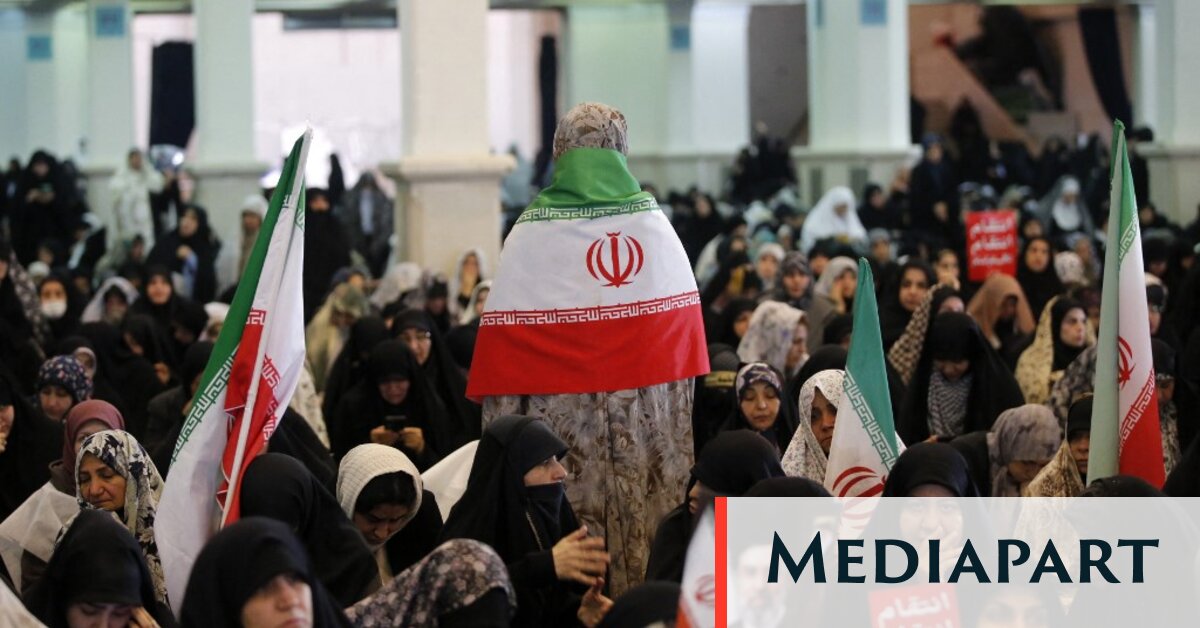
    Des milliers d’Iraniens se sont rassemblés le 21 mars dans la grande mosquée de Téhéran pour célébrer la fin du Ramadan. © Photo Fatemeh Bahrami / Anadolu via AFP

    Plus tôt dans la même journée, une vingtaine de pays, principalement européens, dont la France, ont exprimé samedi 21 mars, leur « profonde préoccupation face à l’escalade » et appellent à un « moratoire immédiat et global sur les attaques d’infrastructures civiles », condamnant les frappes de l’Iran contre des installations pétrolières et gazières des pays du Golfe.

    Le Japon, le Canada et les Émirats arabes unis sont également signataires de ce communiqué dans lequel les pays se disent « prêts à contribuer aux efforts appropriés visant à garantir la sécurité du passage dans le détroit » d’Ormuz, ce couloir maritime permettant aux pays du golfe Persique d’exporter leur pétrole et leur gaz et bloqué par l’Iran depuis le début du conflit. Environ 20 % du pétrole mondial y transite, en temps normal, chaque jour.

    Jusqu’alors, les demandes du président américain d’aider à débloquer cette voie stratégique avaient été accueillies plutôt fraîchement, plusieurs pays dont la France ayant refusé de contribuer  à une réouverture par la force du détroit. Les 9 et 10 mars, le président Emmanuel Macron et le ministre des affaires étrangères Jean-Noël Barrot avaient précisé que la France accepterait uniquement une mission « défensive », « après la sortie de la phase la plus chaude du conflit », selon les mots du président français.

    Samedi, l’armée américaine a assuré avoir « réduit » la capacité de l’Iran à menacer la navigation dans le détroit d’Ormuz après le bombardement d’une installation souterraine abritant des missiles de croisière.

    Missiles dans l’océan Indien

    Sur le front, quelques heures avant ce communiqué commun, Israël et les États-Unis ont visé le complexe nucléaire iranien de Natanz, le principal site d’enrichissement du nucléaire du pays. Situé dans l’ouest de l’Iran, il avait déjà été frappé début mars. « Aucune fuite de matières radioactives n’a été signalée », indique l’organisation de l’énergie atomique d’Iran, tandis que l’AIEA, l’agence internationale de l’énergie atomique appelle de nouveau à « la retenue militaire afin d’éviter tout risque d’incident nucléaire ».

    La veille, l’Iran a visé, sans la toucher, la base américano-britannique de Diego Garcia, située au milieu de l’océan Indien soit à 4 000 kilomètres du territoire iranien. Selon le Wall Street Journal, l’un des missiles a connu une défaillance en vol et l’autre a été intercepté par un navire de guerre américain.

    La Grande-Bretagne, qui a autorisé les États-Unis à utiliser cette base pour des « opérations défensives spécifiques contre l’Iran » dénonce dans cette tentative d’attaque une « menace pour les intérêts et les alliés du Royaume-Uni » ainsi que « les attaques irresponsables de l’Iran, qui frappent dans toute la région et prennent en otage le détroit d’Ormuz ».

    Depuis le 18 mars, le conflit a changé de dimension : les attaques israéliennes contre les infrastructures gazières iraniennes suivies des représailles de l’Iran contre des installations pétrolières et gazières laissent présager une guerre longue. Et si Donald Trump a dit, vendredi, envisager de « réduire graduellement » les opérations militaires en Iran, le ministre israélien de la défense tient donc un discours totalement opposé.

    « L’intensité des frappes qui seront menées par les forces israéliennes et l’armée américaine contre le régime de terreur iranien et les infrastructures sur lesquelles il s’appuie augmentera considérablement » dès dimanche 22 mars, a assuré Israël Katz, ajoutant : « Nous ne nous arrêterons pas tant que tous les objectifs de la guerre n’auront pas été atteints. »

    De son côté, l’Iran menace les Émirats arabes unis de « violentes frappes » en cas de « nouvelles agressions » contre les îles du golfe d’Abou Moussa et de Grand Tunb, situées près de l’entrée du détroit d’Ormuz et contrôlées par l’Iran.

    Le Guide suprême, invisible

    Et alors que de nouveaux bombardements ont visé certains quartiers de Téhéran dans la nuit de vendredi à samedi, des milliers de fidèles se sont rassemblés à la grande mosquée de la capitale pour célébrer l’Aïd-el-Fitr qui marque la fin du ramadan – le mois de jeûne dans ce pays majoritairement chiite s’est achevé un jour plus tard que dans la plupart des pays musulmans.

    La prière, traditionnellement dirigée par le Guide suprême, s’est faite sans Mojtaba Khamenei, qui n’est jamais apparu en public depuis sa nomination. La veille, il n’a pas non plus prononcé le traditionnel prêche pour Norouz, le nouvel an persan célébré par les Iraniens. Seul un message écrit, dans lequel il assure que l’Iran « a été victorieux », lui a été attribué.

    À l’occasion de cette fête, le président iranien Massoud Pezeshkian s’est par ailleurs adressé, en arabe puis en farsi sur le réseau social X, aux « pays islamiques » assurant ne chercher « aucun conflit » avec eux. « À l’arrivée du nouvel an persan, efforçons-nous de laisser de côté les rancœurs, les tensions et les divergences. Cette année, plus que jamais, nous avons besoin de Norouz : un Norouz qui incarne l’unité, la cohésion et la concorde nationale dans notre culture », a-t-il écrit aux pays qu’il appelle ses « chers voisins ».

    Depuis le 28 février, plus de 2 000 missiles et drones ont pourtant été envoyés sur les pays arabes riverains du golfe Persique. Ce samedi, plusieurs explosions ont été entendues à Manama, la capitale de Bahreïn, selon l’Agence France-Presse.

    Au Liban, où un conflit ouvert entre Israël et le Hezbollah a repris le 2 mars, l’armée israélienne a annoncé de nouvelles frappes sur Beyrouth samedi matin, assurant viser « des cibles de l’organisation terroriste Hezbollah à Beyrouth ». Le Hezbollah rapporte pour sa part des « affrontements directs » avec les forces israéliennes dans le sud du pays.

    En vingt jours, plus d’un millier de personnes ont été tuées au Liban selon le ministère de la santé, dont au moins 38 personnels paramédicaux. Comme raconté par Mediapart, l’armée israélienne vise en effet des ambulances et des infrastructures médicales, utilisées selon elle à des fins « militaires » par le Hezbollah.

    En France, un débat sur la crise au Moyen-Orient devrait être organisé mercredi 25 mars à l’Assemblée nationale, selon les informations du Monde. Le Parlement reprend ses travaux lundi 23 mars après une pause de trois semaines, en raison des élections municipales dont le second tour se tient le 22 mars.

    Read More

  • French prosecutors suspect tycoon Musk encouraged deepfakes to inflate value of X

    French prosecutors suspect tycoon Musk encouraged deepfakes to inflate value of X


    French prosecutors say they have alerted US authorities to a suspicion that tech billionaire Elon Musk encouraged sexualised deepfakes on social media platform X to “artificially” increase his company’s value.

    Issued on:


    2 min Reading time

    The Grok chatbot – developed by xAI and hosted on Musk’s social media platform X – allows users to make nonconsensual sexualised deepfakes, including of women and children. The practice has triggered investigations in Europe and the UK.

    “The controversy sparked by sexually explicit deepfakes generated by Grok may have been deliberately generated in order to artificially boost the value of companies X and X AI”, the Paris prosecutor’s office said Saturday.

    This may have been done, it said, with a view to “the planned June 2026 stock market listing of the new entity created by the merger” between Space X and X AI.

    It said it had reached out on Tuesday to the US Department of Justice, as well as French lawyers at the US Securities and Exchange Commission (SEC), a financial market regulation body, to share its concerns.

    On Monday this week three young women filed a lawsuit against xAI in a federal California court. They claim the company facilitated child pornography by allowing the creation of sexually explicit images of them. 

    In February, the data protection watchdog in Ireland – where X’s European HQ is based – launched a probe into Grok’s generation of sexualised deepfake images.

    Ireland watchdog opens probe into sexual AI imagery from Grok chatbot

    Mounting investigations

    Since last year, the French authorities have been investigating X over allegations that its algorithm was used to interfere in French politics.

    It now also includes a probe into the Grok AI tool’s dissemination of Holocaust denials and sexual deepfakes.

    French authorities last month summoned Musk to a “voluntary interview” and searched the local offices of his social media network, in what Musk called a “political attack“.

    US officials have strongly condemned the enquiry.

    In a separate case, a US federal judge on Friday found Musk misled Twitter shareholders, driving down the company’s share price as he was poised to buy it in a $44 billion deal in 2022.

    US jury finds Elon Musk misled Twitter shareholders

    Musk was accused of falsely claiming on social media that Twitter (which he rebranded X) underreported how many fake and spam accounts, known as bots, were on its platform.

    Damages have yet to be calculated but Francis Bottini, a lawyer for the shareholders, estimated they could total about $2.5 billion.

    (with newswires)

    Read More