Category: France

  • France court sentences Russia-linked tanker captain to one year in jail

    France court sentences Russia-linked tanker captain to one year in jail


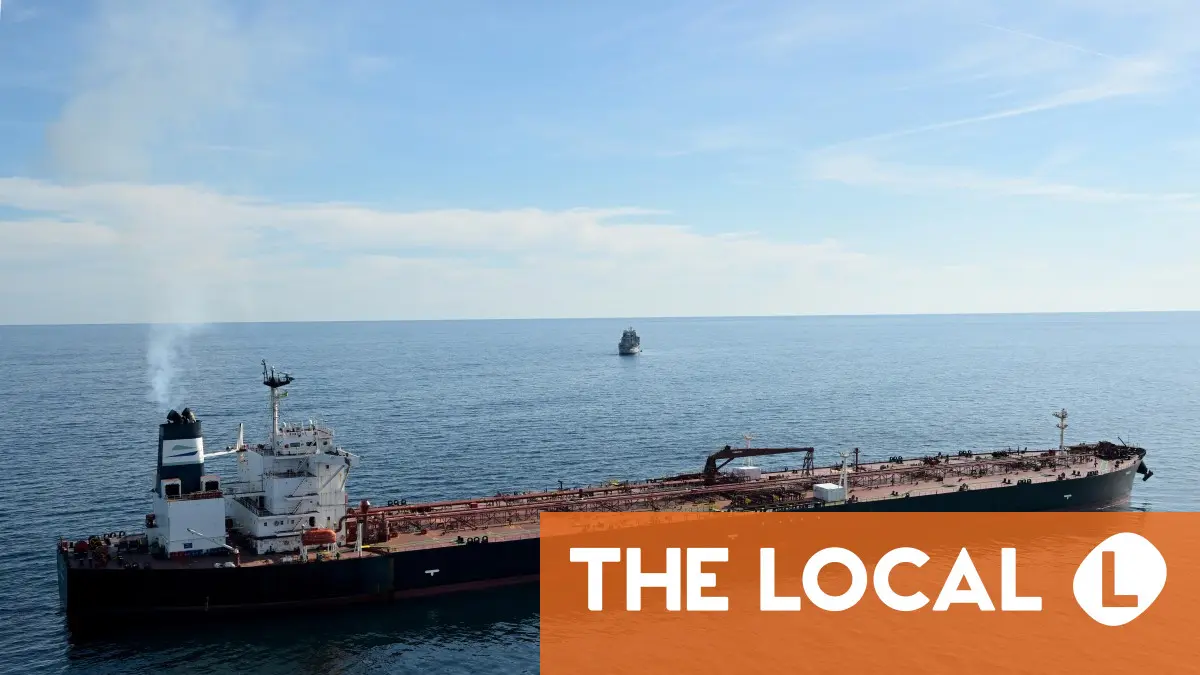
    A French court on Monday issued an arrest warrant and a one-year jail sentence against the Chinese captain of a suspected Russian “shadow fleet” tanker over failing to comply with orders to stop his ship.

    Chen Zhangjie, 39, was sentenced in absentia after the French navy boarded the Boracay tanker in September before releasing the vessel and its crew days later, in what Russian President Vladimir Putin condemned as “piracy”.

    The court in the western city of Brest also ordered Zhangjie to pay a €150,000 fine.

    The vessel, claiming to be flagged in Benin, was thought to be part of a fleet transporting Russian oil in violation of Western sanctions imposed over Moscow’s invasion of Ukraine.

    Two employees of a Russian private security company were on board the Boracay when the French navy stopped it, an informed French source and the captain’s lawyer have told AFP.

    They were in charge of representing Russian interests and gathering intelligence, they said.

    The Boracay has been linked to mysterious drone flights over Denmark last year, part of a spate of drone sightings and airspace violations in European countries blamed on Russia.

    No formal link has however been established and Moscow denies responsibility.

    The European Union lists 598 vessels, suspected of being part of the “shadow fleet”, as banned from European ports and maritime services.

    Read More

  • Middle East war live: Iran defiant as Trump makes new threat against its oil hub

    Middle East war live: Iran defiant as Trump makes new threat against its oil hub


    Power outages take place in parts of Tehran: Iranian media

    Israel military says air defences responding to Iranian missiles

    Israel’s military said its air defences were responding to Iranian missiles on Tuesday as sirens rang out in Jerusalem. 

    “A short while ago, the IDF identified missiles launched from Iran toward the territory of the State of Israel,” the Israeli military posted on Telegram. 

    Sirens sounded and several blasts were heard over Jerusalem, an AFP witness said. 

    Explosions heard in Tehran: local media

    Young Iranian says Trump’s threats to destroy civilian infrastructure are ‘terrifying’

    A 22-year-old resident of Karaj, a city just west of Iran’s capital, said his area lost power for several hours overnight following nearby strikes.

    “I was really scared. I thought that they’d hit the power plants and that we are not going to have power anymore,” he said, speaking on condition of anonymity out of security fears.

    He said he’d already packed a go-bag with documents, chargers, a laptop and wads of cash in case “bank servers go down.” Power returned around 1 am Monday.

    He and his friends have scant information about the war, he said, amid Iran’s blanket internet shutdown. “I am really confused. I don’t know what to feel or what to think.”

    He added that security checkpoints are common in his area. “They search the car, they check the trunk, they ask for your ID, and they send you on your way.”

    Rising gasoline prices are a double blow for drivers who use their own vehicles for work

    Millions of people have jobs that require using personal vehicles for work, like delivery drivers and ride-share providers, as well as self-employed electricians, nannies, home health care aides and real estate agents.

    The Iran war has pushed up the average US price for a gallon of regular gas by $1.

    Some companies compensate employees for using their own vehicles, including the cost of gas. Ride-hailing and food delivery platforms like Uber and Instacart don’t reimburse drivers for gas, but some are offering temporary incentives in response to rising gas prices.

    Leslie Sherman-Shafer, an Uber driver in the San Francisco Bay Area, said she’s putting in extra hours to cover the difference.

    “With everything going up, it’s impossible to save a dime,” said Sherman-Shafer, a retired dental office assistant.

    Security Council to hold emergency meeting on killings of UN peacekeepers

    The United Nations’ most powerful body will convene an emergency session Tuesday after officials announced that three peacekeepers in southern Lebanon had been killed in the last 24 hours. The meeting was scheduled after a request from France.

    It was unclear who was behind the projectile and explosion that killed the three peacekeepers, as the UN says the incidents remain under investigation.

    Jean-Pierre Lacroix, under-secretary-general for peace operations, said Monday that all three peacekeepers who were killed were from the Indonesian army. That makes 97 fatalities of UNIFIL peacekeepers due to malicious acts since the mission began in March 1978 and a total of more than 330 fatalities — the most of any UN peacekeeping operation.

    UN envoy says ‘Lebanon is a shadow of its former self’ since Israeli invasion

    Jeanine Hennis-Plasschaer, the UN special coordinator for Lebanon, issued a scathing statement Monday, saying that the humanitarian impact in southern Lebanon as Israel trades fire with Hezbollah has reached devastating levels.

    The envoy detailed the three UN peacekeepers and nine Lebanese paramedics killed in just the last few days as a snapshot of the death toll that now stands at more than 1,240.

    “One thing is clear: the longer this goes on, the harder it will be to come back from,” Hennis-Plasschaer said. “As maximalist rhetoric abounds, the prospect of a negotiated settlement is a daunting one. But we must start somewhere.”

    She added that while “tactical military gains may produce short-term wins, on and off the battlefield,” they do risk “long-term damage to the stability and prosperity both Lebanese and Israelis deserve.”

    Gulf allies privately make the case to Trump to keep fighting until Iran is decisively defeated

    Gulf allies of the United States are arguing that Tehran hasn’t been weakened enough by the monthlong US-led bombing campaign, according to US, Gulf and Israeli officials.

    Officials from Saudi Arabia, United Arab Emirates, Kuwait and Bahrain have conveyed in private conversations that they do not want the military operation to end until there are significant changes in the Iranian leadership or there’s a dramatic shift in Iranian behaviour, according to the officials, who were not authorised to comment publicly and spoke on the condition of anonymity.

    While regional leaders are broadly supportive now of the US efforts, one Gulf diplomat described some division, with Saudi Arabia and the UAE leading the calls for increasing military pressure on Tehran.

    The UAE has emerged as perhaps the most hawkish of the Gulf countries and is pushing hard for Trump to order a ground invasion, the diplomat said.

    Trump says US is negotiating with Iran’s parliamentary speaker, who denies talks

    US President Donald Trump on Monday threatened widespread destruction of Iran’s energy resources and other vital infrastructure, including desalination plants, if a deal to end the war with Tehran is not reached “shortly.”

    Trump said the US is negotiating with Iran’s parliamentary speaker, Mohammad Bagher Qalibaf, in an interview with the New York Post published Monday. The former Revolutionary Guard commander was previously floated as Washington’s negotiating partner, but has denied Iran is talking to the US and said Pakistan-facilitated discussions were merely a cover for American troop deployments.

    Iranian attack sparks fire on Kuwaiti oil tanker at Dubai Port: state media

    An Iranian attack sparked a fire on a Kuwaiti oil tanker at Dubai Port, state media reported on Tuesday, as Tehran continues its campaign in the Gulf in response to US-Israeli strikes.

    “The Kuwaiti giant crude oil tanker was subjected to a direct and malicious Iranian attack while in the anchorage area of Dubai Port in the UAE,” official news agency KUNA reported, citing Kuwait’s state-owned oil company. 

    There were no injuries, according to the report, and Dubai authorities later said firefighters had extinguished the blaze. 

    KUNA reported the tanker was fully laden at the time of the attack, which had caused “material damage to the ship’s hull” and “the possibility of an oil spill in the surrounding waters.”

    Kuwait’s military also said on Tuesday its air defences were responding to “hostile missile and drone attacks”, according to an X post. 

    Israel military launches investigation after peacekeeper deaths in Lebanon

    Israel’s military said on Tuesday that it had launched an investigation into separate incidents that killed three UN peacekeepers in southern Lebanon. 

    “The incidents are being thoroughly reviewed in order to clarify the circumstances and determine whether they resulted from Hezbollah activity or from IDF activity,” the Israeli military posted on Telegram. 

    “It should be noted these incidents occurred in an active combat area,” where it was operating against Iran-backed group Hezbollah, the post added.

    “Therefore, it should not be assumed that incidents in which UNIFIL soldiers were harmed were caused by the IDF,” it said, referring to the United Nations Interim Force in Lebanon (UNIFIL).

    The UN peacekeeping mission in Lebanon said two of its personnel were killed Monday in an explosion and another had died late Sunday when a projectile hit their position.

    Iran panel approves Hormuz toll plan

    Iranian state media reported that a parliamentary commission had approved plans to impose tolls on vessels transiting the Strait of Hormuz, the waterway vital to oil and gas shipments that has been effectively closed due to the Middle East war.

    Citing a member of the parliament’s security commission, state TV said the plan involved, among other things, “financial arrangements and rial toll systems” and “implementing the sovereign role of Iran”, as well as cooperation with Oman on the other side of the strait.

    NATO intercepts Turkey-bound missile

    NATO forces intercepted a new missile fired from Iran towards Turkey — the fourth since the start of the Middle East war.

    None of the four projectiles managed to hit Turkish soil, according to the authorities. 

    US ‘hopeful’ in private Iran talks

    US Secretary of State Marco Rubio voiced hope for working with elements within Iran’s government, saying the United States privately had received positive messages.

    Rubio said there were internal “fractures” inside the Islamic republic and that the United States hopes figures with “power to deliver” take charge.

    Israel strikes Iran university

    Israel’s military said it had struck the Imam Hossein University in Tehran run by Iran’s Revolutionary Guards, claiming the institution was used for advanced weapons research.

    Israel kills three Hezbollah members

    An Israeli airstrike on a residential building near Beirut’s southern suburbs killed at least three Hezbollah members, a security source told AFP.

    The strike “targeted an office used by Hezbollah, killing three members and seriously wounding three others”, while the Israeli army, for its part, announced it had “begun striking Hezbollah terrorist infrastructures in Beirut”.

    Trump threatens Iran oil hub

    Trump threatened to destroy Iran’s oil export hub of Kharg Island, oil wells and power plants if it does not agree soon to a deal to end the war.

    The US president wrote on his Truth Social network that while the United States is in “serious discussions” with “a more reasonable regime” in Tehran, if an agreement was not forthcoming Washington would set about “completely obliterating all of their Electric Generating Plants, Oil Wells and Kharg Island (and possibly all desalinization plants!)”.

    Read More

  • Racisme contre le maire de Saint-Denis Bally Bagayoko: la ministre chargée des discriminations aux abonnés absents

    Racisme contre le maire de Saint-Denis Bally Bagayoko: la ministre chargée des discriminations aux abonnés absents


    Alors que des membres du gouvernement ont condamné lundi le racisme subi par l’édile, la ministre chargée de lutter contre les discriminations Aurore Bergé n’a pas eu un mot à son endroit, préférant accuser Bally Bagayoko de faire de la «discrimination politique».

    Read More

  • New Paris mayor promises urgent action over alleged sexual abuse in schools

    New Paris mayor promises urgent action over alleged sexual abuse in schools


    Paris’s newly elected mayor, Emmanuel Grégoire, says tackling sexual abuse in the city’s after-school programmes is his “absolute priority”, promising changes in management and rapid decisions. 

    Issued on:


    2 min Reading time

    Officially sworn in by the Paris Council on Sunday, Grégoire said Monday that after-school services were the “absolute priority” of the start of his term.

    “There will be decisions taken in the very first hours of this day, others in the days ahead, and others over a longer timeframe,” he told franceinfo public radio, adding that management changes would be made “at every level”.

    Grégoire’s comments follow cases of alleged child abuse in after-school services in France, particularly in the capital.

    A report by France Inter radio in early March claimed that three lawsuits had been filed against a Parisian pre-school employee for alleged rapes against minors. Despite the complaints, the employee was transferred to another school rather than being suspended.

    In 2025, 19 after-school staff members working for the City of Paris were suspended following reports of sexual misconduct.

    The Paris prosecutor’s office opened 15 investigations into sexual assaults in pre-schools involving children under the age of five.

    Who is Paris’s newly sworn-in mayor, Emmanuel Grégoire?

    ‘We must overturn the table’

    Grégoire acknowledged there had been failures at multiple levels, including poor judgment by school or after-school directors, errors higher up the chain of command, and cases where the full gravity of events only became clear after the fact.

    In his inaugural address to the 163-member Paris Council on Sunday, the mayor had already called for zero tolerance and a full review of all recruitment procedures.

    “The first battle is after-school provision,” he declared. “We must start from scratch. We must overturn the table. We must identify those who are guilty. We must protect our children.”

    He said any staff member suspected of abuse must face immediate suspension.

    “At no point should a youth worker suspected of sexual violence not be immediately suspended,” he said.

    French PM Bayrou denies covering up sexual abuse at Catholic school

    Parents demand independent audit

    The new mayor faces mounting pressure. A collective of 751 parents from seven schools in the 7th and 15th arrondissements wrote to Grégoire on Sunday, demanding an independent audit, comprehensive child protection measures, clear communication with families, and full accountability of responsibility.

    In response, Grégoire said he would appoint an external adviser to evaluate what had gone wrong and monitor compliance with procedures. He also promised to publish detailed statistics on cases across Paris schools “as soon as possible”.

    The mayor is due to meet campaigning groups MeTooEcole and SOS Périscolaire later on Monday.

    Child abuse became a key topic during the Paris electoral campaign, and critics accused Grégoire of having done nothing to tackle the issue.

    In his defence, he said that he had no longer been in charge at City Hall since 2024, when he became an MP.

    Grégoire recently revealed he was a victim of sexual abuse himself while in primary school, aged around nine or 10. 

    “This is the story of a child who … was sexually abused for several months during after-school activities at a municipal swimming pool,” he told France Inter last year. “At the time, I couldn’t find the strength, the means, or the words to express that pain and suffering.”

    Read More

  • Several French far-right mayors take down EU flags

    Several French far-right mayors take down EU flags


    Several recently elected far-right mayors have taken down European Union flags from the facades of their town halls, in a move the French government denounced as ‘populism’.

    Marine Le Pen’s anti-immigration, eurosceptic Rassemblement National (RN) party notched wins in small and mid-sized towns, in the recent local elections, even though it failed to take any major urban centres.

    Far-right mayors in several towns wasted no time in taking down the EU flags.

    “Out with the European flags at the town hall! Make way for the French flags,” Christophe Barthes, the mayor of the southern town of Carcassonne, said on X on Sunday.

    He posted footage showing him personally taking down the European flag and leaving only the French tricolour and the regional flag of Occitanie.

    Bryan Masson, the new mayor of Cagnes-sur-Mer, a seaside resort near the southern city of Nice, and Anthony Garenaux-Glinkowski, the far-right mayor of the northern town of Harnes, followed suit.

    Garenaux-Glinkowski also took down the Ukrainian flag that French city halls have been flying in a gesture of solidarity after Russia invaded Ukraine in 2022.

    France’s Europe minister Benjamin Haddad denounced the move as “populism.”

    “Will they also refuse the European funds received by our farmers, our businesses for re-industrialisation, and our regions? Will they hand back their European Parliament allowances?” Haddad said in a statement to AFP.

    “This is populism that shows the RN hasn’t changed,” he added.

    No law requires the European symbol to be displayed on town hall facades, except on May 9th, Europe Day.

    Most town halls display both the French flag and the EU flag, and often add an extra flag for special events, such as LGBTQ pride month, while some town halls also fly the Ukrainian flag in order to show solidarity.

    However the EU flag remains a choice for local mayors – it is, however, compulsory to fly both the French flag and the EU flag on school buildings.

    When French government ministers give speeches, it is common for them to have both the French and EU flags in the background.

    In 2023 the French Assemblée nationale voted n favour of making the EU flag compulsory for town halls, but the bill was later defeated in the Senate.

    In 2022, French authorities took down a temporary installation of the EU flag from the Arc de Triomphe monument in Paris, after right-wing opponents of President Emmanuel Macron accused him of “erasing” French identity.

    Read More

  • Trump threatens to destroy Iran’s Kharg Island oil hub if no deal reached

    Trump threatens to destroy Iran’s Kharg Island oil hub if no deal reached


    US President Donald Trump threatened Monday to destroy Iran‘s Kharg Island, a crude oil export hub, along with oil wells and power plants unless Tehran quickly accepted a deal to end the US-Israeli war. 

    The risk of further escalation, including a potential US ground operation to seize Kharg Island, is sending tremors through financial and energy markets, as well as neighbouring Gulf countries.

    In a post on his Truth Social network, Trump voiced hope about US talks with a “more reasonable regime” in Tehran, an apparent reference to new leadership despite the failure of the month-long war to dislodge the Islamic republic.

    But Trump warned that if a deal were not struck — including to reopen the vital Strait of Hormuz shipping lane — US forces would destroy “all of their Electric Generating Plants, Oil Wells and Kharg Island (and possibly all desalinization plants!).”

    Destroying civilian infrastructure such as power and water facilities would be illegal under international humanitarian law and could constitute a war crime, experts say.

    Iran has previously threatened to retaliate by targeting energy infrastructure and desalination plants in its Arab neighbours in the Gulf that host the US military, such as the United Arab Emirates, Oman, Qatar and Saudi Arabia

    Showing it will not back down, an Iranian parliamentary committee voted to impose tolls on vessels through the Strait of Hormuz, the passageway through which one-fifth of global oil passes.

    State television said Iran would forbid the United States and Israel from passing through.

    The tolling plan for the strait has outraged the United States, which has spoken of creating a “coalition” to oppose it.

    “No one in the world can accept it,” Secretary of State Marco Rubio told Al-Jazeera.

    “It sets an incredible precedent. So this means that nations can now take over international waterways and claim them as their own,” Rubio said of the waterway the US president recently called the “Strait of Trump.”

    Oil price causes havoc 

    Economy ministers and central bankers from the G7 club of rich countries met in Paris to discuss the war’s effects, with many countries introducing energy-saving measures or cutting fuel taxes to help consumers.

    Market experts warned that any US ground operation or wider Iranian retaliation could send oil prices to levels not seen since the July 2008 commodity boom, when the cost of Brent crude, the international benchmark, hit close to $150 a barrel.

    Brent has already risen nearly 60 percent this month, and the US benchmark WTI by more than half.

    The spectre of a widening conflict grew over the weekend when Iran-backed Houthi rebels in Yemen fired missiles and drones at Israel.

    The Houthis have previously threatened shipping through the Red Sea and the Suez canal, which requires vessels to travel through a narrow strait off Yemen‘s coast.

    “The Houthi’s ability to disrupt shipping through the Bab al-Mandeb strait, which accounts for roughly 12 percent of global trade, is the new key risk,” said analyst Chris Weston at the Australian financial services firm Pepperstone. 

    Read more‘The Houthis hold serious cards’ expert says, amid threats to choke off Red Sea passage

    In Lebanon, Israel continued to bombard Beirut’s southern suburbs and the country’s south, where an airstrike targeted an army checkpoint and killed a soldier.

    The United Nations peacekeeping force in south Lebanon, where Israeli and Hezbollah forces are clashing, reported that two of its personnel were killed Monday in “an explosion of unknown origin.” 

    Another peacekeeper was killed on Sunday, with Indonesia confirming one of its soldiers had died.

    New strikes 

    Around the Middle East on Monday, there was no let-up in hostilities.

    Israel said its air defence batteries responded to missiles launched from Iran, after earlier announcing it was striking military infrastructure across Tehran.

    Israel also confirmed it had hit the Imam Hossein University in the capital, which it said was used by Iran’s Islamic Revolutionary Guards Corps for advanced weapons research. 

    In Israel, emergency services reported a fire at an oil refinery in the northern port city of Haifa, which also suffered a blaze on March 19.

    Kuwait condemned strikes on a power station and a desalination plant, which killed an Indian worker.

    Egypt pleads for end 

    On the diplomatic front, Egyptian President Abdel Fattah al-Sisi, whose country is playing a role in mediating indirect talks between the US and Iran, appealed directly to Trump on Monday to find an offramp.

    “Please, help us to stop the war, you are capable of it,” Sisi told a press conference with Cypriot President Nikos Christodoulides in Cairo. 

    Egypt’s foreign minister joined counterparts from Saudi Arabia, Turkey and Egypt in the Pakistani capital Islamabad on Sunday for talks on the crisis.

    Trump has claimed to be in direct contact with senior Iranian figures who have not been identified publicly. 

    Rubio said there were “fractures” within the Islamic republic and voiced hope that the Iranian officials allegedly in contact with Washington had the “power to deliver.”

    But Iranian foreign ministry spokesman Esmaeil Baqaei again denied any negotiations, saying that the United States had sent only a request to talk via intermediaries including Pakistan.

    Iranian leaders insist Trump’s offer of talks is a smokescreen as he moves thousands of marines and paratroopers to the region for a possible ground invasion.

    Read moreUS mulls over ground offensive in Iran despite claims of talks

    After weeks of strikes, residents of Tehran painted a picture of a city that is still clinging to some routine, with cafes and restaurants open and no shortages reported in supermarkets or petrol stations.

    Security remains tight, with checkpoints erected on streets around the capital.

    “When I make it to a cafe table, even for a few minutes, I can almost believe the world hasn’t ended,” said Fatemeh, 27, a dental assistant.

    “And then I go back home, back to the reality of living through war, with all its darkness and weight.”

    (FRANCE 24 with AFP)
    Read More

  • Grâce à CNews, le racisme a encore de beaux jours devant lui

    Grâce à CNews, le racisme a encore de beaux jours devant lui


    Sur la chaîne de Vincent Bolloré, le maire de Saint-Denis Bally Bagayoko a été assimilé en deux jours, d’abord à un «singe», puis à un «mâle dominant», chef «d’une tribu primitive». Des propos ouvertement racistes qui démontrent la prégnance de l’assignation raciale en France.

    Read More

  • Captain of Russian ‘shadow tanker’ sentenced to one year in French prison

    Captain of Russian ‘shadow tanker’ sentenced to one year in French prison


    A French court has handed down a one-year prison sentence and issued an arrest warrant for the Chinese captain of a tanker suspected of being part of Russia’s so-called ‘shadow fleet’, in a case that highlights Europe’s growing efforts to enforce sanctions at sea.

    Issued on:


    2 min Reading time

    Chen Zhangjie, 39, was sentenced in absentia on Monday after failing to comply with French naval orders to stop his vessel, the Boracay, during an incident in September.

    The court in the western city of Brest also imposed a fine of €150,000, underlining the seriousness with which authorities are treating alleged sanctions evasion.

    The Boracay was intercepted by the French navy before being boarded and inspected. It was later released along with its crew, prompting a sharp reaction from Russian President Vladimir Putin, who described the operation as “piracy”.

    Despite the diplomatic tension, the ruling signals a firm stance from French authorities as scrutiny intensifies around maritime activities linked to Moscow.

    Russian ‘shadow fleet’ ship detained by French navy resumes voyage

    Shadow fleet under scrutiny

    The tanker had claimed to be sailing under a Benin flag and is believed to be part of a network of vessels used to transport Russian oil in ways that may circumvent Western sanctions imposed following the invasion of Ukraine.

    These so-called shadow fleets have become an increasing focus for European governments, who are keen to close loopholes in enforcement.

    According to an informed French source and the captain’s lawyer, two employees of a Russian private security company were also on board at the time of the interception. Their reported role was to represent Russian interests and gather intelligence, adding another layer of intrigue to the case.

    The European Union has already blacklisted 598 vessels suspected of participating in such operations, banning them from European ports and maritime services.

    The Brest court’s decision is therefore part of a broader effort to ensure that these measures carry real consequences.

    French prosecutor seeks penalty for captain in Russian shadow fleet test case

    Wider security concerns

    Beyond sanctions enforcement, the Boracay has also drawn attention for its alleged links to a series of unexplained drone flights over Denmark last year. These incidents formed part of a wider pattern of drone sightings and airspace violations across Europe that have often been attributed to Russian activity.

    No formal connection has been established between the tanker and the drone activity, and Moscow has consistently denied any involvement. Still, the overlap of maritime and aerial security concerns has heightened unease among European officials.

    While the case against Chen Zhangjie centres on non-compliance with naval orders, it reflects a much larger geopolitical picture – one in which maritime routes, energy supplies and security risks are increasingly intertwined

    (with newswires)

    Read More

  • European airports record longer waits at borders as EES deadline looms

    European airports record longer waits at borders as EES deadline looms


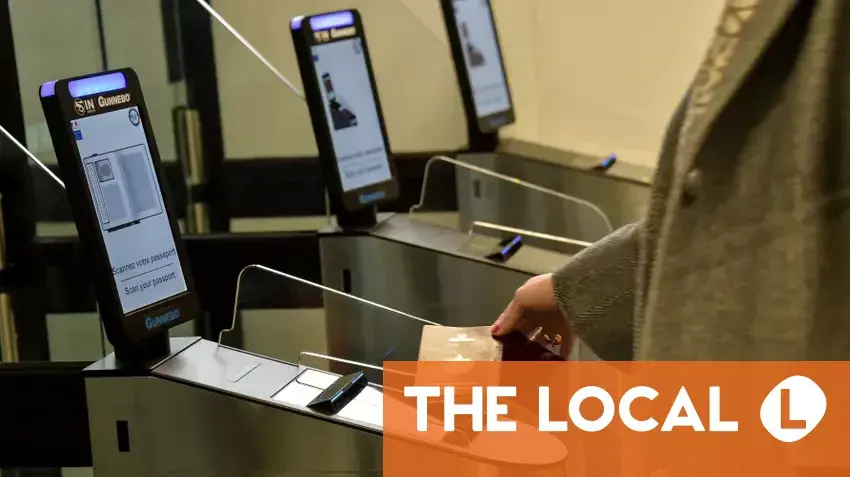
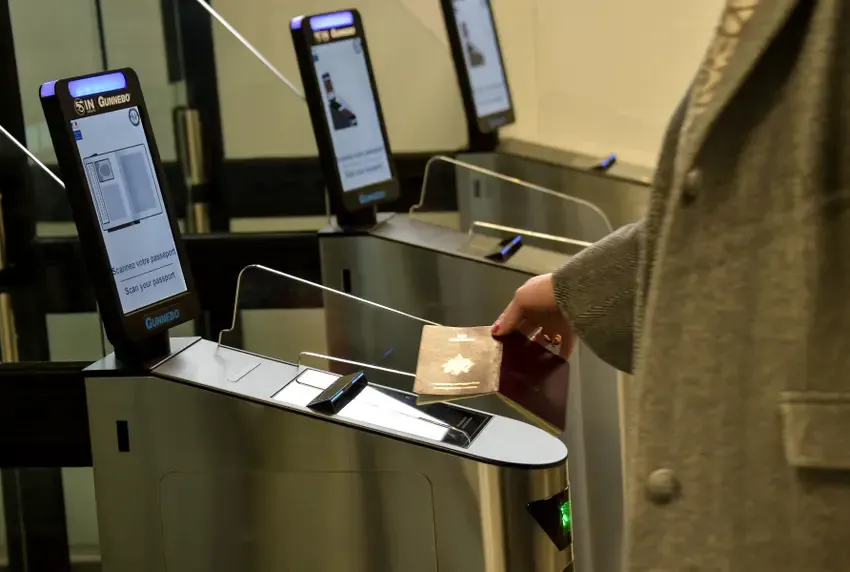
    European airports and airlines organisations issued on Monday the latest warning about the next implementation phase of the EU’s new biometric border system, “as the transition phase comes to an end right in the travel peak of the Easter holidays.”

    The Airports Council International (ACI Europe) and Airlines for Europe (A4E) have reported that the continued roll out of the EU’s Entry/Exit System (EES), in which passengers give finger prints and facial scans, is causing more and more delays around Europe. 

    The two organisation said in a joint statement on Monday that since March 10th, when the registration of 50 per cent of third country nationals travelling to the Schengen area became mandatory, there has been “a continued deterioration in waiting times at border crossing points”.

    READ MORE about EES passport checks

    “Waiting times are now regularly reaching up to two hours at peak traffic times, with some airports reporting even longer queues,” the groups added.

    This happens “despite the continued use by border control authorities of both the partial and full suspension of EES processes … during travel peaks,” the statement read.

    A spokesperson for ACI Europe said that, based on a survey conducted by the group, “several airports across Europe have had to partially or fully suspend the EES, including those in France, Italy, Spain, Portugal, Greece, Switzerland, Belgium and Germany”.

    READ MORE: EES border checks catch 4,000 over-stayers

    “Of those, Belgium, Greece, Portugal and Italy have seen some of the longest waiting times”, with airports of all sizes affected, including Brussels International in Belgium, Torino and Milan Malpensa in Italy, and Frankfurt Airport in Germany, “to name just a few.”

    She added that the list was “not exhaustive”.

    “It is clear that the issue is affecting a wide range of airports across Europe and has even led to passengers missing flights,” she said.

    The EES has being introduced gradually since October 12th 2025 across the 29 countries of the Schengen area (25 EU member states plus Iceland, Norway, Switzerland, and Liechtenstein) with the deadline for full implementation April 9th 2026.

    “With the next critical milestones approaching – namely the requirement to register 100 per cent of third country nationals as of March 31st, followed by the end of the transition period on April 9th – airports and airlines warn that the situation risks deteriorating further,” the groups said in a statement.

    “From that point onwards, Member States will no longer be able to fully suspend the system in response to operational pressures, removing a key safeguard currently used to manage peak demand,” the statement said.

    The two organisations point at persisting problems regarding border control staff shortages, technical and maintenance issues with self-service kiosks, limited use of automated border control gates, reliability of the central IT system, and lack of availability of the EES preregistration app, currently deployed only in Sweden and Portugal.

    EES flexibility

    The two organisations called on the European Commission and EU Member States to “extend the possibility to fully or partially suspend… during the entirety of the 2026 summer season” and, if necessary, during winter too.

    A European Commission spokesperson said in January that member States will be able to partially suspend the EES over the summer. “After the completion of the roll-out, Member States will still be able to partially suspend EES operations where necessary during a period of an additional 90 days with a possible 60-day extension to cover the summer peak,” Markus Lammert said.

    “This will give Member States the necessary tools to manage potential extended queues,” he added

    Biometric registration

    The EES, which collects digital personal records of visitors from third countries and replaces the manual stamping of passports, requires passengers to register fingerprints and facial images the first time they cross an external Schengen border. The data is recorded in a Europe-wide database tracking each time travellers enter and exit the Schengen area, to avoid people staying beyond the limits of the 90/180 day rule.

    Last week the British government urged UK tourists travelling to the Schengen area around Easter to allow additional time and follow travel operators’ guidance. “As with all journeys, travellers should follow their travel operator’s guidance and allow time to complete these checks, particularly if they have connections or onward transport booked,” the government note said.

    Read More

  • Three UN peacekeepers killed in south Lebanon in 24 hours amid Israel-Hezbollah conflict

    Three UN peacekeepers killed in south Lebanon in 24 hours amid Israel-Hezbollah conflict


    United Nations peacekeepers, who for decades have served as a buffer between Israel and Lebanon, have seen three of their comrades killed and several others wounded since the latest war erupted between Israel and Hezbollah.

    The mandate for the UN force in south Lebanon expires at the end of this year

    Here are the key facts about the role of Lebanon’s ‘Blue Helmets’ in the current conflict.

    In the firing line

    The United Nations Interim Force in Lebanon (UNIFIL) patrols the area around the country’s southern border, where Hezbollah and Israel began clashing this month after the Iran-backed group drew Lebanon into the Middle East war by firing rockets at Israel.

    Israeli forces have been pushing into areas north of the frontier, and officials have announced plans to establish a buffer zone up to the Litani River, around 30 kilometres (20 miles) from Israel.

    On Monday, two Indonesian peacekeepers were killed when “an explosion of unknown origin destroyed their vehicle”, wounding at least two others, the force said.*

    Read moreMiddle East war live: UN says two additional peacekeepers killed in south Lebanon explosion

    The day before, another Indonesian peacekeeper was killed and three others wounded when a projectile, also of undetermined origin, exploded near a UNIFIL position.

    And earlier this month, three Ghanaian peacekeepers were wounded when their base was hit, with Lebanese President Joseph Aoun accusing Israel of being responsible and UNIFIL saying it would investigate.

    Over the years since its mission began in 1978, the force has lost around 340 members.

    Visiting UN chief Antonio Guterres this month said attacks against peacekeepers and their positions were “completely unacceptable … and may constitute war crimes“.

    Ceasefire monitors

    UNIFIL was set up in 1978 to monitor the withdrawal of Israeli forces after they invaded Lebanon to stem Palestinian attacks targeting northern Israel.

    Israel again invaded in 1982, only withdrawing from south Lebanon in 2000.

    After a 2006 war between Israel and Hezbollah, UN Security Council Resolution 1701 bolstered UNIFIL’s role and its peacekeepers were tasked with monitoring the ceasefire between the two sides.

    UNIFIL vehicles drive on a main road in Qlayaa, southern Lebanon on March 27, 2026
    UNIFIL vehicles drive on a main road in Qlayaa, southern Lebanon on March 27, 2026. © Karamallah Daher, Reuters

    UNIFIL patrols the Blue Line, the 120-kilometre (75-mile) de facto border between Lebanon and Israel, in coordination with the Lebanese army. It also has a maritime task force that supports Lebanon’s navy.

    The mission has its headquarters south Lebanon’s Naqura, which in recent years has hosted indirect border negotiations between Lebanon and Israel.

    Following a November 2024 ceasefire that sought to end more than a year of hostilities between Israel and Hezbollah over the Gaza war, UNIFIL became part of a five-member committee supervising that truce.

    Under pressure from the United States and Israel, the UN Security Council voted last year to end the force’s mandate on December 31, 2026, with an “orderly and safe drawdown and withdrawal” by the end of 2027.

    International force

    The mission currently involves around 8,200 peacekeepers from 47 countries, according to the force’s website.

    Top troop-contributing countries include Italy, Indonesia, Spain, India, Ghana, France, Nepal and Malaysia.

    Italy’s Major General Diodato Abagnara has headed the mission since June 2025.

    UNIFIL patrols have occasionally faced harassment, though confrontations are typically defused by the Lebanese army.

    In December 2022, an Irish peacekeeper was killed and three colleagues wounded when their convoy came under fire in south Lebanon.

    Border area

    Resolution 1701 of 2006 called for the Lebanese army and UN peacekeepers to be the only armed forces deployed in the country’s south.

    UNIFIL had been supporting the army in dismantling Hezbollah infrastructure near the border in the months before the latest hostilities erupted, in line with a Lebanese government decision to disarm the militants following the 2024 truce.

    Hezbollah has long held sway over swathes of the south and has built tunnels and hideouts there, despite not having had a visible military presence in the border area since 2006.

    What comes next?

    Lebanese authorities want a continued international troop presence in the south after UNIFIL’s exit, and have been urging European countries to stay.

    Last month, French Foreign Minister Jean-Noël Barrot said Lebanon’s army should replace the force when the peacekeepers withdraw.

    Italy has said it intends to keep a military presence in Lebanon after UNIFIL leaves.

    (FRANCE 24 with AFP)

    Read More