Category: France

  • Lionel Jospin, former PM who reshaped France’s modern left, dies aged 88

    Lionel Jospin, former PM who reshaped France’s modern left, dies aged 88


    Former French prime minister Lionel Jospin, a Socialist reformer who introduced the 35-hour working week and civil partnerships for same-sex couples, has died aged 88.

    Issued on:


    3 min Reading time

    Lionel Jospin, who led the French government from 1997 to 2002, died on Sunday, according to his family.

    He had undergone what he described as a “serious operation” earlier this year and had returned home to rest in January, though no further details were made public.

    President Emmanuel Macron praised Jospin on social media platform X for his “rigour, his courage and his ideal of progress”.

    As prime minister, Jospin oversaw a period of economic growth and falling unemployment, while pursuing a programme that blended social reform with economic pragmatism.

    His government reduced the working week from 39 to 35 hours, expanded access to healthcare and introduced civil unions granting equal rights to unmarried couples, whether gay or straight. At the same time, he embraced fiscal discipline and privatised more state assets than any predecessor.

    He summed up this approach with a phrase that defined his politics: “Yes to the market economy, no to a market society.”

    For a time, Jospin appeared to embody a modernised European left, seeking to reconcile economic openness with social protection. His administration also created around 300,000 public-sector jobs for young people.

    Yet despite these achievements, he struggled to connect with voters. His serious, intellectual style – reinforced by his close ties to academic circles and his marriage to philosopher Sylviane Agacinski – left some seeing him as distant.

    Far-right National Front founder Jean-Marie Le Pen dies aged 96

    Shock defeat

    On 21 April 2002, French voters delivered a political earthquake. In the first round of the presidential election, far-right leader Jean-Marie Le Pen edged ahead of Jospin to secure a place in the runoff against incumbent president Jacques Chirac.

    What had been expected to be a conventional contest between Chirac and Jospin was upended by a fragmented left and a crowded field of candidates. Jospin secured 16.18 percent of the vote, just behind Le Pen’s 16.86 percent.

    Within minutes of the result, Jospin addressed supporters. Taking full responsibility, he announced he would withdraw from political life – a swift and definitive exit that underscored his reputation for integrity.

    Le Pen went on to lose heavily to Chirac in the runoff, as voters united to block the far right. But Jospin never returned to elected office.

    Hollande leads official tribute to ex-prime minister Pierre Mauroy

    Radical roots to reformist leader

    Born in 1937 in a middle-class suburb of Paris, Jospin was shaped by both Protestant discipline and socialist conviction. His father was a teacher and political organiser, while his mother worked as a midwife and later a social worker.

    After studying at elite French institutions, he briefly embraced Trotskyism before moving towards a more moderate socialism. He joined the Socialist Party in 1971 and rose through its ranks, becoming a close ally of President François Mitterrand and later a mentor to François Hollande.

    By 1997, after a snap parliamentary election, he became prime minister in a period of “cohabitation”, sharing power with Chirac while overseeing domestic policy.

    Despite leading a coalition of Socialists, Communists and Greens, he steered a pragmatic course, combining reform with restraint. His guiding principle was to remain firm on goals while flexible in methods.

    In Chirac’s death, France mourns a major part of its history

    Lasting legacy

    Jospin’s defeat in 2002 was as unexpected as it was decisive. He later acknowledged overestimating public dissatisfaction with Chirac and underestimating divisions on the left.

    Reflecting on his decision to accept responsibility in 2002, Jospin once remarked, with dry humour: “I acted as if I only blamed myself.”

    However, he remained proud of his record, pointing to a government that, in his view, had delivered results while avoiding scandal.

    After leaving frontline politics, he stepped aside for a new generation. In 2012, he was appointed by Hollande to lead a commission on ethics in public life.

    Jospin is survived by his wife, Sylviane Agacinski, and his children, Hugo and Eva.

    (with newswires)

    Read More

  • French Phrase of the Day: Projet perso

    French Phrase of the Day: Projet perso


    On every street corner, you can hear this French phrase….

    Read More

  • Pilot, co-pilot killed in runway collision at New York airport

    Pilot, co-pilot killed in runway collision at New York airport


    Read More

  • How to Make Learning French Fun

    How to Make Learning French Fun


    Learning French is not always easy. It takes discipline to memorize verb conjugations and vocabulary while spending hours studying textbooks and doing exercises. But language teachers today are using new technologies and techniques to actively engage each student so that learning the language becomes personalized, immersive, flexible and fun. 

    “People don’t just want to study French, they want to live it like Emily in Paris,” said Cindy Beziat, Community and Events Manager at Alliance Française San Francisco (AFSF). “That’s why learning has expanded into events, cultural experiences, real-life conversations and media. With technology, travel and global culture at our fingertips, language learning has become more immersive, flexible and personalised.” 

    The teachers at Alliance Française Silicon Valley (AFSCV) agree. They claim the classroom has changed and become more of an immersive program. It’s a mix of classes, conversations, meet-ups, workshops on current affairs, outdoor activities, and cultural eventswhere teaching and learning are personalised. 

    “Each student learns differently, so it’s important for me to differentiate my teaching,” said Dennis Bogusz, Professor at AFSCV. “This works best in a one-to-one class, of course, but even in a group setting, it’s still possible to offer a variety of audio, visual, and even kinetic elements to learning. Most important is getting students to communicate in French about authentic situations early and as much as possible.” 

    There are current fun teaching tools and techniques that are making learning more engaging for French students. One tool is using AI to generate personalized exercises tailored to students’ interests and levels, according to Florence Thomas, Executive Director at AFSCV. Teachers can use AI driven applications for lesson creation and students can continue to learn individually through apps such as Duolingo, Babbel and Busuu that analyze user performance and tailor exercises for a customized experience. Apps are considered support tools, according to the instructors at AFSF, but they are great for habit building. 

    “Adult learners usually appreciate quiz-based activities and AI is a great tool for content creation,” Thomas said. “We use multimedia resources, games and conversational practice to keep lessons dynamic and engaging.” 

    Other learning techniques that work well are daily exposure to French through podcasts, music or short videos. There are many online recommendations including listening to French news. Bogusz recommends Radio France International (RFI) which provides news in “français facile”.  

    “You get current events broken down into short segments and with a transcript,” said Bogusz. “RFI also provides free online language learning modules for different levels as does TV5Monde. Another benefit of these sites is they expose students to voices from across the Francophone world.” 

    French teachers also suggest that experiencing online creators can be a fun and entertaining way to learn vocabulary, expressions and current French speaking. One of the funniest content creators is AT Frenchies, according to Bogusz. The team of Alex and Tom presents street vocabulary, cultural stories and often focuses on current events with a sense of humour. 

    “Alex and Tom are French language and cultural ambassadors who help you learn French without taking it too seriously,” said Bogusz.  

    One of the best – and most fun – ways to learn French is through events that allow students to speak in a casual, supportive environment while learning and experiencing something new. The Alliance Française organizations offer many events that encourageconversations such as movie nights, café conversations, wine tastings, book clubs, bilingual nature walks and seasonal celebrations such as Beaujolais Nouveau and French markets. Each local Alliance Française website lists many in person and virtual events, as does the Alliance Françaises Federation USA

    A popular new event series is immersion travel to France to experience French language and culture. The AFSF took students to Montpellier and Strasbourg last year and will be going to Toulouse April 12 – 18, 2026. The trip will combine morning French classes adapted to the participants language levels along with cultural visits and excursions. Students will visit the Airbus Factory and museum, attend a cheese tasting, explore the town of Castres and the Goya Museum along with walking tours of Toulouse.  

    “Do immersion events work?” asked Beziat. “Absolutely. Immersion accelerates listening, confidence and cultural understanding in a way no classroom alone can.” 

    But the AF classrooms are a great and fun way to start learning French. Beziat claims students can start communicating much sooner than they expect by taking the conversational classes that teach real-life use of French across different levels and learning styles with a focus on communication, not perfection.  

    “The best teachers aren’t just fluent, they know how learners struggle and how to make French feel accessible and fun,” she said. 

    Bogusz agrees. “Most of my students are adults who take French on their own for a wide variety of reasons. The one thing they all have in common is strong self-motivation. I’m really grateful for the time and effort they make for learning French.”   

    If the desire to learn French includes swear words, the AT Frenchies offer a few examples so when the harder work of memorising the spelling of tenses and the proper way to use “en” gets frustrating, one can react in French. Merde

    Your email address will not be published. Required fields are marked *

    Read More

  • Doors Open Along the Grand issues call for participating sites


    Article content

    The City of Brantford, County of Brant and Six Nations of the Grand River are inviting local organizations and businesses to participate in Doors Open Along the Grand being held in May.

    Article content

    Applications are now open for sites that are interested in opening their doors to the public and highlighting their history, services, or spaces with the community on Saturday, May 9 from 10 a.m. to 4 p.m.  

    Article content

    Every year, visitors to Doors Open events gain rare access to buildings and spaces that are normally closed to the public, or that normally charge admission.  

    Past participating sites include The Arlington Hotel, Bell Homestead National Historic Site, and Chiefswood National Historic Site. 

    Those interested in participating in the 2026 edition of Doors Open Along the Grand are encouraged to apply at bit.ly/ApplyDO2026. Participating sites must be located in the City of Brantford, County of Brant, or Six Nations of the Grand River, be able to accommodate a minimum of 40 visitors throughout the day, and reflect the diversity of their community by highlighting unique neighbourhoods, stories, individuals, architecture or buildings.   

    Community members interested in volunteering at Doors Open Along the Grand are invited to get involved by emailing tourism@brantford.ca 

    The event is presented in partnership with Doors Open Ontario, an annual program of the Ontario Heritage Trust. The trust conserves provincially significant cultural and natural heritage, interprets Ontario’s history, celebrates its diversity and educates Ontarians of its importance in our society.  


    Share this article in your social network

    Read More

  • À Lyon, l’écologiste Grégory Doucet remporte une victoire en trompe‑l’œil

    À Lyon, l’écologiste Grégory Doucet remporte une victoire en trompe‑l’œil


    Le maire sortant conserve la troisième ville de France à gauche, face à Jean-Michel Aulas, qui a annoncé avoir déposé un recours. Mais la métropole rhodanienne, véritable cœur du pouvoir local, bascule à droite.

    Read More

  • French left wins mayoral elections in Paris, Marseille and Lyon

    French left wins mayoral elections in Paris, Marseille and Lyon


    Left-wing parties have held onto Paris, Marseille and Lyon, according to provisional results announced on Sunday evening. The far right failed to take the big cities it had hoped, but made significant inroads in smaller ones. 

    Most of France’s almost 35,000 villages and towns elected municipal leaders in a first round last weekend, but the races went to run-offs on Sunday in about 1,500 communes, including bigger urban centres.

    In Paris, Emmanuel Grégoire, a former deputy of outgoing Socialist mayor Anne Hidalgo, beat right-wing former minister Rachida Dati.

    Provisional results put 48-year-old Grégoire on 51 percent and Dati on 40 percent. Sonia Chikirou of the hard-left France Unbowed (LFI) came third with on around 8 percent.

    Rachida Dati had described the campaign to become mayor of Paris as "the battle of (her) life".
    Rachida Dati had described the campaign to become mayor of Paris as “the battle of (her) life”. REUTERS – Benoit Tessier

    Former justice and culture minister Dati, a protegee of convicted ex-president Nicolas Sarkozy, had hoped to seize Paris for the right after 25 years of rule by the Socialists, and become its second female mayor in a row. 

    “Paris has decided to stay true to its history,” Gregoire told a cheering crowd, before making the journey to Paris City Hall by bike.

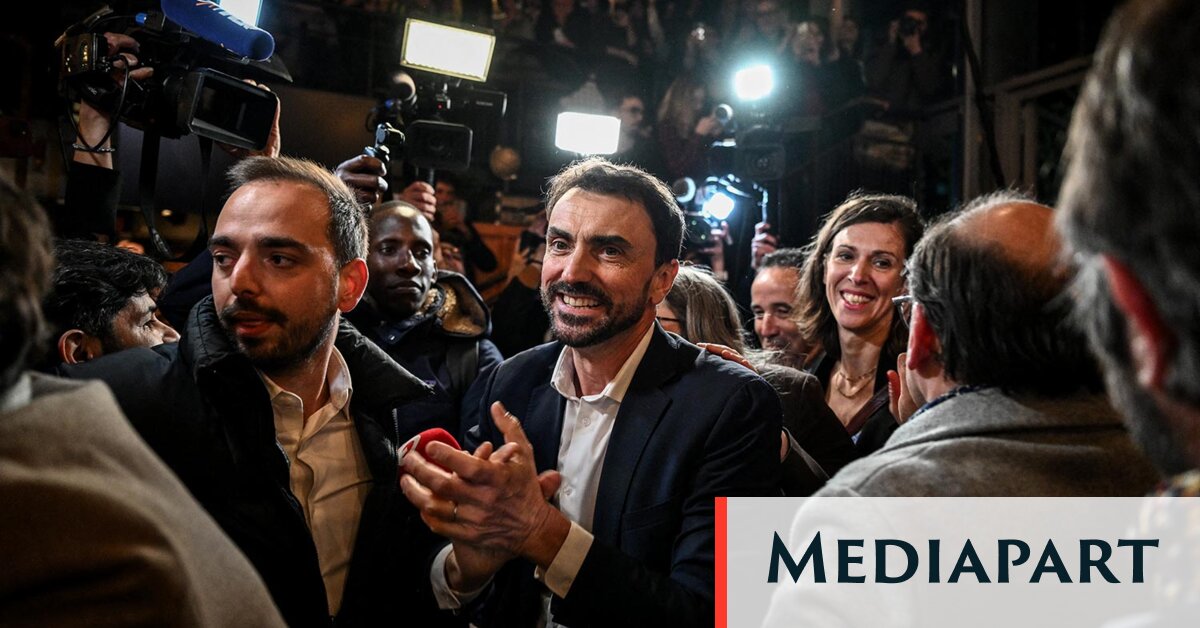
    Emmanuel Gregoire is surrounded by journalists and supporters as he arrives in front of the Paris City Hall after early results suggested he won the second round of the French mayoral election in Paris.
    Emmanuel Gregoire is surrounded by journalists and supporters as he arrives in front of the Paris City Hall after early results suggested he won the second round of the French mayoral election in Paris. REUTERS – Abdul Saboor

    In Marseille, the leftist incumbent, Benoit Payan, was comfortably re-elected with more than 53 percent, beating far-right candidate Franck Allisio of the National Rally, after running neck-and-neck in the first round.

    Taking Marseille, France’s third biggest city, would have given a huge boost to the RN, which controls only one town – Perpignan – of more than 100,000 inhabitants. 

    Marseille tight, Paris uncertain after first round of French local elections

    ‘Reasons to hope’

    In the northern port city of Le Havre, Edouard Philippe was comfortably re-elected with 47.7 percent of the vote, provisional results showed.

    The centre-right former prime minister, who has declared he will run for president in 2027, is seen as one of the strongest opponents to the RN’s potential presidential pick – whether veteran leader Marine Le Pen or her 30-year-old lieutenant Jordan Bardella.

    “There are reasons to hope,” Philippe told his supporters.

    Edouard Philippe (C-L) makes a V-sign after being re-elected as mayor of Le Havre.
    Edouard Philippe (C-L) makes a V-sign after being re-elected as mayor of Le Havre. © Lou Benoist / AFP

    However another former prime minister – centrist François Bayrou – lost his seat in Pau, where he’s been mayor since 2014. The seat was won by Socialist Jérôme Marbot, running on a united left ticket. 

    President Macron’s centrist Renaissance party had few illusions of making big gains in the local elections by party leader Gabriel Attal welcomed Renaissance victories in Bordeaux and Annecy, taken from the Greens .

    He also highlighted what he called an “anti-extremist” lesson. “The French reject this drift toward the extremes and want to start hoping again,” he said.

    Macron warns extremes pose danger to France ahead of final mayoral vote

    Limited far-right gains

    MP Eric Ciotti, who ran on a combined right-wing/far-right ticket, won the city of Nice on the Côte d’Azur, beating outgoing conservative mayor Christian Estrosi on 45 percent versus 39.5 percent respectively.

    Ciotti deemed it a victory for his strategy of uniting the right and far right.

    The RN party had been hoping for wins in southern urban hubs, notably Marseille, Toulon and Nimes, but exit polls suggest otherwise. Nimes elected Communist candidate Vincent Bouget.

    Eric Ciotti (centre) sits alongside Marine Le Pen (right) and RN spokesperson Sebastien Chenu (L) at a meeting of the far-right party in 2024 after he left the conservative Republicans to form a broad right/far-right alliance.
    Eric Ciotti (centre) sits alongside Marine Le Pen (right) and RN spokesperson Sebastien Chenu (L) at a meeting of the far-right party in 2024 after he left the conservative Republicans to form a broad right/far-right alliance. AFP – GEOFFROY VAN DER HASSELT

    However, the RN won the smaller southern towns of Menton, Carcassonne, Orange and Castres. It also took control of Vierzon, La Flèche and Liévin – bastions of the left.

    In winning Wittelsheim, it made its first inroads in the region of Alsace on the border with Germany.

    “Never before have the RN and its allies had so many elected officials across France,” said RN president Jordan Bardella, claiming the party had won 70 communes.

    No green wave

    In Lyon, France’s second largest city, incumbent mayor Grégory Doucet of the Greens beat right-wing candidate and former president of Olympique Lyonnais Jean-Michel Aulus by a margin of less than 3,000 votes.

    Aulus initially refused to concede defeat and announced he would file an appeal citing “irregularities during the election”. He later said he would accept defeat if the final results were confirmed.

    While the last municipal elections in 2020 saw a “green wave” – with ecologists taking big cities like Lyon, Bordeaux, Strasbourg, Grenoble, Poitiers, Besançon and Annecy – the party managed to hold onto only Grenoble and Lyon.

    Green wave as environmentalists win key cities in French local elections

    Difficult alliances

    One of the key takeaways from this second round of municipal elections is that alliances between the Socialists (PS), Greens and hard-left France Unbowed (LFI) – designed to keep out the far right – did not pay off.

    PS-LFI alliances lost out in Toulouse, Limoges, Poitiers and Besançon.

    While in Paris and Marseille, the Socialists, with Greens support, won without forming an alliance with LFI.

    Macron hardens attack on ‘far-left’ LFI, says antisemitic rhetoric must be tackled

    The hard-left party led by firebrand Jean-Luc Mélenchon won the towns of Roubaix and Creil in the north of France, and Vénissieux in the Rhone valley. It had already won Saint-Denis, north of Paris, in the first round.

    Overall turnout stood at 57 percent – the country’s lowest in local polls bar the 2020 edition that took place during the Covid pandemic.

    Read More

  • What changes in France this week

    What changes in France this week


    MPs head back to the Assembly, there’s a big G7 meeting in Yvelines, and the clocks go forward for the summer.

    Monday 

    Politics — MPs return to the Assembly after a break for the municipal elections.

    Court — A money-laundering trial involving the Congolese president’s niece begins.

    Thursday 

    International Politics — In what could be an interesting couple of days in Yvelines, given the state of the planet right now, foreign ministers from G7 countries are due to meet at Abbaye des Vaux de Cernay.

    Travel — Paris-Berlin night trains start running again, via Brussels.

    READ ALSO New Paris-Berlin night train to include three extra stops

    Sport — France’s footballers will take on Brazil in Foxborough, Massachusetts, as part of a brief US tour ahead of the World Cup later this year. The match kicks off at 9pm France time.

    Strike — Education unions have called on school staff in Charente, Charente-Maritime, Deux-Sèvres, and Vienne to walk out on strike in protest at working conditions, and planned class closures and staff reductions for the start of the 2026/27 school year. Demonstrations are planned in Angoulême, La Rochelle, Niort, and Poitiers.

    Friday 

    Rugby — New France coach Francois Ratier is due to announce the 32-player squad for the first round of the Women’s Six Nations at the end of a three-day training camp at FFR headquarters in Marcoussis. Les Bleues kick off their tournament against Italy at Grenoble’s Stade des Alpes on April 11th. 

    Food and Drink — The four-day Foire Internationale aux Fromages et aux Vins takes place in Coulommiers, Seine-et-Marne, featuring the expected array of food and drink, as well as producer competitions.

    Saturday 

    Religion — Pope Leo XIV becomes the first sitting pontiff to visit Monaco since Paul III in 1538 — and the first to arrive in a helicopter. He will celebrate a public mass at Stade Louis-II.

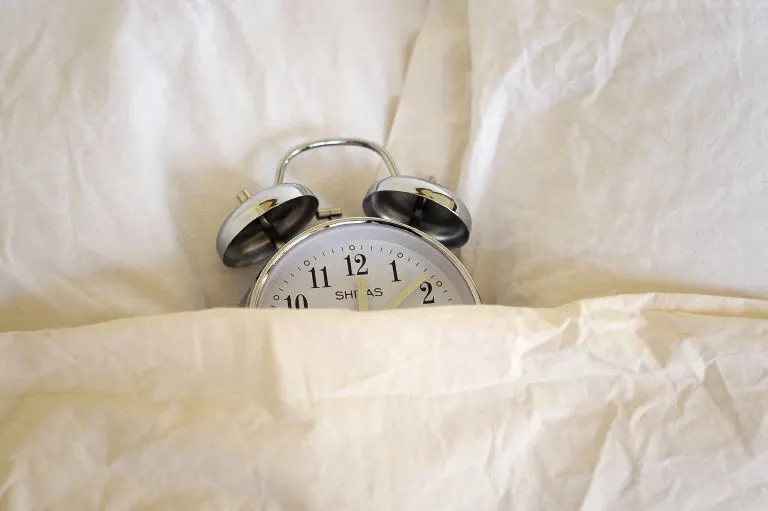
    Time — We all lose an hour’s sleep as the clocks go forward during the night of Saturday, March 28th, to Sunday, March 29th, 2026, at 2am.

    READ ALSO ‘It’s pointless’ – Why the French want to end the changing of the clocks

    Sunday 

    New flights – Air France will launch twice-daily flights between Paris-Charles-de-Gaulle and London Gatwick from March 29th.

    READ ALSO LISTED: All the new flights to and from France in 2026

    Sport — The second and final match of France senior men’s football team’s brief pre-World Cup US tour sees them take on Colombia in Landover, Maryland. The match kicks off at 9pm France time.

    Read More

  • Earth heat hits record in 2025 as UN warns warming will last thousands of years

    Earth heat hits record in 2025 as UN warns warming will last thousands of years


    The amount of heat trapped by the Earth reached record levels in 2025, with the consequences of such warming feared to last for thousands of years, the UN warned Monday.

    The 11 hottest years ever recorded were all between 2015 and 2025, the United Nations’ WMO weather and climate agency confirmed in its flagship State of the Global Climate annual report.

    Last year was the second or third hottest year on record, at about 1.43 Celsius above the 1850-1900 average, the World Meteorological Organisation said.

    “The global climate is in a state of emergency. Planet Earth is being pushed beyond its limits. Every key climate indicator is flashing red,” said UN Secretary-General Antonio Guterres.

    “Humanity has just endured the 11 hottest years on record. When history repeats itself 11 times, it is no longer a coincidence. It is a call to act.”

    For the first time, the WMO climate report includes the planet’s energy imbalance: the rate at which energy enters and leaves the Earth system.

    Read moreFlights, petrol cars and cruise ships: Amsterdam bans fossil fuel ads

    Under a stable climate, incoming energy from the Sun is about the same as the amount of outgoing energy, the Geneva-based agency said.

    However the increase in concentrations of heat-trapping greenhouse gases — carbon dioxide, methane and nitrous oxide — “to their highest level in at least 800,000 years” has “upset this equilibrium”, the WMO said.

    “The Earth’s energy imbalance has increased since its observational record began in 1960, particularly in the past 20 years. It reached a new high in 2025.”

    Ocean heat record

    WMO chief Celeste Saulo said scientific advances had improved understanding of the energy imbalance and its implications for the climate.

    “Human activities are increasingly disrupting the natural equilibrium and we will live with these consequences for hundreds and thousands of years,” she said.

    More than 91 percent of the excess heat is stored in the ocean.

    “Ocean heat content reached a new record high in 2025 and its rate of warming more than doubled from 1960-2005 to 2005-2025,” the WMO said.

    Read moreThe race for Paris: Why France’s capital has likely gone green for good

    Ocean warming has far-reaching consequences, such as degradation of marine ecosystems, biodiversity loss and reduction of the ocean carbon sink, the agency said.

    “It fuels tropical and subtropical storms and exacerbates ongoing sea-ice loss in the polar regions.”

    The Antarctic and Greenland ice sheets have both lost considerable mass, and the annual average extent of Arctic sea ice in 2025 was the lowest or second-lowest ever recorded in the satellite era.

    Last year, the global mean sea level was around 11 centimetres higher than when satellite altimetry records began in 1993. 

    Ocean warming and sea level rise are projected to continue for centuries.

    ‘Dire picture’

    WMO scientific officer John Kennedy said global weather is still under the influence of La Nina, a naturally occurring climate phenomenon that cools surface temperatures in the central and eastern equatorial Pacific Ocean. It brings changes in winds, pressure and rainfall patterns.

    Conditions oscillate between La Nina and its warming opposite El Nino, with neutral conditions in between.

    Read moreTrump revokes Obama-era climate finding on greenhouse gas risks

    The warmest year on record, 2024, was around 1.55C above the 1850-1900 average, and started in a strong El Nino.

    Forecasts indicate neutral conditions by the middle of 2026 with a possible El Nino developing before the end of the year, said Kennedy.

    If so, “then we’re likely to see maybe elevated temperatures again in 2027”, he told a press conference.

    The World Meteorological Organisation’s deputy chief, Ko Barrett, said the outlook was a “dire picture”.

    She said the WMO provided the evidence it sees, hoping that the information “will encourage people to take action”.

    But there was “no denying” that “these indicators are not moving in a direction that provides for a lot of hope”, she said.

    With war gripping the Middle East and fuel prices soaring, Guterres said the world should heed the alarm call.

    “In this age of war, climate stress is also exposing another truth: our addiction to fossil fuels is destabilising both the climate and global security,” he said.

    “Today’s report should come with a warning label: climate chaos is accelerating and delay is deadly,” he said.

    (FRANCE 24 with AFP)

    Read More

  • Ireland and France: A Story of Saints, Soldiers and St. Patrick’s Spirit

    Ireland and France: A Story of Saints, Soldiers and St. Patrick’s Spirit


    As St. Patrick’s Day approaches, France begins to turn a little greener – and not just in its shop windows or pub façades. The ties between Ireland and France run deep, stretching back more than 1,500 years. Theirs is a relationship shaped by saints and scholars, soldiers and statesmen, music and migration – and, of course, the occasional excellent pint. It may look, on the surface, like an excuse for a lively night out. But behind the Guinness taps and green bunting lies a remarkably rich shared history. 

    Long before shamrocks became global symbols, Saint Patrick himself had French connections. Tradition holds that before returning to Ireland as a missionary, Patrick studied in Gaul, likely in Auxerre. Those early spiritual links were strengthened in the centuries that followed as Irish monks travelled to France, founding monasteries and contributing to the preservation of learning in medieval Europe. In many ways, the Franco-Irish story begins not with political alliances, but with pilgrimage. 

    Statue of Saint Patrick Photo: Wikimedia Commons

    Centuries later, the bond deepened through exile. After the 1691 Treaty of Limerick, thousands of Irish soldiers left their homeland for France in what became known as the Flight of the Wild Geese. They formed Irish brigades within the French army and fought with distinction for their adopted country.

    As the Irish government itself reflects on their website, “the Ireland-France relationship evokes memories of our shared Norman, Huguenot and Celtic heritage, the Flight of the Wild Geese at the end of the 17th century and the spirit of the French Revolution a hundred years later which so captured the imagination of Wolfe Tone and the United Irishmen”. Their loyalty to France never eroded their Irish identity; instead, it wove the two together. 

    Celtic Crossed Grave Photo: Shutterstock

    One descendant of that tradition would rise to the very top of French public life. Patrice de MacMahon, born into a family of Irish Jacobite nobility, became a Marshal of France and later President of the Republic (1873–1879). An Irish name at the Élysée Palace is perhaps the most striking symbol of how thoroughly Irish heritage became part of the French story. 

    Culture, too, has long flowed between the two shores. Sharing a Celtic heritage binds Ireland especially to Brittany, the closest EU region to Ireland. 

    Brittany’s music, mythology, bagadoù pipe bands and ancient standing stones echo Ireland’s own traditions. Standing on the Breton coast, watching Atlantic waves roll in, it’s easy to imagine the centuries of travel and exchange across that narrow stretch of sea. More and more, Irish contemporary culture, from cinema and fashion to new music, continues to break through to French audiences, building on foundations laid by giants such as James Joyce, Samuel Beckett, Oscar Wilde and Eileen Gray, whose imprint on France remains indelible. 

    Brittany Coast Photo: Shutterstock

    Today, the beating heart of that cultural exchange is the Centre Culturel Irlandais, housed in the historic Irish College on Rue Irlandais in Paris’ Latin Quarter. 

    Far from being a once-a-year celebration, the Centre offers exhibitions, literary talks, live music nights, Irish language meet-ups and stand-up comedy. This March 13th, for example, the famed comedian Dylan Moran takes to the stage – showing you don’t have to cross the sea to experience Ireland at its most creative and irreverent! Around St. Patrick’s Day, its courtyard overflow with endless celebration. 

    Even in darker moments of history, Irish touches appear. In 1939, as war loomed over Europe, Guinness was supplied to British and Allied troops stationed in France. A pint of stout became more than a simple drink, it provided soldiers with comfort, familiarity and, I’m sure, boosted morale. Today, that same stout flows ever-so freely across France every March 17th – bars lined with rows of black-and-cream pints waiting to be claimed. 

    Irish Pub in Paris Photo: Shutterstock

    And then there are those pubs. Anyone who has lived in Paris knows the truth: a night in an Irish bar is a night of guaranteed fun. I remember evenings where the shelves were stacked high with Guinness glasses, the room humming with accents from Dublin to Donegal (and from Bordeaux to Belleville) and, just before closing time, one last request ringing out: “Zombie!” When The Cranberries blasted through the speakers and the entire bar sang along, it felt less like a Paris night out and more like something shared between all. Music spilling into the street, strangers becoming friends by closing time – these are small but powerful examples of connection. 

    Sport, too, tells its own story of rivalry and respect. France and Ireland’s rugby history dates back to 1909. Since then, the two nations have played 105 test matches: France leads the series with 61 wins to Ireland’s 37, with seven draws. Every Six Nations clash carries not just points but fierce competition underpinned by deep mutual regard. 

    French Rugby Team Photo: Shutterstock

    St. Patrick’s Day in France is joyful. Pint glasses are raised, bagpipes play, and monuments glow green. But it is not simply an excuse for a night of drinking. It is a celebration layered with centuries of history – of wandering saints and exiled soldiers, of revolutionary ideals and literary brilliance, of Celtic kinship and sporting rivalry, of cultural centres and crowded pubs. 

    A relationship that began with pilgrimage, passed through regiments and presidencies, echoed in Breton bagpipes, roared across rugby pitches, and still resounds each time an Irish bar belts out one last song before the lights come up. 

    Sláinte – et vive l’amitié franco-irlandaise!

    Lead photo credit : Giants Causeway, Ireland Photo: Shutterstock ©

    Your email address will not be published. Required fields are marked *

    Read More