Les Italiens ont rejeté à 53,8% la réforme judiciaire proposée par la cheffe du gouvernement. Faisant passer ce message qu’ils ne sont pas prêts à voir la Constitution et l’État de droit attaqués. La présidente du Conseil comptait sur ce scrutin pour asseoir sa légitimité, alors que son bilan intérieur est mitigé.
Read More
Category: France
-
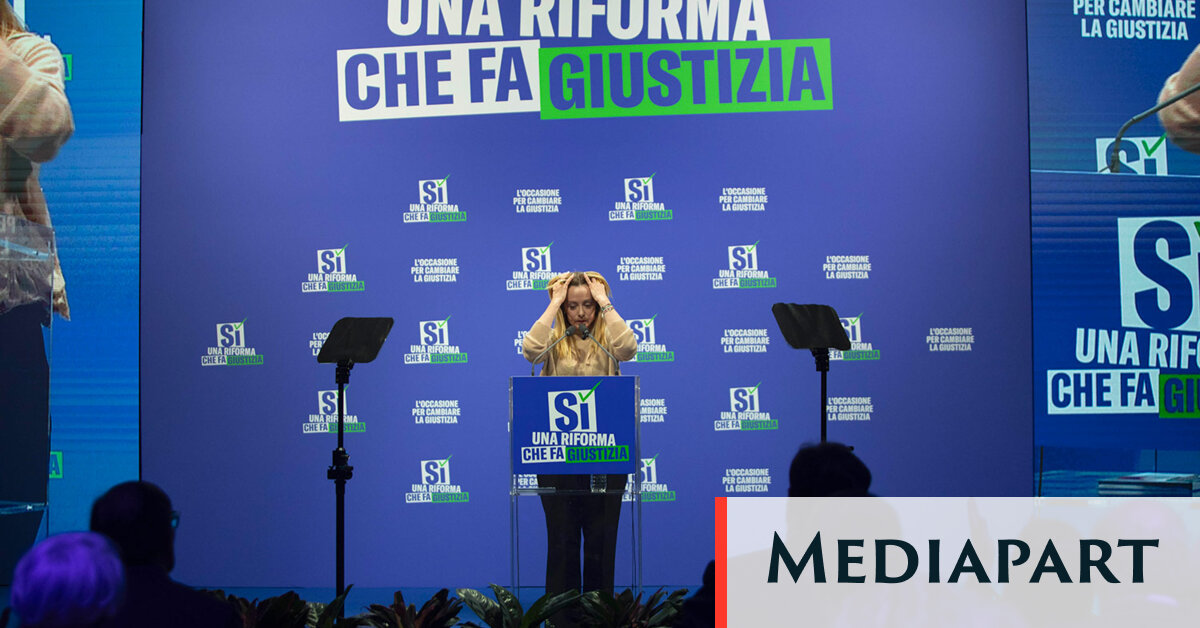
Italie: Meloni affaiblie après l’échec de son référendum sur la justice
-

France’s first advanced chemical recycling plant opens, to criticism from NGOs

TotalEnergies’ new plastics recycling plant has come under fire from environmental activists, who claim the chemicals it uses will create more greenhouse gases than conventional recycling methods.
Issued on:
3 min Reading timeFrench oil giant TotalEnergies opened the recycling plant at its Grandpuits site, 80km south-east of Paris, on Thursday.
Using recycling technology supplied by the British group Plastic Energy, it will deal with plastic waste that cannot be processed mechanically and is normally sent to landfill sites or incinerated.
Plant operators say a pyrolysis process will heat the plastic waste at high temperatures, in the absence of oxygen and under pressure, to transform it into high-quality synthetic oil, which can be used to make new plastic, fertiliser or fuel.
“This advanced recycling process makes it possible to recycle waste that cannot be recycled mechanically,” said a TotalEnergies statement.
‘Not a desirable alternative’
However, environmental NGO Zero Waste France says it believes chemical recycling projects are nothing more than “yet another attempt by the oil industry to push the narrative that we can continue to produce large quantities of plastic, which is essential to the oil industry’s viability”.
“This process emits nine times more greenhouse gases than mechanical recycling,” said Bénédicte Kjaer Kahlat, a lawyer at the organisation. “So it is by no means a realistic or desirable alternative today.”
Beth Gardiner, author of Plastic Inc, told French news agency AFP: “The industry is really trying to convince people that chemical recycling is a miracle solution to plastic waste proliferation, but the evidence is lacking.”
Globally, only 9 percent of plastic waste is recycled. Scientists say to effectively put an end to microplastic pollution, production must be reduced and limitations placed on its use.
TotalEnergies convicted of greenwashing over claims of carbon neutrality
The Grandpuits-Gargenville refinery and oil depot came into operation in 1966. In September 2020, TotalEnergies announced plans to convert the refinery into a zero-oil platform – at a cost of more than €500 million.
The plant will handle up to 15,000 tonnes of recycled plastic annually, alongside 210,000 tonnes of sustainable aviation fuel, 50,000 tonnes of road biofuels and 70,000 tonnes of bionaphtha, a hydrocarbon mixture produced from renewable sources such as vegetable oils, waste animal fats and used cooking oil.
“The start-up of the first advanced plastics recycling plant in France is an important milestone in the conversion of our Grandpuits site into a zero-crude complex,” said Valérie Goff, senior vice president of renewables, fuels and chemicals at TotalEnergies.
German NGO accuses TotalEnergies of complicity in Mozambique war crimes
Legal action
The launch of the recycling plant comes days after a Belgian court adjourned a case in which a farmer is seeking compensation from TotalEnergies for damage to his land caused by climate change.
Hugues Falys, from Hainaut in western Belgium, took TotalEnergies to court on the grounds that the group is Belgium’s leading refiner and distributor of petroleum products.
Falys, who is supported by activist groups including Greenpeace and food rights organisation FIAN, says the company can be held liable for global warming because of emissions generated when its products are burned – a claim rejected by TotalEnergies.
The claim was filed in 2024 before the Tournai business court in western Belgium. Lawyers for both sides presented their cases during hearings between November 2025 and January 2026.
“The decision to adjourn the proceedings was made in the interest of ensuring a fully informed debate,” the court said in a statement. The next hearing was set for 9 September – to allow another hearing involving TotalEnergies time to finish in Paris..
That case was brought against TotalEnergies by several NGOs and the City of Paris. They want TotalEnergies to stop developing new hydrocarbon projects and cut back oil and gas production.
The Paris plaintiffs accuse the firm of having failed to properly consider environmental risks under a 2017 law that imposes a “duty of vigilance” on large companies.
TotalEnergies and its accusers are at odds over the definition of the environment, and whether it refers to risks on a local scale, such as a polluted river, or more broadly to global warming. The energy firm’s lawyers argued global warming is beyond the scope of that law.
This article was partially adapted from this report in French.
-
French supermarket boss admits ‘mistake’ over promised fuel price drop
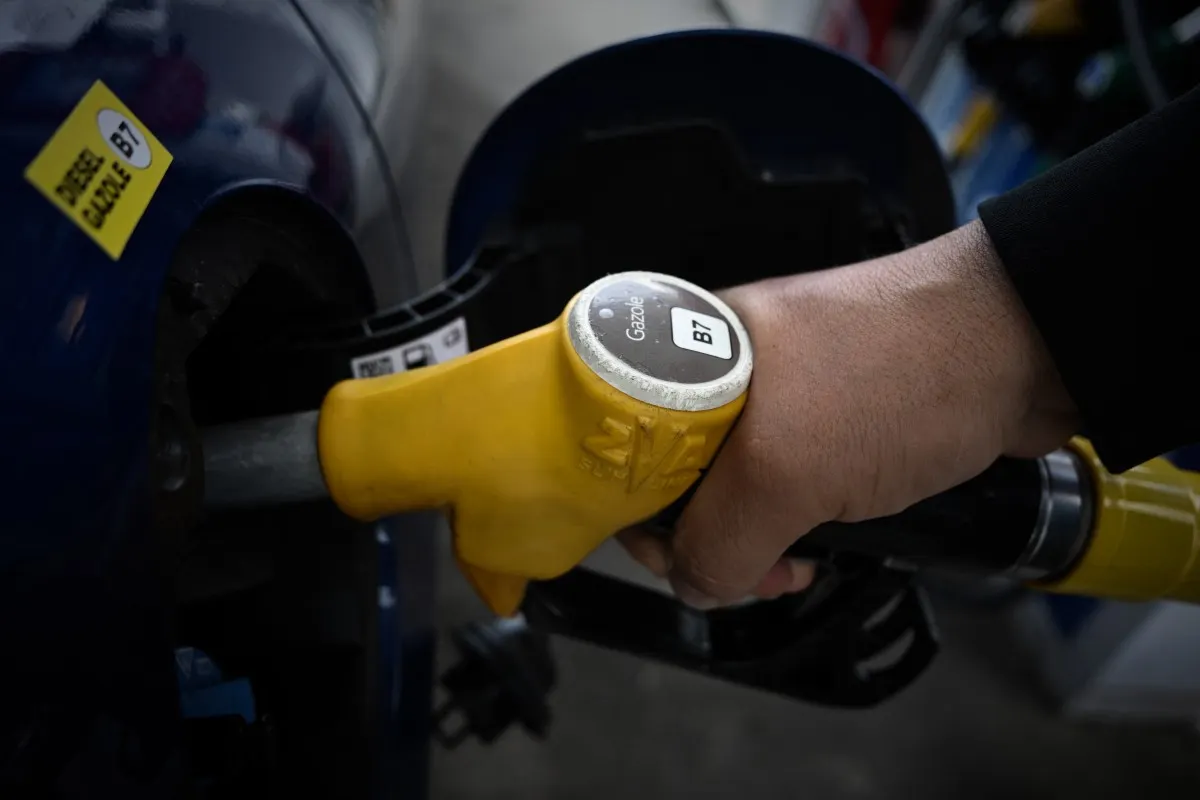
Michel-Edouard Leclerc, head of France’s largest supermarket group Leclerc, has admitted he was wrong to suggest drivers would soon benefit from a sharp fall in fuel prices.
Leclerc admitted that the widely reported reduction of “around €0.30” per litre at the pump – which he had indicated could happen within days – ultimately did not happen.
“I plead guilty to having overestimated our ability to continue selling at lower prices,” he told AFP, adding that he “fully understands the expectations” raised among drivers. “I regret not having anticipated such volatility.”
Speaking in an interview to France Info on March 11th, Leclerc pointed to a recent dip in oil prices following days of increases due to escalating tensions in the Middle East.
He suggested that, as petrol stations restock their supplies, prices could fall by €0.23 per litre, followed by a further €0.07 drop – bringing the total expected decrease to roughly €0.30 per litre.
While some price reductions were briefly seen in certain outlets, the broader drop never happened in Leclerc gas stations.
Leclerc said that he had not intended to announce any formal campaign or promotion, but rather to describe the market’s current situation.
The French oil giant Total Energies has said that it will cap fuel prices at €1.99 per litre for petrol and €2.09 per litre for diesel – but only until the end of March.
Despite the mistake, Leclerc remains one of the cheapest outlets for fuel in France.
MAP: How to find the cheapest petrol and diesel in France
Leclerc is not the only retail executive to have raised expectations of falling prices. Dominique Schelcher, CEO of Coopérative U supermarket chain, also said earlier in the week that prices would “fall significantly at the pump”.
However, Coopérative U later acknowledged that any reductions have been modest and inconsistent.
“There has been a gradual drop of several cents at some petrol stations over several days,” the group told AFP, “but we are entirely at the mercy of price volatility and developments in the geopolitical situation.”
Meanwhile the expansion of the conflict in the Middle East means that household gas prices may also start to rise in the days to come.
-

North Korea’s Kim Jong Un says nuclear-armed status ‘irreversible’
North Korea will never change its status as a nuclear-armed state, its leader Kim Jong Un said, state media reported on Tuesday.
The declaration — delivered on Monday — follows Kim’s reappointment a day earlier as head of the authoritarian nation’s highest policymaking body, the State Affairs Commission.
“We will continue to firmly consolidate our status as a nuclear-armed state as an irreversible course, while aggressively stepping up our struggle against hostile forces,” he said in a policy speech at the rubber-stamp legislature in Pyongyang.
Read moreNorth Korea tests nuclear-capable rocket launchers amid US-South Korea military drills
In a lengthy policy address reported by the official Korean Central News Agency, the third-generation leader addressed a wide range of issues, from nuclear weapons and defence policy to economic goals and relations with South Korea and the United States.
“We will, in line with the mission entrusted by the Constitution of the Republic …., further expand and advance our self-defensive nuclear deterrent,” he said, referring to nuclear weapons.
Pursuing an expansion of nuclear weapons to consolidate its status as a nuclear-armed state has been “entirely justified”, he added.
The isolated country will ensure “precise readiness” of its nuclear forces, he said, to fend off “strategic threats”.
Kim did not mince words about his southern neighbour, which he called “the most hostile state”.
“We will designate South Korea as the most hostile state and deal with it by thoroughly,” he said.
One of your browser extensions seems to be blocking the video player from loading. To watch this content, you may need to disable it on this site.

North Korean leader Kim oversees test-launch of multiple rocket launchers via REUTERS – KCNA Pyongyang will “make it pay mercilessly — without the slightest consideration or hesitation — for any act that infringes upon our Republic,” he added.
Kim is the third-generation ruler of the state founded by his grandfather Kim Il Sung in 1948, and has ruled the country since his father’s death in 2011.
The North’s legislature re-elected Kim as president of state affairs, KCNA reported earlier, without saying whether the decision was unanimous or with dissent.
Critics argue that elections in North Korea are pre-determined and designed to give the leadership a veneer of democratic legitimacy.
(FRANCE 24 with AFP)
-

The World of Astérix Comics
Dominic Bliss charts how a plucky Gaul from a 1959 magazine became a 400-million-selling cultural force, spawning films, games and a theme park, while poking fun at history, empire and modern-day France in 120 languages…
The year is 50 BC. Gaul is entirely occupied by the Romans. Well, not entirely… One small village of indomitable Gauls still holds out against the invaders.” These are the lines that set the scene at the start of the Astérix comic books, each adventure starring two of the best-known cartoon characters in French literature. The small chap is, of course, Astérix himself – diminutive in size but valiant and spirited thanks to a secret potion that arms him with superhuman strength. His sidekick is the big fat one, Obélix, who, when he’s not loyally assisting his friend in bashing the invading Romans, is found delivering menhir stones or feasting on wild boar.

With global sales of 400m copies and translations into 120 languages and dialects, Astérix is the best-selling European comic book series of all time. Others don’t even come close: not Lucky Luke, not the Smurfs, not 2000 AD… not even Tintin..
There have been 41 Astérix books in all, the latest, Astérix en Lusitanie, published in October 2025. This time our two intrepid heroes travel to Lusitania-modern-day Portugal – where, as Astérix says, they plan to “try out the delicious local specialities, beat up a few fresh Romans and, who knows, perhaps meet some charming young ladies”. Since he first appeared in the late 1950s, Astérix has grown far beyond the confines of the comic strip. As well as all the books, there have been films – both live action and animated-board games, video games and, most recently, a new Netflix cartoon series. And just north of Paris, in Plailly, there’s Parc Astérix, a theme park dedicated to the characters which, since 1989, has offered a distinctly French alternative to the more Americanised Disneyland Paris nearby, welcoming 2.8m visitors a year.
It was 66 years ago, in 1959, that Astérix and Obélix first saw the light of day, appearing in the launch issue of a French magazine called Pilote. Two of the magazine’s founders were writer René Goscinny and illustrator Albert Uderzo. The two plucky Gauls they created went on to conquer the world. The first comic book, Astérix le Gaulois (Astérix the Gaul), was published in French in 1961, followed by regular sequels. Sales increased exponentially with each adventure and English-language versions started in 1969.

During that post-Second World War period, Astérix was in many ways a personification of his nation. Having been occupied by Nazi Germany and attempting to redefine itself as its colonial empire declined, France needed a hero. With his winged helmet and handlebar moustache, the small but fearless Gaulish tribesman stepped up to fill the role. From their tiny little enclave in Armorica (modern-day Brittany), the friends’ struggle against the occupying Romans was an obvious metaphor for French resistance during the war. Others have suggested it represents French anxiety at post-war American-led globalisation. Although the hilarious slapstick of Goscinny and Uderzo’s stories appealed to younger readers, the ingenious word play, the political satire and the mockery of European national stereotypes meant adult readers were hooked too.
No country, not even France itself, was immune from playful ridicule. In Astérix chez les Bretons (Astérix in Britain), the locals are portrayed as overly polite and preoccupied with drinking tea. In Astérix chez les Helvètes (Astérix in Switzerland), they are obsessed with fondue, cuckoo clocks, neutrality and yodelling. In Astérix chez les Belges (Astérix in Belgium), there are comic references to Belgian celebrities, the Battle of Waterloo and mussels and chips.
The books served a historical function, too, giving youngsters and adults alike a popular reference for aspects of the Roman Empire such as gladiators, legionaries, banquets and slavery. Many volumes were even translated into Latin and Greek, with accompanying teachers’ guides.
UNIVERSAL APPEAL
When Goscinny died of a heart attack in 1977, readers implored Uderzo to continue the series and he duly obliged, although later there were legal battles, buyouts and a revolving door of new writers and illustrators. The last two editions were created by writer Fabcaro and illustrator Didier Conrad.
Uderzo, who died in 2020, always struggled to explain the enduring appeal of his and Goscinny’s creation. “We are like magicians who don’t know how they do a trick,” he once said. Another time he suggested: “It’s David against Goliath. Everyone can identify with the image of retribution against things that are bigger than us.”

Didier Conrad © Christophe Guibbaud
Céleste Surugue, chief executive at the current publishers, Les Éditions Albert-René, says the stories work on multiple levels. “They combine visual gags, wordplay, historical references and cultural nods,” he says. “They appeal to both children and adults. Astérix gently pokes fun at everyone through a series of national and international clichés. It all shows that, beyond our apparent differences, we are united by the same humanity.” Surugue highlights the universal human values in the comic books. “Our indomitable Gauls embody laughter, freedom, solidarity and friendship. Also, Astérix’s Gaulish village is a symbol of resistance against oppression, of David against Goliath, which resonates in many cultural contexts and in all eras.” He also pays homage to the inventiveness of the many translators who have rewritten the books in other languages. “For humour to work abroad, translators often have to adapt rather than translate literally,” he says.

Fabcaro © Christophe Guibbaud
BRINGING HISTORY TO LIFE
Two translators who deserve special mention are Anthea Bell and Derek Hockridge who worked on the first 36 albums, brilliantly transposing the original French wordplay, cultural references and quirky humour for the English-speaking world. Most memorable were their genius alternatives to the characters’ names, so that Obélix’s dog Idéfix becomes Dogmatix; the village chief Abraracourcix becomes Vitalstatistix; the village elder Agecanonix becomes Geriatrix; the bard Assurancetourix becomes Cacofonix; and the fishmonger Ordralfabétix becomes Unhygienix. Without Bell and Hockridge’s ingenious work, it’s possible Astérix would not have won such global acclaim.
Without Astérix, it’s also possible children worldwide would never have learned so much about the Roman Empire and Ancient Gaul’s place within it. “For many foreign readers, Astérix is indeed the main gateway to the Gallo-Roman era, but this is also true for many children in France,” Surugue adds. “We laugh with Astérix but we also learn. The quality of the writing allows French history and culture to shine through globally with a smile. Astérix is a very good cultural ambassador for France. He embodies his nation – he is rebellious, attached to its traditions, but also capable of self-mockery.”

PLANCHE ANNONCE T41 – Ceci n’est pas une planche de l’album !
At 66 years old, if Astérix inhabited modern-day France, he would be ready for retirement. In fact, he’d probably be donning a gilet jaune and protesting at President Macron’s pension reforms. Which leads us to wonder where our diminutive hero will be in another 66 years’ time. “He’s in better shape than ever,” Surugue insists. “Whether that’s in the French or the foreign editions of the books, or with the theme park, or with Alain Chabat’s wonderful Netflix series.”

While Surugue and his colleagues are currently concentrating on the latest Astérix book, they naturally have an eye on the future. “Yes, of course, we’re thinking about new exciting projects,” he says. “But we always want to look after our famous character with both ambition and prudence. With 66 years of history behind him and a very long future in front, Astérix deserves the very best.”
The latest Astérix comic book, Astérix in Lusitania, was published in French and English on October 23, 2025.
From France Today Magazine
-
Meet Dr. Andrew Burkett: From coding to being BCHS’s chief of staff
Article content
Patient safety and continuing to build a strong team are top of mind for Brant Community Healthcare System (BCHS)’s new chief of staff and VP of medical and academic affairs.
Article content
Dr. Andrew Burkett is a respirologist and has been chief and medical director of internal medicine at BCHS since October 2023, but an unusual path got him there.
Article content
Burkett was working as a computer programmer when he volunteered at a hospital for a couple of weeks while travelling in Fiji with friends.
Although he was “basically handing out blankets,” that experience shifted his trajectory.
When he returned to Ireland, where he was living, he applied to medical school, which had more in common with computer programming than some might think.
“The through thread is problem solving. I think good computer programmers don’t get frustrated, and they work at a problem until they solve it. I think good doctors do too. There’s an obsession about the getting it right that, so weirdly it’s not as different a job as people think,” he told The Hamilton Spectator.
Article content
Burkett took over the chief of staff role on Feb. 9 from Dr. Anirudh (Rudy) Goel, who left at the end of 2025 and set the Brantford General Hospital and Willett Urgent Care Centre in Paris up for success with its medical advisory council.
“Across the board, every medical leader on there is very focused on quality care, safe care, and really wants to see Brantford become a world-class centre,” Burkett said.
As chief of staff, he’s tasked with ensuring quality of care and patient safety. The other part of his role involves growing the academic side of the hospital, including the partnership with Hamilton and other academic groups, he said.
Bringing more learners through can increase care, but also helps with recruitment, one of the top challenges he’s identified.
“I want very good docs in Brantford and I want the docs who are there to feel that they have a fulfilling career and are happy and can make a difference for the population,” he said.
Celeste Percy-Beauregard, Local Journalism Initiative reporter at the Hamilton Spectator. The initiative is funded by the Government of Canada.
Share this article in your social network
-
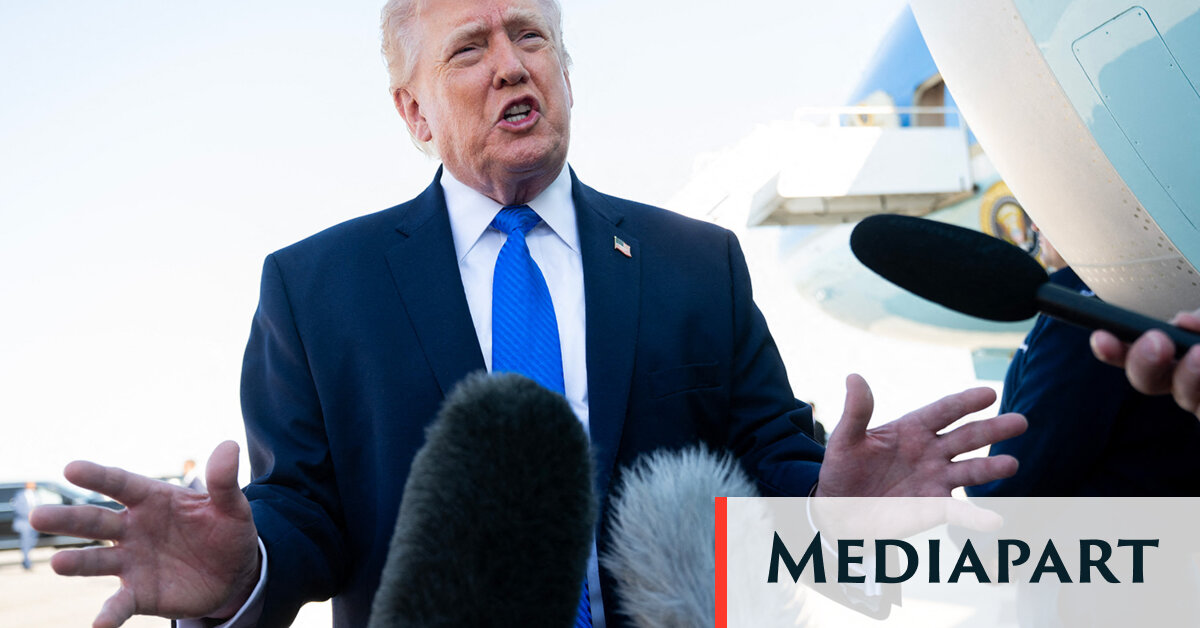
Trump affirme négocier avec l’Iran, Téhéran dément
Les cookies et technologies similaires que nous utilisons sur Mediapart sont de différentes natures et nous permettent de poursuivre différentes finalités.
Certains sont nécessaires au fonctionnement du site et de l’application mobile (vous ne pouvez pas les refuser). D’autres sont optionnels mais contribuent à faciliter votre expérience de lecteur ou de lectrice et d’une certaine façon à soutenir Mediapart. Vous pouvez les refuser ou les accepter ci-dessous, selon leurs finalités.
Acceptez-vous que Mediapart utilise des cookies ou technologies similaires pour les finalités suivantes ?
Vous pouvez faire votre choix, pour chaque catégorie, en activant ou désactivant le bouton interrupteur.
Nécessaires au fonctionnement
du site ou de l’applicationConnexion des abonné·es, mesure d’audience anonymisée, envoi des notifications push, suivi des pannes, mise en avant de nos services : ces outils sont nécessaires au suivi de l’activité de nos services et à leur bon fonctionnement.
Voici les différents cookies et technologies similaires compris dans cette catégorie :
- Cookies d’authentification : connexion des abonné·es.
- AT Internet : mesure d’audience anonymisée
- Affichage de contenus éditoriaux multimédias : vidéos (YouTube, Dailymotion, Vimeo, INA), réseaux sociaux (Facebook, Instagram, Pinterest, Twitter), documents (Scribd, Document Cloud, Slideshare), sons (SoundCloud, Spotify, Deezer), cartes (Google Maps, Mapbox, CartoDB, uMap), infographies (Highcharts, GitHub, Datawrapper, Flourish, Infogram, ThingLink, jQuery, Google Fonts, Bootstrap), live blogs (24liveblog, CoverItLive), aide à l’intégration de média dans les publications Journal et Club (Embedly).
- Typeform : questionnaires facultatifs pour recueillir les avis des lecteurs sur nos produits numériques.
- Datadog (uniquement sur le site web) : indicateurs techniques et équilibrage de charge.
- Selligent (uniquement sur le site web) : communication avec l’abonné·e, mise en avant des services, offres et avantages.
- Batch (uniquement sur l’application) : envoi de notifications push et de messages in-app.
- Firebase Cloud Messaging (uniquement sur l’application) : nécessaire au fonctionnement des notifications push sur Android.
- Microsoft App Center (uniquement sur l’application) : système de mise à jour et de suivi des pannes de l’application.
Ces outils nous permettent de recueillir des statistiques de fréquentation du site et de l’application mobile pour comprendre les usages, détecter d’éventuels problèmes et optimiser l’ergonomie de nos produits.
Voici les outils tiers compris dans cette catégorie :
- AT Internet : mesure d’audience reliée à l’identifiant d’abonné·e.
- CrazyEggs (uniquement sur le site web) : analyse de parcours client.
- Nonli (uniquement sur le site web) : permet à notre équipe des réseaux sociaux de publier les contenus Mediapart sur les réseaux sociaux.
- Qiota (uniquement sur le site web) : gestion du système de datawall.
Il n’y a pas de publicité sur Mediapart. Mais nous faisons la promotion de nos contenus et services sur d’autres sites et réseaux sociaux. Pour cela, nous utilisons les technologies mises à disposition par certains acteurs publicitaires.
Voici les outils tiers compris dans cette catégorie :
- Facebook (uniquement sur le site web) : ciblage d’audience sur les réseaux sociaux pour faire la promotion de Mediapart.
Gestion de l’accès aux contenus
Nous utilisons le service Qiota d’Opper Marketing Suite pour configurer l’activation d’un datawall sur certains de nos contenus (uniquement sur le site web). Ce dispositif destiné aux utilisateur·ices non abonné·es requiert la saisie d’une adresse email pour accéder aux contenus concernés. En fournissant cette information, l’utilisateur consent à sa collecte, son stockage et son utilisation à des fins statistiques. Conformément à la réglementation en vigueur, les utilisateurs disposent d’un droit d’accès, de rectification et de suppression de leurs données, qu’ils peuvent exercer en contactant dpo@opper.io.
-

French local elections reshape political landscape in overseas territories

Local elections across France’s overseas territories have delivered a series of striking results, reshaping political balances from the Pacific to the Caribbean. From a breakthrough for the left in Reunion Island to a symbolic defeat for a regional heavyweight in Guadeloupe, voters have sent a clear – and sometimes surprising – message.
In French Pacific territory of New Caledonia, the local elections once again highlighted the territory’s central political fault line: independence. In and around the capital Nouméa, where most of the population lives, anti-independence candidates consolidated their hold.
Centre-right mayor Sonia Lagarde was comfortably re-elected with around 62 percent of the vote, and neighbouring suburbs followed suit, reinforcing the strength of loyalist sentiment in urban areas.
Yet beyond this urban core, the picture was more mixed. In some smaller towns, pro-independence forces lost ground – most strikingly in Koné, in New Caledonia‘s northern province, where a new list ended decades of independence-aligned leadership.
Elsewhere, however, long-standing figures held firm, underlining the resilience of the Kanak independence movement in its traditional strongholds.
The contrasting results feed directly into the debate over the Bougival Agreement, a controversial proposal on the territory’s future that is due to be examined in Paris. Both sides claim vindication: loyalists pointed to broad overall support, while their opponents argued that pro-independence voters had largely rejected the deal.
In French Polynesia, the elections confirmed the continued dominance of autonomist parties, which favour remaining within France while retaining significant local powers.
In the capital, Papeete, a broadly aligned candidate won a fragmented race, and across the archipelago similar forces prevailed.
The main exception was Faa’a, where veteran pro-independence leader Oscar Temaru once again held onto his stronghold.
What you need to know about France’s 2026 local elections
Indian Ocean shifts and tensions
Further west in the Indian Ocean, Reunion Island delivered one of the clearest political shifts of the elections. The left strengthened its foothold, most notably in Le Tampon – inland from the southern city of Saint Pierre – where hard-left France Unbowed candidate, Alexis Chaussalet won control of the town for the left, for the first time since the Second World War.
The victory owed much to divisions on the right and marked a symbolic breakthrough.
Elsewhere on the island, the mood was more finely balanced. In one key town, the incumbent mayor scraped back in by just a handful of votes, while other right-leaning strongholds held steady. Still, the overall sense is of a political landscape slowly tilting, rather than dramatically overturning.
Meanwhile, in Mayotte – still struggling in the aftermath of Cyclone Chido in 2024 – voters opted for change. Only a small number of mayors held onto their posts, with several former officeholders returning to power after years away.
In the northern municipality of Koungou, for instance, a previous mayor staged a comeback nearly two decades after leaving office.
Not everything passed smoothly, however. Allegations of fraudulent proxy voting have prompted an investigation, a reminder of the administrative and political challenges that continue to shape the island’s public life.
France approves €4bn plan to rebuild Mayotte and tighten migration rules
Caribbean and Guiana: change, continuity and renewal
In the Caribbean, Guadeloupe produced one of the most striking results. Ary Chalus, a prominent centre-left regional figure, lost control of Baie-Mahault, a key economic hub.
His defeat follows recent legal troubles and marks a significant political setback, with voters appearing to turn to Michel Mado, an independent centrist who campaigned as a more credible and less contentious alternative.
Elsewhere on the island, however, incumbents largely held their ground, suggesting that the upset was localised rather than part of a broader political shift.
Fed up with being overlooked, France’s Guadeloupe turns to the far right
Neighbouring Martinique offered a blend of continuity and renewal. In the capital, Fort-de-France, the incumbent mayor Didier Laguerre narrowly secured another term, preserving a political lineage that stretches back decades.
Beyond the capital, change was more visible. A wave of new mayors was elected, and the number of women leading municipalities has risen significantly, pointing to a gradual transformation in local political life.
Martinique is still recovering from a turbulent 2024, when the island was rocked by protests over the high cost of living that escalated into urban violence, roadblocks and repeated night-time curfews imposed by authorities.
In French Guiana, on the South American mainland, a generational shake-up came to the fore. Lénaïck Adam, a 34-year-old former Renaissance MP, was elected mayor of Saint-Laurent-du-Maroni – deep in French Amazonia – defeating both the incumbent centrist Sophie Charles and veteran right-wing politician Léon Bertrand, who have dominated local politics for decades.
Local elections ‘less vulnerable’ to disinformation, despite targeted campaigns
A patchwork of change
Taken together, the recent elections in France’s overseas territories do not point to a single, overarching shift. Instead, they reveal a patchwork of local dynamics shaped by history, identity and economic concerns.
However, a common thread runs through them: voters are actively reshaping political landscapes, whether by endorsing familiar figures, embracing new ones, or quietly redrawing the balance of power.
In territories often seen from Paris as distant, the message is: local politics remain vibrant, contested and, above all, consequential.
(with AFP)
-

The verdict on what the local election results mean for France

The Talking France podcast returns with a special edition looking at all things local elections – from results and reactions, to what this means for the 2027 presidential election.
Host Ben McPartland is joined by The Local France’s Emma Pearson, Emma Albright and John Lichfield to look at all the news regarding the results of the French local elections.
Starting with the results in the three major cities: Paris, Lyon, and Marseille. We discuss the wins, some anecdotes and what the various candidates had to say about the results.
We then discuss what’s ahead: for the now elected mayors as well as for the 2027 presidential election in France.
Finally John Lichfield shares his analysis about what, if any, lessons can be drawn from these elections for next year’s presidential poll.
You can find the Talking France podcast on Spotify, Apple or the French platform Deezer and via our friends at World Radio Paris. You can download it here or listen on the link below.
Finally, with the recent death of former Prime Minister Lionel Jospin, we take a look at the legacy he left behind and what important points marked his political career.
We’ll be back next week with the usual format of Talking France.
Talking France is a free podcast made possible by the support of paying members of The Local – you can find out more about becoming a member here. Members can also help us to spread by leaving a nice review on their podcast platform, sharing episodes on social media or just telling a friend about us.
-

Italian voters reject Giorgia Meloni’s judicial reform in referendum defeat
Italian Prime Minister Giorgia Meloni conceded defeat on Monday in a referendum on justice reform, but despite the major blow to her far-right leadership, she insisted she was going nowhere.
With almost all ballots counted from the Sunday-Monday vote, the “No” camp was at almost 54 percent, compared to just over 46 percent for “Yes”, according to official figures.
During the campaign, Meloni had insisted the referendum, which concerned the role and oversight of judges and prosecutors, was not about her own leadership of the government.
And she repeated this Monday, saying “the Italians have decided”, but adding that “this does not change our commitment to continue”.
One of your browser extensions seems to be blocking the video player from loading. To watch this content, you may need to disable it on this site.

Italy referendum © FRANCE 24 Yet she had forcefully campaigned for the proposals, alongside her coalition partners in the hard-right government, while the opposition parties had fought for a “No”.
Daniele Albertazzi, a professor of politics at the UK‘s University of Surrey told AFP it was a “bad, bad result” for Meloni.
“It means she has lost the Italian electorate on a major issue in her manifesto, and one of the key proposals of the right… for the past 30 years,” he said.
It is the first such setback for Meloni, who has led an uncharacteristically stable coalition government since October 2022 and faces parliamentary elections next year.
“If the centre-left gets its act together, this is going to help them. Because it means that her image as unbeatable is not there any more,” Albertazzi said.
Turnout was relatively high for a referendum, at almost 59 percent.
‘Eviction notice’
The referendum, voted Sunday and Monday, sought to separate the role of judges and prosecutors and change their oversight body in what the government cast as necessary measures to ensure impartiality in the courts.
But critics said it was an attempt to exert more control over independent judges, whose decisions Meloni’s ministers have often attacked in public.
They also argued the reform failed to address the real challenges facing Italy’s dysfunctional justice system, from years-long trials and huge case backlogs to prison overcrowding.
Read moreA “no” vote in Italy’s referendum could be ‘first blow’ to Meloni’s premiership
Political analysts said the reform’s complexity, not easily understood by many Italians, and the rhetoric surrounding it meant the vote ultimately became a referendum on the Italian leader herself.
“Meloni is certainly weakened,” Lorenzo Castellani, professor of politics at Rome’s Luiss university, told AFP.
Former prime minister Giuseppe Conte, the leader of the Five Star Movement, who had campaigned against the referendum, said it was time for a new government.
“It’s an eviction notice for this government after four years,” he told a press conference.
Rallying cry
Italy’s right has championed the issue of judicial reform since it became a key rallying cry of late conservative prime minister Silvio Berlusconi, who accused the magistrates bringing a slew of trials against him of left-wing bias.
Members of Meloni’s government have similarly attacked the judiciary, with Justice Minister Carlo Nordio saying last month the reform would correct a “para-Mafia mechanism” operating within the body.
The referendum would have prevented judges and public prosecutors from switching roles, although only a tiny minority currently do so, addressing concerns that too-cosy relations between the two groups harm defendants.
The reform’s most divisive part involved changes to the Superior Council of the Judiciary (CSM), an oversight and disciplinary body whose members are elected by their peers and parliament.
The changes would have divided the CSM into two separate councils, one for judges and one for prosecutors, and created a new 15-member disciplinary court.
Members would have been drawn by lots, no longer voted by their peers, while a fraction of the judges chosen randomly for the court will come from lists compiled by parliament.
Dividing the powerful CSM would make its members more susceptible to political pressure, argued the “No” camp, which also said that using a lottery system to choose those to sit on the court undermined the concept of merit.
(FRANCE 24 with AFP)

