Category: France

  • Arakabu, le nettoyeur de Fukushima qui veut défendre la santé des travailleurs du nucléaire

    Arakabu, le nettoyeur de Fukushima qui veut défendre la santé des travailleurs du nucléaire


    Il est le premier travailleur de la décontamination de la centrale accidentée à attaquer en justice Tepco, l’industriel chargé du site, en raison de la leucémie et de la dépression qui l’ont frappé. Son objectif: obtenir une meilleure protection des ouvriers de l’atome.

    Read More

  • Local elections ‘less vulnerable’ to disinformation, despite targeted campaigns

    Local elections ‘less vulnerable’ to disinformation, despite targeted campaigns


    Elections everywhere are increasingly affected by disinformation campaigns, and this year’s French municipal elections are no exception, with watchdogs identifying fake campaign websites. However, their local nature may offer them some protection from the effects.

    France’s local elections are, in one aspect, particularly vulnerable to manipulation, with the large number of candidates making it easier for false information to circulate unnoticed.

    “We are traditionally particularly attentive to the local elections, because it multiplies the possibilities of identity theft,” explains Pierre Bonis, head of Afnic, the organisation which operates France’s country code domain names, including “.fr”.

    Election manipulators often try to make fake candidate sites using a technique called “typosquatting” – or URL hijacking – which diverts users to sites designed to look like those of candidates or local news sites, but containing false information.

    While the large number of candidates – there were more than 900,000 candidates on more than 50,000 lists in the first round – exposes the French local elections to such risks, the nature of society in small villages and towns can limit the impact of disinformation – according to Bruno Courtois, a cyber security adviser at the Sopra Steria digital consultancy.

    “Local elections are still based on trust and knowledge of local teams, which remains the best defence against disinformation,” he told RFI. Even in towns of up to 100,000 residents, elected officials and residents often know each other, which makes deception more difficult.

    French cyber experts reveal vast network of Russian disinformation sites

    Larger cities at risk

    However, lager cities may be more vulnerable.

    “What is more worrying is large metropolitan areas where the relationship between mayors and voters is more distant,” said Courtois. “I worry more about big cities than small and medium-sized ones.”

    Afnic identified almost 200 fake websites during the municipal election campaign, Bonis told RFI. Many were set up well in advance of the election to build credibility over time.

    One target was Pierre-Yves Bournazel, the candidate from President Emmanuel Macron’s Horizons group for mayor of Paris.

    According to Viginum, which tracks foreign disinformation campaigns, an attack was carried out by the Storm 15-16 network – which is linked to Russian disinformation players that have been active in France and other European countries.

    Anti-disinformation tools

    Wikipedia, the collaborative online encyclopaedia – which can be edited by members of the public – sees a flurry of activity on candidate and issue pages around elections.

    Wikimedia France worked with a data analysis company to create a barometer to note which pages are most often modified ahead of elections, in order to inform moderators, journalists, researchers and the general public.

    But it is impossible to track all manipulation on Wikipedia or elsewhere, and simply shutting down fraudulent sites is not enough to address the issue.

    “It goes beyond elections. It is about protect the integrity of the European information space more broadly,” said Courtois, pointing to initiatives such as media certification systems, or using tools to label content generated by artificial intelligence (AI) on social media platforms.

    Another priority is strengthening media comprehension and social awareness through education.

    “There are all the education efforts that can be put in place on these issues, but the reality is that it is difficult and takes time,” he said.

    ‘A new battleground’: France takes its fight against disinformation online

    AI enters the game

    Disinformation around elections is not new. Courtois points to the Ems Dispatch in 1870, a telegram edited by Prussian Chancellor Otto von Bismarck to provoke France into declaring war on Prussia, as an early example of the consequences of disinformation.

    What has changed, he says, is the speed and reach of information through digital technology.

    “It’s this ability to reach any citizen that makes this threat more widespread, personalised and harder to contain.”

    AI too has become part of the electoral landscape, used by campaign teams and voters alike.

    “It’s a tool that has become totally essential,” said Clarisse de Maupeou, an AI specialist at polling agency Ipsos, which published a survey in which 25 percent of respondents said they used a generative AI model to learn about a politician or party, and 23 percent said they would consider doing so.

    “As for how people use it, they do not ask outright who to vote for. They ask it to help them identify which candidate best matches their views.”

    She notes that people have always used available tools to inform themselves.

    ”In the past it was newspapers and television, then social media. What is most practical for young people today is using AI,” she said.

    She raises concerns, however, about the origins and potential bias of AI tools – many of which come from the United States.

    For Bonis, the election itself is more of a target than any individual candidate.

    “The ultimate aim of disinformation during elections is to put people off voting. It is not necessarily about convincing them to vote for one candidate or another. The more confusing the information, the more it creates a [general] sense of distrust.”

    Read More

  • French teachers call nationwide strike over budget cuts

    French teachers call nationwide strike over budget cuts


    Five of France’s largest teaching unions have called a nationwide strike in protest at what they describe as ‘austerity’ budget plans for education.

    Read More

  • EU, Australia seal free trade deal eight years in the making – Business

    EU, Australia seal free trade deal eight years in the making – Business


    One of your browser extensions seems to be blocking the video player from loading. To watch this content, you may need to disable it on this site.

    BUSINESS DAILY
    BUSINESS DAILY © FRANCE 24

    From the show

    Business


    Reading time
    1 min

    The EU and Australia have signed a sweeping free trade agreement that will eliminate tariffs on nearly all trade between them as global economies seek to hedge against chaotic US tariff policies. Also in this edition: crude oil prices rise again as traders remain sceptical of signals that Washington is trying to de-escalate its war with Iran.  

    Read More

  • A Foodie’s Tour Through Vannes

    A Foodie’s Tour Through Vannes


    Alison Hughes enjoys some Breton hospitality on a taste sensation tour of the charming Morbihan town of Vannes…

    We were a small group who gathered outside the town hall in Vannes to start our food tour in the company of our compagnon gourmand, Bertrand. A proud Breton, Bertrand has a background in tourism and hospitality and first came across the idea of food tours while working in India and thought it would be a great way to celebrate Breton cuisine.

    Vannes is a perfect place to explore on foot-the sort of place where you can freely wander, soaking up the history and the visual treat of half-timbered buildings and pavement cafés. But it’s even better if you have a knowledgeable guide and tastings along the way. Starting near the hôtel de ville reminiscent of the one in Paris we were soon in the old quarter of the town in Place Henri IV with the imposing façade of the Cathédrale Saint-Pierre stretching up to the heavens. Close by is one of the oldest buildings in Vannes, La Cohue. Dating back to 13th century, it was first a market hall, then briefly became home to the Breton parliament in exile, before being used as a theatre and now an art museum.

    Turning down by the side of the cathedral, Bertrand drew our attention to a bronze motif in the paving stones similar in style to the scallop shells marking the way to Compostela. It is a representation of a stoat (hermine in French) wearing a scarf, which is the Breton emblem symbolising purity and bravery. Legend has it that Anne de Bretagne was out hunting one day when she spotted a stoat with its pristine winter coat refusing to cross a muddy stream. Taking this as a sign of purity and bravery, she adopted the maxim plutôt la mort que la souillure (rather death than defilement) as her personal motto. Brittany’s connection with the animal, however, predates Anne: it appears on chivalric arms as early as the 13th century. Today, l’hermine has pride of place on the black-and-white Breton flag and turns up endlessly in tourist shops.

    To whet our taste buds, we stopped outside the indoor market. where Bertrand produced a tub of biscuits time for une petite devinette (guessing game). Most of us correctly guessed blé noir (buckwheat) as the main ingredient, but sesame seeds and seaweed proved more elusive. The result is a crisp, savoury biscuit that works well with cheese and is gluten-free too.

    Blé noir or sarrasin is, of course, the main ingredient for making galettes (savoury crêpes) but we learned that in the past it was served as part of the main course, as a filler, often alongside bone marrow and vegetables. Much of Breton cooking has its roots in the simple ingredients that were readily available: dairy, vegetables, fruit and seafood.

    OFF TO MARKET

    Heading inside the marketplace we were invited to sit down while Breton hot dogs-aka galettes-saucisses, galettes wrapped around a sausage were being prepared, to be washed down with a slug of local cider, bien sûr. Purists don’t add sauces such as ketchup or mustard. Likewise, la complète (a galette with ham, cheese and a fried egg) is the traditional way to eat a savoury crêpe; the addition of smoked salmon, mushrooms and ratatouille, however delicious, are modern inventions. Bernard then surprised us again by singing ‘the sausage song’, an anthem adopted by Rennes football supporters while eating their favourite half-time snack:

    Galette-saucisse, je t’aime, j’en mangerai des kilos Et si tu m’abandonnes, Alors je m’empoisonne Avec des tripes de Caen Et des rillettes du Mans.
    Next it was time to weave our way through the Saturday shoppers to Véro’s cheese stall. Véronique Cauvin stocks more than 250 types of cheese and dairy products, but we were here to sample the Breton onesa Tome de Rhuys, a chèvre aux algues, a Trappe de Timadeuc and a Pavé Breton. Véro studied at renowned culinary school Ferrandi Paris, and offers her services as a chef for private functions as well as manning the cheese stall. She also has more than 25 cookery books to her name. We were feeling quite replete by this time, but we knew we had several more treats in store. Vannes has a separate indoor market dedicated to fish and seafood and this was our next stop. Here we met Gwenaël Le Labourier, an oyster and mussel farmer, who was busy shucking oysters for his customers. One of our party, impressed by Gwenaël’s biceps, wanted to know how much the racks of oysters weighed (up to 25kg), how long they took to reach maturity (three years) and whether he came from a family of oyster farmers (no). In fact, unusually (as it is often a father-to-son profession) after helping out a neighbour one day, Gwenaël just took to it and has been working in the industry since the age of 15.

    Oyster farmer, Gwenael Le Labourier

    Questions over, it was time to sample the prepared oysters and mussels, so we took ourselves outside with the tray of goodies, and Bernard produced a bottle of Muscadet-sur-lie, the perfect accompaniment for shellfish. You might be of the opinion of one of the group (“too slippery”, said with a shudder) but if you’ve never tried oysters before, this would be the perfect chance to do so.

    The tour was beginning to feel like one of those safari suppers where each course is eaten at a different location. We were now on to desserts and first stop was the tiny shop Les Nuages de Gege, which specialises in cream puffs -choux pastry filled with fresh cream with a variety of savoury and sweet flavours, from smoked salmon to chocolate ganache. Géraldine, the creator of the business, swapped a career in audiovisual in Paris for this delightful little shop tucked down a side street in Vannes. The fresh ingredients of the nuages (clouds) mean they need to be consumed within 24 hours no problem when they are this delicious.

    CULTURAL INSIGHTS

    For our last ‘course’ we returned to the main square to try a true Breton speciality, kouign-amann (literally butter cake). Again, the ingredients are very simple – a kind of bread dough, butter and sugar, which are layered up to resemble puff pastry. The cake originated in Douarnenez, Finistère, but has been adopted throughout Brittany and has become popular as street food as far afield as Indonesia. François, who learned his trade from his parents, has the ideal premises in the heart of Vannes, where everything is freshly made on-site, and he was doing a roaring trade when we arrived at his eponymous shop. A warm, buttery treat was the perfect way to round off our food tour.

    Looking back, it proved an unusually rich way to get under the skin of a place: I came away with a sharper sense of Vannes’ history, a Breton song lodged in my head, and a genuine feel for the region’s culture. One word of advice: if you take the tour, have a very light breakfast!

    VANNES ESSENTIALS

    GETTING THERE

    Brittany Ferries operates overnight sailings from Portsmouth to Saint-Malo, which is about a two-hour drive from Vannes.

    www.brittany-ferries.co.uk

    WHERETO STAY

    Hôtel Le Branhoc – Brit Hotel Auray

    A 2-star hotel 20km from Vannes. 5 route du Bono, 56400 Auray

    hotel-auray.brithotel.com

    FOOD TOUR & PRODUCERS

    Breizhtronomie Food Tour

    Walking tours are available around Vannes, Auray and Concarneau and take on average three hours. Prices start at €55 per person and include all tastings. Family tours of 1.5 hours are also available. Tours in English on certain dates or by arrangement.

    breizhtronomie-food-tour.com/en

    La Ferme de Kerroui

    A farm producer specialising in poultry. Halles des Lices, 56000 Vannes

    lafermedekerroui.com

    Véro – Crèmes et Fromages

    Halles des Lices, 56000 Vannes

    www.facebook.com/VEROcremesetfromages

    Gwenaël Le Labourier

    Halle aux Poissons de Vannes, 56000 Vannes Site ostréicole, 56000 Le Tour-du-Parc

    Les Nuages de Gege

    7 rue de la Poissonnerie, 56000 Vannes

    www.facebook.com/lesnuagesdegege

    François

    6 Place des Lices, 56000 Vannes

    TOURIST INFORMATION

    Golfe du Morbihan/Vannes tourism

    6 Quai Eric Tabarly, 56000 Vannes

    www.golfedumorbihan.bzh

    From France Today Magazine

    Lead photo credit : Photo: Shutterstock

    Your email address will not be published. Required fields are marked *
    Read More

  • Décharges sauvages de Nestlé: le tribunal annule les analyses étayant l’ampleur de la pollution

    Décharges sauvages de Nestlé: le tribunal annule les analyses étayant l’ampleur de la pollution


    Nestlé comparaît du 23 au 27 mars à Nancy pour avoir abandonné des tonnes de déchets plastiques autour de ses usines vosgiennes, polluant les sols et les eaux. Au premier jour du procès, le président a annulé toutes les analyses faites dans le cadre de l’enquête permettant de mesurer la pollution.

    Read More

  • Alleged accomplice back in court over deadly 2018 Strasbourg market attack

    Alleged accomplice back in court over deadly 2018 Strasbourg market attack


    A Paris appeal court is revisiting the role of an alleged accomplice in the 2018 Strasbourg Christmas market attack in which five people were killed, reopening questions over what he knew – and when. A verdict is due on 17 April.

    Issued on:


    2 min Reading time

    The appeal trial of Audrey Mondjehi, accused of helping supply the firearm used in the 2018 Strasbourg Christmas market attack, opened on Monday before the Special Criminal Court of Appeal in Paris.

    Mondjehi, now 44, is contesting the 30-year prison sentence handed down in 2024, which includes a mandatory minimum term of two-thirds of the sentence during which no early release is possible. He faces life imprisonment if found guilty on appeal.

    The case revisits one of France’s most shocking recent terrorist attacks, in which gunman Chérif Chekatt killed five people and injured eleven others before being shot dead by police after a two-day manhunt.

    French court hands Strasbourg attack plotter 30-year prison term

    Knowledge of radicalisation

    At the heart of the appeal lies a key question – whether Mondjehi knew about Chekatt’s radicalisation.

    The first court ruled that he “was aware of the violent radicalisation” of Chekatt, a man he had known since the two met in prison in 2007. Mondjehi has consistently denied this, maintaining that he believed Chekatt was planning a robbery rather than a terrorist act.

    He admitted helping Chekatt obtain a weapon from members of the settled Roma community, but insists he had no knowledge of any extremist intent.

    Prosecutors, however, argue that the nature of their relationship and Chekatt’s known background make this claim difficult to sustain. Chekatt, a repeat offender, had been flagged on France’s “S list” – a security watchlist for individuals considered a potential threat to national security.

    Strasbourg terror suspects in court over deadly 2018 Christmas attack

    Night that shocked Strasbourg

    On the evening of 11 December 2018, Chekatt launched his attack in the heart of Strasbourg, targeting the city’s famous Christmas market, which attracts around three million visitors each year.

    After pledging allegiance to the Islamic State armed group, he opened fire on passers-by in crowded streets, shouting “Allah Akbar!” – “God is great”. The attack left five people dead and eleven injured, sending shockwaves across France and beyond.

    Chekatt fled the scene, triggering a manhunt that ended two days later when police tracked him down in Strasbourg’s Neudorf district, where he had grown up. He was shot dead during the operation.

    Mondjehi is being tried for complicity in murder and attempted murder in connection with a terrorist enterprise.

    The broader case has also involved several other figures. Two intermediaries were previously convicted of criminal conspiracy, though without the terrorist element being upheld, and received sentences of four and five years respectively, partly suspended. A third man was acquitted.

    Meanwhile, the alleged weapons seller, an elderly man identified as Albert B., will not stand trial. A medical assessment at the end of 2025 concluded that his health was definitively incompatible with appearing in court.

    The appeal trial is expected to run for several weeks, with a verdict due on 17 April.

    (with newswires)

    Read More

  • Russia-linked tanker seized by France arrives in Marseille

    Russia-linked tanker seized by France arrives in Marseille


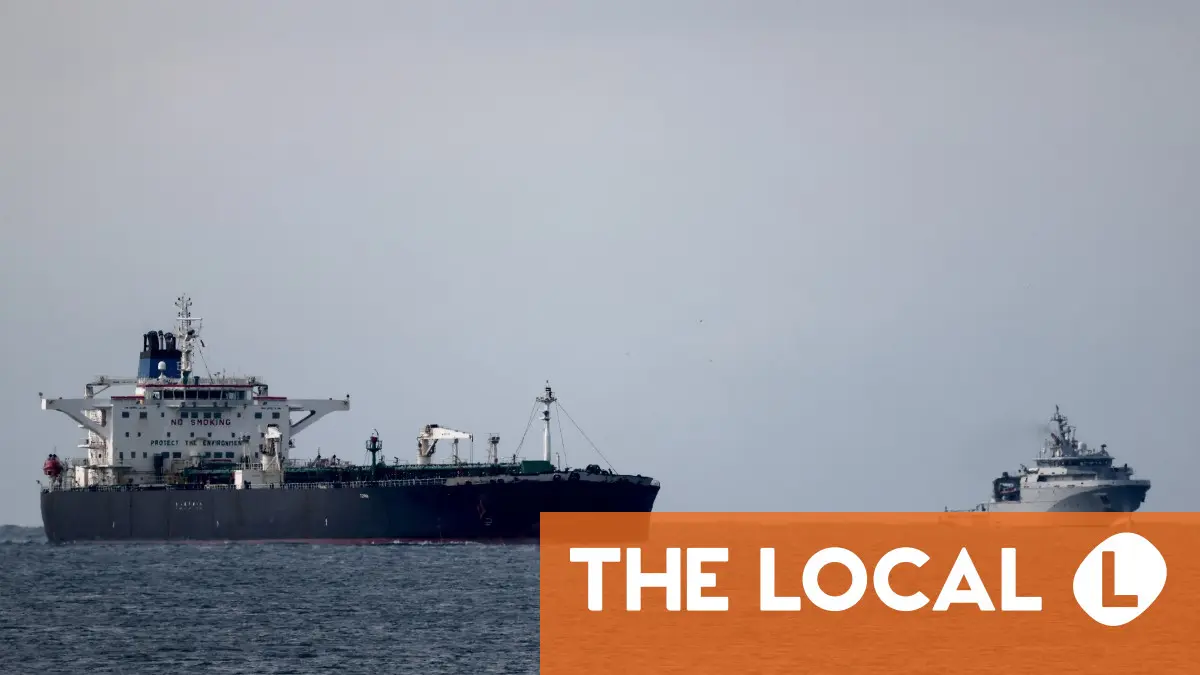
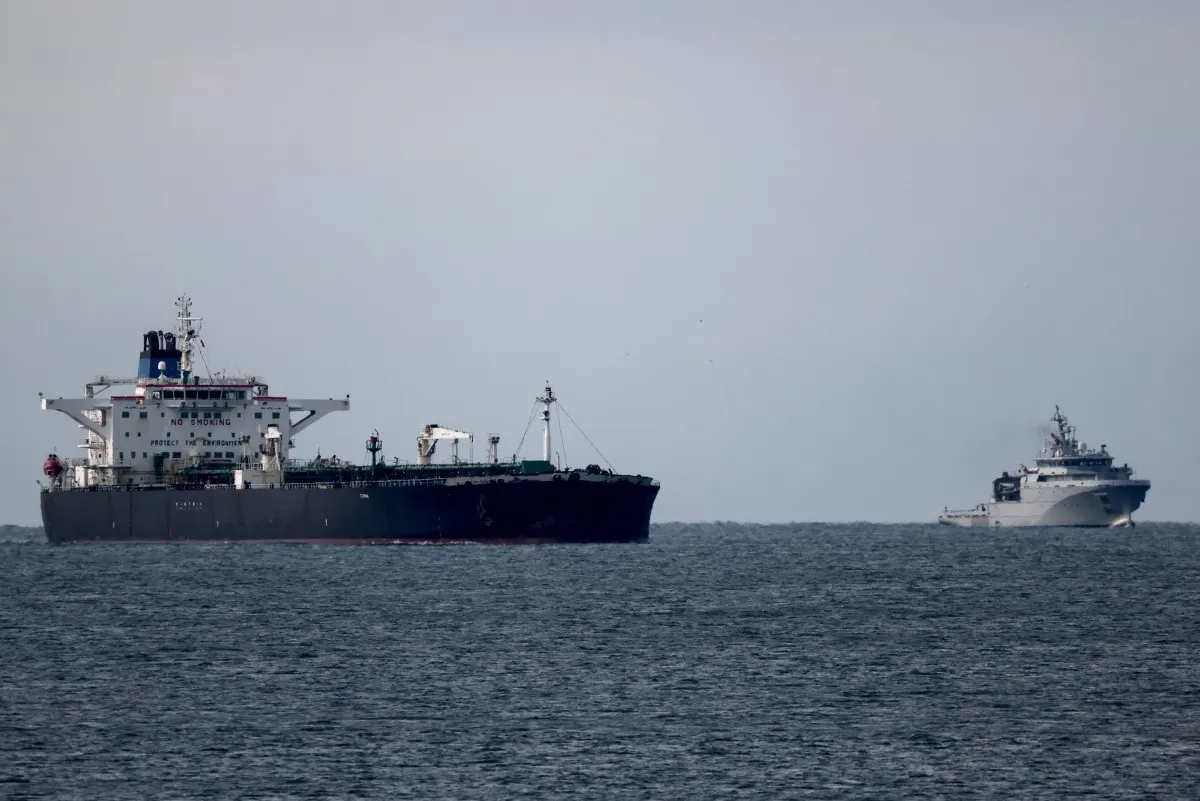
    French authorities in Marseille took control of an oil tanker suspected of sanctions busting on Monday after it arrived in the southern French port days after it was intercepted for being part of a “shadow fleet” used by Russia to export its oil.

    Several European countries have targeted Moscow’s “shadow fleet”, which is used to transport oil in breach of Western sanctions imposed over Moscow’s invasion of Ukraine, now in its fifth year.

    The Deyna, a 250-metre-long vessel that set sail from Murmansk in Russia’s far northwest under a Mozambican flag, is under EU sanctions and is the third such tanker intercepted by France in recent months.

    “It will be anchored and kept at the disposal of the public prosecutor’s office in Marseille,” as part of a preliminary investigation, according to a joint statement from the Bouches-du-Rhone and Mediterranean Maritime prefectures.

    The Deyna was intercepted on Friday with the help of Britain near Spain’s Balearic Islands and formally accused of irregularities with its registration.

    President Emmanuel Macron said at the time tankers transporting oil for Russia were “profiteers of war” and pledged to keep up the pressure on Moscow, despite global attention being distracted by the US-Israeli war with Iran.

    The United States has eased restrictions on Russia’s oil sales as it tries to stabilise global energy markets — a decision Macron criticised.

    French forces impounded another suspected Russian tanker, the Grinch, in January, though the ship was later allowed to sail on after its owner paid a multi-million-euro fine.

    Another tanker, the Boracay, was seized by France in September and the Chinese captain was put on trial in absentia for failing to follow orders to stop the ship.

    Other European nations have also ramped up efforts to seize Russia-linked vessels.

    Belgian special forces intercepted a tanker in the North Sea earlier this month, and the Swedish coast guard arrested the Russian captain of another vessel on suspicion of forging documents.

    Nearly 600 vessels suspected of being part of Russia’s “shadow fleet” are subject to European Union sanctions.

    Read More

  • Middle East war live: Trump says US, Iran are talking as Tehran fires new missile strikes on Israel

    Middle East war live: Trump says US, Iran are talking as Tehran fires new missile strikes on Israel


    Live

    An apartment damaged by a missile strike is seen in Ramat Gan, in the outskirts of Tel Aviv on March 18, 2026
    An apartment damaged by a missile strike is seen in Ramat Gan, in the outskirts of Tel Aviv, Israel on March 18, 2026. © Ilia Yefimovich, AFP

    President Donald Trump started the fourth week of his war against Iran by offering the world some guarded optimism that the US could soon be winding operations down. Meanwhile, Iran launched another round of missiles towards Israel early Tuesday, state television announced. Follow our liveblog for all the latest updates.

    Israeli strike on Bshamoun, south of Beirut, kills two

    An Israeli strike on Bshamoun, a town south of Beirut, has killed at least two people, Lebanon’s health ministry said Tuesday.

    “The Israeli enemy raid on the town of Bshamoun in the Aley district resulted, in a preliminary toll, in the martyrdom of two citizens and the injury of five others,” the ministry said in a statement.

    Bshamoun lies outside of the traditional strongholds of Iran-backed Hezbollah.

    Israel carries out 7 air raids on south Beirut overnight

    Israel targeted seven areas of Beirut’s southern suburbs overnight, Lebanese state media reported on Tuesday. 

    “Enemy warplanes launched seven raids overnight on the southern suburbs, targeting the areas of: Bir al-Abed, Al-Ruwais — outskirts of Al-Manshiyya, Haret Hreik, Sayyed Hadi Nasrallah Highway, Saint Therese, Burj al-Barajneh and Al-Kafaat,” Lebanon’s state-run National News Agency reported.

    Iran state media says ‘new wave of missiles’ launched at Israel

    Iran launched another round of missiles towards Israel on Tuesday morning, state television announced, after earlier strikes hit a building in the north while a loud explosion rang out in Jerusalem. 

    “Iran fires new wave of missiles at occupied territories,” the state-run Islamic Republic of Iran Broadcasting (IRIB) posted on Telegram.

    Moments later, it posted that the “Iranian missiles pass(ed) through several Israeli missile defences”.

    The Magen David Adom emergency services released video of a damaged building in the north of Israel, and said there were no deaths from the incident. 

    The Israeli military later on Tuesday morning issued several notices that it had detected incoming Iranian missiles and was working to intercept them. 

    EU chief urges immediate end to hostilities in the Middle East

    European Union chief Ursula von der Leyen called on Tuesday for an immediate end to hostilities in the Middle East, describing a “critical” situation for energy supply chains globally.

    “We all feel the knock on effects on gas and oil prices on our businesses and our societies,” von der Leyen said alongside Prime Minister Anthony Albanese in Canberra.

    “It is of utmost importance that we come to a solution that is negotiated, and this puts an end to the hostilities that we see in the Middle East,” she added.

    • The UN Security Council is negotiating on a draft resolution introduced by Bahrain to authorize states to use “all necessary means” to ensure freedom of navigation in the Strait of Hormuz, diplomatic sources said Monday.
    • US Interior Secretary Doug Burgum told US news broadcaster CNBC on Monday that there was currently engagement with Iran on a potential solution to the mid-east conflict.
    • Prime Minister Benjamin Netanyahu said Monday that he spoke with Donald Trump, saying that the US president believed US-Israeli military gains in Iran could be converted into a negotiated agreement that protects Israel‘s interests.

    (FRANCE 24 with AFP, AP and Reuters)

    Read More

  • 6 Unexpected Festivals in France’s Basque Country

    6 Unexpected Festivals in France’s Basque Country


    Fêtes de Bayonne, France’s flagship festival, was dreamed up by a rugby team, freshly inspired by Pamplona’s running of the bulls and allegedly drunk on Spanish wine. In 1932, the team decided to soft-launch their own red-and-white bull-running party in Bayonne. Today, the Fêtes de Bayonne has become the largest festival in France, drawing over a million partiers to the Basque city every July.  

    According to locals, there are only two steps to becoming a “festayer”, an official Fêtes de Bayonne reveller. First, don an all-white outfit and bring a red scarf (don’t wear it yet, though – the party starts with a ritual where everyone puts them on simultaneously). Second, join the joyfully tipsy crowd for five days of musical performances, picnics, cow races, parades, bull spectacles in the arena, and late-night parties that carry on until dawn.  

    From racing rubber ducks to tasting a 3,000-egg omelette, the French Basque Country’s festival season is packed with oddities, deep history, and genuine delights.  

     1. Saint Pansart (Zan Pantzar) 

    The spring festival season kicks off officially with Saint Pansart, a party celebrating the end of winter. Classified as an event of “intangible cultural heritage” by the French Ministry of Culture, Saint Pansart has been celebrated in the French Basque Country since at least the 1500s, and its ancient traditions are on full display. ‘Joaldunak’ (traditional Basque figures draped in cowbells) stomp down the cobblestone streets, and dancers whirl through the plazas. The day’s festivities culminate in the mock trial and staged execution of Saint Pansart himself, a carnivalesque effigy whose death symbolises the death of the old year and the celebration of the new one.  

    Dancers in traditional Basque dress during Saint Pansart Photo: Jenika Kidd ©

    Where: Bayonne (as well as other towns in French Basque Country)
    When: Late February / Early March (for Bayonne, the Saturday before Mardi Gras)  

    2. Omelette Pascale d’Anglet 

    Every Easter Monday, the charming surf town Anglet transforms into an improbable open-air kitchen. The special Easter omelette requires 3,000 eggs and a custom-built pan nearly two metres wide; members of the local cycling club gather around it to stir the eggs with actual oars. If you visit, expect to watch the absurd culinary spectacle unfold while drinking breakfast rosé, enjoying live music, and discussing whether this year’s omelette will stick.  

    Local cycling association “Les Mailhouns” cooking an omelette Photo: Karine Pierret-Delage

    Where: Downtown Anglet
    When: Monday following Easter

    3. Foire au Jambon de Bayonne 

    Dating back to the 15th century, the Foire au Jambon de Bayonne is a celebration of the region’s prized, AOC-protected ham with four days of competitions, tastings, and traditional demonstrations. Master charcutiers judge hams using fine probes of boxwood or horse bone, a technique as traditional as the curing methods themselves. The event feels ancient, slightly absurd, and completely sincere, a lovely combination that runs through Basque celebrations. 

    Jambon de Bayonne Van Photo: Flickr ©

    Where: Bayonne
    When: Mid-April

    4. Maïder Arosteguy Surf Competition 

    Not every festival in the Basque Country has centuries of history. But with over 40 years of successful competitions, the Biarritz Pays Basque Maïder Arosteguy holds the title as the longest ongoing surf competition in Europe. Named for famed biarrote Maïder Arosteguy, an original supporter of Biarritz’ early surfing competitions, the spring contest marks the beginning of France’s surf competition season.  

    If you can’t make the Maïder Arosteguy, more local surf competitions are scattered throughout the summer season, including the Biarritz Longboard Surf Competition, the Queen Classic, and the Biarritz Belza Classic. The Maïder Arosteguy brings together top-level professional surfers and the next generation of talent. 

    Photo: Hina Conradi / @hushootsBiarritz  ©

    Where: Grande Plage, Biarritz
    When: Each spring, typically in April

    5. Duck Race Cambo-les-Bains 

    If you think racing rubber ducks for charity sounds like something invented for tourists, think again. Cambo-les-Bains’ Duck Race is packed with local families cheering on their tiny yellow champions as they bob heroically down the Nive River. The lucky grand prize winner is typically announced during the after-party at a nearby park, with food stands and live music to enjoy while you await the results. 20,000 ducks race down the Nive for charity at Duck Race Cambo-les-Bains. 

    Photo: Tourist Office of Cambo-les-Bains ©

    Where: Cambo-les-Bains
    When: First Sunday in July

    6. Fêtes du Thon 

    For diehard seafood enthusiasts, the Fêtes du Thon might just be the highlight of festival season. Held in the historic seaside town of Saint-Jean-de-Luz, the event celebrates the end of the tuna fishing season, which stretches from June through the end of July.  

    For the Fêtes du Thon, the picturesque fishing village shuts down its streets for a full-day extravaganza. The day starts with a street party centred on seafood (namely tuna) and live music around the town centre. Later in the day, the festivities drift toward the port, where guests enjoy a sit-down communal meal by the water.  

    Photo: Saint Jean De Luz Tourism ©

    Where: Saint-Jean-de-Luz 
    When: End of July 

    These six are only a starting point; every weekend during Basque Country’s festival season offers multiple events, all with unique excuses to eat too much, drink local wine, and stumble into traditions you never knew existed. With so much to choose from, the only real mistake would be staying home.  

    Your email address will not be published. Required fields are marked *

    Read More