Category: France

  • « Ce film est le pied de nez d’une génération qui veut parler de la dictature au Paraguay »

    « Ce film est le pied de nez d’une génération qui veut parler de la dictature au Paraguay »


    Les cookies et technologies similaires que nous utilisons sur Mediapart sont de différentes natures et nous permettent de poursuivre différentes finalités.

    Certains sont nécessaires au fonctionnement du site et de l’application mobile (vous ne pouvez pas les refuser). D’autres sont optionnels mais contribuent à faciliter votre expérience de lecteur ou de lectrice et d’une certaine façon à soutenir Mediapart. Vous pouvez les refuser ou les accepter ci-dessous, selon leurs finalités.

    Acceptez-vous que Mediapart utilise des cookies ou technologies similaires pour les finalités suivantes ?

    Vous pouvez faire votre choix, pour chaque catégorie, en activant ou désactivant le bouton interrupteur.

    Nécessaires au fonctionnement
    du site ou de l’application

    Connexion des abonné·es, mesure d’audience anonymisée, envoi des notifications push, suivi des pannes, mise en avant de nos services : ces outils sont nécessaires au suivi de l’activité de nos services et à leur bon fonctionnement.

    Ces outils nous permettent de recueillir des statistiques de fréquentation du site et de l’application mobile pour comprendre les usages, détecter d’éventuels problèmes et optimiser l’ergonomie de nos produits.

    Il n’y a pas de publicité sur Mediapart. Mais nous faisons la promotion de nos contenus et services sur d’autres sites et réseaux sociaux. Pour cela, nous utilisons les technologies mises à disposition par certains acteurs publicitaires.

    Gestion de l’accès aux contenus

    Nous utilisons le service Qiota d’Opper Marketing Suite pour configurer l’activation d’un datawall sur certains de nos contenus (uniquement sur le site web). Ce dispositif destiné aux utilisateur·ices non abonné·es requiert la saisie d’une adresse email pour accéder aux contenus concernés. En fournissant cette information, l’utilisateur consent à sa collecte, son stockage et son utilisation à des fins statistiques. Conformément à la réglementation en vigueur, les utilisateurs disposent d’un droit d’accès, de rectification et de suppression de leurs données, qu’ils peuvent exercer en contactant dpo@opper.io.

    Read More

  • France signs charter with dating apps to fight homophobic ambushes

    France signs charter with dating apps to fight homophobic ambushes


    France’s top dating apps have signed a government charter to help tackle homophobic ambushes, after one case was recorded every four days in 2024, the ministry in charge of fighting discrimination said on Wednesday. The agreement sets out measures to improve reporting, data sharing and user safety.

    Issued on: Modified:


    1 min Reading time

    Dating apps Tinder, Grindr, Bumble and Happn signed the charter on Monday alongside the non-profit groups SOS Homophobie, Stop Homophobie, Le Refuge and Flag!, Aurore Bergé, the junior minister for fighting discrimination, said in a statement.

    The “charter for the prevention of violence and the safety of LGBT+ people” sets out “concrete commitments around three priorities: prevent, report and protect”, the ministry said.

    Victims are lured by fake profiles, tricked into meetings and then attacked because of their sexual orientation.

    Toxic climate blamed for rise in LGBTQI+ attacks in France

    Safer tools, shared data

    The platforms have promised to improve their tools for reporting threats or ambushes.

    They will also keep data so it can be passed to law enforcement, including after profiles are deleted, and will work more closely with authorities to “identify and prosecute perpetrators”, the ministry said.

    The charter also commits the platforms to promoting the use of verified profiles.

    The ministry described the deal as “an unprecedented collective commitment between public authorities, digital platforms, associations and law enforcement”.

    ‘Centuries of patriarchal history’: why trans rumours are wielded against women

    Organised violence

    “These LGBT-phobic ambushes are organised violence targeting people simply because they are, or are assumed to be, LGBT+,” Bergé said in the statement.

    “Tools designed to create meetings and connections can no longer be diverted to set traps and organise hate.”

    She said France was becoming “the first country in the world to establish this level of cooperation” with the platforms on the issue.

    In an interview with Têtu, a French LGBT+ magazine, Bergé said the attacks were premeditated. “These ambushes are not ordinary assaults,” she said, adding the government had begun work with the platforms to strengthen prevention and reporting.

    “The digital environment makes it easier to act,” Bergé told Têtu. “Behind a screen, perpetrators think they can escape justice. That is false.”

    She also said coordination between the apps and law enforcement would be simplified, bans strengthened to stop excluded users signing up again, and cooperation between platforms improved.

    Read More

  • French films with English subtitles to watch in March 2026

    French films with English subtitles to watch in March 2026


    A Romy Schneider must-see, a belated Easter celebration, a biopic set in occupied France, and a Jean-Luc Godard classic all feature on Lost in Frenchlation’s April listings of French films with English subtitles.

    Lost in Frenchlation is a Paris-based club that runs screenings of French films — both new releases and timeless classics — with English subtitles, in order to allow language learners to appreciate the offerings of French cinema.

    Here’s what’s on in April 2026.

    Friday, April 3rd

    La Guerre des Prix (Price Wars)

    Where? L’Entrepôt 7 rue Francis de Pressensé Paris.

    When? Drinks at 7pm and screening at 8pm.

    Tickets Prices to see the film range from €5.30 – €12.20. You can buy them online here.


    Les Revenants’ Ana Girardot stars in Anthony Déchaux’s directorial debut — a tense drama set, somewhat surprisingly, behind the scenes of the cut-throat supermarket retail world and the critical negotiations with producers. 

    Saturday, April 4th

    Coutures 

    Where? Luminor Hôtel de Ville 20, rue du temple Paris.

    When? Screening at 11am.

    Tickets at €7 are available online here.


    Another chance to see Hollywood icon Angelina Jolie star in a under-the-catwalk drama following the lives of three women — a director, a model and a make-up artist — whose lives cross paths in Paris in the frenzy of Fashion Week. You’ll also hear her more-than-creditable French.

    Thursday, April 9th

    L’Attachement (The Ties That Bind Us)

    Where? Luminor Hôtel de Ville 20, rue du temple Paris.

    When? Drinks at 7pm, screening at 8pm, followed by a Q&A with director Carine Tardieu.

    Tickets Prices to see the film range from €5.30 – €12.20. You can buy them online here.


    Tender drama, in which comfortably single fiftysomething bookshop owner Valeria Bruni Tedeschi is more surprised than anyone to find herself becoming an important female role model for the six-year-old son and newborn daughter of a neighbour whose wife died in childbirth. 

    Saturday, April 11th

    Eiffel

    Where? Balzac 1 Rue Balzac Paris.

    When? Screening at 11am.

    Tickets Prices to see the film range from €5.30 – €12.20. You can buy them online here.


    Another chance to see Martin Bourboulon’s ambitious grand-scale biopic-of-sorts of Gustave Eiffel, at the peak of his career after completing the Statue of Liberty. Everything changes the day he crosses paths with his love and their forbidden relationship inspires him to change the Paris skyline forever.

    Sunday, April 12th

    Délicieux (Delicious)

    Where? Luminor Hôtel de Ville 20, rue du temple Paris.

    When? Drinks and chocolate tasting at 6pm and screening at 7pm.

    Tickets Prices to see the film range from €5.30 – €12.20. You can buy them online here.


    On the eve of French Revolution chef Grégory Gadebois opens the first ‘modern’ restaurant in France, with the help of free-spririted Isabelle Carré in director Éric Besnard’s sumptuous drama.

    Saturday, April 18th

    Police Flash 80

    Where? Club de l’Étoile, 14 Rue Troyon, Paris.

    When? Montmartre Movie Tour at 3pm, drinks at 6pm, stand-up comedy show with Sarah Donnelly at 7pm and screening at 7.30pm.

    Tickets Prices to see the film range from €15-€17. You can buy them online here.

    Tickets for the Montmartre Movie tour, sold separately, are available here.


    Those of you ‘mature’ enough to fondly remember ridiculous Eighties’ US spoof cop show Sledge Hammer!  are likely to have happy flashbacks at this chaotic neon-soaked retro police comedy in which old-school dinosaur François Damiens and his uptight new partner Audrey Lamy seek to bust open a drug cartel. 

    Sunday, April 19th

    Les Choses de la Vie (The Things of Life)

    Where? Studio des Ursulines 10 rue des Ursulines Paris.

    When? Tea Bar at 5pm (bring your own mug!) and screening at 5.30pm or Tea Bar at 7pm and screening at 7.30pm.

    Tickets Prices to see the film range from €5.30 – €12.20. You can buy them online here.


    The film that made the remarkable Romy Schneider an icon in France is a devastating meditation on love and the fragile nature of everyday decisions. She stars as the subject of older, married Michel Piccoli’s adulterous desires who wants to be more than just a lover — with devastating consequences.

    Monday, April 20th

    L’œuvre Invisible (The Invisible Work)

    Where? Cinéma du Panthéon 13 rue Victor Cousin Paris.

    When? Drinks at 7pm and screening at 8pm, followed by a Q&A with directors Avril Tembouret and Vladimir Rodionov.

    Tickets Prices to see the film range from €5.30 – €12.20. You can buy them online here.


    It’s somehow appropriate that a documentary tracing the life and ghost career of unknown director Alexandre Trannoy — a Don Quixote movie maker who worked with the likes of Jean Rochefort, Anouk Aimée, Lino Ventura, and Marlene Dietrich, but who somehow never managed to finish a film — should take 15 years to make. This is the result of an impossible quest to document an impossible dreamer.

    Tuesday, April 21st

    Le Mépris (Contempt)

    Where? L’Epée de Bois 100 Rue Mouffetard Paris.

    When? Drinks at Tournebride bar from 7pm and screening at 8pm.

    Tickets Prices to see the film range from €5.30 – €12.20. You can buy them online here.


    One of Jean-Luc Godard’s slow-burn to cult status films could have been subtitled Scenes from a Marital Breakdown. Michel Piccoli and Brigitte Bardot are both in top form as a couple whose lives slowly and tragically fall apart in the behind-the-camera struggles of a director (Fritz Lang – a hero of Godard’s — as himself) and producer Jack Palance during the filming of an adaptation of Homer’s Odyssey.

    Sunday, April 26th

    L’Agent Secret (The Secret Agent)

    Where? Jeu de Paume 1 place de la Concorde Paris.

    When? Drinks at 5pm at Rose Bakery, screening at 6pm.

    Tickets Prices to see the film range from €5.30 – €12.20. You can buy them online here.


    Kleber Mendonça Filho’s Portuguese-language political thriller set in 1977 Brazil was a Cannes’ sensation. It tells the story of a technology specialist fleeing a mysterious past, who heads to a city on the Atlantic coast in search of peace, but soon realises it is far from the refuge he seeks.

    Tuesday, April 28th

    Le Goût des Autres

    Where? Lucernaire 53 Rue Notre Dame des Champs, Paris.

    When? Drinks at 7pm, screening at 8pm.

    Tickets Prices to see the film range from €5.30 – €12.20. You can buy them online here.


    Acting alongside Jean-Pierre Bacri, who also co-wrote the script, Agnès Jaoui skilfully dissects dissatisfaction with French provincial life in a charming and erudite directorial debut.

    Thursday, April 30th

    Les Rayons et les Ombres

    Where? Arlequin 76 rue de rennes Paris.

    When? Midnight in Paris Tour at 4.30pm, Drinks at 7pm and screening at 8pm.

    Tickets Prices to see the film range from €5.30 – €12.20. You can buy them online here.

    Tickets for the Midnight in Paris Tour, sold separately, are available here.


    Jean Dujardin and Nastya Golubeva Carax star in the true story of Jean and Corinne Luchaire, a father and daughter in occupied France. She is a young movie star, and he is a prominent journalist, who is also a friend of the powerful Nazi German ambassador to Paris.

    Read More

  • Estonia and Latvia say they were hit by drones as Ukraine unleashes massive attack on Russia

    Estonia and Latvia say they were hit by drones as Ukraine unleashes massive attack on Russia


    A drone coming from Russian airspace hit a chimney of a power plant in Estonia while another fell on Latvian territory, authorities in the two Baltic countries said Wednesday.

    The reports came as Kyiv launched a barrage of almost 400 drones following Russia’s record aerial assault on Ukraine on Tuesday.

    Authorities in both countries said that the drones had come in from Russian airspace, with Riga saying that the projectile that landed in Latvia appeared to be Ukrainian.

    “A drone struck the chimney of the Auvere power plant. No one was injured in the incident,” Estonia’s internal security service said in a statement, adding that “the drone entered Estonian airspace from Russian airspace”.

    One of your browser extensions seems to be blocking the video player from loading. To watch this content, you may need to disable it on this site.


    © France 24

    The Auvere power plant, operated by the Enefit Power group, is located in northeastern Estonia, near the town of Narva on the Russian border.

    “These are the effects of Russia’s large-scale war of aggression,” said ISS Director General Margo Palloson, expressing concern about “the occurrence of such incidents in the future”.

    Latvian Prime Minister Evika Silina said on her X account, however, that the drone that fell on Latvian territory was apparently Ukrainian.

    The ​incidents occurred at about ​the same time that ​a Ukrainian drone attack set fire to ​oil facilities at Russia’s Baltic Sea port of Ust-Luga, a major petroleum export hub about 25 kilometres from the border with Estonia.

    The two Baltic countries are along a possible trajectory for drones targeting the region not far from Saint Petersburg.

    Russian air defences downed 389 incoming Ukrainian drones, Russia’s defence ministry said Wednesday, in what was the largest reported overnight attack on Russian regions and Crimea since Moscow’s forces invaded Ukraine more than four years ago.

    It came a day after Russia fired almost 1,000 drones and 34 missiles at Ukraine in the space of 24 hours, extending its usual nighttime barrage into daylight hours in one of its biggest aerial attacks of the war. At least six people were killed and around 50 people were injured, Ukrainian authorities said.

    (FRANCE 24 with Reuters, AFP and AP)

    Read More

  • Au procès du policier qui a tué Olivio Gomes, ses collègues réfutent toute erreur

    Au procès du policier qui a tué Olivio Gomes, ses collègues réfutent toute erreur


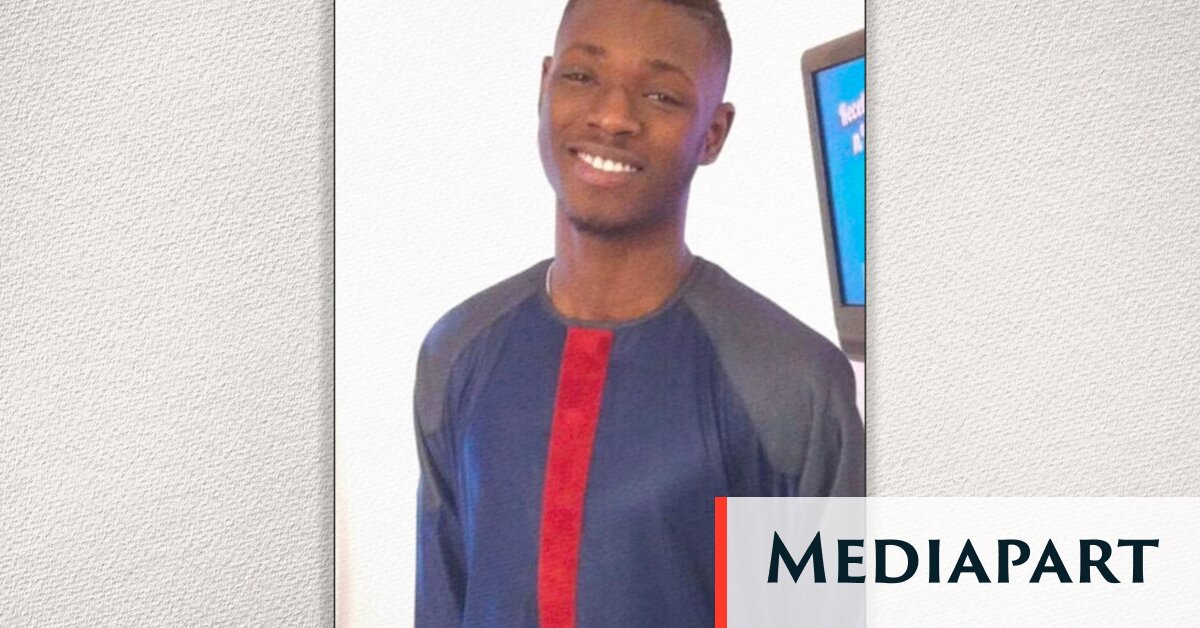
    Auditionnés mardi, les deux anciens coéquipiers du policier jugé pour meurtre ont tenté de justifier les raisons de leur filature et de l’interpellation hors de leur zone de compétence d’Olivio Gomes, qui ne présentait aucun danger apparent.

    Read More

  • French judge probes ex-EU border chief over claims of crimes against humanity

    French judge probes ex-EU border chief over claims of crimes against humanity


    A French judge will investigate claims brought by an NGO that the former head of the European Union border agency, Frontex, was complicit in crimes against humanity, a judicial source has said.

    Issued on:


    2 min Reading time

    Frontex, responsible for EU border control, was headed by Frenchman Fabrice Leggeri between January 2015 and April 2022.

    He was regularly accused by NGOs of tolerating illegal pushbacks of migrants and asylum seekers during his leadership.

    The Human Rights League (LDH) filed a complaint against him in 2024, accusing him of encouraging his staff to facilitate the interception of migrant boats by the Libyan and Greek authorities.

    In the same year he joined French far-right party National Rally (RN), as number three on its list for the European elections.

    Surge in migrant deaths highlights rising dangers of Mediterranean route

    Leggeri had “chosen a policy aimed at obstructing, at any cost – particularly in human lives – the entry of migrants into the EU,” LDH said.

    The judicial source told French news agency AFP that a judge would investigate, after the Paris Court of Appeal ruled last week there were “grounds to initiate a judicial investigation into the facts as set out in the LDH’s complaint”.

    “For the first time, one or more French investigating judges will examine the conditions of the possible criminal liability of Fabrice Leggeri in the carnage that has resulted in thousands of deaths in the Mediterranean, particularly children and women,” LDH lawyer Emmanuel Daoud said on Tuesday.

    Migrants who were detained by Libyan authorities on a boat off the coast are held ahead of their deportation at a detention centre in Surman, Libya, in 2022.
    Migrants who were detained by Libyan authorities on a boat off the coast are held ahead of their deportation at a detention centre in Surman, Libya, in 2022. AFP – MAHMUD TURKIA

    Daoud denounced a “hunt for migrants and exiles” organised and coordinated by Frontex under Leggeri’s the leadership with “very significant financial and technical resources”.

    Leggeri is also accused by the group of supporting the Libyan coast guard, “sometimes allied with criminal organisations, or by covering up reprehensible actions by the Greek coast guard or police forces,” Daoud said. 

    Representatives of Leggeri, now a Member of the European Parliament for the RN, told AFP he had not been told about the decision so had no comment to make.

    Migrant rescue vessel Ocean Viking back at sea after Libyan coast guard attacks

    Some 82,000 migrants have died or gone missing since 2014, mainly in the Mediterranean – where the figure is 34,000 – the world’s deadliest migration route, according to the International Organization for Migration.

    This is an underestimated number, according to the UN Support Mission in Libya and the Office of the High Commissioner for Human Rights, which in a recent joint report pointed to the “serious violations” suffered by migrants “arbitrarily detained in official and unofficial detention centres” in Libya.

    NGOs have criticised the fact that Frontex‘s maritime surveillance resources have been progressively replaced by aerial resources, in order to detect vessels earlier and to involve the Libyan coast guard rather than the Italian or Maltese coast guard.

    (with AFP)

    Read More

  • Key questions answered on French citizenship changes

    Key questions answered on French citizenship changes


    France’s rules on citizenship have undergone several big changes in the last year – so we held a live Q&A to answer the key questions from members of The Local. Here’s a roundup of the main topics.

    Read More

  • Middle East live: Israeli strikes on South Lebanon leave nine dead

    Middle East live: Israeli strikes on South Lebanon leave nine dead


    Iran military spokesperson says US is negotiating with itself, state media reports

    The United ⁠States is ​negotiating with itself, an Iranian military ​spokesman said according to state media on Wednesday, a day after US President ​Donald Trump ‌said Tehran wants ⁠to make a deal to end the ‌war in the Middle East.

    “Has ‌the level of your inner struggle reached ​the stage of you negotiating with yourself?” Ebrahim Zolfaghari, spokesperson for the unified command ​of Iran’s armed forces, Khatam ​al-Anbiya Central Headquarters, taunted the ​US leadership.

    “People like us can never get ​along with people like you.”

    Zolfaghari said US investments and pre-war energy prices would not return as long as ⁠Washington does not accept that regional stability ⁠is guaranteed ​by Iranian armed forces.

    A 15-point ⁠plan aimed at putting an end to the conflict was drafted ​by Washington and sent ‌to Tehran, a person familiar with the matter told Reuters on Tuesday.

    Trump administration offers 15-point ceasefire plan to Iran

    The Trump administration offered a 15-point ceasefire plan to Iran, a person briefed on the contours of the proposal said late Tuesday, even as the US military prepared to call up at least 1,000 more troops to supplement some 50,000 troops already in the Mideast.

    The plan was submitted to Iran by intermediaries from Pakistan, who have offered to host renewed negotiations between Washington and Tehran, according to the person, who spoke on condition of anonymity because they were not authorised to speak publicly.

    Top WTO official sounds fertiliser warning over Middle East war

    Disruptions to fertiliser supplies caused by the Middle East war pose a double threat to global food security through scarcity and high prices, a top World Trade Organization official has warned.

    A third of the world’s fertilisers normally transit the strait of Hormuz, and the disruption has prompted multiple warnings about the impact on food production.

    “Fertilisers are the number one issue of concern today. If there is no more fertiliser, there is an impact on quantities but also on prices,” WTO Deputy Director-General Jean-Marie Paugam told AFP in an interview in Yaoundé.

    “The effect compounds the following year: harvests shrink and prices rise.”

    Iran Guards say fired missiles at Israel, Kuwait, Jordan and Bahrain

    Iran’s Revolutionary Guards said they had fired missiles at Israel as well as military bases hosting US forces in Kuwait, Jordan and Bahrain, Iranian state television reported on Wednesday.

    A Guards statement carried by state broadcaster IRIB said that “targets in the heart of the occupied territories”, meaning Israel, and US military bases in the region “were struck by precision-guided liquid- and solid-fuel missile systems and attack drones”.

    Oil prices tumble, stocks soar over hopes for war end

    Oil prices tumbled and stocks rose Wednesday on hopes for a de-escalation of the Middle East war after Washington sent a peace plan to Iran, while Tehran announced it will let “non-hostile” oil vessels through the crucial Strait of Hormuz.

    After nearly four weeks of conflict, investors jumped on the first signs that hostilities could wind down, though analysts pointed out that the arrival of more US troops in the region suggested the chance of escalation remained.

    The economic impact of the crisis has begun to bite around the world, with governments looking to cut energy consumption and airlines scaling back flights.

    Both main crude contracts plunged more than 6% – with Brent back below $100 – after US President Donald Trump voiced optimism at ending the war and said officials were “in negotiations right now”. Iran has not confirmed any formal talks.

    US media: US to deploy at least 1,000 troops from the 82nd Airborne Division to Middle East

    The US military is preparing to deploy at least 1,000 troops from the 82nd Airborne Division to the Middle East in the coming days, according to three people with knowledge of the plans.

    The unit is considered the Army’s emergency response force and can typically be deployed on short notice.

    The force would include a battalion of the 1st Brigade Combat Team as well as Maj. Gen. Brandon Tegtmeier, the division’s commander, and division staff, according to the people, who spoke Tuesday on condition of anonymity to discuss sensitive military plans or private conversations.

    It’s the latest addition of American troops to the Iran war effort after US officials recently said thousands of Marines aboard several Navy ships will be heading to the region.

    While the Marine units are trained in missions that include supporting US embassies, evacuating civilians and disaster relief, the soldiers of the 82nd Airborne, based at Fort Bragg in North Carolina, are trained to parachute into hostile or contested territory to secure key territory and airfields.

    Israeli strikes kill 9 in south Lebanon

    Lebanese state media reported on Wednesday that Israeli strikes killed at least six people in a town and a Palestinian refugee camp in the southern Sidon area, and three more in another town.

    Israel has stepped up its campaign against Tehran-backed militant group Hezbollah, whose rocket attacks on March 2 pulled Lebanon into the regional war, triggered by US-Israeli strikes on Iran.

    Citing the health ministry, Lebanon’s official National News Agency (NNA) said four people were killed in an “Israeli enemy raid” on the town of Adloun, and another two in a strike on an apartment in the Mieh Mieh refugee camp that left four others wounded.

    In another area of southern Lebanon, the NNA earlier said an Israeli raid on the town of Habboush killed at least three people and wounded 18 others.

    Read More

  • Après sa défaite référendaire, Giorgia Meloni sous le choc

    Après sa défaite référendaire, Giorgia Meloni sous le choc


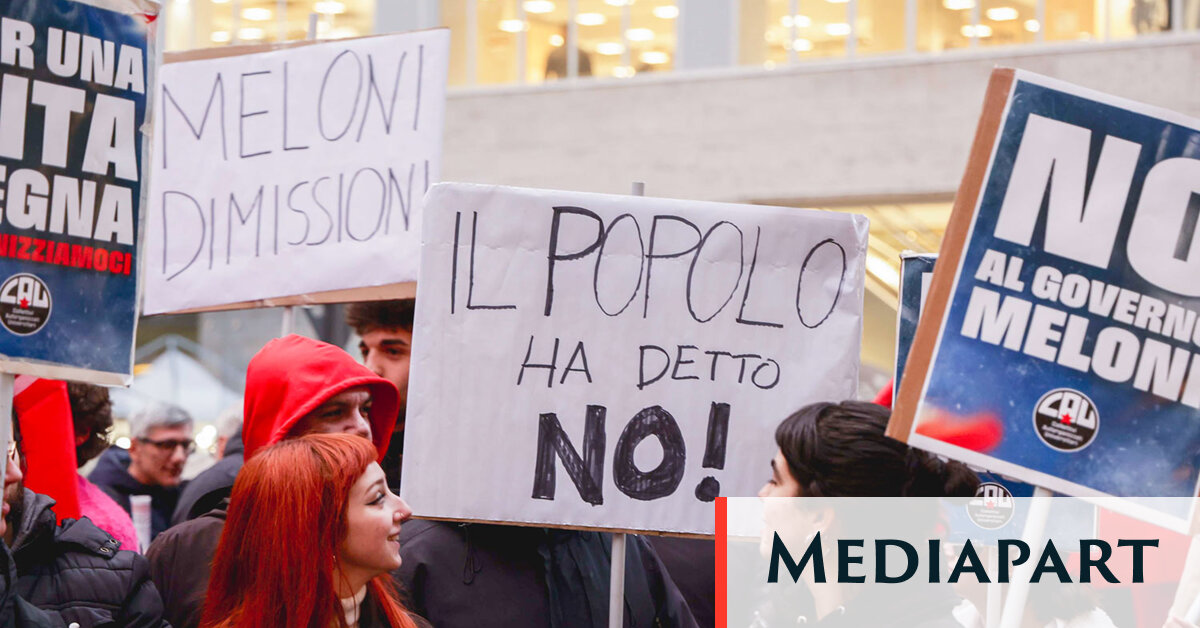
    La contestation de la réforme de la justice de Giorgia Meloni s’est construite sur une mobilisation de la jeunesse, du sud et des zones urbaines. La présidente du Conseil est nettement fragilisée, mais l’opposition peine à profiter du moment.

    Read More

  • What to watch in the deciding round of France’s local elections

    What to watch in the deciding round of France’s local elections


    Voters cast their ballots on Sunday in the second round of elections that will decide who runs France’s biggest cities. Beyond selecting local mayors and councillors, the polls could give clues which way French voters are leaning – and what deals parties are prepared to do – ahead of a presidential election next year.

    Most of France’s roughly 35,000 communes elected their local councils last weekend in the first round of the municipal elections, held nationwide every six years.

    But in districts where the race is more competitive, including most big cities, the elections go to a second round this Sunday. 

    The week between the two rounds is crucial: it’s when parties decide whether to run together, to drop out and throw their weight behind an ally, or to go it alone. 

    With the deadline to finalise lists now passed, we now know the shape the second round will take – and it could set the scene for France’s presidential vote, just over a year away. 

    “These elections are completely different, if only in terms of voter turnout,” said Frédéric Dabi, head of polling institute Ifop, who cautioned against direct comparisons with national elections.

    “But there’s still an effect,” he told RFI. “It creates momentum, it provides a boost, and it establishes a narrative.”

    French municipal elections

    Held every six years, France’s municipal elections consist of two rounds, taking place this year on 15 and 22 March. Candidates are competing across nearly 35,000 communes, from small villages to major cities like Paris, Lyon and Marseille.

    A ⁠list that wins more than 50 percent in the first round takes control of the local council. Failing that, all lists with 10 percent or more go through to a second round. Those with at least 5 percent can merge with larger lists. The system often leads to three- or four-way runoffs, and encourages parties to strike alliances between the two rounds.

    Both French and EU nationals living in France are eligible to vote – unlike in parliamentary and presidential elections, which are restricted to French citizens.

    Low turnout and far-right gains mark first round of France’s local elections

    Left’s battle to hold Paris

    One of the fiercest battles is for Paris, which the centre-left Socialist Party has run for the past 25 years.

    With Socialist mayor Anne Hidalgo retiring, the right has an opportunity to claim the capital. Its candidate, former culture minister Rachida Dati, came second in the first round with 25.46 percent, while the Socialists’ Emmanuel Grégoire led on 37.98 percent. 

    Candidates from the hard left, centre and far right also won more than 10 percent each, putting them through to the second round. 

    Since then, however, far-right candidate Sarah Knafo has strategically dropped out and centrist Pierre-Yves Bournazel has merged his list with Dati’s, potentially uniting voters on the right.

    Dati also has the support of the head of the far-right National Rally (RN) party, Jordan Bardella, who said he would back her against the “existential threat” posed by the left.

    There is no such alliance on the left, with Grégoire refusing to team up with Sophia Chikirou of hard-left France Unbowed (LFI). The party has been shunned by much of the mainstream left amid accusations of antisemitism, extremism and violence

    That leaves Grégoire in a three-way race against Chikirou and Dati. If Knafo and Bournazel’s voters throw their support behind Dati, it would overtake the Socialists’ first-round lead – and prove the potential of a broad right-wing alliance.  

    France’s local elections: who are the contenders in the battle for Paris?

    RN eyes Marseille 

    France’s second-biggest city is a test case for whether the National Rally can win over urban voters in big numbers.

    The party is in close second place in Marseille, its candidate Franck Allisio taking 35.02 percent in the first round compared to 36.70 percent for incumbent left-wing mayor Benoît Payan. 

    Winning the city would be a major coup for the RN, which until now has governed only small and mid-sized towns.

    The National Rally's candidate for mayor of Marseille, Franck Allisio (right) gives a press conference with party president Jordan Bardella, on 6 March 2026.
    The National Rally’s candidate for mayor of Marseille, Franck Allisio (right) gives a press conference with party president Jordan Bardella, on 6 March 2026. © AP – Philippe Magoni

    Payan ruled out forming a united front with France Unbowed – which came in fourth – to block the far right. But on Tuesday LFI’s Sébastien Delogu withdrew from the race, slamming Payan’s “irresponsibility and sectarianism” but saying the ascent of the RN represented a greater threat. 

    Meanwhile third-place candidate Martine Vassal, running for the right-wing Republicans (LR), remains in the race despite the National Rally calling on her to pull out.

    France’s parity law boosts female candidates, but most mayors are still men

    Far-right momentum

    While Marseille represents the biggest prize, the National Rally – as of 2024, France’s single largest party in parliament – has other gains in sight. 

    It stands to get a foothold in Nice, France’s fifth-biggest city, via a partnership with Eric Ciotti, the conservative politician who led the Republicans until the party ousted him for proposing to ally with the RN in 2024’s snap parliamentary elections.

    Ciotti is standing in Nice as a joint candidate for his own splinter party, the UDR, and the National Rally – and is ahead of the outgoing centre-right mayor Christian Estrosi by more than 12 points after the first round. 

    Tellingly, the new head of the Republicans, Bruno Retailleau, refused to throw his weight behind Estrosi after what he said was a “damaging” campaign.

    Some in the UDR have taken it as Retailleau laying the groundwork for an alliance in next year’s presidential poll – a shift that would sound the knell for the cordon sanitaire that has historically kept France’s mainstream parties from partnering with the far right. 

    Mayor of Nice Christian Estrosi (left) with Eric Ciotti, who is running to replace him, at a demonstration in support of police on 31 January 2026.

 (R) take part in a demonstration called by the Alliance Police Nationale union to denounce the lack of resources in their profession in Nice, south-eastern France, on January 31, 2026. (Photo by Valery HACHE / AFP)
    Mayor of Nice Christian Estrosi (left) with Eric Ciotti, who is running to replace him, at a demonstration in support of police on 31 January 2026.

    (R) take part in a demonstration called by the Alliance Police Nationale union to denounce the lack of resources in their profession in Nice, south-eastern France, on January 31, 2026. (Photo by Valery HACHE / AFP) © AFP – VALERY HACHE

    The RN has a similar lead in the southern city of Toulon, where voters elected the far right once before in 1995. It is competing against two other lists from the more mainstream right, which have not merged to block it.

    Yet alliances aren’t the only factor that can shift second-round results. Seeing the RN out in front has historically mobilised voters who oppose them – including people who didn’t take part in the first round.

    That effect could be decisive in districts where the party has only a marginal lead, such as the city of Nîmes.

    Hard-left dilemma

    Where once the far right was viewed as the ultimate threat, these elections have seen the hard left emerge as the faction to be stopped at any cost. 

    One survey released at the end of February found 63 percent of voters polled said they would try to keep France Unbowed out of power by voting for its rivals in the second round, compared to 45 percent who said they would seek to block the National Rally. 

    That sentiment has produced some unlikely unions. In Strasbourg, the Socialist Party frontrunner Catherine Trautmann has merged her list with a centrist ally of President Emmanuel Macron to face off against a coalition between LFI and the Greens – a move that earned her a rebuke from her party’s leadership. 

    In Lille, meanwhile, the Greens and the Socialists are teaming up to try and block LFI, whose candidate came in a close second to the Socialist incumbent in the first round. 

    Extremes pose danger to France, warns Macron before final vote for mayoral slots

    Elsewhere, however, the mainstream left is taking a pragmatic approach after France Unbowed qualified for a record number of second-round races. The Socialists refused to run a joint campaign with LFI, but didn’t rule out striking local alliances between the two rounds – which it has now done in cities including Avignon, Brest and Nantes

    In Lyon, where the death of a far-right student last month during a fight with anti-fascist activists contributed to the backlash against LFI, the party narrowly made it through to the second round behind the incumbent Greens and their challengers on the centre-right. 

    France Unbowed has since secured a merger with the left-wing list – a move that risks alienating some moderates. One centre-left voter told RFI she planned to cast a blank ballot: “I’ll be in a real bind in the second round… I can’t vote for someone who allies themselves with people I consider extremists.”

    Lyon's incumbent mayor Grégory Doucet has allied with Anaïs Belouassa-Cherifi of France Unbowed against centre-right candidate Jean-Michel Aulas.
    Lyon’s incumbent mayor Grégory Doucet has allied with Anaïs Belouassa-Cherifi of France Unbowed against centre-right candidate Jean-Michel Aulas. © Alexandre Neracoulis / Studio graphique FMM

    How did Lyon become France’s capital of political violence?

    The balance of power was flipped in France’s fourth city Toulouse, where LFI came in ahead of the Socialists and their allies the Greens, making it the primary challenger to the centre-right frontrunners. The left has since merged to head into the second round with a single list.

    In the northern city of Roubaix, LFI even came close to winning the first round outright. It goes into the second without the need for partners, the centre-left list having come in in distant third.

    Read More