Category: France

  • Huées dans les mairies : l’hypocrisie sans fin de la droite

    Huées dans les mairies : l’hypocrisie sans fin de la droite


    Les cookies et technologies similaires que nous utilisons sur Mediapart sont de différentes natures et nous permettent de poursuivre différentes finalités.

    Certains sont nécessaires au fonctionnement du site et de l’application mobile (vous ne pouvez pas les refuser). D’autres sont optionnels mais contribuent à faciliter votre expérience de lecteur ou de lectrice et d’une certaine façon à soutenir Mediapart. Vous pouvez les refuser ou les accepter ci-dessous, selon leurs finalités.

    Acceptez-vous que Mediapart utilise des cookies ou technologies similaires pour les finalités suivantes ?

    Vous pouvez faire votre choix, pour chaque catégorie, en activant ou désactivant le bouton interrupteur.

    Nécessaires au fonctionnement
    du site ou de l’application

    Connexion des abonné·es, mesure d’audience anonymisée, envoi des notifications push, suivi des pannes, mise en avant de nos services : ces outils sont nécessaires au suivi de l’activité de nos services et à leur bon fonctionnement.

    Ces outils nous permettent de recueillir des statistiques de fréquentation du site et de l’application mobile pour comprendre les usages, détecter d’éventuels problèmes et optimiser l’ergonomie de nos produits.

    Il n’y a pas de publicité sur Mediapart. Mais nous faisons la promotion de nos contenus et services sur d’autres sites et réseaux sociaux. Pour cela, nous utilisons les technologies mises à disposition par certains acteurs publicitaires.

    Gestion de l’accès aux contenus

    Nous utilisons le service Qiota d’Opper Marketing Suite pour configurer l’activation d’un datawall sur certains de nos contenus (uniquement sur le site web). Ce dispositif destiné aux utilisateur·ices non abonné·es requiert la saisie d’une adresse email pour accéder aux contenus concernés. En fournissant cette information, l’utilisateur consent à sa collecte, son stockage et son utilisation à des fins statistiques. Conformément à la réglementation en vigueur, les utilisateurs disposent d’un droit d’accès, de rectification et de suppression de leurs données, qu’ils peuvent exercer en contactant dpo@opper.io.

    Read More

  • Macron unveils ‘France Libre’ as France’s next aircraft carrier

    Macron unveils ‘France Libre’ as France’s next aircraft carrier


    President Emmanuel Macron announced on Wednesday that France’s next aircraft carrier will be named France Libre, as the country seeks to reinforce its standing as a major maritime power.

    Issued on:


    2 min Reading time


    By:


    Jan van der Made with RFI

    Once completed, the France Libre, France’s new nuclear-powered flagship, which is set to replace the country’s sole aircraft carrier, the Charles de Gaulle, will be the largest warship ever built in Europe.

    Ahead of the ceremony, Macron posted a 32 second video highlighting some of France’s proudest moments and technological achievements.

    Set to rousing music, the video featured footage of the Charles de Gaulle, submarines, troops, jets streaking in the air, high-speed trains, and France’s astronaut Sophie Adenot, who has been in space since mid-February.

    “France is wild”, read the white letters splashed in English across the clip.

    Screenshot from social media platform "x," where French President Emmanuel Macron posted a 32 second film featuring France's achievements. 18 March 2026.
    Screenshot from social media platform “x,” where French President Emmanuel Macron posted a 32 second film featuring France’s achievements. 18 March 2026. © screenshot X

    In December, during a visit to the UAE, Macron announced the start of construction of the new aircraft carrier, a project estimated to cost €10 billion. The vessel is to enter service in 2038.

    “In an age of predators, we must be strong in order to be feared,” Macron told troops at a French military base near Abu Dhabi, close to the Strait of Hormuz, at the time.

    Maritime ambitions

    In recent weeks, the president has repeatedly underscored France’s maritime ambitions.

    France holds back on Hormuz intervention, weighs escort plan once tensions ease

    He said last week that Paris and its allies were putting together a mission to help reopen the Strait of Hormuz, a vital shipping route for tankers that Iran has effectively closed since the United States and Israel carried out air strikes in the Islamic republic last month.

    The colours of the tricolor illuminating the tower with the bridge on the French aircraft carrier Charles De Gaulle during a media tour while moored at the quay of the North Port in Malmo, Sweden, 25 February 2026
    The colours of the tricolor illuminating the tower with the bridge on the French aircraft carrier Charles De Gaulle during a media tour while moored at the quay of the North Port in Malmo, Sweden, 25 February 2026 AFP – JOHAN NILSSON

    But the French leader has ruled out any action until hostilities there cool.

    Macron unveiled the warship’s name at a shipyard in the western town of Indret, near Nantes, where the vessel’s two nuclear reactors will be built.

    Nuclear powered

    Construction of the future warship’s hull is expected to begin in the western port city of Saint-Nazaire in 2031.

    France is one of the two countries in the world that operate nuclear-powered aircraft carriers. The United States has 11 such vessels.

    The Charles de Gaulle was commissioned in 2001 and is the largest warship ever built for the French Navy, but, with its lenth of 262 meter it globally belongs to the smaller aircraft carriers.

    The world’s aircraft carriers


    • USS Gerald R. Ford (CVN‑78, length: 337 m) – USA  
    • USS Nimitz‑class carriers (CVN‑68 series, 332 – 333m ) – USA
    • (NB: the US currently deploys ten Nimitz-class carrier groups)
    • Fujian (316 m) – China
    • Admiral Kuznetsov(305 m) – Russia
    • Shandong (305 m, same hull‑line as Liaoning/Kuznetsov) – China
    • Liaoning (304 m, ex‑Soviet Varyag hull) – China
    • INS Vikramaditya (284 m, same hull line as Kuznetsov) – India
    • HMS Queen Elizabeth / HMS Prince of Wales (284 m) – UK
    • INS Vikrant (262 m) – India
    • Charles de Gaulle (262 m)  – France

    The new warship will be much larger than the 42,000-tonne 261-metre-long Charles de Gaulle.

    It will weigh nearly 80,000 tonnes and be approximately 310 metres long. With a crew of 2,000, it will be able to carry 30 fighter aircraft as well as combat drones.

    “In the future, the aircraft carrier will be more than just an aircraft carrier,” said the Chief of the Naval Staff, Admiral Nicolas Vaujour.

    (With newswires)

    Read More

  • Americans in Paris to host ‘biggest ever’ No Kings protest

    Americans in Paris to host ‘biggest ever’ No Kings protest


    Americans in France are planning another No Kings protest against the US regime of Donald Trump, which they expect to attract several thousand people, both American and French.

    Saturday, March 28th, marks the third day of international No Kings protests – in Paris, the event will be held at Place de la Bastille from 11am.

    It is being organised by Indivisible Paris in conjunction with La Digue and a coalition of French organisations – but everyone is welcome and there is no need to register in advance.

    The organisers said: “The third NO KINGS day of action on March 28th is expected to mark the largest single day of protest in US history, with protests planned in over 3,000 US locations, magnified by parallel protests in over 60 cities worldwide as pro-democracy groups denounce the global rise of autocracy.”

    Ada Shen, a representative of Indivisible Paris, added: “Since Trump’s return to power, he has consistently attacked the institutional pillars of our democracy – he ignores rule of law, he corrupts everything he touches, he lies to the American people and the world.

    “La Digue and our coalition partners understand that what is happening in America is not isolated: it is part of a broader global surge of far-right and anti-democratic forces. Join us on March 28th in Paris and send a message back home to those resisting on the ground in the US: Paris stands with you. The whole world is watching.”

    Find more information here

    Read More

  • US ties Ukraine security guarantees to Donbas withdrawal, Zelensky says

    US ties Ukraine security guarantees to Donbas withdrawal, Zelensky says


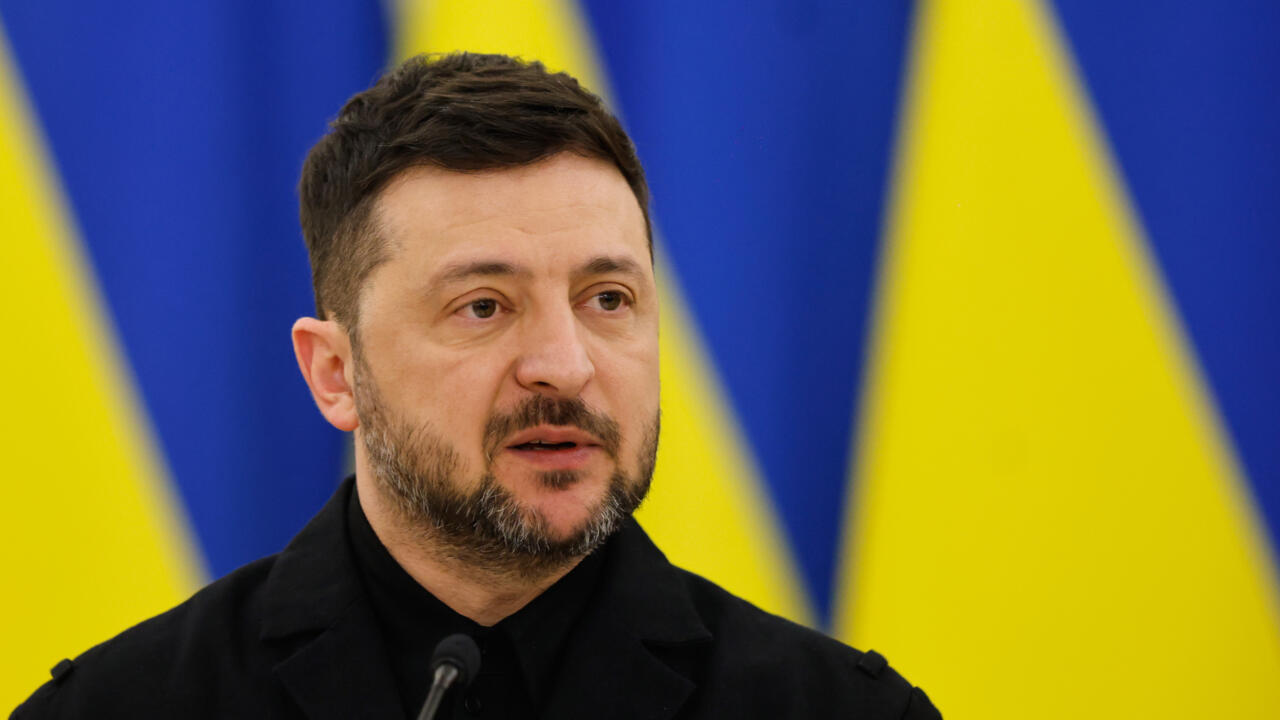
    The US is making its offer of security guarantees for a peace deal in Ukraine conditional on Kyiv ceding all of the country’s eastern region of Donbas to Russia, President Volodymyr Zelensky told Reuters in an interview.

    With the US focused on its own conflict with Iran, President Donald Trump is applying pressure to Ukraine in an effort to bring a quick end to the four-year war triggered by Russia’s 2022 invasion, Zelensky said.

    “The Middle East definitely has an impact on President Trump, and I think on his next steps. President Trump, unfortunately, in my opinion, still chooses a strategy of putting more pressure on the Ukrainian side,” he told Reuters.

    Hundreds of thousands of people have been killed, and swathes of Ukraine laid waste, in Europe’s bloodiest conflict since World War Two.

    The Ukrainian leader has repeatedly said robust security guarantees from international partners are needed to ensure that Russia does not restart hostilities in the future, after any peace deal is agreed.

    One of your browser extensions seems to be blocking the video player from loading. To watch this content, you may need to disable it on this site.

    Smoke rises from a burning building following a Russian drone attack in Lviv on March 24, 2026
    Smoke rises from a burning building following a Russian drone attack in Lviv on March 24, 2026. © Yuriy Dyachyshyn, AFP

    Two vital questions remained unresolved regarding security guarantees, Zelensky said: who would help to fund Ukraine’s weapons purchases to sustain its military deterrent, and how exactly its allies would respond in the face of any future Russian aggression?

    “The Americans are prepared to finalise these guarantees at a high level once Ukraine is ready to withdraw from Donbas,” the 48-year-old leader said.

    Russian President Vladimir Putin insists that control of the whole of Donbas is an essential element of his war aims, which Moscow would achieve on the battlefield if it could not do so at the negotiating table.

    But the pace of Russia’s advance has been slow over the past two years. Military analysts say it could take a long time and a significant amount of manpower to conquer all of Donbas, which includes a so-called “fortress belt” of cities heavily fortified by the Ukrainian military.

    One of your browser extensions seems to be blocking the video player from loading. To watch this content, you may need to disable it on this site.

    Ukraine: Massive wave of daytime Russian strikes hits sites nationwide
    Ukraine: Massive wave of daytime Russian strikes hits sites nationwide © France 24

    Zelensky warned that a withdrawal would compromise the security of both Ukraine and, by extension, Europe, by handing the region’s strong defensive positions to Russia.

    “I would very much like the American side to understand that the eastern part of our country is part of our security guarantees,” he said.

    The White House did not immediately respond to a request for comment.

    Zelensky had said in January that a security guarantees document between Ukraine and the US was “100% ready” and waiting to be signed. On Tuesday, following weekend talks between US and Ukrainian officials in Miami, he said there was still work to be done.

    Russia betting US will walk away, Zelensky says

    Speaking in a gilded meeting room at the presidential offices in central Kyiv, Zelensky said Russia was betting Washington would lose interest if the peace talks stalled and would walk away. He acknowledged that there was some risk of this.

    Zelensky questioned, however, whether Russia was willing to sacrifice hundreds of thousands more soldiers in an effort to capture the area of Donbas it does not already control – roughly 6,000 square kilometres. He repeated that a summit with Trump, Putin and himself was the only way to settle outstanding questions on territory and security guarantees to clinch a peace deal.

    One of your browser extensions seems to be blocking the video player from loading. To watch this content, you may need to disable it on this site.

    Los equipos de rescate intentan extinguir el incendio de un edificio residencial que arde tras un ataque con drones rusos en Zaporizhzhia, Ucrania, el martes 24 de marzo de 2026.
    Los equipos de rescate intentan extinguir el incendio de un edificio residencial que arde tras un ataque con drones rusos en Zaporizhzhia, Ucrania, el martes 24 de marzo de 2026. AP – Kateryna Klochko

    The Ukrainian leader shrugged off past tensions between himself and Trump. “I am not a box of chocolates or a car, to be liked or disliked by one person or another,” he said. “In my opinion, the President of the United States looks at this more pragmatically, and he probably wants the war to end quickly. We also want to do so quickly.”

    Following heavy Russian bombardment of Ukrainian cities on Wednesday, Zelensky thanked the Trump administration for maintaining supplies of Patriot missile defence systems, despite increased demand for these weapons because of the conflict in the Gulf.

    Ukrainian officials have previously expressed fears that shipments of US-made Patriots – the only missiles in Ukraine’s arsenal capable of downing Russian ballistic missiles – would dry up because of the Iran conflict.

    “Deliveries to us were not stopped. I’m very grateful to President Trump, and to his team,” Zelensky said. “But this supply of Patriot missiles is not as large as we need.”

    Meanwhile, Ukraine was making progress in the production of its own long-range missiles and drones, allowing it to strike deep within Russia in retaliation for Russian bombardment of Ukrainian cities, Zelensky said.

    (FRANCE 24 with Reuters)

    Read More

  • L’islamologue Tariq Ramadan condamné par défaut à 18 ans de réclusion criminelle pour viols

    L’islamologue Tariq Ramadan condamné par défaut à 18 ans de réclusion criminelle pour viols


    Les cookies et technologies similaires que nous utilisons sur Mediapart sont de différentes natures et nous permettent de poursuivre différentes finalités.

    Certains sont nécessaires au fonctionnement du site et de l’application mobile (vous ne pouvez pas les refuser). D’autres sont optionnels mais contribuent à faciliter votre expérience de lecteur ou de lectrice et d’une certaine façon à soutenir Mediapart. Vous pouvez les refuser ou les accepter ci-dessous, selon leurs finalités.

    Acceptez-vous que Mediapart utilise des cookies ou technologies similaires pour les finalités suivantes ?

    Vous pouvez faire votre choix, pour chaque catégorie, en activant ou désactivant le bouton interrupteur.

    Nécessaires au fonctionnement
    du site ou de l’application

    Connexion des abonné·es, mesure d’audience anonymisée, envoi des notifications push, suivi des pannes, mise en avant de nos services : ces outils sont nécessaires au suivi de l’activité de nos services et à leur bon fonctionnement.

    Ces outils nous permettent de recueillir des statistiques de fréquentation du site et de l’application mobile pour comprendre les usages, détecter d’éventuels problèmes et optimiser l’ergonomie de nos produits.

    Il n’y a pas de publicité sur Mediapart. Mais nous faisons la promotion de nos contenus et services sur d’autres sites et réseaux sociaux. Pour cela, nous utilisons les technologies mises à disposition par certains acteurs publicitaires.

    Gestion de l’accès aux contenus

    Nous utilisons le service Qiota d’Opper Marketing Suite pour configurer l’activation d’un datawall sur certains de nos contenus (uniquement sur le site web). Ce dispositif destiné aux utilisateur·ices non abonné·es requiert la saisie d’une adresse email pour accéder aux contenus concernés. En fournissant cette information, l’utilisateur consent à sa collecte, son stockage et son utilisation à des fins statistiques. Conformément à la réglementation en vigueur, les utilisateurs disposent d’un droit d’accès, de rectification et de suppression de leurs données, qu’ils peuvent exercer en contactant dpo@opper.io.

    Read More

  • Inflation in France jumps as Iran war hits growth and spending

    Inflation in France jumps as Iran war hits growth and spending


    France is heading for a sharp rise in inflation this spring as soaring oil prices linked to the conflict in Iran erode household purchasing power, with growth expected to slow in early 2026, the national statistics agency said.

    Issued on:


    2 min Reading time

    Insee expects growth of 0.2 percent in both the first and second quarters, down from 0.3 percent previously. At the same time, inflation is forecast to climb above 2 percent in the spring after running at less than 1 percent in February.

    The Middle East conflict, which began on 28 February, pushed oil prices to around $100 a barrel, compared with an average of 63 dollars at the end of 2025. The impact has been quickly felt at petrol stations.

    “The surge in hydrocarbon prices would translate in France, as elsewhere in the world, into a marked rebound in inflation, which would go above 2 percent during the spring,” Insee said in its updated outlook.

    With oil once again a weapon in the Middle East, is clean energy the key to peace?

    Holding for now

    Despite the shock, growth remains stable in the short term.

    “At the very short term, growth is holding up thanks to the recovery momentum in the euro zone,” said Dorian Roucher, head of Insee’s economic outlook department, told business daily Les Echos.

    Insee has only slightly lowered its forecasts despite the shock. Les Echos reported that growth carry-over could reach 0.9 percent by mid-year, matching the country’s total growth in 2025.

    “At this stage, Insee’s forecasts do not lead us to revise our own forecasts in either direction,” Roland Lescure, the economy minister, told lawmakers on the finance committee.

    But the pressure on households is expected to come sooner. Insee expects inflation to move above 2 percent by May. The agency now sees it reaching 2.2 percent by June.

    Kharg Island, the fragile oil lifeline behind Iran’s war economy

    Household squeeze

    The rise in prices is set to hit household finances. Purchasing power is expected to fall by 0.5 percent by mid-year, as wages have not yet adjusted to higher inflation.

    “While they were gradually recovering the losses suffered during the inflationary wave of 2022 and 2023, real wages would decline again in the second quarter,” Insee said.

    The increase is mainly driven by petrol and gas prices and has not yet spread to other sectors such as food. One exception is air travel, where higher kerosene costs are expected to push up ticket prices.

    Households are expected to soften the impact in the short term by drawing on their savings, allowing consumption to hold up despite higher energy costs, Insee said.

    “The main negative effects are more likely to be felt towards the end of the year,” Roucher said. “An oil price shock will have a much stronger effect on growth in 2027 than on growth in 2026.”

    Insee estimates that a $40 rise in oil prices would cut growth by about 0.4 percentage points over a year. Meanwhile unemployment is expected to edge up to 8.1 percent by mid-2026.

    (with newswires)

    Read More

  • France jails ex-policeman for raping domestic abuse victim

    France jails ex-policeman for raping domestic abuse victim


    A French court on Wednesday jailed a former police officer for 12 years for raping a woman who came to report domestic abuse.

    The court found Jean-Pierre Dagos, 58, guilty of having twice raped the woman in 2023 in the town of Pontault-Combault, east of Paris, once after she came to file the complaint, and then a few days later after summoning her back to his office.

    The defendant, in custody since 2023, admitted during his trial to having imposed oral sex act on her, but claimed he had no idea she had not consented.

    The woman is from Angola and did not have residency papers. She told the court she had been terrified, believing the officer was armed and had the power to deport her and force her to leave behind her three French-born children.

    An internal police investigator told the court on Monday that women had filed 176 complaints against law enforcement officers in 2023, of which 19 had amounted to at least inappropriate behaviour.

    Under French law, rape is “any act of sexual penetration, of whatever nature, or any oral-genital act committed on another person through violence, coercion, threat or surprise”.

    A revision to the law, passed in the wake of the Dominique Pelicot case, will amend the law to define rape as any non-consensual sexual act. Dominique Pelicot was jailed in 2025 after admitting to drugging his wife Gisèle and inviting dozens of strangers to rape her while she was unconscious.

    Read More

  • Iran targets US public opinion with online information war

    Iran targets US public opinion with online information war


    When President Donald Trump announced in a social media video on February 28 that the United States and Israel had launched strikes on Iran, he kickstarted a war that has engulfed the Middle East

    But he also sparked an online information war that analysts say has been dominated by the use of AI-generated content to spread fake news about the conflict

    One study from Clemson University in South Carolina found that, within 24 hours of the US and Israel launching attacks on Iran, dozens of social media accounts affiliated with the Islamic Revolutionary Guard Corps had begun posting Iranian propaganda about the war, some of which reached an audience of millions.

    Among the most widely viewed content are AI-generated videos mocking Trump – styled to reference Western media including the LEGO movies and the Teletubbies – and AI videos and photographs claiming to show the devastation Iranian strikes have wrought on Israel and the Gulf states.

    “The propaganda includes memes and cartoons that aren’t meant to be perceived as real but are very good at spreading political messaging,” said Darren Linvill, author of the study and co-director of Clemson’s Media Forensics Hub. 

    A screen shot of a post on X showing an AI-generated video of US President Donald Trump depicted as a LEGO figurine
    A screenshot of a post on X showing an AI-generated video of US President Donald Trump depicted as a LEGO figurine. © Megatron @Megatron_ron via X

    “The deepfakes portray a version of reality that [seems] genuine and often paint Iran as more successful in the conflict. Both are being shared widely among communities that are critical of the war and hungry for this messaging.”

    ‘Politically divisive’

    The accounts analysed in the Clemson study had been used previously for Iranian influence operations “designed to exploit regional fault lines to advance Iranian regime interests” in the West by posting “politically divisive” content such as critiques of the recent US immigration crackdown.

    The switch to posting war propaganda on platforms including X, Instagram and Bluesky suggests that Iran quickly overhauled its social media strategy when the war with the US and Israel began.

    As the conflict has spiralled over the past month, Iran has relied on both state media outlets and proxies to push its online message as a form of asymmetrical warfare with a view to targeting a US audience.

    Read moreMiddle East war live: Iran rejects US ceasefire plan and offers counterproposal, state TV says

    “The Iranian regime wants to make the conflict as painful as possible for the US and Israel, and if they can target what support Trump and [Prime Minister Benjamin] Netanyahu have, it may ultimately shorten the war,” Linvill said.

    There is fertile ground in the United States for messages critiquing military involvement in the Middle East. 

    Ipsos polling from mid-March found that US public opinion was “overwhelmingly” against the war in Iran, with 58 percent opposing US military strikes and 78 percent against the idea of US boots on the ground.

    In some cases, the Iranian regime does not need to create original or fake content to spread its message. 

    Clips of the former head of the US National Counterterrorism Center, Joe Kent, being interviewed about his resignation in opposition to the war were widely shared online by Iranian state media.

    ‘A ton of lies in a grain of truth’

    AI videos in particular “travel fast and plug into emotions that people already have”, said Tine Munk, senior lecturer in criminology at Nottingham Trent University and a specialist in digital warfare.

    “They create a lot of noise, even when they are so obviously fake because it is easy to communicate complex ideas through visual storytelling using these shared cultural references,” he said. 

    But many of the photos and videos gaining traction online purport to show events on the ground that are harder to identify as fake.

    Information warfare analyst Tal Hagin has been tracking these on X – a platform where disinformation about the war is rife.

    Among them are hundreds of examples of videos and images showing Iranian attacks on Israel that are either years old, of attacks on different countries or are AI-generated.

    A screen shot showing a post on X debunking an AI-generated image of Iranian strikes on Tel Aviv
    A screenshot showing a post on X debunking an AI-generated image of Iranian strikes on Tel Aviv. © Tal Hagin @talhagin via X

    “There was a strike in Tel Aviv on February 28th, and the videos and photos of those strikes have been used every single day to allegedly depict new strikes,” Hagin said. 

    The strategy is effective, he added, because the initial attack really did happen. “Then they put a ton of lies into that grain of truth, so people don’t know what the truth is anymore.”

    In addition, “social media platforms are not fulfilling their commitments on labelling content and removing it if it is provably false”, said Melanie Smith, expert in information operations at the Institute for Strategic Dialogue. 

    “We’re seeing content get millions of views before it’s proven to be AI and labelled as such.”

    ‘Information battlefield’

    The current conflict in the Middle East is not the first time viral videos and memes have been used as a weapon of war – they are an established form of Ukrainian resistance against Russian misinformation.

    But the use of AI to generate wartime propaganda is a new development. 

    “This conflict is the first time we’ve really seen AI-generated content be used very intentionally to sow chaos and confusion around what’s actually happening on the ground,” Smith said.

    Adding to the confusion are censorship rules restricting the flow of information out of both Israel and Iran. 

    In Israel, wartime censors have prohibited the sharing of information deemed sensitive, such as the location of interceptor missiles.

    Meanwhile, Iran has imposed a full internet blackout, now in its fourth week, making it extremely difficult for outsiders to know what is happening on the ground.

    The result is “a big information void that can be filled very quickly with synthetic content, propaganda narratives and generally chaotic information”, Smith said. 

    Iran is surging forward on this “information battlefield”, said Munk. “It’s a broader war strategy where Iran cannot always dominate militarily, so it’s focused on shaping perceptions to create doubt and uncertainty.”

    Trump has accused Iran of using AI-generated “fake news” as a “disinformation weapon” –although the White House shared its own heavily critiqued AI video combining real footage of strikes in Iran with clips from action movies and video games.

    “Iran has been fairly successful, certainly more successful than the US and Israel, in reaching a broad audience and gaining more support than they might otherwise have,” Linvill said.

    Read More

  • «Rallumer la lumière», une idéologisation absurde du débat sur l’éclairage public

    «Rallumer la lumière», une idéologisation absurde du débat sur l’éclairage public


    Nombreux ont été les candidats aux municipales à promettre le rétablissement de l’éclairage public la nuit pour des raisons sécuritaires. Des décisions au coût exorbitant, catastrophiques pour la biodiversité, comme pour la santé humaine.

    Read More

  • France sees sharp rise in cadmium exposure from everyday foods

    France sees sharp rise in cadmium exposure from everyday foods


    Cadmium exposure is rising in France, with nearly half of adults exceeding safe levels because of contamination in everyday foods such as bread, pasta, potatoes and vegetables, health authorities have warned – calling for urgent action to cut the risks linked to the cancer-causing metal.   

    Issued on: Modified:


    2 min Reading time

    Anses, France’s food safety agency, said on Wednesday that the population was experiencing “strong and increasing” exposure to cadmium, mainly through food.

    It described the situation as “concerning” and said it required action that was “rapid and determined” to limit harmful effects on human health.

    “Nearly half of the adult population [47.6 percent] exceeds the toxicological reference values,” Géraldine Carne, a toxicologist and coordinator of the report, told a press conference.

    The findings come from a two-year study that, for the first time, sets out the scale and nature of cadmium exposure in France. The metal is present in soils, builds up in the body and is not easily removed.

    Cadmium is classified as carcinogenic, mutagenic and toxic for reproduction. It can affect several parts of the body, including the bones, kidneys and cardiovascular system.

    “This toxic element is widely distributed in the organs,” Carne said, warning of effects on the pancreas, bladder, prostate and breasts.

    Cities can improve air quality ‘quite rapidly’ with political will

    France above neighbours

    Studies over several decades show exposure levels are rising, with France standing out from neighbouring countries. “Levels in France are up to three or four times higher than in countries such as Belgium, England or Italy,” Carne said.

    Food is by far the main source of contamination, accounting for up to 98 percent of exposure in non-smokers, the agency said. Staple foods such as cereal products, potatoes and vegetables are the biggest contributors because they are widely consumed.

    The report links this exposure in part to agricultural practices, particularly the use of phosphate-based fertilisers that contain cadmium.

    Anses called for urgent reductions in the amount of cadmium allowed in fertilisers and urged action across the whole sector, “and not only farmers”.

    The agency also said current regulatory limits for cadmium in food were “not sufficiently protective” and should be lowered.

    Why France’s agriculture law may not help the farmers it claims to defend

    What consumers can do

    For consumers, the room for action is limited. The report said it was “not relevant to formulate recommendations in terms of individual choices”, given how widespread contamination is in food from the soil.

    Still, Anses suggested reducing consumption of wheat-based products with low nutritional value, such as breakfast cereals, cakes and biscuits.

    It also encouraged a shift towards legumes such as lentils and chickpeas, which are “10 times less contaminated than cereals”.

    Chocolate, often singled out for cadmium content, was described as only a minor contributor because it is consumed in smaller amounts and is not subject to specific advice.

    (with newswires)

    Read More