In Hungary, mayors now have the right to “select” residents of their towns after a new law was passed last summer. The far-right mayor of Pilis, a town of 12,000 inhabitants, is one of them. One former resident of the town, who was forced to leave, explains why he believes the procedure is discriminatory, particularly towards the Roma minority. Our France 2 colleagues report, with FRANCE 24’s Florent Marchais.
A French pedestrian’s unexpected burst of speed prompts Justin Postlethwaite to ponder cross-Channel courtesy and contrariness…
Credit where credit is dueor, as the French rather cerebrally, indeed biblically, say, “rendre à César ce qui est à César”, which translates as ‘render unto Caesar the things which are Caesar’s’. The credit in question relates to a recent, scarce sighting in France: a pedestrian crossing a passage piéton (zebra crossing) at a pace faster than a lazy Burgundian escargot. I say ‘scarce’ because experience tells me that a French person crossing the road is in no hurry whatsoever, and will never succumb to the unspoken social pressure of ‘getting a bit of a move on’ just to placate waiting road users. Of course, I am not referring to those who are genuinely unable to ‘get a move on’ for whatever reason, be this medical or otherwise.
On this occasion, not only did the pleasant pedestrian a hip young man of about 20 years old with his hands in his pockets and a skinny clope hanging nonchalantly from his thin-moustache-topped mouth- increase his speed beyond standard walking pace. Не actually moved up a gear into the faux-jogging motion that indicates someone doing their best to please impatient drivers (of which I am not one, I like to think). He removed the roll-up from his mouth and smiled courteously; I raised my hand in appreciation at the faux-jog, and everyone was the better for this fleeting coming together of Anglo-French manners.
A FRENCH EXCEPTION
The reason this occurrence stood out is because the French and I am more than happy to be corrected by readers who feel otherwise are generally not people-pleasers*. The most obvious example of this, which any reader who has ordered a café au lait on a Parisian sidewalk terrace will attest to, is the famed ‘rudeness’ of the capital’s waiters. Our columnist Stephen Clarke, who lives in Paris, has alluded to this regularly and amusingly in his sideways glance at life in the City of Light.
Personally, I can accept the serveurs’ sniffy aloofness – it lends a certain amusing theatricality to proceedings – provided that the service is effective and courteous (which it usually is). In their mind, they are merely being professional and have little inclination, or time, to engage in idle chit-chat. The French have a collective sense of self-assuredness and focus regarding the job in hand.
TO EACH HIS OWN
The contrarian that I am, I much prefer this sullenness to the boutique sycophancy which is creeping into the French shopping experience nothing gets my goat (ça me rend chèvre, say the French!) quite like being jumped upon by an eager clothes shop employee who, before one has even reached the first rail of polo shirts, enquires if you are looking for “quelque chose en particulier aujourd’hui?”.
Those more forgiving than myself would call this common courtesy. I call it professional people-pleasing. The French might say lèche-bottes (bootlicker) since there is no direct translation of ‘people-pleaser’, which actually infers a gentler approach. In my head, I want to reply ‘Un peu de tranquillité, s’il vous plaît’, (a little peace, please) but ingrained British politeness makes me blurt: ‘Non, je regarde un peu, merci. (No, I’m just looking, thanks). In short, à chacun son goûtslow down and let the French do things their way.
*As a disclaimer, and call me a lèche-bottes, but there are exceptions to all of the above examples, notably in the wonderful French tourism industry, in which France Today is fully immersed it is packed with passionate -purveyors of pleasure.
From France Today Magazine
Lead photo credit :Photo: Shutterstock
Your email address will not be published. Required fields are marked *
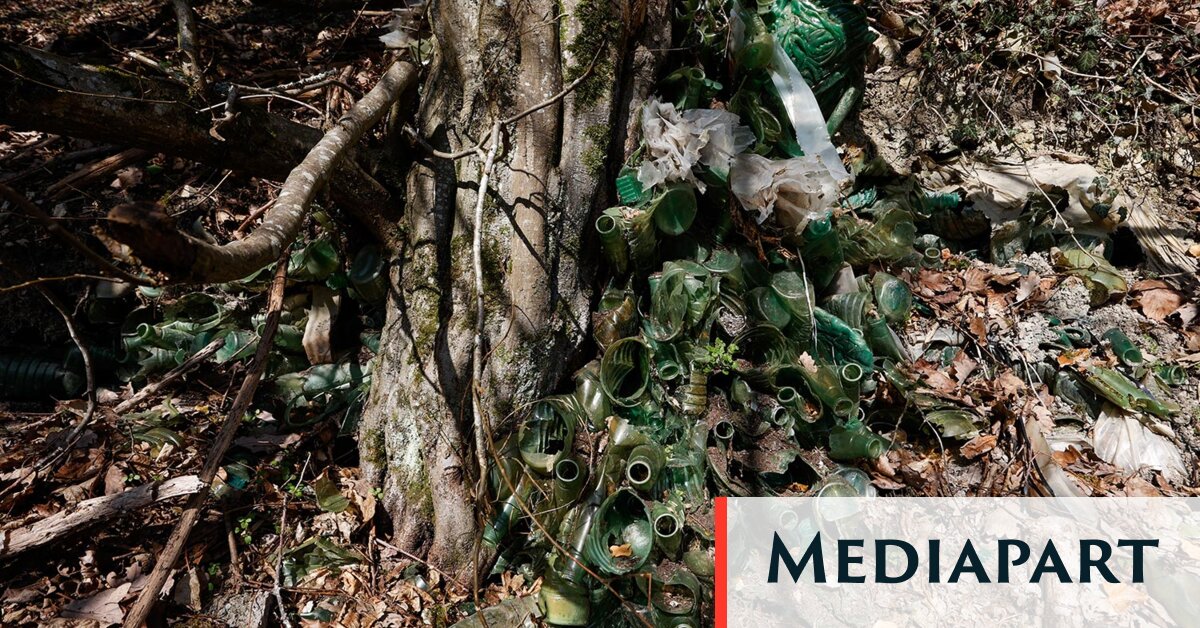
Au troisième jour du procès sur les décharges illégales de plastiques, les représentants de la multinationale se sont empêtrés dans leurs contradictions. Appelé en tant que témoin, l’agent de l’Office français de la biodiversité a souligné les risques sanitaires provoqués par les pratiques de l’industriel.
Nine CRS officers were sentenced on Tuesday to suspended prison terms ranging from six to 24 months for beating “yellow vest” protesters in a fast-food restaurant in Paris in 2018.
Issued on: Modified:
3 min Reading time
On 1 December 2018 – the third Saturday of the “Yellow Vest” anti-government protests – police officers used batons and kicked demonstrators who had sought refuge in a Burger King restaurant in Paris.
This episode, which lasted only 2 minutes and 37 seconds, was filmed from various angles by protesters, journalists, and security cameras.
One protester received 27 baton blows, another was left with a bloodied face, and a woman was injured in the arm and still suffers from the trauma.
Four individuals have filed civil suits in this case, but 16 unidentified victims – who have not come forward to the justice system – have also been counted by investigators.
The nine police officers – members at the time of the incident of CRS 43 based in the eastern town of Chalon-sur-Saône, south of Dijon – were all found guilty of intentional violence with several aggravating circumstances, but their convictions were not entered on their criminal records.
On Tuesday, the presiding judge at the Paris criminal court announced suspended prison terms ranging from six to 24 months, saying that the use of force “did not meet the strict and imperative conditions of necessity and proportionality.”
None of the accused were present for the verdict.
The court said it had taken into account “the objectively violent social context” and “the extreme difficulty of the intervention,” but it dismissed all the justifications to exonerate the defendants, including “necessity,” “acting under orders from legitimate authorities,” and “self-defense of property.”
The judge, on the contrary, emphasised “the nature and seriousness of the acts committed against the demonstrators,” who “appeared to be taking refuge” in the fast-food restaurant “to regain their composure” after the air in the street had become unbreathable due to tear gas grenades fired by law enforcement, and “displayed peaceful behavior.”
While the criminal court acknowledged that each of the officers was “fully responsible” for the victims’ injuries, it declared itself incompetent to rule on material damages, as their actions were “not separable from their official duties,” referring this part of the case to the administrative court.
During their interrogation, the accused admitted to having lacked “lucidity” during the operation in the early evening, carried out after hours of clashes with demonstrators around the Arc de Triomphe, in an “insurrectionary” atmosphere.
In court, they further recounted believing that the people who had entered the fast-food restaurant, which was closed, were looters.
The yellow vests stormed the Arc de Triomphe on Saturday, 1 December 2018 in Paris.Geoffroy VAN DER HASSELT / AFP
Law is not a luxury
The police officers also expressed feeling “abandoned” by their superiors and directly implicated the Paris police headquarters.
Their commander, called as a witness, harshly criticised the chain of command, arguing that he and others should have been in the dock alongside the riot police. “They have to obey; those who give the orders are never held accountable,” he asserted, reproaching his own superiors for not relieving his unit, even though his men hadn’t eaten since 6:00 a.m.
“Disorder never suspends the law; the law is not a luxury reserved for calm days; the law is precisely what must hold firm when everything collapses,” prosecutor Marie Dubarry said.
The Yellow Vest protests broke out in 2018, triggered by fuel hikes and the cost of living crisis and the movement mushroomed into a wider protest against President Emmanuel Macron and his pension reform.
Some 212 cases of alleged police brutality have been investigated by the IGPN police oversight body in relation to the protests.
This French expression has a long history and comes from the city of Limoges, in southwestern France.
Why do I need to know se faire limoger?
The city of Limoges is known for its porcelain but it’s also the origin of the expression “se faire limoger“, which is commonly used in French media.
What does it mean?
The French expression se faire limoger, roughly pronounced suh fehr lee-mo-zhay (listen here) means “to get fired” or “to be dismissed from a job”, often suddenly or harshly.
The expression is a bit informal and used especially in the media.
So what does this expression have to do with the French city?
On August 3rd, 1914, Germany declared war on France, marking the beginning of World War I. A few weeks later, the French army was struggling, and Paris was within reach of German troops.
The War Ministry, and General Joffre (commander in chief of French forces at the time) in particular, made the radical decision to send part of the general staff – deemed responsible for this disaster – into early retirement. It was decided that they would head to Limoges.
That was all it took for the town in Haute-Vienne to give its name to an expression synonymous with a harsh and final dismissal.
Even today, the people of Limoges are not keen on the use of this expression, which gives the city a bad reputation.
Manual widget for ML (class=”ml-manual-widget-container”)
Use it like this
Il s’est fait limoger sans avertissement. – He was let go without warning.
Le directeur s’est fait limoger après le scandale. – The director was fired after the scandal.
Donald Trump a fini par limoger sa ministre de l’intérieur Kristi Noem (Le Parisien) – Donald Trump ended up firing Secretary of Homeland Security Kristi Noem.
France is among the countries poised to invest in Australian critical minerals projects, Australia’s resources minister said on Thursday, as Canberra’s framework deal with the US prompts nations with advanced manufacturing sectors to secure access to supply.
Australia has been on a four-year mission to build an industry for minerals like rare earths that are key to future technologies such as electronics and defence, as countries look to diversify their supply chain away from dominant producer China.
As well as last October’s critical minerals agreement with the United States, which included an $8.5 billion pipeline of investments, Australia has inked agreements for sector cooperation with Japan, South Korea, India, France, Germany and Britain.
US calls for critical minerals trading bloc
To display this content from YouTube, you must enable advertisement tracking and audience measurement.
One of your browser extensions seems to be blocking the video player from loading. To watch this content, you may need to disable it on this site.
“Since the framework agreement with the US, that work has taken on new urgency from some other partners as they make sure they also have access to critical minerals,” Australian Resources Minister Madeleine King told Reuters in an interview during the Minerals Week summit in Canberra.
“France is more and more keen,” she said.
France has engaged at a policy and financing framework level, including through export credit agency Bpifrance Assurance Export, but unlike the US and Japan has not yet announced large-scale project funding for Australian critical minerals.
The French trade commission in Sydney did not immediately respond to a request for comment.
Australia is seeking billions of dollars more in investment for 49 mining projects and 29 midstream processing projects for a growing critical minerals sector that is forecast to produce A$18 billion ($12.52 billion) of export earnings in the financial year starting on July 1.
Australia this month joined the G7 Critical Minerals Production Alliance to help advance its growth objectives.
On Tuesday, Australia and the European Unionsigned a free trade agreement after eight years of negotiations, potentially easing EU access to Australian critical minerals but it stopped short of announcing a detailed list of investment projects as it did with the US.
“Many other countries just aren’t used to getting involved in mining and mining-style financing, but they’re going to have to, if they want to … have that secure supply,” King said.
Decades of investment
Australia has provided A$28 billion of financial support for the sector since the current government was elected in May 2022 and may need to be prepared to back the industry’s development for decades, King said.
“If you want to compare timelines, it took (China) 40 years,” she said. “We would like to do it quicker. But we do need to think of it as a long-term proposition.”
The Australian government supported its giant iron ore and liquefied natural gas markets to get on their feet and if anything critical minerals might be more difficult, she added.
EU to unveil new plan to end dependence on China’s rare earths
To display this content from YouTube, you must enable advertisement tracking and audience measurement.
One of your browser extensions seems to be blocking the video player from loading. To watch this content, you may need to disable it on this site.
Australia is developing an A$1.2 billion strategic reserve that will focus on antimony, gallium and rare earths to supply to its partners and which is expected to be operational in the second half of this year.
The reserve will “no doubt” have an element of a floor price, King said earlier this week, but its agreements will be structured to ensure Australia will reap rewards if prices rise, she said.
“When there is an upside, the government should be able to get some of that benefit, but also exit this part of the arrangement,” she added.
The US is also building a $12 billion minerals stockpile, called Project Vault.
“And we see our reserve as being able to be the catalyst to feed into Project Vault,” she said, adding details were still under discussion.
Les cookies et technologies similaires que nous utilisons sur Mediapart sont de différentes natures et nous permettent de poursuivre différentes finalités.
Certains sont nécessaires au fonctionnement du site et de l’application mobile (vous ne pouvez pas les refuser). D’autres sont optionnels mais contribuent à faciliter votre expérience de lecteur ou de lectrice et d’une certaine façon à soutenir Mediapart. Vous pouvez les refuser ou les accepter ci-dessous, selon leurs finalités.
Acceptez-vous que Mediapart utilise des cookies ou technologies similaires pour les finalités suivantes ?
Vous pouvez faire votre choix, pour chaque catégorie, en activant ou désactivant le bouton interrupteur.
Nécessaires au fonctionnement du site ou de l’application
Connexion des abonné·es, mesure d’audience anonymisée, envoi des notifications push, suivi des pannes, mise en avant de nos services : ces outils sont nécessaires au suivi de l’activité de nos services et à leur bon fonctionnement.
Voici les différents cookies et technologies similaires compris dans cette catégorie :
Cookies d’authentification : connexion des abonné·es.
AT Internet : mesure d’audience anonymisée
Affichage de contenus éditoriaux multimédias : vidéos (YouTube, Dailymotion, Vimeo, INA), réseaux sociaux (Facebook, Instagram, Pinterest, Twitter), documents (Scribd, Document Cloud, Slideshare), sons (SoundCloud, Spotify, Deezer), cartes (Google Maps, Mapbox, CartoDB, uMap), infographies (Highcharts, GitHub, Datawrapper, Flourish, Infogram, ThingLink, jQuery, Google Fonts, Bootstrap), live blogs (24liveblog, CoverItLive), aide à l’intégration de média dans les publications Journal et Club (Embedly).
Typeform : questionnaires facultatifs pour recueillir les avis des lecteurs sur nos produits numériques.
Datadog (uniquement sur le site web) : indicateurs techniques et équilibrage de charge.
Selligent (uniquement sur le site web) : communication avec l’abonné·e, mise en avant des services, offres et avantages.
Batch (uniquement sur l’application) : envoi de notifications push et de messages in-app.
Firebase Cloud Messaging (uniquement sur l’application) : nécessaire au fonctionnement des notifications push sur Android.
Microsoft App Center (uniquement sur l’application) : système de mise à jour et de suivi des pannes de l’application.
Ces outils nous permettent de recueillir des statistiques de fréquentation du site et de l’application mobile pour comprendre les usages, détecter d’éventuels problèmes et optimiser l’ergonomie de nos produits.
Voici les outils tiers compris dans cette catégorie :
AT Internet : mesure d’audience reliée à l’identifiant d’abonné·e.
CrazyEggs (uniquement sur le site web) : analyse de parcours client.
Nonli (uniquement sur le site web) : permet à notre équipe des réseaux sociaux de publier les contenus Mediapart sur les réseaux sociaux.
Qiota (uniquement sur le site web) : gestion du système de datawall.
Il n’y a pas de publicité sur Mediapart. Mais nous faisons la promotion de nos contenus et services sur d’autres sites et réseaux sociaux. Pour cela, nous utilisons les technologies mises à disposition par certains acteurs publicitaires.
Voici les outils tiers compris dans cette catégorie :
Facebook (uniquement sur le site web) : ciblage d’audience sur les réseaux sociaux pour faire la promotion de Mediapart.
Gestion de l’accès aux contenus
Nous utilisons le service Qiota d’Opper Marketing Suite pour configurer l’activation d’un datawall sur certains de nos contenus (uniquement sur le site web). Ce dispositif destiné aux utilisateur·ices non abonné·es requiert la saisie d’une adresse email pour accéder aux contenus concernés. En fournissant cette information, l’utilisateur consent à sa collecte, son stockage et son utilisation à des fins statistiques. Conformément à la réglementation en vigueur, les utilisateurs disposent d’un droit d’accès, de rectification et de suppression de leurs données, qu’ils peuvent exercer en contactant dpo@opper.io.
President Emmanuel Macron warned on Wednesday that political extremists presented a danger to France as candidates continued their campaigning ahead of Sunday’s second round of polling in mayoral elections.
Issued on: Modified:
2 min Reading time
In his first public comments since the first round of voting last Sunday, Mr Macron said: “Extremes, wherever they may be, remain a danger to the republic.”
France’s two-round mayoral races are closely watched for indications of the political mood and patterns of tactical alliance. This year’s elections are being regarded as a bellwether for the 2027 presidential contest, with Mr Macron due to stand down after completing two terms in office.
The far-right National Rally, led by Marine Le Pen, and the hard-left France Unbowed party of Jean-Luc Mélenchon have both recorded gains in the first round.
In a notable result, an alliance of France Unbowed and the Communist Party has taken the Paris working-class suburb of Saint-Denis.
Far right gains
The National Rally has also made significant gains. In Perpignan, the incumbent RN mayor Louis Aliot was re-elected with 50.61 per cent of the vote, retaining the largest municipality under the party’s control.
In Nice, a far-right ally held a lead of approximately ten points, according to estimates, while in the southern city of Toulon, the far-right candidate was ahead of the sitting mayor, according to projections.
“Change will not wait for 2027. It starts next Sunday,” RN leader Jordan Bardella told supporters following the first round.
Bardella said several outgoing mayors from the party had already been re-elected in the first round. He called on centre-right politicians to join forces with the RN in the second round.
According to early results, Édouard Philippe, a centrist seen as a strong contender for the presidential election, appeared well placed to remain mayor of the northern port city of Le Havre.
In France‘s second-largest city, Marseille, the RN candidate, Franck Allisio, won 35.35 percent of the vote, putting him neck and neck with the incumbent left-wing mayor, Benoît Payan, with 35.5 percent.
The second round hinges on whether the list led by LFI MP Sébastien Delogu, who won just over 13 percent of the vote, merges with Payan’s list or withdraws in his favour.
Payan said he would engage in “no backroom negotiations, no political horse trading”, a position that Delogu described as “irresponsible”. Payan had rejected a “technical merger” of left-wing lists and instead called for the LFI list to withdraw.
Mélenchon said the party was urging the left to accept the “outstretched hand” of his movement to defeat the far right.
That could happen in Lyon, where the incumbent Green mayor Grégory Doucet, backed by the Socialists, Place Publique and the Communists, managed to hold his ground against the former Lyon football club boss Jean-Michel Aulas, who leads a joint centre-right list.
LFI candidate Anaïs Belouassa-Cherifi, who won just over 10 percent of the vote, called for a “technical merger” of her list with Doucet’s “to keep the city on the left”, a possibility Doucet did not rule out during the campaign.
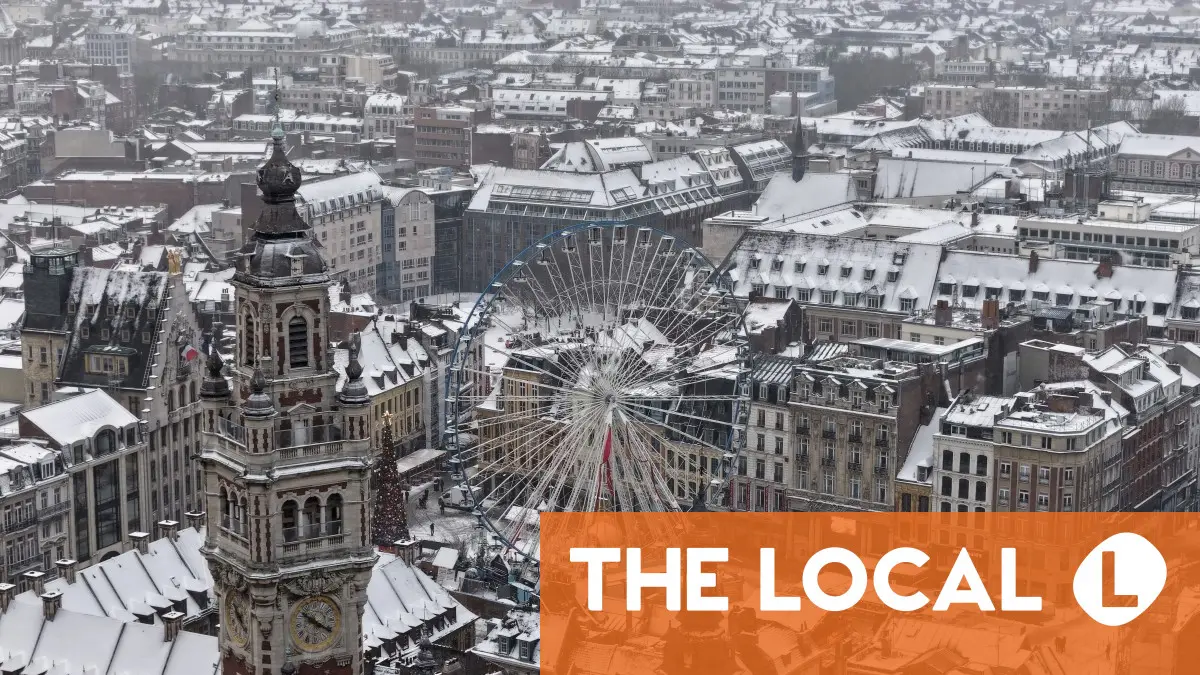
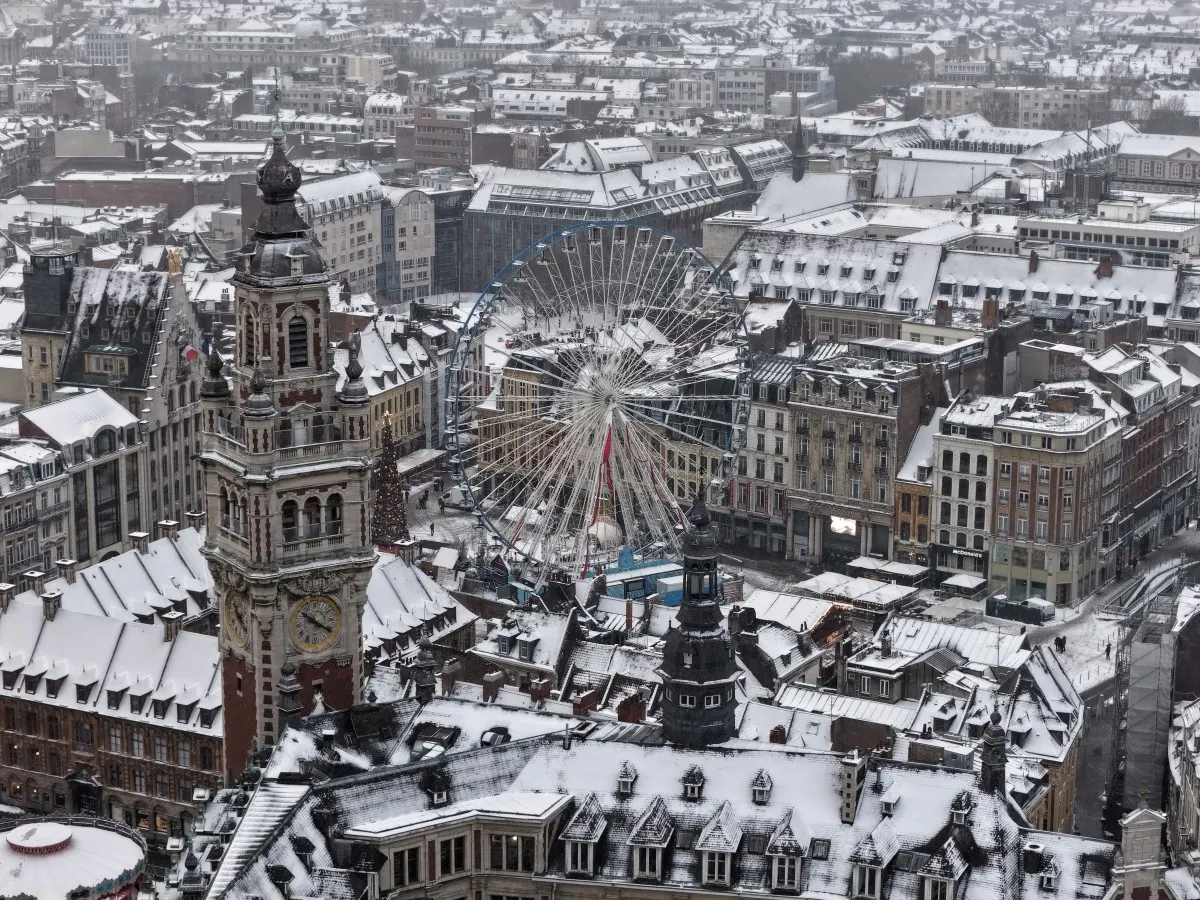
The northern French city of Lille will host the future European Union customs authority, officials said on Wednesday, as the bloc seeks to stem the flow of cheap Chinese parcel imports.
The new body is part of the EU’s overhaul of its customs rules and Brussels has said the authority will centralise European efforts to tackle fierce pressure from a myriad of issues including the proliferation of e-commerce.
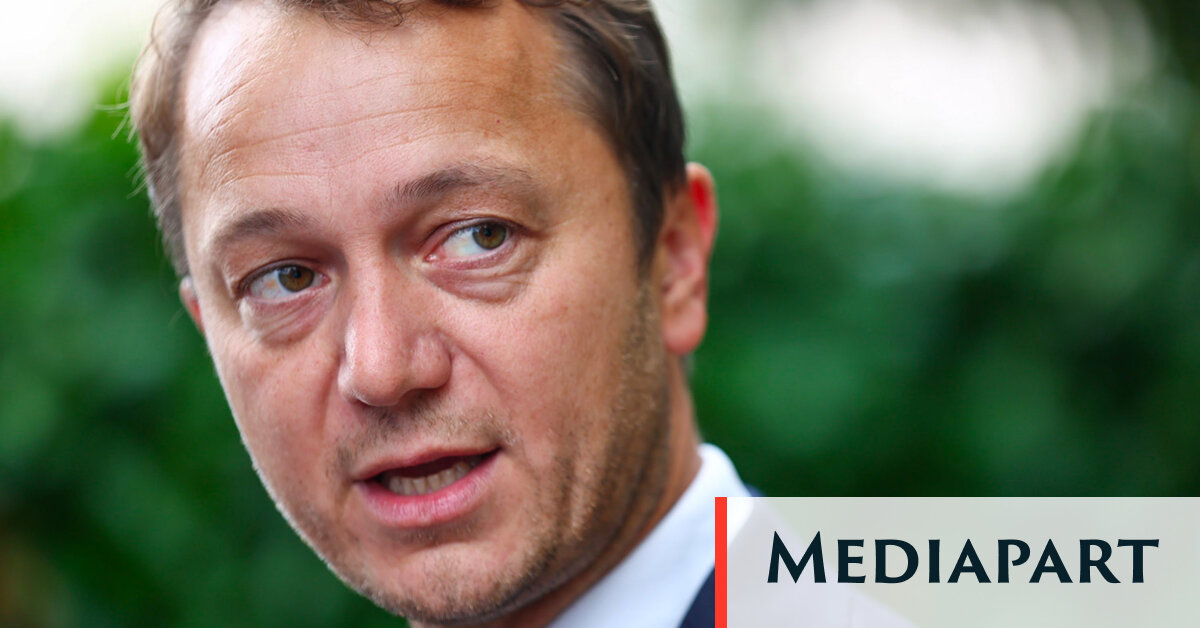
Lille mayor Arnaud Deslandes welcomed the news, calling it a “victory” reflecting the city’s location “at the crossroads of Europe.”
Nine cities had been in the running: Bucharest, Liege, Lille, Malaga, Porto, Rome, The Hague, Warsaw, and Zagreb.
Representatives of the European Parliament and member states picked the chosen city after several rounds of voting.
The authority is expected to start work in 2028.
A large focus of the EU’s customs reforms has been the proliferation of small parcels ordered via Chinese platforms, which European governments and businesses say has led to unfair competition as well as health and safety risks for consumers.
EU ministers in December agreed to impose a €3 duty on low-value imports into the bloc from July 2026, a month after the bloc opted to scrap a duty exemption for parcels worth less than €150 imported directly to consumers.
France has already imposed its own duty on low-value non-EU imports – €2 per parcel – ahead of the EU’s legislation.
The EU said 4.6 billion small retail packages entered the bloc in 2024 – more than 145 per second – with 91 percent originating in China.
Israel’s military said Thursday its forces had carried out a wave of strikes across Iran, as Tehran continues to insist that it will not negotiate on a peace deal. US President Donald Trump has warned he is ready to “unleash hell” if Iran does not accept a deal to end the nearly four-week Middle East war. Follow our liveblog for the latest updates.
G7 allies to discuss Iran at meetings this week in France
Foreign ministers from the world’s leading Western democracies are meeting in France this week against the backdrop of wars in Iran and Ukraine, economic uncertainty, and mounting unease over an increasingly unpredictable US foreign policy.
A top priority for Washington’s partners will be a debriefing from US Secretary of State Marco Rubio, who will attend the meeting’s second day on Friday.
Officials said allies are hoping to get greater clarity on US and Israeli military operations against Iran and on whether any meaningful diplomatic channel exists to end the conflict.
Talks will also focus on the Strait of Hormuz, which Iran has effectively closed, choking about a fifth of global oil supplies.
Activists use Starlink to bypass Iran internet blackout amid war
With the war in Iran leading to a near-total internet blackout in the country, activists around the world – especially in the United States – are mobilising to help Iranians stay connected via Starlink.
Despite being banned, billionaire Elon Musk’s satellite internet system has gained ground in Iran thanks to a network of international activists, multiple people involved in these efforts told AFP.
“As of this year, we have more than 300 devices that we have delivered to the country,” said Emilia James of the US-based organisation NetFreedom Pioneers. She declined to go into further detail to protect the operation and the users.
Oil rises, equities mixed as Middle East war uncertainty persists
Oil prices rose and equities were mixed on Thursday as investors tracked developments in the Middle East war after Iranian officials were said to have replied to US demands to end a conflict that has sparked warnings of an unprecedented energy crisis.
Markets have been buoyed since late Monday after US President Donald Trump backed down on a threat to destroy the Islamic republic’s energy infrastructure and said the two sides were in peace talks.
But while crude prices are down from last week and the mood on trading floors has been less dour than most of March, uncertainty and the virtual closure of the Strait of Hormuz – through which around 20 per cent of oil and gas passes – continues to cast a dark shadow.
Israel carries out wave of strikes across Iran, including Isfahan
Israel’s military said Thursday its forces had carried out a wave of strikes across Iran, including in the central city of Isfahan.
A brief military statement said Israeli forces “completed a wide-scale wave of strikes targeting infrastructure of the Iranian terror regime in several areas across Iran”.
Yesterday’s key developments:
Iran rejected a 15-point US peace plan to end the Middle East war, with Iranian Foreign Minister Abbas Araghchi saying, “We do not intend to negotiate.”
US President Donald Trump is ready to “unleash hell” if Iran does not accept a deal to end the nearly four-week Middle East war, the White House warned Wednesday.
The United States claimed that it has hit two-thirds of Iran’s production facilities for missiles and drones, and a similar proportion of its naval production.