Its deposit growth came at 3.36%, also much lower than the banking system’s growth. The non-interest income for the reporting quarter increased 2.82% to Rs 4,541 crore.
Read More
Category: Business
-
Union Bank Q3 Profit Rises 9.7% To Rs 5,073 Crore On Lower Provisions
-

Pilots’ association urges DGCA to suspend flights in high-risk conflict zones in West Asia
Airlines Pilots’ Association of India (ALPA) on Saturday urged the Directorate General of Civil Aviation (DGCA) to suspend operations into identified high-risk conflict zones in West Asia and mandate disclosure and verification of valid insurance coverage.
In a letter to the DGCA, the pilot association highlighted the risk in carrying out operations with civilian airlines in conflict-torn regions, citing previous incidents of civilian airlines being shot down in the fog of war.
ALPA wrote, “Operating flights into, or in close proximity to, an active war zone constitutes a serious and unacceptable risk to the safety of passengers, flight crew, and aircraft. In our considered view, such decisions amount to wilful endangerment of human life.
It is pertinent to note that this issue was previously raised by us on March 18 with the Directorate General of Civil Aviation (DGCA).
The DGCA issued an Urgent Safety advisory dated March 19 as a response–advising airlines to conduct their own independent risk assessments–raises significant concerns.
“It highlighted that commercial airlines do not possess the requisite intelligence for risk assessment in regions with active conflicts. The associated stressed on no formal assurance provided to confirm that adequate war risk insurance coverage for pilots and crew members carrying out operations in West Asia.”
Commercial airlines do not possess the requisite intelligence, surveillance capabilities, or geopolitical risk assessment infrastructure necessary to adequately evaluate threats in active conflict environments.
Such assessments fall squarely within the domain of sovereign authorities and specialised agencies.
Delegating this responsibility to individual operators not only creates inconsistencies in safety standards but also exposes flight crew and passengers to potentially catastrophic risks without a robust and uniform safety framework,” the pilots’ association added.
The letter read, “Additionally, it is a matter of serious concern that pilots have been actively seeking clarification regarding the status and validity of their insurance coverage while operating into such high-risk zones… To date, no documentary evidence or formal assurance has been provided to confirm that adequate warrisk insurance coverage remains valid under these circumstances. It is perhaps because the Airlines do not have suitable and adequate insurance riders entirely.”
“It would not be out of place to place on record that the current belligerents, USA, Israel and Iran have shot down civilian airlines in the fog of war of previous conflicts. Iran Air Flight 655 shot down by the USA during the previous conflict of similar circumstances, Libyan Arab Airlines Flight 114 shot down by Israel, and Ukraine International Airlines Flight 752 shot down by Iran,” ALPA added.
ALPA asked the DGCA to issue binding directives regarding operations in conflict regions and initiate a thorough inquiry into the decision-making processes within Air India, which is carrying out its operations in West Asia.
The letter read, “In light of the above, we strongly urge the Ministry of Civil Aviation and the DGCA to: Immediately review and suspend operations into identified high-risk conflict zones until a centralised and authoritative risk assessment is conducted, especially in light of the worsening situation. Establish clear, binding directives regarding operations in conflict regions, aligned with international best practices and based on intelligence inputs. Initiate a thorough inquiry into the decision-making processes within Air India, particularly the roles of the Vice President – Operations and the Crew Scheduling Department, to determine accountability for exposing crew and passengers to such risks, particularly if found not to have adequate war risk insurance. Mandate immediate disclosure and verification of valid insurance coverage, including war-risk clauses, for all crew operating into or near conflict zones. This aspect should be clearly addressed in the next safety advisory issued after the expiry of the previous one.”
The conflict in West Asia began with Israel-US strikes on Iran on February 28, killing Supreme Leader Ayatollah Ali Khamenei. As Iran retaliated, it widened the ambit of the conflict, affecting its neighbours in the region. The conflict has hampered the airspace, leading to several cancellations and delays in flight schedules.
Published on March 28, 2026
-
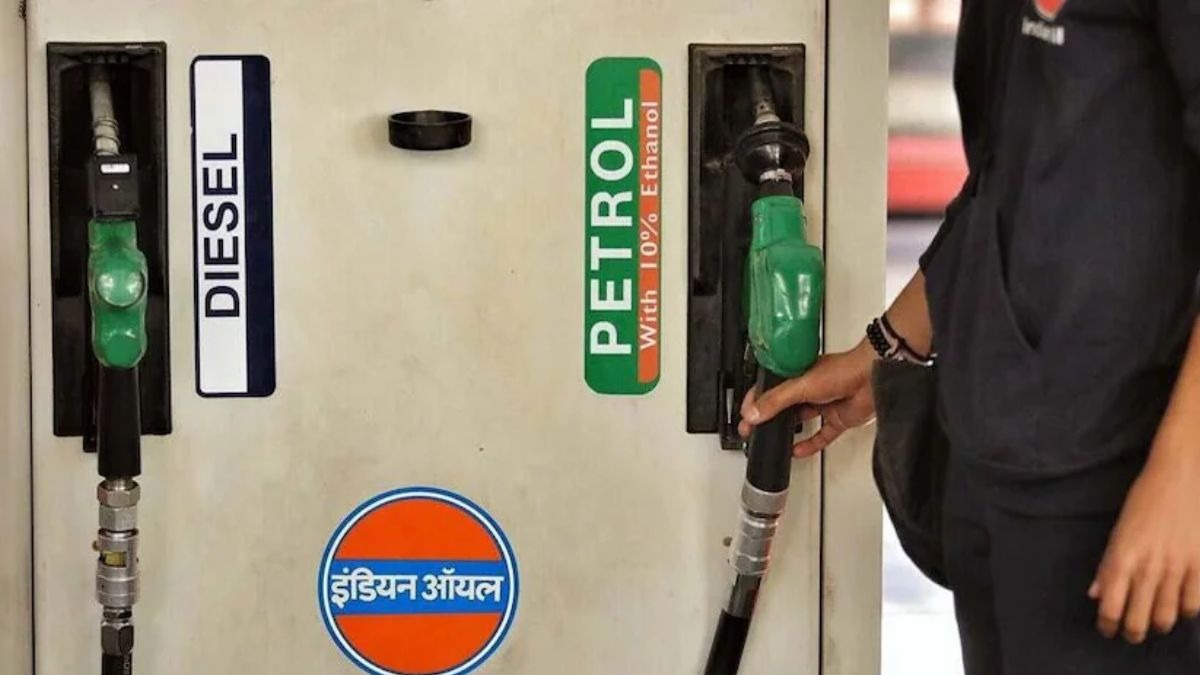
Petrol, diesel prices today, March 28: Check prices in Delhi, Mumbai, Kolkata, Chennai, Hyderabad
Fuel prices across India held steady on March 20, even as global crude markets remain on edge amid tensions in West Asia and disruptions to key shipping routes. The pause in the prices comes amid heightened political sensitivities ahead of state elections.
Prices remain unchanged after the government decided to cut excise duty on petrol and diesel by Rs 10 per litre. The excise duty on petrol went down from Rs 13 per litre to Rs 3 where the duty on diesel has been cut to zero from Rs 10 per litre.
In Delhi, petrol continues to retail at Rs 94.77 per litre, while diesel is priced at Rs 87.67 per litre. Prices remain higher in Mumbai, where petrol is selling at Rs 103.54 per litre and diesel at about Rs 90.03 per litre.
Across major cities such as Bengaluru, Hyderabad and Kolkata, petrol prices are still above Rs 100 per litre, while diesel continues to be below Rs 100.
DON’T MISS | Petrol, diesel excise duty cut: Here’s how much excise you will still have to pay
Fuel prices in key cities (March 28)
City Petrol (Rs./litre) Diesel (Rs./litre) Delhi 94.77 87.67 Hyderabad 107.50 95.70 Kolkata 105.41 92.02 Mumbai 103.54 90.03 Bengaluru 102.96 90.99 Chennai 101.06 92.61 What drives petrol and diesel prices in India?
A combination of global, economic, and domestic factors shapes fuel prices at the pump. At the heart of it is the international price of crude oil, the base raw material for both petrol and diesel, which has the single biggest bearing on what consumers ultimately pay.
The rupee-dollar exchange rate is another key variable, given that India relies heavily on imported crude. When the rupee weakens against the dollar, the cost of procuring crude rises, which can feed directly into higher retail fuel prices.
DON’T MISS | Petrol, diesel excise duty cut may cost govt over Rs 1 lakh crore, fiscal hit to be reviewed fortnightly
Why do prices differ across different cities?
On top of that, taxes levied by both the central and state governments make up a substantial portion of the final price, which is why petrol and diesel rates differ across states. Transportation costs and prevailing demand-supply conditions also factor into the retail price consumers see at the pump.
-
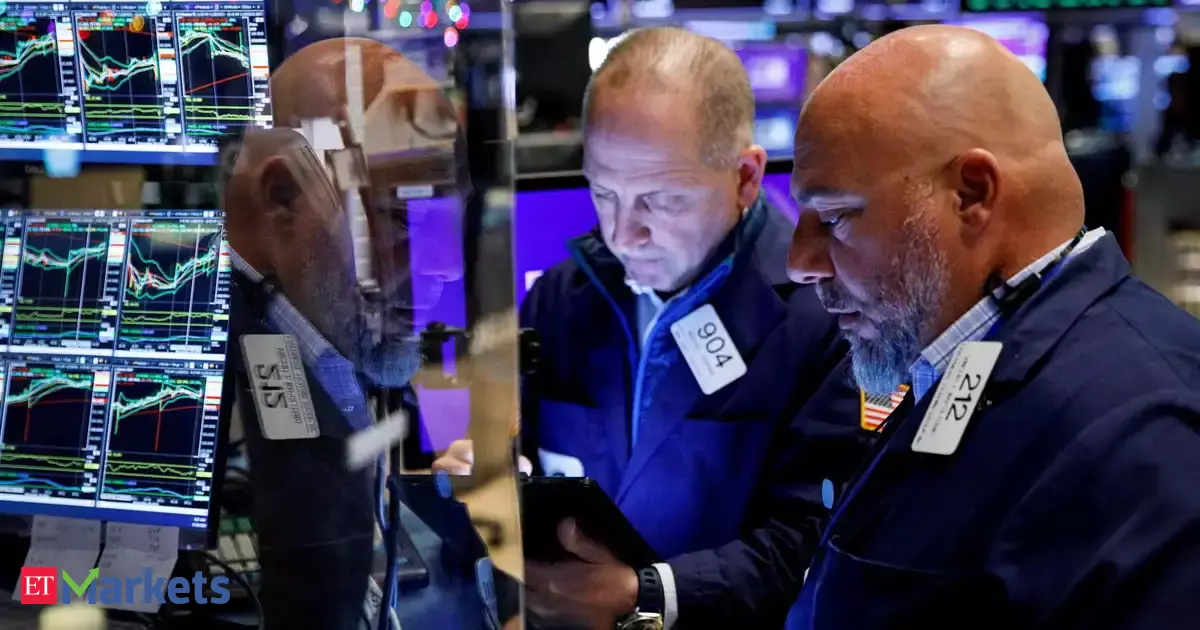
US Stock Market | Stocks tumble, Dow confirms correction territory, as Middle East tensions drag
U.S. stocks tumbled on Friday, with each of the three major U.S. indexes closing at their lowest levels in over seven months and the Dow confirming it was in correction territory as the month-long Middle East war continued to suppress risk appetite. Markets took little solace from U.S. President Donald Trump’s announcement that he gave Iran another 10 days to reopen the Strait of Hormuz or face the destruction of its energy plants, after Iran rejected his proposals to end the war that began with U.S.-Israeli air strikes on Iran. Secretary of State Marco Rubio said the U.S. could achieve its objectives in Iran without the use of any ground troops and expected its operation to conclude in a matter of weeks, despite recent deployments of additional forces to the region. U.S. crude settled up 5.46% at $99.64 a barrel and Brent rose 4.22% to settle at $112.57 per barrel, but they were little changed on the week.The Dow, S&P 500 and Nasdaq each suffered their fifth straight weekly decline, the longest such streak in nearly four years. The Dow is now down more than 10% from its February 10 record close, becoming the latest major index to confirm a correction, commonly defined as a drop of 10% from its prior high. The Dow follows the Nasdaq in crossing the correction threshold while the Russell 2000, which was the first on the correction path, confirmed it last Friday.
“Clearly, the overall tone has turned very negative and now we have broken down into correction territory,” said Ken Polcari, partner and chief market strategist at SlateStone Wealth in Jupiter, Florida.
“In the end, I would view this as a big opportunity, but would not be surprised if we see a drawdown anywhere between 15% to 20% before it is over.”
The Dow Jones Industrial Average fell 793.47 points, or 1.73%, to 45,166.64, the S&P 500 lost 108.31 points, or 1.67%, to 6,368.85 and the Nasdaq Composite lost 459.72 points, or 2.15%, to 20,948.36.
The CBOE Volatility Index, considered Wall Street’s fear gauge, was up 3.61 points to close at 31.05, its highest close since April 21.Megacaps were the biggest drag on the benchmark S&P index, with Nvidia down 2.2% as the biggest weight, while Amazon dropped 4%. Software shares were also under renewed selling pressure, and the S&P 500 software and services index closed at its lowest level since November 6, 2023. Along with pressure from Amazon, consumer discretionary stocks dropped 3.1%, the worst-performing of the 11 major S&P sectors, as cruise operator Carnival slumped 4.3% after cutting its annual adjusted profit forecast. Fellow cruise operator Norwegian tumbled 6.9%. The surge in oil prices along with other products such as fertilizer as a result of the Iran war has fanned inflation fears and dampened expectations that the Federal Reserve and other central banks have room to lower interest rates. Money market participants are not pricing in any easing from the U.S. Federal Reserve this year, compared with expectations of two cuts before the conflict broke out, according to CME’s FedWatch Tool. Markets are now pricing in a roughly 25% chance for a hike of at least 25 basis points at the Fed’s October meeting. Philadelphia Fed President Anna Paulson acknowledged the risks to the economy from the war, but did not specify what it meant for monetary policy in the near term. U.S. consumer sentiment eased to a three-month low in March, raising concerns about the economy due to the Middle East war.
Declining issues outnumbered advancers by a 3.38-to-1 ratio on the NYSE and by a 3.62-to-1 ratio on the Nasdaq.
The S&P 500 posted 22 new 52-week highs and 27 new lows while the Nasdaq Composite recorded 25 new highs and 355 new lows.
Volume on U.S. exchanges was 18.13 billion shares, compared with the 20.4 billion average for the full session over the last 20 trading days.
-

From the Supreme Court’s Cox ruling to Primary Wave’s Kobalt deal… it’s MBW’s weekly round-up
Welcome to Music Business Worldwide’s Weekly Round-up – where we make sure you caught the five biggest stories to hit our headlines over the past seven days. MBW’s Round-up is exclusively supported by BMI, a global leader in performing rights management, dedicated to supporting songwriters, composers and publishers and championing the value of music.
This week, Primary Wave Music announced a definitive agreement to acquire Kobalt from Francisco Partners.
Meanwhile, the US Supreme Court unanimously sided with internet service provider Cox Communications in a landmark music piracy case brought by the major record labels.
Elsewhere, Domain Capital Group closed $768 million in equity commitments for its second entertainment fund.
Also this week, BMG revealed its annual revenues dipped to €900 million in 2025, but the Bertelsmann-owned company hit a record EBITDA margin of 32%. BMG‘s catalog investment topped $400 million for the year.
And Firebird entered into a strategic partnership with UK-based artist management company Goodlife Management, the home of Fred again.., The Blessed Madonna, Ki/Ki, and ¥ØU$UK€ ¥UK1MAT$U, among others.
Here are some of the biggest headlines from the past few days…
1. PRIMARY WAVE MUSIC TO ACQUIRE KOBALT FROM FRANCISCO PARTNERS
Primary Wave Music has announced a definitive agreement to acquire Kobalt, which it describes as “one of the world’s premier independent music publishing and technology platforms.”
The transaction includes an investment from Brookfield, a strategic partner to Primary Wave.
According to the companies, the “deal creates a scaled, independent alternative to traditional publishing models, highlighting Kobalt’s best-in-class royalty platform, amra’s global digital collection vehicle, and Primary Wave’s proven ability to grow the value of legendary music IP through creative marketing and other initiatives…” (MBW)
2. US SUPREME COURT SIDES WITH COX COMMUNICATIONS IN LANDMARK MUSIC PIRACY CASE BROUGHT BY RECORD LABELS
The US Supreme Court has ruled that internet service provider Cox Communications cannot be held responsible for music piracy committed by its subscribers, ending a landmark copyright case in which the major record companies had won a $1 billion jury verdict.
The unanimous decision was handed down on Wednesday (March 25).
Justice Clarence Thomas, writing for the Court, said that Cox “neither induced its users’ infringement nor provided a service tailored to infringement.”
Commenting on the decision, Mitch Glazier, RIAA Chairman and CEO, said: “We are disappointed in the Court’s decision vacating a jury’s determination that Cox Communications contributed to mass scale copyright infringement, based on overwhelming evidence that the company knowingly facilitated theft…” (MBW)
3. AFTER TEAMING UP WITH SONY MUSIC PUBLISHING TO ACQUIRE MIRANDA LAMBERT CATALOG, DOMAIN CAPITAL CLOSES $768M ENTERTAINMENT FUND
Domain Capital Group has closed $768 million in equity commitments for its second entertainment fund.
The Atlanta-based private investment management firm said Domain Entertainment Fund II focuses on investments in film libraries, television participation and music catalogs, with additional allocations for literary works, theatrical productions and sports.
The firm added that Fund II includes investments with notable partners including Paramount Pictures and Sony Music Publishing, and features titles and artists including Sonic 3, Friends, The Matrix Trilogy, Miranda Lambert and Thomas Rhett… (MBW)
4. BMG REVENUE DIPPED TO €900M IN 2025 BUT EBITDA MARGIN HIT RECORD 32% – AS CATALOG INVESTMENT TOPPED $400M
BMG generated EUR €900 million (USD $1.02bn) in annual revenues in 2025, down 6.5% YoY on a reported basis, or down 1.5% YoY on an organic basis.
That’s according to a new set of annual fiscal results from the music company’s parent, Bertelsmann, published on March 26.
The revenue decline was largely a deliberate consequence of BMG’s own strategic choices – most notably the divestment of non-core businesses in its Live segment, combined with unfavorable foreign exchange movements driven by the weaker US dollar.
BMG’s annual adjusted operating EBITDA reached an all-time high of EUR €284 million ($321m), up 7.2% YoY compared to the prior year’s record equivalent of €265 million… (MBW)
5. FIREBIRD ACQUIRES MAJORITY STAKE IN GOODLIFE MANAGEMENT, THE HOME OF FRED AGAIN.., THE BLESSED MADONNA, AND MORE
Firebird has entered into a strategic partnership with UK-based artist management company Goodlife Management, the home of Fred again.., The Blessed Madonna, Ki/Ki, and ¥ØU$UK€ ¥UK1MAT$U, among others.
MBW understands that Firebird has acquired a majority stake in the company.
The deal brings Goodlife founders Oliver Sasse, Lucy Sasse, Ellie Shaw, and David Watters — along with their “dynamic team” and talent roster — into Firebird’s expanding ecosystem of management companies, which already includes Mick Management (US/UK), Red Light Management (US/UK), JET Management (US), Hills Artists (US), and Special Projects (UK).
Firebird said the new partnership “significantly bolsters” its presence in the electronic music landscape… (MBW)
Partner message: MBW’s Weekly Round-up is supported by BMI, the global leader in performing rights management, dedicated to supporting songwriters, composers and publishers and championing the value of music. Find out more about BMI here. Music Business Worldwide
-

Rubio says Iran war to last ’weeks not months,’ no US ground troops needed
Rubio says Iran war to last ’weeks not months,’ no US ground troops needed
Read More -
Access Error
The page you are trying to access is unavailable because we detected potential misuse. Please wait a moment and try again.
For help please visit help.ft.com. We
apologise for any inconvenience.The following information can help our support team to resolve this issue.
- Reason
- Access Blocked
- Request ID
- 9e3256767c1b46b3
- Status Code
- 403
-
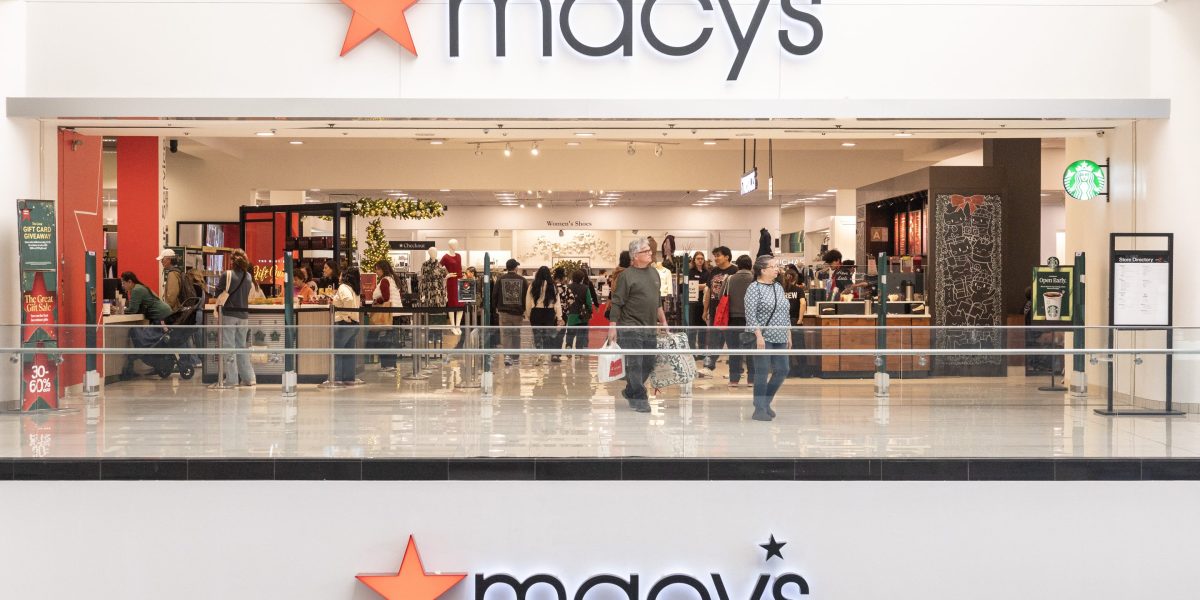
Macy’s just launched an AI-powered shopping assistant. Customers who use it spend nearly 400% more
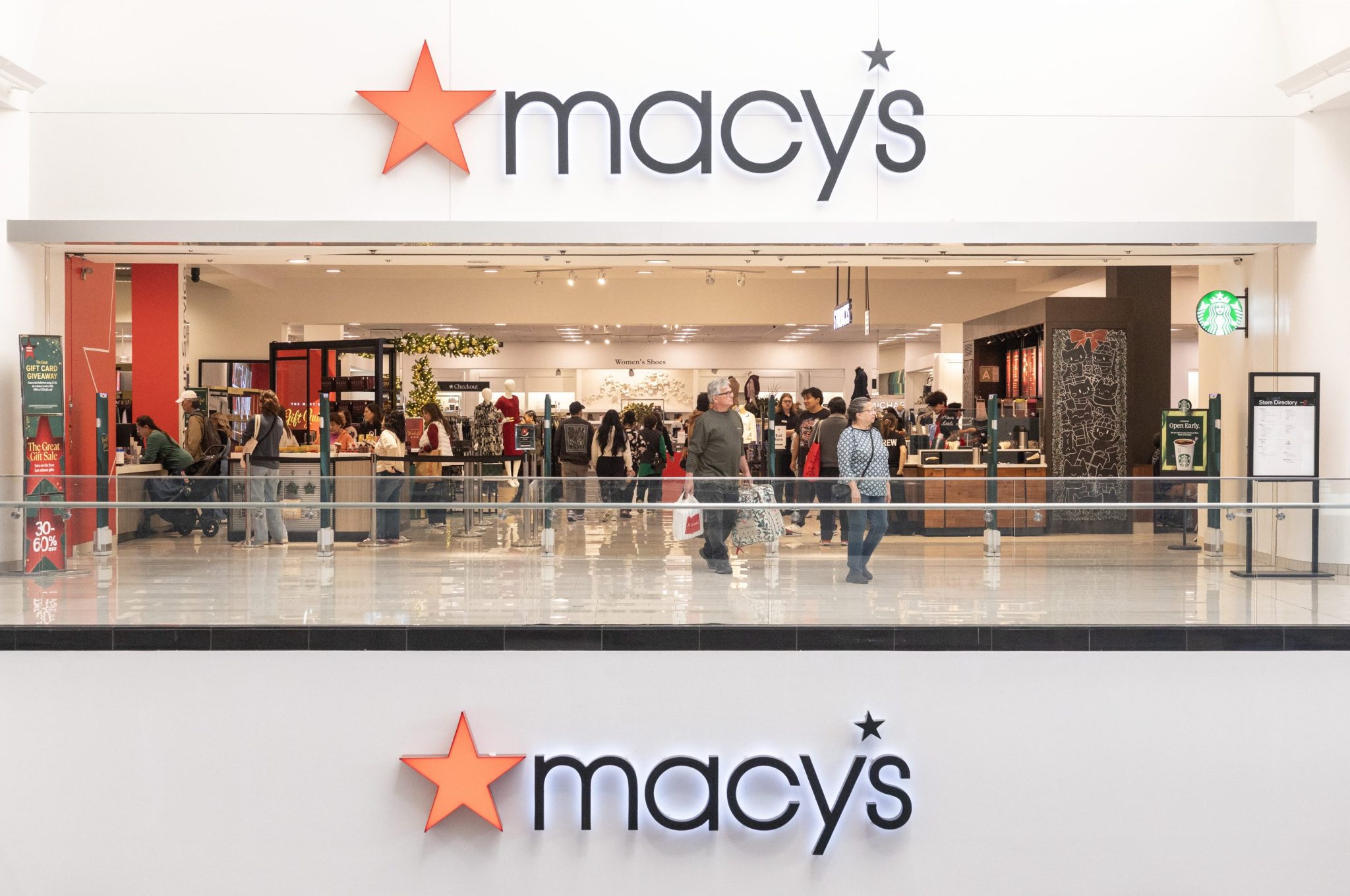
If you’ve ever stood in front of the mirror and wondered what your outfit’s missing, Macy’s may have the answer. The company recently launched its “Ask Macy’s” AI chatbot, powered by Google’s Gemini AI assistant, and it’s having shocking success.
The chatbot launched across all the company’s digital platforms on Monday, but it was tested with about half of Macy’s website visitors over several weeks, the company told Bloomberg. Shoppers who use the chatbot spend about 4.75 times more than those who don’t, Bloomberg reported.
The bot’s short-term success comes as Macy’s tries to make its comeback after a decade of declining sales.
Earlier this month, the company reported net sales decreased by 2.4% last year, but returned to comparable sales growth, up 1.5%. Macy’s expects to make $21.4 billion to $21.65 billion in net sales this year, a little less than last year’s $21.76 billion, and sees comp sales flat at the midpoint of guidance.
Chief Customer and Digital Officer Max Magni explained that customers may be primed to spend more because they’re looking for a specific item, such as an outfit for an upcoming event, rather than when they’re just browsing, Bloomberg reported. He suspects that the bot is also attracting a younger customer base.
The most popular features are the “complete the look” option, where the bot suggests accessories to go with an outfit, and a virtual try-on feature that allows shoppers to see what an item looks like on them. Customers can also use the virtual try-on feature in store, if they don’t have time to see if an item fits, Chief Stores Office Barbie Cameron told Bloomberg.
More AI shopping assistants are coming as companies and startups bet on making online shopping more seamless. For example, Bill Gates’s daughter Phoebe Gates founded Phia, a browser extension that compares prices across the internet.
And after more than four years in beta, Marc Lore and Melissa Bridgeford, publicly launched shopping agent Wizard in February.
“Every retailer is trying to figure it out one step at a time,” Magni told Bloomberg. “This is anybody’s game. Nobody has cracked the code.”
Getting the Macy’s bot ready for customers has taken some tweaking, and thousands of employees weighed in, according to Magni. Originally, it didn’t take into account that shoppers in different climates may not want to see the same selections.
There were also some tone issues, Magni added. When he asked for T-shirt suggestions for his son, the bot coldly offered a list and wrote: “Here’s a T-shirt for a 10-year-old.”
Now, the bot is more friendly. When asked again, the bot replied “‘Ten-year-olds can have so much fun with color – do you want a brighter or more muted color selection?’” Magni said. “The machine continues to learn.”
-
Access Error
The page you are trying to access is unavailable because we detected potential misuse. Please wait a moment and try again.
For help please visit help.ft.com. We
apologise for any inconvenience.The following information can help our support team to resolve this issue.
- Reason
- Access Blocked
- Request ID
- 9e319947ac6147df
- Status Code
- 403
-

Asia’s Largest 2,400 sqm Indoor Transparent Screen Illuminates Central World, Thailand
Unilumin completed Asia’s largest indoor transparent screen at Bangkok’s Central World, spanning 2,400 square meters. This project enhances commercial appeal and tourist engagement, showcasing advanced LED technology.
BANGKOK, March 27, 2026 /PRNewswire/ — Recently, the largest indoor transparent screen project in Asia, built by global LED leader Unilumin, was officially completed at Central World in Bangkok, Thailand. Covering a total area of 2,400 square meters, this landmark project sets a new benchmark for the digital transformation of commercial complexes across Southeast Asia and the entire Asian region.
The project employs Unilumin’s UVF series transparent screen (10 mm pixel pitch), which delivers a brightness of 8,000 cd/㎡, a transparency rate exceeding 70%, and a lightweight design of only 8 kg/㎡. With a 7680Hz high refresh rate and 16-bit grayscale processing, the display produces delicate, smooth images and authentic, natural colors—even under intense ambient light.
To adapt to the complex architectural structure, the Unilumin team developed multiple structural installation solutions, including frame curtain walls, point-supported curtain walls, and hoisting methods, fully demonstrating the product’s flexibility and adaptability. The screen also supports a customized front-black, back-white aesthetic that seamlessly integrates with the building’s design.
The project, initiated in 2023, involved three years of sampling, testing, and optimization. From design to surveys, the Unilumin team maintained close communication with the client, earning trust through exceptional display quality, stable performance, and efficient heat dissipation. During delivery, R&D and production teams swiftly responded to changing requirements, completing upgrades and batch deliveries, while technical staff provided on-site support.
Adjacent to the Erawan Shrine—the site sees an average daily foot traffic of over 400,000 people. As a key visual centerpiece in the shopping district, this transparent screen not only enhances the complex’s technological appeal and commercial atmosphere but has also become a popular Instagram spot for tourists. Whether for brand exposure, content display, or public art presentation, the project demonstrates immense commercial value and social influence.
About Unilumin
Unilumin is a global leader in LED displays, lighting products, and integrated Metasight solutions, ranked among the Top 500 Asian Brands for 3 consecutive years, operating in 160+ countries with R&D centers in China, Japan, and the U.S., and the world’s largest intelligent LED manufacturing base. Unilumin has completed a series of milestone projects, such as the world’s largest holographic screen at Spring Cocoon, the 22,000-square-meter Riyadh Season and Boulevard World immersive mega projects in Saudi Arabia, and the world’s first acoustically transparent LED cinema screen.
For more information, please visit https://www.unilumin.com
Source : 2,400 sqm: Asia’s Largest Indoor Transparent Screen Shines at Central World, Thailand
The information provided in this article was created by Cision PR Newswire, our news partner. The author's opinions and the content shared on this page are their own and may not necessarily represent the perspectives of Thailand Business News.
Other People are Reading